Rigveda 1.87: To the Maruts
Introduction
Rigveda 1.87 is a hymn of 6 verses addressed to the Maruts. It stands in book (maṇḍala) 1, a collection of hymns by many families of poets. The Rigveda is the oldest collection of Sanskrit hymns, composed in the second half of the second millennium BCE and handed down orally for many centuries before it was written down.
The manuscript shown is Penn Ms. Coll. 390 Item 41 (University of Pennsylvania), an undated paper manuscript of the padapāṭha (the word-by-word recitation text, in which every word is written separately and compounds are split) of the whole Ṛgveda in Devanāgarī, 884 leaves in fascicles, 7-9 lines to the page, accents in red; this hymn stands on fol. 59r-59v. Each section below gives the verses that end on one page; the page boundaries were read on the images (the opening words of every page), not counted out. Where the manuscript is a padapāṭha (the word-by-word recitation text), the section shows Aufrecht's continuous (saṃhitā) text first and, as the edition text, the padapāṭha of the same verses, which is the form written on the page.
How was this verified? (Provenance)
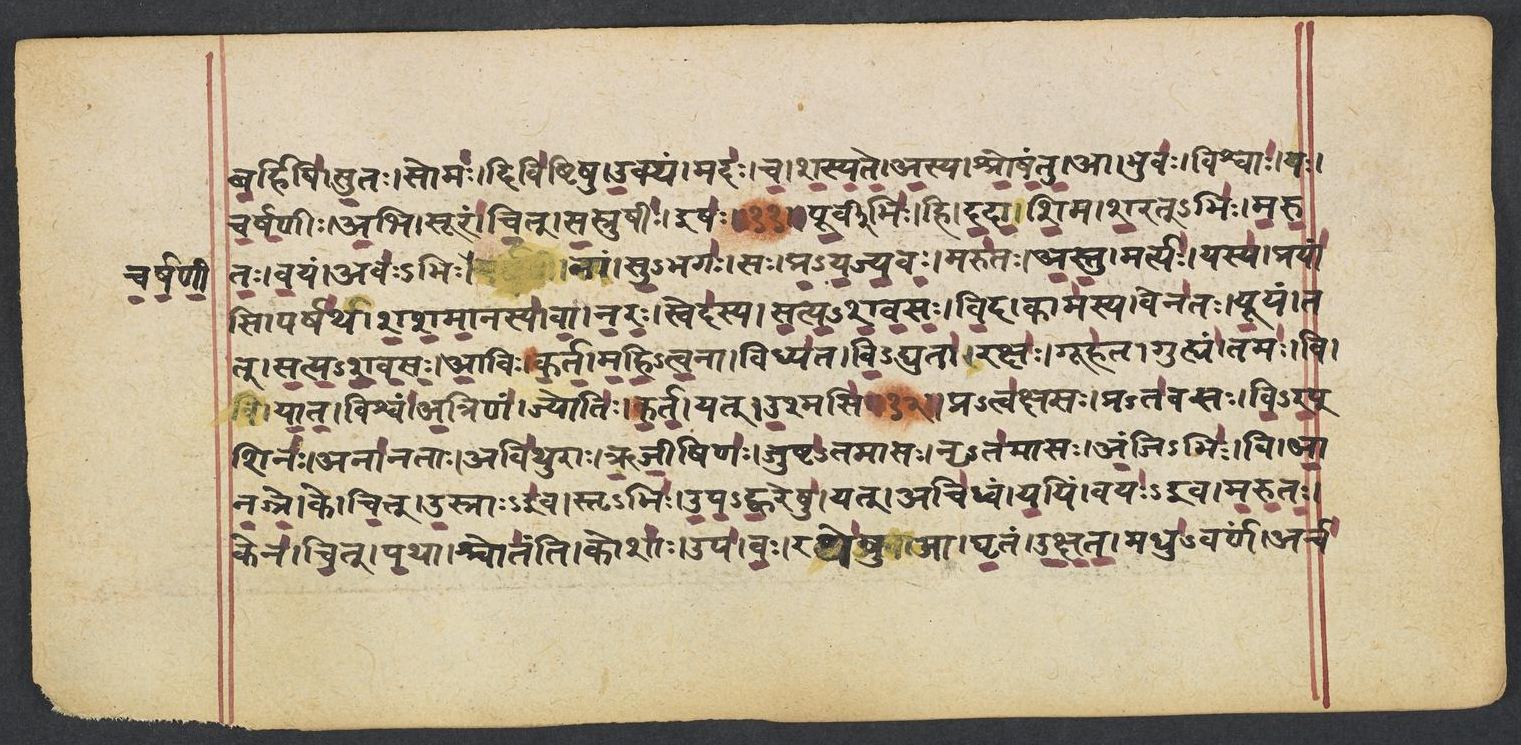
Where on the image
Penn Ms. Coll. 390 Item 41, fol. 59r (OPenn image 60, lower leaf). Checked on the image: the Rigveda text on this page begins in RV 1.86.4 ‹barhiṣi sutaḥ somaḥ diviṣṭiṣu›. The next page with Rigveda text, fol. 59v, begins in RV 1.87.2 ‹-arcate›. Verse 1.87.1 ends on this page.
1pratva̍kṣasa̱ḥ prata̍vaso vira̱pśino 'nā̍natā̱ avi̍thurā ṛjī̱ṣiṇa̍ḥ | juṣṭa̍tamāso̱ nṛta̍māso a̱ñjibhi̱r vy ā̍najre̱ ke ci̍d u̱srā i̍va̱ stṛbhi̍ḥ ||
Compare: Padapāṭha (word-by-word text written in the manuscript; Sansknet e-text via GRETIL)
1pra-tvakṣasaḥ | pra-tavasaḥ | vi-rapśinaḥ | anānatāḥ | avithurāḥ | ṛjīṣ iṇaḥ | juṣṭa-tamāsaḥ | nṛ-tamāsaḥ | añji-bhiḥ | vi | ānajre | ke | cit | usrāivastṛbhiḥ
1LOUD Singers, never humbled, active, full of strength, immovable, impetuous, manliest, bestbeloved, They have displayed themselves with glittering ornaments, a few in number only, like the heavens with stars.
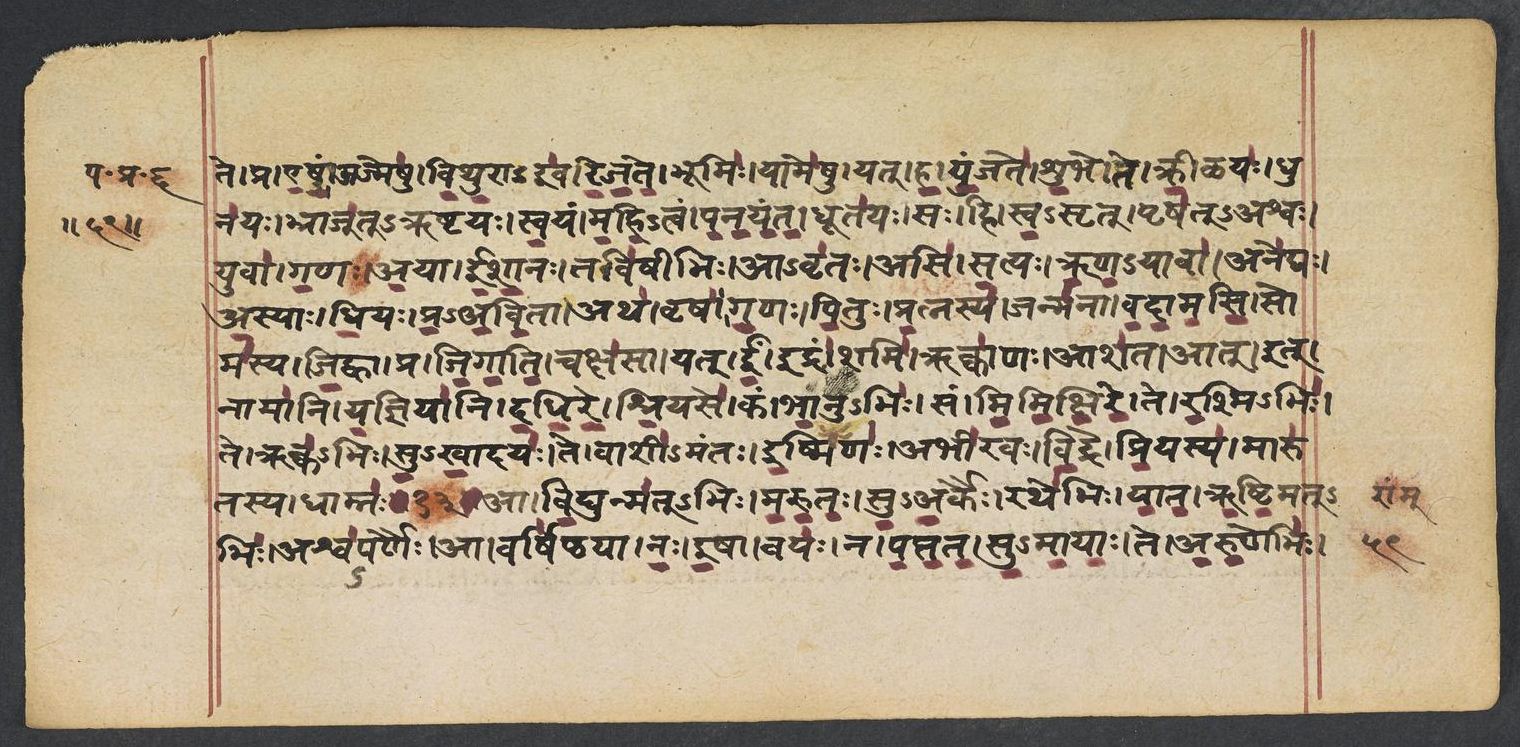
Where on the image
Penn Ms. Coll. 390 Item 41, fol. 59v (OPenn image 61, upper leaf). Checked on the image: the Rigveda text on this page begins in RV 1.87.2 ‹-arcate›. The next page with Rigveda text, fol. 60r, begins in RV 1.88.2 ‹varam ā piśaṅgaiḥ śubhe›. Verses 1.87.2-6 end on this page; 1.87.2 begins on fol. 59r.
2u̱pa̱hva̱reṣu̱ yad aci̍dhvaṁ ya̱yiṁ vaya̍ iva maruta̱ḥ kena̍ cit pa̱thā | ścota̍nti̱ kośā̱ upa̍ vo̱ rathe̱ṣv ā ghṛ̱tam u̍kṣatā̱ madhu̍varṇa̱m arca̍te ||
3praiṣā̱m ajme̍ṣu vithu̱reva̍ rejate̱ bhūmi̱r yāme̍ṣu̱ yad dha̍ yu̱ñjate̍ śu̱bhe | te krī̱ḻayo̱ dhuna̍yo̱ bhrāja̍dṛṣṭayaḥ sva̱yam ma̍hi̱tvam pa̍nayanta̱ dhūta̍yaḥ ||
4sa hi sva̱sṛt pṛṣa̍daśvo̱ yuvā̍ ga̱ṇo̱3̱̍ 'yā ī̍śā̱nas tavi̍ṣībhi̱r āvṛ̍taḥ | asi̍ sa̱tya ṛ̍ṇa̱yāvāne̍dyo̱ 'syā dhi̱yaḥ prā̍vi̱tāthā̱ vṛṣā̍ ga̱ṇaḥ ||
5pi̱tuḥ pra̱tnasya̱ janma̍nā vadāmasi̱ soma̍sya ji̱hvā pra ji̍gāti̱ cakṣa̍sā | yad ī̱m indra̱ṁ śamy ṛkvā̍ṇa̱ āśa̱tād in nāmā̍ni ya̱jñiyā̍ni dadhire ||
6śri̱yase̱ kam bhā̱nubhi̱ḥ sam mi̍mikṣire̱ te ra̱śmibhi̱s ta ṛkva̍bhiḥ sukhā̱daya̍ḥ | te vāśī̍manta i̱ṣmiṇo̱ abhī̍ravo vi̱dre pri̱yasya̱ māru̍tasya̱ dhāmna̍ḥ ||
Compare: Padapāṭha (word-by-word text written in the manuscript; Sansknet e-text via GRETIL)
2upa-hvareṣu | yat | acidhvam | yayim | vayaḥ-iva | marutaḥ | kena | cit | pathā | ścotanti | kośāḥ | upa | vaḥ | ratheṣu | ā | ghṛtam | ukṣata | madhu-varṇam | arcate
3pra | eṣām | ajmeṣu | vithurāiva | rejate | bhūmiḥ | yāmeṣu | yat | ha | yuñjate | śubhe | te | krīḷayaḥ | dhunayaḥ | bhrājat-ṛṣṭayaḥ | svayam | mahi-tvam | panayanta | dhūtayaḥ
4saḥ | hi | sva-sṛt | pṛṣat-aśvaḥ | yuvā | gaṇaḥ | ayā | īśānaḥ | taviṣī-bhiḥ | āv ṛtaḥ | asi | satyaḥ | ṛṇa-yāvā | anedyaḥ | asyāḥ | dhiyaḥ | pra-avitā | atha | vṛṣā | gaṇaḥ
5pituḥ | pratnasya | janmanā | vadāmasi | somasya | jihvā | pra | jigāti | cakṣasā | yat | īm | indram | śami | ṛkvāṇaḥ | āśata | āt | it | nāmāni | yajñiyāni | dadhire
6śriyase | kam | bhānu-bhiḥ | sam | mimikṣire | te | raśmi-bhiḥ | te | ṛkva-bhiḥ | su-khādayaḥ | te | vāśī-mantaḥ | iṣmiṇaḥ | abhīravaḥ | vidre | priyasya | mārutasya | dhāmnaḥ
2When, Maruts, on the steeps ye pile the moving cloud, ye are like birds on whatsoever path it be. Clouds everywhere shed forth the rain upon your cars. Drop fatness, honey-hued, for him who sings your praise.
3Earth at their racings trembles as if weak and worn, when on their ways they yoke their cars for victory. They, sportive, loudly roaring, armed with glittering spears, shakers of all, themselves admire their mightiness.
4Self-moving is that youthful band, with spotted steeds; thus it hath lordly sway, endued with power and might. Truthful art thou, and blameless, searcher out of sin: so thou, Strong Host, wilt be protector of this prayer.
5We speak by our descent from our primeval Sire; our tongue, when we behold the Soma, stirs itself. When, shouting, they had joined Indra in toil of fight, then only they obtained their sacrificial names.
6Splendours they gained for glory, they who wear bright rings; rays they obtained, and men to celebrate their praise. Armed with their swords, impetuous and fearing naught, they have possessed the Maruts' own beloved home.
Notes
- Sanskrit: Aufrecht's edition (1877) with the Vedic accents, as entered by van Nooten and Holland (GRETIL).
- English: Ralph T. H. Griffith, The Hymns of the Rigveda (1889-1892; 2nd ed. 1896-1897), from the VedaWeb digital text; OCR slips in that text were corrected against the printed 2nd edition (data/sources/rigveda/griffith_errata.json).
- Padapāṭha (edition text): Sansknet e-text via GRETIL (CC BY-NC-SA 4.0).
Cite
Sources
- Source: Penn Ms. Coll. 390 Item 41 (undated (catalogued with Penn's 18th-19th c. Vedic manuscripts)), OPenn, Public Domain Mark + Aufrecht's accented text (GRETIL) + Griffith's English (VedaWeb) (holding institution)
- Critical edition: Aufrecht (1877), accented e-text via GRETIL
← previous · → next · v cycle view · l back to library