Rigveda 1.88: To the Maruts
Introduction
Rigveda 1.88 is a hymn of 6 verses addressed to the Maruts. It stands in book (maṇḍala) 1, a collection of hymns by many families of poets. The Rigveda is the oldest collection of Sanskrit hymns, composed in the second half of the second millennium BCE and handed down orally for many centuries before it was written down.
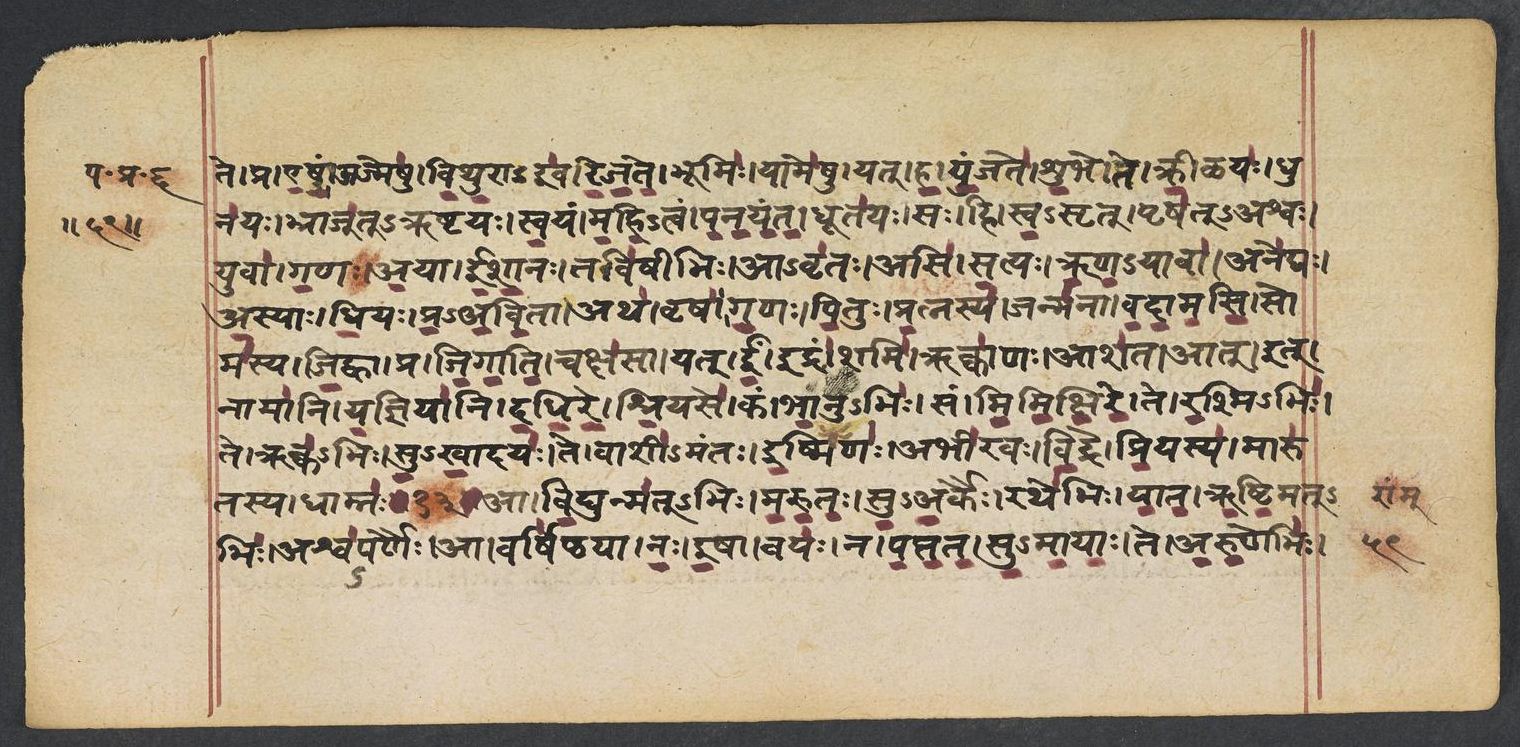
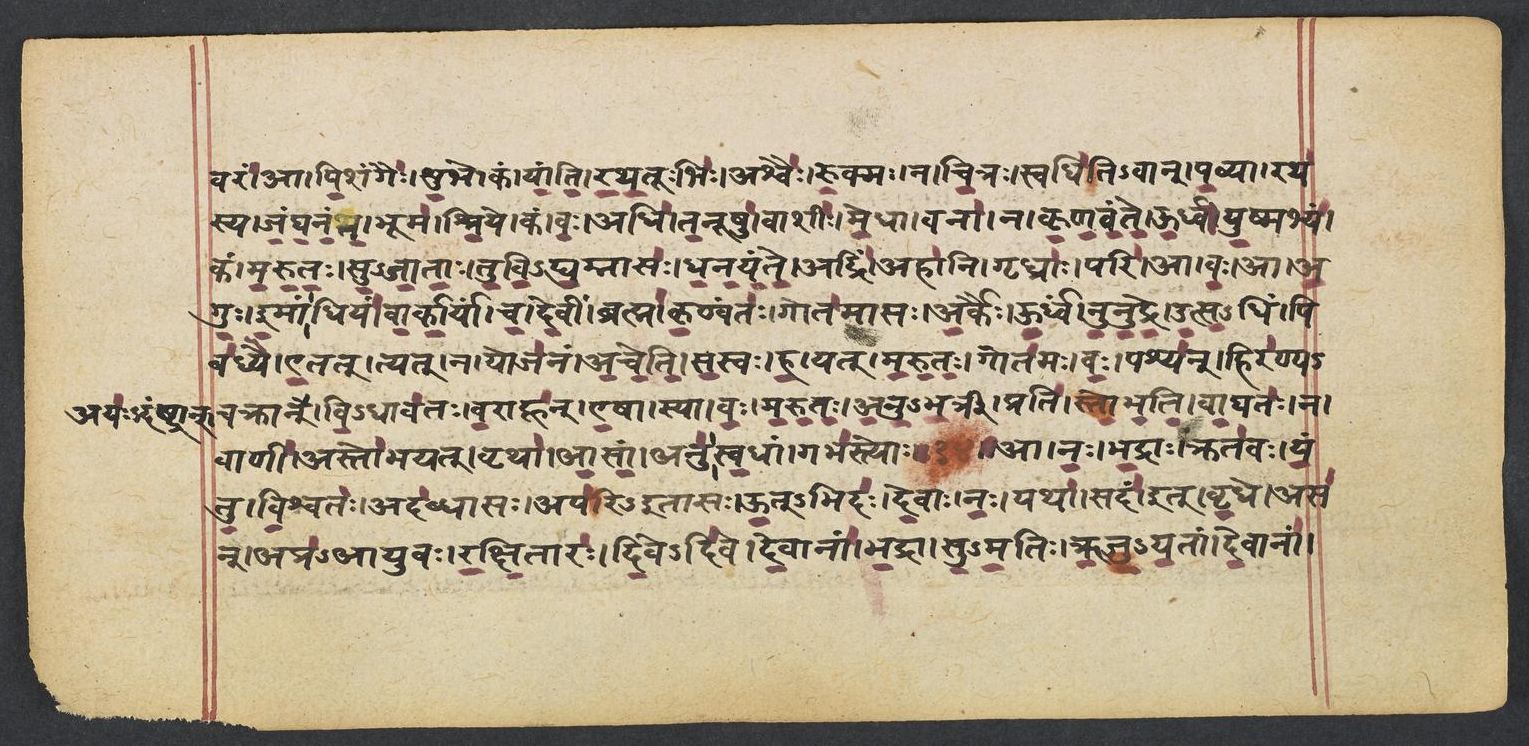
The manuscript shown is Penn Ms. Coll. 390 Item 41 (University of Pennsylvania), an undated paper manuscript of the padapāṭha (the word-by-word recitation text, in which every word is written separately and compounds are split) of the whole Ṛgveda in Devanāgarī, 884 leaves in fascicles, 7-9 lines to the page, accents in red; this hymn stands on fol. 59v-60r. Each section below gives the verses that end on one page; the page boundaries were read on the images (the opening words of every page), not counted out. Where the manuscript is a padapāṭha (the word-by-word recitation text), the section shows Aufrecht's continuous (saṃhitā) text first and, as the edition text, the padapāṭha of the same verses, which is the form written on the page.
How was this verified? (Provenance)
Where on the image
Penn Ms. Coll. 390 Item 41, fol. 59v (OPenn image 61, upper leaf). Checked on the image: the Rigveda text on this page begins in RV 1.87.2 ‹-arcate›. The next page with Rigveda text, fol. 60r, begins in RV 1.88.2 ‹varam ā piśaṅgaiḥ śubhe›. Verse 1.88.1 ends on this page.
1ā vi̱dyunma̍dbhir marutaḥ sva̱rkai rathe̍bhir yāta ṛṣṭi̱madbhi̱r aśva̍parṇaiḥ | ā varṣi̍ṣṭhayā na i̱ṣā vayo̱ na pa̍ptatā sumāyāḥ ||
Compare: Padapāṭha (word-by-word text written in the manuscript; Sansknet e-text via GRETIL)
1ā | vidyunmat-bhiḥ | marutaḥ | su-arkaiḥ | rathebhiḥ | yāta | ṛṣṭimat-bhiḥ | aśva-parṇaiḥ | ā | varṣiṣṭhayā | naḥ | iṣā | vayaḥ | na | paptata | su-māyāḥ
1COME hither, Maruts, on your lightning laden cars, sounding with sweet songs, armed with lances, winged with steeds. Fly unto us with noblest food, like birds, O ye of mighty power.
Where on the image
Penn Ms. Coll. 390 Item 41, fol. 60r (OPenn image 61, lower leaf). Checked on the image: the Rigveda text on this page begins in RV 1.88.2 ‹varam ā piśaṅgaiḥ śubhe›. The next page with Rigveda text, fol. 60v, begins in RV 1.89.2 ‹rātiḥ abhi naḥ ni›. Verses 1.88.2-6 end on this page; 1.88.2 begins on fol. 59v.
2te̍ 'ru̱ṇebhi̱r vara̱m ā pi̱śaṅgai̍ḥ śu̱bhe kaṁ yā̍nti ratha̱tūrbhi̱r aśvai̍ḥ | ru̱kmo na ci̱traḥ svadhi̍tīvān pa̱vyā ratha̍sya jaṅghananta̱ bhūma̍ ||
3śri̱ye kaṁ vo̱ adhi̍ ta̱nūṣu̱ vāśī̍r me̱dhā vanā̱ na kṛ̍ṇavanta ū̱rdhvā | yu̱ṣmabhya̱ṁ kam ma̍rutaḥ sujātās tuvidyu̱mnāso̍ dhanayante̱ adri̍m ||
4ahā̍ni̱ gṛdhrā̱ḥ pary ā va̱ āgu̍r i̱māṁ dhiya̍ṁ vārkā̱ryāṁ ca̍ de̱vīm | brahma̍ kṛ̱ṇvanto̱ gota̍māso a̱rkair ū̱rdhvaṁ nu̍nudra utsa̱dhim piba̍dhyai ||
5e̱tat tyan na yoja̍nam aceti sa̱svar ha̱ yan ma̍ruto̱ gota̍mo vaḥ | paśya̱n hira̍ṇyacakrā̱n ayo̍daṁṣṭrān vi̱dhāva̍to va̱rāhū̍n ||
6e̱ṣā syā vo̍ maruto 'nubha̱rtrī prati̍ ṣṭobhati vā̱ghato̱ na vāṇī̍ | asto̍bhaya̱d vṛthā̍sā̱m anu̍ sva̱dhāṁ gabha̍styoḥ ||
Compare: Padapāṭha (word-by-word text written in the manuscript; Sansknet e-text via GRETIL)
2te | aruṇebhiḥ | varam | ā | piśaṅgaiḥ | śubhe | kam | yānti | rathatūḥ-bhiḥ | aśvaiḥ | rukmaḥ | na | citraḥ | svadhiti-vān | pavyā | rathasya | jaṅghananta | bhūma
3śriye | kam | vaḥ | adhi | tanūṣu | vāśīḥ | medhā | vanā | na | kṛṇavante | ūrdhvā | yuṣmabhyam | kam | marutaḥ | su-jātāḥ | tuvi-dyumnāsaḥ | dhanayante | adrim
4ahāni | gṛdhrāḥ | pari | ā | vaḥ | ā | aguḥ | imām | dhiyam | vārkāryām | ca | devīm | brahma | kṛṇvantaḥ | gotamāsaḥ | arkaiḥ | ūrdhvam | nunudre | utsa-dhim | pibadhyai
5etat | tyat | na | yojanam | aceti | sasvaḥ | ha | yat | marutaḥ | gotamaḥ | vaḥ | paśyan | hiraṇya-cakrān | ayaḥ-daṃṣṭrān | vi-dhāvataḥ | varāhūn
6eṣā | syā | vaḥ | marutaḥ | anu-bhartrī | prati | stobhati | vāghataḥ | na | vāṇī | astobhayat | vṛthā | āsām | anu | svadhām | gabhastyoḥ
2With their red-hued or, haply, tawny coursers which speed their chariots on, they come for glory. Brilliant like gold is he who holds the thunder. Earth have they smitten with the chariot's felly.
3For beauty ye have swords upon your bodies. As they stir woods so may they stir our spirits. For your sake, O ye Maruts very mighty and well-born, have they set the stone, in motion.
4The days went round you and came back O yearners, back, to this prayer and to this solemn worship. The Gotamas making their prayer with singing have pushed the well's lid up to drink the water.
5No hymn was ever known like this aforetime which Gotama sang forth for you, O Maruts, What time upon your golden wheels he saw you, wild boars rushing about with tusks of iron.
6To you this freshening draught of Soma rusheth, O Maruts, like the voice of one who prayeth. It rusheth freely from our hands as these. libations wont to flow.
Notes
- Sanskrit: Aufrecht's edition (1877) with the Vedic accents, as entered by van Nooten and Holland (GRETIL).
- English: Ralph T. H. Griffith, The Hymns of the Rigveda (1889-1892; 2nd ed. 1896-1897), from the VedaWeb digital text; OCR slips in that text were corrected against the printed 2nd edition (data/sources/rigveda/griffith_errata.json).
- Padapāṭha (edition text): Sansknet e-text via GRETIL (CC BY-NC-SA 4.0).
Cite
Sources
- Source: Penn Ms. Coll. 390 Item 41 (undated (catalogued with Penn's 18th-19th c. Vedic manuscripts)), OPenn, Public Domain Mark + Aufrecht's accented text (GRETIL) + Griffith's English (VedaWeb) (holding institution)
- Critical edition: Aufrecht (1877), accented e-text via GRETIL
← previous · → next · v cycle view · l back to library