Rigveda 1.89: To all the gods (a bhadram karnebhih)
Introduction
Rigveda 1.89 is a hymn of 10 verses addressed to all the gods. It stands in book (maṇḍala) 1, a collection of hymns by many families of poets. The Rigveda is the oldest collection of Sanskrit hymns, composed in the second half of the second millennium BCE and handed down orally for many centuries before it was written down.
The manuscript shown is Penn Ms. Coll. 390 Item 41 (University of Pennsylvania), an undated paper manuscript of the padapāṭha (the word-by-word recitation text, in which every word is written separately and compounds are split) of the whole Ṛgveda in Devanāgarī, 884 leaves in fascicles, 7-9 lines to the page, accents in red; this hymn stands on fol. 60r-61r. Each section below gives the verses that end on one page; the page boundaries were read on the images (the opening words of every page), not counted out. Where the manuscript is a padapāṭha (the word-by-word recitation text), the section shows Aufrecht's continuous (saṃhitā) text first and, as the edition text, the padapāṭha of the same verses, which is the form written on the page.
How was this verified? (Provenance)
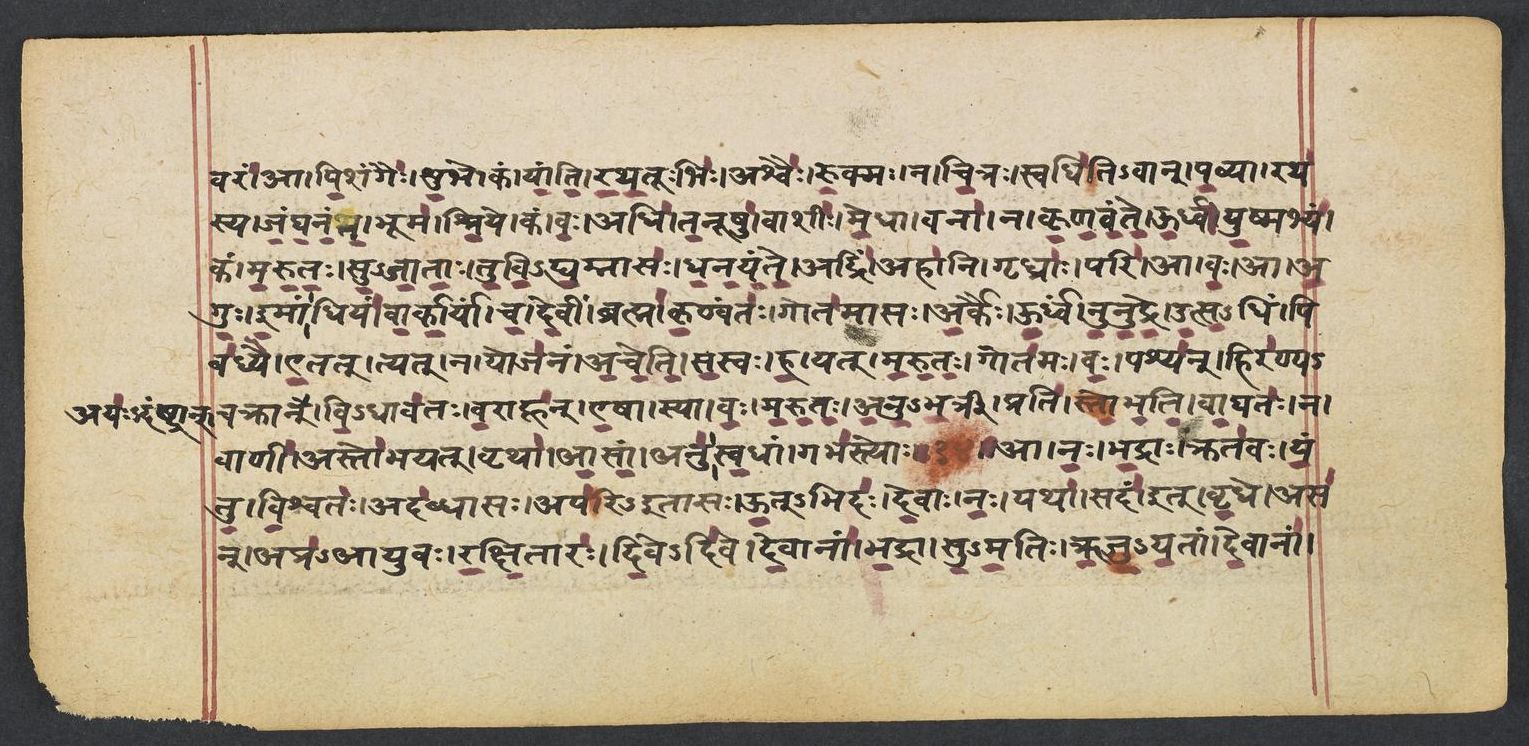
Where on the image
Penn Ms. Coll. 390 Item 41, fol. 60r (OPenn image 61, lower leaf). Checked on the image: the Rigveda text on this page begins in RV 1.88.2 ‹varam ā piśaṅgaiḥ śubhe›. The next page with Rigveda text, fol. 60v, begins in RV 1.89.2 ‹rātiḥ abhi naḥ ni›. Verse 1.89.1 ends on this page.
1ā no̍ bha̱drāḥ krata̍vo yantu vi̱śvato 'da̍bdhāso̱ apa̍rītāsa u̱dbhida̍ḥ | de̱vā no̱ yathā̱ sada̱m id vṛ̱dhe asa̱nn aprā̍yuvo rakṣi̱tāro̍ di̱ve-di̍ve ||
Compare: Padapāṭha (word-by-word text written in the manuscript; Sansknet e-text via GRETIL)
1ā | naḥ | bhadrāḥ | kratavaḥ | yantu | viśvataḥ | adabdhāsaḥ | apari-itāsaḥ | ut-bhidaḥ | devāḥ | naḥ | yathā | sadam | it | vṛdhe | asan | apra-āyuvaḥ | rakṣitāraḥ | dive--dive
1MAY powers auspicious come to us from every side, never deceived, unhindered, and victorious, That the Gods ever may be with us for our gain, our guardians day by day unceasing in their care.
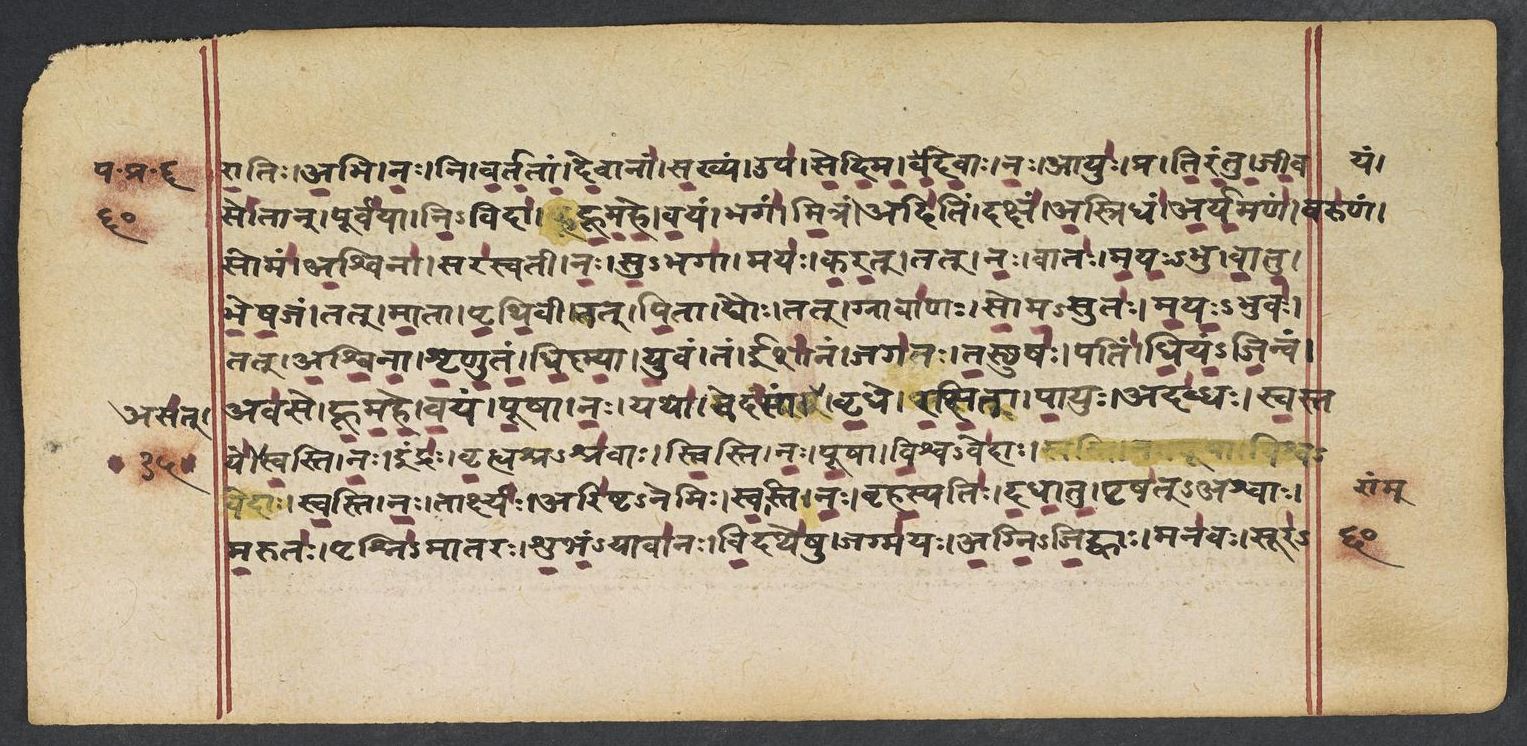
Where on the image
Penn Ms. Coll. 390 Item 41, fol. 60v (OPenn image 62, upper leaf). Checked on the image: the Rigveda text on this page begins in RV 1.89.2 ‹rātiḥ abhi naḥ ni›. The next page with Rigveda text, fol. 61r, begins in RV 1.89.7 ‹-sūra-cakṣasaḥ viśve naḥ devāḥ›. Verses 1.89.2-6 end on this page; 1.89.2 begins on fol. 60r.
2de̱vānā̍m bha̱drā su̍ma̱tir ṛ̍jūya̱tāṁ de̱vānā̍ṁ rā̱tir a̱bhi no̱ ni va̍rtatām | de̱vānā̍ṁ sa̱khyam upa̍ sedimā va̱yaṁ de̱vā na̱ āyu̱ḥ pra ti̍rantu jī̱vase̍ ||
3tān pūrva̍yā ni̱vidā̍ hūmahe va̱yam bhaga̍m mi̱tram adi̍ti̱ṁ dakṣa̍m a̱sridha̍m | a̱rya̱maṇa̱ṁ varu̍ṇa̱ṁ soma̍m a̱śvinā̱ sara̍svatī naḥ su̱bhagā̱ maya̍s karat ||
4tan no̱ vāto̍ mayo̱bhu vā̍tu bheṣa̱jaṁ tan mā̱tā pṛ̍thi̱vī tat pi̱tā dyauḥ | tad grāvā̍ṇaḥ soma̱suto̍ mayo̱bhuva̱s tad a̍śvinā śṛṇutaṁ dhiṣṇyā yu̱vam ||
5tam īśā̍na̱ṁ jaga̍tas ta̱sthuṣa̱s pati̍ṁ dhiyaṁji̱nvam ava̍se hūmahe va̱yam | pū̱ṣā no̱ yathā̱ veda̍sā̱m asa̍d vṛ̱dhe ra̍kṣi̱tā pā̱yur ada̍bdhaḥ sva̱staye̍ ||
6sva̱sti na̱ indro̍ vṛ̱ddhaśra̍vāḥ sva̱sti na̍ḥ pū̱ṣā vi̱śvave̍dāḥ | sva̱sti na̱s tārkṣyo̱ ari̍ṣṭanemiḥ sva̱sti no̱ bṛha̱spati̍r dadhātu ||
Compare: Padapāṭha (word-by-word text written in the manuscript; Sansknet e-text via GRETIL)
2devānām | bhadrā | su-matiḥ | ṛju-yatām | devānām | rātiḥ | abhi | naḥ | ni | vartatām | devānām | sakhyam | upa | sedima | vayam | devāḥ | naḥ | āyuḥ | pra | tirantu | jīvase
3tān | pūrvayā | ni-vidā | hūmahe | vayam | bhagam | mitram | aditim | dakṣam | asridham | aryamaṇam | varuṇam | somam | aśvinā | sarasvatī | naḥ | su-bhagā | mayaḥ | karat
4tat | naḥ | vātaḥ | mayaḥ-bhu | vātu | bheṣajam | tat | mātā | pṛthivī | tat | pitā | dyauḥ | tat | grāvāṇaḥ | soma-sutaḥ | mayaḥ-bhuvaḥ | tat | aśvinā | śṛṇutam | dhiṣṇyā | yuvam
5tam | īśānam | jagataḥ | tasthuṣaḥ | patim | dhiyam-jinvam | avase | hūmahe | vayam | pūṣā | naḥ | yathā | vedasam | asat | vṛdhe | rakṣitā | pāyuḥ | adabdhaḥ | svastaye
6svasti | naḥ | indraḥ | vṛddha-śravāḥ | svasti | naḥ | pūṣā | viśva-vedāḥ | svasti | naḥ | tārkṣyaḥ | ariṣṭa-nemiḥ | svasti | naḥ | bṛhaspatiḥ | dadhātu
2May the auspicious favour of the Gods be ours, on us descend the bounty of the righteous Gods. The friendship of the Gods have we devoutly sought: so may the Gods extend our life that we may live.
3We call them hither with a hymn of olden time, Bhaga, the friendly Daksha, Mitra, Aditi, Aryaman, Varuṇa, Soma, the Aṣvins. May Sarasvatî, auspicious, grant felicity.
4May the Wind waft to us that pleasant medicine, may Earth our Mother give it, and our Father Heaven, And the joy-giving stones that press the Soma's juice. Aṣvins, may ye, for whom our spirits long, hear this.
5Him we invoke for aid who reigns supreme, the Lord of all that stands or moves, inspirer of the soul, That Pûshan may promote the increase of our wealth, our keeper and our guard infallible for our good.
6Illustrious far and wide, may Indra prosper us: may Pûshan prosper us, the Master of all wealth. May Târkshya with uninjured fellies prosper us: Br̥ihaspati vouchsafe to us prosperity.
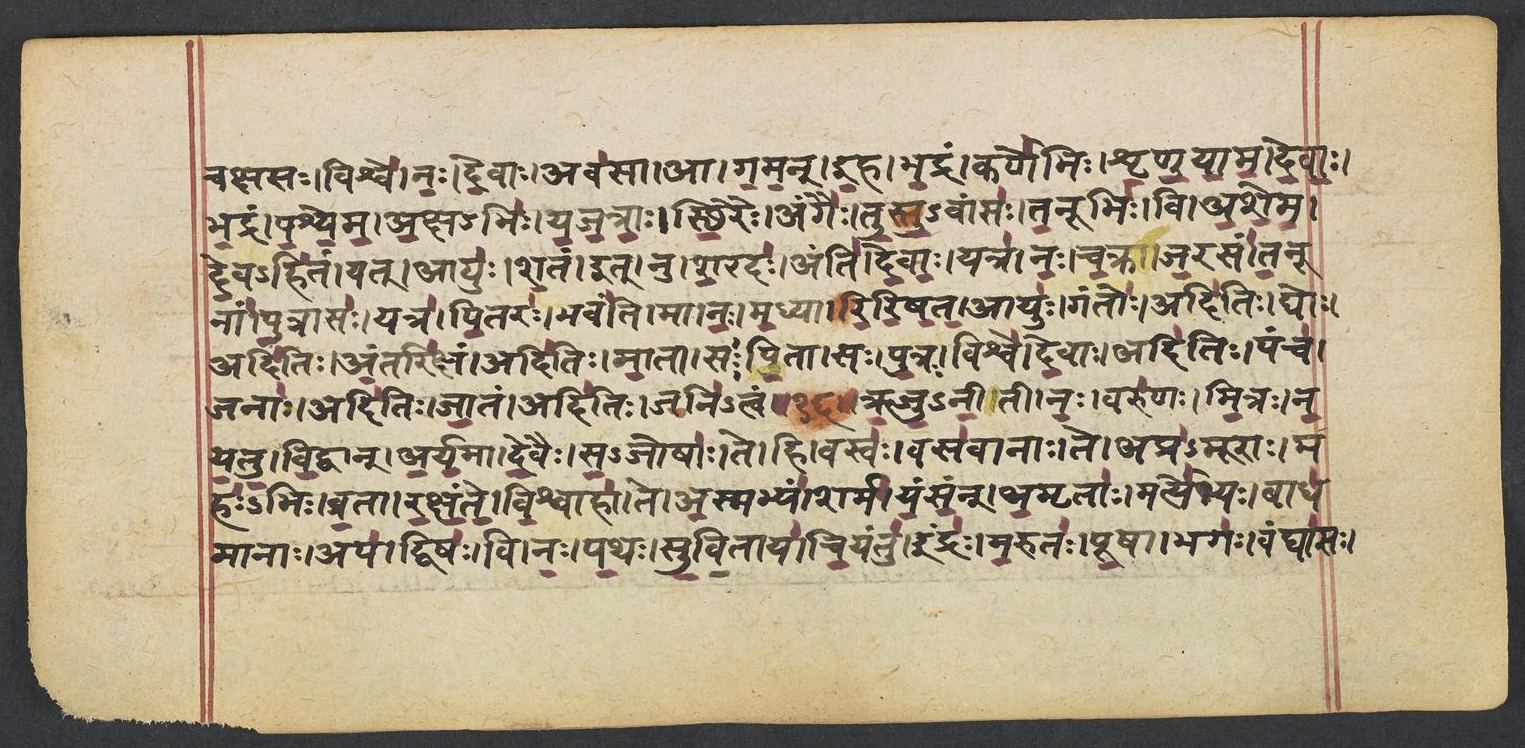
Where on the image
Penn Ms. Coll. 390 Item 41, fol. 61r (OPenn image 62, lower leaf). Checked on the image: the Rigveda text on this page begins in RV 1.89.7 ‹-sūra-cakṣasaḥ viśve naḥ devāḥ›. The next page with Rigveda text, fol. 61v, begins in RV 1.90.5 ‹uta naḥ dhiyaḥ go--agrāḥ›. Verses 1.89.7-10 end on this page; 1.89.7 begins on fol. 60v.
7pṛṣa̍daśvā ma̱ruta̱ḥ pṛśni̍mātaraḥ śubha̱ṁyāvā̍no vi̱dathe̍ṣu̱ jagma̍yaḥ | a̱gni̱ji̱hvā mana̍va̱ḥ sūra̍cakṣaso̱ viśve̍ no de̱vā ava̱sā ga̍mann i̱ha ||
8bha̱draṁ karṇe̍bhiḥ śṛṇuyāma devā bha̱dram pa̍śyemā̱kṣabhi̍r yajatrāḥ | sthi̱rair aṅgai̍s tuṣṭu̱vāṁsa̍s ta̱nūbhi̱r vy a̍śema de̱vahi̍ta̱ṁ yad āyu̍ḥ ||
9śa̱tam in nu śa̱rado̱ anti̍ devā̱ yatrā̍ naś ca̱krā ja̱rasa̍ṁ ta̱nūnā̍m | pu̱trāso̱ yatra̍ pi̱taro̱ bhava̍nti̱ mā no̍ ma̱dhyā rī̍riṣa̱tāyu̱r ganto̍ḥ ||
10adi̍ti̱r dyaur adi̍tir a̱ntari̍kṣa̱m adi̍tir mā̱tā sa pi̱tā sa pu̱traḥ | viśve̍ de̱vā adi̍ti̱ḥ pañca̱ janā̱ adi̍tir jā̱tam adi̍ti̱r jani̍tvam ||
Compare: Padapāṭha (word-by-word text written in the manuscript; Sansknet e-text via GRETIL)
7pṛṣat-aśvāḥ | marutaḥ | pṛśni-mātaraḥ | śubham-yāvānaḥ | vidatheṣu | jagmayaḥ | agni-jihvāḥ | manavaḥ | sūra-cakṣasaḥ | viśve | naḥ | devāḥ | avasā | ā | gaman | iha
8bhadram | karṇebhiḥ | śṛṇuyāma | devāḥ | bhadram | paśyema | akṣa-bhiḥ | yajatrāḥ | sth iraiḥ | aṅgaiḥ | tustu-vāṃsaḥ | tanūbhiḥ | vi | aśema | deva-hitam | yat | āyuḥ
9śatam | it | nu | śaradaḥ | anti | devāḥ | yatra | naḥ | cakra | jarasam | tanūnām | putrāsaḥ | yatra | pitaraḥ | bhavanti | mā | naḥ | madhyā | ririṣata | āyuḥ | gantoḥ
10aditiḥ | dyauḥ | aditiḥ | antarikṣam | aditiḥ | mātā | saḥ | pitā | saḥ | putraḥ | viśve | devāḥ | aditiḥ | pañca | janāḥ | aditiḥ | jātam | aditiḥ | jani-tvam
7The Maruts, Sons of Pr̥iṣni, borne by spotted steeds, moving in glory, oft visiting holy rites, Sages whose tongue is Agni, brilliant as the Sun,– hither let all the Gods for our protection come.
8Gods, may we with our ears listen to what is good, and with our eyes see what is good, ye Holy Ones. With limbs and bodies firm may we extolling you attain the term of life appointed by the Gods.
9A hundred autumns stand before us, O ye Gods, within whose space ye bring our bodies to decay; Within whose space our sons become fathers in turn. Break ye not in the midst our course of fleeting life.
10Aditi is the heaven, Aditi is mid-air, Aditi is the Mother and the Sire and Son. Aditi is all Gods, Aditi five-classed men, Aditi all that hath been bom and shall be born.
Notes
- Sanskrit: Aufrecht's edition (1877) with the Vedic accents, as entered by van Nooten and Holland (GRETIL).
- English: Ralph T. H. Griffith, The Hymns of the Rigveda (1889-1892; 2nd ed. 1896-1897), from the VedaWeb digital text; OCR slips in that text were corrected against the printed 2nd edition (data/sources/rigveda/griffith_errata.json).
- Padapāṭha (edition text): Sansknet e-text via GRETIL (CC BY-NC-SA 4.0).
Cite
Sources
- Source: Penn Ms. Coll. 390 Item 41 (undated (catalogued with Penn's 18th-19th c. Vedic manuscripts)), OPenn, Public Domain Mark + Aufrecht's accented text (GRETIL) + Griffith's English (VedaWeb) (holding institution)
- Critical edition: Aufrecht (1877), accented e-text via GRETIL
← previous · → next · v cycle view · l back to library