Rigveda 1.94: To Agni
Introduction
Rigveda 1.94 is a hymn of 16 verses addressed to Agni. It stands in book (maṇḍala) 1, a collection of hymns by many families of poets. The Rigveda is the oldest collection of Sanskrit hymns, composed in the second half of the second millennium BCE and handed down orally for many centuries before it was written down.
The manuscript shown is Penn Ms. Coll. 390 Item 41 (University of Pennsylvania), an undated paper manuscript of the padapāṭha (the word-by-word recitation text, in which every word is written separately and compounds are split) of the whole Ṛgveda in Devanāgarī, 884 leaves in fascicles, 7-9 lines to the page, accents in red; this hymn stands on fol. 65v-66v. Each section below gives the verses that end on one page; the page boundaries were read on the images (the opening words of every page), not counted out. Where the manuscript is a padapāṭha (the word-by-word recitation text), the section shows Aufrecht's continuous (saṃhitā) text first and, as the edition text, the padapāṭha of the same verses, which is the form written on the page.
How was this verified? (Provenance)
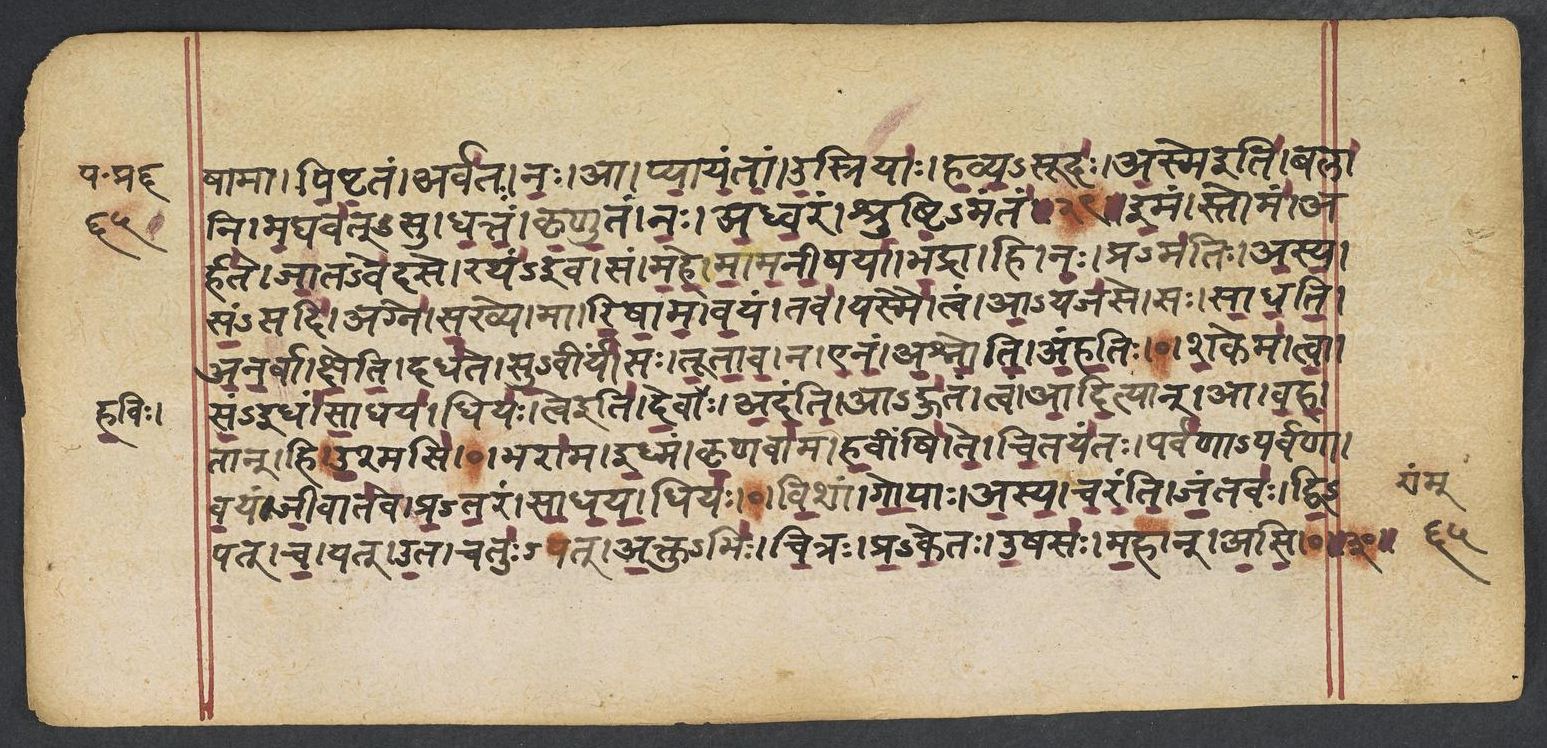
Where on the image
Penn Ms. Coll. 390 Item 41, fol. 65v (OPenn image 67, upper leaf). Checked on the image: the Rigveda text on this page begins in RV 1.93.12 ‹-agnīṣomā pipṛtam arvataḥ naḥ›. The next page with Rigveda text, fol. 66r, begins in RV 1.94.6 ‹tvam adhvaryuḥ uta hotā›. Verses 1.94.1-5 end on this page.
1i̱maṁ stoma̱m arha̍te jā̱tave̍dase̱ ratha̍m iva̱ sam ma̍hemā manī̱ṣayā̍ | bha̱drā hi na̱ḥ prama̍tir asya sa̱ṁsady agne̍ sa̱khye mā ri̍ṣāmā va̱yaṁ tava̍ ||
2yasmai̱ tvam ā̱yaja̍se̱ sa sā̍dhaty ana̱rvā kṣe̍ti̱ dadha̍te su̱vīrya̍m | sa tū̍tāva̱ naina̍m aśnoty aṁha̱tir agne̍ sa̱khye mā ri̍ṣāmā va̱yaṁ tava̍ ||
3śa̱kema̍ tvā sa̱midha̍ṁ sā̱dhayā̱ dhiya̱s tve de̱vā ha̱vir a̍da̱nty āhu̍tam | tvam ā̍di̱tyām̐ ā va̍ha̱ tān hy u1̱̍śmasy agne̍ sa̱khye mā ri̍ṣāmā va̱yaṁ tava̍ ||
4bharā̍me̱dhmaṁ kṛ̱ṇavā̍mā ha̱vīṁṣi̍ te ci̱taya̍nta̱ḥ parva̍ṇā-parvaṇā va̱yam | jī̱vāta̍ve prata̱raṁ sā̍dhayā̱ dhiyo 'gne̍ sa̱khye mā ri̍ṣāmā va̱yaṁ tava̍ ||
5vi̱śāṁ go̱pā a̍sya caranti ja̱ntavo̍ dvi̱pac ca̱ yad u̱ta catu̍ṣpad a̱ktubhi̍ḥ | ci̱traḥ pra̍ke̱ta u̱ṣaso̍ ma̱hām̐ a̱sy agne̍ sa̱khye mā ri̍ṣāmā va̱yaṁ tava̍ ||
Compare: Padapāṭha (word-by-word text written in the manuscript; Sansknet e-text via GRETIL)
1imam | stomam | arhate jāta-vedase | ratham-iva | sam | mahema | manīṣayā | bhadrā | hi | naḥ | pra-matiḥ | asya | sam-sadi | agne | sakhye | mā | riṣāma | vayam | tava
2yasmai | tvam | āyajase | saḥ | sādhati | anarvā | kṣeti | dadhate | su-vīryam | saḥ | tūtāva | na | enam | aśnoti | aṃhatiḥ | agne | sakhye | mā | riṣāma | vayam | tava
3śakema | tvā | sam-idham | sādhaya | dhiyaḥ | tve | devāḥ | haviḥ | adanti | āhutam | tvam | ādityān | ā | vaha | tān | hi | uśmasi | agne | sakhye | mā | riṣāma | vayam | tava
4bharāma | idhmam | kṛṇavāma | havīṃṣi | te | citayantaḥ | parvaṇāparvaṇā | vayam | jīvātave | pra-taram | sādhaya | dhiyaḥ | agne | sakhye | mā | riṣāma | vayam | tava
5viśām | gopāḥ | asya | caranti | jantavaḥ | dvi-pat | ca | yat | uta | catuḥ-pat | aktu-bhiḥ | citraḥ | pra-ketaḥ | uṣasaḥ | mahān | asi | agne | sakhye | mā | riṣāma | vayam | tava
1FOR Jâtavedas worthy of our praise will we frame with our mind this eulogy as 'twere a car. For good, in his assembly, is this care of ours. Let us not, in thy friendship, Agni, suffer harm.
2The man for whom thou sacrificest prospereth, dwelleth without a foe, gaineth heroic might. He waxeth strong, distress never approacheth him. Let us riot, in thy friendship, Agni, suffer harm.
3May we have power to kindle thee. Fulfil our thoughts. In thee the Gods eat the presented offering, Bring hither the Âdityas, for we long for them. Let us not in thy friendship, Agni, suffer harm.
4We will bring fuel and prepare burnt offerings, reminding thee at each successive festival. Fulfil our thought that so we may prolong our lives. Let us not in thy friendship, Agni, suffer harm.
5His ministers move forth, the guardians of the folk, protecting quadruped and biped with their rays. Mighty art thou, the wondrous herald of the Dawn. Let us not in thy friend. ship, Agni, suffer harm.
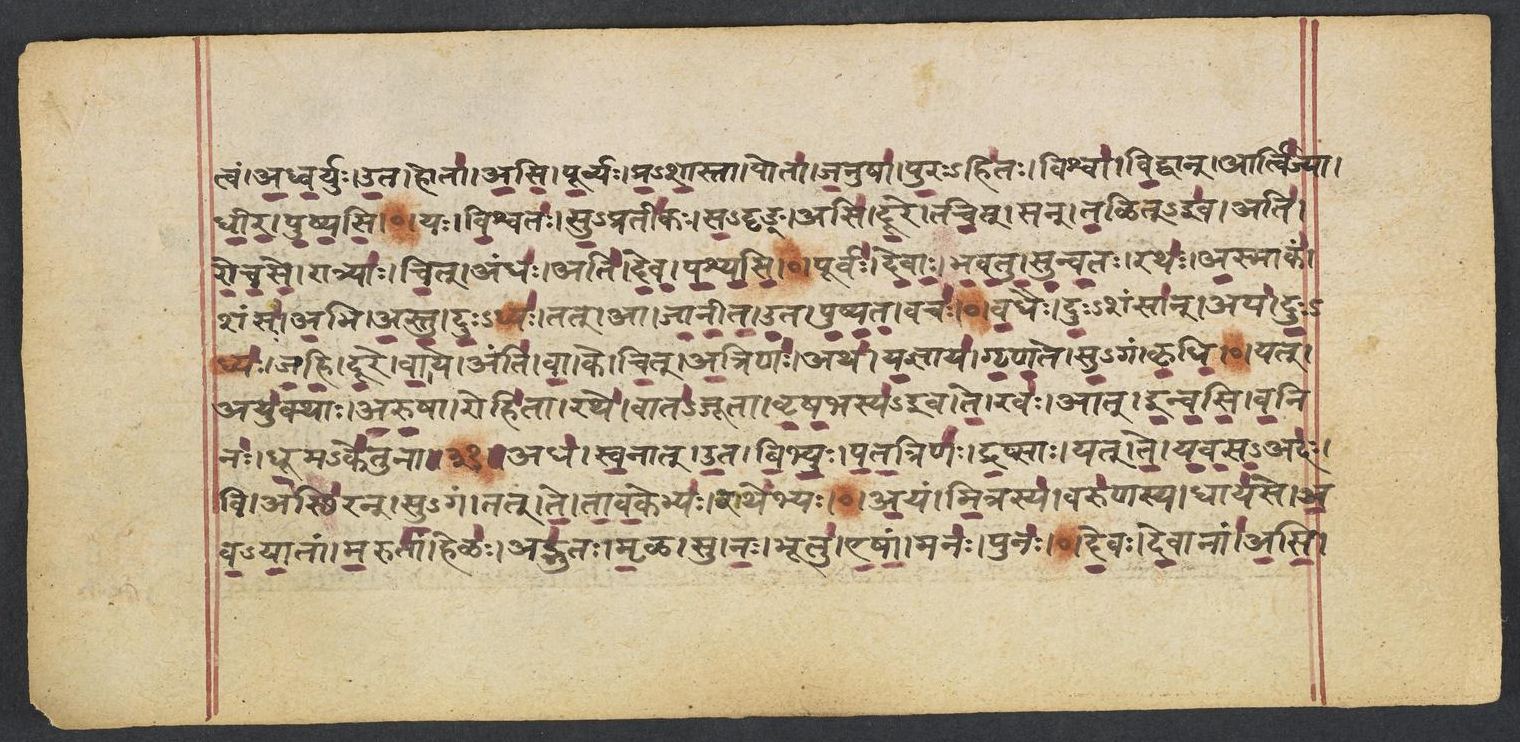
Where on the image
Penn Ms. Coll. 390 Item 41, fol. 66r (OPenn image 67, lower leaf). Checked on the image: the Rigveda text on this page begins in RV 1.94.6 ‹tvam adhvaryuḥ uta hotā›. The next page with Rigveda text, fol. 66v, begins in RV 1.94.13 ‹mitraḥ adbhutaḥ vasuḥ vasūnām›. Verses 1.94.6-12 end on this page.
6tvam a̍dhva̱ryur u̱ta hotā̍si pū̱rvyaḥ pra̍śā̱stā potā̍ ja̱nuṣā̍ pu̱rohi̍taḥ | viśvā̍ vi̱dvām̐ ārtvi̍jyā dhīra puṣya̱sy agne̍ sa̱khye mā ri̍ṣāmā va̱yaṁ tava̍ ||
7yo vi̱śvata̍ḥ su̱pratī̍kaḥ sa̱dṛṅṅ asi̍ dū̱re ci̱t san ta̱ḻid i̱vāti̍ rocase | rātryā̍ś ci̱d andho̱ ati̍ deva paśya̱sy agne̍ sa̱khye mā ri̍ṣāmā va̱yaṁ tava̍ ||
8pūrvo̍ devā bhavatu sunva̱to ratho̱ 'smāka̱ṁ śaṁso̍ a̱bhy a̍stu dū̱ḍhya̍ḥ | tad ā jā̍nīto̱ta pu̍ṣyatā̱ vaco 'gne̍ sa̱khye mā ri̍ṣāmā va̱yaṁ tava̍ ||
9va̱dhair du̱ḥśaṁsā̱m̐ apa̍ dū̱ḍhyo̍ jahi dū̱re vā̱ ye anti̍ vā̱ ke ci̍d a̱triṇa̍ḥ | athā̍ ya̱jñāya̍ gṛṇa̱te su̱gaṁ kṛ̱dhy agne̍ sa̱khye mā ri̍ṣāmā va̱yaṁ tava̍ ||
10yad ayu̍kthā aru̱ṣā rohi̍tā̱ rathe̱ vāta̍jūtā vṛṣa̱bhasye̍va te̱ rava̍ḥ | ād i̍nvasi va̱nino̍ dhū̱make̍tu̱nāgne̍ sa̱khye mā ri̍ṣāmā va̱yaṁ tava̍ ||
11adha̍ sva̱nād u̱ta bi̍bhyuḥ pata̱triṇo̍ dra̱psā yat te̍ yava̱sādo̱ vy asthi̍ran | su̱gaṁ tat te̍ tāva̱kebhyo̱ rathe̱bhyo 'gne̍ sa̱khye mā ri̍ṣāmā va̱yaṁ tava̍ ||
12a̱yam mi̱trasya̱ varu̍ṇasya̱ dhāya̍se 'vayā̱tām ma̱rutā̱ṁ heḻo̱ adbhu̍taḥ | mṛ̱ḻā su no̱ bhūtv e̍ṣā̱m mana̱ḥ puna̱r agne̍ sa̱khye mā ri̍ṣāmā va̱yaṁ tava̍ ||
Compare: Padapāṭha (word-by-word text written in the manuscript; Sansknet e-text via GRETIL)
6tvam | adhvaryuḥ | uta | hotā | asi | pūrvyaḥ | pra-śāstā | potā | januṣā | puraḥ-hitaḥ | viśvā | vidvān | ārtvijyā | dhīra | puṣyasi | agne | sakhye | mā | riṣāma | vayam | tava
7yaḥ | viśvataḥ | su-pratīkaḥ | sa-dṛṅ | asi | dūre | cit | san | taḷit-iva | ati | rocase | rātryāḥ | cit | andhaḥ | ati | deva | paśyasi | agne | sakhye | mā | riṣāma | vayam | tava
8pūrvaḥ | devāḥ | bhavatu | sunvataḥ | rathaḥ | asmākam | śaṃsaḥ | abhi | astu | duḥ-dhyaḥ | tat | ā | jānīta | uta | puṣyata | vacaḥ | agne | sakhye | mā | riṣāma | vayam | tava
9vadhaiḥ | duḥ-śaṃsān | apa | duḥ-dhyaḥ | jahi | dūre | vā | ye | anti | vā | ke | cit | atri ṇaḥ | atha | yajñāya | gṛṇate | su-gam | kṛdhi | agne | sakhye | mā | riṣāma | vayam | tava
10yat | ayukthāḥ | aruṣā | rohitā | rathe | vāta-jūtā | vṛṣabhasya-iva | te | āt | invasi | vaninaḥ | dhūma-ketunā | agne | sakhye | mā | riṣāma | vayam | tava
11adha | svanāt | uta | bibhyuḥ | patatriṇaḥ | drapsā | yat | te | yavasa-adaḥ | vi | asthiran | su-gam | tat | te | tāvakebhyaḥ | rathebhyaḥ | agne | sakhye | mā | riṣāma | vayam | tava
12ayam | mitrasya | varuṇasya | dhāyase | ava-yātām | marutām | heḷaḥ | adbhutaḥ | mṛḷa | su | naḥ | bhūtu | eṣām | manaḥ | punaḥ | agne | sakhye | mā | riṣāma | vayam | tava
6Thou art Presenter and the chief Invoker, thou Director, Purifier, great High Priest by birth. Knowing all priestly work thou perfectest it, Sage. Let us not in thy friendship, Agni, suffer harm.
7Lovely of form art thou, alike on every side; though far, thou shinest brightly as if close at hand. O God, thou seest through even the dark of night. Let us not in thy friendship, Agni, suffer harm.
8Gods, foremost he his car who pours libations out, and let our hymn prevail o'er evil-hearted men. Attend to this our speech and make it prosper well. Let us not in thy friendship, Agni, suffer harm.
9Smite with thy weapons those of evil speech and thought, devouring demons, whether near or far away. Then to the singer give free way for sacrifice. Let us not in thy friendship, Agni, suffer harm.
10When to thy chariot thou hadst yoked two red steeds and two ruddy steeds, wind-sped, thy roar was like a bull's. Thou with smoke-bannered flame attackest forest trees. Let us not in thy friendship, Agni, suffer harm.
11Then at thy roar the very birds are terrified, when, eating-up the grass, thy sparks fly forth abroad. Then is it easy for thee and thy car to pass. Let us not in thy friendship, Agni, suffer harm.
12He hath the Power to soothe Mitra and Varuṇa: wonderful is the Maruts' wrath when they descend. Be gracious; let their hearts he turned to us again. Let us not in thy friendship, Agni, suffer harm.
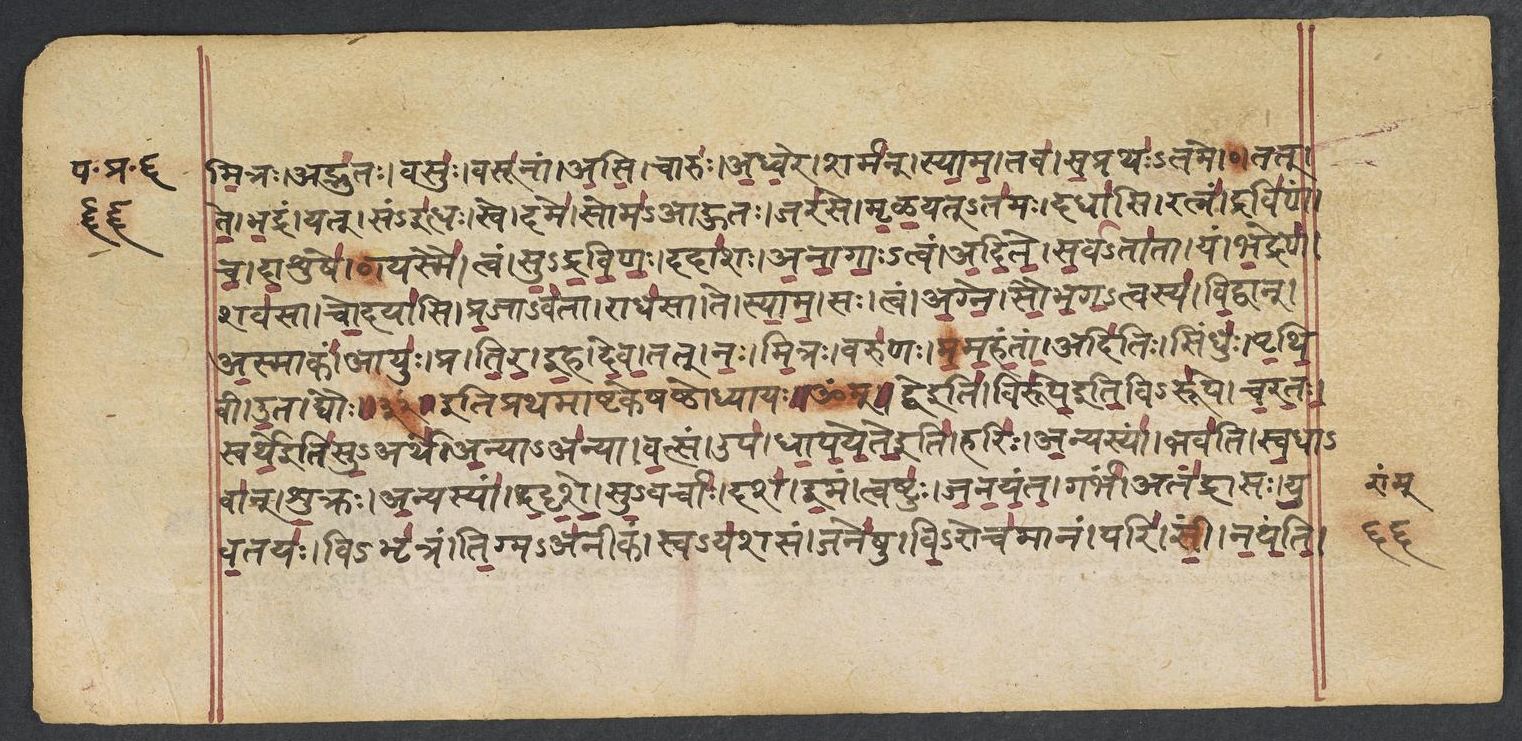
Where on the image
Penn Ms. Coll. 390 Item 41, fol. 66v (OPenn image 68, upper leaf). Checked on the image: the Rigveda text on this page begins in RV 1.94.13 ‹mitraḥ adbhutaḥ vasuḥ vasūnām›. The next page with Rigveda text, fol. 67r, begins in RV 1.95.3 ‹trīṇi jānā pari bhūṣanti›. Verses 1.94.13-16 end on this page; 1.94.13 begins on fol. 66r.
13de̱vo de̱vānā̍m asi mi̱tro adbhu̍to̱ vasu̱r vasū̍nām asi̱ cāru̍r adhva̱re | śarma̍n syāma̱ tava̍ sa̱pratha̍sta̱me 'gne̍ sa̱khye mā ri̍ṣāmā va̱yaṁ tava̍ ||
14tat te̍ bha̱draṁ yat sami̍ddha̱ḥ sve dame̱ somā̍huto̱ jara̍se mṛḻa̱yatta̍maḥ | dadhā̍si̱ ratna̱ṁ dravi̍ṇaṁ ca dā̱śuṣe 'gne̍ sa̱khye mā ri̍ṣāmā va̱yaṁ tava̍ ||
15yasmai̱ tvaṁ su̍draviṇo̱ dadā̍śo 'nāgā̱stvam a̍dite sa̱rvatā̍tā | yam bha̱dreṇa̱ śava̍sā co̱dayā̍si pra̱jāva̍tā̱ rādha̍sā̱ te syā̍ma ||
16sa tvam a̍gne saubhaga̱tvasya̍ vi̱dvān a̱smāka̱m āyu̱ḥ pra ti̍re̱ha de̍va | tan no̍ mi̱tro varu̍ṇo māmahantā̱m adi̍ti̱ḥ sindhu̍ḥ pṛthi̱vī u̱ta dyauḥ ||
Compare: Padapāṭha (word-by-word text written in the manuscript; Sansknet e-text via GRETIL)
13devaḥ | devānām | asi | mitraḥ | adbhutaḥ | vasuḥ | vasūnām | asi | cāruḥ | adhvare | śarman | syāma | tava | saprathaḥ-tame | agne | sakhye | mā | riṣāma | vayam | tava
14tat | te | bhadram | yat | sam-iddhaḥ | sve | dame | soma-āhutaḥ | jarase | mṛḷayat-tamaḥ | dadhāsi | ratnam | draviṇam | ca | dāśuṣe | agne | sakhye | mā | riṣāma | vayam | tava
15yasmai | tvam | su-draviṇaḥ | dadāśaḥ | anāgāḥ-tvam | adite | sarva-tātā | yam | bhadreṇa | śavasā | codayāsi | prajāvatā | rādhasā | te | syāma
16saḥ | tvam | agne | saubhaga-tvasya | vidvān | asmākam | āyuḥ | pra | tira | iha | deva | tat | naḥ | mitraḥ | varuṇaḥ | mamahantām | aditiḥ | sindhuḥ | pṛthivī | uta | dyauḥ
13Thou art a God, thou art the wondrous Friend of Gods, the Vasu of the Vasus, fair in sacrifice. Under, thine own most wide protection may we dwell. Let us not in thy friendship, Agni, suffer harm.
14This is thy grace that, kindled in thine own abode, invoked with Soma thou soundest forth most benign, Thou givest wealth and treasure to the worshipper. Let us not in thy friendship, Agni, suffer harm.
15To whom thou, Lord of goodly riches, grantest freedom from every sin with perfect wholeness, Whom with good strength thou quikenest, with children and wealth-may we be they, Eternal Being.
16Such, Agni, thou who knowest all good fortune, God, lengthen here the days of our existence. This prayer of ours may Varuṇa grant, and Mitra, and Aditi and Sindhu, Earth and Heaven.
Notes
- Sanskrit: Aufrecht's edition (1877) with the Vedic accents, as entered by van Nooten and Holland (GRETIL).
- English: Ralph T. H. Griffith, The Hymns of the Rigveda (1889-1892; 2nd ed. 1896-1897), from the VedaWeb digital text; OCR slips in that text were corrected against the printed 2nd edition (data/sources/rigveda/griffith_errata.json).
- Padapāṭha (edition text): Sansknet e-text via GRETIL (CC BY-NC-SA 4.0).
Cite
Sources
- Source: Penn Ms. Coll. 390 Item 41 (undated (catalogued with Penn's 18th-19th c. Vedic manuscripts)), OPenn, Public Domain Mark + Aufrecht's accented text (GRETIL) + Griffith's English (VedaWeb) (holding institution)
- Critical edition: Aufrecht (1877), accented e-text via GRETIL
← previous · → next · v cycle view · l back to library