Rigveda 1.95: To Agni
Introduction
Rigveda 1.95 is a hymn of 11 verses addressed to Agni. It stands in book (maṇḍala) 1, a collection of hymns by many families of poets. The Rigveda is the oldest collection of Sanskrit hymns, composed in the second half of the second millennium BCE and handed down orally for many centuries before it was written down.
The manuscript shown is Penn Ms. Coll. 390 Item 41 (University of Pennsylvania), an undated paper manuscript of the padapāṭha (the word-by-word recitation text, in which every word is written separately and compounds are split) of the whole Ṛgveda in Devanāgarī, 884 leaves in fascicles, 7-9 lines to the page, accents in red; this hymn stands on fol. 66v-67v. Each section below gives the verses that end on one page; the page boundaries were read on the images (the opening words of every page), not counted out. Where the manuscript is a padapāṭha (the word-by-word recitation text), the section shows Aufrecht's continuous (saṃhitā) text first and, as the edition text, the padapāṭha of the same verses, which is the form written on the page.
How was this verified? (Provenance)
Where on the image
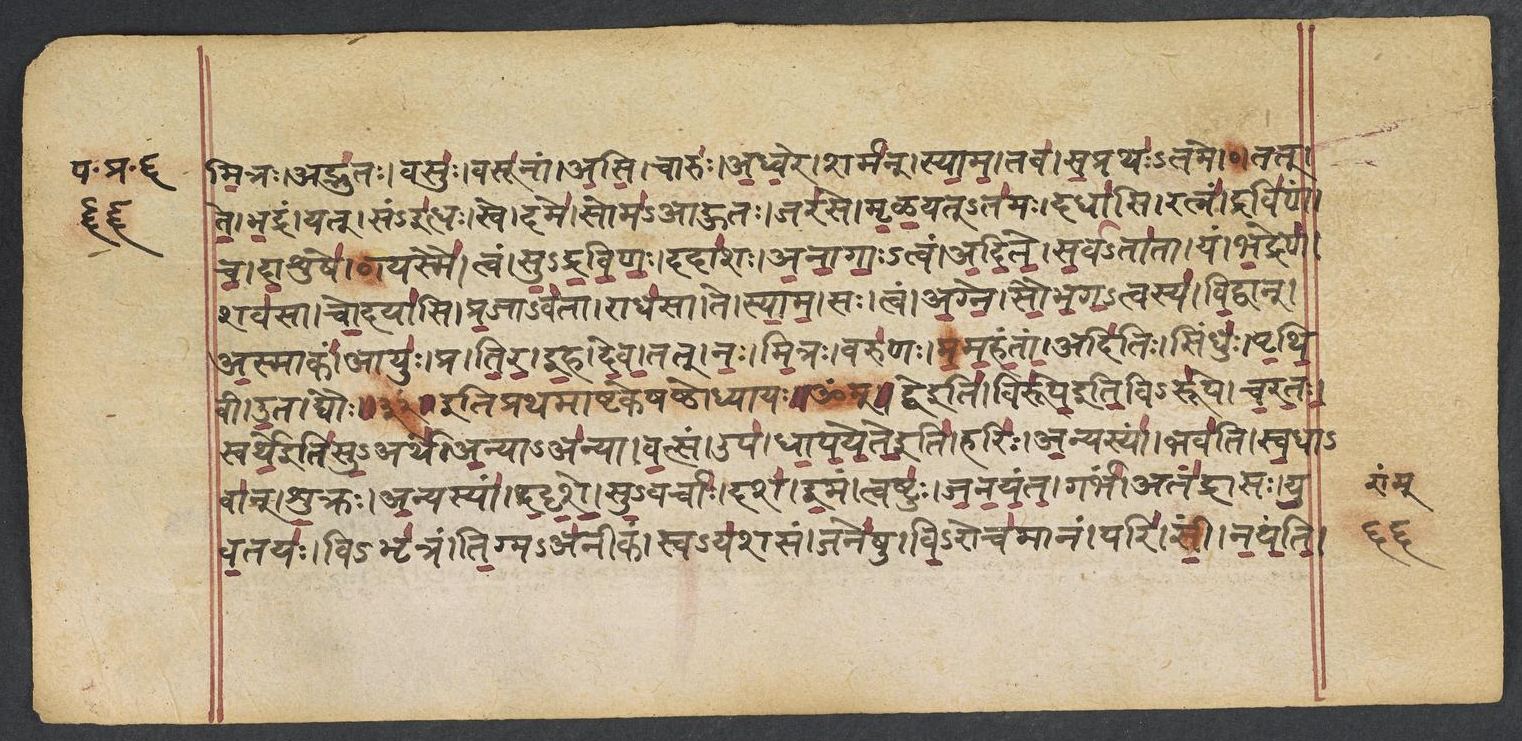
Penn Ms. Coll. 390 Item 41, fol. 66v (OPenn image 68, upper leaf). Checked on the image: the Rigveda text on this page begins in RV 1.94.13 ‹mitraḥ adbhutaḥ vasuḥ vasūnām›. The next page with Rigveda text, fol. 67r, begins in RV 1.95.3 ‹trīṇi jānā pari bhūṣanti›. Verses 1.95.1-2 end on this page.
1dve virū̍pe carata̱ḥ svarthe̍ a̱nyānyā̍ va̱tsam upa̍ dhāpayete | hari̍r a̱nyasyā̱m bhava̍ti sva̱dhāvā̍ñ chu̱kro a̱nyasyā̍ṁ dadṛśe su̱varcā̍ḥ ||
2daśe̱maṁ tvaṣṭu̍r janayanta̱ garbha̱m ata̍ndrāso yuva̱tayo̱ vibhṛ̍tram | ti̱gmānī̍ka̱ṁ svaya̍śasa̱ṁ jane̍ṣu vi̱roca̍māna̱m pari̍ ṣīṁ nayanti ||
Compare: Padapāṭha (word-by-word text written in the manuscript; Sansknet e-text via GRETIL)
1dve | virūpeitivi-rūpe | carataḥ | svartheitisu-arthe | anyāanyā | vatsam | upa | dhāpayeteiti | hariḥ | anyasyām | bhavati | svadhāvān | śukraḥ | anyasyām | dadṛśe | su-varcāḥ
2daśa | imam | tvaṣṭuḥ | janayanta | garbham | atandrāsaḥ | yuvatayaḥ | vi-bhṛtram | tigma-anīkam | sva-yaśasam | janeṣu | vi-rocamānam | pari | sīm | nayanti
1To fair goals travel Two unlike in semblance: each in succession nourishes an infant. One bears a Godlike Babe of golden colour; bright and fair-shining, is he with the other.
2Tvashṭar's ten daughters, vigilant and youthful, produced this Infant borne to sundry quarters. They bear around him whose long flames are pointed, fulgent among mankind with native splendour.
Where on the image
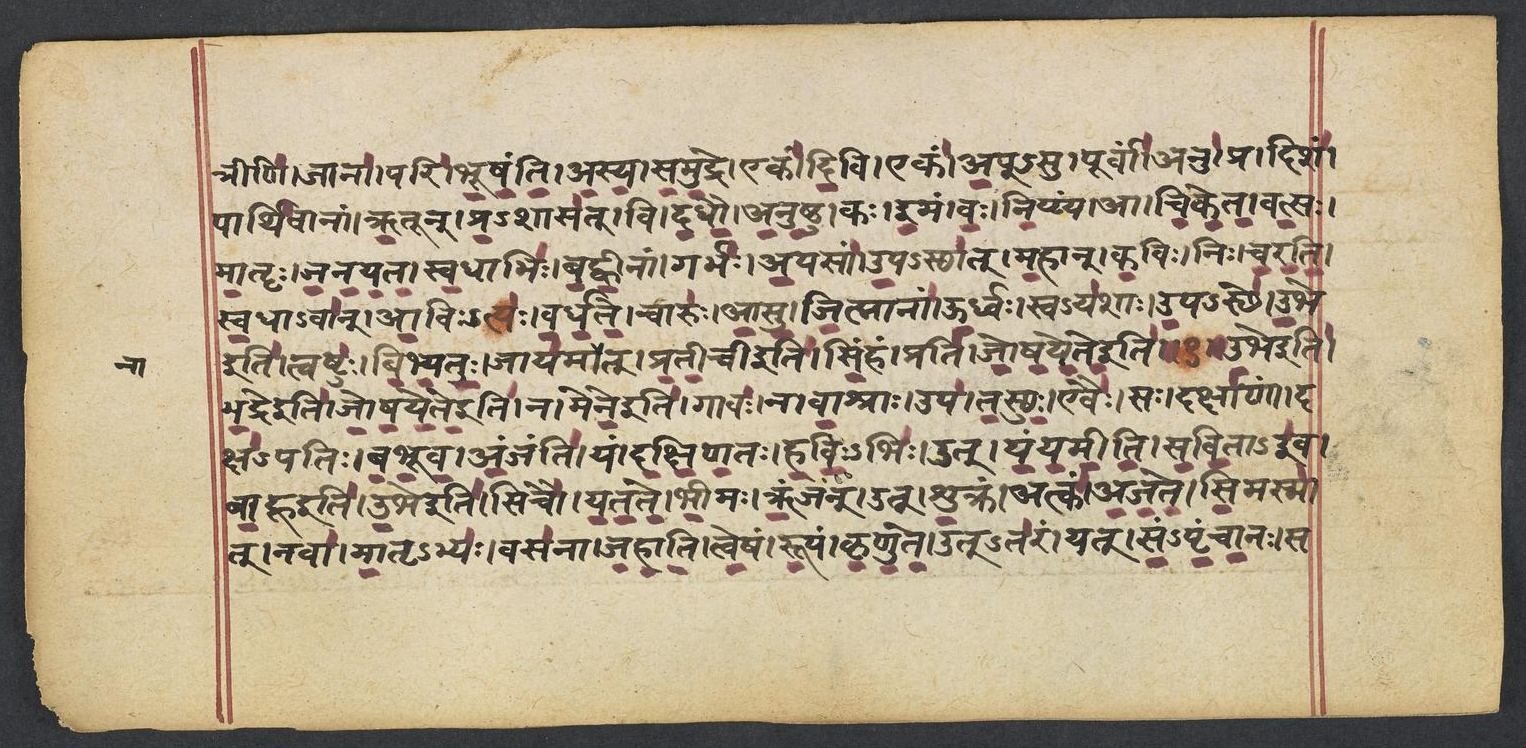
Penn Ms. Coll. 390 Item 41, fol. 67r (OPenn image 68, lower leaf). Checked on the image: the Rigveda text on this page begins in RV 1.95.3 ‹trīṇi jānā pari bhūṣanti›. The next page with Rigveda text, fol. 67v, begins in RV 1.95.8 ‹-sadane go--bhiḥ at-bhiḥ kaviḥ›. Verses 1.95.3-7 end on this page.
3trīṇi̱ jānā̱ pari̍ bhūṣanty asya samu̱dra eka̍ṁ di̱vy eka̍m a̱psu | pūrvā̱m anu̱ pra diśa̱m pārthi̍vānām ṛ̱tūn pra̱śāsa̱d vi da̍dhāv anu̱ṣṭhu ||
4ka i̱maṁ vo̍ ni̱ṇyam ā ci̍keta va̱tso mā̱tṝr ja̍nayata sva̱dhābhi̍ḥ | ba̱hvī̱nāṁ garbho̍ a̱pasā̍m u̱pasthā̍n ma̱hān ka̱vir niś ca̍rati sva̱dhāvā̍n ||
5ā̱viṣṭyo̍ vardhate̱ cāru̍r āsu ji̱hmānā̍m ū̱rdhvaḥ svaya̍śā u̱pasthe̍ | u̱bhe tvaṣṭu̍r bibhyatu̱r jāya̍mānāt pratī̱cī si̱ṁham prati̍ joṣayete ||
6u̱bhe bha̱dre jo̍ṣayete̱ na mene̱ gāvo̱ na vā̱śrā upa̍ tasthu̱r evai̍ḥ | sa dakṣā̍ṇā̱ṁ dakṣa̍patir babhūvā̱ñjanti̱ yaṁ da̍kṣiṇa̱to ha̱virbhi̍ḥ ||
7ud ya̍ṁyamīti savi̱teva̍ bā̱hū u̱bhe sicau̍ yatate bhī̱ma ṛ̱ñjan | uc chu̱kram atka̍m ajate si̱masmā̱n navā̍ mā̱tṛbhyo̱ vasa̍nā jahāti ||
Compare: Padapāṭha (word-by-word text written in the manuscript; Sansknet e-text via GRETIL)
3trīṇi | jānā | pari | bhūṣanti | asya | samudre | ekam | divi | ekam | ap-su | pūrvām | anu | pra | diśam | pārthivānām | ṛtūn | pra-śāsat | vi | dadhau | anuṣṭhu
4kaḥ | imam | vaḥ | niṇyam | ā | ciketa | vatsaḥ | mātṝḥ | janayata | sva-dhābhiḥ | bahvīnām | garbhaḥ | apasām | upa-sthāt | mahān | kaviḥ | niḥ | carati | svadhāvān
5āviḥ-tyaḥ | vardhate | cāruḥ | āsu | jihmānām | ūrdhvaḥ | sva-yaśāḥ | upa-sthe | ubhe iti | tvaṣṭuḥ | bibhyatuḥ | jāyamānāt | pratīcī iti | siṃham | prati | joṣayeteiti
6ubhe iti | bhadre iti | joṣayeteiti | na | mene | gāvaḥ | na | vāśrāḥ | upa | tasthuḥ | evaiḥ | saḥ | dakṣāṇām | dakṣa-patiḥ | babhūva | añjanti | yam | dakṣiṇataḥ | haviḥ-bhiḥ
7ut | yaṃyamīti | savitāiva | bāhū iti | ubhe iti | sicau | yatate | bhīmaḥ | ṛñjan | ut | śukram | atkam | ajate | simasmāt | navā | mātṛ-bhyaḥ | vasanā | jahāti
3Three several places of his birth they honour, in mid-air, in the heaven, and in the waters. Governing in the east of earthly regions, the seasons hath he stablished in their order.
4Who of you knows this secret One? The Infant by his own nature hath brought forth his Mothers. The germ of many, from the waters' bosom he goes forth, wise and great, of Godlike nature.
5Visible, fair, he grows in native brightness uplifted in the lap of waving waters. When he was born both Tvashṭar's worlds were frightened: they turn to him and reverence the Lion.
6The Two auspicious Ones, like women, tend him: like lowing cows they seek him in their manner. He is the Lord of Might among the mighty; him, on the right, they balm with their oblations.
7Like Savitar his arms with might he stretches; awful, he strives grasping the world's two borders. He forces out from all a brilliant vesture, yea, from his Mothers draws he forth new raiment.
Where on the image
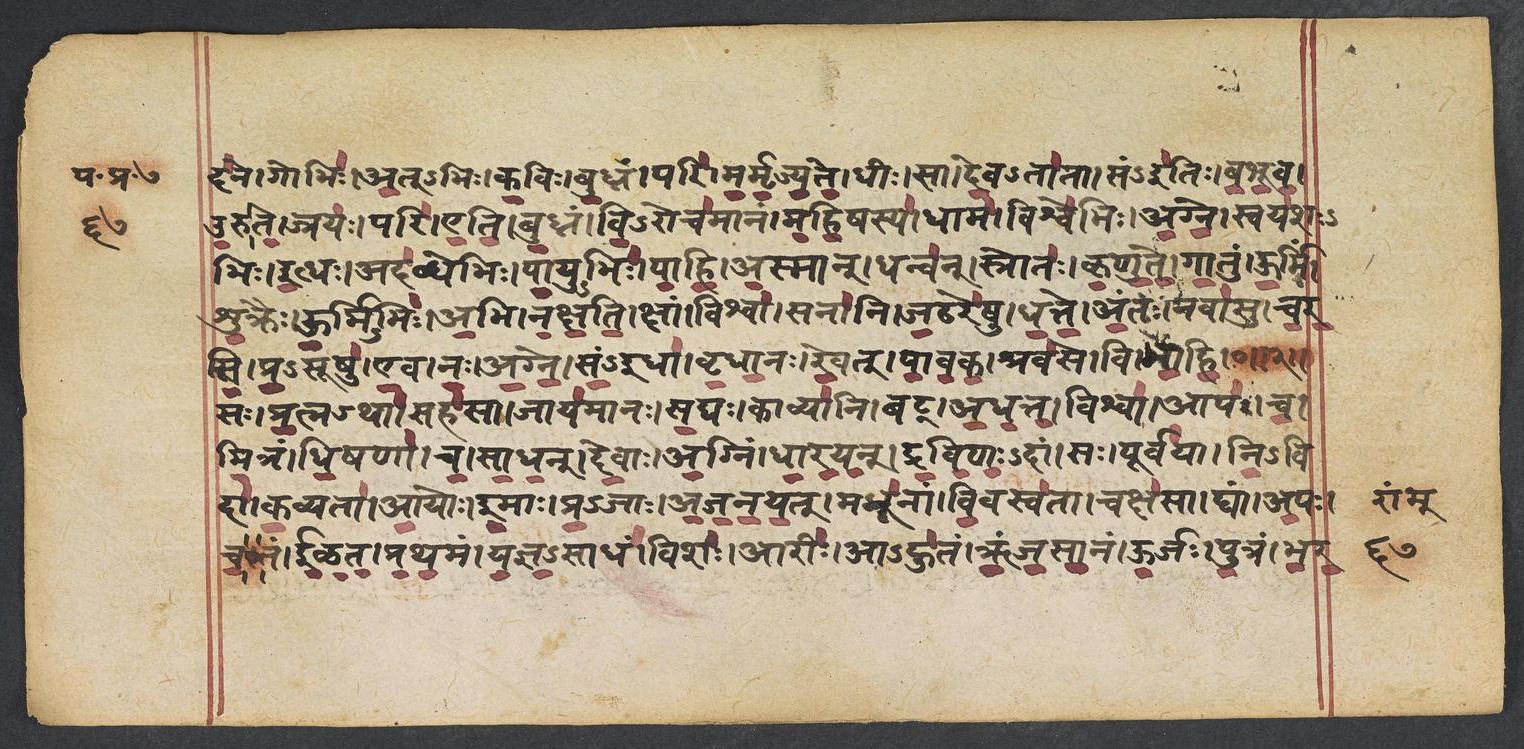
Penn Ms. Coll. 390 Item 41, fol. 67v (OPenn image 69, upper leaf). Checked on the image: the Rigveda text on this page begins in RV 1.95.8 ‹-sadane go--bhiḥ at-bhiḥ kaviḥ›. The next page with Rigveda text, fol. 68r, begins in RV 1.96.3 ‹-bharatam sṛpra-dānum devāḥ agnim›. Verses 1.95.8-11 end on this page; 1.95.8 begins on fol. 67r.
8tve̱ṣaṁ rū̱paṁ kṛ̍ṇuta̱ utta̍ra̱ṁ yat sa̍mpṛñcā̱naḥ sada̍ne̱ gobhi̍r a̱dbhiḥ | ka̱vir bu̱dhnam pari̍ marmṛjyate̱ dhīḥ sā de̱vatā̍tā̱ sami̍tir babhūva ||
9u̱ru te̱ jraya̱ḥ pary e̍ti bu̱dhnaṁ vi̱roca̍mānam mahi̱ṣasya̱ dhāma̍ | viśve̍bhir agne̱ svaya̍śobhir i̱ddho 'da̍bdhebhiḥ pā̱yubhi̍ḥ pāhy a̱smān ||
10dhanva̱n srota̍ḥ kṛṇute gā̱tum ū̱rmiṁ śu̱krair ū̱rmibhi̍r a̱bhi na̍kṣati̱ kṣām | viśvā̱ sanā̍ni ja̱ṭhare̍ṣu dhatte̱ 'ntar navā̍su carati pra̱sūṣu̍ ||
11e̱vā no̍ agne sa̱midhā̍ vṛdhā̱no re̱vat pā̍vaka̱ śrava̍se̱ vi bhā̍hi | tan no̍ mi̱tro varu̍ṇo māmahantā̱m adi̍ti̱ḥ sindhu̍ḥ pṛthi̱vī u̱ta dyauḥ ||
Compare: Padapāṭha (word-by-word text written in the manuscript; Sansknet e-text via GRETIL)
8tveṣam | rūpam | kṛṇute | ut-taram | yat | sam-pṛñcānaḥ | sadane | go--bhiḥ | at-bhiḥ | kaviḥ | budhnam | pari | marmṛjyate | dhīḥ | sā | devatātā | sam-itiḥ | babhūva
9uru | te | jrayaḥ | pari | eti | budhnam | vi-rocamānam | mahiṣasya | dhāma | viśvebhiḥ | agne | svayaśaḥ-bhiḥ | iddhaḥ | adabdhebhiḥ | pāyu-bhiḥ | pāhi | asmān
10dhanvan | srotaḥ | kṛṇute | gatum | ūrmim | śukraiḥ | ūrmi-bhiḥ | abhi | nakṣati | kṣām | viśvā | sanāni | jaṭhareṣu | dhatte | antaḥ | navāsu | carati | pra-sūṣu
11eva | naḥ | agne | sam-idhā | vṛdhānaḥ | revat | pāvaka | śravase | vi | bhāhi | tat | naḥ | mi traḥ | varuṇaḥ | mamahantām | aditiḥ | sindhuḥ | pṛthivī | uta | dyauḥ
8He makes him a most noble form of splendour, decking him in his home with milk and waters. The Sage adorns the depths of air with wisdom . this is the meeting where the Gods are worshipped.
9Wide through the firmament spreads forth triumphant the far-resplendent strength of' thee the Mighty. Kindled by us do thou preserve us, Agni, with all thy self-bright undiminished succours.
10In dry spots he makes stream, and course, and torrent, and inundates the earth with floods that glisten. All ancient things within his maw he gathers, and moves among the new fresh-sprouting grasses.
11Fed with our fuel, purifying Agni, so blaze to us auspiciously for glory. This prayer of ours may Varuṇa grant, and Mitra, and Aditi and Sindhu, Earth and Heaven.
Notes
- Sanskrit: Aufrecht's edition (1877) with the Vedic accents, as entered by van Nooten and Holland (GRETIL).
- English: Ralph T. H. Griffith, The Hymns of the Rigveda (1889-1892; 2nd ed. 1896-1897), from the VedaWeb digital text; OCR slips in that text were corrected against the printed 2nd edition (data/sources/rigveda/griffith_errata.json).
- Padapāṭha (edition text): Sansknet e-text via GRETIL (CC BY-NC-SA 4.0).
Cite
Sources
- Source: Penn Ms. Coll. 390 Item 41 (undated (catalogued with Penn's 18th-19th c. Vedic manuscripts)), OPenn, Public Domain Mark + Aufrecht's accented text (GRETIL) + Griffith's English (VedaWeb) (holding institution)
- Critical edition: Aufrecht (1877), accented e-text via GRETIL
← previous · → next · v cycle view · l back to library