Rigveda 1.96: To Agni giver of goods
Introduction
Rigveda 1.96 is a hymn of 9 verses addressed to Agni giver of goods. It stands in book (maṇḍala) 1, a collection of hymns by many families of poets. The Rigveda is the oldest collection of Sanskrit hymns, composed in the second half of the second millennium BCE and handed down orally for many centuries before it was written down.
The manuscript shown is Penn Ms. Coll. 390 Item 41 (University of Pennsylvania), an undated paper manuscript of the padapāṭha (the word-by-word recitation text, in which every word is written separately and compounds are split) of the whole Ṛgveda in Devanāgarī, 884 leaves in fascicles, 7-9 lines to the page, accents in red; this hymn stands on fol. 67v-68r. Each section below gives the verses that end on one page; the page boundaries were read on the images (the opening words of every page), not counted out. Where the manuscript is a padapāṭha (the word-by-word recitation text), the section shows Aufrecht's continuous (saṃhitā) text first and, as the edition text, the padapāṭha of the same verses, which is the form written on the page.
How was this verified? (Provenance)
Where on the image
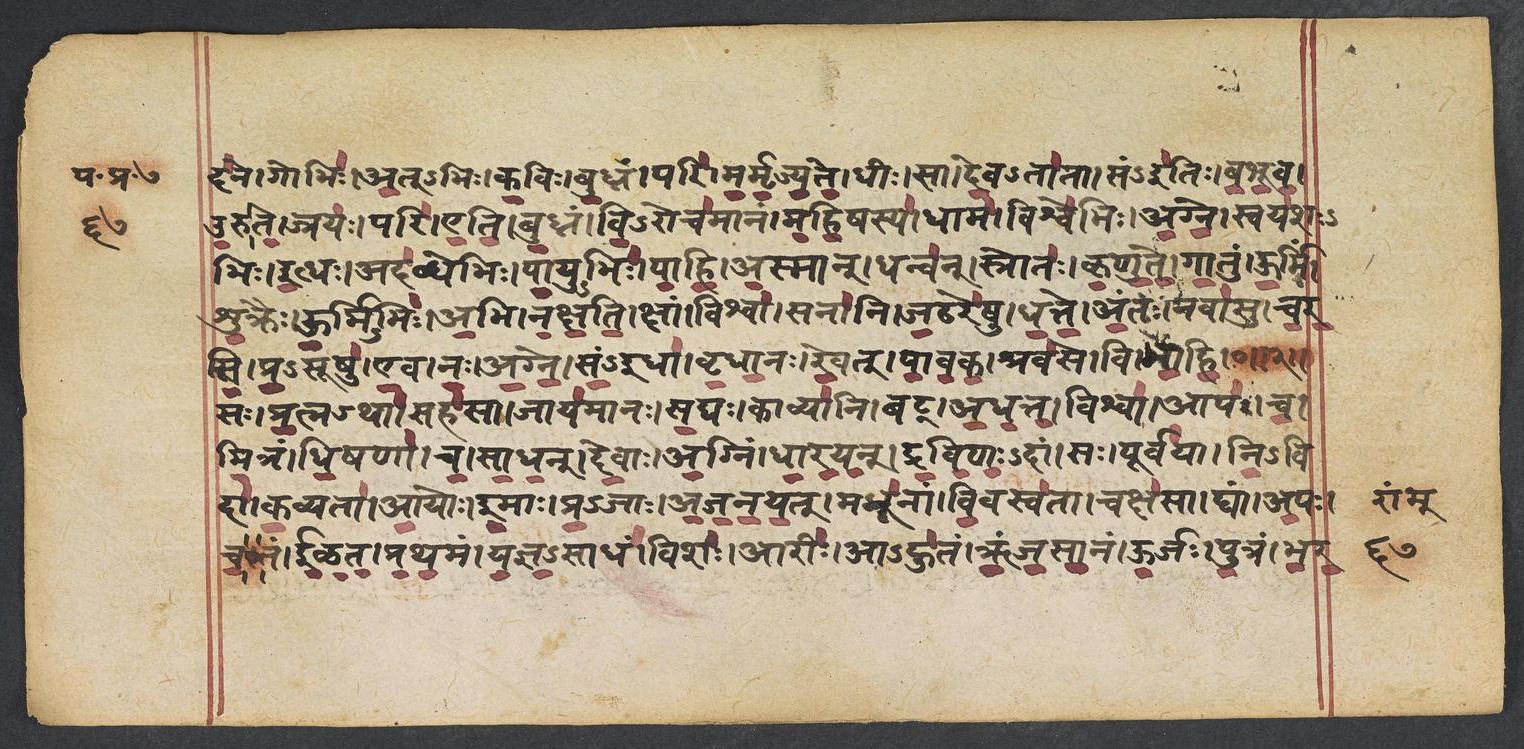
Penn Ms. Coll. 390 Item 41, fol. 67v (OPenn image 69, upper leaf). Checked on the image: the Rigveda text on this page begins in RV 1.95.8 ‹-sadane go--bhiḥ at-bhiḥ kaviḥ›. The next page with Rigveda text, fol. 68r, begins in RV 1.96.3 ‹-bharatam sṛpra-dānum devāḥ agnim›. Verses 1.96.1-2 end on this page.
1sa pra̱tnathā̱ saha̍sā̱ jāya̍mānaḥ sa̱dyaḥ kāvyā̍ni̱ baḻ a̍dhatta̱ viśvā̍ | āpa̍ś ca mi̱traṁ dhi̱ṣaṇā̍ ca sādhan de̱vā a̱gniṁ dhā̍rayan draviṇo̱dām ||
2sa pūrva̍yā ni̱vidā̍ ka̱vyatā̱yor i̱māḥ pra̱jā a̍janaya̱n manū̍nām | vi̱vasva̍tā̱ cakṣa̍sā̱ dyām a̱paś ca̍ de̱vā a̱gniṁ dhā̍rayan draviṇo̱dām ||
Compare: Padapāṭha (word-by-word text written in the manuscript; Sansknet e-text via GRETIL)
1saḥ | pratna-thā | sahasā | jāyamānaḥ | sadyaḥ | kāvyāni | baṭ | adhatta | viśvā | āpaḥ | ca | mitram | dhiṣaṇā | ca | sādhan | devāḥ | agnim | dhārayan | draviṇaḥ-dām
2saḥ | pūrvayā | ni-vidā | kavyatā | āyoḥ | imāḥ | pra-jāḥ | ajanayat | manūnām | vivasvatā | cakṣasā | dyām | apaḥ | ca | devāḥ | agnim | dhārayan | draviṇaḥ-dām
1HE in the ancient way by strength engendered, lo! straight hath taken to himself all wisdom. The waters and the bowl have made him friendly. The Gods possessed the wealth bestowing Agni.
2At Âyu's ancient call he by his wisdom gave all this progeny of men their being, And, by refulgent light, heaven and the waters. The Gods possessed the wealth. bestowing Agni.
Where on the image
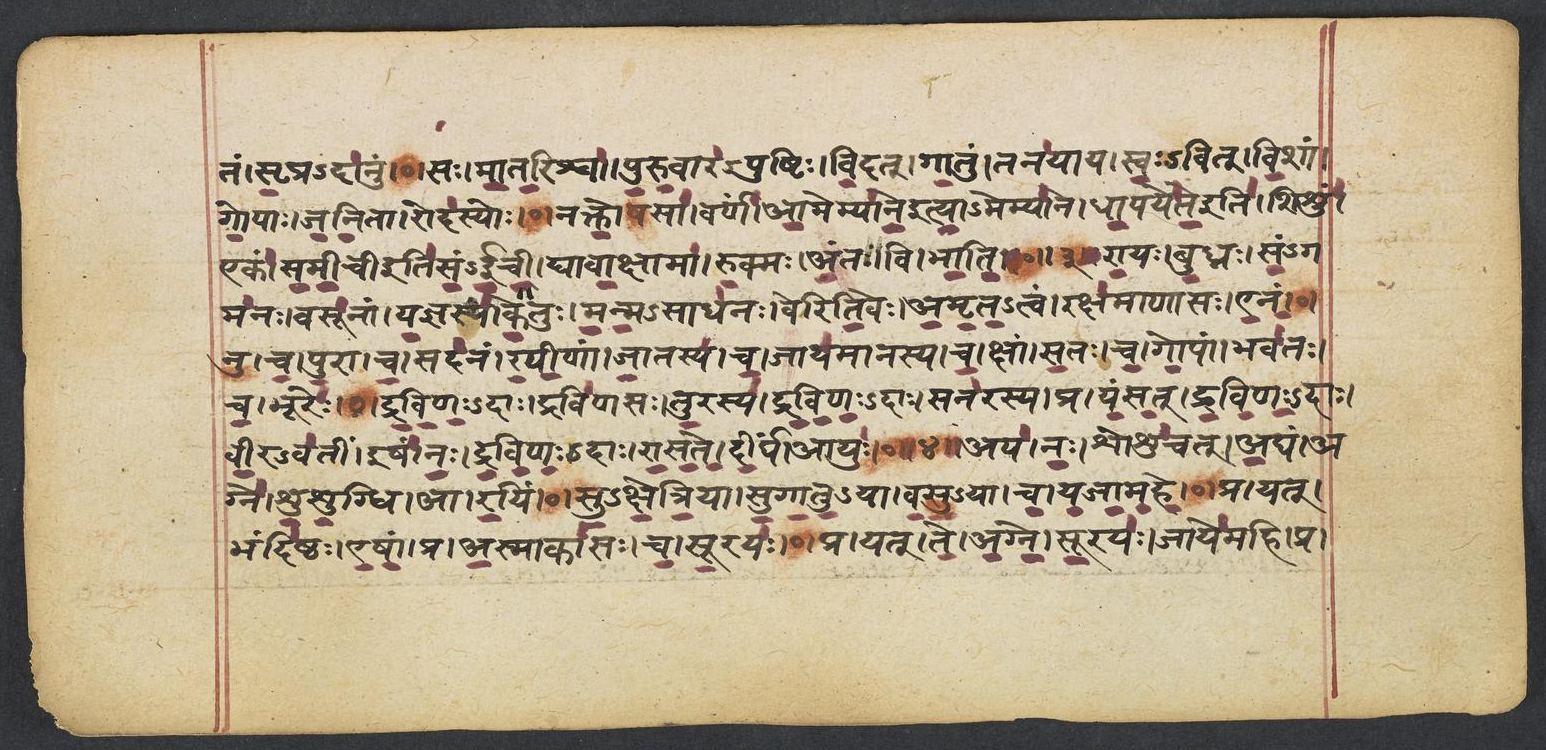
Penn Ms. Coll. 390 Item 41, fol. 68r (OPenn image 69, lower leaf). Checked on the image: the Rigveda text on this page begins in RV 1.96.3 ‹-bharatam sṛpra-dānum devāḥ agnim›. The next page with Rigveda text, fol. 68v, begins in RV 1.97.4 ‹-śośucat agham›. Verses 1.96.3-9 end on this page; 1.96.3 begins on fol. 67v.
3tam ī̍ḻata pratha̱maṁ ya̍jña̱sādha̱ṁ viśa̱ ārī̱r āhu̍tam ṛñjasā̱nam | ū̱rjaḥ pu̱tram bha̍ra̱taṁ sṛ̱pradā̍nuṁ de̱vā a̱gniṁ dhā̍rayan draviṇo̱dām ||
4sa mā̍ta̱riśvā̍ puru̱vāra̍puṣṭir vi̱dad gā̱tuṁ tana̍yāya sva̱rvit | vi̱śāṁ go̱pā ja̍ni̱tā roda̍syor de̱vā a̱gniṁ dhā̍rayan draviṇo̱dām ||
5nakto̱ṣāsā̱ varṇa̍m ā̱memyā̍ne dhā̱paye̍te̱ śiśu̱m eka̍ṁ samī̱cī | dyāvā̱kṣāmā̍ ru̱kmo a̱ntar vi bhā̍ti de̱vā a̱gniṁ dhā̍rayan draviṇo̱dām ||
6rā̱yo bu̱dhnaḥ sa̱ṁgama̍no̱ vasū̍nāṁ ya̱jñasya̍ ke̱tur ma̍nma̱sādha̍no̱ veḥ | a̱mṛ̱ta̱tvaṁ rakṣa̍māṇāsa enaṁ de̱vā a̱gniṁ dhā̍rayan draviṇo̱dām ||
7nū ca̍ pu̱rā ca̱ sada̍naṁ rayī̱ṇāṁ jā̱tasya̍ ca̱ jāya̍mānasya ca̱ kṣām | sa̱taś ca̍ go̱pām bhava̍taś ca̱ bhūre̍r de̱vā a̱gniṁ dhā̍rayan draviṇo̱dām ||
8dra̱vi̱ṇo̱dā dravi̍ṇasas tu̱rasya̍ draviṇo̱dāḥ sana̍rasya̱ pra ya̍ṁsat | dra̱vi̱ṇo̱dā vī̱rava̍tī̱m iṣa̍ṁ no draviṇo̱dā rā̍sate dī̱rgham āyu̍ḥ ||
9e̱vā no̍ agne sa̱midhā̍ vṛdhā̱no re̱vat pā̍vaka̱ śrava̍se̱ vi bhā̍hi | tan no̍ mi̱tro varu̍ṇo māmahantā̱m adi̍ti̱ḥ sindhu̍ḥ pṛthi̱vī u̱ta dyauḥ ||
Compare: Padapāṭha (word-by-word text written in the manuscript; Sansknet e-text via GRETIL)
3tam | iḷata | prathamam | yajña-sādham | viśaḥ | ārīḥ | āhutam | ṛñjasānam | ūrjaḥ | putram | bharatam | sṛpra-dānum | devāḥ | agnim | dhārayan | draviṇaḥ-dām
4saḥ | mātariśvā | puruvāra-puṣṭiḥ | vidat | gātum | tanayāya | svaḥ-vit | viśām | gopāḥ | janitā | rodasyoḥ | devāḥ | agnim | dhārayan | draviṇaḥ-dām
5naktoṣasā | varṇam | āmemyāneity āmemyāne | dhāpayeteiti | śiśum | ekam | samīcī itisam-īcī | dyāvākṣāmā | rukmaḥ | antaḥ | vi | bhāti | devāḥ | agnim | dhārayan | draviṇaḥ-dām
6rāyaḥ | budhnaḥ | sam-gamanaḥ | vasūnām | yajñasya | ketuḥ | manma-sādhanaḥ | veḥ | amṛta-tvam | rakṣamāṇāsaḥ | enam | devāḥ | agnim | dhārayan | draviṇaḥ-dām
7nu | ca | purā | ca | sadanam | rayīṇām | jātasya | ca | jāyamānasya | ca | kṣām | sataḥ | ca | gopām | bhavataḥ | ca | bhūreḥ | devāḥ | agnim | dhārayan | draviṇaḥ-dām
8draviṇaḥ-dāḥ | draviṇasaḥ | turasya | draviṇaḥ-dāḥ | sanarasya | pra | yaṃsat | draviṇaḥ-dāḥ | vīra-vatīm | iṣam | naḥ | draviṇaḥ-dāḥ | rāsate | dīrgham | āyuḥ
9eva | naḥ | agne | sam-idhā | vṛdhānaḥ | revat | pāvaka | śravase | vi | bhāhi | tat | naḥ | mi traḥ | varuṇaḥ | mamahantām | aditiḥ | sindhuḥ | pṛthivī | uta | dyauḥ
3Praise him, ye Aryan folk, as chief performer of sacrifice adored and ever toiling, Well-tended, Son of Strength, the Constant Giver. The Gods possessed the wealth bestowing Agni.
4That Mâtariṣvan rich in wealth and treasure, light-winner, finds a pathway for his offspring, Guard of our folk, Father of earth and heaven. The Gods possessed the wealth bestowing Agni.
5Night and Dawn, changing each the other's colour, meeting together suckle one same Infant: Golden between the heaven and earth he shineth. The Gods possessed the wealth bestowing Agni.
6Root of wealth, gathering-place of treasures, banner of sacrifice, who grants the suppliant's wishes: Preserving him as their own life immortal, the Gods possessed the wealth-bestowing Agni.
7Now and of old the home of wealth, the mansion of what is born and what was born aforetime, Guard of what is and what will be hereafter,– the Gods possessed the wealth bestowing Agni.
8May the Wealth-Giver grant us conquering riches; may the Wealth-Giver grant us wealth with heroes. May the Wealth-Giver grant us food with offspring, and length of days may the Wealth-Giver send us.
9Fed with our fuel, purifying Agni, so blaze to us auspiciously for glory. This prayer of ours may Varuṇa grant, and Mitra, and Aditi and Sindhu, Earth and Heaven.
Notes
- Sanskrit: Aufrecht's edition (1877) with the Vedic accents, as entered by van Nooten and Holland (GRETIL).
- English: Ralph T. H. Griffith, The Hymns of the Rigveda (1889-1892; 2nd ed. 1896-1897), from the VedaWeb digital text; OCR slips in that text were corrected against the printed 2nd edition (data/sources/rigveda/griffith_errata.json).
- Padapāṭha (edition text): Sansknet e-text via GRETIL (CC BY-NC-SA 4.0).
Cite
Sources
- Source: Penn Ms. Coll. 390 Item 41 (undated (catalogued with Penn's 18th-19th c. Vedic manuscripts)), OPenn, Public Domain Mark + Aufrecht's accented text (GRETIL) + Griffith's English (VedaWeb) (holding institution)
- Critical edition: Aufrecht (1877), accented e-text via GRETIL
← previous · → next · v cycle view · l back to library