Rigveda 10.1: To Agni
Introduction
Rigveda 10.1 is a hymn of 7 verses addressed to Agni. It stands in book (maṇḍala) 10, the last and latest book. The Rigveda is the oldest collection of Sanskrit hymns, composed in the second half of the second millennium BCE and handed down orally for many centuries before it was written down.
The manuscript shown is Penn Ms. Coll. 390 Item 41 (University of Pennsylvania), an undated paper manuscript of the padapāṭha (the word-by-word recitation text, in which every word is written separately and compounds are split) of the whole Ṛgveda in Devanāgarī, 884 leaves in fascicles, 7-9 lines to the page, accents in red; this hymn stands on fol. 742v-743r. Each section below gives the verses that end on one page; the page boundaries were read on the images (the opening words of every page), not counted out. Where the manuscript is a padapāṭha (the word-by-word recitation text), the section shows Aufrecht's continuous (saṃhitā) text first and, as the edition text, the padapāṭha of the same verses, which is the form written on the page.
How was this verified? (Provenance)
Where on the image
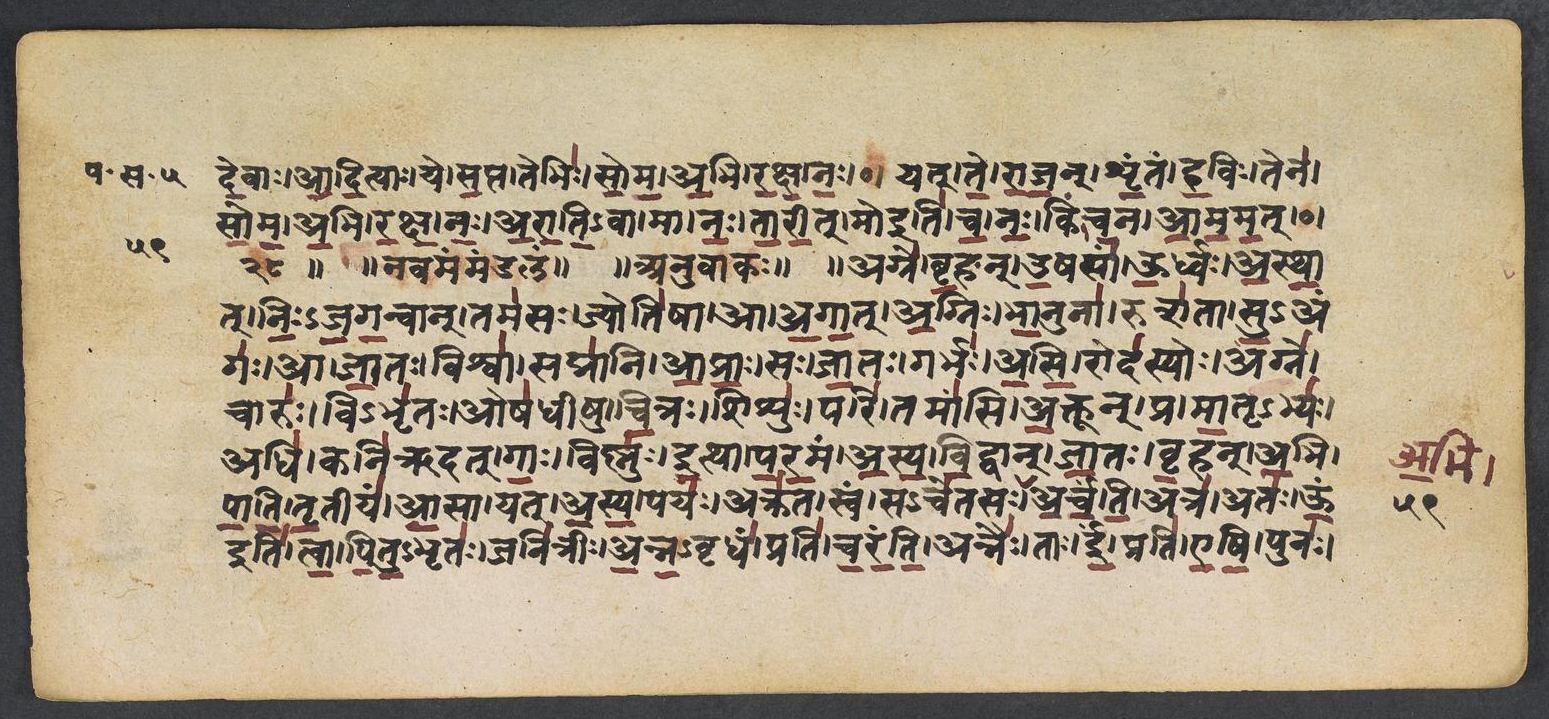
Penn Ms. Coll. 390 Item 41, fol. 742v (numbered 59v by the scribe) (OPenn image 743, upper leaf). Checked on the image: the Rigveda text on this page begins in RV 9.114.3 ‹devāḥ ādityāḥ ye sapta›. The next page with Rigveda text, fol. 743r (numbered 60r by the scribe), begins in RV 10.1.4 ‹anya-rūpāḥ asi tvam vikṣu›. Verses 10.1.1-3 end on this page.
1agre̍ bṛ̱hann u̱ṣasā̍m ū̱rdhvo a̍sthān nirjaga̱nvān tama̍so̱ jyoti̱ṣāgā̍t | a̱gnir bhā̱nunā̱ ruśa̍tā̱ svaṅga̱ ā jā̱to viśvā̱ sadmā̍ny aprāḥ ||
2sa jā̱to garbho̍ asi̱ roda̍syo̱r agne̱ cāru̱r vibhṛ̍ta̱ oṣa̍dhīṣu | ci̱traḥ śiśu̱ḥ pari̱ tamā̍ṁsy a̱ktūn pra mā̱tṛbhyo̱ adhi̱ kani̍kradad gāḥ ||
3viṣṇu̍r i̱tthā pa̍ra̱mam a̍sya vi̱dvāñ jā̱to bṛ̱hann a̱bhi pā̍ti tṛ̱tīya̍m | ā̱sā yad a̍sya̱ payo̱ akra̍ta̱ svaṁ sace̍taso a̱bhy a̍rca̱nty atra̍ ||
Compare: Padapāṭha (word-by-word text written in the manuscript; Sansknet e-text via GRETIL)
1agne | bṛhan | uṣasām | ūrdhvaḥ | asthāt | niḥ-jaganvān | tamasaḥ | jyotiṣā | ā | agāt | agniḥ | bhānunā | ruśatā | su-aṅgaḥ | ā | jātaḥ | viśvā | sadmāni | aprāḥ
2saḥ | jātaḥ | garbhaḥ | asi | rodasyoḥ | agne | cāruḥ | vi-bhṛtaḥ | oṣadhīṣu | citraḥ | śiśuḥ | pari | tamāṃsi | aktūn | pra | mātṛ-bhyaḥ | adhi | kanikradat | gāḥ
3viṣṇuḥ | itthā | paramam | asya | vidvān | jātaḥ | bṛhan | abhi | pāti | tṛtīyam | āsā | yat | asya | payaḥ | akrata | svam | sa-cetasaḥ | abhi | arcanti | atra
1HIGH hath the Mighty risen before the dawning, and come to us with light from out the darkness. Fair-shapen Agni with white-shining splendour hath filled at birth all human habitations.
2Thou, being born, art Child of Earth and Heaven, parted among the plants in beauty, Agni! The glooms of night thou, Brilliant Babe, subduest, and art come forth, loud roaring, from thy Mothers.
3Here, being manifested, lofty Vishṇu, full wise, protects his own supremest station. When they have offered in his mouth their sweet milk, to him with one accord they sing forth praises.
Where on the image
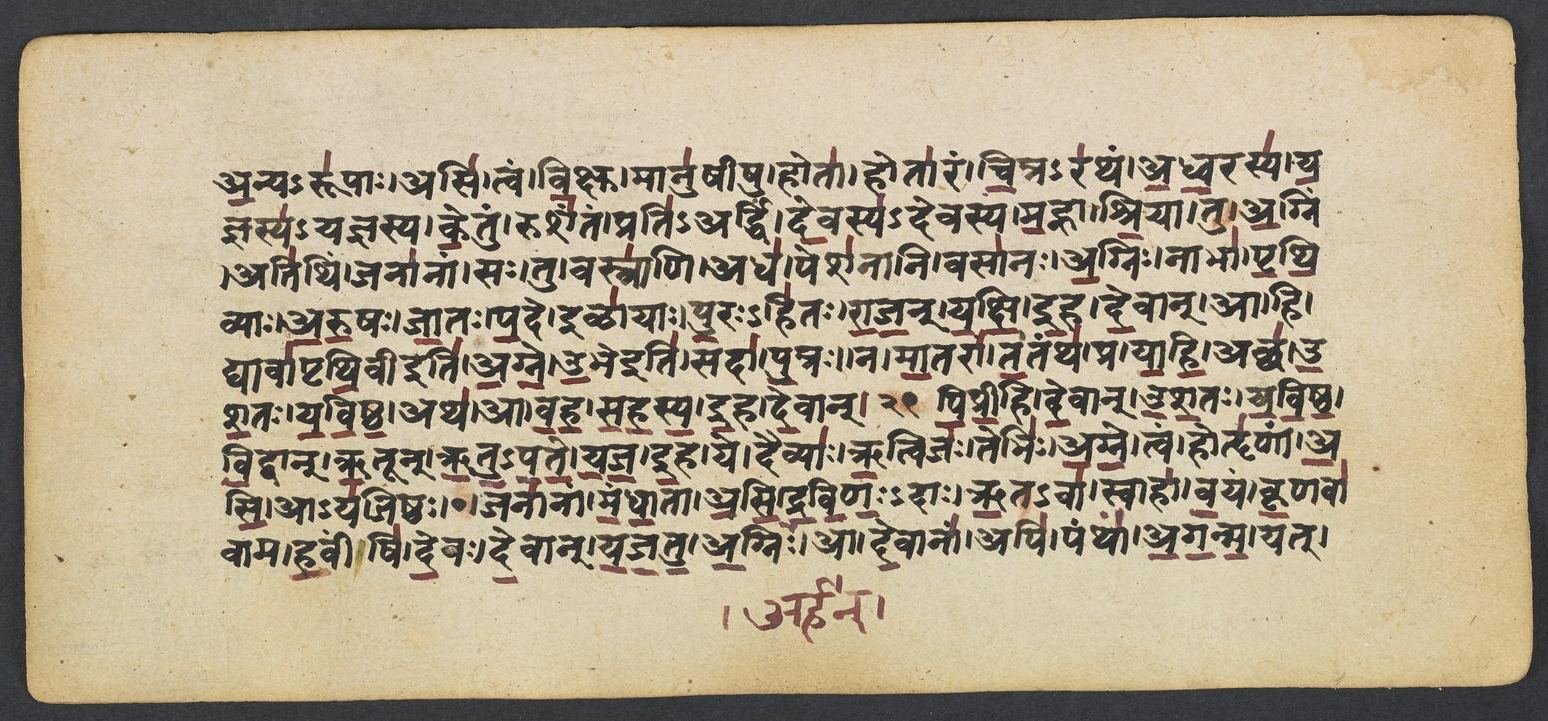
Penn Ms. Coll. 390 Item 41, fol. 743r (numbered 60r by the scribe) (OPenn image 743, lower leaf). Checked on the image: the Rigveda text on this page begins in RV 10.1.4 ‹anya-rūpāḥ asi tvam vikṣu›. The next page with Rigveda text, fol. 743v (numbered 60v by the scribe), begins in RV 10.2.3 ‹śaknavāma tat anu pra-voḷhum›. Verses 10.1.4-7 end on this page; 10.1.4 begins on fol. 742v (numbered 59v by the scribe).
4ata̍ u tvā pitu̱bhṛto̱ jani̍trīr annā̱vṛdha̱m prati̍ cara̱nty annai̍ḥ | tā ī̱m praty e̍ṣi̱ puna̍r a̱nyarū̍pā̱ asi̱ tvaṁ vi̱kṣu mānu̍ṣīṣu̱ hotā̍ ||
5hotā̍raṁ ci̱trara̍tham adhva̱rasya̍ ya̱jñasya̍-yajñasya ke̱tuṁ ruśa̍ntam | pratya̍rdhiṁ de̱vasya̍-devasya ma̱hnā śri̱yā tv a1̱̍gnim ati̍thi̱ṁ janā̍nām ||
6sa tu vastrā̱ṇy adha̱ peśa̍nāni̱ vasā̍no a̱gnir nābhā̍ pṛthi̱vyāḥ | a̱ru̱ṣo jā̱taḥ pa̱da iḻā̍yāḥ pu̱rohi̍to rājan yakṣī̱ha de̱vān ||
7ā hi dyāvā̍pṛthi̱vī a̍gna u̱bhe sadā̍ pu̱tro na mā̱tarā̍ ta̱tantha̍ | pra yā̱hy accho̍śa̱to ya̍vi̱ṣṭhāthā va̍ha sahasye̱ha de̱vān ||
Compare: Padapāṭha (word-by-word text written in the manuscript; Sansknet e-text via GRETIL)
4ataḥ | oṃ iti | tvā | pitu-bhṛtaḥ | janitrīḥ | anna-vṛdham | prati | caranti | annaiḥ | tāḥ | īm | prati | eṣi | punaḥ | anya-rūpāḥ | asi | tvam | vikṣu | mānuṣīṣu | hotā
5hotāram | citra-ratham | adhvarasya | yajñasya-yajñasya | ketum | ruśantam | prati-ardhim | devasya-devasya | mahnā | śriyā | tvam | agnim | atithim | janānām
6saḥ | tu | vastrāṇi | adha | peśanāni | vasānaḥ | agniḥ | nābhā | pṛthivyāḥ | aruṣaḥ | jātaḥ | pade | iḷāyāḥ | puraḥ-hitaḥ | rājan | yakṣi | iha | devān
7ā | hi | dyāvāpṛthivī iti | agne | ubhe iti | sadā | putraḥ | na | mātarā | tatantha | pra | yāhi | accha | uśataḥ | yaviṣṭha | atha | ā | vaha | sahasya | iha | devān
4Thence bearing food the Mothers come to meet thee, with food for thee who givest food its increase. These in their altered form again thou meetest. Thou art Invoking Priest in homes of mortals.
5Priest of the holy rite, with car that glitters, refulgent Banner of each act of worship, Sharinging every God through might and glory, even Agni Guest of men I summon hither.
6So Agni stands on earth's most central station, invested in well-decorated garments. Born, red of hue, where men pour out libations, O King, as great High Priest bring the Gods hither.
7Over the earth and over heaven, O Agni, thou, Son, hast ever spread above thy Parents. Come, Youthfullest! to those who long to meet thee, and hither bring the Gods, O Mighty Victor.
Notes
- Sanskrit: Aufrecht's edition (1877) with the Vedic accents, as entered by van Nooten and Holland (GRETIL).
- English: Ralph T. H. Griffith, The Hymns of the Rigveda (1889-1892; 2nd ed. 1896-1897), from the VedaWeb digital text; OCR slips in that text were corrected against the printed 2nd edition (data/sources/rigveda/griffith_errata.json).
- Padapāṭha (edition text): Sansknet e-text via GRETIL (CC BY-NC-SA 4.0).
Cite
Sources
- Source: Penn Ms. Coll. 390 Item 41 (undated (catalogued with Penn's 18th-19th c. Vedic manuscripts)), OPenn, Public Domain Mark + Aufrecht's accented text (GRETIL) + Griffith's English (VedaWeb) (holding institution)
- Critical edition: Aufrecht (1877), accented e-text via GRETIL
← previous · → next · v cycle view · l back to library