Rigveda 10.2: To Agni
Introduction
Rigveda 10.2 is a hymn of 7 verses addressed to Agni. It stands in book (maṇḍala) 10, the last and latest book. The Rigveda is the oldest collection of Sanskrit hymns, composed in the second half of the second millennium BCE and handed down orally for many centuries before it was written down.
The manuscript shown is Penn Ms. Coll. 390 Item 41 (University of Pennsylvania), an undated paper manuscript of the padapāṭha (the word-by-word recitation text, in which every word is written separately and compounds are split) of the whole Ṛgveda in Devanāgarī, 884 leaves in fascicles, 7-9 lines to the page, accents in red; this hymn stands on fol. 743r-743v. Each section below gives the verses that end on one page; the page boundaries were read on the images (the opening words of every page), not counted out. Where the manuscript is a padapāṭha (the word-by-word recitation text), the section shows Aufrecht's continuous (saṃhitā) text first and, as the edition text, the padapāṭha of the same verses, which is the form written on the page.
How was this verified? (Provenance)
Where on the image
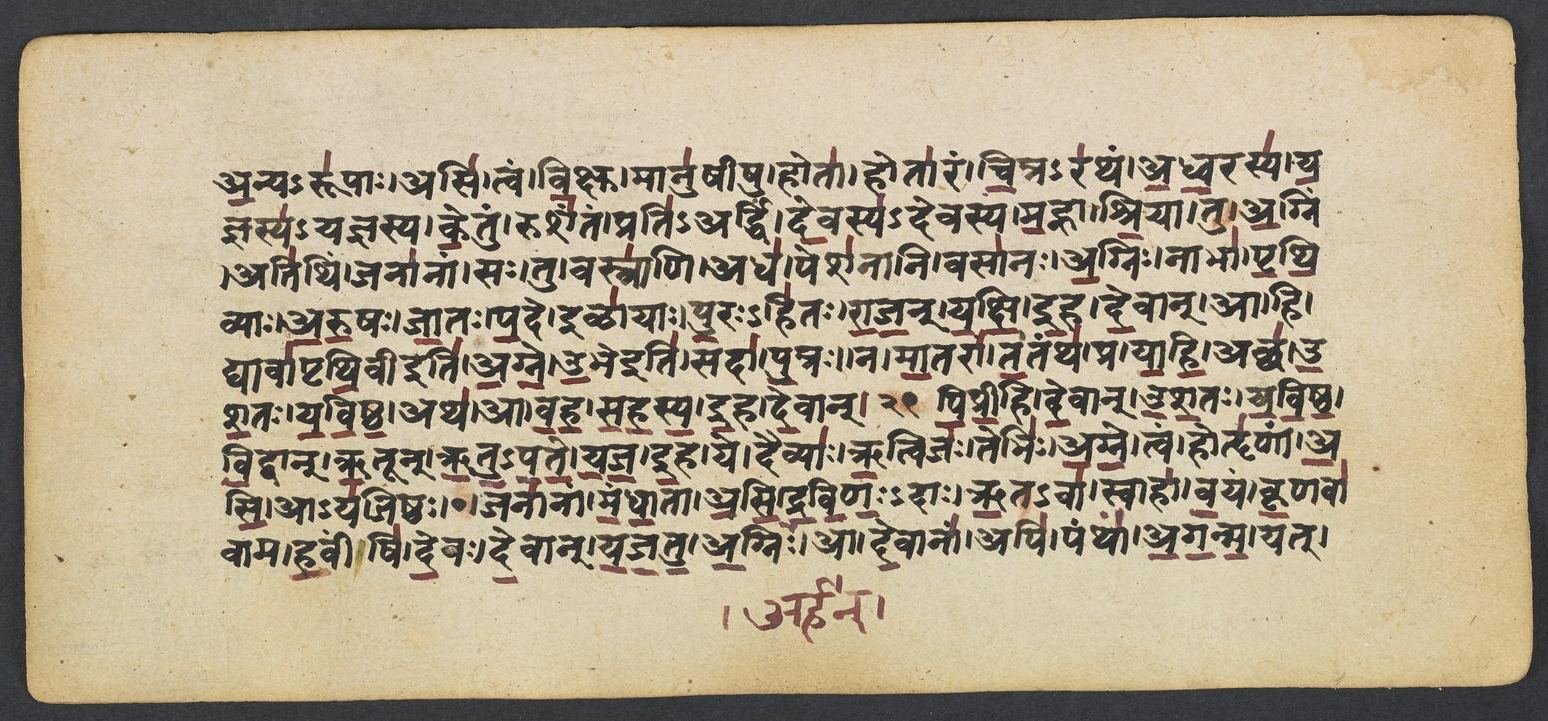
Penn Ms. Coll. 390 Item 41, fol. 743r (numbered 60r by the scribe) (OPenn image 743, lower leaf). Checked on the image: the Rigveda text on this page begins in RV 10.1.4 ‹anya-rūpāḥ asi tvam vikṣu›. The next page with Rigveda text, fol. 743v (numbered 60v by the scribe), begins in RV 10.2.3 ‹śaknavāma tat anu pra-voḷhum›. Verses 10.2.1-2 end on this page.
1pi̱prī̱hi de̱vām̐ u̍śa̱to ya̍viṣṭha vi̱dvām̐ ṛ̱tūm̐r ṛ̍tupate yaje̱ha | ye daivyā̍ ṛ̱tvija̱s tebhi̍r agne̱ tvaṁ hotṝ̍ṇām a̱sy āya̍jiṣṭhaḥ ||
2veṣi̍ ho̱tram u̱ta po̱traṁ janā̍nām mandhā̱tāsi̍ draviṇo̱dā ṛ̱tāvā̍ | svāhā̍ va̱yaṁ kṛ̱ṇavā̍mā ha̱vīṁṣi̍ de̱vo de̱vān ya̍jatv a̱gnir arha̍n ||
Compare: Padapāṭha (word-by-word text written in the manuscript; Sansknet e-text via GRETIL)
1piprīhi | devān | uśataḥ | yaviṣṭha | vidvān | ṛtūn | ṛtu-pate | yaja | iha | ye | daivyāḥ | ṛtvijaḥ | tebhiḥ | agne | tvam | hotṛṝṇām | asi | āyajiṣṭhaḥ
2veṣi | hotram | uta | potram | janānām | mandhātā | asi | draviṇaḥ-dāḥ | ṛta-vā | svāhā | vayam | kṛṇavāma | havīṃṣi | devaḥ | devān | yajatu | agniḥ | arhan
1GLADDEN the yearning Gods, O thou Most Youthful: bring them, O Lord of Seasons, knowing seasons, With all the Priests Celestial, O Agni. Best worshipper art thou of all Invokers.
2Thine is the Herald's, thine the Cleanser's office, thinker art thou, wealth-giver, true to Order. Let us with Svâhâ offer up oblations, and Agni, worthy God, pay the Gods worship.
Where on the image
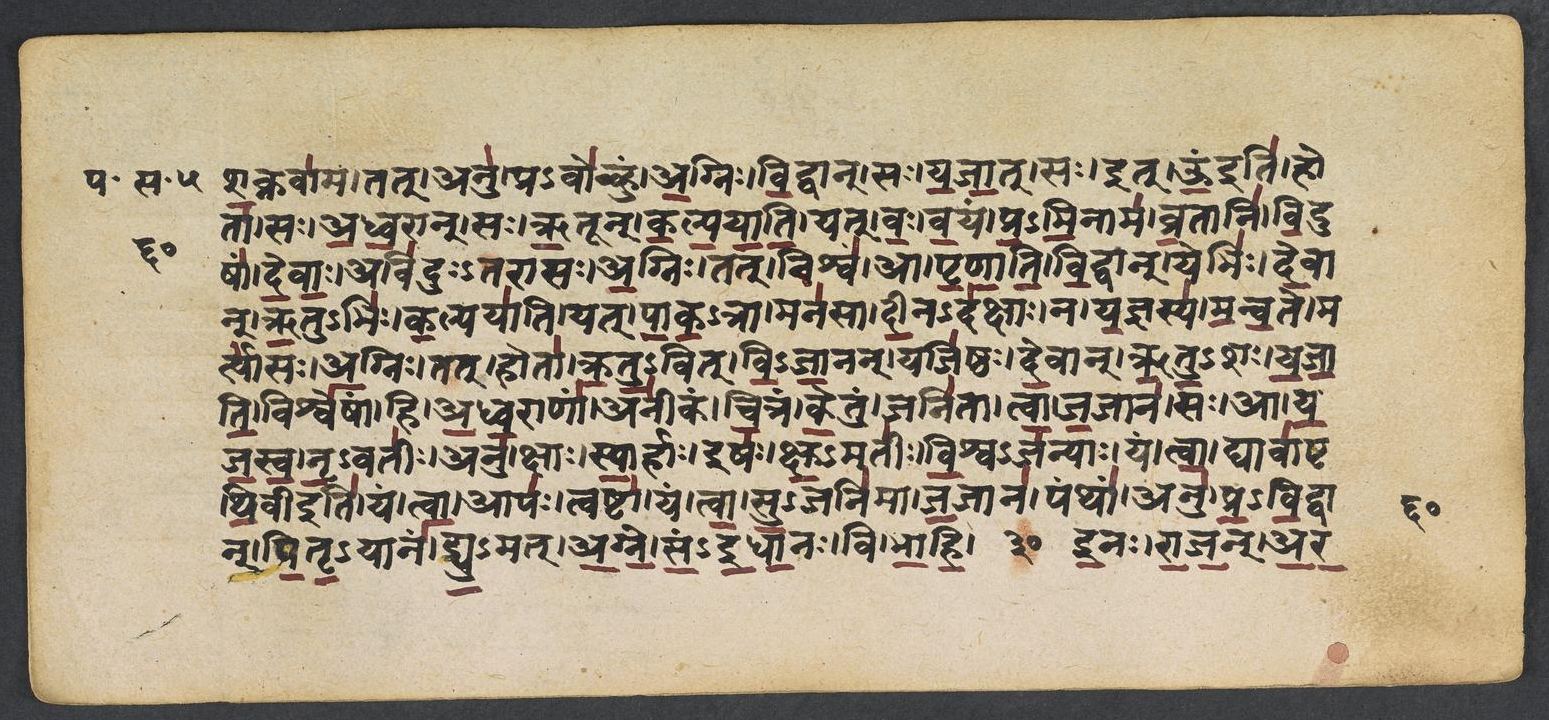
Penn Ms. Coll. 390 Item 41, fol. 743v (numbered 60v by the scribe) (OPenn image 744, upper leaf). Checked on the image: the Rigveda text on this page begins in RV 10.2.3 ‹śaknavāma tat anu pra-voḷhum›. The next page with Rigveda text, fol. 744r (numbered 61r by the scribe), begins in RV 10.3.1 ‹-aratiḥ sam-iddhaḥ raudraḥ dakṣāya›. Verses 10.2.3-7 end on this page; 10.2.3 begins on fol. 743r (numbered 60r by the scribe).
3ā de̱vānā̱m api̱ panthā̍m aganma̱ yac cha̱knavā̍ma̱ tad anu̱ pravo̍ḻhum | a̱gnir vi̱dvān sa ya̍jā̱t sed u̱ hotā̱ so a̍dhva̱rān sa ṛ̱tūn ka̍lpayāti ||
4yad vo̍ va̱yam pra̍mi̱nāma̍ vra̱tāni̍ vi̱duṣā̍ṁ devā̱ avi̍duṣṭarāsaḥ | a̱gniṣ ṭad viśva̱m ā pṛ̍ṇāti vi̱dvān yebhi̍r de̱vām̐ ṛ̱tubhi̍ḥ ka̱lpayā̍ti ||
5yat pā̍ka̱trā mana̍sā dī̱nada̍kṣā̱ na ya̱jñasya̍ manva̱te martyā̍saḥ | a̱gniṣ ṭad dhotā̍ kratu̱vid vi̍jā̱nan yaji̍ṣṭho de̱vām̐ ṛ̍tu̱śo ya̍jāti ||
6viśve̍ṣā̱ṁ hy a̍dhva̱rāṇā̱m anī̍kaṁ ci̱traṁ ke̱tuṁ jani̍tā tvā ja̱jāna̍ | sa ā ya̍jasva nṛ̱vatī̱r anu̱ kṣāḥ spā̱rhā iṣa̍ḥ kṣu̱matī̍r vi̱śvaja̍nyāḥ ||
7yaṁ tvā̱ dyāvā̍pṛthi̱vī yaṁ tvāpa̱s tvaṣṭā̱ yaṁ tvā̍ su̱jani̍mā ja̱jāna̍ | panthā̱m anu̍ pravi̱dvān pi̍tṛ̱yāṇa̍ṁ dyu̱mad a̍gne samidhā̱no vi bhā̍hi ||
Compare: Padapāṭha (word-by-word text written in the manuscript; Sansknet e-text via GRETIL)
3ā | devānām | api | panthām | aganma | yat | śaknavāma | tat | anu | pra-voḷhum | agniḥ | vidvān | saḥ | yajat | saḥ | it | oṃ iti | hotā | saḥ | adhvarān | saḥ | ṛtūn | kalpayāti
4tat | vaḥ | vayam | pra-mināma | vratāni | viduṣām | devāḥ | aviduḥ-tarāsaḥ | agniḥ | tat | viśvam | ā | pṛṇāti | vidvān | yebhiḥ | devān | ṛtu-bhiḥ | kalpayāti
5yat | pāka-trā | manasā | dīna-dakṣāḥ | na | yajñasya | manvate | martyāsaḥ | agniḥ | tat | hotā | kratu-vit | vi-jānan | yajiṣṭhaḥ | devān | ṛtu-śaḥ | yajāti
6viśveṣām | hi | adhvarāṇām | anīkam | citram | ketum | janitā | tvā | jajāna | saḥ | ā | yajasva | nṛ-vatīḥ | anu | kṣāḥ | spārhāḥ | iṣaḥ | kṣu-matīḥ | visva-janyāḥ
7yam | tvā | dyāvāpṛthivī iti | yam | tvā | āpaḥ | tvaṣṭā | yam | tvā | su-jamimā | jajāna | panthām | anu | pra-vidvān | pitṛ-yānam | dyu-mat | agne | sam-idhānaḥ | vi | bhāhi
3To the Gods' pathway have we travelled, ready to execute what work we may accomplish. Let Agni, for he knows, complete the worship. He is the Priest: let him fix rites and seasons.
4When we most ignorant neglect the statutes of you, O Deities with whom is knowledge, Wise Agni shall correct our faults and failings, skilled to assign each God his fitting season.
5When, weak in mind, of feeble understanding, mortals bethink them not of sacrificing, Then shall the prudent and discerning Agni worship the Gods, best worshipper, in season.
6Because the Father hath produced thee, Leader of all our solemn rites, their brilliant Banner: So win by worship pleasant homes abounding in heroes, and rich food to nourish all men.
7Thou whom the Heaven and Earth, thou whom the Waters, and Tvashṭar, maker of fair things, created, Well knowing, all along the Fathers' pathway, shine with resplendent light, enkindled, Agni.
Notes
- Sanskrit: Aufrecht's edition (1877) with the Vedic accents, as entered by van Nooten and Holland (GRETIL).
- English: Ralph T. H. Griffith, The Hymns of the Rigveda (1889-1892; 2nd ed. 1896-1897), from the VedaWeb digital text; OCR slips in that text were corrected against the printed 2nd edition (data/sources/rigveda/griffith_errata.json).
- Padapāṭha (edition text): Sansknet e-text via GRETIL (CC BY-NC-SA 4.0).
Cite
Sources
- Source: Penn Ms. Coll. 390 Item 41 (undated (catalogued with Penn's 18th-19th c. Vedic manuscripts)), OPenn, Public Domain Mark + Aufrecht's accented text (GRETIL) + Griffith's English (VedaWeb) (holding institution)
- Critical edition: Aufrecht (1877), accented e-text via GRETIL
← previous · → next · v cycle view · l back to library