Rigveda 10.100: To all the gods
Introduction
Rigveda 10.100 is a hymn of 12 verses addressed to all the gods. It stands in book (maṇḍala) 10, the last and latest book. The Rigveda is the oldest collection of Sanskrit hymns, composed in the second half of the second millennium BCE and handed down orally for many centuries before it was written down.
The manuscript shown is Penn Ms. Coll. 390 Item 48 (University of Pennsylvania), a paper manuscript of the eighth aṣṭaka (RV 10.46-10.191) of the Ṛgveda Saṃhitā in Devanāgarī, 158 leaves, 6 lines to the page, with the accents marked in red; the scribe's colophon on fol. 158 gives Saṃvat 1768 (1711 CE); this hymn stands on fol. 83r-84r. Each section below gives the verses that end on one page; the page boundaries were read on the images (the opening words of every page), not counted out. Like most Rigveda manuscripts, Penn Ms. Coll. 390 Item 48 writes a repeated refrain in short form after its first occurrence (for example kasmai° for kasmai devāya haviṣā vidhema); the Sanskrit shown is the full text of Aufrecht's edition.
How was this verified? (Provenance)
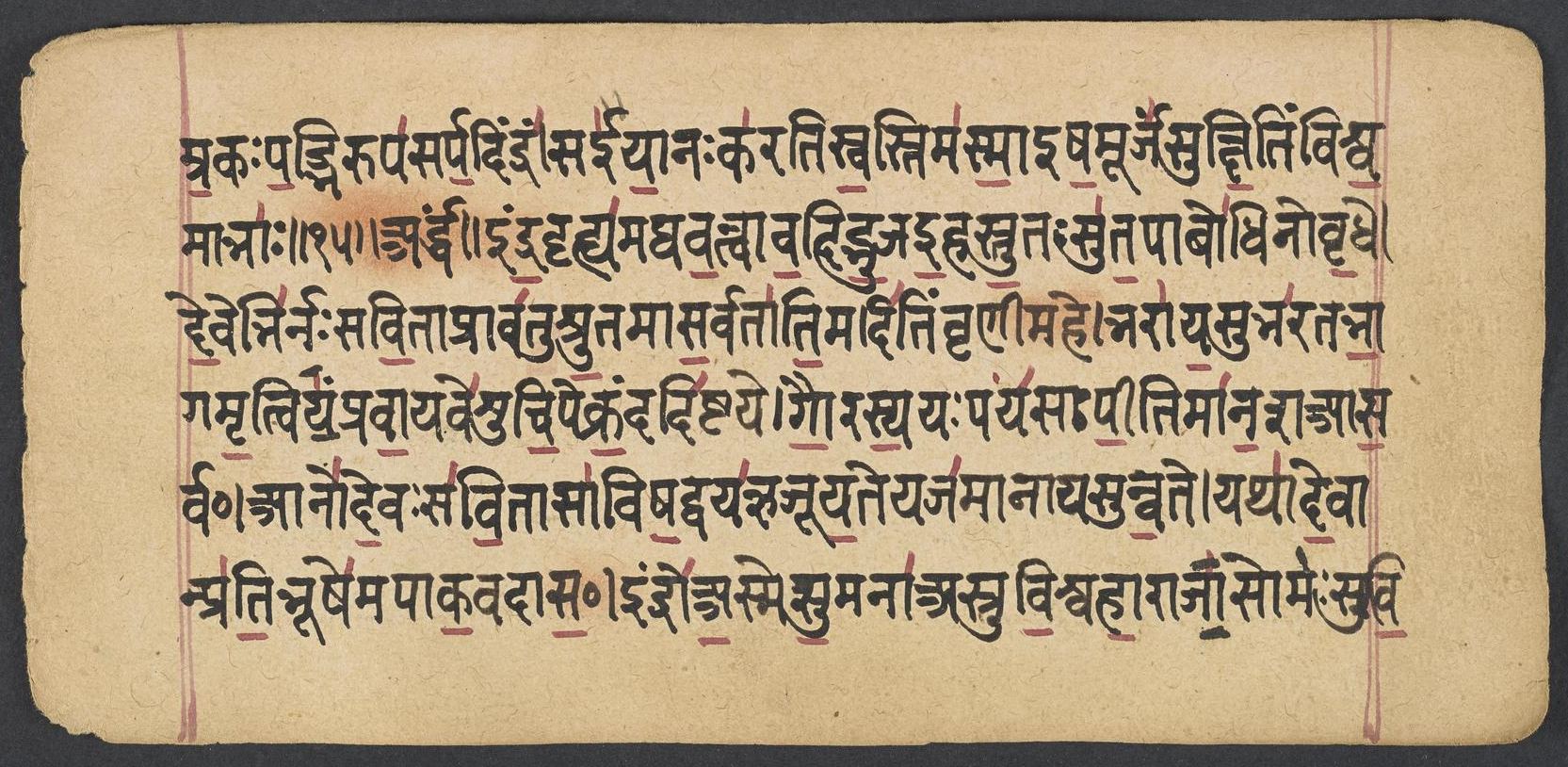
Where on the image
Penn Ms. Coll. 390 Item 48, fol. 83r (OPenn image 82, lower leaf). Checked on the image: the Rigveda text on this page begins in RV 10.99.12 ‹-vamrakaḥ paḍbhir upa sarpad›. The next page with Rigveda text, fol. 83v, begins in RV 10.100.4 ‹-suvitasyādhy etu naḥ›. Verses 10.100.1-3 end on this page.
1indra̱ dṛhya̍ maghava̱n tvāva̱d id bhu̱ja i̱ha stu̱taḥ su̍ta̱pā bo̍dhi no vṛ̱dhe | de̱vebhi̍r naḥ savi̱tā prāva̍tu śru̱tam ā sa̱rvatā̍ti̱m adi̍tiṁ vṛṇīmahe ||
2bharā̍ya̱ su bha̍rata bhā̱gam ṛ̱tviya̱m pra vā̱yave̍ śuci̱pe kra̱ndadi̍ṣṭaye | gau̱rasya̱ yaḥ paya̍saḥ pī̱tim ā̍na̱śa ā sa̱rvatā̍ti̱m adi̍tiṁ vṛṇīmahe ||
3ā no̍ de̱vaḥ sa̍vi̱tā sā̍viṣa̱d vaya̍ ṛjūya̱te yaja̍mānāya sunva̱te | yathā̍ de̱vān pra̍ti̱bhūṣe̍ma pāka̱vad ā sa̱rvatā̍ti̱m adi̍tiṁ vṛṇīmahe ||
1Be, like thyself, O Indra, strong for our delight: here lauded, aid us, Maghavan, drinker of the juice. Savitar with the Gods protect us: hear ye Twain. We ask for freedom and complete felicity.
2Bring swift, for offering, the share that suits the time, to the pure-drinker Vâyu, roaring as he goes, To him who hath approached the draught of shining milk. We ask for freedom and complete felicity.
3May Savitar the God send us full life, to each who sacrifices, lives aright and pours the juice That we with simple hearts may wait upon the Gods. We ask for freedom and complete felicity.
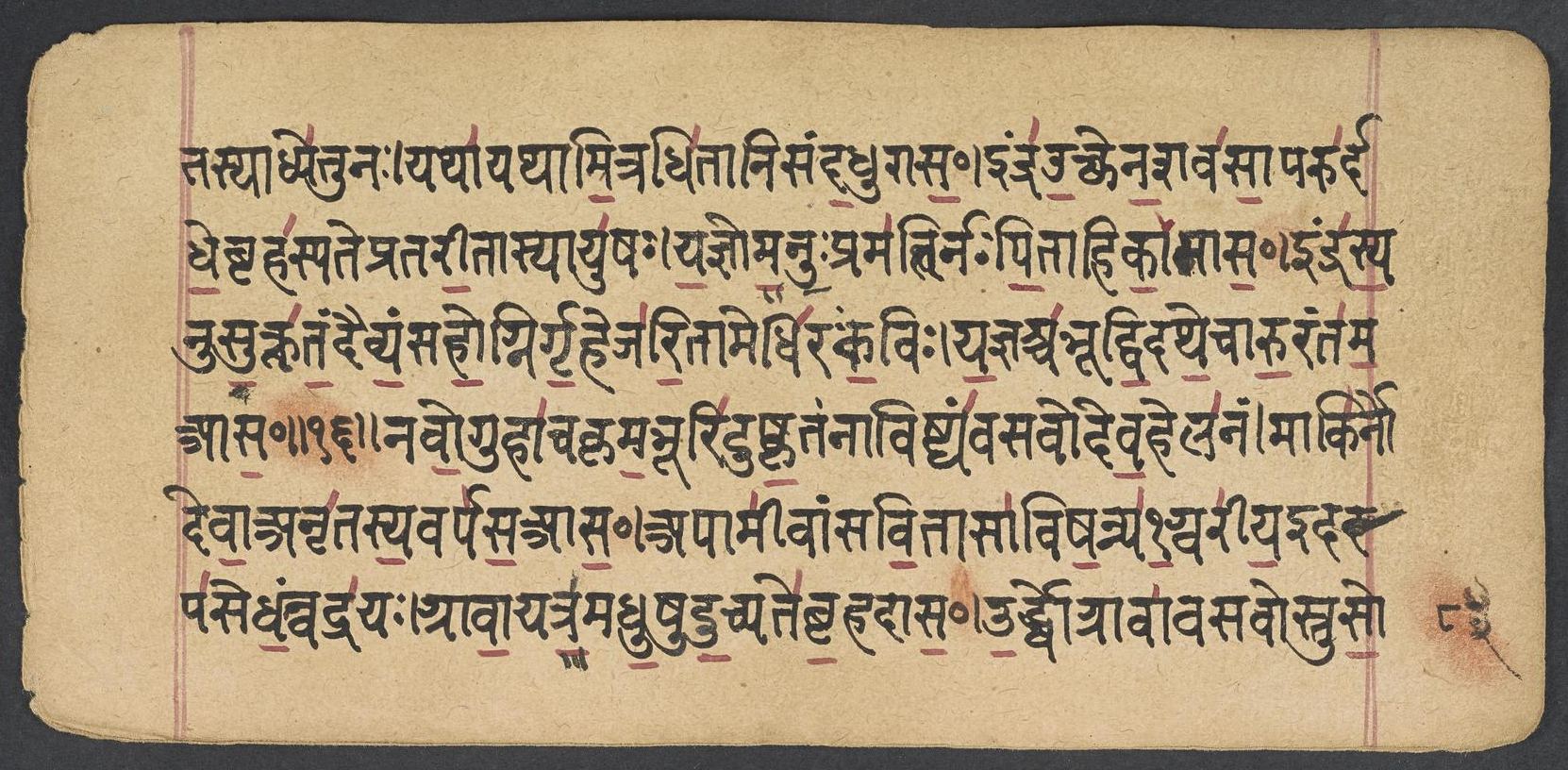
Where on the image
Penn Ms. Coll. 390 Item 48, fol. 83v (OPenn image 83, upper leaf). Checked on the image: the Rigveda text on this page begins in RV 10.100.4 ‹-suvitasyādhy etu naḥ›. The next page with Rigveda text, fol. 84r, begins in RV 10.100.9 ‹-sotari viśvā dveṣāṁsi sanutar›. Verses 10.100.4-8 end on this page; 10.100.4 begins on fol. 83r.
4indro̍ a̱sme su̱manā̍ astu vi̱śvahā̱ rājā̱ soma̍ḥ suvi̱tasyādhy e̍tu naḥ | yathā̍-yathā mi̱tradhi̍tāni saṁda̱dhur ā sa̱rvatā̍ti̱m adi̍tiṁ vṛṇīmahe ||
5indra̍ u̱kthena̱ śava̍sā̱ paru̍r dadhe̱ bṛha̍spate pratarī̱tāsy āyu̍ṣaḥ | ya̱jño manu̱ḥ prama̍tir naḥ pi̱tā hi ka̱m ā sa̱rvatā̍ti̱m adi̍tiṁ vṛṇīmahe ||
6indra̍sya̱ nu sukṛ̍ta̱ṁ daivya̱ṁ saho̱ 'gnir gṛ̱he ja̍ri̱tā medhi̍raḥ ka̱viḥ | ya̱jñaś ca̍ bhūd vi̱dathe̱ cāru̱r anta̍ma̱ ā sa̱rvatā̍ti̱m adi̍tiṁ vṛṇīmahe ||
7na vo̱ guhā̍ cakṛma̱ bhūri̍ duṣkṛ̱taṁ nāviṣṭya̍ṁ vasavo deva̱heḻa̍nam | māki̍r no devā̱ anṛ̍tasya̱ varpa̍sa̱ ā sa̱rvatā̍ti̱m adi̍tiṁ vṛṇīmahe ||
8apāmī̍vāṁ savi̱tā sā̍viṣa̱n nya1̱̍g varī̍ya̱ id apa̍ sedha̱ntv adra̍yaḥ | grāvā̱ yatra̍ madhu̱ṣud u̱cyate̍ bṛ̱had ā sa̱rvatā̍ti̱m adi̍tiṁ vṛṇīmahe ||
4May Indra evermore be gracious unto us, and may King Soma meditate our happiness, Even as men secure the comfort of a friend. We ask for freedom and complete felicity.
5Indra hath given the body with its song and strength: Br̥ihaspati, thou art the lengthener of life. The sacrifice is Manu, Providence, our Sire. We ask for freedom and complete felicity.
6Indra possesseth might celestial nobly formed: the singer in the house is Agni, prudent Sage. lie is the sacrifice in synod, fair, most near. We ask for freedom and complete felicity,
7Not often have we sinned against you secretly, nor, Vasus, have we openly provoked the Gods. Not one of its, ye Gods, hath worn an alien shape. We ask for freedom and complete felicity.
8May Savitar remove from us our malady, and may the Mountains keep it far away from where The press-stone as it sheds the meath rings loudly forth. We ask for freedom and complete felicity.
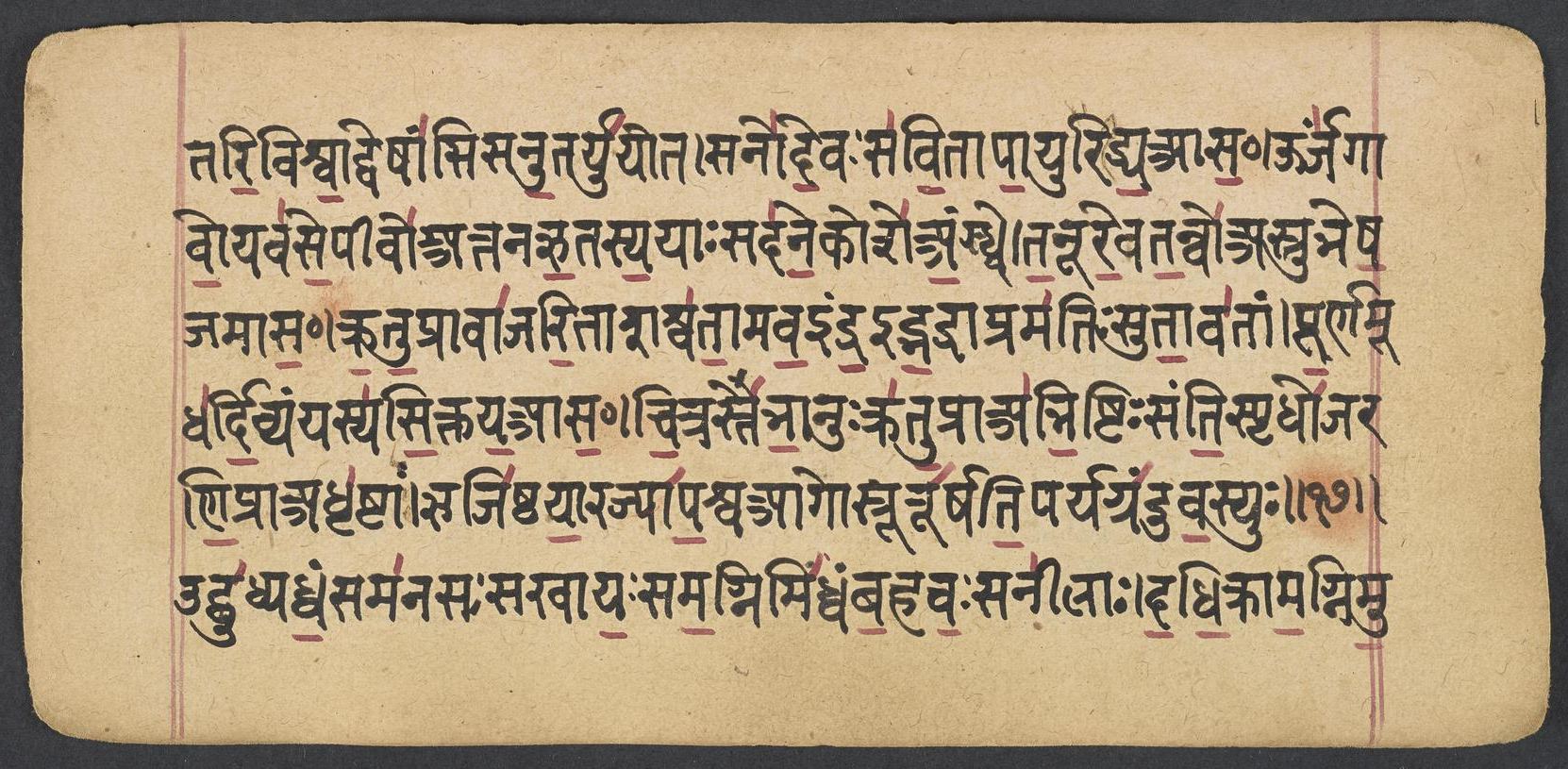
Where on the image
Penn Ms. Coll. 390 Item 48, fol. 84r (OPenn image 83, lower leaf). Checked on the image: the Rigveda text on this page begins in RV 10.100.9 ‹-sotari viśvā dveṣāṁsi sanutar›. The next page with Rigveda text, fol. 84v, begins in RV 10.101.1 ‹-uṣasaṁ ca devīm indrāvato›. Verses 10.100.9-12 end on this page; 10.100.9 begins on fol. 83v.
9ū̱rdhvo grāvā̍ vasavo 'stu so̱tari̱ viśvā̱ dveṣā̍ṁsi sanu̱tar yu̍yota | sa no̍ de̱vaḥ sa̍vi̱tā pā̱yur īḍya̱ ā sa̱rvatā̍ti̱m adi̍tiṁ vṛṇīmahe ||
10ūrja̍ṁ gāvo̱ yava̍se̱ pīvo̍ attana ṛ̱tasya̱ yāḥ sada̍ne̱ kośe̍ a̱ṅgdhve | ta̱nūr e̱va ta̱nvo̍ astu bheṣa̱jam ā sa̱rvatā̍ti̱m adi̍tiṁ vṛṇīmahe ||
11kra̱tu̱prāvā̍ jari̱tā śaśva̍tā̱m ava̱ indra̱ id bha̱drā prama̍tiḥ su̱tāva̍tām | pū̱rṇam ūdha̍r di̱vyaṁ yasya̍ si̱ktaya̱ ā sa̱rvatā̍ti̱m adi̍tiṁ vṛṇīmahe ||
12ci̱tras te̍ bhā̱nuḥ kra̍tu̱prā a̍bhi̱ṣṭiḥ santi̱ spṛdho̍ jaraṇi̱prā adhṛ̍ṣṭāḥ | raji̍ṣṭhayā̱ rajyā̍ pa̱śva ā gos tūtū̍rṣati̱ pary agra̍ṁ duva̱syuḥ ||
9Ye Vasus, let the stone, the presser stand erect: avert all enmities and keep them far remote. Our guard to be adored is Savitar this God. We ask for freedom and complete felicity.
10Eat strength and fatness in the pasture, kine, who are balmed at the reservoir and at the seat of Law. So let your body be our body's medicine. We ask for freedom and complete felicity.
11The singer fills the spirit: all mens, love hath he. Indra takes kindly care of those who pour the juice. For his libation is the heavenly udder full. We ask for freedom and complete felicity.
12Wondrous thy spirit-filling light, triumphant; thy hosts save from decay and are resistless. The pious votary by straightest pathway speeds to possess the best of all the cattle.
Notes
- Sanskrit: Aufrecht's edition (1877) with the Vedic accents, as entered by van Nooten and Holland (GRETIL).
- English: Ralph T. H. Griffith, The Hymns of the Rigveda (1889-1892; 2nd ed. 1896-1897), from the VedaWeb digital text; OCR slips in that text were corrected against the printed 2nd edition (data/sources/rigveda/griffith_errata.json).
Cite
Sources
- Source: Penn Ms. Coll. 390 Item 48 (1711 CE (colophon: Saṃvat 1768)), OPenn, Public Domain Mark + Aufrecht's accented text (GRETIL) + Griffith's English (VedaWeb) (holding institution)
- Critical edition: Aufrecht (1877), accented e-text via GRETIL
← previous · → next · v cycle view · l back to library