Rigveda 10.99: To Indra
Introduction
Rigveda 10.99 is a hymn of 12 verses addressed to Indra. It stands in book (maṇḍala) 10, the last and latest book. The Rigveda is the oldest collection of Sanskrit hymns, composed in the second half of the second millennium BCE and handed down orally for many centuries before it was written down.
The manuscript shown is Penn Ms. Coll. 390 Item 48 (University of Pennsylvania), a paper manuscript of the eighth aṣṭaka (RV 10.46-10.191) of the Ṛgveda Saṃhitā in Devanāgarī, 158 leaves, 6 lines to the page, with the accents marked in red; the scribe's colophon on fol. 158 gives Saṃvat 1768 (1711 CE); this hymn stands on fol. 81v-83r. Each section below gives the verses that end on one page; the page boundaries were read on the images (the opening words of every page), not counted out. Like most Rigveda manuscripts, Penn Ms. Coll. 390 Item 48 writes a repeated refrain in short form after its first occurrence (for example kasmai° for kasmai devāya haviṣā vidhema); the Sanskrit shown is the full text of Aufrecht's edition.
How was this verified? (Provenance)
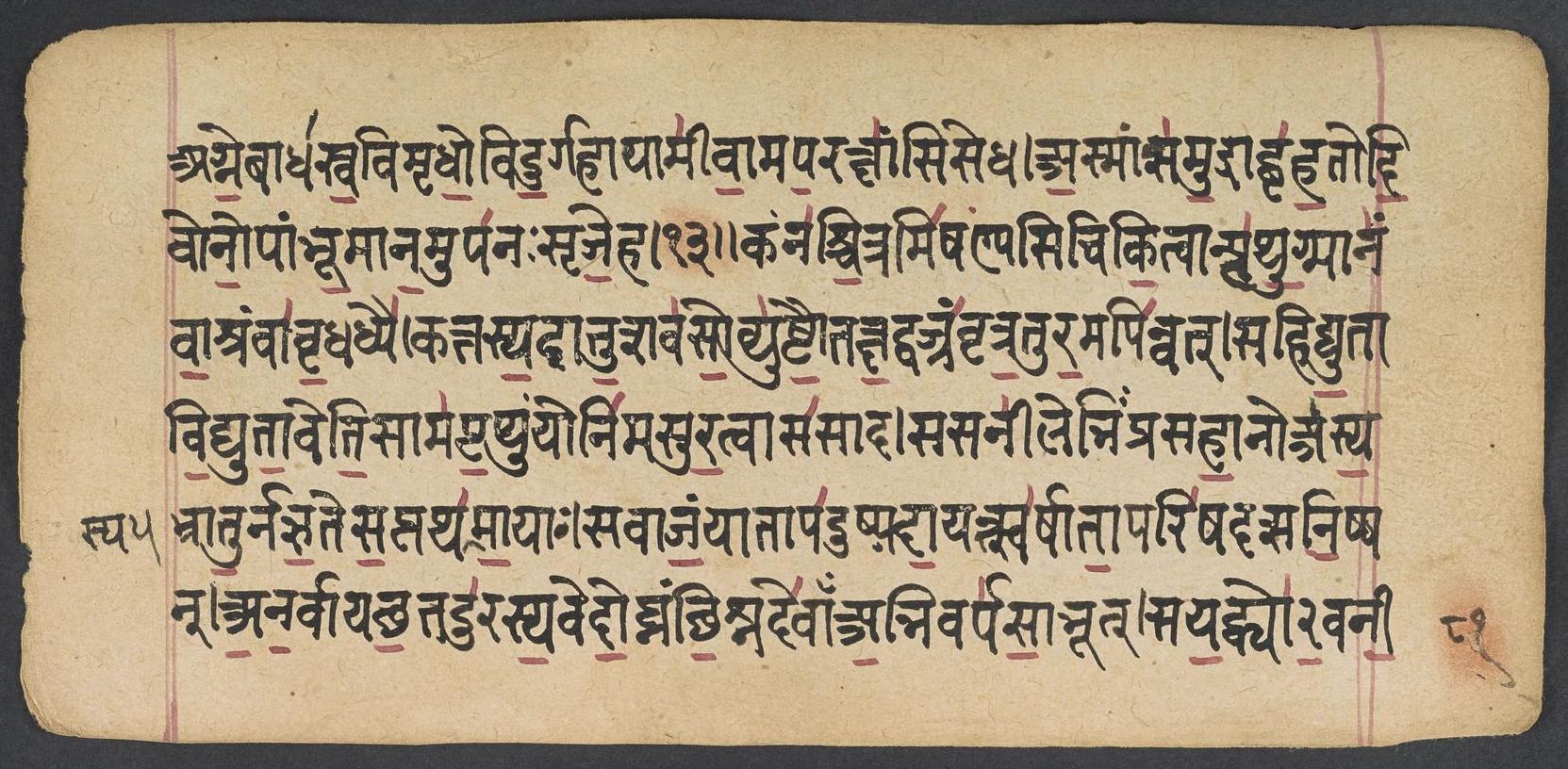
Where on the image
Penn Ms. Coll. 390 Item 48, fol. 81v (OPenn image 81, upper leaf). Checked on the image: the Rigveda text on this page begins in RV 10.98.12 ‹agne bādhasva vi mṛdho›. The next page with Rigveda text, fol. 82r, begins in RV 10.99.4 ‹-goṣv arvā juhoti pradhanyāsu›. Verses 10.99.1-3 end on this page.
1kaṁ na̍ś ci̱tram i̍ṣaṇyasi ciki̱tvān pṛ̍thu̱gmāna̍ṁ vā̱śraṁ vā̍vṛ̱dhadhyai̍ | kat tasya̱ dātu̱ śava̍so̱ vyu̍ṣṭau̱ takṣa̱d vajra̍ṁ vṛtra̱tura̱m api̍nvat ||
2sa hi dyu̱tā vi̱dyutā̱ veti̱ sāma̍ pṛ̱thuṁ yoni̍m asura̱tvā sa̍sāda | sa sanī̍ḻebhiḥ prasahā̱no a̍sya̱ bhrātu̱r na ṛ̱te sa̱ptatha̍sya mā̱yāḥ ||
3sa vāja̱ṁ yātāpa̍duṣpadā̱ yan sva̍rṣātā̱ pari̍ ṣadat sani̱ṣyan | a̱na̱rvā yac cha̱tadu̍rasya̱ vedo̱ ghnañ chi̱śnade̍vām̐ a̱bhi varpa̍sā̱ bhūt ||
1WHAT Splendid One, Loud-voiced, Farstriding, dost thou, well knowing, urge us to exalt with praises? What give we him? When his might dawned, he fashioned the Vr̥itra-slaying bolt, and sent us waters.
2He goes to end his work with lightning flashes: wide is the seat his Asura glory gives him. With his Companions, not without his Brother, he quells Saptatha's magic devices.
3On most auspicious path he goes to battle he toiled to win heaven's light, full fain to gain it; He seized the hundred-gated castle's treasure by craft, unchecked, and slew the lustful demons.
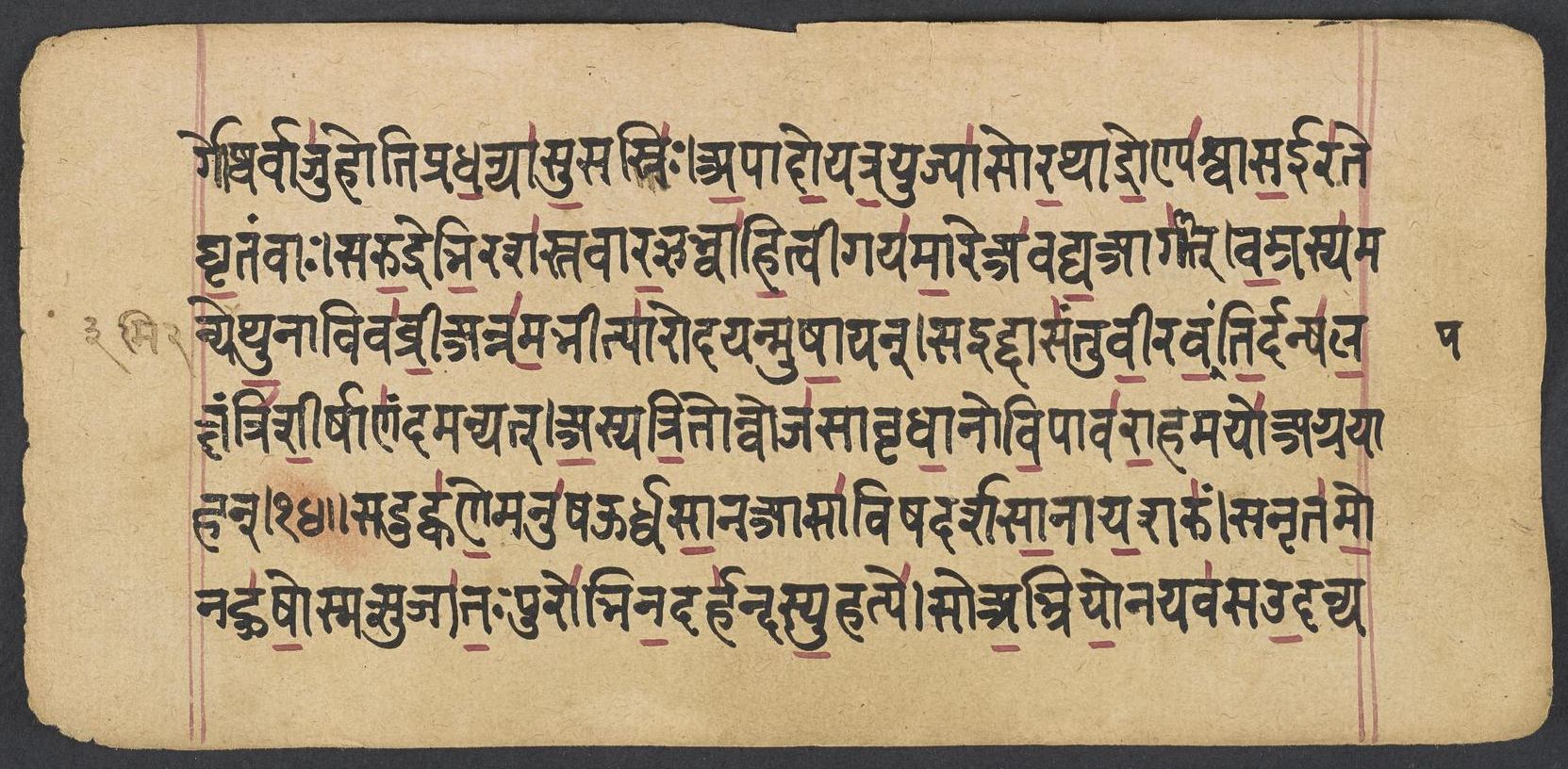
Where on the image
Penn Ms. Coll. 390 Item 48, fol. 82r (OPenn image 81, lower leaf). Checked on the image: the Rigveda text on this page begins in RV 10.99.4 ‹-goṣv arvā juhoti pradhanyāsu›. The next page with Rigveda text, fol. 82v, begins in RV 10.99.8 ‹-kṣayāya gātuṁ vidan no›. Verses 10.99.4-7 end on this page; 10.99.4 begins on fol. 81v.
4sa ya̱hvyo̱3̱̍ 'vanī̱r goṣv arvā ju̍hoti pradha̱nyā̍su̱ sasri̍ḥ | a̱pādo̱ yatra̱ yujyā̍so 'ra̱thā dro̱ṇya̍śvāsa̱ īra̍te ghṛ̱taṁ vāḥ ||
5sa ru̱drebhi̱r aśa̍stavāra̱ ṛbhvā̍ hi̱tvī gaya̍m ā̱rea̍vadya̱ āgā̍t | va̱mrasya̍ manye mithu̱nā viva̍vrī̱ anna̍m a̱bhītyā̍rodayan muṣā̱yan ||
6sa id dāsa̍ṁ tuvī̱rava̱m pati̱r dan ṣa̍ḻa̱kṣaṁ tri̍śī̱rṣāṇa̍ṁ damanyat | a̱sya tri̱to nv oja̍sā vṛdhā̱no vi̱pā va̍rā̱ham ayo̍agrayā han ||
7sa druhva̍ṇe̱ manu̍ṣa ūrdhvasā̱na ā sā̍viṣad arśasā̱nāya̱ śaru̍m | sa nṛta̍mo̱ nahu̍ṣo̱ 'smat sujā̍ta̱ḥ puro̍ 'bhina̱d arha̍n dasyu̱hatye̍ ||
4Fighting for kine, the prize of war, and I roaming among the herd be brings the young streams hither, Where, footless, joined, without a car to bear them, with jars for steeds, they pour their flood like butter.
5Bold, unsolicited for wealth, with Rudras he came, the Blameless, having left his dwelling, Came, seized the food of Vamra and his consort, and left the couple weeping and unsheltered.
6Lord of the dwelling, he subdued the demon who roared aloud, six-eyed and triple-headed. Trita, made stronger by the might he lent him, struck down the boar with shaft whose point was iron.
7He raised himself on high and shot his arrow against the guileful and oppressive foeman. Strong, glorious, manliest, for us he shattered the forts of Nabus when he slew the Dasyus.
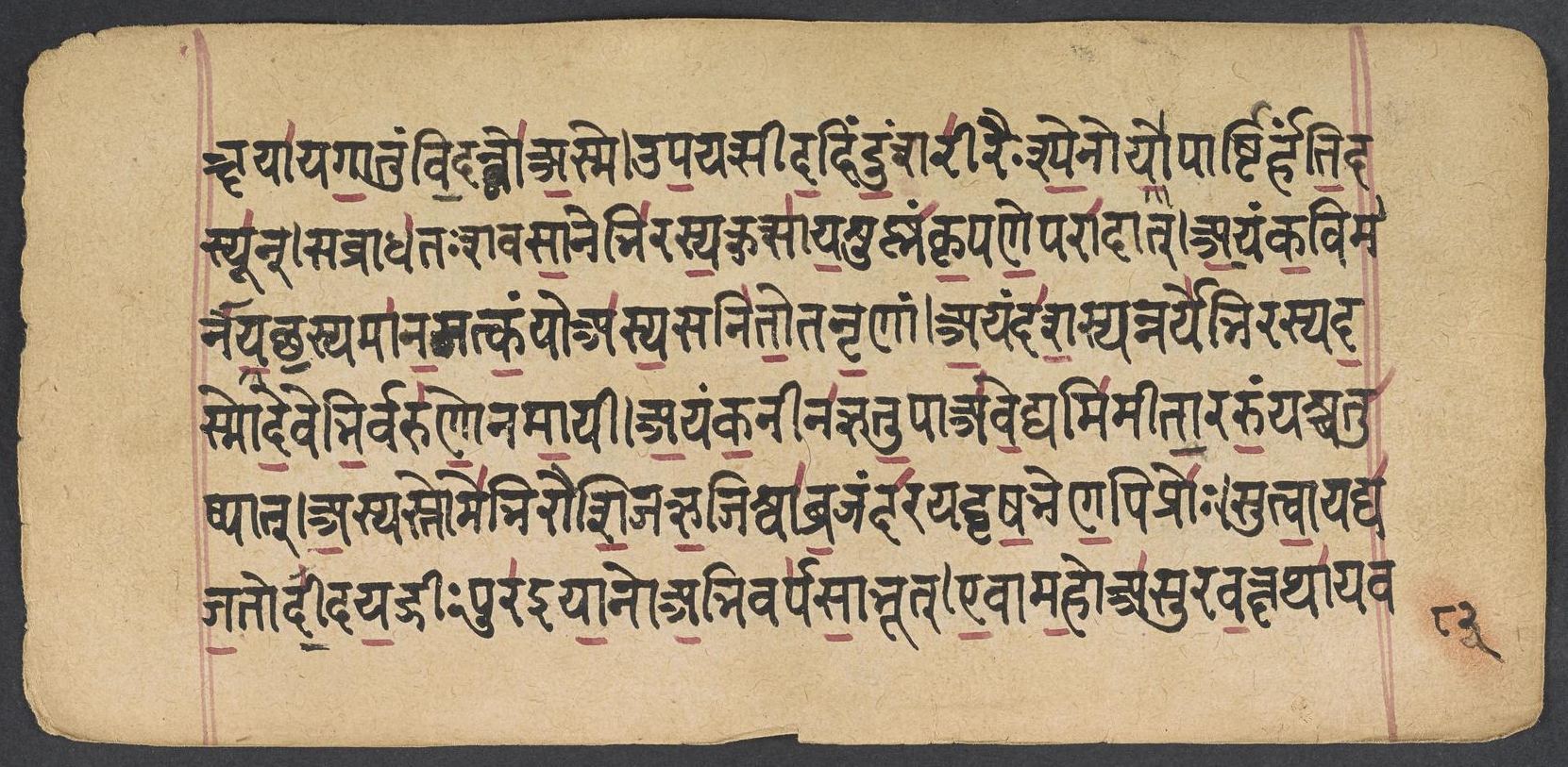
Where on the image
Penn Ms. Coll. 390 Item 48, fol. 82v (OPenn image 82, upper leaf). Checked on the image: the Rigveda text on this page begins in RV 10.99.8 ‹-kṣayāya gātuṁ vidan no›. The next page with Rigveda text, fol. 83r, begins in RV 10.99.12 ‹-vamrakaḥ paḍbhir upa sarpad›. Verses 10.99.8-11 end on this page; 10.99.8 begins on fol. 82r.
8so a̱bhriyo̱ na yava̍sa uda̱nyan kṣayā̍ya gā̱tuṁ vi̱dan no̍ a̱sme | upa̱ yat sīda̱d indu̱ṁ śarī̍raiḥ śye̱no 'yo̍pāṣṭir hanti̱ dasyū̍n ||
9sa vrādha̍taḥ śavasā̱nebhi̍r asya̱ kutsā̍ya̱ śuṣṇa̍ṁ kṛ̱paṇe̱ parā̍dāt | a̱yaṁ ka̱vim a̍nayac cha̱syamā̍na̱m atka̱ṁ yo a̍sya̱ sani̍to̱ta nṛ̱ṇām ||
10a̱yaṁ da̍śa̱syan narye̍bhir asya da̱smo de̱vebhi̱r varu̍ṇo̱ na mā̱yī | a̱yaṁ ka̱nīna̍ ṛtu̱pā a̍ve̱dy ami̍mītā̱raru̱ṁ yaś catu̍ṣpāt ||
11a̱sya stome̍bhir auśi̱ja ṛ̱jiśvā̍ vra̱jaṁ da̍rayad vṛṣa̱bheṇa̱ pipro̍ḥ | sutvā̱ yad ya̍ja̱to dī̱daya̱d gīḥ pura̍ iyā̱no a̱bhi varpa̍sā̱ bhūt ||
8He, like a cloud that rains upon the pasture, hath found for us the way to dwell in safety. When the Hawk comes in body to the Soma, armed with his iron claws he slays the Dasyus.
9He with his potent Friends gave up the mighty, gave Ṣushṇa up to Kutsa for affliction. He led the lauded Kavi, he delivered Atka as prey to him and to his heroes.
10He, with his Gods who love mankind, the Wondrous, giving like Varuṇa who works with magic, Was known, yet young as guardian of the seasons; and he quelled Araru, four-footed dernon.
11Through lauds of him hath Auṣija R̥ijiṣvan burst, with the Mighty's aid, the stall of Pipru. When the saint pressed the juice and shone as singer, he seized the forts and with his craft subdued them.
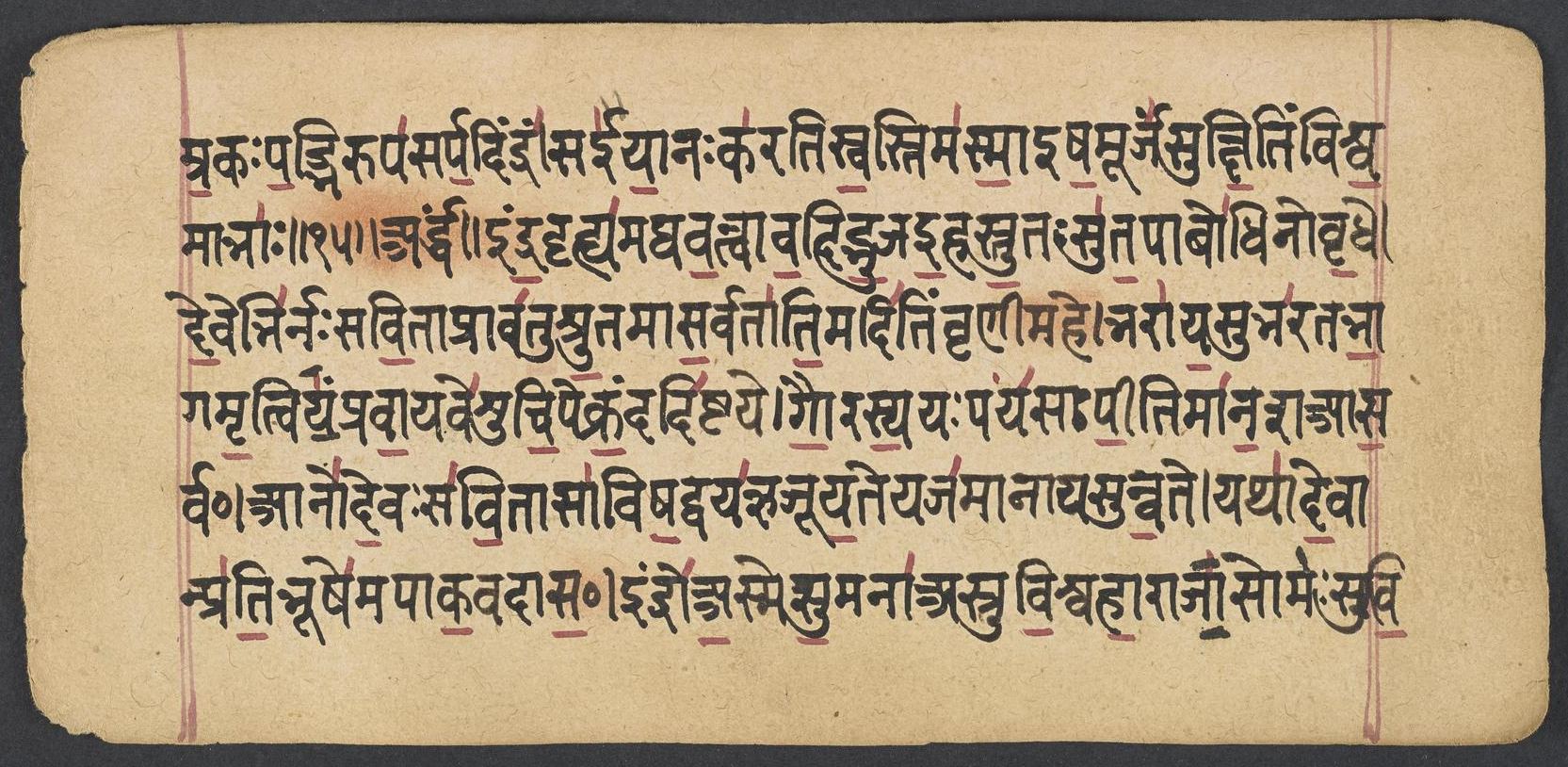
Where on the image
Penn Ms. Coll. 390 Item 48, fol. 83r (OPenn image 82, lower leaf). Checked on the image: the Rigveda text on this page begins in RV 10.99.12 ‹-vamrakaḥ paḍbhir upa sarpad›. The next page with Rigveda text, fol. 83v, begins in RV 10.100.4 ‹-suvitasyādhy etu naḥ›. Verse 10.99.12 ends on this page; 10.99.12 begins on fol. 82v.
12e̱vā ma̱ho a̍sura va̱kṣathā̍ya vamra̱kaḥ pa̱ḍbhir upa̍ sarpa̱d indra̍m | sa i̍yā̱naḥ ka̍rati sva̱stim a̍smā̱ iṣa̱m ūrja̍ṁ sukṣi̱tiṁ viśva̱m ābhā̍ḥ ||
12So, swiftly Asura, for exaltation, hath the great Vamraka come nigh to Indra. He will, when supplicated, bring him blessing: he hath brought all, food, strength, a happy dwelling.
Notes
- Sanskrit: Aufrecht's edition (1877) with the Vedic accents, as entered by van Nooten and Holland (GRETIL).
- English: Ralph T. H. Griffith, The Hymns of the Rigveda (1889-1892; 2nd ed. 1896-1897), from the VedaWeb digital text; OCR slips in that text were corrected against the printed 2nd edition (data/sources/rigveda/griffith_errata.json).
Cite
Sources
- Source: Penn Ms. Coll. 390 Item 48 (1711 CE (colophon: Saṃvat 1768)), OPenn, Public Domain Mark + Aufrecht's accented text (GRETIL) + Griffith's English (VedaWeb) (holding institution)
- Critical edition: Aufrecht (1877), accented e-text via GRETIL
← previous · → next · v cycle view · l back to library