Rigveda 10.102: The race of Mugdalani
Introduction
Rigveda 10.102 is a hymn of 12 verses addressed to the race of Mugdalani. It stands in book (maṇḍala) 10, the last and latest book. The Rigveda is the oldest collection of Sanskrit hymns, composed in the second half of the second millennium BCE and handed down orally for many centuries before it was written down.
The manuscript shown is Penn Ms. Coll. 390 Item 48 (University of Pennsylvania), a paper manuscript of the eighth aṣṭaka (RV 10.46-10.191) of the Ṛgveda Saṃhitā in Devanāgarī, 158 leaves, 6 lines to the page, with the accents marked in red; the scribe's colophon on fol. 158 gives Saṃvat 1768 (1711 CE); this hymn stands on fol. 85v-87r. Each section below gives the verses that end on one page; the page boundaries were read on the images (the opening words of every page), not counted out. Like most Rigveda manuscripts, Penn Ms. Coll. 390 Item 48 writes a repeated refrain in short form after its first occurrence (for example kasmai° for kasmai devāya haviṣā vidhema); the Sanskrit shown is the full text of Aufrecht's edition.
How was this verified? (Provenance)
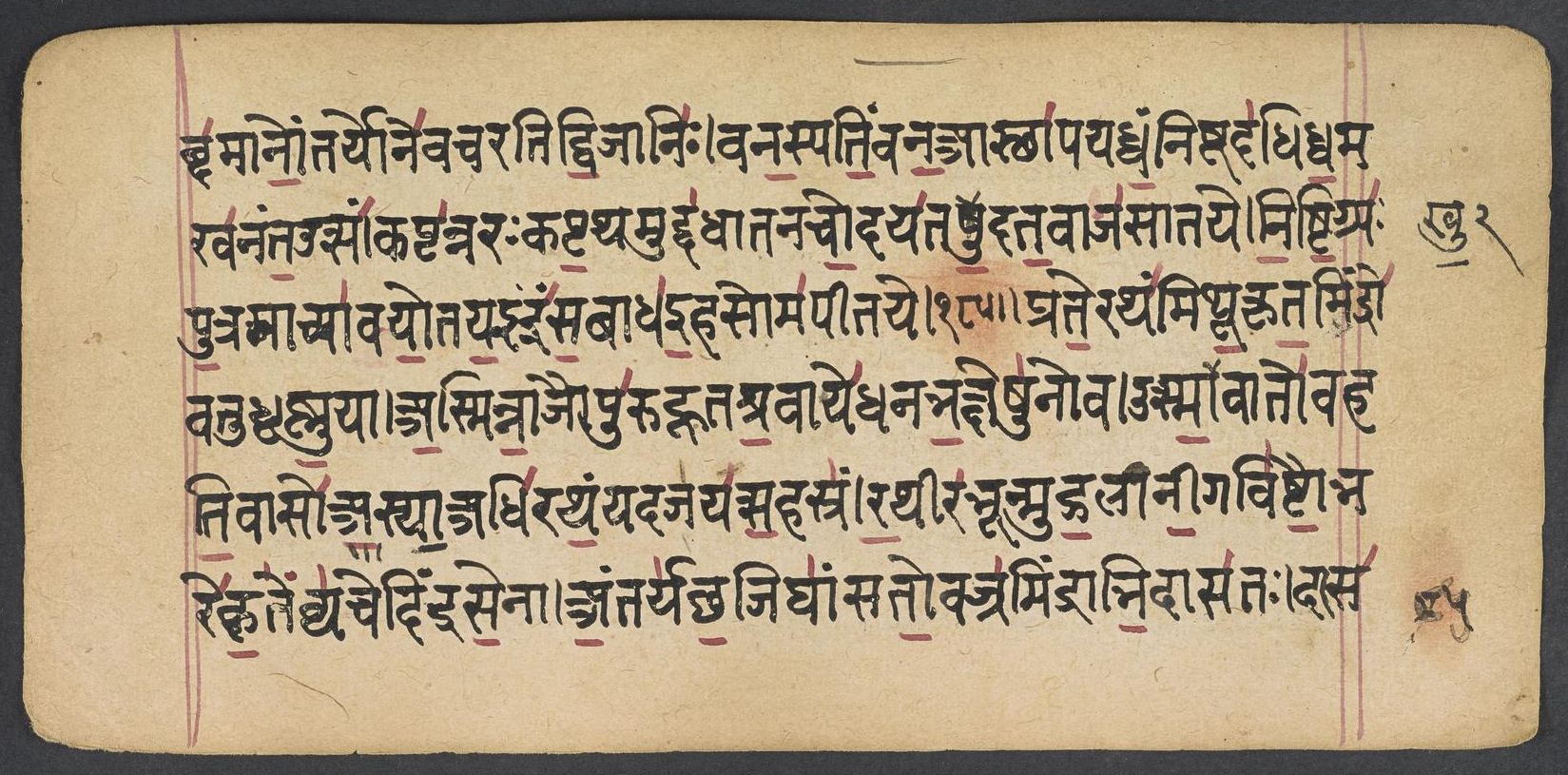
Where on the image
Penn Ms. Coll. 390 Item 48, fol. 85v (OPenn image 85, upper leaf). Checked on the image: the Rigveda text on this page begins in RV 10.101.11 ‹-āpibdamāno 'ntar yoneva carati›. The next page with Rigveda text, fol. 86r, begins in RV 10.102.3 ‹-dāsasya vā maghavann āryasya›. Verses 10.102.1-2 end on this page.
1pra te̱ ratha̍m mithū̱kṛta̱m indro̍ 'vatu dhṛṣṇu̱yā | a̱sminn ā̱jau pu̍ruhūta śra̱vāyye̍ dhanabha̱kṣeṣu̍ no 'va ||
2ut sma̱ vāto̍ vahati̱ vāso̍ 'syā̱ adhi̍ratha̱ṁ yad aja̍yat sa̱hasra̍m | ra̱thīr a̍bhūn mudga̱lānī̱ gavi̍ṣṭau̱ bhare̍ kṛ̱taṁ vy a̍ced indrase̱nā ||
1FOR thee may Indra boldly speed the car that works on either side. Favour us, Much-invoked! in this most glorious fight against the raiders of our wealth.
2Loose in the wind the woman's robe was streaming what time she won a car-load worth a thousand. The charioteer in fight was Mudgalani: she Indra's dart, heaped up the prize of battle.
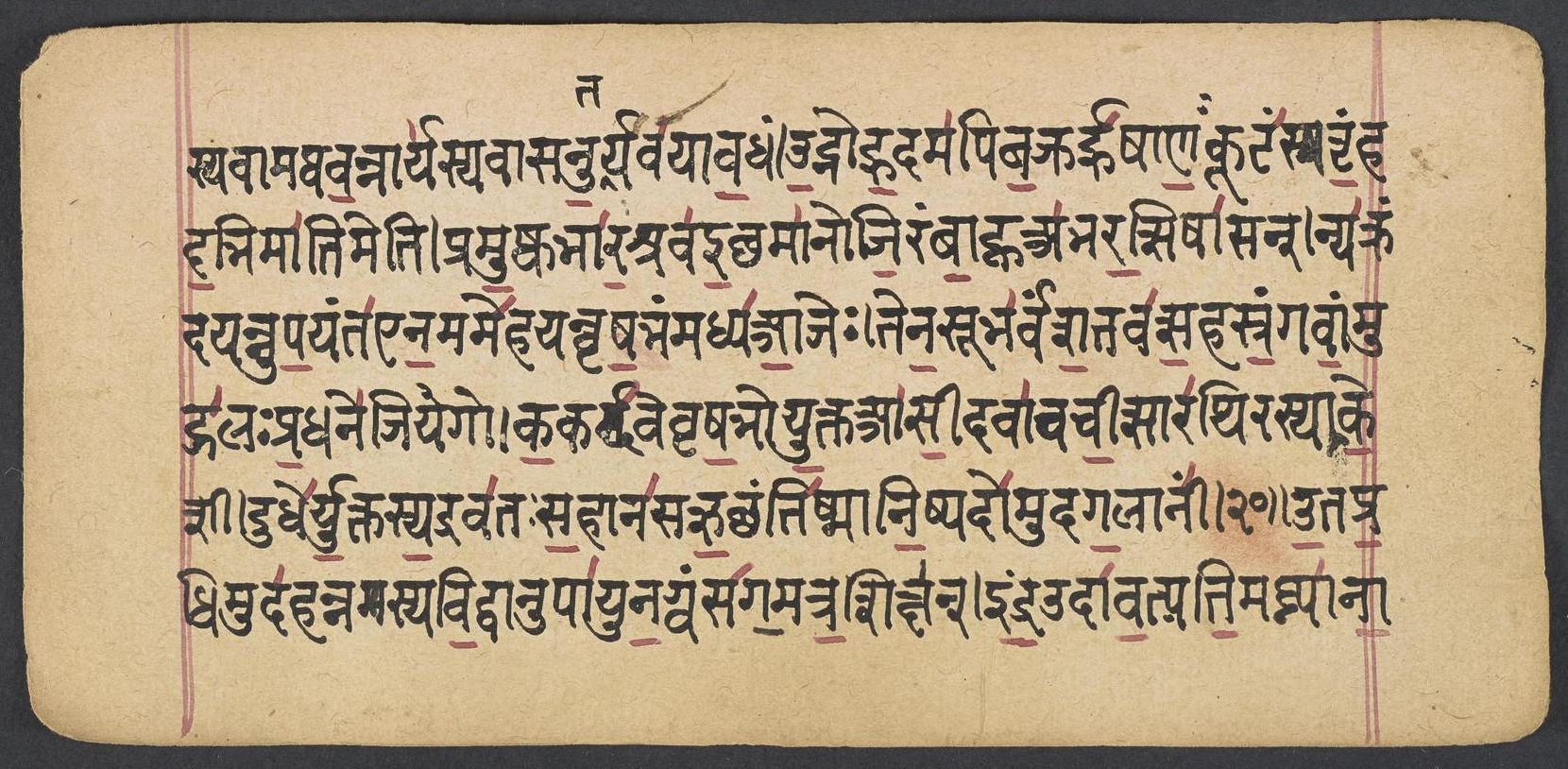
Where on the image
Penn Ms. Coll. 390 Item 48, fol. 86r (OPenn image 85, lower leaf). Checked on the image: the Rigveda text on this page begins in RV 10.102.3 ‹-dāsasya vā maghavann āryasya›. The next page with Rigveda text, fol. 86v, begins in RV 10.102.7 ‹-aghnyānām araṁhata padyābhiḥ kakudmān›. Verses 10.102.3-6 end on this page; 10.102.3 begins on fol. 85v.
3a̱ntar ya̍ccha̱ jighā̍ṁsato̱ vajra̍m indrābhi̱dāsa̍taḥ | dāsa̍sya vā maghava̱nn ārya̍sya vā sanu̱tar ya̍vayā va̱dham ||
4u̱dno hra̱dam a̍piba̱j jarhṛ̍ṣāṇa̱ḥ kūṭa̍ṁ sma tṛ̱ṁhad a̱bhimā̍tim eti | pra mu̱ṣkabhā̍ra̱ḥ śrava̍ i̱cchamā̍no 'ji̱ram bā̱hū a̍bhara̱t siṣā̍san ||
5ny a̍krandayann upa̱yanta̍ ena̱m ame̍hayan vṛṣa̱bham madhya̍ ā̱jeḥ | tena̱ sūbha̍rvaṁ śa̱tava̍t sa̱hasra̱ṁ gavā̱m mudga̍laḥ pra̱dhane̍ jigāya ||
6ka̱karda̍ve vṛṣa̱bho yu̱kta ā̍sī̱d avā̍vacī̱t sāra̍thir asya ke̱śī | dudhe̍r yu̱ktasya̱ drava̍taḥ sa̱hāna̍sa ṛ̱cchanti̍ ṣmā ni̱ṣpado̍ mudga̱lānī̍m ||
3O Indra, cast thy bolt among assailants who would slaughter us: The weapon both of Dâsa and of Ârya foe keep far away, O Maghavan.
4The bull in joy had drunk a lake of water. His shattering horn encountered an opponent. Swiftly, in vigorous strength, eager for glory, he stretched his forefeet, fain to win and triumph.
5They came anear the bull; they made him thunder, made him pour rain down ere the fight was ended. And Mudgala thereby won in the contest well-pastured kine in hundreds and in thousands.
6In hope of victory that bull was harnessed: Kesi the driver urged him on with shouting. As he ran swiftly with the car behind him his lifted heels pressed close on Mudgalani.
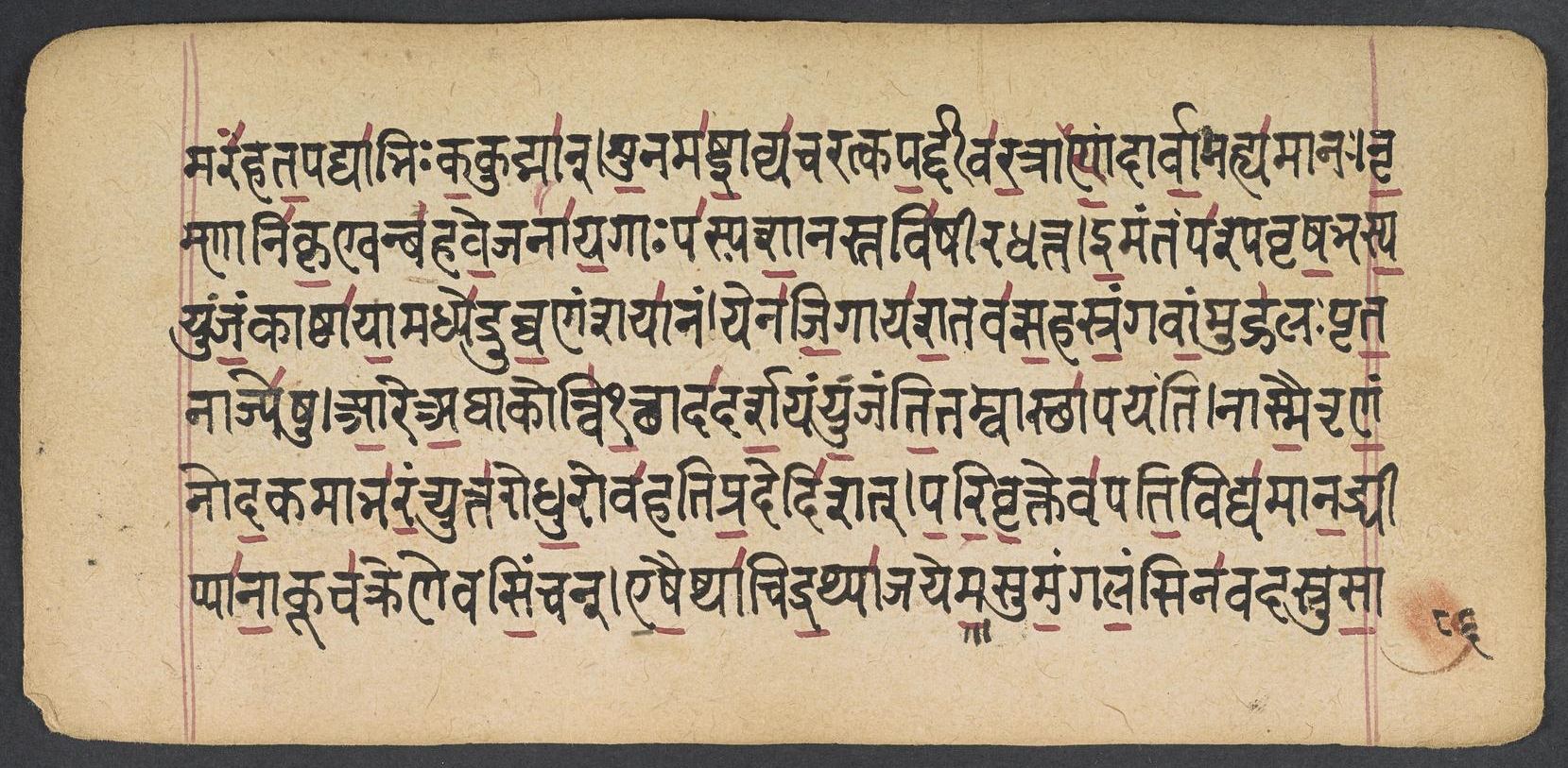
Where on the image
Penn Ms. Coll. 390 Item 48, fol. 86v (OPenn image 86, upper leaf). Checked on the image: the Rigveda text on this page begins in RV 10.102.7 ‹-aghnyānām araṁhata padyābhiḥ kakudmān›. The next page with Rigveda text, fol. 87r, begins in RV 10.102.11 ‹-sātam›. Verses 10.102.7-10 end on this page; 10.102.7 begins on fol. 86r.
7u̱ta pra̱dhim ud a̍hann asya vi̱dvān upā̍yuna̱g vaṁsa̍ga̱m atra̱ śikṣa̍n | indra̱ ud ā̍va̱t pati̱m aghnyā̍nā̱m ara̍ṁhata̱ padyā̍bhiḥ ka̱kudmā̍n ||
8śu̱nam a̍ṣṭrā̱vy a̍carat kapa̱rdī va̍ra̱trāyā̱ṁ dārv ā̱nahya̍mānaḥ | nṛ̱mṇāni̍ kṛ̱ṇvan ba̱have̱ janā̍ya̱ gāḥ pa̍spaśā̱nas tavi̍ṣīr adhatta ||
9i̱maṁ tam pa̍śya vṛṣa̱bhasya̱ yuñja̱ṁ kāṣṭhā̍yā̱ madhye̍ drugha̱ṇaṁ śayā̍nam | yena̍ ji̱gāya̍ śa̱tava̍t sa̱hasra̱ṁ gavā̱m mudga̍laḥ pṛta̱nājye̍ṣu ||
10ā̱re a̱ghā ko nv i1̱̍tthā da̍darśa̱ yaṁ yu̱ñjanti̱ tam v ā sthā̍payanti | nāsmai̱ tṛṇa̱ṁ noda̱kam ā bha̍ra̱nty utta̍ro dhu̱ro va̍hati pra̱dedi̍śat ||
7Deftly for him he stretched the car-pole forward, guided the bull thereto and firmly yoked him. Indra vouchsafed the lord of cows his favour: with mighty steps the buffalo ran onward.
8Touched by the goad the shaggy beast went nobly, bound to the pole by the yoke's thong of leather. Performing deeds of might for many people, he, looking on the cows, gained strength and vigour.
9Here look upon this mace, this bull's companion, now lying midway on the field of battle. Therewith hath Mudgala in ordered contest won for cattle for himself, a hundred thousand.
10Far is the evil: who hath here beheld it? Hither they bring the bull whom they are yoking.. To this they give not either food or water. Reaching beyond the pole it gives directions.
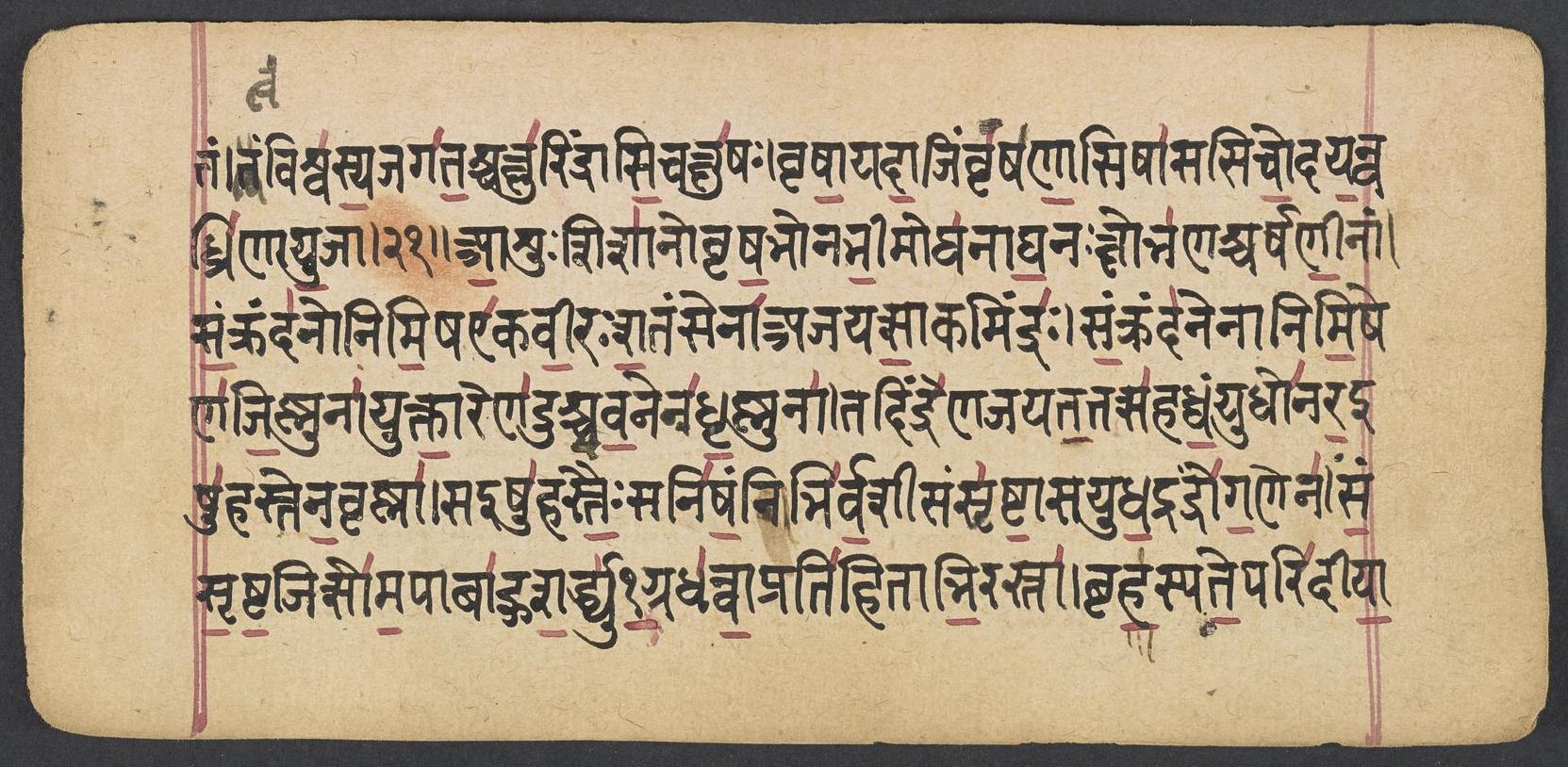
Where on the image
Penn Ms. Coll. 390 Item 48, fol. 87r (OPenn image 86, lower leaf). Checked on the image: the Rigveda text on this page begins in RV 10.102.11 ‹-sātam›. The next page with Rigveda text, fol. 87v, begins in RV 10.103.4 ‹rathena rakṣohāmitrām̐ apabādhamānaḥ›. Verses 10.102.11-12 end on this page; 10.102.11 begins on fol. 86v.
11pa̱ri̱vṛ̱kteva̍ pati̱vidya̍m āna̱ṭ pīpyā̍nā̱ kūca̍kreṇeva si̱ñcan | e̱ṣai̱ṣyā̍ cid ra̱thyā̍ jayema suma̱ṅgala̱ṁ sina̍vad astu sā̱tam ||
12tvaṁ viśva̍sya̱ jaga̍ta̱ś cakṣu̍r indrāsi̱ cakṣu̍ṣaḥ | vṛṣā̱ yad ā̱jiṁ vṛṣa̍ṇā̱ siṣā̍sasi co̱daya̱n vadhri̍ṇā yu̱jā ||
11Like one forsaken, she hath found a husband, and teemed as if her breast were full and flowing. With swiftly-racing chariot may we conquer, and rich and blessed be our gains in battle.
12Thou, Indra, art the mark whereon the eyes of all life rest, when thou, A Bull who drivest with thy bull, wilt win the race together with thy weakling friend.
Notes
- Sanskrit: Aufrecht's edition (1877) with the Vedic accents, as entered by van Nooten and Holland (GRETIL).
- English: Ralph T. H. Griffith, The Hymns of the Rigveda (1889-1892; 2nd ed. 1896-1897), from the VedaWeb digital text; OCR slips in that text were corrected against the printed 2nd edition (data/sources/rigveda/griffith_errata.json).
Cite
Sources
- Source: Penn Ms. Coll. 390 Item 48 (1711 CE (colophon: Saṃvat 1768)), OPenn, Public Domain Mark + Aufrecht's accented text (GRETIL) + Griffith's English (VedaWeb) (holding institution)
- Critical edition: Aufrecht (1877), accented e-text via GRETIL
← previous · → next · v cycle view · l back to library