Rigveda 10.103: To Indra
Introduction
Rigveda 10.103 is a hymn of 13 verses addressed to Indra. It stands in book (maṇḍala) 10, the last and latest book. The Rigveda is the oldest collection of Sanskrit hymns, composed in the second half of the second millennium BCE and handed down orally for many centuries before it was written down.
The manuscript shown is Penn Ms. Coll. 390 Item 48 (University of Pennsylvania), a paper manuscript of the eighth aṣṭaka (RV 10.46-10.191) of the Ṛgveda Saṃhitā in Devanāgarī, 158 leaves, 6 lines to the page, with the accents marked in red; the scribe's colophon on fol. 158 gives Saṃvat 1768 (1711 CE); this hymn stands on fol. 87r-88v. Each section below gives the verses that end on one page; the page boundaries were read on the images (the opening words of every page), not counted out. Like most Rigveda manuscripts, Penn Ms. Coll. 390 Item 48 writes a repeated refrain in short form after its first occurrence (for example kasmai° for kasmai devāya haviṣā vidhema); the Sanskrit shown is the full text of Aufrecht's edition.
How was this verified? (Provenance)
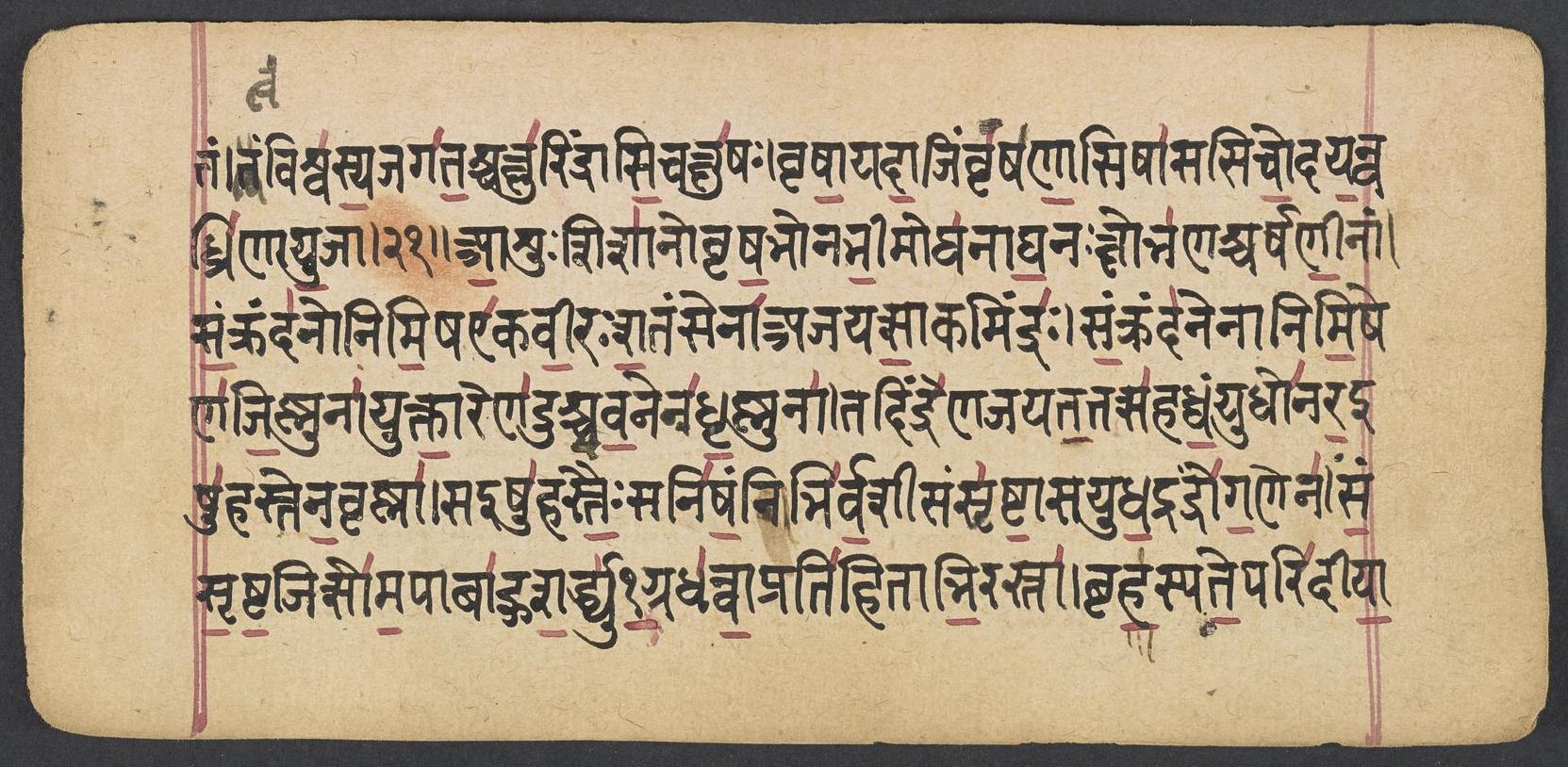
Where on the image
Penn Ms. Coll. 390 Item 48, fol. 87r (OPenn image 86, lower leaf). Checked on the image: the Rigveda text on this page begins in RV 10.102.11 ‹-sātam›. The next page with Rigveda text, fol. 87v, begins in RV 10.103.4 ‹rathena rakṣohāmitrām̐ apabādhamānaḥ›. Verses 10.103.1-3 end on this page.
1ā̱śuḥ śiśā̍no vṛṣa̱bho na bhī̱mo gha̍nāgha̱naḥ kṣobha̍ṇaś carṣaṇī̱nām | sa̱ṁkranda̍no 'nimi̱ṣa e̍kavī̱raḥ śa̱taṁ senā̍ ajayat sā̱kam indra̍ḥ ||
2sa̱ṁkranda̍nenānimi̱ṣeṇa̍ ji̱ṣṇunā̍ yutkā̱reṇa̍ duścyava̱nena̍ dhṛ̱ṣṇunā̍ | tad indre̍ṇa jayata̱ tat sa̍hadhva̱ṁ yudho̍ nara̱ iṣu̍hastena̱ vṛṣṇā̍ ||
3sa iṣu̍hastai̱ḥ sa ni̍ṣa̱ṅgibhi̍r va̱śī saṁsra̍ṣṭā̱ sa yudha̱ indro̍ ga̱ṇena̍ | sa̱ṁsṛ̱ṣṭa̱jit so̍ma̱pā bā̍huśa̱rdhy u1̱̍gradha̍nvā̱ prati̍hitābhi̱r astā̍ ||
1SWIFT, rapidly striking, like a bull who sharpens his horns, terrific, stirring up the people, With eyes that close not, bellowing, Sole Hero, Indra. subdued at once a hundred armies.
2With him loud-roaring, ever watchful, Victor, bold, hard to overthrow, Rouser of battle, Indra. the Strong, whose hand bears arrows, conquer, ye warriors, now, now vanquish in the combat.
3He rules with those who carry shafts and quivers, Indra who with his band rings hosts together, Foe-conquering, strong of arm, the Soma-drinker, with mighty bow, shooting with well-laid arrows.
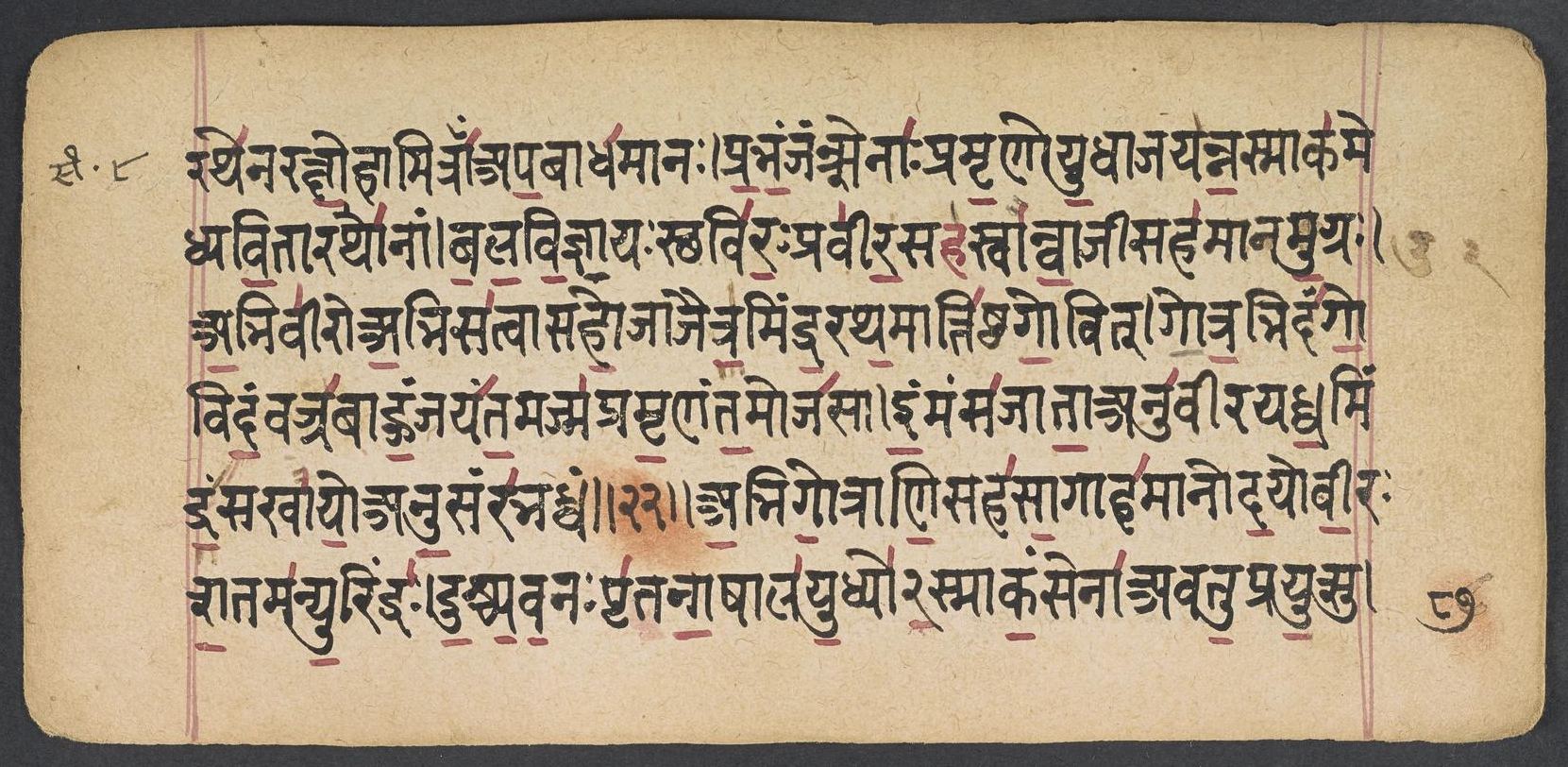
Where on the image
Penn Ms. Coll. 390 Item 48, fol. 87v (OPenn image 87, upper leaf). Checked on the image: the Rigveda text on this page begins in RV 10.103.4 ‹rathena rakṣohāmitrām̐ apabādhamānaḥ›. The next page with Rigveda text, fol. 88r, begins in RV 10.103.8 ‹indra āsāṁ netā bṛhaspatir›. Verses 10.103.4-7 end on this page; 10.103.4 begins on fol. 87r.
4bṛha̍spate̱ pari̍ dīyā̱ rathe̍na rakṣo̱hāmitrā̍m̐ apa̱bādha̍mānaḥ | pra̱bha̱ñjan senā̍ḥ pramṛ̱ṇo yu̱dhā jaya̍nn a̱smāka̍m edhy avi̱tā rathā̍nām ||
5ba̱la̱vi̱jñā̱yaḥ sthavi̍ra̱ḥ pravī̍ra̱ḥ saha̍svān vā̱jī saha̍māna u̱graḥ | a̱bhivī̍ro a̱bhisa̍tvā saho̱jā jaitra̍m indra̱ ratha̱m ā ti̍ṣṭha go̱vit ||
6go̱tra̱bhida̍ṁ go̱vida̱ṁ vajra̍bāhu̱ṁ jaya̍nta̱m ajma̍ pramṛ̱ṇanta̱m oja̍sā | i̱maṁ sa̍jātā̱ anu̍ vīrayadhva̱m indra̍ṁ sakhāyo̱ anu̱ saṁ ra̍bhadhvam ||
7a̱bhi go̱trāṇi̱ saha̍sā̱ gāha̍māno 'da̱yo vī̱raḥ śa̱tama̍nyu̱r indra̍ḥ | du̱ścya̱va̱naḥ pṛ̍tanā̱ṣāḻ a̍yu̱dhyo̱3̱̍ 'smāka̱ṁ senā̍ avatu̱ pra yu̱tsu ||
4Br̥ihaspati, fly with thy chariot hither, slayer of demons, driving off our foemen. Be thou protector of our cars, destroyer, victor in battle, breaker-up of armies.
5Conspicuous by thy strength, firm, foremost fighter, mighty and fierce, victorious, all-subduing, The Son of Conquest, passing men and heroes, kine-winner, mount thy conquering car, O Indra.
6Cleaver of stalls, kine-winner, armed with thunder, who quells an army and with might destroys it.- Follow him, brothers! quit yourselves like heroes, and like this Indra show your zeal and courage.
7Piercing the cow-stalls with surpassing vigour, Indra, the pitiless Hero, wild with anger, Victor in fight, unshaken and resistless,may he protect our armies in our battles.
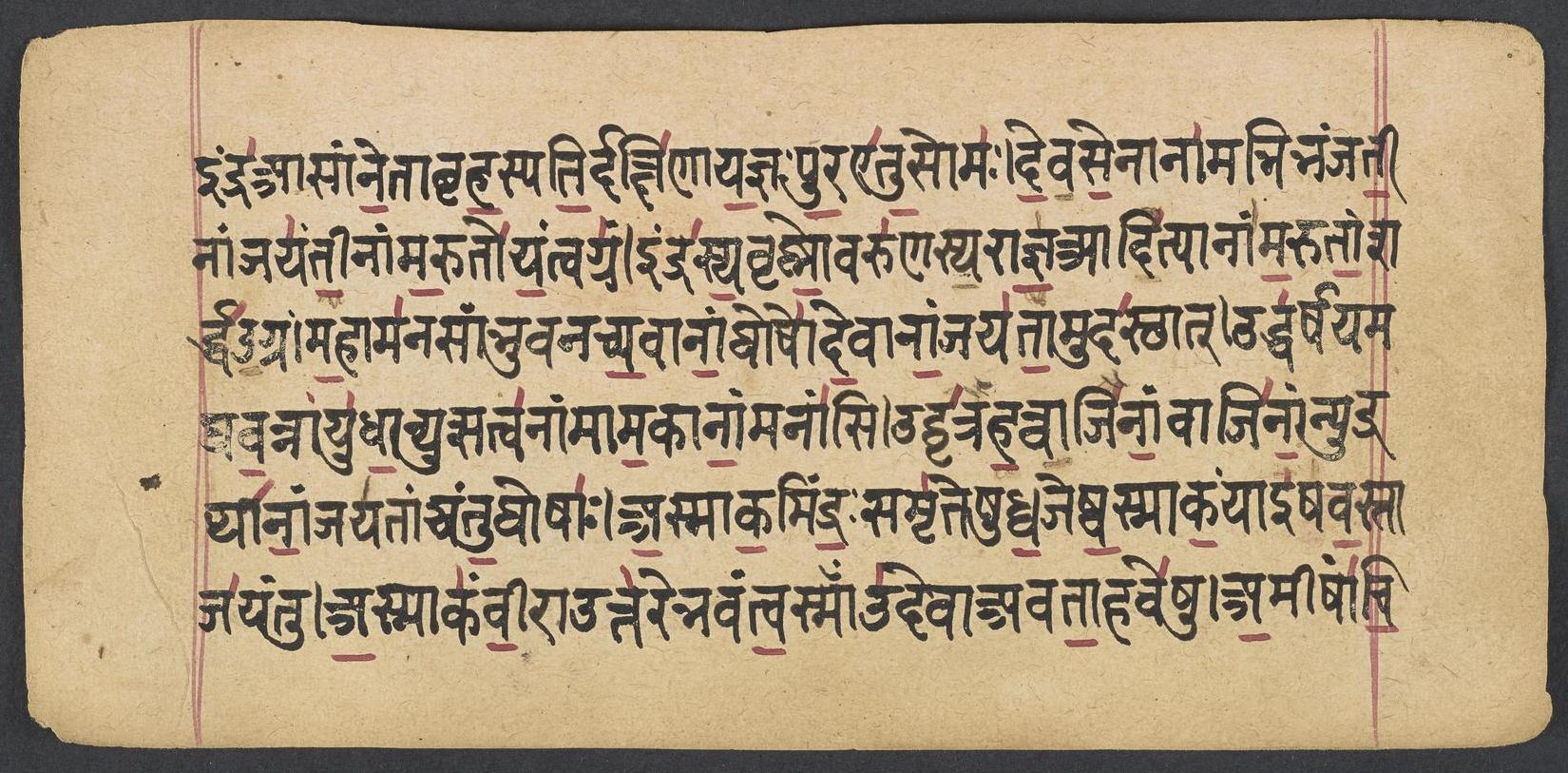
Where on the image
Penn Ms. Coll. 390 Item 48, fol. 88r (OPenn image 87, lower leaf). Checked on the image: the Rigveda text on this page begins in RV 10.103.8 ‹indra āsāṁ netā bṛhaspatir›. The next page with Rigveda text, fol. 88v, begins in RV 10.103.12 ‹-cittam pratilobhayantī gṛhāṇāṅgāny apve›. Verses 10.103.8-11 end on this page.
8indra̍ āsāṁ ne̱tā bṛha̱spati̱r dakṣi̍ṇā ya̱jñaḥ pu̱ra e̍tu̱ soma̍ḥ | de̱va̱se̱nānā̍m abhibhañjatī̱nāṁ jaya̍ntīnām ma̱ruto̍ ya̱ntv agra̍m ||
9indra̍sya̱ vṛṣṇo̱ varu̍ṇasya̱ rājña̍ ādi̱tyānā̍m ma̱rutā̱ṁ śardha̍ u̱gram | ma̱hāma̍nasām bhuvanacya̱vānā̱ṁ ghoṣo̍ de̱vānā̱ṁ jaya̍tā̱m ud a̍sthāt ||
10ud dha̍rṣaya maghava̱nn āyu̍dhā̱ny ut satva̍nām māma̱kānā̱m manā̍ṁsi | ud vṛ̍trahan vā̱jinā̱ṁ vāji̍nā̱ny ud rathā̍nā̱ṁ jaya̍tāṁ yantu̱ ghoṣā̍ḥ ||
11a̱smāka̱m indra̱ḥ samṛ̍teṣu dhva̱jeṣv a̱smāka̱ṁ yā iṣa̍va̱s tā ja̍yantu | a̱smāka̍ṁ vī̱rā utta̍re bhavantv a̱smām̐ u̍ devā avatā̱ have̍ṣu ||
8Indra guide these: Br̥ihaspati precede them, the guerdon, and the sacrifice, and Soma; And let the banded Maruts march in forefront of heavenly hosts that conquer and demolish.
9Ours be the potent host of mighty Indra, King Varuṇa, and Maruts, and Âdityas. Uplifted is the shout of Gods who conquer high-minded Gods who cause the worlds to tremble.
10Bristle thou up, O Maghavan, our weapons: excite the spirits of my warring heroes. Urge on the strong steeds' might, O Vr̥itra-slayer, and let the din of conquering cars go upward.
11May Indra aid us when our flags are gathered: victorious be the arrows of our army. May our brave men of war prevail in battle. Ye Gods, protect us in the shout of onset.
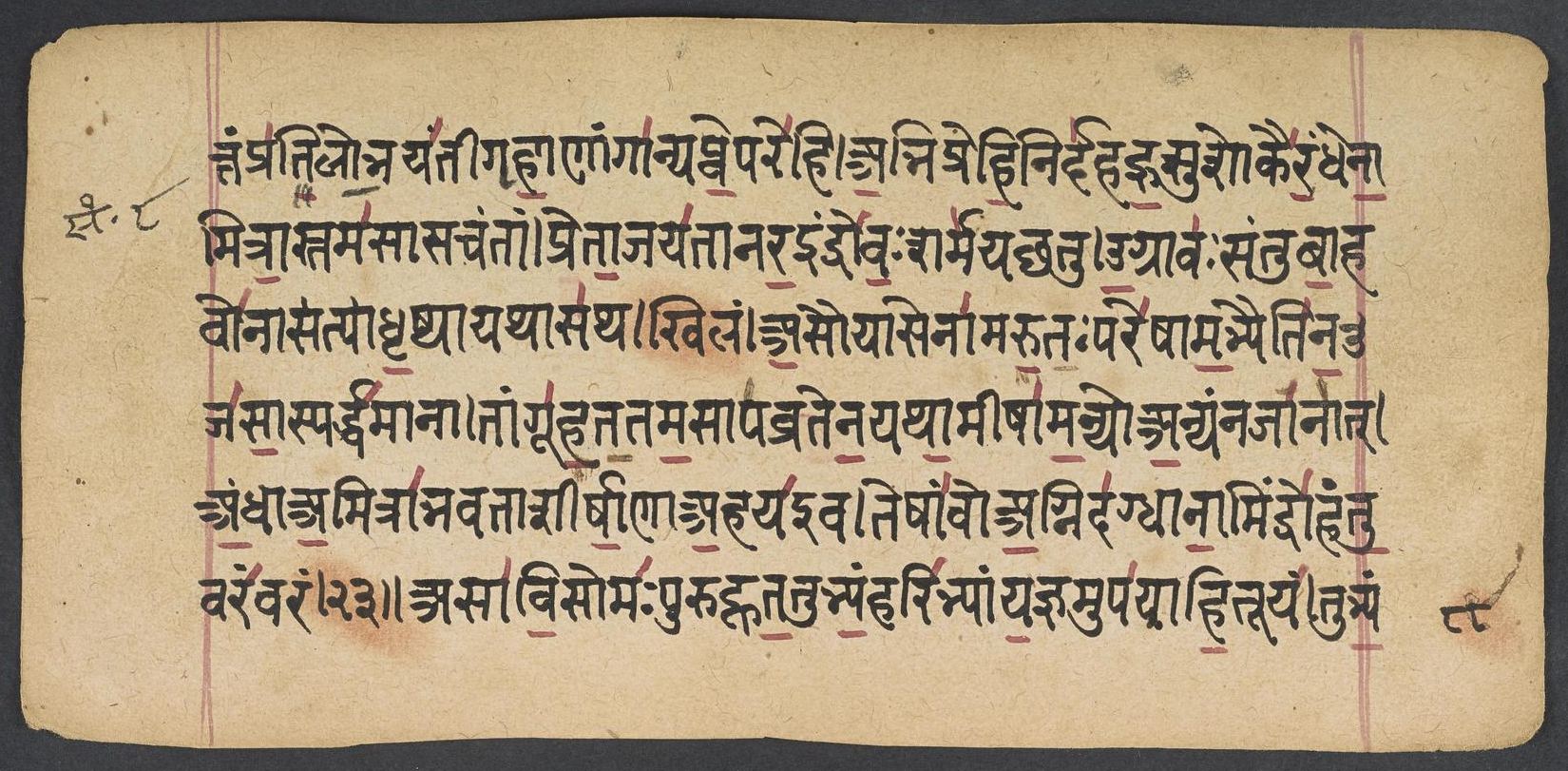
Where on the image
Penn Ms. Coll. 390 Item 48, fol. 88v (OPenn image 88, upper leaf). Checked on the image: the Rigveda text on this page begins in RV 10.103.12 ‹-cittam pratilobhayantī gṛhāṇāṅgāny apve›. 10.103.13 ends in line 3, followed by the heading khilaṃ and khila verses (asau yā senā marutaḥ pareṣām) with a varga number; 10.104.1 begins in line 6. The next page with Rigveda text, fol. 89r, begins in RV 10.104.1 ‹giro vipravīrā iyānā dadhanvira›. Verses 10.103.12-13 end on this page; 10.103.12 begins on fol. 88r.
12a̱mīṣā̍ṁ ci̱ttam pra̍tilo̱bhaya̍ntī gṛhā̱ṇāṅgā̍ny apve̱ pare̍hi | a̱bhi prehi̱ nir da̍ha hṛ̱tsu śokai̍r a̱ndhenā̱mitrā̱s tama̍sā sacantām ||
13pretā̱ jaya̍tā nara̱ indro̍ va̱ḥ śarma̍ yacchatu | u̱grā va̍ḥ santu bā̱havo̍ 'nādhṛ̱ṣyā yathāsa̍tha ||
12Bewildering the senses of our foemen, seize thou their bodies and depart, O Apva. Attack them, set their hearts on fire and burn them: so let our foes abide in utter darkness.
13Advance, O heroes, win the day. May Indra be your sure defence. Exceeding mighty be your arms, that none may wound or injure you.
Notes
- Sanskrit: Aufrecht's edition (1877) with the Vedic accents, as entered by van Nooten and Holland (GRETIL).
- English: Ralph T. H. Griffith, The Hymns of the Rigveda (1889-1892; 2nd ed. 1896-1897), from the VedaWeb digital text; OCR slips in that text were corrected against the printed 2nd edition (data/sources/rigveda/griffith_errata.json).
- This manuscript inserts khila verses (supplementary hymns outside Aufrecht's text) at some hymn ends; they are noted in the section notes and not reproduced.
Cite
Sources
- Source: Penn Ms. Coll. 390 Item 48 (1711 CE (colophon: Saṃvat 1768)), OPenn, Public Domain Mark + Aufrecht's accented text (GRETIL) + Griffith's English (VedaWeb) (holding institution)
- Critical edition: Aufrecht (1877), accented e-text via GRETIL
← previous · → next · v cycle view · l back to library