Rigveda 10.108: Sarama and the Panis
Introduction
Rigveda 10.108 is a hymn of 11 verses addressed to Sarama and the Panis. It stands in book (maṇḍala) 10, the last and latest book. The Rigveda is the oldest collection of Sanskrit hymns, composed in the second half of the second millennium BCE and handed down orally for many centuries before it was written down.
The manuscript shown is Penn Ms. Coll. 390 Item 48 (University of Pennsylvania), a paper manuscript of the eighth aṣṭaka (RV 10.46-10.191) of the Ṛgveda Saṃhitā in Devanāgarī, 158 leaves, 6 lines to the page, with the accents marked in red; the scribe's colophon on fol. 158 gives Saṃvat 1768 (1711 CE); this hymn stands on fol. 93v-95r. Each section below gives the verses that end on one page; the page boundaries were read on the images (the opening words of every page), not counted out. Like most Rigveda manuscripts, Penn Ms. Coll. 390 Item 48 writes a repeated refrain in short form after its first occurrence (for example kasmai° for kasmai devāya haviṣā vidhema); the Sanskrit shown is the full text of Aufrecht's edition.
How was this verified? (Provenance)
Where on the image
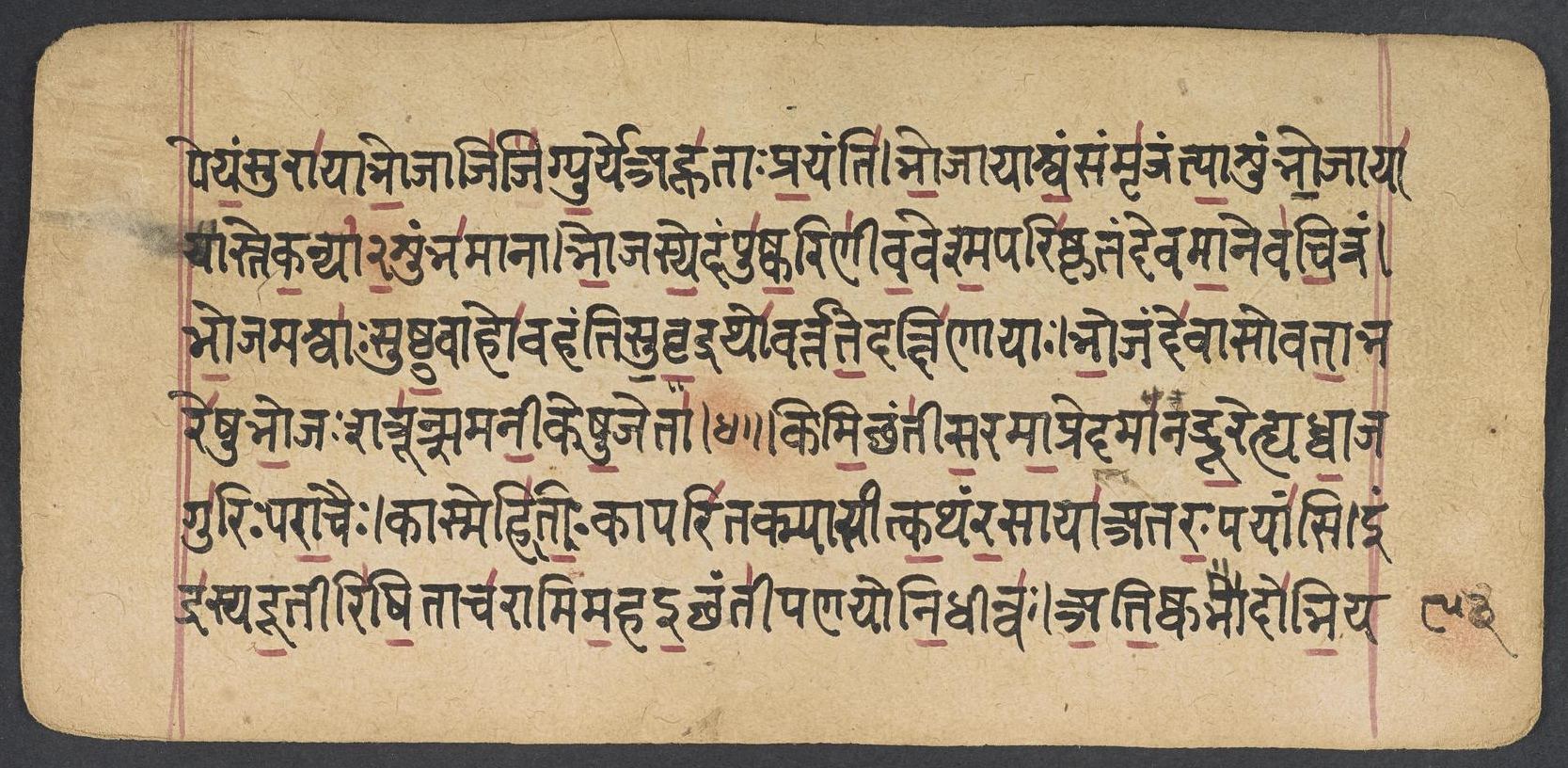
Penn Ms. Coll. 390 Item 48, fol. 93v (OPenn image 93, upper leaf). Checked on the image: the Rigveda text on this page begins in RV 10.107.9 ‹-antaḥpeyaṁ surāyā bhojā jigyur›. The next page with Rigveda text, fol. 94r, begins in RV 10.108.2 ‹-bhiyasā tan na āvat›. Verse 10.108.1 ends on this page.
1kim i̱cchantī̍ sa̱ramā̱ predam ā̍naḍ dū̱re hy adhvā̱ jagu̍riḥ parā̱caiḥ | kāsmehi̍ti̱ḥ kā pari̍takmyāsīt ka̱thaṁ ra̱sāyā̍ atara̱ḥ payā̍ṁsi ||
1WHAT wish of Saramâ hath brought her hither? The path leads far away to distant places. What charge hast thou for us? Where turns thy journey? How hast thou made thy way o'er Rasâ's waters.
Where on the image
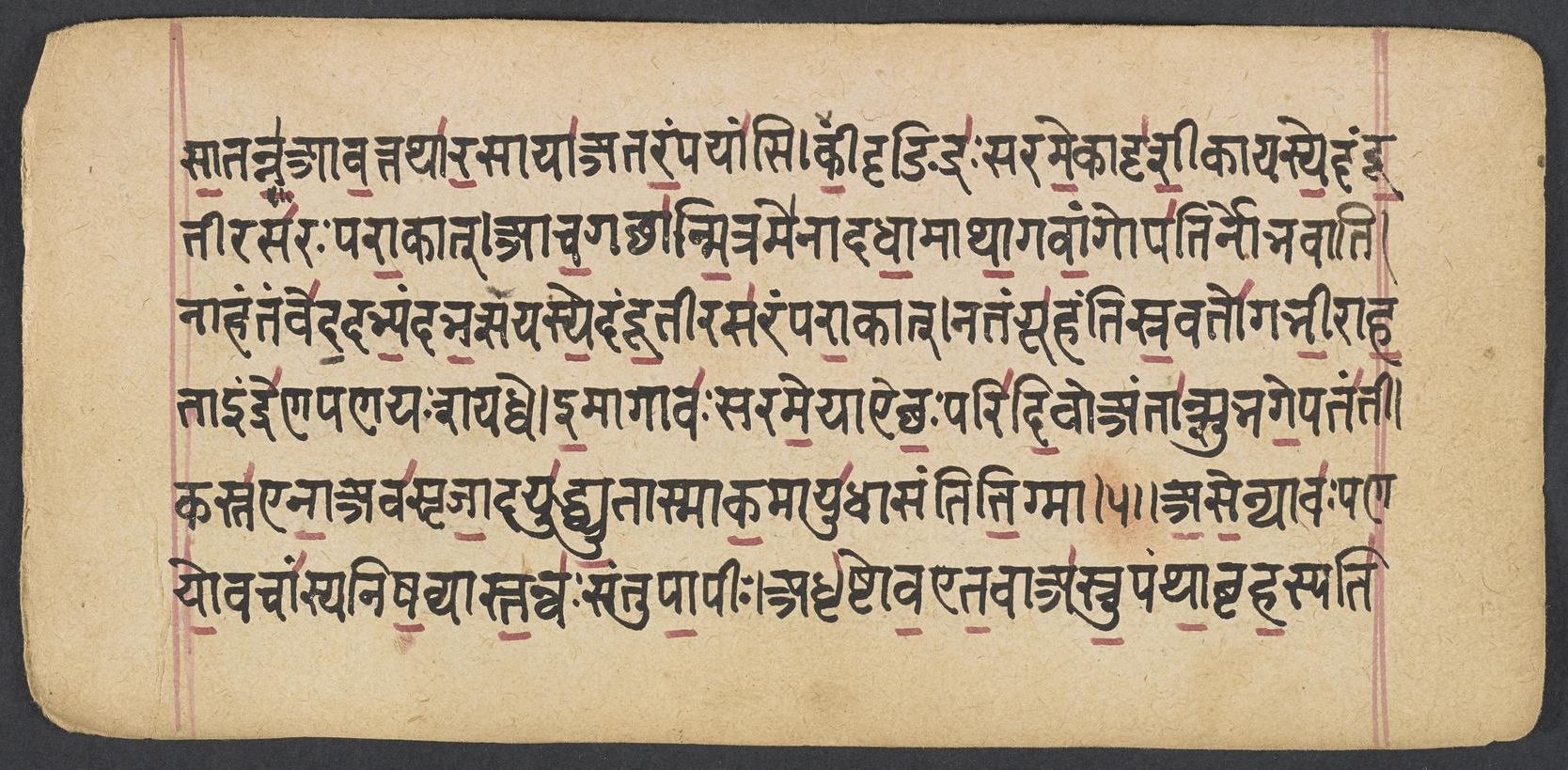
Penn Ms. Coll. 390 Item 48, fol. 94r (OPenn image 93, lower leaf). Checked on the image: the Rigveda text on this page begins in RV 10.108.2 ‹-bhiyasā tan na āvat›. The next page with Rigveda text, fol. 94v, begins in RV 10.108.6 ‹va ubhayā na mṛḻāt›. Verses 10.108.2-5 end on this page; 10.108.2 begins on fol. 93v.
2indra̍sya dū̱tīr i̍ṣi̱tā ca̍rāmi ma̱ha i̱cchantī̍ paṇayo ni̱dhīn va̍ḥ | a̱ti̱ṣkado̍ bhi̱yasā̱ tan na̍ āva̱t tathā̍ ra̱sāyā̍ atara̱m payā̍ṁsi ||
3kī̱dṛṅṅ indra̍ḥ sarame̱ kā dṛ̍śī̱kā yasye̱daṁ dū̱tīr asa̍raḥ parā̱kāt | ā ca̱ gacchā̍n mi̱tram e̍nā dadhā̱māthā̱ gavā̱ṁ gopa̍tir no bhavāti ||
4nāhaṁ taṁ ve̍da̱ dabhya̱ṁ dabha̱t sa yasye̱daṁ dū̱tīr asa̍ram parā̱kāt | na taṁ gū̍hanti sra̱vato̍ gabhī̱rā ha̱tā indre̍ṇa paṇayaḥ śayadhve ||
5i̱mā gāva̍ḥ sarame̱ yā aiccha̱ḥ pari̍ di̱vo antā̍n subhage̱ pata̍ntī | kas ta̍ enā̱ ava̍ sṛjā̱d ayu̍dhvy u̱tāsmāka̱m āyu̍dhā santi ti̱gmā ||
2I come appointed messenger of Indra, seeking your ample stores of wealth, O Paṇis. This hath preserved me from the fear of crossing: thus have I made my way o'er Rasâ's waters.
3What is that Indra like, what is his aspect whose envoy, Saramâ, from afar thou comest? Let him approach, and we will show him friendship: he shall be made the herdsman of our cattle.
4I know him safe from harm: but he can punish who sent me hither from afar as envoy. Him rivers flowing with deep waters hide not. Low will ye be, O Paṇis, slain by Indra.
5These are the kine which, Saramâ, thou seekest, flying, O Blest One, to the ends of heaven. Who will loose these for thee without a battle? Yea, and sharp-pointed are our warlike weapons.
Where on the image
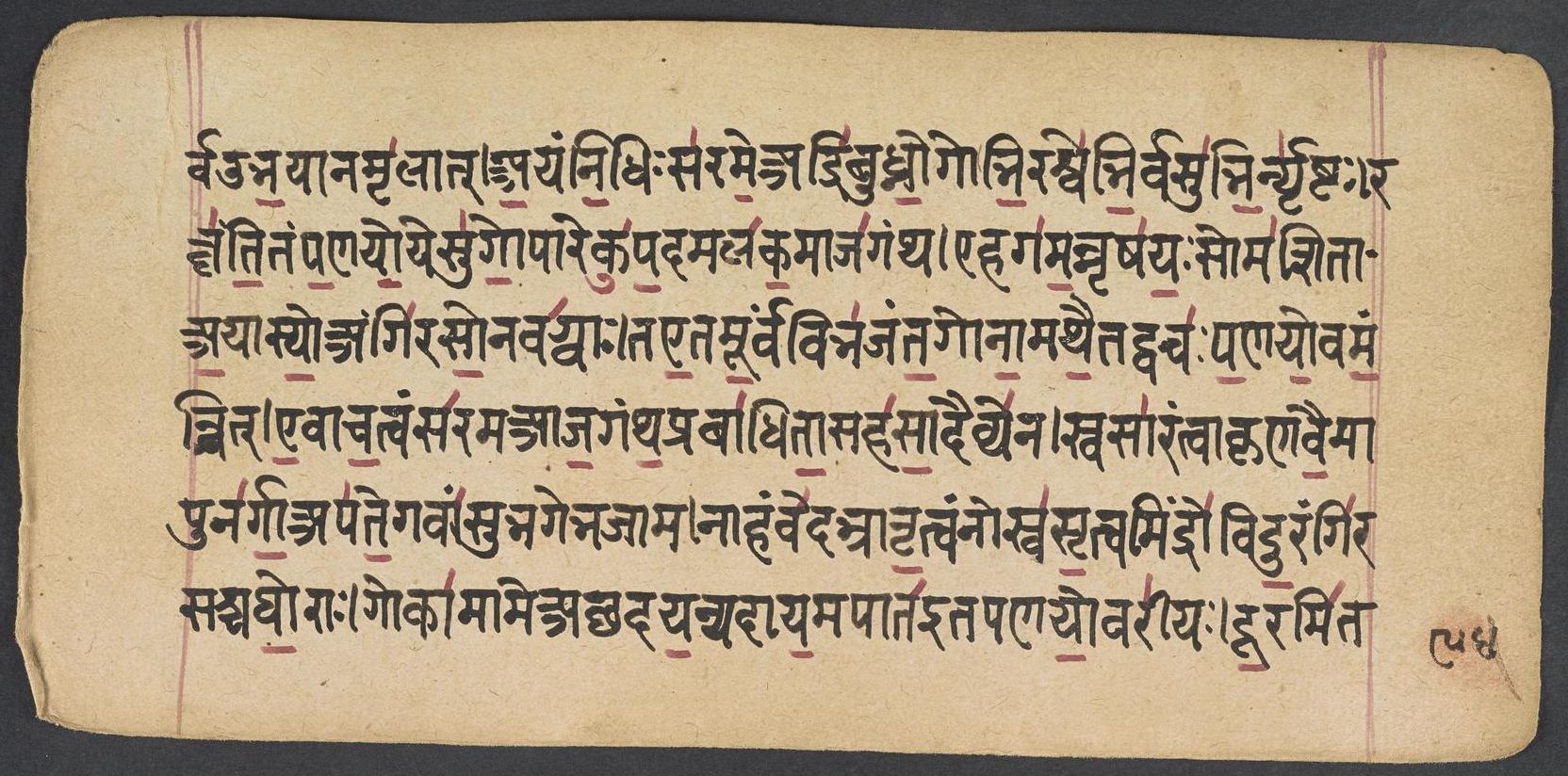
Penn Ms. Coll. 390 Item 48, fol. 94v (OPenn image 94, upper leaf). Checked on the image: the Rigveda text on this page begins in RV 10.108.6 ‹va ubhayā na mṛḻāt›. The next page with Rigveda text, fol. 95r, begins in RV 10.108.11 ‹paṇayo varīya ud gāvo›. Verses 10.108.6-10 end on this page; 10.108.6 begins on fol. 94r.
6a̱se̱nyā va̍ḥ paṇayo̱ vacā̍ṁsy aniṣa̱vyās ta̱nva̍ḥ santu pā̱pīḥ | adhṛ̍ṣṭo va̱ eta̱vā a̍stu̱ panthā̱ bṛha̱spati̍r va ubha̱yā na mṛ̍ḻāt ||
7a̱yaṁ ni̱dhiḥ sa̍rame̱ adri̍budhno̱ gobhi̱r aśve̍bhi̱r vasu̍bhi̱r nyṛ̍ṣṭaḥ | rakṣa̍nti̱ tam pa̱ṇayo̱ ye su̍go̱pā reku̍ pa̱dam ala̍ka̱m ā ja̍gantha ||
8eha ga̍ma̱nn ṛṣa̍ya̱ḥ soma̍śitā a̱yāsyo̱ aṅgi̍raso̱ nava̍gvāḥ | ta e̱tam ū̱rvaṁ vi bha̍janta̱ gonā̱m athai̱tad vaca̍ḥ pa̱ṇayo̱ vama̱nn it ||
9e̱vā ca̱ tvaṁ sa̍rama āja̱gantha̱ prabā̍dhitā̱ saha̍sā̱ daivye̍na | svasā̍raṁ tvā kṛṇavai̱ mā puna̍r gā̱ apa̍ te̱ gavā̍ṁ subhage bhajāma ||
10nāhaṁ ve̍da bhrātṛ̱tvaṁ no sva̍sṛ̱tvam indro̍ vidu̱r aṅgi̍rasaś ca gho̱rāḥ | gokā̍mā me acchadaya̱n yad āya̱m apāta̍ ita paṇayo̱ varī̍yaḥ ||
6Even if your wicked bodies, O ye Paṇis, were arrow-proof, your words are weak for wounding; And were the path to you as yet unmastered, Br̥ihaspati in neither case will spare you.
7Paved with the rock is this our treasure-chamber; filled full of precious things, of kine, and horses. These Paṇis who are watchful keepers guard it. In vain hast thou approached this lonely station.
8R̥ishis will come inspirited with Soma, Angirases unwearied, and Navagvas. This stall of cattle will they part among them: then will the Paṇis wish these words unspoken.
9Even thus, O Saramâ, hast thou come hither, forced by celestial might to make the journey. Turn thee not back, for thou shalt be our sister: O Blest One, we will give thee of the cattle.
10Brotherhood, sisterhood, I know not either: the dread Angirases and Indra know them. They seemed to long for kine when I departed. Hence, into distance, be ye gone, O Paṇis.
Where on the image
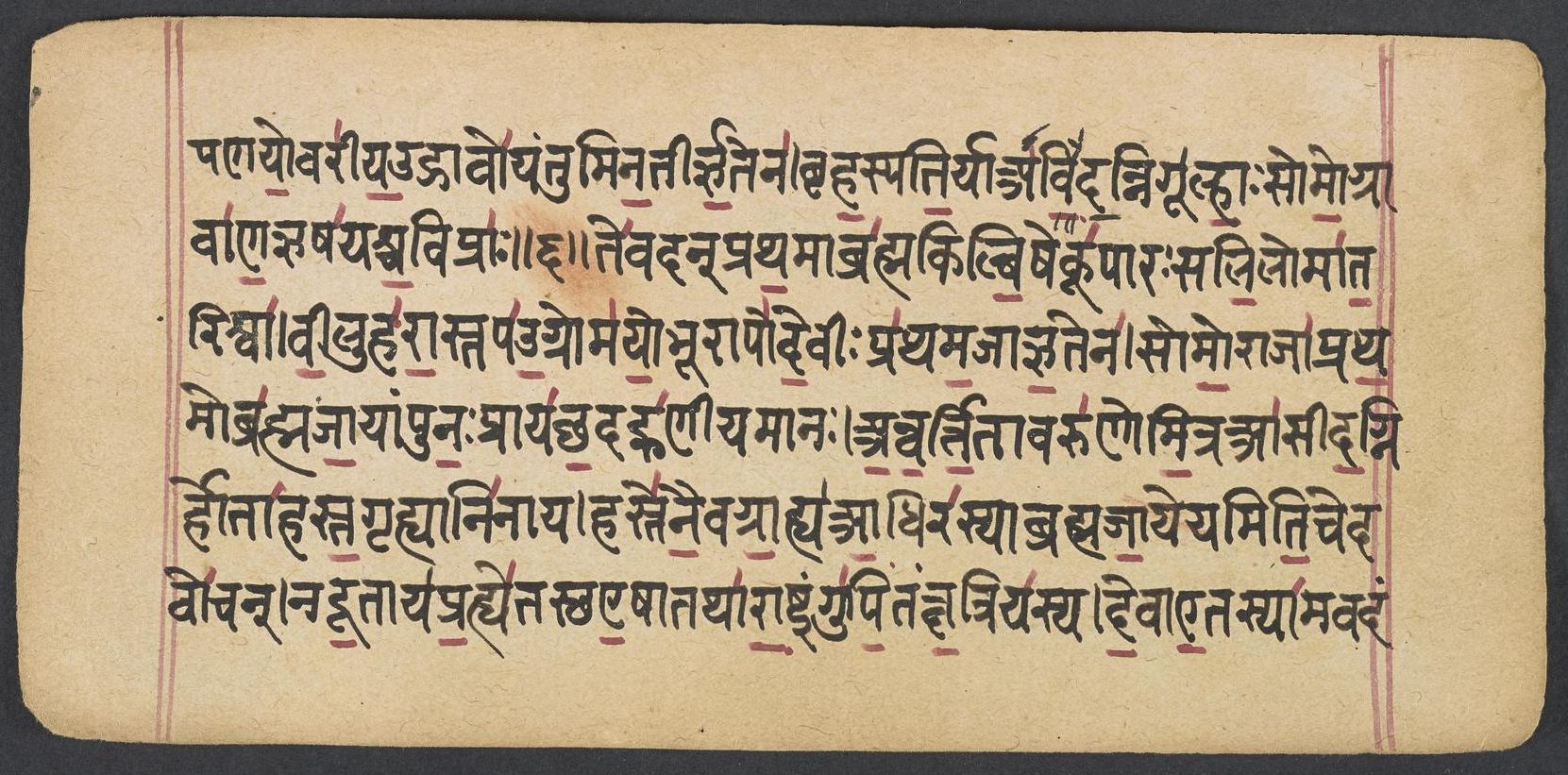
Penn Ms. Coll. 390 Item 48, fol. 95r (OPenn image 94, lower leaf). Checked on the image: the Rigveda text on this page begins in RV 10.108.11 ‹paṇayo varīya ud gāvo›. The next page with Rigveda text, fol. 95v, begins in RV 10.109.4 ‹-avadanta pūrve saptaṛṣayas tapase›. Verse 10.108.11 ends on this page; 10.108.11 begins on fol. 94v.
11dū̱ram i̍ta paṇayo̱ varī̍ya̱ ud gāvo̍ yantu mina̱tīr ṛ̱tena̍ | bṛha̱spati̱r yā avi̍nda̱n nigū̍ḻhā̱ḥ somo̱ grāvā̍ṇa̱ ṛṣa̍yaś ca̱ viprā̍ḥ ||
11Hence, far away, ye Paṇis! Let the cattle lowing come forth as holy Law commandeth, Kine which Br̥ihaspati, and Soma, R̥ishis, sages, and pressing-stones have found when hidden.
Notes
- Sanskrit: Aufrecht's edition (1877) with the Vedic accents, as entered by van Nooten and Holland (GRETIL).
- English: Ralph T. H. Griffith, The Hymns of the Rigveda (1889-1892; 2nd ed. 1896-1897), from the VedaWeb digital text; OCR slips in that text were corrected against the printed 2nd edition (data/sources/rigveda/griffith_errata.json).
Cite
Sources
- Source: Penn Ms. Coll. 390 Item 48 (1711 CE (colophon: Saṃvat 1768)), OPenn, Public Domain Mark + Aufrecht's accented text (GRETIL) + Griffith's English (VedaWeb) (holding institution)
- Critical edition: Aufrecht (1877), accented e-text via GRETIL
← previous · → next · v cycle view · l back to library