Rigveda 10.107: To Daksina (praise of the singer)
Introduction
Rigveda 10.107 is a hymn of 11 verses addressed to Daksina (praise of the singer). It stands in book (maṇḍala) 10, the last and latest book. The Rigveda is the oldest collection of Sanskrit hymns, composed in the second half of the second millennium BCE and handed down orally for many centuries before it was written down.
The manuscript shown is Penn Ms. Coll. 390 Item 48 (University of Pennsylvania), a paper manuscript of the eighth aṣṭaka (RV 10.46-10.191) of the Ṛgveda Saṃhitā in Devanāgarī, 158 leaves, 6 lines to the page, with the accents marked in red; the scribe's colophon on fol. 158 gives Saṃvat 1768 (1711 CE); this hymn stands on fol. 92r-93v. Each section below gives the verses that end on one page; the page boundaries were read on the images (the opening words of every page), not counted out. Like most Rigveda manuscripts, Penn Ms. Coll. 390 Item 48 writes a repeated refrain in short form after its first occurrence (for example kasmai° for kasmai devāya haviṣā vidhema); the Sanskrit shown is the full text of Aufrecht's edition.
How was this verified? (Provenance)
Where on the image
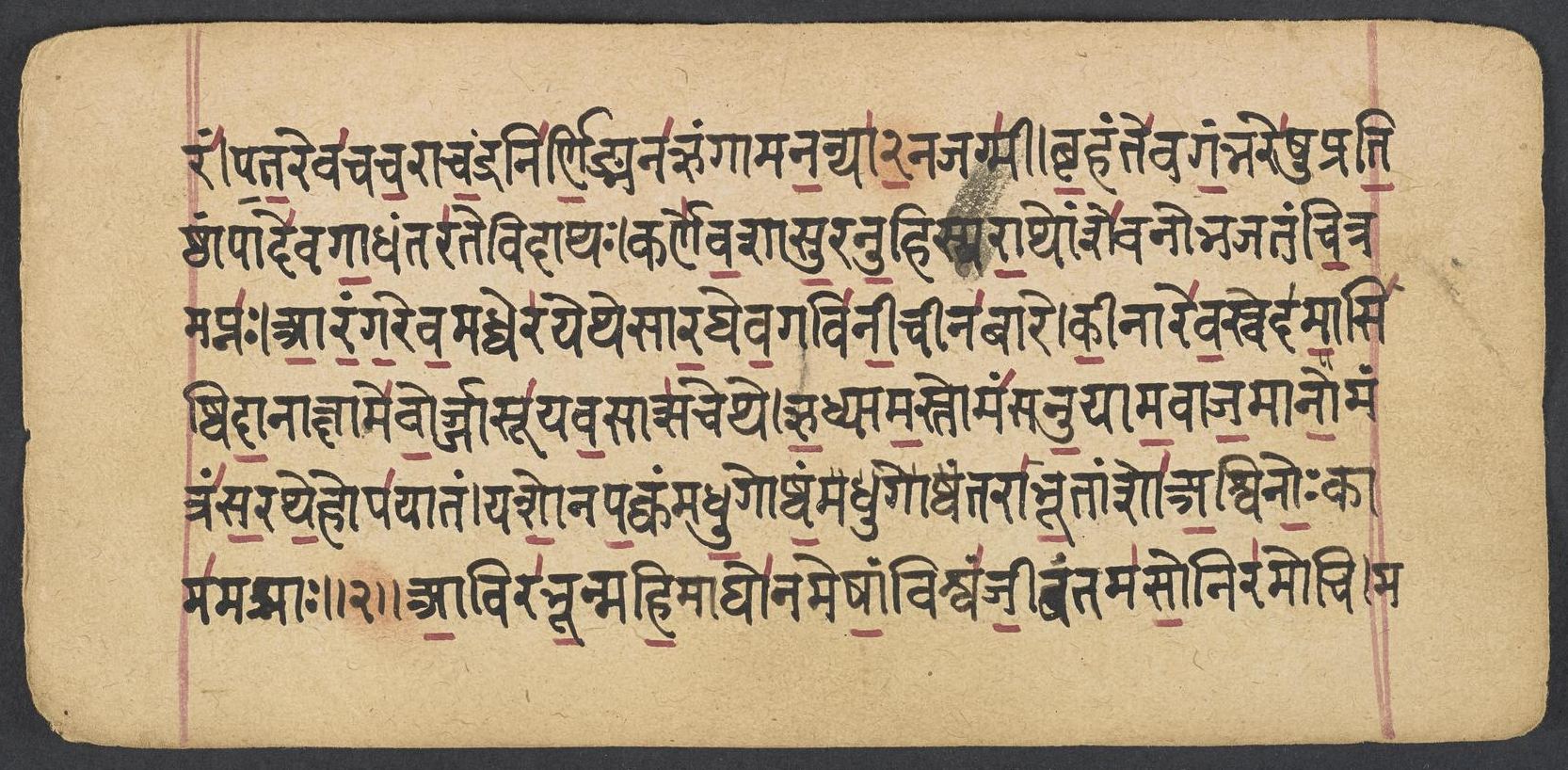
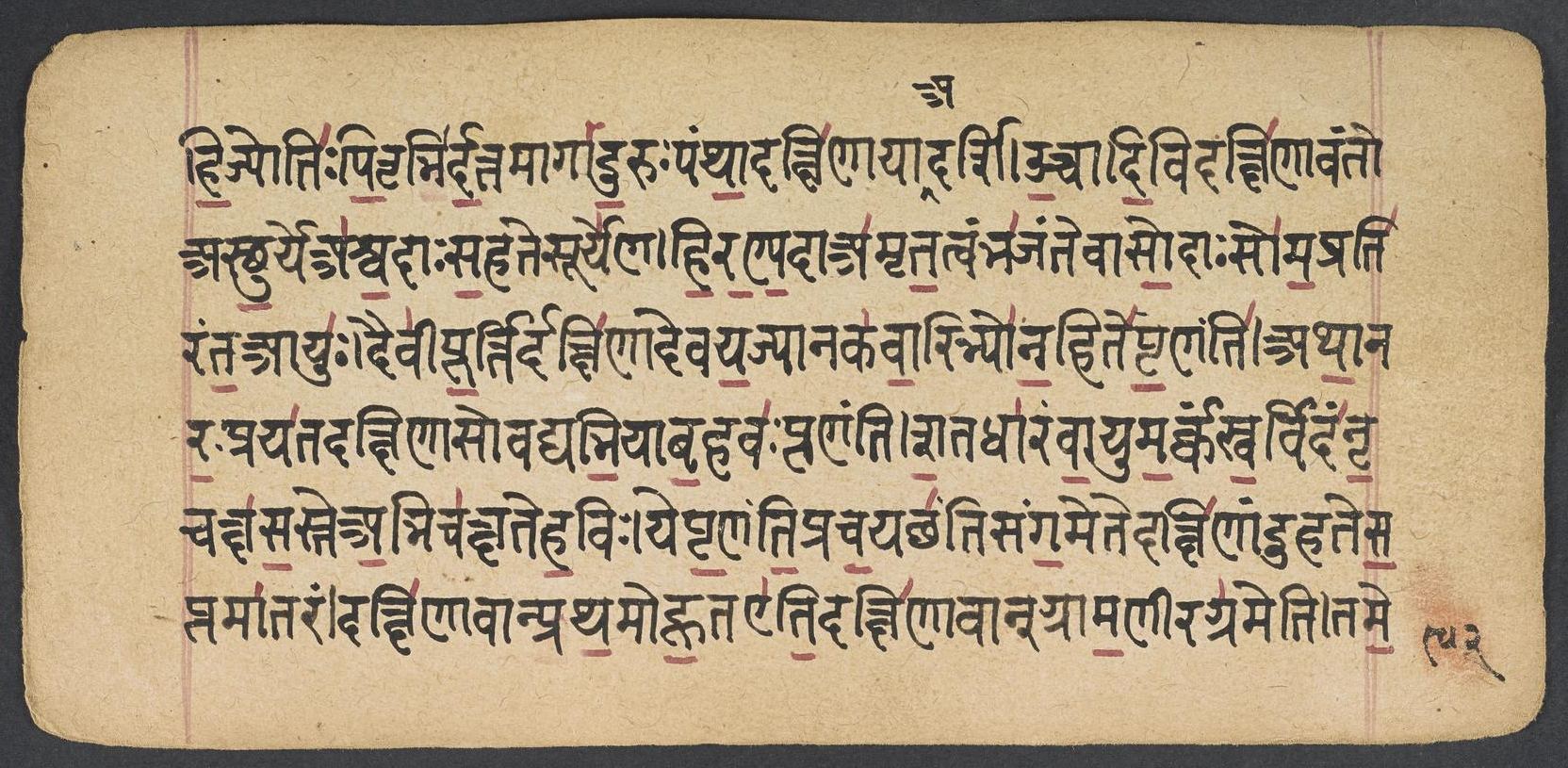
Penn Ms. Coll. 390 Item 48, fol. 92v (OPenn image 92, upper leaf). Checked on the image: the Rigveda text on this page begins in RV 10.107.1 ‹-mahi jyotiḥ pitṛbhir dattam›. The next page with Rigveda text, fol. 93r, begins in RV 10.107.5 ‹-tam eva manye nṛpatiṁ›. Verses 10.107.1-4 end on this page; 10.107.1 begins on fol. 92r.
1ā̱vir a̍bhū̱n mahi̱ māgho̍nam eṣā̱ṁ viśva̍ṁ jī̱vaṁ tama̍so̱ nir a̍moci | mahi̱ jyoti̍ḥ pi̱tṛbhi̍r da̱ttam āgā̍d u̱ruḥ panthā̱ dakṣi̍ṇāyā adarśi ||
2u̱ccā di̱vi dakṣi̍ṇāvanto asthu̱r ye a̍śva̱dāḥ sa̱ha te sūrye̍ṇa | hi̱ra̱ṇya̱dā a̍mṛta̱tvam bha̍jante vāso̱dāḥ so̍ma̱ pra ti̍ranta̱ āyu̍ḥ ||
3daivī̍ pū̱rtir dakṣi̍ṇā devaya̱jyā na ka̍vā̱ribhyo̍ na̱hi te pṛ̱ṇanti̍ | athā̱ nara̱ḥ praya̍tadakṣiṇāso 'vadyabhi̱yā ba̱hava̍ḥ pṛṇanti ||
4śa̱tadhā̍raṁ vā̱yum a̱rkaṁ sva̱rvida̍ṁ nṛ̱cakṣa̍sa̱s te a̱bhi ca̍kṣate ha̱viḥ | ye pṛ̱ṇanti̱ pra ca̱ yaccha̍nti saṁga̱me te dakṣi̍ṇāṁ duhate sa̱ptamā̍taram ||
1THESE men's great bounty hath been manifested, and the whole world of life set free from darkness. Great light hath come, vouchsafed us by the Fathers: apparent is the spacious path of Guerdon.
2High up in heaven abide the Guerdon-givers: they who give steeds dwell with the Sun for ever. They who give gold are blest with life eternal. they who give robes prolong their lives, O Soma.
3Not from the niggards-for they give not fireely-comes Meed at sacrifice, Gods' satisfaction: Yea, many men with hands stretched out with Guerdon present their gifts because they dread dishonour.
4These who observe mankind regard oblation as streamy Vâyu and light-finding Arka. They satisfy and give their gifts in synod, and pour in streams the seven-mothered Guerdon.
Where on the image
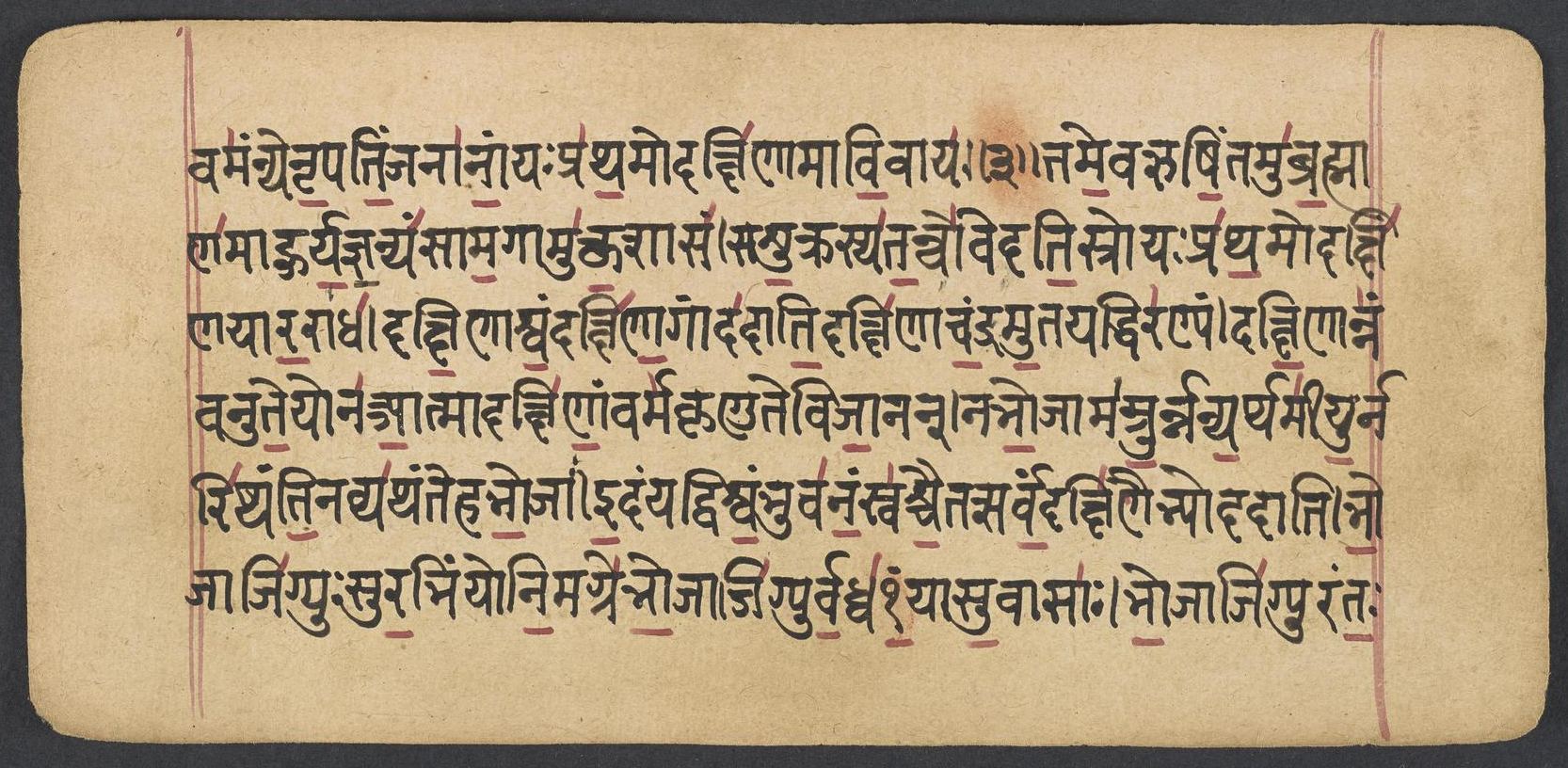
Penn Ms. Coll. 390 Item 48, fol. 93r (OPenn image 92, lower leaf). Checked on the image: the Rigveda text on this page begins in RV 10.107.5 ‹-tam eva manye nṛpatiṁ›. The next page with Rigveda text, fol. 93v, begins in RV 10.107.9 ‹-antaḥpeyaṁ surāyā bhojā jigyur›. Verses 10.107.5-8 end on this page; 10.107.5 begins on fol. 92v.
5dakṣi̍ṇāvān pratha̱mo hū̱ta e̍ti̱ dakṣi̍ṇāvān grāma̱ṇīr agra̍m eti | tam e̱va ma̍nye nṛ̱pati̱ṁ janā̍nā̱ṁ yaḥ pra̍tha̱mo dakṣi̍ṇām āvi̱vāya̍ ||
6tam e̱va ṛṣi̱ṁ tam u̍ bra̱hmāṇa̍m āhur yajña̱nya̍ṁ sāma̱gām u̍ktha̱śāsa̍m | sa śu̱krasya̍ ta̱nvo̍ veda ti̱sro yaḥ pra̍tha̱mo dakṣi̍ṇayā ra̱rādha̍ ||
7dakṣi̱ṇāśva̱ṁ dakṣi̍ṇā̱ gāṁ da̍dāti̱ dakṣi̍ṇā ca̱ndram u̱ta yad dhira̍ṇyam | dakṣi̱ṇānna̍ṁ vanute̱ yo na̍ ā̱tmā dakṣi̍ṇā̱ṁ varma̍ kṛṇute vijā̱nan ||
8na bho̱jā ma̍mru̱r na nya̱rtham ī̍yu̱r na ri̍ṣyanti̱ na vya̍thante ha bho̱jāḥ | i̱daṁ yad viśva̱m bhuva̍na̱ṁ sva̍ś cai̱tat sarva̱ṁ dakṣi̍ṇaibhyo dadāti ||
5He who brings Guerdon comes as first invited: chief of the hamlet comes the Guerdon-bearer. Him I account the ruler of the people who was the first to introduce the Guerdon.
6They call him R̥ishi, Brahman, Sâma-chanter, reciter of the laud, leader of worship. The brightly-shining God's three forms he knoweth who first bestowed the sacrificial Guerdon.
7Guerdon bestows the horse, bestows the bullock, Guerdon bestows, moreover, gold that R̥ishisters. Guerdon gives food which is our life and spirit. He who is wise takes Guerdon for his armour.
8The liberal die not, never are they ruined: the liberal suffer neither harm nor trouble. The light of heaven, the universe about us,– all this doth sacrificial Guerdon give them.
Where on the image
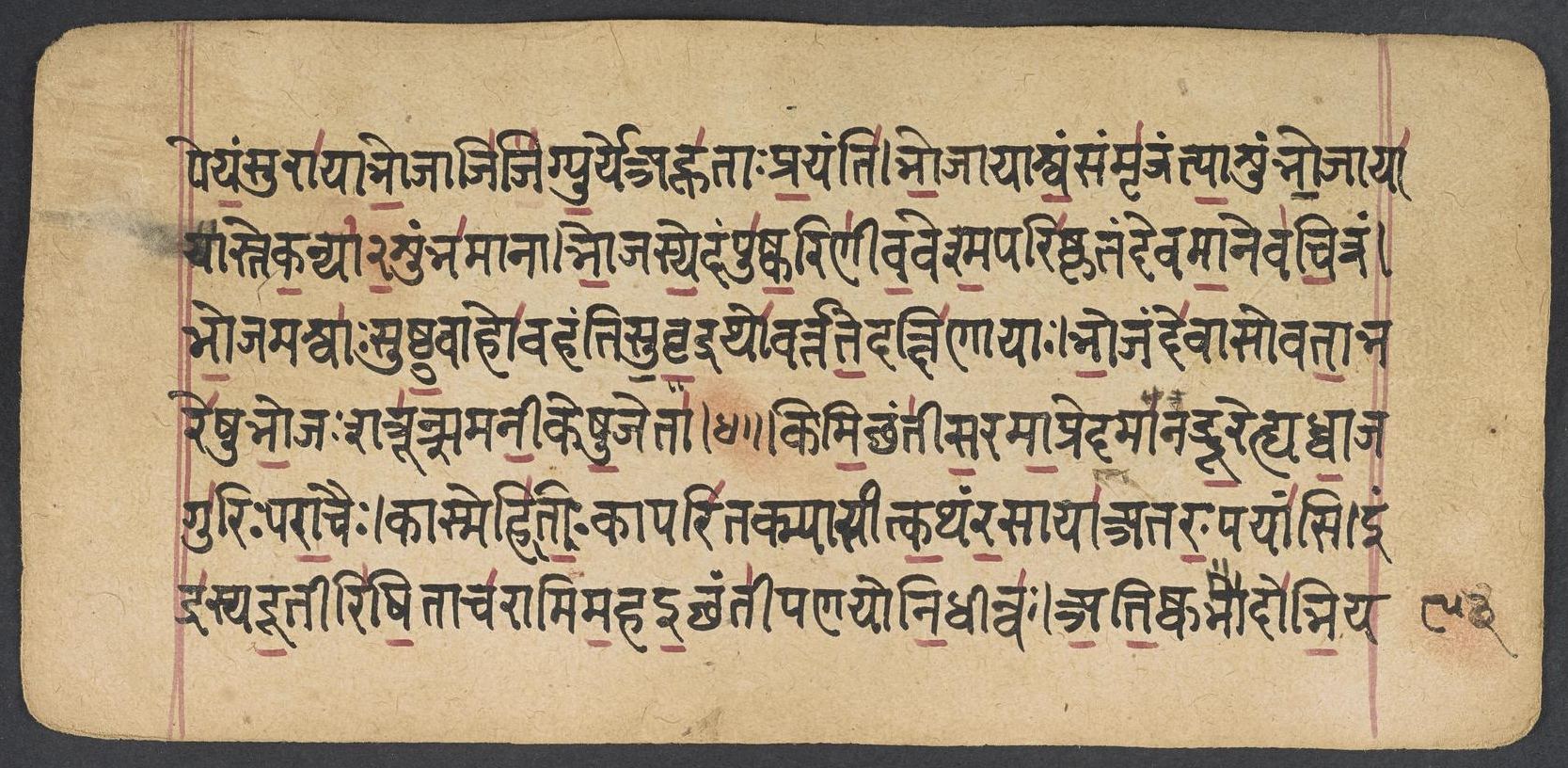
Penn Ms. Coll. 390 Item 48, fol. 93v (OPenn image 93, upper leaf). Checked on the image: the Rigveda text on this page begins in RV 10.107.9 ‹-antaḥpeyaṁ surāyā bhojā jigyur›. The next page with Rigveda text, fol. 94r, begins in RV 10.108.2 ‹-bhiyasā tan na āvat›. Verses 10.107.9-11 end on this page; 10.107.9 begins on fol. 93r.
9bho̱jā ji̍gyuḥ sura̱bhiṁ yoni̱m agre̍ bho̱jā ji̍gyur va̱dhva1̱̍ṁ yā su̱vāsā̍ḥ | bho̱jā ji̍gyur anta̱ḥpeya̱ṁ surā̍yā bho̱jā ji̍gyu̱r ye ahū̍tāḥ pra̱yanti̍ ||
10bho̱jāyāśva̱ṁ sam mṛ̍janty ā̱śum bho̱jāyā̍ste ka̱nyā̱3̱̍ śumbha̍mānā | bho̱jasye̱dam pu̍ṣka̱riṇī̍va̱ veśma̱ pari̍ṣkṛtaṁ devamā̱neva̍ ci̱tram ||
11bho̱jam aśvā̍ḥ suṣṭhu̱vāho̍ vahanti su̱vṛd ratho̍ vartate̱ dakṣi̍ṇāyāḥ | bho̱jaṁ de̍vāso 'vatā̱ bhare̍ṣu bho̱jaḥ śatrū̍n samanī̱keṣu̱ jetā̍ ||
9First have the liberal gained a fragrant dwelling, and got themselves a bride in fair apparel. The liberal have obtained their draught of liquor, and conquered those who, unprovoked, assailed them.
10They deck the fleet steed for the bounteous giver: the maid adorns herself and waits to meet him. His home is like a lake with lotus blossoms, like the Gods' palaces adorned and splendid.
11Steeds good at draught convey the liberal giver, and lightly rolling moves the car of Guerdon. Assist, ye Gods, the liberal man in battles: the liberal giver conquers foes in combat.
Notes
- Sanskrit: Aufrecht's edition (1877) with the Vedic accents, as entered by van Nooten and Holland (GRETIL).
- English: Ralph T. H. Griffith, The Hymns of the Rigveda (1889-1892; 2nd ed. 1896-1897), from the VedaWeb digital text; OCR slips in that text were corrected against the printed 2nd edition (data/sources/rigveda/griffith_errata.json).
Cite
Sources
- Source: Penn Ms. Coll. 390 Item 48 (1711 CE (colophon: Saṃvat 1768)), OPenn, Public Domain Mark + Aufrecht's accented text (GRETIL) + Griffith's English (VedaWeb) (holding institution)
- Critical edition: Aufrecht (1877), accented e-text via GRETIL
← previous · → next · v cycle view · l back to library