Rigveda 10.110: Apri hymn
Introduction
Rigveda 10.110 is a hymn of 11 verses addressed to Apri hymn. It stands in book (maṇḍala) 10, the last and latest book. The Rigveda is the oldest collection of Sanskrit hymns, composed in the second half of the second millennium BCE and handed down orally for many centuries before it was written down.
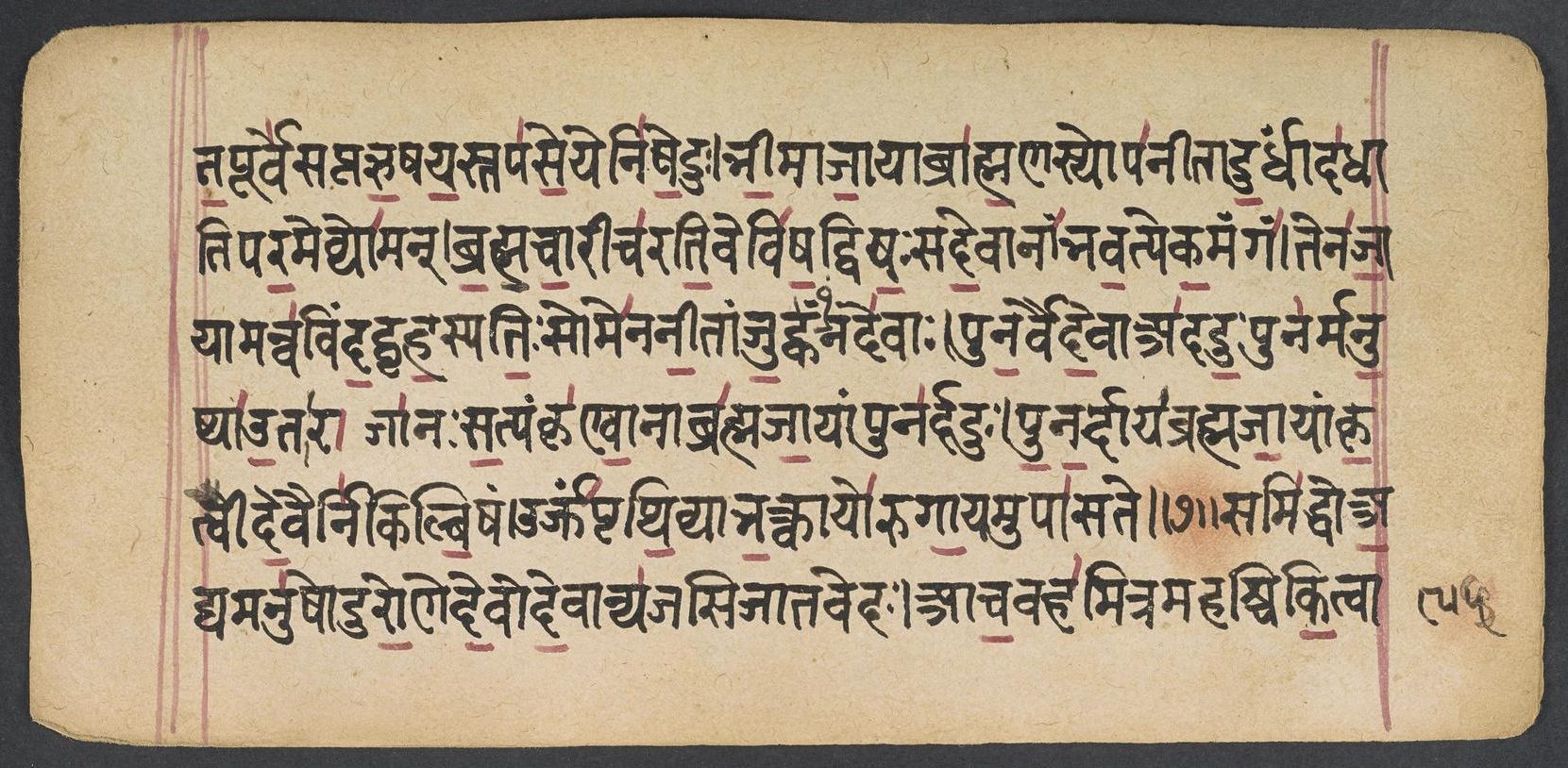
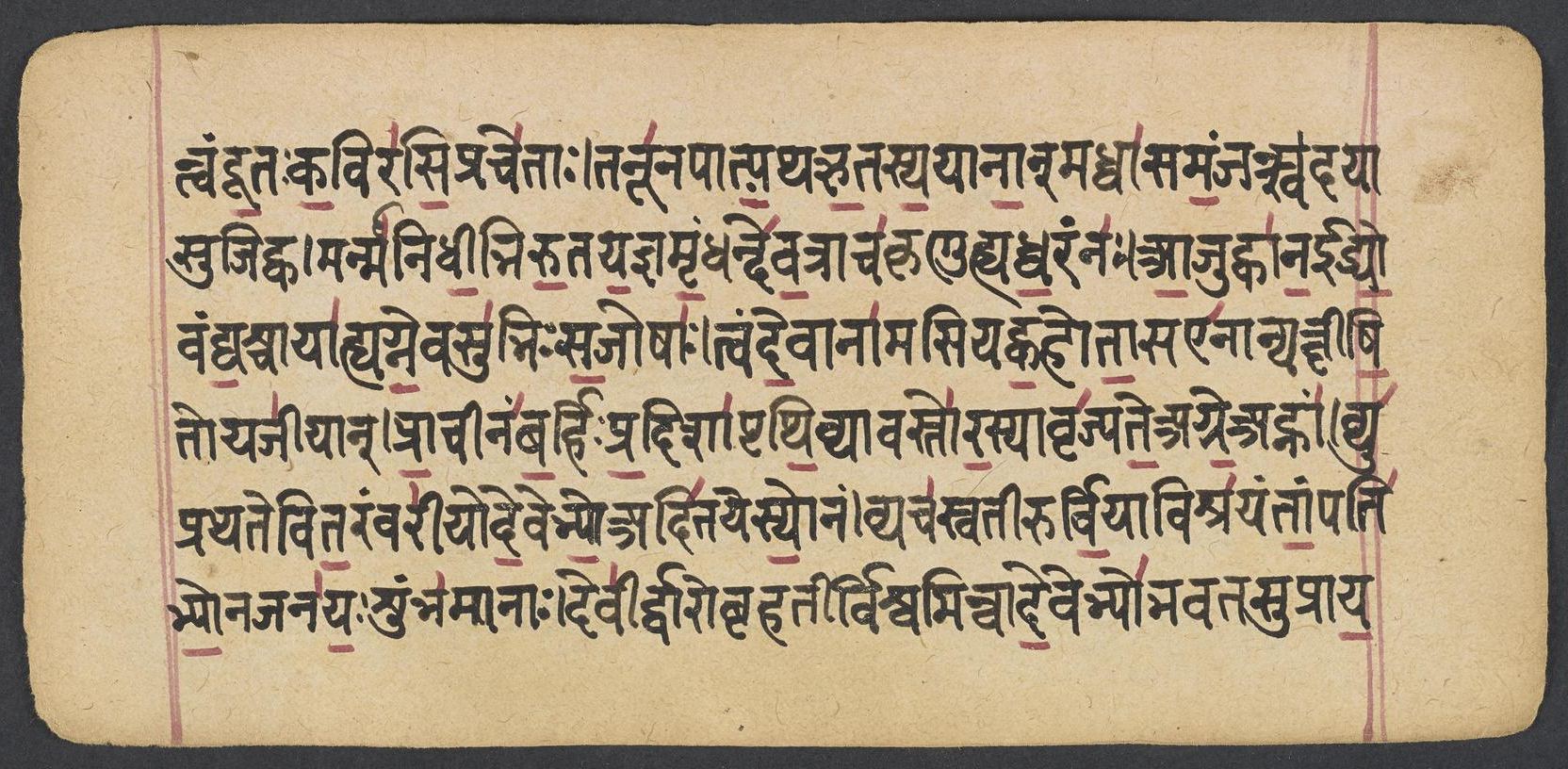
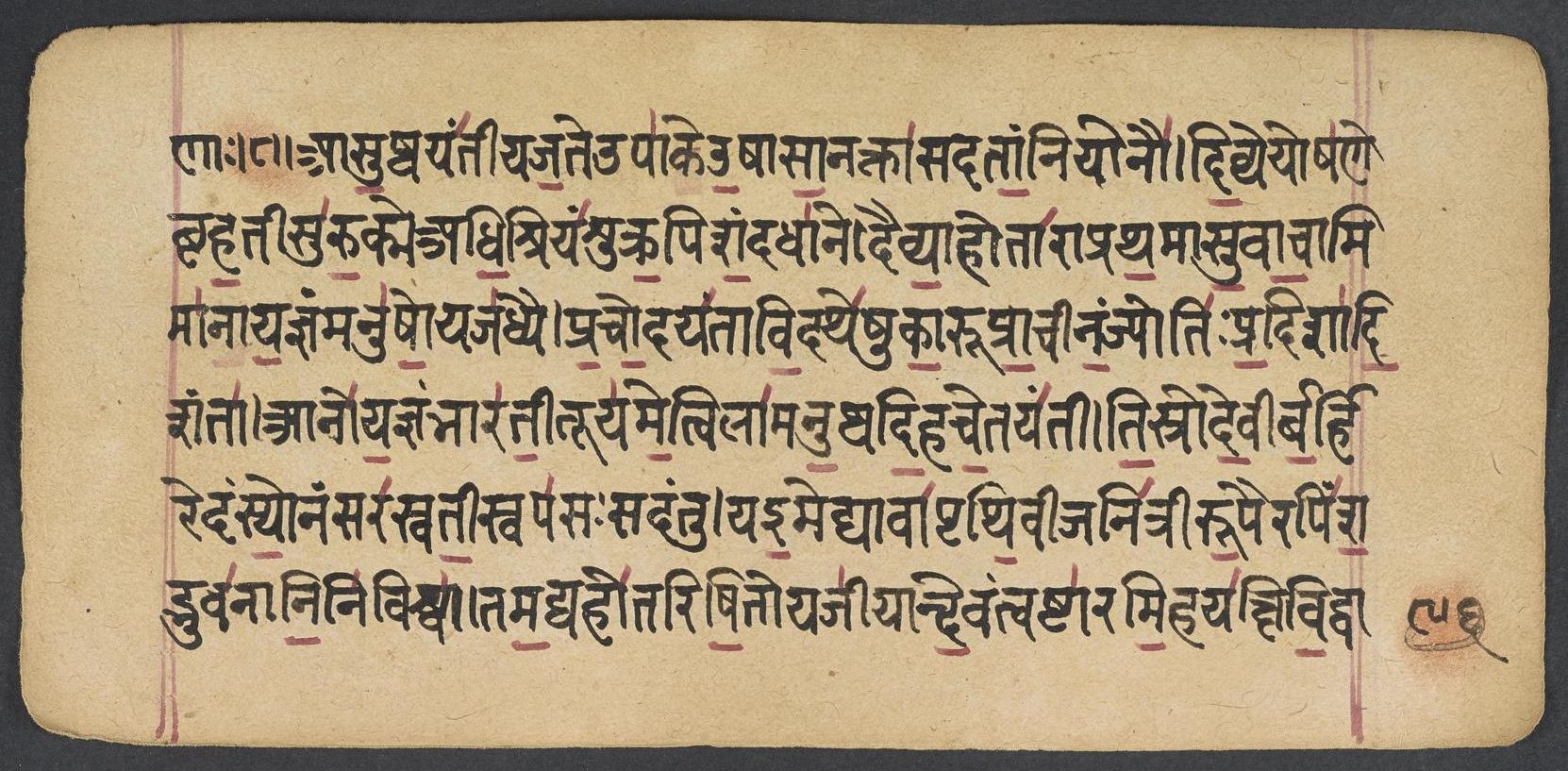
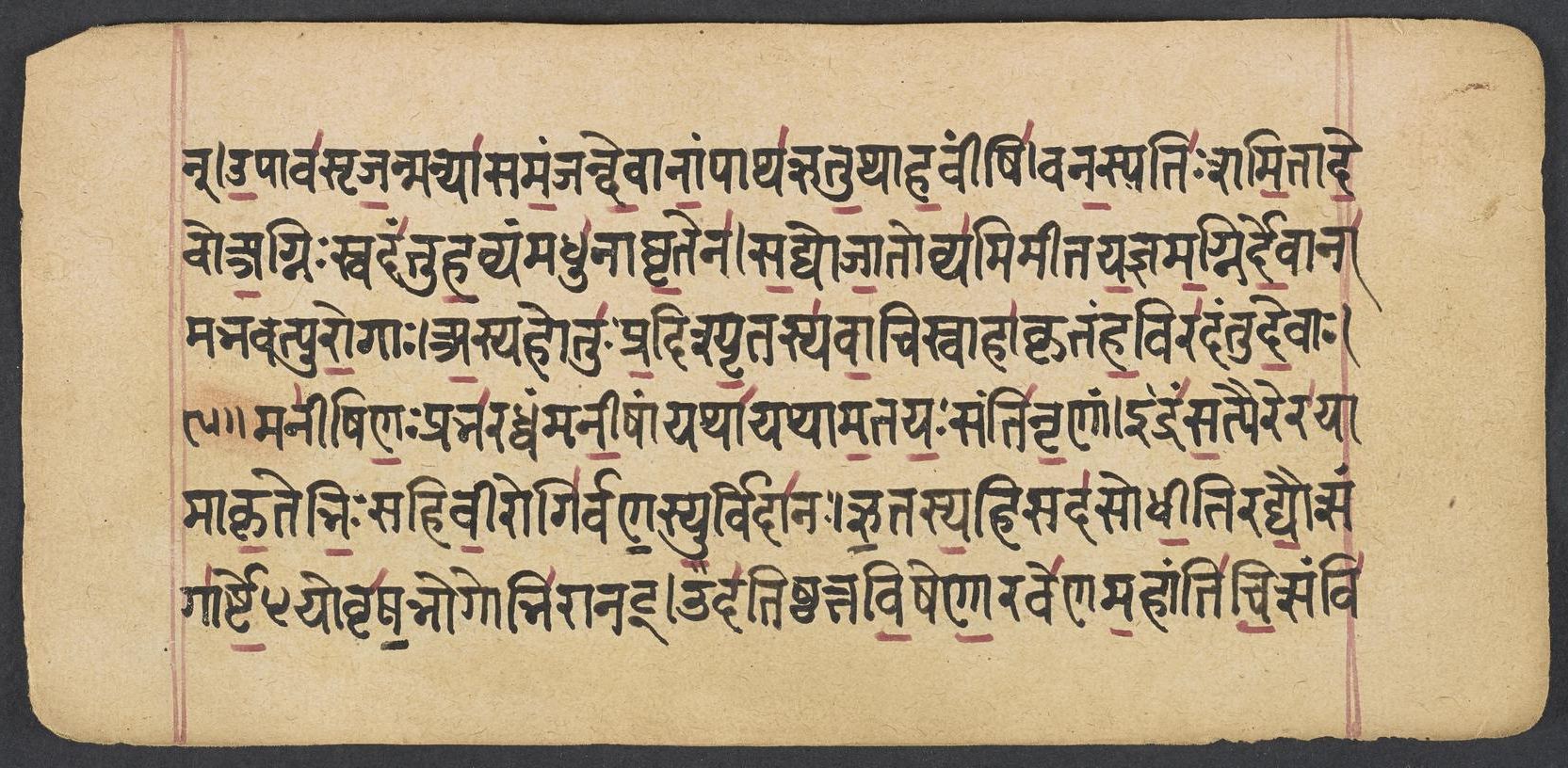
The manuscript shown is Penn Ms. Coll. 390 Item 48 (University of Pennsylvania), a paper manuscript of the eighth aṣṭaka (RV 10.46-10.191) of the Ṛgveda Saṃhitā in Devanāgarī, 158 leaves, 6 lines to the page, with the accents marked in red; the scribe's colophon on fol. 158 gives Saṃvat 1768 (1711 CE); this hymn stands on fol. 95v-97r. Each section below gives the verses that end on one page; the page boundaries were read on the images (the opening words of every page), not counted out. Like most Rigveda manuscripts, Penn Ms. Coll. 390 Item 48 writes a repeated refrain in short form after its first occurrence (for example kasmai° for kasmai devāya haviṣā vidhema); the Sanskrit shown is the full text of Aufrecht's edition.
How was this verified? (Provenance)
Where on the image
Penn Ms. Coll. 390 Item 48, fol. 96r (OPenn image 95, lower leaf). Checked on the image: the Rigveda text on this page begins in RV 10.110.1 ‹tvaṁ dūtaḥ kavir asi›. The next page with Rigveda text, fol. 96v, begins in RV 10.110.5 ‹-suprāyaṇāḥ›. Verses 10.110.1-4 end on this page; 10.110.1 begins on fol. 95v.
1sami̍ddho a̱dya manu̍ṣo duro̱ṇe de̱vo de̱vān ya̍jasi jātavedaḥ | ā ca̱ vaha̍ mitramahaś ciki̱tvān tvaṁ dū̱taḥ ka̱vir a̍si̱ prace̍tāḥ ||
2tanū̍napāt pa̱tha ṛ̱tasya̱ yānā̱n madhvā̍ sama̱ñjan sva̍dayā sujihva | manmā̍ni dhī̱bhir u̱ta ya̱jñam ṛ̱ndhan de̍va̱trā ca̍ kṛṇuhy adhva̱raṁ na̍ḥ ||
3ā̱juhvā̍na̱ īḍyo̱ vandya̱ś cā yā̍hy agne̱ vasu̍bhiḥ sa̱joṣā̍ḥ | tvaṁ de̱vānā̍m asi yahva̱ hotā̱ sa e̍nān yakṣīṣi̱to yajī̍yān ||
4prā̱cīna̍m ba̱rhiḥ pra̱diśā̍ pṛthi̱vyā vasto̍r a̱syā vṛ̍jyate̱ agre̱ ahnā̍m | vy u̍ prathate vita̱raṁ varī̍yo de̱vebhyo̱ adi̍taye syo̱nam ||
1THOU in the house of man this day enkindled worshippest Gods as God, O Jâtavedas. Observant, bright as Mitra, bring them hither: thou art a sapient and foreknowing envoy.
2Tanûnapât, fair-tongued, with sweet meath balming the paths and waysof Order, make them pleasant. Convey our sacrifice to heaven, exalting with holy thoughts ourhymns of praise and worship.
3Invoked, deserving prayer and adoration, O Agni, come accordant with the Vasus. Thou art, O Youthful Lord, the Gods' Invoker, so, best of Sacrificers, bring them quickly.
4By rule the Sacred Grass is scattered eastward, a robe to clothe this earth when dawns are breaking. Widely it spreads around and far-extended, fair for the Gods and bringing peace and freedom.
Where on the image
Penn Ms. Coll. 390 Item 48, fol. 96v (OPenn image 96, upper leaf). Checked on the image: the Rigveda text on this page begins in RV 10.110.5 ‹-suprāyaṇāḥ›. The next page with Rigveda text, fol. 97r, begins in RV 10.110.9 ‹-vidvān›. Verses 10.110.5-8 end on this page; 10.110.5 begins on fol. 96r.
5vyaca̍svatīr urvi̱yā vi śra̍yantā̱m pati̍bhyo̱ na jana̍ya̱ḥ śumbha̍mānāḥ | devī̍r dvāro bṛhatīr viśvaminvā de̱vebhyo̍ bhavata suprāya̱ṇāḥ ||
6ā su̱ṣvaya̍ntī yaja̱te upā̍ke u̱ṣāsā̱naktā̍ sadatā̱ṁ ni yonau̍ | di̱vye yoṣa̍ṇe bṛha̱tī su̍ru̱kme adhi̱ śriya̍ṁ śukra̱piśa̱ṁ dadhā̍ne ||
7daivyā̱ hotā̍rā pratha̱mā su̱vācā̱ mimā̍nā ya̱jñam manu̍ṣo̱ yaja̍dhyai | pra̱co̱daya̍ntā vi̱dathe̍ṣu kā̱rū prā̱cīna̱ṁ jyoti̍ḥ pra̱diśā̍ di̱śantā̍ ||
8ā no̍ ya̱jñam bhāra̍tī̱ tūya̍m e̱tv iḻā̍ manu̱ṣvad i̱ha ce̱taya̍ntī | ti̱sro de̱vīr ba̱rhir edaṁ syo̱naṁ sara̍svatī̱ svapa̍saḥ sadantu ||
5Let the expansive Doors be widely opened, like wives who deck their beauty for their husbands. Lofty, celestial, all-impelling Portals, admit the Gods and give them easy entrance.
6Pouring sweet dews let holy Night and Morning, each close to each, he seated at their station, Lofty, celestial Dames with gold to deck them. assuming all their fair and radiant beauty.
7Come the two first celestial sweet-voiced Hotars, arranging sacrifice for man to worship As singers who inspire us in assemblies, showing the eastward light with their direction.
8Let Bhâratî come quickly to our worship, and Iḷâ showing like a human being. So let Sarasvatî and both her fellows, deft Goddesses, on this fair grass be seated.
Where on the image
Penn Ms. Coll. 390 Item 48, fol. 97r (OPenn image 96, lower leaf). Checked on the image: the Rigveda text on this page begins in RV 10.110.9 ‹-vidvān›. The next page with Rigveda text, fol. 97v, begins in RV 10.111.2 ‹-vivyācā rajāṁsi›. Verses 10.110.9-11 end on this page; 10.110.9 begins on fol. 96v.
9ya i̱me dyāvā̍pṛthi̱vī jani̍trī rū̱pair api̍ṁśa̱d bhuva̍nāni̱ viśvā̍ | tam a̱dya ho̍tar iṣi̱to yajī̍yān de̱vaṁ tvaṣṭā̍ram i̱ha ya̍kṣi vi̱dvān ||
10u̱pāva̍sṛja̱ tmanyā̍ sama̱ñjan de̱vānā̱m pātha̍ ṛtu̱thā ha̱vīṁṣi̍ | vana̱spati̍ḥ śami̱tā de̱vo a̱gniḥ svada̍ntu ha̱vyam madhu̍nā ghṛ̱tena̍ ||
11sa̱dyo jā̱to vy a̍mimīta ya̱jñam a̱gnir de̱vānā̍m abhavat puro̱gāḥ | a̱sya hotu̍ḥ pra̱diśy ṛ̱tasya̍ vā̱ci svāhā̍kṛtaṁ ha̱vir a̍dantu de̱vāḥ ||
9Hotar more skilled in sacrifice, bring hither with speed to-day God Tvashṭar, thou who knowest. Even him who formed these two, the Earth and Heaven the Parents, with their forms, and every creature.
10Send to our offerings which thyself thou balmest the Companies of Gods in ordered season. Agni, Vanaspati the Immolator sweeten our offered gift with meath and butter.
11Agni, as soon as he was born, made ready the sacrifice, and was the Gods' preceder. May the Gods eat our offering consecrated according to this true Priest's voice and guidance.
Notes
- Sanskrit: Aufrecht's edition (1877) with the Vedic accents, as entered by van Nooten and Holland (GRETIL).
- English: Ralph T. H. Griffith, The Hymns of the Rigveda (1889-1892; 2nd ed. 1896-1897), from the VedaWeb digital text; OCR slips in that text were corrected against the printed 2nd edition (data/sources/rigveda/griffith_errata.json).
Cite
Sources
- Source: Penn Ms. Coll. 390 Item 48 (1711 CE (colophon: Saṃvat 1768)), OPenn, Public Domain Mark + Aufrecht's accented text (GRETIL) + Griffith's English (VedaWeb) (holding institution)
- Critical edition: Aufrecht (1877), accented e-text via GRETIL
← previous · → next · v cycle view · l back to library