Rigveda 10.111: To Indra
Introduction
Rigveda 10.111 is a hymn of 10 verses addressed to Indra. It stands in book (maṇḍala) 10, the last and latest book. The Rigveda is the oldest collection of Sanskrit hymns, composed in the second half of the second millennium BCE and handed down orally for many centuries before it was written down.
The manuscript shown is Penn Ms. Coll. 390 Item 48 (University of Pennsylvania), a paper manuscript of the eighth aṣṭaka (RV 10.46-10.191) of the Ṛgveda Saṃhitā in Devanāgarī, 158 leaves, 6 lines to the page, with the accents marked in red; the scribe's colophon on fol. 158 gives Saṃvat 1768 (1711 CE); this hymn stands on fol. 97r-98v. Each section below gives the verses that end on one page; the page boundaries were read on the images (the opening words of every page), not counted out. Like most Rigveda manuscripts, Penn Ms. Coll. 390 Item 48 writes a repeated refrain in short form after its first occurrence (for example kasmai° for kasmai devāya haviṣā vidhema); the Sanskrit shown is the full text of Aufrecht's edition.
How was this verified? (Provenance)
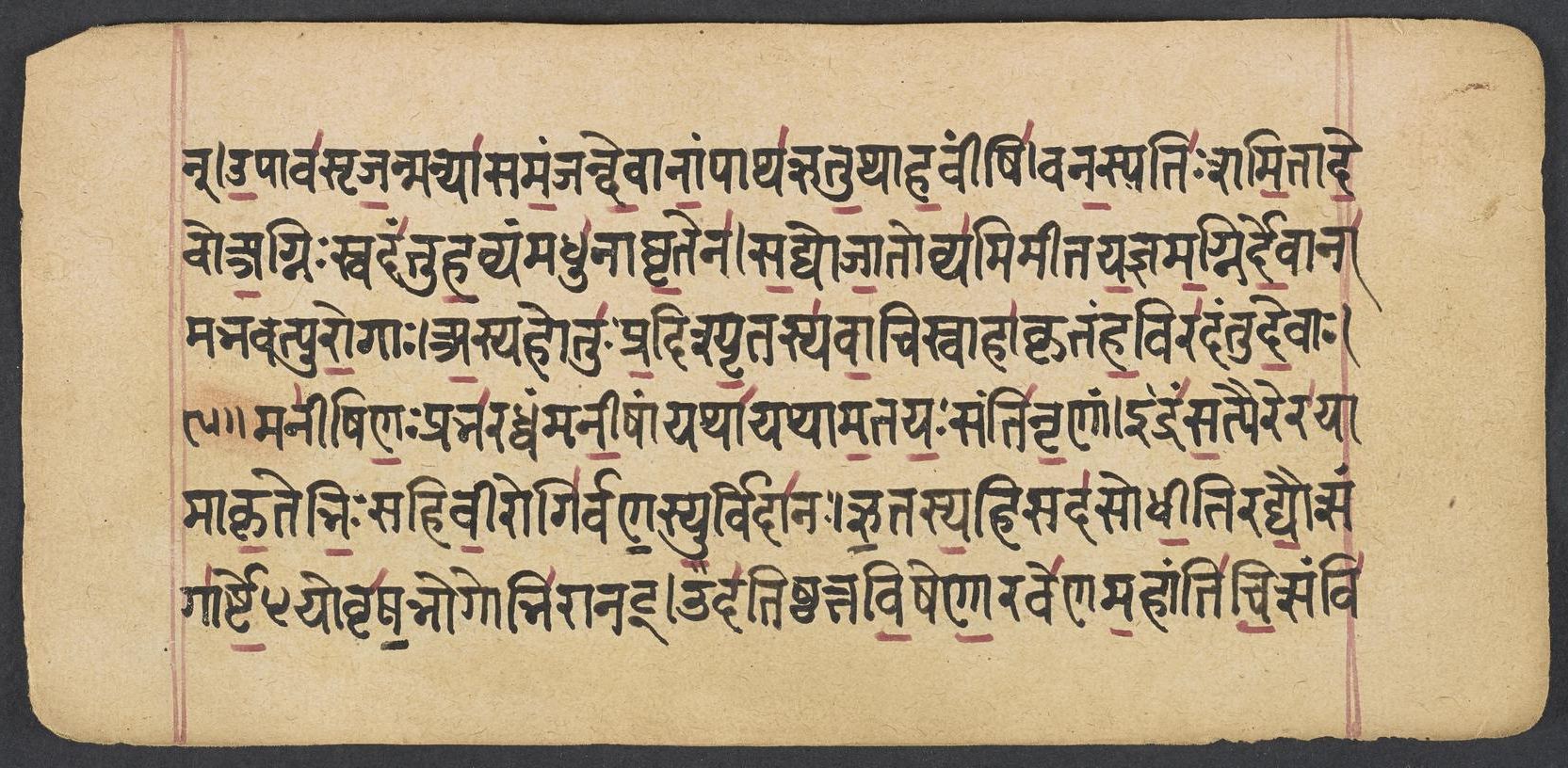
Where on the image
Penn Ms. Coll. 390 Item 48, fol. 97r (OPenn image 96, lower leaf). Checked on the image: the Rigveda text on this page begins in RV 10.110.9 ‹-vidvān›. The next page with Rigveda text, fol. 97v, begins in RV 10.111.2 ‹-vivyācā rajāṁsi›. Verse 10.111.1 ends on this page.
1manī̍ṣiṇa̱ḥ pra bha̍radhvam manī̱ṣāṁ yathā̍-yathā ma̱taya̱ḥ santi̍ nṛ̱ṇām | indra̍ṁ sa̱tyair era̍yāmā kṛ̱tebhi̱ḥ sa hi vī̱ro gi̍rvaṇa̱syur vidā̍naḥ ||
1BRING forth your sacred song ye prudent singers, even as are the thoughts of human beings. Let us draw Indra with true deeds anear us: he loves our songs, the Hero, and is potent.
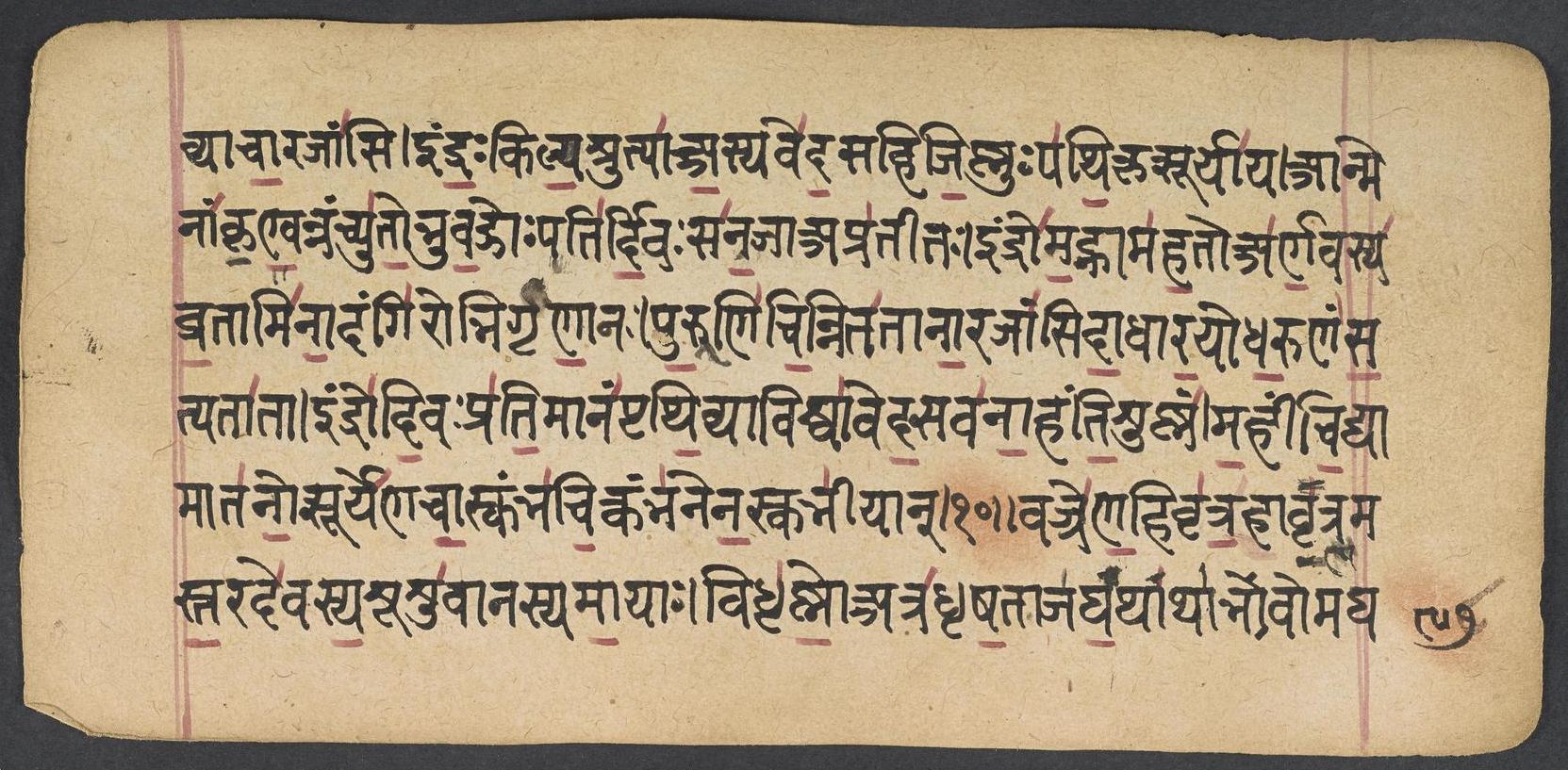
Where on the image
Penn Ms. Coll. 390 Item 48, fol. 97v (OPenn image 97, upper leaf). Checked on the image: the Rigveda text on this page begins in RV 10.111.2 ‹-vivyācā rajāṁsi›. The next page with Rigveda text, fol. 98r, begins in RV 10.111.6 ‹-maghavan bāhvojāḥ›. Verses 10.111.2-5 end on this page; 10.111.2 begins on fol. 97r.
2ṛ̱tasya̱ hi sada̍so dhī̱tir adyau̱t saṁ gā̍rṣṭe̱yo vṛ̍ṣa̱bho gobhi̍r ānaṭ | ud a̍tiṣṭhat tavi̱ṣeṇā̱ rave̍ṇa ma̱hānti̍ ci̱t saṁ vi̍vyācā̱ rajā̍ṁsi ||
3indra̱ḥ kila̱ śrutyā̍ a̱sya ve̍da̱ sa hi ji̱ṣṇuḥ pa̍thi̱kṛt sūryā̍ya | ān menā̍ṁ kṛ̱ṇvann acyu̍to̱ bhuva̱d goḥ pati̍r di̱vaḥ sa̍na̱jā apra̍tītaḥ ||
4indro̍ ma̱hnā ma̍ha̱to a̍rṇa̱vasya̍ vra̱tāmi̍nā̱d aṅgi̍robhir gṛṇā̱naḥ | pu̱rūṇi̍ ci̱n ni ta̍tānā̱ rajā̍ṁsi dā̱dhāra̱ yo dha̱ruṇa̍ṁ sa̱tyatā̍tā ||
5indro̍ di̱vaḥ pra̍ti̱māna̍m pṛthi̱vyā viśvā̍ veda̱ sava̍nā̱ hanti̱ śuṣṇa̍m | ma̱hīṁ ci̱d dyām āta̍no̱t sūrye̍ṇa cā̱skambha̍ ci̱t kambha̍nena̱ skabhī̍yān ||
2The hymn shone brightly from the seat of worship: to the kine came the Bull, the Heifer's Offspring With mighty bellowing hath he arisen, and hath pervaded even the spacious regions.
3Indra knows, verily, how to hear our singing, for he, victorious, made a path for Sûrya. He made the Cow, and be became the Sovran of Heaven, primeval, matchless, and unshaken.
4Praised by Angirases, Indra demolished with might the works of the great watery monster Full many regions, too, hath he pervaded, and by his truth supported earth's foundation.
5The counterpart of heaven and earth is Indra: he knoweth all libations, slayeth Ṣushṇa. The vast sky with the Sun hath he extended, and, best otpillars, stayed it with a pillar.
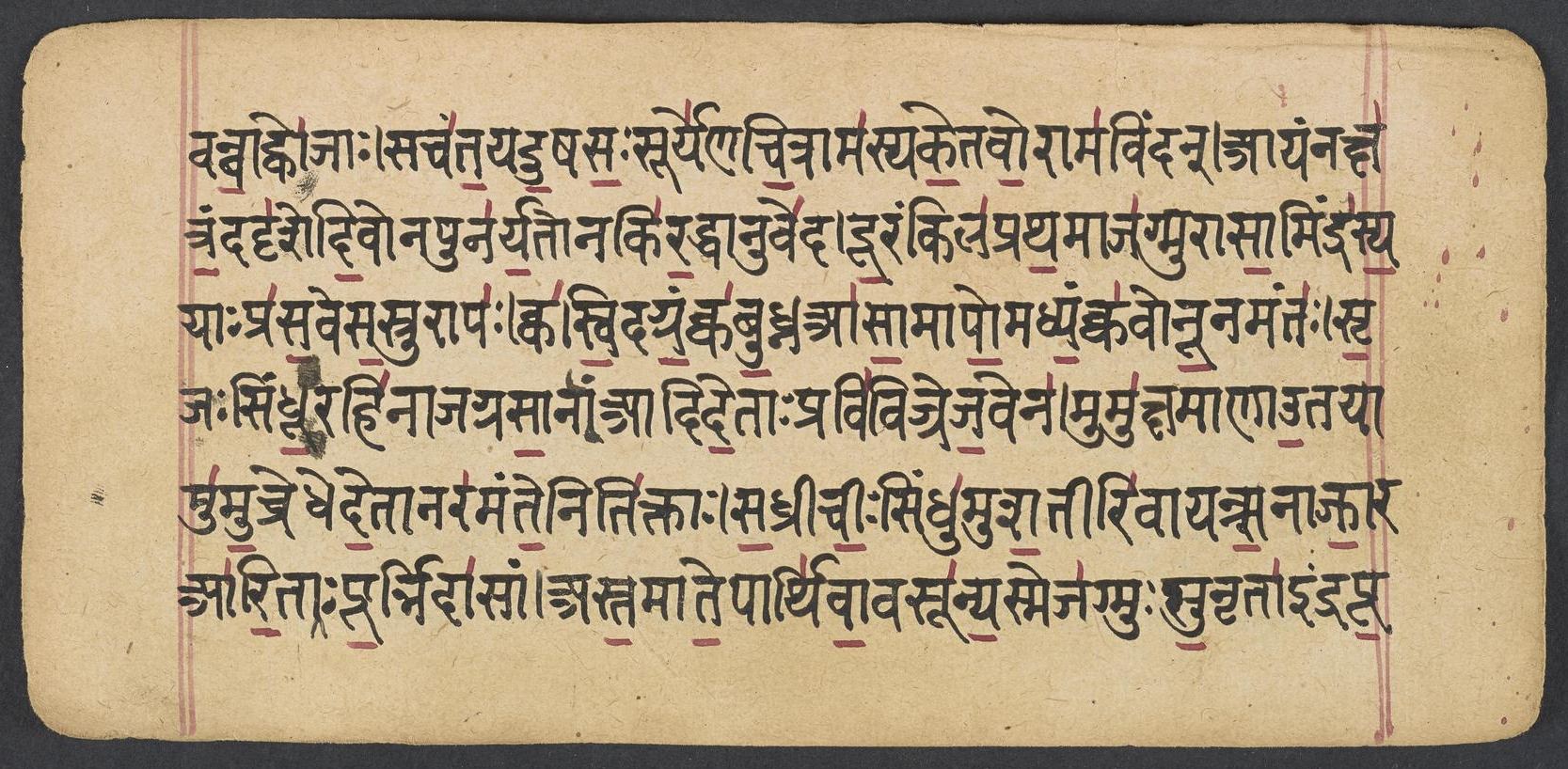
Where on the image
Penn Ms. Coll. 390 Item 48, fol. 98r (OPenn image 97, lower leaf). Checked on the image: the Rigveda text on this page begins in RV 10.111.6 ‹-maghavan bāhvojāḥ›. The next page with Rigveda text, fol. 98v, begins in RV 10.111.10 ‹-pūrvīḥ›. Verses 10.111.6-9 end on this page; 10.111.6 begins on fol. 97v.
6vajre̍ṇa̱ hi vṛ̍tra̱hā vṛ̱tram asta̱r ade̍vasya̱ śūśu̍vānasya mā̱yāḥ | vi dhṛ̍ṣṇo̱ atra̍ dhṛṣa̱tā ja̍gha̱nthāthā̍bhavo maghavan bā̱hvo̍jāḥ ||
7saca̍nta̱ yad u̱ṣasa̱ḥ sūrye̍ṇa ci̱trām a̍sya ke̱tavo̱ rām a̍vindan | ā yan nakṣa̍tra̱ṁ dadṛ̍śe di̱vo na puna̍r ya̱to naki̍r a̱ddhā nu ve̍da ||
8dū̱raṁ kila̍ pratha̱mā ja̍gmur āsā̱m indra̍sya̱ yāḥ pra̍sa̱ve sa̱srur āpa̍ḥ | kva̍ svi̱d agra̱ṁ kva̍ bu̱dhna ā̍sā̱m āpo̱ madhya̱ṁ kva̍ vo nū̱nam anta̍ḥ ||
9sṛ̱jaḥ sindhū̱m̐r ahi̍nā jagrasā̱nām̐ ād id e̱tāḥ pra vi̍vijre ja̱vena̍ | mumu̍kṣamāṇā u̱ta yā mu̍mu̱cre 'dhed e̱tā na ra̍mante̱ niti̍ktāḥ ||
6The Vr̥itra-slaver with his bolt felled Vr̥itra: the magic of the godless, waxen mighty, Here hast thou, Bold Assailant, boldly conquered. Yea, then thine arms, O Maghavan, were potent.
7When the Dawns come attendant upon Sûrya their rays discover wealth of divers colours. The Star of heaven is seen as 'twere approaching: none knoweth aught of it as it departeth.
8Far have they gone, the first of all these waters, the waters that flowed forth when Indra sent them. Where is their spring, and where is their foundation? Where now, ye Waters, is your inmost centre?
9Thou didst free rivers swallowed by the Dragon; and rapidly they set themselves in motion, Those that were loosed and those that longed for freedom. Excited now to speed they run unresting.
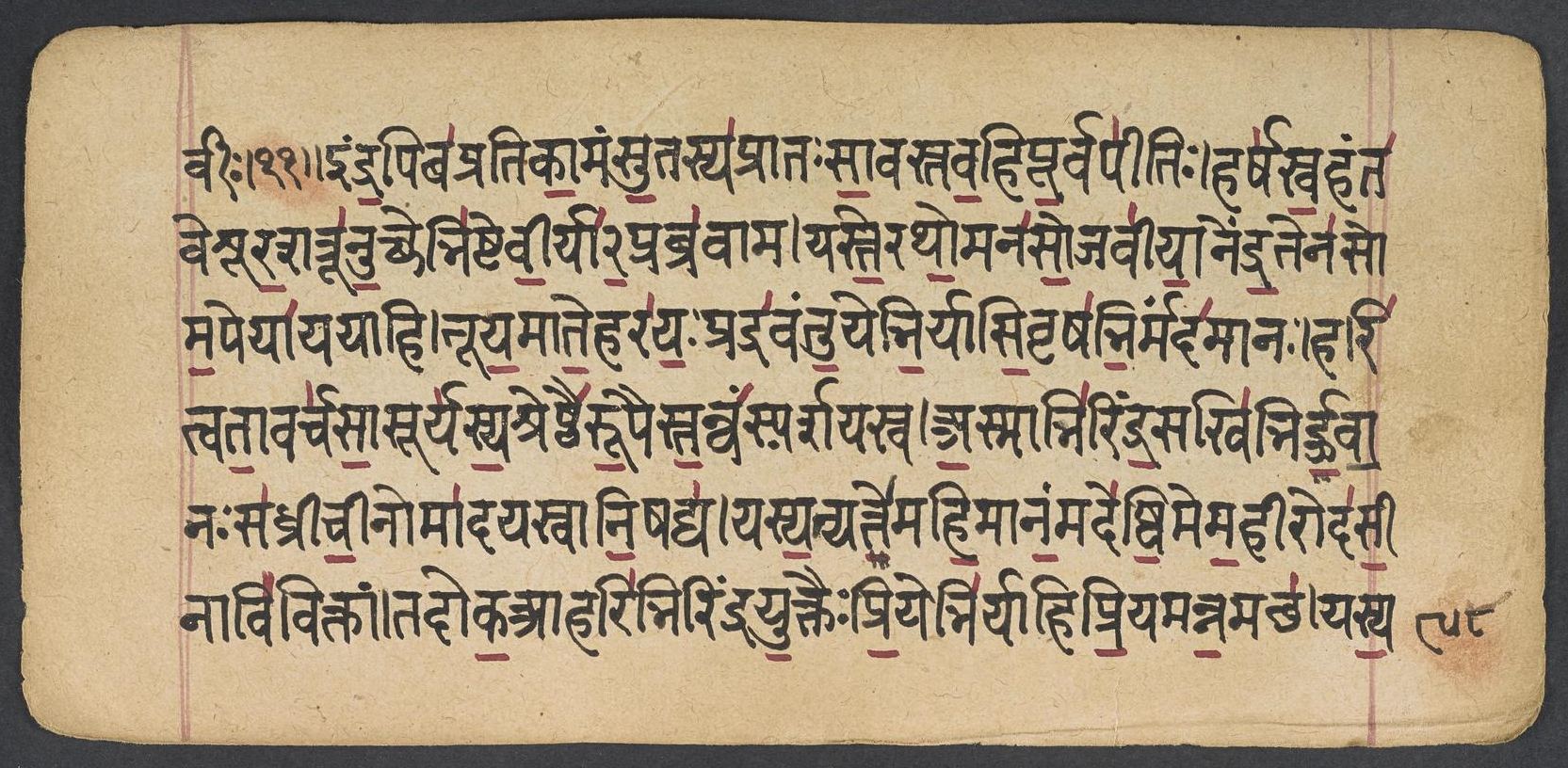
Where on the image
Penn Ms. Coll. 390 Item 48, fol. 98v (OPenn image 98, upper leaf). Checked on the image: the Rigveda text on this page begins in RV 10.111.10 ‹-pūrvīḥ›. The next page with Rigveda text, fol. 99r, begins in RV 10.112.5 ‹-śaśvat papivām̐ indra śatrūn›. Verse 10.111.10 ends on this page; 10.111.10 begins on fol. 98r.
10sa̱dhrīcī̱ḥ sindhu̍m uśa̱tīr i̍vāyan sa̱nāj jā̱ra ā̍ri̱taḥ pū̱rbhid ā̍sām | asta̱m ā te̱ pārthi̍vā̱ vasū̍ny a̱sme ja̍gmuḥ sū̱nṛtā̍ indra pū̱rvīḥ ||
10Yearning together they have sped to Sindhu: the Fort-destroyer, praised, of old, hath loved them. Indra, may thy terrestrial treasures reach us, and our full songs of joy approach thy dwelling.
Notes
- Sanskrit: Aufrecht's edition (1877) with the Vedic accents, as entered by van Nooten and Holland (GRETIL).
- English: Ralph T. H. Griffith, The Hymns of the Rigveda (1889-1892; 2nd ed. 1896-1897), from the VedaWeb digital text; OCR slips in that text were corrected against the printed 2nd edition (data/sources/rigveda/griffith_errata.json).
Cite
Sources
- Source: Penn Ms. Coll. 390 Item 48 (1711 CE (colophon: Saṃvat 1768)), OPenn, Public Domain Mark + Aufrecht's accented text (GRETIL) + Griffith's English (VedaWeb) (holding institution)
- Critical edition: Aufrecht (1877), accented e-text via GRETIL
← previous · → next · v cycle view · l back to library