Rigveda 10.115: To Agni
Introduction
Rigveda 10.115 is a hymn of 9 verses addressed to Agni. It stands in book (maṇḍala) 10, the last and latest book. The Rigveda is the oldest collection of Sanskrit hymns, composed in the second half of the second millennium BCE and handed down orally for many centuries before it was written down.
The manuscript shown is Penn Ms. Coll. 390 Item 48 (University of Pennsylvania), a paper manuscript of the eighth aṣṭaka (RV 10.46-10.191) of the Ṛgveda Saṃhitā in Devanāgarī, 158 leaves, 6 lines to the page, with the accents marked in red; the scribe's colophon on fol. 158 gives Saṃvat 1768 (1711 CE); this hymn stands on fol. 102r-103r. Each section below gives the verses that end on one page; the page boundaries were read on the images (the opening words of every page), not counted out. Like most Rigveda manuscripts, Penn Ms. Coll. 390 Item 48 writes a repeated refrain in short form after its first occurrence (for example kasmai° for kasmai devāya haviṣā vidhema); the Sanskrit shown is the full text of Aufrecht's edition.
How was this verified? (Provenance)
Where on the image
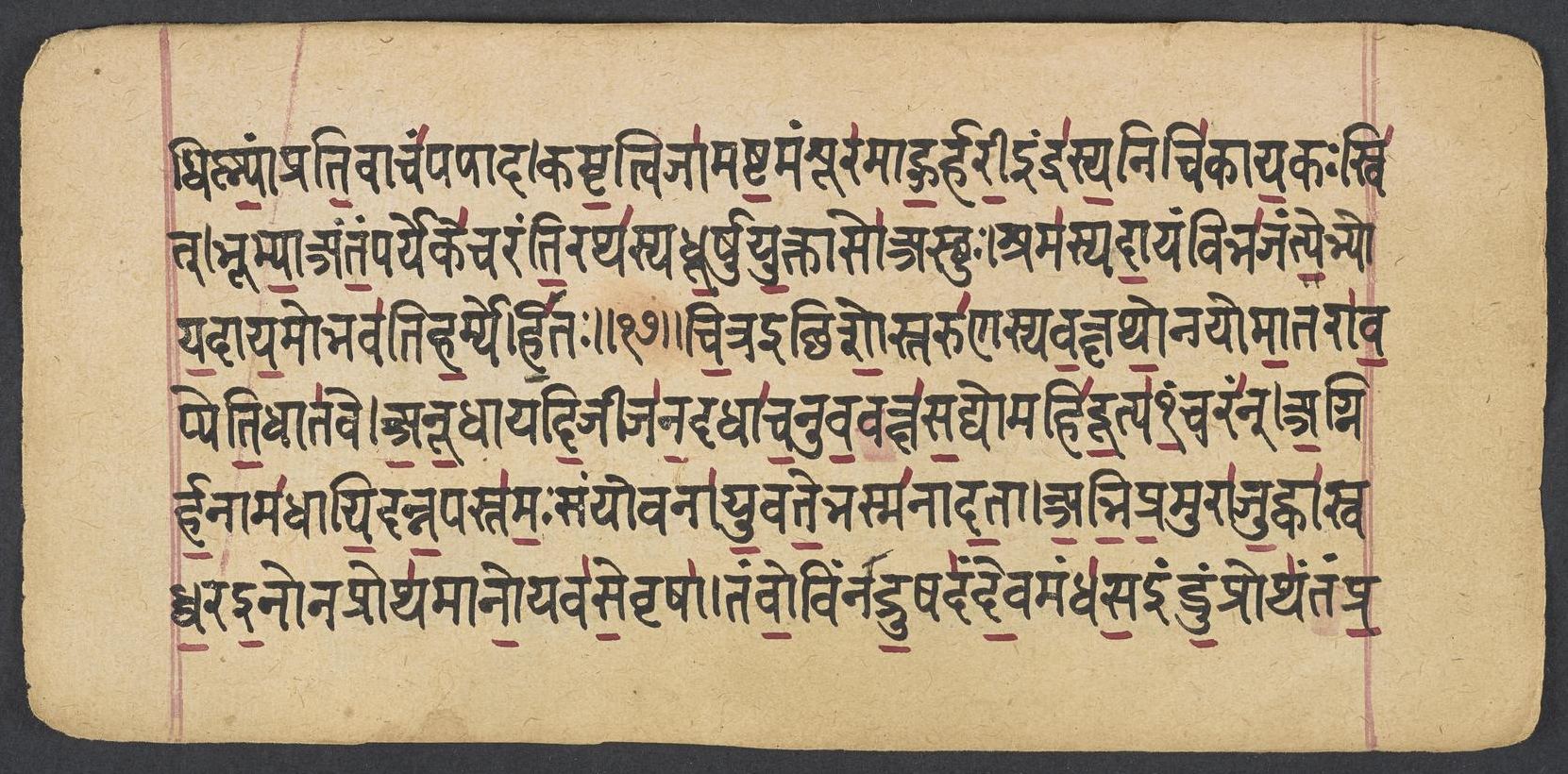
Penn Ms. Coll. 390 Item 48, fol. 102r (OPenn image 101, lower leaf). Checked on the image: the Rigveda text on this page begins in RV 10.114.9 ‹prati vācam papāda›. The next page with Rigveda text, fol. 102v, begins in RV 10.115.3 ‹-pravapantam arṇavam›. Verses 10.115.1-2 end on this page.
1ci̱tra ic chiśo̱s taru̍ṇasya va̱kṣatho̱ na yo mā̱tarā̍v a̱pyeti̱ dhāta̍ve | a̱nū̱dhā yadi̱ jīja̍na̱d adhā̍ ca̱ nu va̱vakṣa̍ sa̱dyo mahi̍ dū̱tya1̱̍ṁ cara̍n ||
2a̱gnir ha̱ nāma̍ dhāyi̱ dann a̱pasta̍ma̱ḥ saṁ yo vanā̍ yu̱vate̱ bhasma̍nā da̱tā | a̱bhi̱pra̱murā̍ ju̱hvā̍ svadhva̱ra i̱no na protha̍māno̱ yava̍se̱ vṛṣā̍ ||
1VERILY wondrous is the tender Youngling's growth who never draweth nigh to drink his Mothers' milk. As soon as she who hath no udder bore him, he, faring on his great errand, suddenly grew strong.
2Then Agni was his name, most active to bestow, gathering up the trees with his consuming tooth; Skilled in fair sacrifice, armed with destroying tongue, impetuous as a bull that snorteth in the mead.
Where on the image
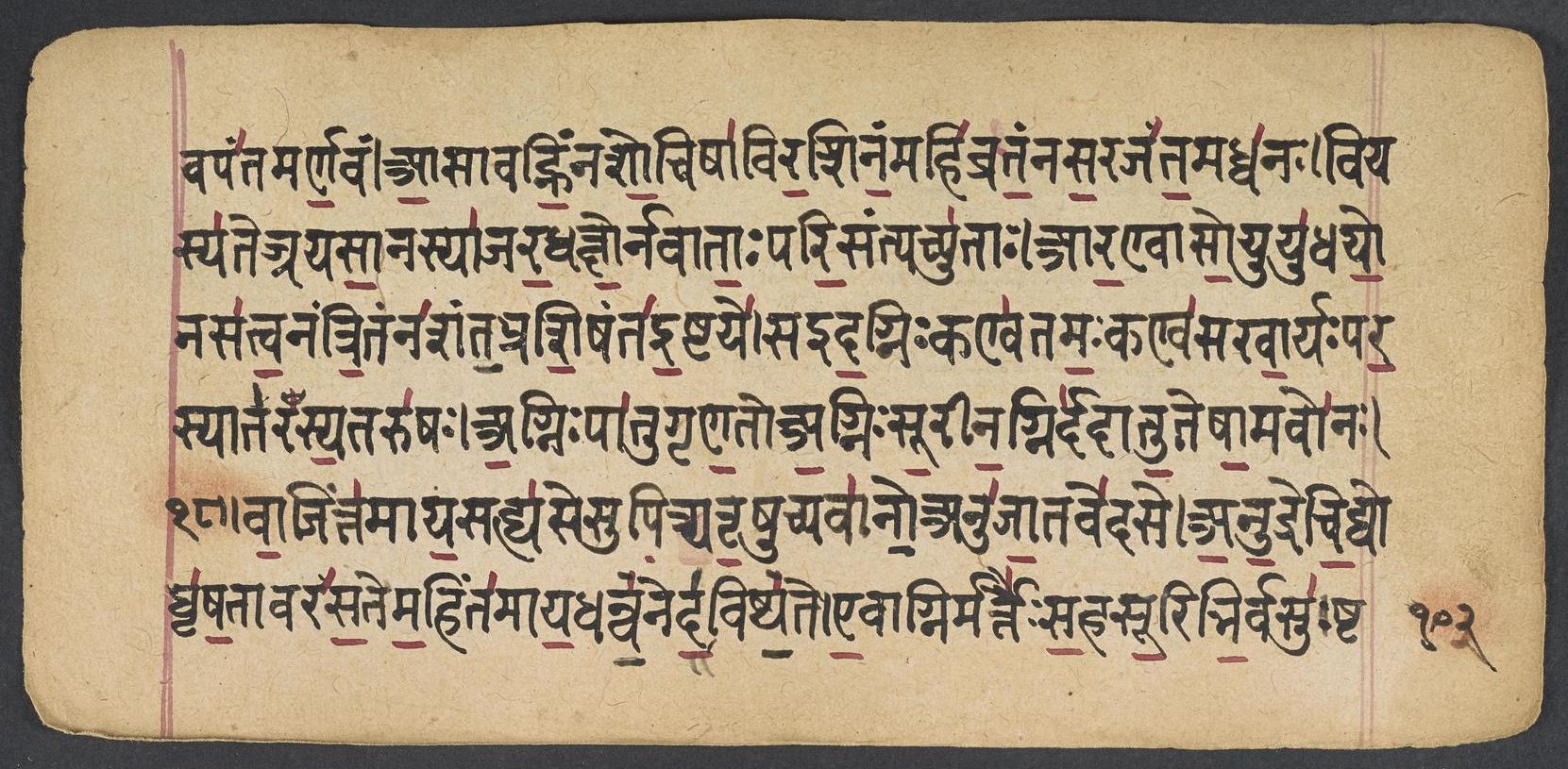
Penn Ms. Coll. 390 Item 48, fol. 102v (OPenn image 102, upper leaf). Checked on the image: the Rigveda text on this page begins in RV 10.115.3 ‹-pravapantam arṇavam›. The next page with Rigveda text, fol. 103r, begins in RV 10.115.7 ‹-ṣṭave sahasaḥ sūnaro nṛbhiḥ›. Verses 10.115.3-6 end on this page; 10.115.3 begins on fol. 102r.
3taṁ vo̱ viṁ na dru̱ṣada̍ṁ de̱vam andha̍sa̱ indu̱m protha̍ntam pra̱vapa̍ntam arṇa̱vam | ā̱sā vahni̱ṁ na śo̱ciṣā̍ vira̱pśina̱m mahi̍vrata̱ṁ na sa̱raja̍nta̱m adhva̍naḥ ||
4vi yasya̍ te jrayasā̱nasyā̍jara̱ dhakṣo̱r na vātā̱ḥ pari̱ santy acyu̍tāḥ | ā ra̱ṇvāso̱ yuyu̍dhayo̱ na sa̍tva̱naṁ tri̱taṁ na̍śanta̱ pra śi̱ṣanta̍ i̱ṣṭaye̍ ||
5sa id a̱gniḥ kaṇva̍tama̱ḥ kaṇva̍sakhā̱ryaḥ para̱syānta̍rasya̱ taru̍ṣaḥ | a̱gniḥ pā̍tu gṛṇa̱to a̱gniḥ sū̱rīn a̱gnir da̍dātu̱ teṣā̱m avo̍ naḥ ||
6vā̱jinta̍māya̱ sahya̍se supitrya tṛ̱ṣu cyavā̍no̱ anu̍ jā̱tave̍dase | a̱nu̱dre ci̱d yo dhṛ̍ṣa̱tā vara̍ṁ sa̱te ma̱hinta̍māya̱ dhanva̱ned a̍viṣya̱te ||
3Praise him, yourGod who, bird-like, rests upon a tree, scattering drops of juice and pouring forth his flood, Speaking aloud with flame as with his lips a priest, and broadening his paths like one of high command.
4Thou Everlasting, whom, far-striding fain to burn, the winds, uninterrupted, never overcome, They have approached, as warriors eager for the fight, heroic Trita, guiding him to gain his wish.
5This Agni is the best of Kaṇvas, Kaṇvas' Friend, Conqueror of the foe whether afar or near. May Agni guard the singers, guard the princes well: may Agni grant to us our princes' gracious help.
6Do thou, Supitrya, swiftly following, make thyself the lord of Jâtavedas, mightiest of all, Who surely gives a boon even in thirsty land most powerful, prepared to aid us in the wilds.
Where on the image
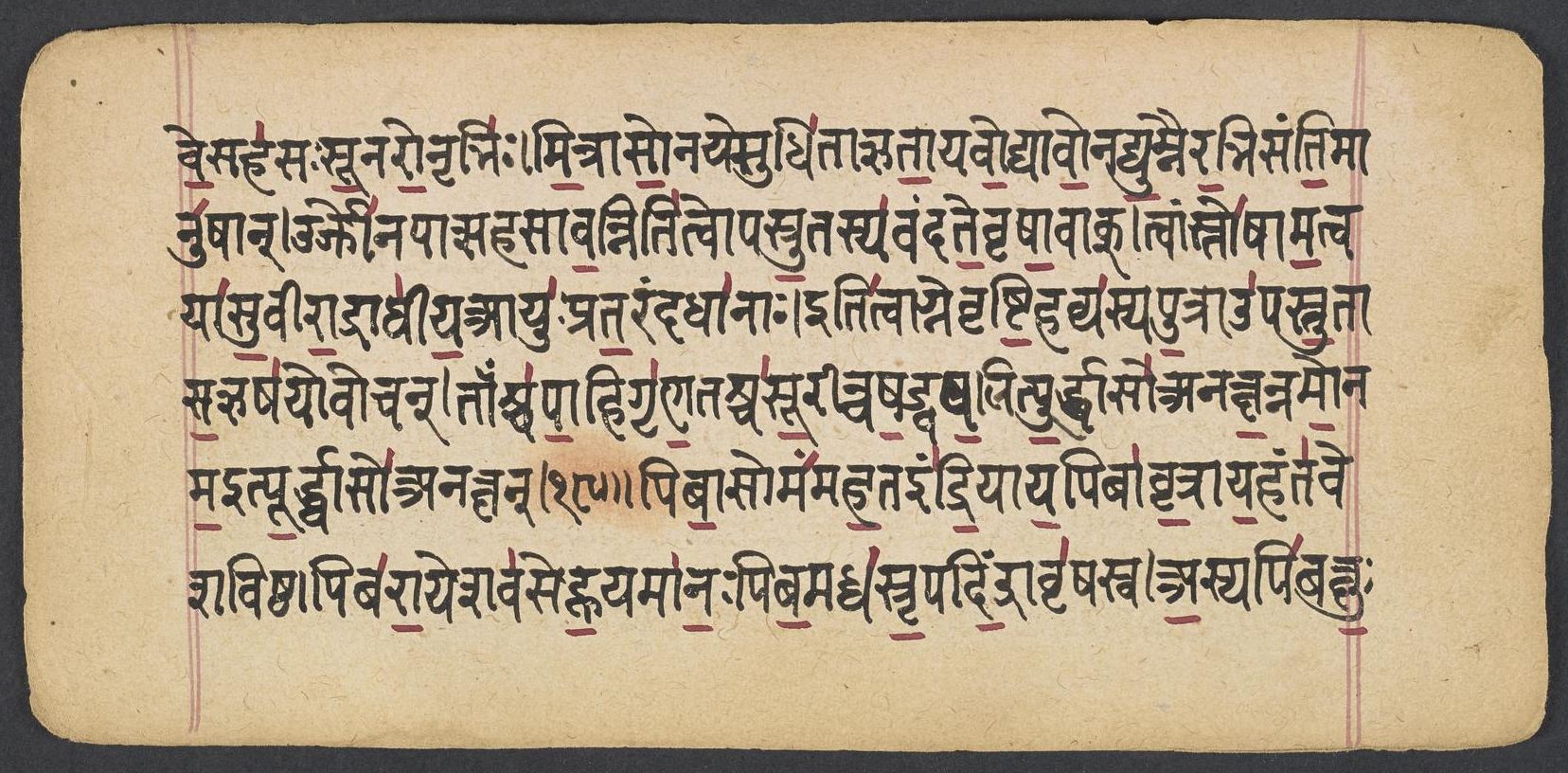
Penn Ms. Coll. 390 Item 48, fol. 103r (OPenn image 102, lower leaf). Checked on the image: the Rigveda text on this page begins in RV 10.115.7 ‹-ṣṭave sahasaḥ sūnaro nṛbhiḥ›. The next page with Rigveda text, fol. 103v, begins in RV 10.116.2 ‹-kṣumataḥ prasthitasyendra somasya varam›. Verses 10.115.7-9 end on this page; 10.115.7 begins on fol. 102v.
7e̱vāgnir martai̍ḥ sa̱ha sū̱ribhi̱r vasu̍ḥ ṣṭave̱ saha̍saḥ sū̱naro̱ nṛbhi̍ḥ | mi̱trāso̱ na ye sudhi̍tā ṛtā̱yavo̱ dyāvo̱ na dyu̱mnair a̱bhi santi̱ mānu̍ṣān ||
8ūrjo̍ napāt sahasāva̱nn iti̍ tvopastu̱tasya̍ vandate̱ vṛṣā̱ vāk | tvāṁ sto̍ṣāma̱ tvayā̍ su̱vīrā̱ drāghī̍ya̱ āyu̍ḥ prata̱raṁ dadhā̍nāḥ ||
9iti̍ tvāgne vṛṣṭi̱havya̍sya pu̱trā u̍pastu̱tāsa̱ ṛṣa̍yo 'vocan | tām̐ś ca̍ pā̱hi gṛ̍ṇa̱taś ca̍ sū̱rīn vaṣa̱ḍ vaṣa̱ḻ ity ū̱rdhvāso̍ anakṣa̱n namo̱ nama̱ ity ū̱rdhvāso̍ anakṣan ||
7Thus noble Agni with princes and mortal men is lauded, excellent for conquering strength with chiefs, Men who are well-disposed as friends and true to Law, even as the heavens in majesty surpass mankind.
8O Son of Strength, Victorious, with this title Upastuta's most potent voice reveres thee. Blest with brave sons by thee we will extol thee, and lengthen out the days of our existence.
9Thus, Agni, have the sons of Vr̥ishṭihavya, the R̥ishis, the Upastutas invoked thee. Protect them, guard the singers and the princes. With Vashaṭ! have they come, with hands uplifted, with their uplifted hands and cries of Glory!
Notes
- Sanskrit: Aufrecht's edition (1877) with the Vedic accents, as entered by van Nooten and Holland (GRETIL).
- English: Ralph T. H. Griffith, The Hymns of the Rigveda (1889-1892; 2nd ed. 1896-1897), from the VedaWeb digital text; OCR slips in that text were corrected against the printed 2nd edition (data/sources/rigveda/griffith_errata.json).
Cite
Sources
- Source: Penn Ms. Coll. 390 Item 48 (1711 CE (colophon: Saṃvat 1768)), OPenn, Public Domain Mark + Aufrecht's accented text (GRETIL) + Griffith's English (VedaWeb) (holding institution)
- Critical edition: Aufrecht (1877), accented e-text via GRETIL
← previous · → next · v cycle view · l back to library