Rigveda 10.114: To all the gods
Introduction
Rigveda 10.114 is a hymn of 10 verses addressed to all the gods. It stands in book (maṇḍala) 10, the last and latest book. The Rigveda is the oldest collection of Sanskrit hymns, composed in the second half of the second millennium BCE and handed down orally for many centuries before it was written down.
The manuscript shown is Penn Ms. Coll. 390 Item 48 (University of Pennsylvania), a paper manuscript of the eighth aṣṭaka (RV 10.46-10.191) of the Ṛgveda Saṃhitā in Devanāgarī, 158 leaves, 6 lines to the page, with the accents marked in red; the scribe's colophon on fol. 158 gives Saṃvat 1768 (1711 CE); this hymn stands on fol. 100v-102r. Each section below gives the verses that end on one page; the page boundaries were read on the images (the opening words of every page), not counted out. Like most Rigveda manuscripts, Penn Ms. Coll. 390 Item 48 writes a repeated refrain in short form after its first occurrence (for example kasmai° for kasmai devāya haviṣā vidhema); the Sanskrit shown is the full text of Aufrecht's edition.
How was this verified? (Provenance)
Where on the image
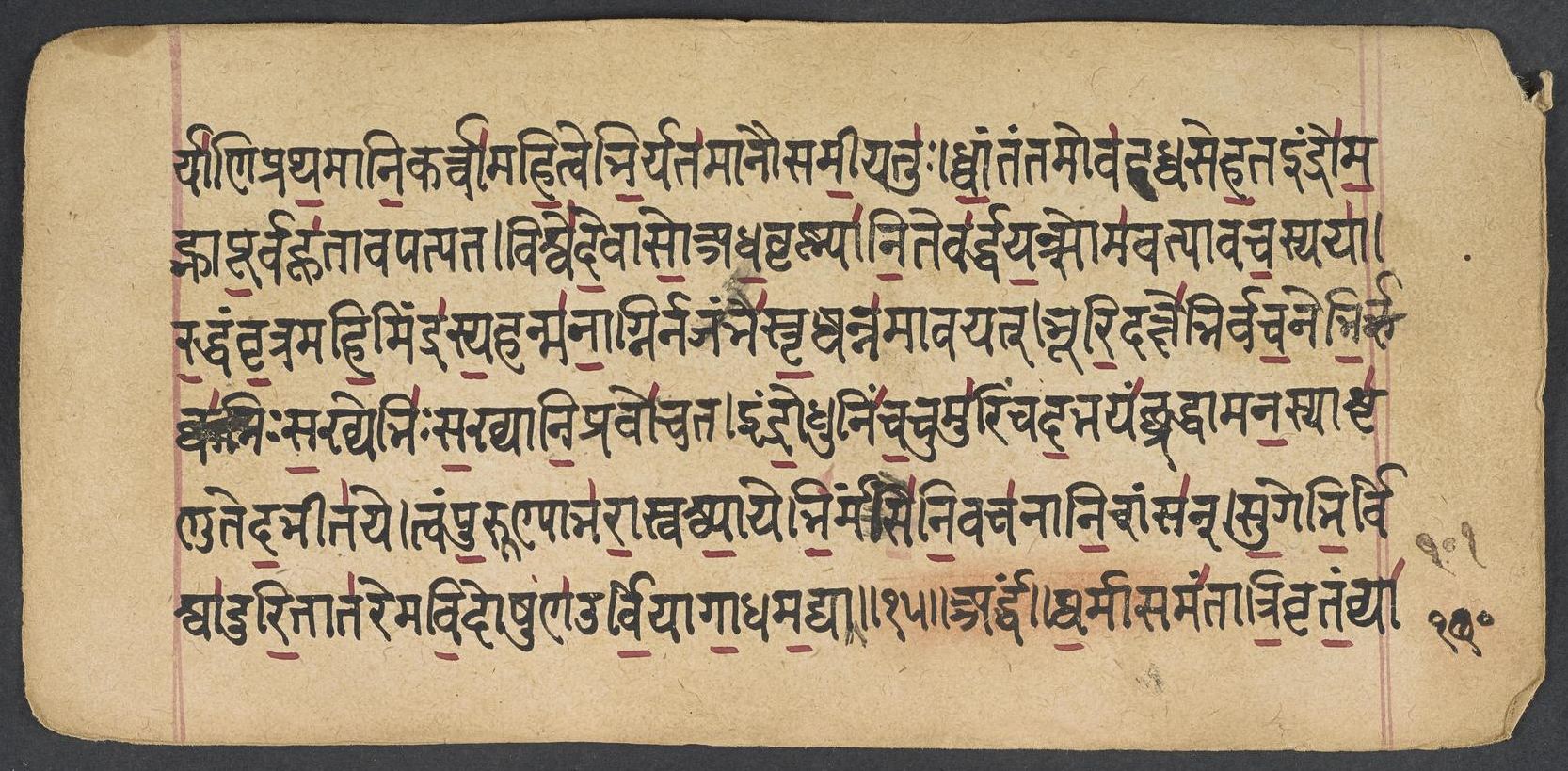
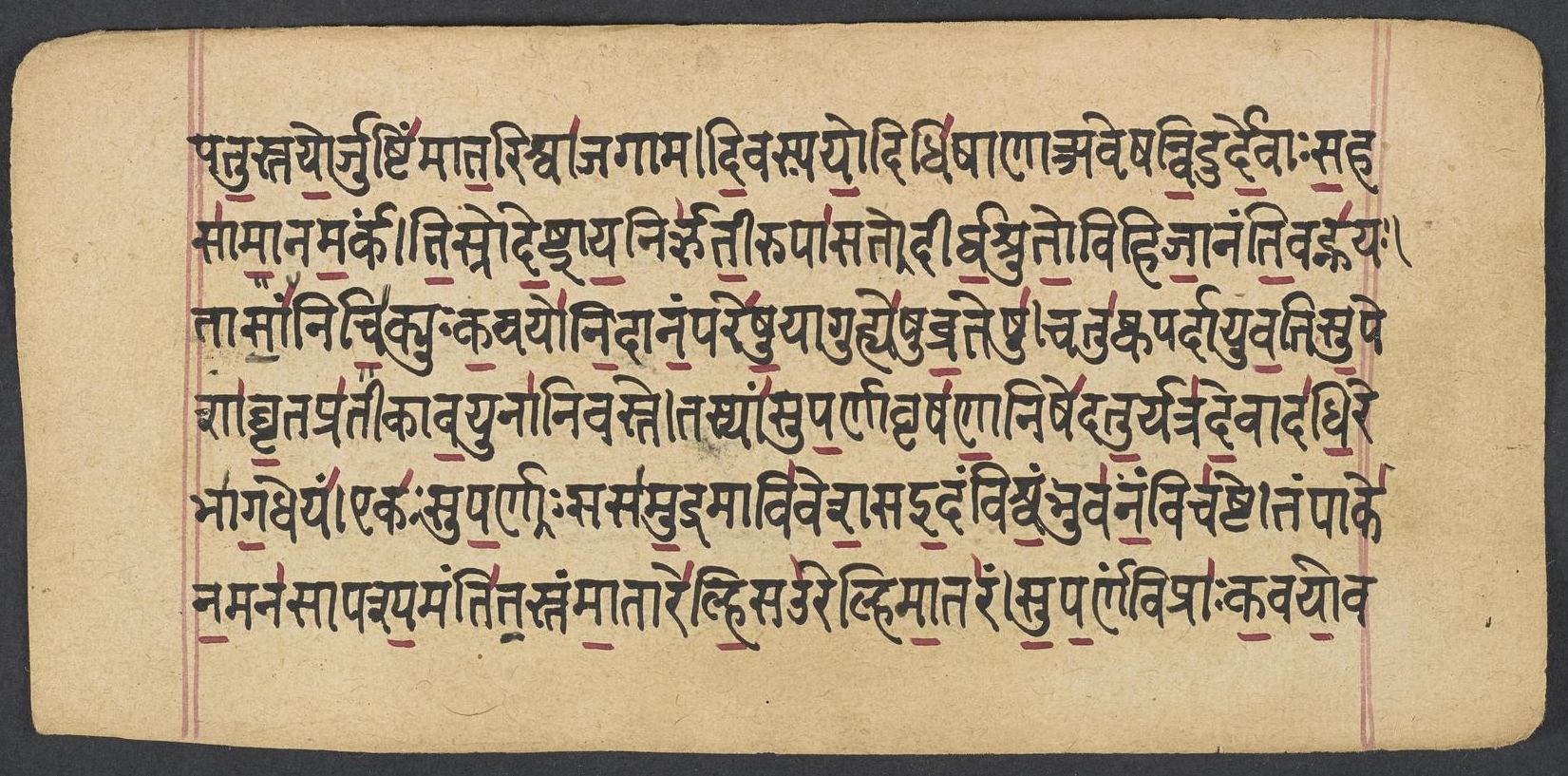
Penn Ms. Coll. 390 Item 48, fol. 101r (OPenn image 100, lower leaf). Checked on the image: the Rigveda text on this page begins in RV 10.114.1 ‹mātariśvā jagāma›. The next page with Rigveda text, fol. 101v, begins in RV 10.114.5 ‹-vacobhir ekaṁ santam bahudhā›. Verses 10.114.1-4 end on this page; 10.114.1 begins on fol. 100v.
1gha̱rmā sama̍ntā tri̱vṛta̱ṁ vy ā̍patu̱s tayo̱r juṣṭi̍m māta̱riśvā̍ jagāma | di̱vas payo̱ didhi̍ṣāṇā aveṣan vi̱dur de̱vāḥ sa̱hasā̍mānam a̱rkam ||
2ti̱sro de̱ṣṭrāya̱ nirṛ̍tī̱r upā̍sate dīrgha̱śruto̱ vi hi jā̱nanti̱ vahna̍yaḥ | tāsā̱ṁ ni ci̍kyuḥ ka̱vayo̍ ni̱dāna̱m pare̍ṣu̱ yā guhye̍ṣu vra̱teṣu̍ ||
3catu̍ṣkapardā yuva̱tiḥ su̱peśā̍ ghṛ̱tapra̍tīkā va̱yunā̍ni vaste | tasyā̍ṁ supa̱rṇā vṛṣa̍ṇā̱ ni ṣe̍datu̱r yatra̍ de̱vā da̍dhi̱re bhā̍ga̱dheya̍m ||
4eka̍ḥ supa̱rṇaḥ sa sa̍mu̱dram ā vi̍veśa̱ sa i̱daṁ viśva̱m bhuva̍na̱ṁ vi ca̍ṣṭe | tam pāke̍na̱ mana̍sāpaśya̱m anti̍ta̱s tam mā̱tā re̍ḻhi̱ sa u̍ reḻhi mā̱tara̍m ||
1Two perfect springs of heat pervade the Threefold, and come for their delight is Mâtariṣvan. Craving the milk of heaven the Gods are present: well do they know the praisesong and the Sâman.
2The priests beard far away, as they are ordered, serve the three Nirr̥itis, for well they know them. Sages have traced the cause that first produced them, dwelling in distant and mysterious chambers.
3The Youthful One, well-shaped, with four locks braided, brightened with oil, puts on the ordinances. Two Birds of mighty power are seated near her, there where the Deities receive their portion.
4One of these Birds hath passed into the sea of air: thence he looks round and views this universal world. With simple heart I have beheld him from anear: his Mother kisses him and he returns her kiss.
Where on the image
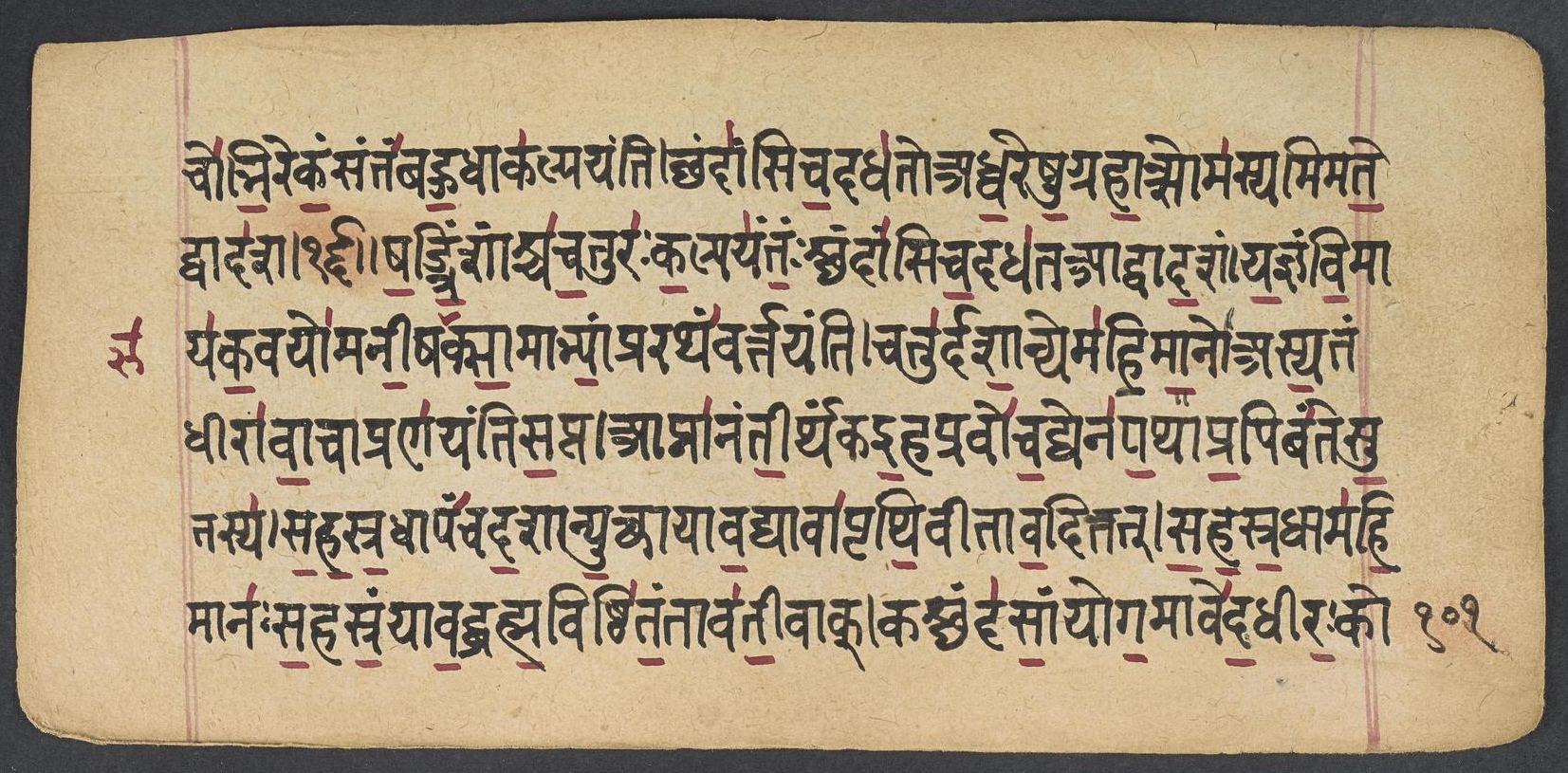
Penn Ms. Coll. 390 Item 48, fol. 101v (OPenn image 101, upper leaf). Checked on the image: the Rigveda text on this page begins in RV 10.114.5 ‹-vacobhir ekaṁ santam bahudhā›. The next page with Rigveda text, fol. 102r, begins in RV 10.114.9 ‹prati vācam papāda›. Verses 10.114.5-8 end on this page; 10.114.5 begins on fol. 101r.
5su̱pa̱rṇaṁ viprā̍ḥ ka̱vayo̱ vaco̍bhi̱r eka̱ṁ santa̍m bahu̱dhā ka̍lpayanti | chandā̍ṁsi ca̱ dadha̍to adhva̱reṣu̱ grahā̱n soma̍sya mimate̱ dvāda̍śa ||
6ṣa̱ṭtri̱ṁśām̐ś ca̍ ca̱tura̍ḥ ka̱lpaya̍nta̱ś chandā̍ṁsi ca̱ dadha̍ta ādvāda̱śam | ya̱jñaṁ vi̱māya̍ ka̱vayo̍ manī̱ṣa ṛ̍ksā̱mābhyā̱m pra ratha̍ṁ vartayanti ||
7catu̍rdaśā̱nye ma̍hi̱māno̍ asya̱ taṁ dhīrā̍ vā̱cā pra ṇa̍yanti sa̱pta | āpnā̍naṁ tī̱rthaṁ ka i̱ha pra vo̍ca̱d yena̍ pa̱thā pra̱piba̍nte su̱tasya̍ ||
8sa̱ha̱sra̱dhā pa̍ñcada̱śāny u̱kthā yāva̱d dyāvā̍pṛthi̱vī tāva̱d it tat | sa̱ha̱sra̱dhā ma̍hi̱māna̍ḥ sa̱hasra̱ṁ yāva̱d brahma̱ viṣṭhi̍ta̱ṁ tāva̍tī̱ vāk ||
5Him with fair wings though only One in nature, wise singers shape, with songs, in many figures. While they at sacrifices fix the metres, they measure out twelve chalices of Soma.
6While they arrange the four and six-and-thirty, and duly order, up to twelve, the measures, Having disposed the sacrifice thoughtful sages send the Car forward with the R̥ich and Sâman.
7The Chariot's majesties are fourteen others: seven sages lead it onward with their Voices. Who will declare to us the ford Âpnâna, the path whereby they drink first draughts of Soma?
8The fifteen lauds are in a thousand places that is as vast as heaven and earth in measure. A thousand spots contain the mighty thousand. Vâk spreadeth forth as far as Prayer extendeth.
Where on the image
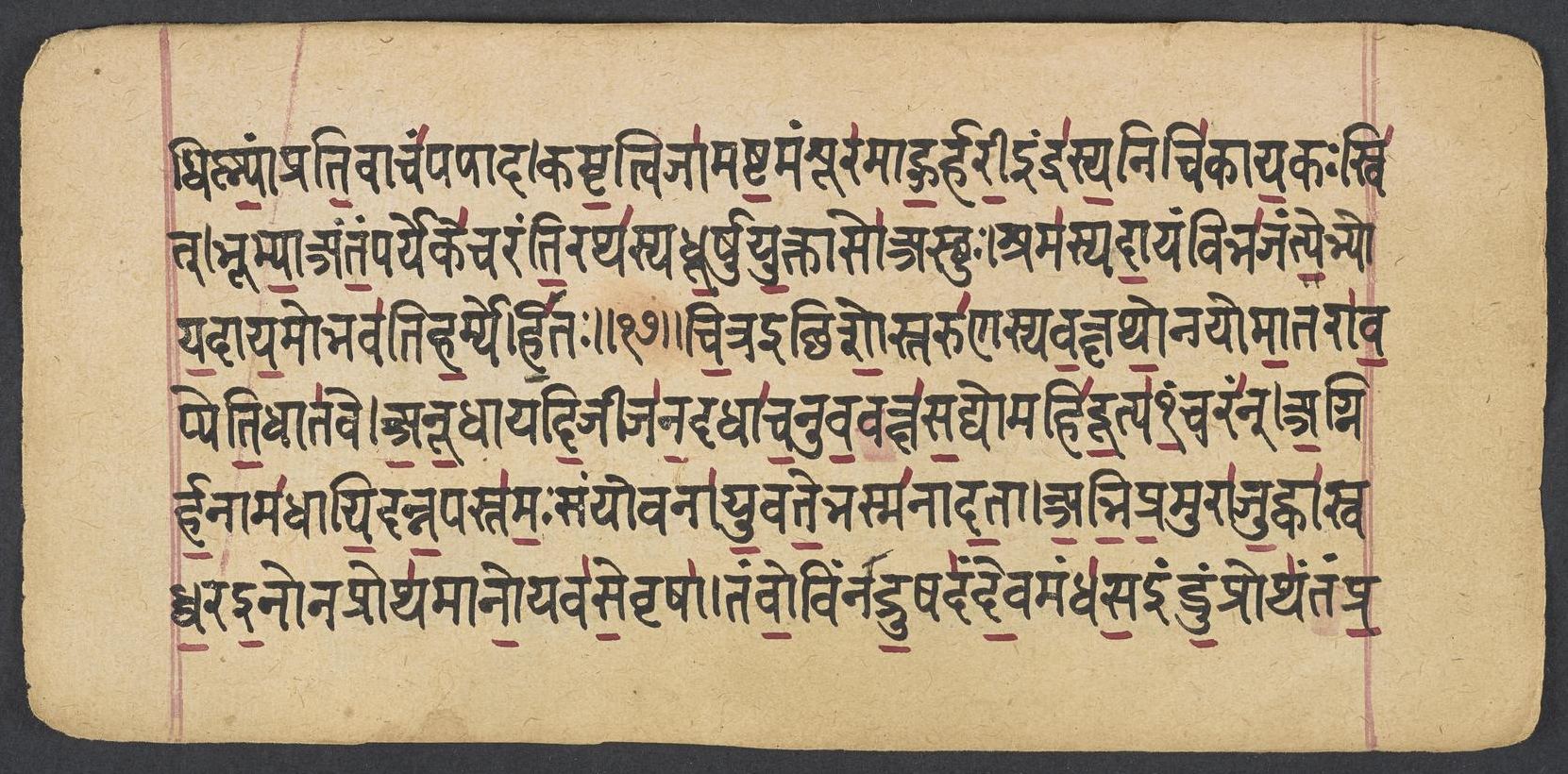
Penn Ms. Coll. 390 Item 48, fol. 102r (OPenn image 101, lower leaf). Checked on the image: the Rigveda text on this page begins in RV 10.114.9 ‹prati vācam papāda›. The next page with Rigveda text, fol. 102v, begins in RV 10.115.3 ‹-pravapantam arṇavam›. Verses 10.114.9-10 end on this page; 10.114.9 begins on fol. 101v.
9kaś chanda̍sā̱ṁ yoga̱m ā ve̍da̱ dhīra̱ḥ ko dhiṣṇyā̱m prati̱ vāca̍m papāda | kam ṛ̱tvijā̍m aṣṭa̱maṁ śūra̍m āhu̱r harī̱ indra̍sya̱ ni ci̍kāya̱ kaḥ svi̍t ||
10bhūmyā̱ anta̱m pary eke̍ caranti̱ ratha̍sya dhū̱rṣu yu̱ktāso̍ asthuḥ | śrama̍sya dā̱yaṁ vi bha̍janty ebhyo ya̱dā ya̱mo bhava̍ti ha̱rmye hi̱taḥ ||
9What sage hath learned the metres' application? Who hath gained Vâk, the spirit's aim and object? Which ministering priest is called eighth Hero? Who then hath tracked the two Bay Steeds of Indra?
10Yoked to his chariot-pole there stood the Coursers: they only travel round earth's farthest limits. These, when their driver in his home is settled, receive the allotted meed of their exertion.
Notes
- Sanskrit: Aufrecht's edition (1877) with the Vedic accents, as entered by van Nooten and Holland (GRETIL).
- English: Ralph T. H. Griffith, The Hymns of the Rigveda (1889-1892; 2nd ed. 1896-1897), from the VedaWeb digital text; OCR slips in that text were corrected against the printed 2nd edition (data/sources/rigveda/griffith_errata.json).
Cite
Sources
- Source: Penn Ms. Coll. 390 Item 48 (1711 CE (colophon: Saṃvat 1768)), OPenn, Public Domain Mark + Aufrecht's accented text (GRETIL) + Griffith's English (VedaWeb) (holding institution)
- Critical edition: Aufrecht (1877), accented e-text via GRETIL
← previous · → next · v cycle view · l back to library