Rigveda 10.117: In praise of giving
Introduction
Rigveda 10.117 is a hymn of 9 verses addressed to praise of charity. It stands in book (maṇḍala) 10, the last and latest book. The Rigveda is the oldest collection of Sanskrit hymns, composed in the second half of the second millennium BCE and handed down orally for many centuries before it was written down.
The manuscript shown is Penn Ms. Coll. 390 Item 48 (University of Pennsylvania), a paper manuscript of the eighth aṣṭaka (RV 10.46-10.191) of the Ṛgveda Saṃhitā in Devanāgarī, 158 leaves, 6 lines to the page, with the accents marked in red; the scribe's colophon on fol. 158 gives Saṃvat 1768 (1711 CE); this hymn stands on fol. 104r-105v. Each section below gives the verses that end on one page; the page boundaries were read on the images (the opening words of every page), not counted out. Like most Rigveda manuscripts, Penn Ms. Coll. 390 Item 48 writes a repeated refrain in short form after its first occurrence (for example kasmai° for kasmai devāya haviṣā vidhema); the Sanskrit shown is the full text of Aufrecht's edition.
How was this verified? (Provenance)
Where on the image
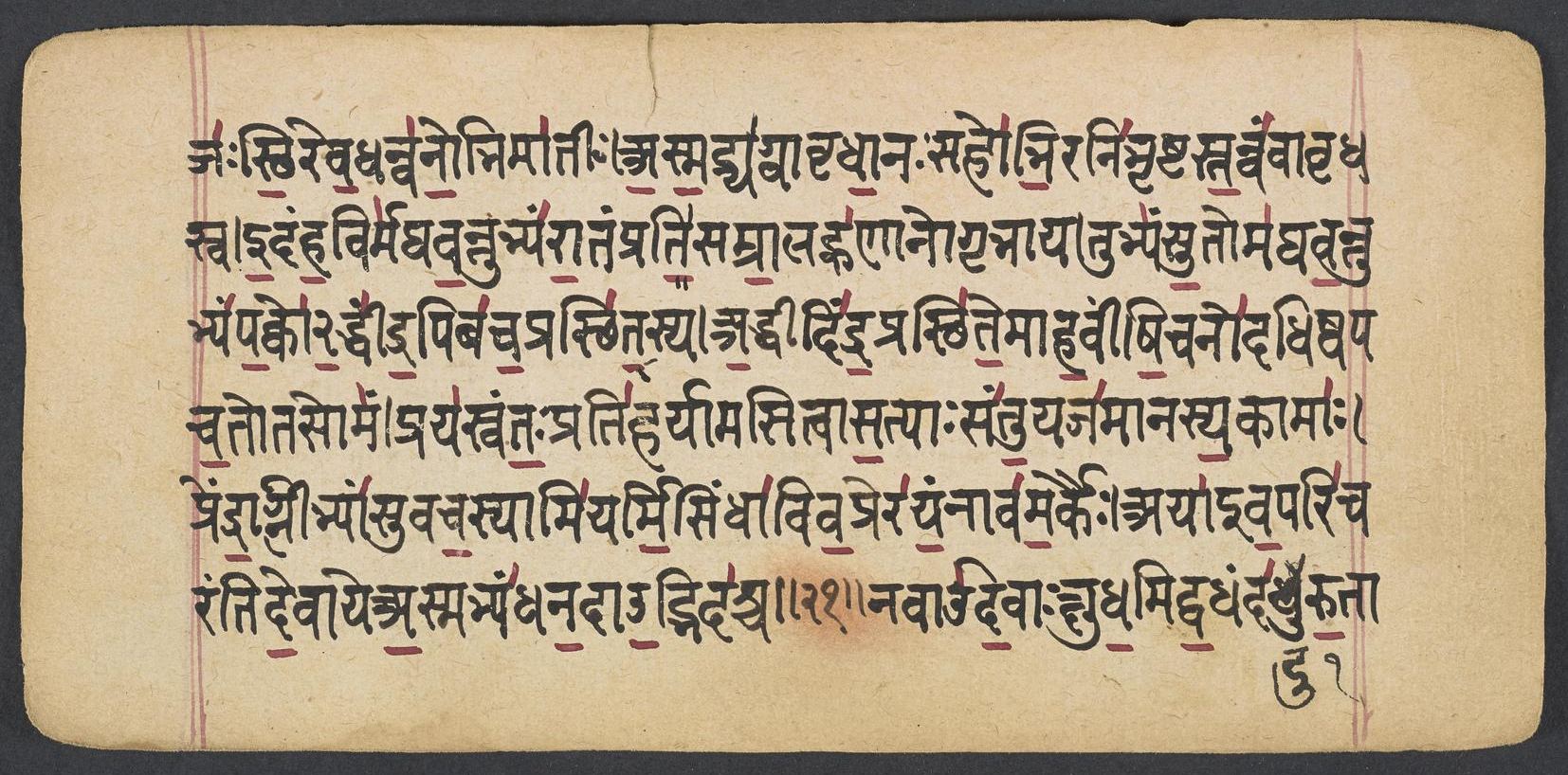
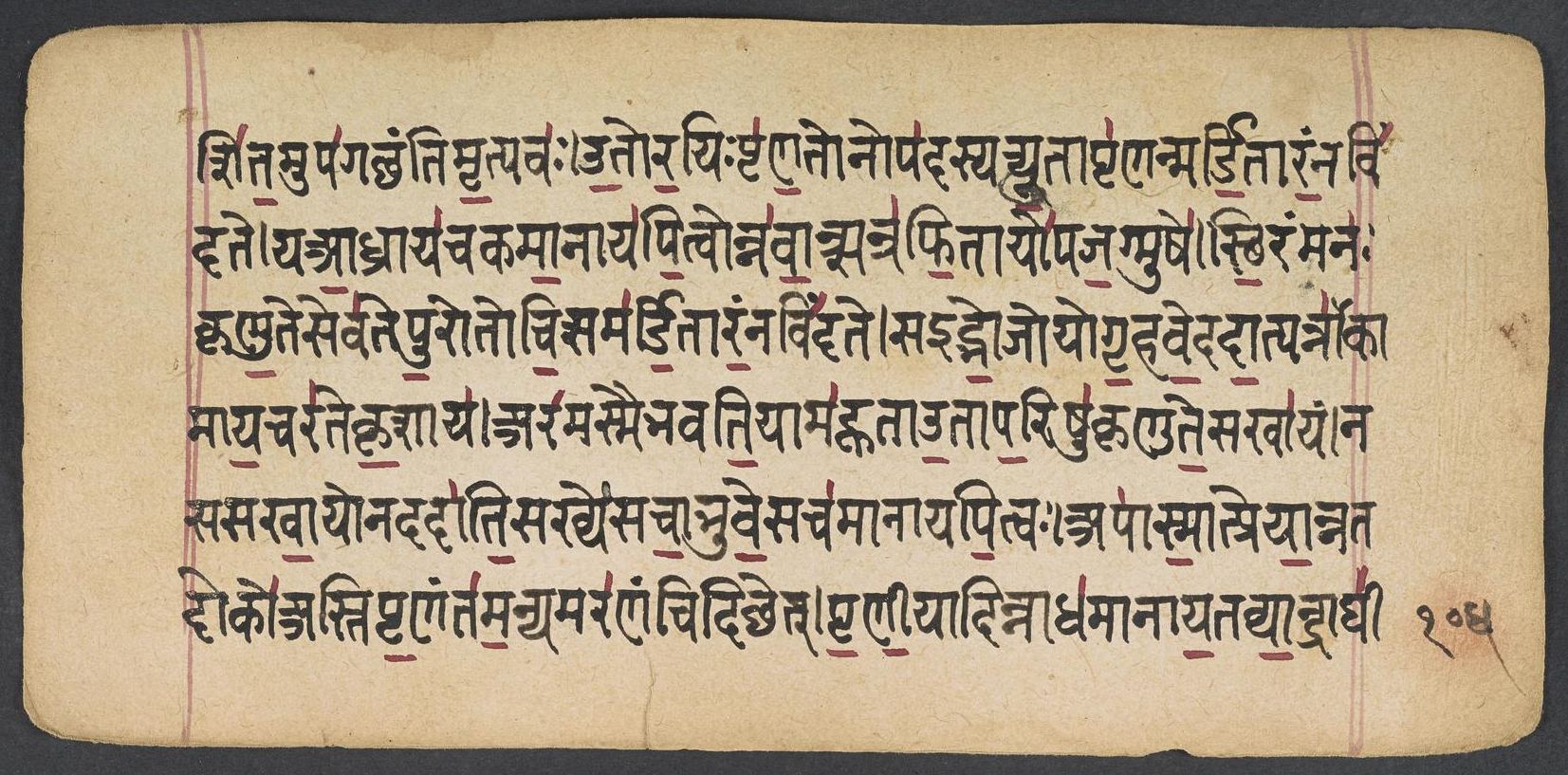
Penn Ms. Coll. 390 Item 48, fol. 104v (OPenn image 104, upper leaf). Checked on the image: the Rigveda text on this page begins in RV 10.117.1 ‹-utāśitam upa gacchanti mṛtyavaḥ›. The next page with Rigveda text, fol. 105r, begins in RV 10.117.5 ‹-drāghīyāṁsam anu paśyeta panthām›. Verses 10.117.1-4 end on this page; 10.117.1 begins on fol. 104r.
1na vā u̍ de̱vāḥ kṣudha̱m id va̱dhaṁ da̍dur u̱tāśi̍ta̱m upa̍ gacchanti mṛ̱tyava̍ḥ | u̱to ra̱yiḥ pṛ̍ṇa̱to nopa̍ dasyaty u̱tāpṛ̍ṇan marḍi̱tāra̱ṁ na vi̍ndate ||
2ya ā̱dhrāya̍ cakamā̱nāya̍ pi̱tvo 'nna̍vā̱n san ra̍phi̱tāyo̍paja̱gmuṣe̍ | sthi̱ram mana̍ḥ kṛṇu̱te seva̍te pu̱roto ci̱t sa ma̍rḍi̱tāra̱ṁ na vi̍ndate ||
3sa id bho̱jo yo gṛ̱have̱ dadā̱ty anna̍kāmāya̱ cara̍te kṛ̱śāya̍ | ara̍m asmai bhavati̱ yāma̍hūtā u̱tāpa̱rīṣu̍ kṛṇute̱ sakhā̍yam ||
4na sa sakhā̱ yo na dadā̍ti̱ sakhye̍ sacā̱bhuve̱ saca̍mānāya pi̱tvaḥ | apā̍smā̱t preyā̱n na tad oko̍ asti pṛ̱ṇanta̍m a̱nyam ara̍ṇaṁ cid icchet ||
1THE Gods have not ordained hunger to be our death: even to the well-fed man comes death in varied shape. The riches of the liberal never waste away, while he who will not give finds none to comfort him.
2The man with food in store who, when the needy comes in miserable case begging for bread to eat, Hardens his heart against him-even when of old he did him service-finds not one to comfort him.
3Bounteous is he who gives unto the beggar who comes to him in want of food and feeble. Success attends him in the shout of battle. He makes a friend of him in future troubles.
4No friend is he who to his friend and comrade who comes imploring food, will offer nothing. Let him depart-no home is that to rest in-, and rather seek a stranger to support him.
Where on the image
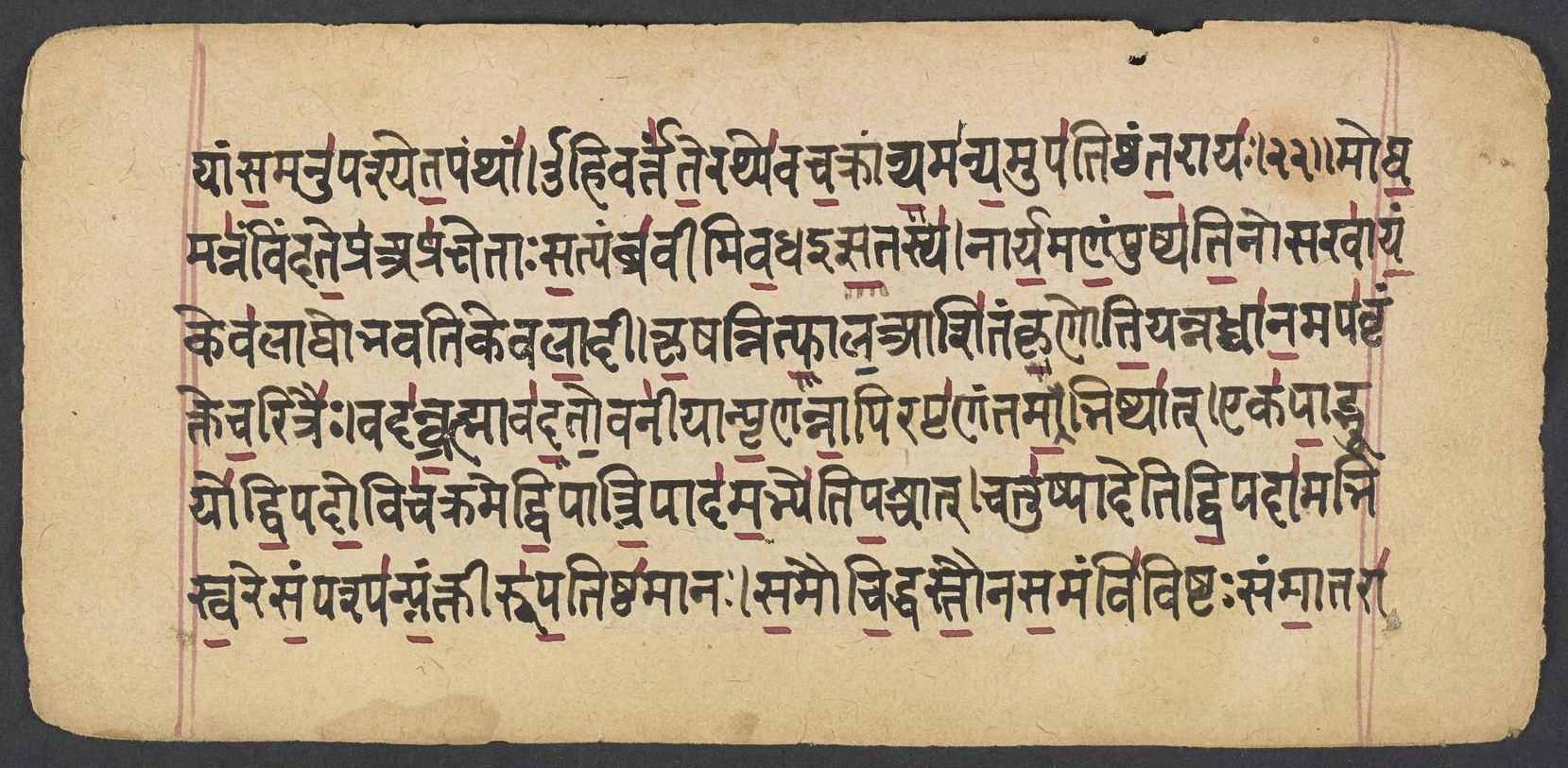
Penn Ms. Coll. 390 Item 48, fol. 105r (OPenn image 104, lower leaf). Checked on the image: the Rigveda text on this page begins in RV 10.117.5 ‹-drāghīyāṁsam anu paśyeta panthām›. The next page with Rigveda text, fol. 105v, begins in RV 10.117.9 ‹-sammātarā cin na samaṁ›. Verses 10.117.5-8 end on this page; 10.117.5 begins on fol. 104v.
5pṛ̱ṇī̱yād in nādha̍mānāya̱ tavyā̱n drāghī̍yāṁsa̱m anu̍ paśyeta̱ panthā̍m | o hi varta̍nte̱ rathye̍va ca̱krānyam-a̍nya̱m upa̍ tiṣṭhanta̱ rāya̍ḥ ||
6mogha̱m anna̍ṁ vindate̱ apra̍cetāḥ sa̱tyam bra̍vīmi va̱dha it sa tasya̍ | nārya̱maṇa̱m puṣya̍ti̱ no sakhā̍ya̱ṁ keva̍lāgho bhavati kevalā̱dī ||
7kṛ̱ṣann it phāla̱ āśi̍taṁ kṛṇoti̱ yann adhvā̍na̱m apa̍ vṛṅkte ca̱ritrai̍ḥ | vada̍n bra̱hmāva̍dato̱ vanī̍yān pṛ̱ṇann ā̱pir apṛ̍ṇantam a̱bhi ṣyā̍t ||
8eka̍pā̱d bhūyo̍ dvi̱pado̱ vi ca̍krame dvi̱pāt tri̱pāda̍m a̱bhy e̍ti pa̱ścāt | catu̍ṣpād eti dvi̱padā̍m abhisva̱re sa̱mpaśya̍n pa̱ṅktīr u̍pa̱tiṣṭha̍mānaḥ ||
5Let the rich satisfy the poor implorer, and bend his eye upon a longer pathway. Riches come now to one, now to another, and like the wheels of cars are ever rolling.
6The foolish man wins food with fruitless labour: that food -I speak the truth- shall be his ruin. He feeds no trusty friend, no man to love him. All guilt is he who eats with no partaker.
7The ploughshare ploughing makes the food that feeds us, and with its feet cuts through the path it follows. Better the speaking than the silent Brahman: the liberal friend outvalues him who gives not.
8He with one foot hath far outrun the biped, and the two-footed catches the three-footed. Four-footed creatures come when bipeds call them, and stand and look where five are met together.
Where on the image
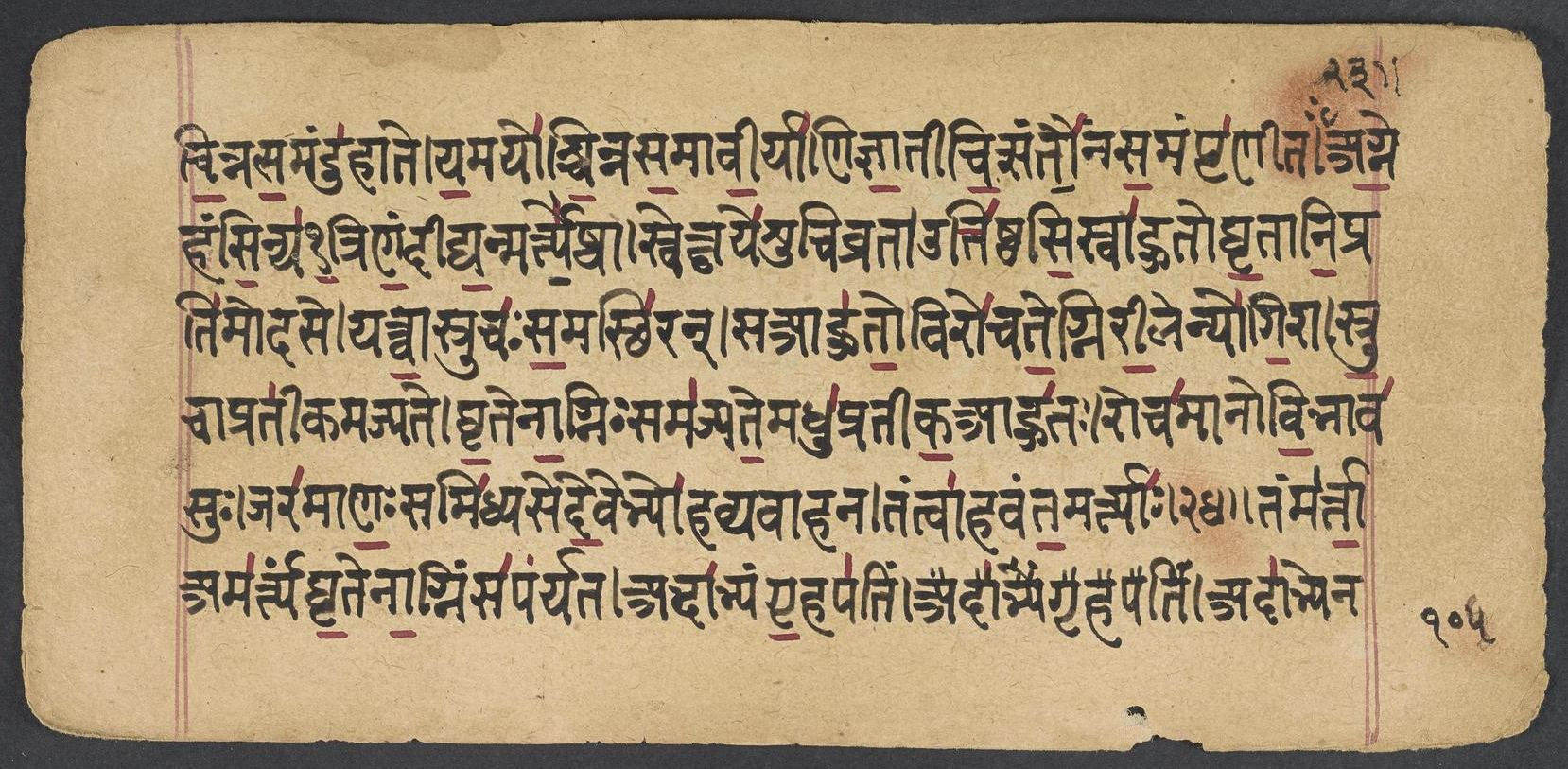
Penn Ms. Coll. 390 Item 48, fol. 105v (OPenn image 105, upper leaf). Checked on the image: the Rigveda text on this page begins in RV 10.117.9 ‹-sammātarā cin na samaṁ›. The next page with Rigveda text, fol. 106r, begins in RV 10.118.7 ‹śociṣāgne rakṣas tvaṁ daha›. Verse 10.117.9 ends on this page; 10.117.9 begins on fol. 105r.
9sa̱mau ci̱d dhastau̱ na sa̱maṁ vi̍viṣṭaḥ sammā̱tarā̍ ci̱n na sa̱maṁ du̍hāte | ya̱mayo̍ś ci̱n na sa̱mā vī̱ryā̍ṇi jñā̱tī ci̱t santau̱ na sa̱mam pṛ̍ṇītaḥ ||
9The hands are both alike: their labour differs. The yield of sister milch-kine is unequal. Twins even differ in their strength and vigour: two, even kinsmen, differ in their bounty.
Notes
- Sanskrit: Aufrecht's edition (1877) with the Vedic accents, as entered by van Nooten and Holland (GRETIL).
- English: Ralph T. H. Griffith, The Hymns of the Rigveda (1889-1892; 2nd ed. 1896-1897), from the VedaWeb digital text; OCR slips in that text were corrected against the printed 2nd edition (data/sources/rigveda/griffith_errata.json).
Cite
Sources
- Source: Penn Ms. Coll. 390 Item 48 (1711 CE (colophon: Saṃvat 1768)), OPenn, Public Domain Mark + Aufrecht's accented text (GRETIL) + Griffith's English (VedaWeb) (holding institution)
- Critical edition: Aufrecht (1877), accented e-text via GRETIL
← previous · → next · v cycle view · l back to library