Rigveda 10.120: To Indra
Introduction
Rigveda 10.120 is a hymn of 9 verses addressed to Indra. It stands in book (maṇḍala) 10, the last and latest book. The Rigveda is the oldest collection of Sanskrit hymns, composed in the second half of the second millennium BCE and handed down orally for many centuries before it was written down.
The manuscript shown is Penn Ms. Coll. 390 Item 48 (University of Pennsylvania), a paper manuscript of the eighth aṣṭaka (RV 10.46-10.191) of the Ṛgveda Saṃhitā in Devanāgarī, 158 leaves, 6 lines to the page, with the accents marked in red; the scribe's colophon on fol. 158 gives Saṃvat 1768 (1711 CE); this hymn stands on fol. 106v-107v. Each section below gives the verses that end on one page; the page boundaries were read on the images (the opening words of every page), not counted out. Like most Rigveda manuscripts, Penn Ms. Coll. 390 Item 48 writes a repeated refrain in short form after its first occurrence (for example kasmai° for kasmai devāya haviṣā vidhema); the Sanskrit shown is the full text of Aufrecht's edition.
How was this verified? (Provenance)
Where on the image
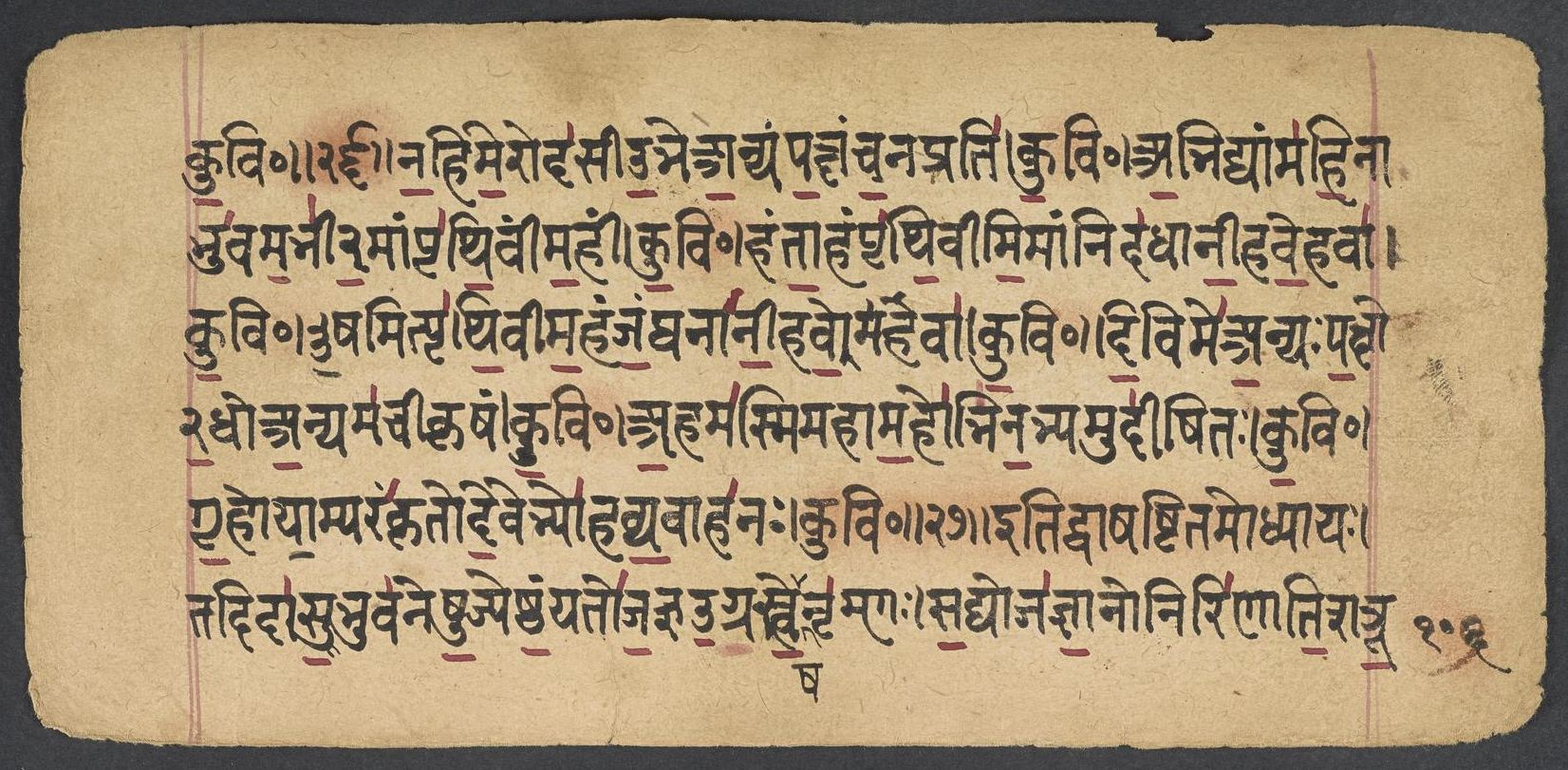
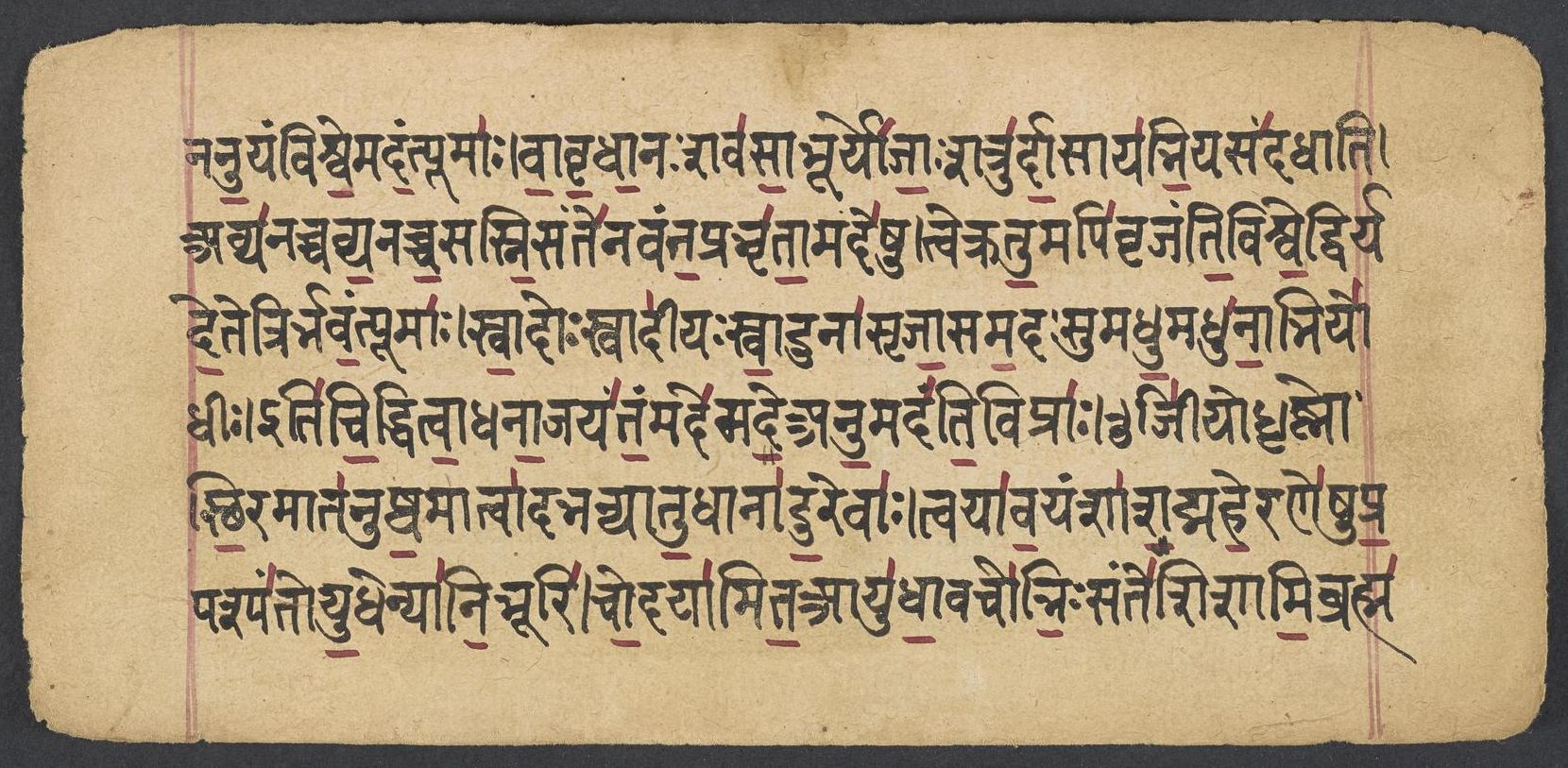
Penn Ms. Coll. 390 Item 48, fol. 107r (OPenn image 106, lower leaf). Checked on the image: the Rigveda text on this page begins in RV 10.120.1 ‹-śatrūn anu yaṁ viśve›. The next page with Rigveda text, fol. 107v, begins in RV 10.120.5 ‹-brahmaṇā vayāṁsi›. Verses 10.120.1-4 end on this page; 10.120.1 begins on fol. 106v.
1tad id ā̍sa̱ bhuva̍neṣu̱ jyeṣṭha̱ṁ yato̍ ja̱jña u̱gras tve̱ṣanṛ̍mṇaḥ | sa̱dyo ja̍jñā̱no ni ri̍ṇāti̱ śatrū̱n anu̱ yaṁ viśve̱ mada̱nty ūmā̍ḥ ||
2vā̱vṛ̱dhā̱naḥ śava̍sā̱ bhūryo̍jā̱ḥ śatru̍r dā̱sāya̍ bhi̱yasa̍ṁ dadhāti | avya̍nac ca vya̱nac ca̱ sasni̱ saṁ te̍ navanta̱ prabhṛ̍tā̱ made̍ṣu ||
3tve kratu̱m api̍ vṛñjanti̱ viśve̱ dvir yad e̱te trir bhava̱nty ūmā̍ḥ | svā̱doḥ svādī̍yaḥ svā̱dunā̍ sṛjā̱ sam a̱daḥ su madhu̱ madhu̍nā̱bhi yo̍dhīḥ ||
4iti̍ ci̱d dhi tvā̱ dhanā̱ jaya̍nta̱m made̍-made anu̱mada̍nti̱ viprā̍ḥ | ojī̍yo dhṛṣṇo sthi̱ram ā ta̍nuṣva̱ mā tvā̍ dabhan yātu̱dhānā̍ du̱revā̍ḥ ||
1IN all the worlds That was the Best and Highest whence sprang the Mighty Gods, of splendid valour. As soon as born he overcomes his foemen, be in whom all who lend him aid are joyful.
2Grown mighty in his strength, with ample vigour, he as a foe strikes fear into the Dâsa, Eager to win the breathing and the breathless. All sang thy praise at banquet and oblation.
3All concentrate on thee their mental vigour, what time these, twice or thrice, are thine assistants. Blend what is sweeter than the sweet with sweetness: win. quickly with our meath that meath in battle.
4Therefore in thee too, thou who winnest riches, at every banquet are the sages joyful. With mightier power, Bold God, extend thy firmness: let not malignant Yatudhanas harm thee.
Where on the image
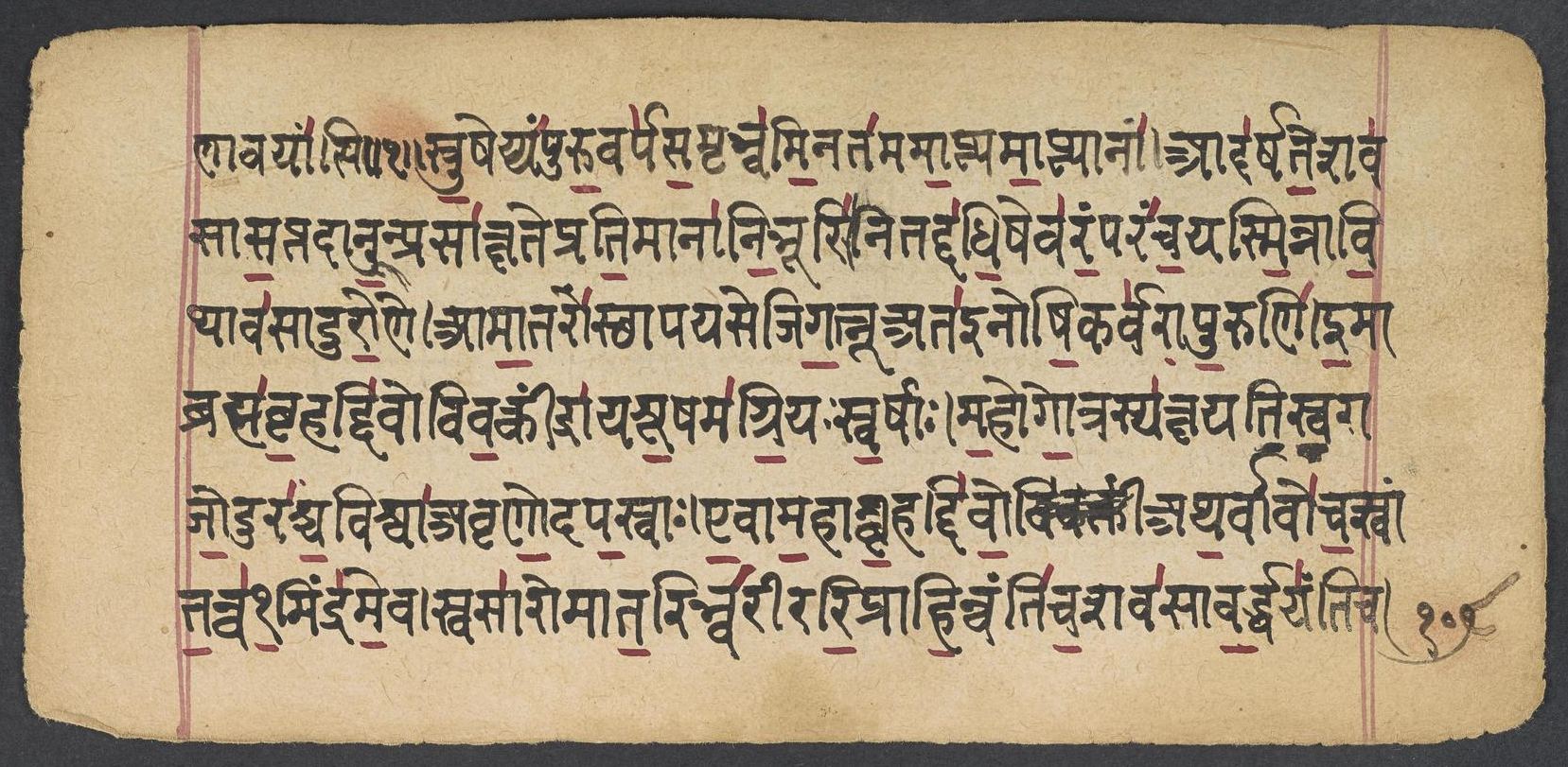
Penn Ms. Coll. 390 Item 48, fol. 107v (OPenn image 107, upper leaf). Checked on the image: the Rigveda text on this page begins in RV 10.120.5 ‹-brahmaṇā vayāṁsi›. The next page with Rigveda text, fol. 108r, begins in RV 10.121.1 ‹hiraṇyagarbhaḥ sam avartatāgre bhūtasya›. Verses 10.120.5-9 end on this page; 10.120.5 begins on fol. 107r.
5tvayā̍ va̱yaṁ śā̍śadmahe̱ raṇe̍ṣu pra̱paśya̍nto yu̱dhenyā̍ni̱ bhūri̍ | co̱dayā̍mi ta̱ āyu̍dhā̱ vaco̍bhi̱ḥ saṁ te̍ śiśāmi̱ brahma̍ṇā̱ vayā̍ṁsi ||
6stu̱ṣeyya̍m puru̱varpa̍sa̱m ṛbhva̍m i̱nata̍mam ā̱ptyam ā̱ptyānā̍m | ā da̍rṣate̱ śava̍sā sa̱pta dānū̱n pra sā̍kṣate prati̱mānā̍ni̱ bhūri̍ ||
7ni tad da̍dhi̱ṣe 'va̍ra̱m para̍ṁ ca̱ yasmi̱nn āvi̱thāva̍sā duro̱ṇe | ā mā̱tarā̍ sthāpayase jiga̱tnū ata̍ inoṣi̱ karva̍rā pu̱rūṇi̍ ||
8i̱mā brahma̍ bṛ̱haddi̍vo viva̱ktīndrā̍ya śū̱ṣam a̍gri̱yaḥ sva̱rṣāḥ | ma̱ho go̱trasya̍ kṣayati sva̱rājo̱ dura̍ś ca̱ viśvā̍ avṛṇo̱d apa̱ svāḥ ||
9e̱vā ma̱hān bṛ̱haddi̍vo̱ atha̱rvāvo̍ca̱t svāṁ ta̱nva1̱̍m indra̍m e̱va | svasā̍ro māta̱ribhva̍rīr ari̱prā hi̱nvanti̍ ca̱ śava̍sā va̱rdhaya̍nti ca ||
5Proudly we put our trust in thee in battles, when we behold great wealth the prize of combat. I with my words impel thy weapons onward, and sharpen with my prayer thy vital vigour.
6Worthy of praises, many-shaped, most skilful, most energetic, Âptya of the Âptyas: He with his might destroys the seven Dânus, subduing many who were deemed his equals.
7Thou in that house which thy protection guardeth bestowest wealth, the higher and the lower. Thou stablishest the two much-wandering Mothers, and bringest many deeds to their completion.
8Br̥ihaddiva, the foremost of light-winners, repeats these holy prayers, this strength of Indra. He rules the great self-luminous fold of cattle, and all the doors of light hath he thrown open.
9Thus hath Br̥ihaddiva, the great Atharvan, spoken to Indra as himself in person. The spotless Sisters, they who are his Mothers, with power exalt him and impel him onward.
Notes
- Sanskrit: Aufrecht's edition (1877) with the Vedic accents, as entered by van Nooten and Holland (GRETIL).
- English: Ralph T. H. Griffith, The Hymns of the Rigveda (1889-1892; 2nd ed. 1896-1897), from the VedaWeb digital text; OCR slips in that text were corrected against the printed 2nd edition (data/sources/rigveda/griffith_errata.json).
Cite
Sources
- Source: Penn Ms. Coll. 390 Item 48 (1711 CE (colophon: Saṃvat 1768)), OPenn, Public Domain Mark + Aufrecht's accented text (GRETIL) + Griffith's English (VedaWeb) (holding institution)
- Critical edition: Aufrecht (1877), accented e-text via GRETIL
← previous · → next · v cycle view · l back to library