Rigveda 10.123: To Vena
Introduction
Rigveda 10.123 is a hymn of 8 verses addressed to Vena. It stands in book (maṇḍala) 10, the last and latest book. The Rigveda is the oldest collection of Sanskrit hymns, composed in the second half of the second millennium BCE and handed down orally for many centuries before it was written down.
The manuscript shown is Penn Ms. Coll. 390 Item 48 (University of Pennsylvania), a paper manuscript of the eighth aṣṭaka (RV 10.46-10.191) of the Ṛgveda Saṃhitā in Devanāgarī, 158 leaves, 6 lines to the page, with the accents marked in red; the scribe's colophon on fol. 158 gives Saṃvat 1768 (1711 CE); this hymn stands on fol. 110r-111r. Each section below gives the verses that end on one page; the page boundaries were read on the images (the opening words of every page), not counted out. Like most Rigveda manuscripts, Penn Ms. Coll. 390 Item 48 writes a repeated refrain in short form after its first occurrence (for example kasmai° for kasmai devāya haviṣā vidhema); the Sanskrit shown is the full text of Aufrecht's edition.
How was this verified? (Provenance)
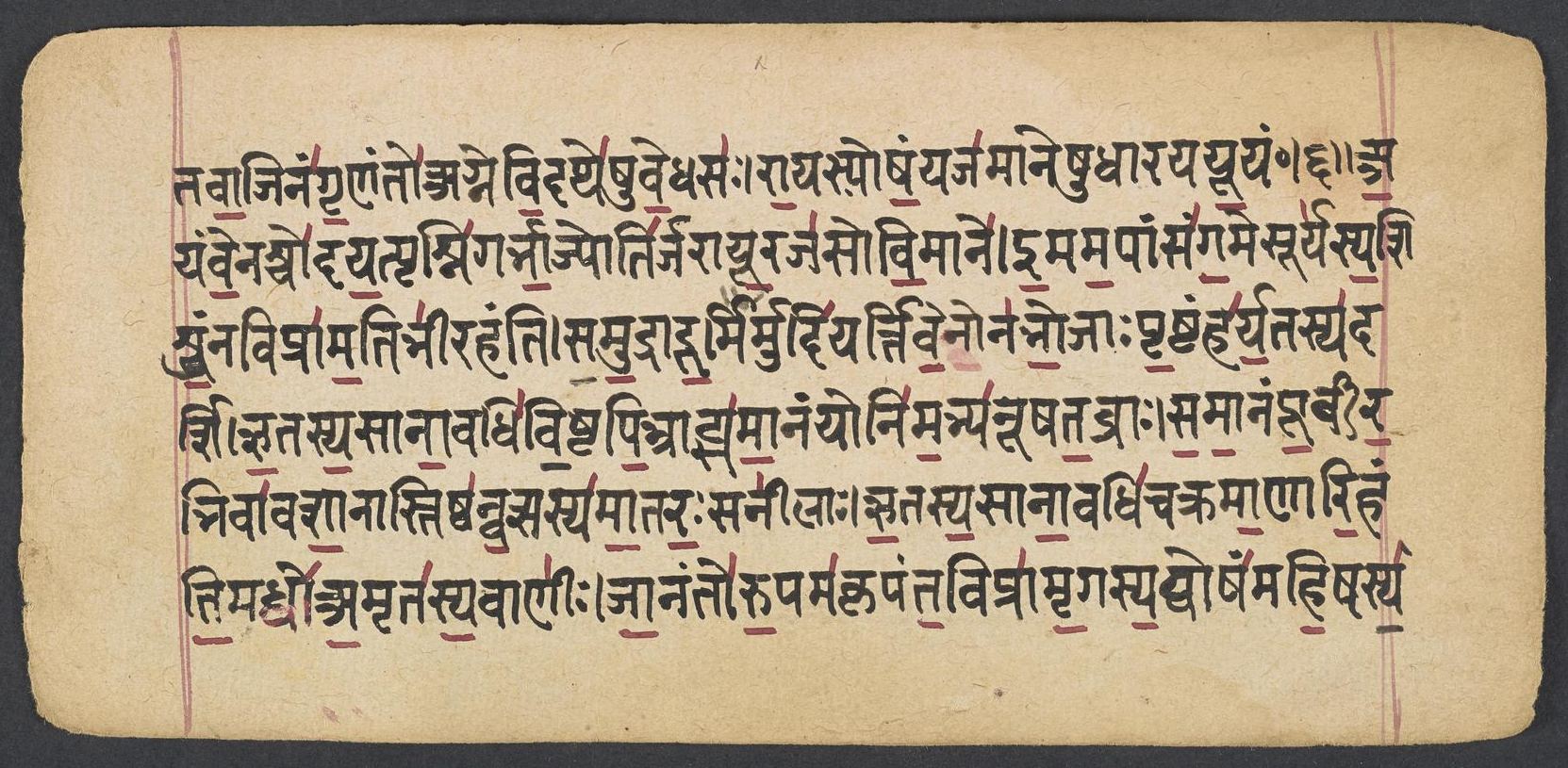
Where on the image
Penn Ms. Coll. 390 Item 48, fol. 110r (OPenn image 109, lower leaf). Checked on the image: the Rigveda text on this page begins in RV 10.122.8 ‹-ahvanta vājinaṁ gṛṇanto agne›. The next page with Rigveda text, fol. 110v, begins in RV 10.123.4 ‹hi gman›. Verses 10.123.1-3 end on this page.
1a̱yaṁ ve̱naś co̍daya̱t pṛśni̍garbhā̱ jyoti̍rjarāyū̱ raja̍so vi̱māne̍ | i̱mam a̱pāṁ sa̍ṁga̱me sūrya̍sya̱ śiśu̱ṁ na viprā̍ ma̱tibhī̍ rihanti ||
2sa̱mu̱drād ū̱rmim ud i̍yarti ve̱no na̍bho̱jāḥ pṛ̱ṣṭhaṁ ha̍rya̱tasya̍ darśi | ṛ̱tasya̱ sānā̱v adhi̍ vi̱ṣṭapi̱ bhrāṭ sa̍mā̱naṁ yoni̍m a̱bhy a̍nūṣata̱ vrāḥ ||
3sa̱mā̱nam pū̱rvīr a̱bhi vā̍vaśā̱nās tiṣṭha̍n va̱tsasya̍ mā̱tara̱ḥ sanī̍ḻāḥ | ṛ̱tasya̱ sānā̱v adhi̍ cakramā̱ṇā ri̱hanti̱ madhvo̍ a̱mṛta̍sya̱ vāṇī̍ḥ ||
1SEE, Vena, born in light, hath driven hither, on chariot of the air, the Calves of Pr̥iṣni. Singers with hymns caress him as an infant there where the waters and the sunlight mingle.
2Vena draws up his wave from out the ocean. mist-born, the fair one's back is made apparent, Brightly he shone aloft on Order's summit: the hosts sang glory to their common birthplace.
3Full many, lowing to their joint-possession, dwelling together stood the Darling's Mothers. Ascending to the lofty height of Order, the bands of singers 'sip the sweets of Amrit.
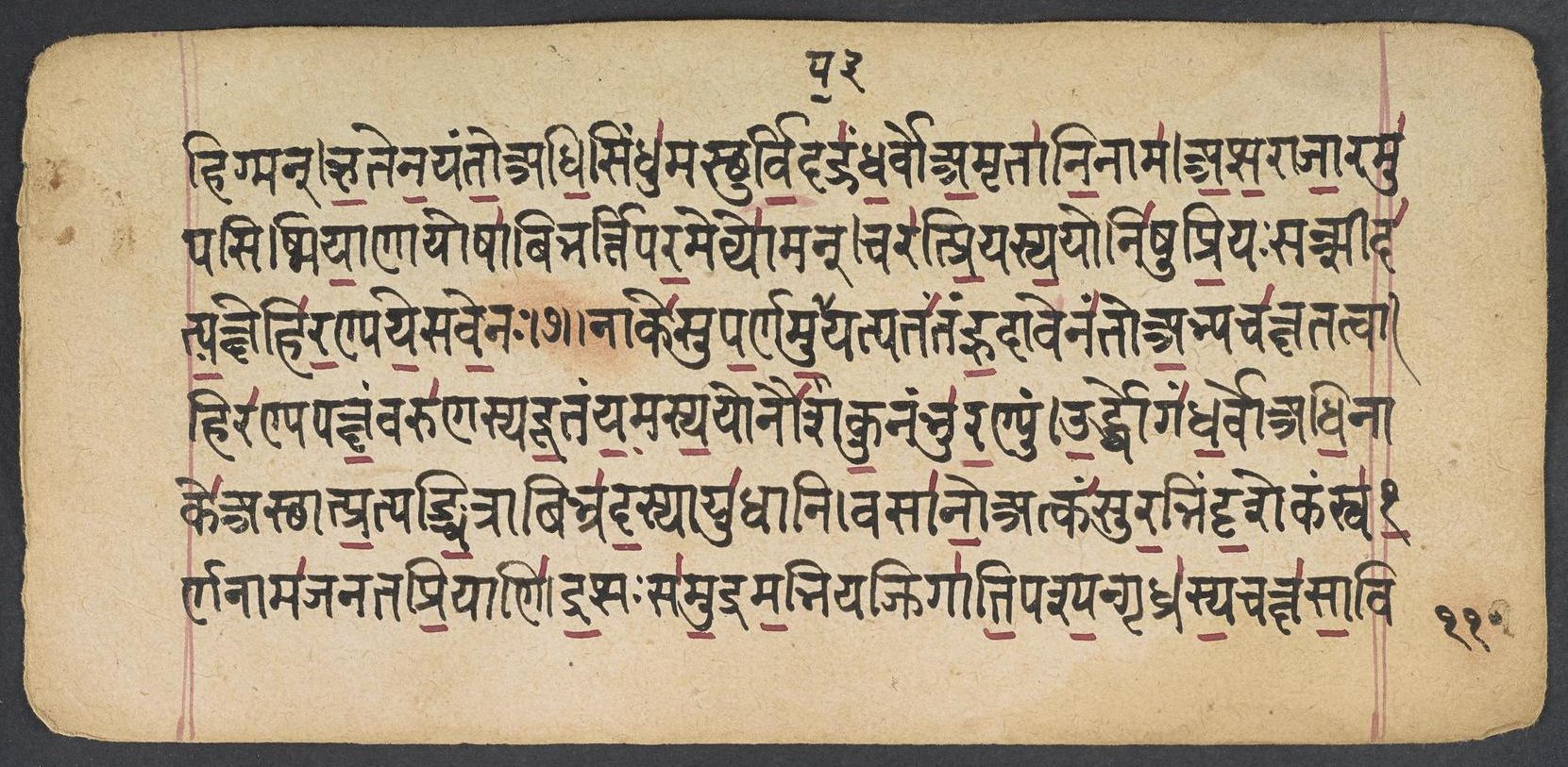
Where on the image
Penn Ms. Coll. 390 Item 48, fol. 110v (OPenn image 110, upper leaf). Checked on the image: the Rigveda text on this page begins in RV 10.123.4 ‹hi gman›. The next page with Rigveda text, fol. 111r, begins in RV 10.123.8 ‹śukreṇa śociṣā cakānas tṛtīye›. Verses 10.123.4-7 end on this page; 10.123.4 begins on fol. 110r.
4jā̱nanto̍ rū̱pam a̍kṛpanta̱ viprā̍ mṛ̱gasya̱ ghoṣa̍m mahi̱ṣasya̱ hi gman | ṛ̱tena̱ yanto̱ adhi̱ sindhu̍m asthur vi̱dad ga̍ndha̱rvo a̱mṛtā̍ni̱ nāma̍ ||
5a̱psa̱rā jā̱ram u̍pasiṣmiyā̱ṇā yoṣā̍ bibharti para̱me vyo̍man | cara̍t pri̱yasya̱ yoni̍ṣu pri̱yaḥ san sīda̍t pa̱kṣe hi̍ra̱ṇyaye̱ sa ve̱naḥ ||
6nāke̍ supa̱rṇam upa̱ yat pata̍ntaṁ hṛ̱dā vena̍nto a̱bhy aca̍kṣata tvā | hira̍ṇyapakṣa̱ṁ varu̍ṇasya dū̱taṁ ya̱masya̱ yonau̍ śaku̱nam bhu̍ra̱ṇyum ||
7ū̱rdhvo ga̍ndha̱rvo adhi̱ nāke̍ asthāt pra̱tyaṅ ci̱trā bibhra̍d a̱syāyu̍dhāni | vasā̍no̱ atka̍ṁ sura̱bhiṁ dṛ̱śe kaṁ sva1̱̍r ṇa nāma̍ janata pri̱yāṇi̍ ||
4Knowing his form, the sages yearned to meet him: they have come nigh to hear the wild Bull's bellow. Performing sacrifice they reached the river: for the Gandharva found the immortal waters.
5The Apsaras, the Lady, sweetly smiling, supports her Lover in sublimest heaven. In his Friend's dwelling as a Friend he wanders: he, Vena, rests him on his golden pinion.
6They gaze on thee with longing in their spirit, as on a strong-winged bird that mounteth sky-ward; On thee with wings of gold, Varuṇa's envoy, the Bird that hasteneth to the home of Yama.
7Erect, to heaven hath the Gandharva mounted, pointing at us his many-coloured weapons; Clad in sweet raiment beautiful to look on, for he, as light, produceth forms that please us.
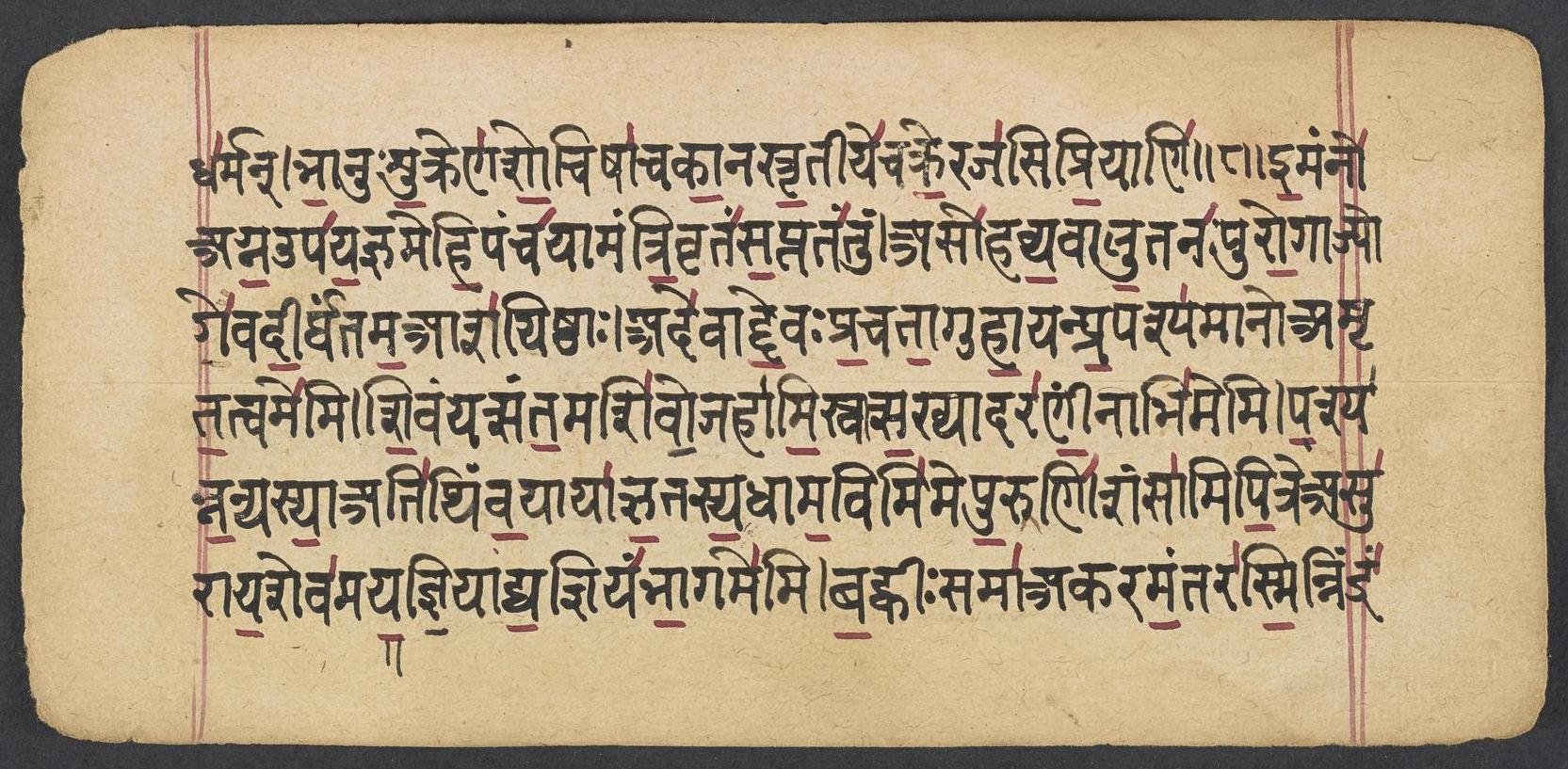
Where on the image
Penn Ms. Coll. 390 Item 48, fol. 111r (OPenn image 110, lower leaf). Checked on the image: the Rigveda text on this page begins in RV 10.123.8 ‹śukreṇa śociṣā cakānas tṛtīye›. The next page with Rigveda text, fol. 111v, begins in RV 10.124.4 ‹vṛṇānaḥ pitaraṁ jahāmi›. Verse 10.123.8 ends on this page; 10.123.8 begins on fol. 110v.
8dra̱psaḥ sa̍mu̱dram a̱bhi yaj jigā̍ti̱ paśya̱n gṛdhra̍sya̱ cakṣa̍sā̱ vidha̍rman | bhā̱nuḥ śu̱kreṇa̍ śo̱ciṣā̍ cakā̱nas tṛ̱tīye̍ cakre̱ raja̍si pri̱yāṇi̍ ||
8When as a spark he cometh near the ocean, still looking with a vulture's eye to heaven, His lustre, joying in its own bright splendour, maketh dear glories in the lowest region.
Notes
- Sanskrit: Aufrecht's edition (1877) with the Vedic accents, as entered by van Nooten and Holland (GRETIL).
- English: Ralph T. H. Griffith, The Hymns of the Rigveda (1889-1892; 2nd ed. 1896-1897), from the VedaWeb digital text; OCR slips in that text were corrected against the printed 2nd edition (data/sources/rigveda/griffith_errata.json).
Cite
Sources
- Source: Penn Ms. Coll. 390 Item 48 (1711 CE (colophon: Saṃvat 1768)), OPenn, Public Domain Mark + Aufrecht's accented text (GRETIL) + Griffith's English (VedaWeb) (holding institution)
- Critical edition: Aufrecht (1877), accented e-text via GRETIL
← previous · → next · v cycle view · l back to library