Rigveda 10.124: Diverse gods
Introduction
Rigveda 10.124 is a hymn of 9 verses addressed to diverse gods. It stands in book (maṇḍala) 10, the last and latest book. The Rigveda is the oldest collection of Sanskrit hymns, composed in the second half of the second millennium BCE and handed down orally for many centuries before it was written down.
The manuscript shown is Penn Ms. Coll. 390 Item 48 (University of Pennsylvania), a paper manuscript of the eighth aṣṭaka (RV 10.46-10.191) of the Ṛgveda Saṃhitā in Devanāgarī, 158 leaves, 6 lines to the page, with the accents marked in red; the scribe's colophon on fol. 158 gives Saṃvat 1768 (1711 CE); this hymn stands on fol. 111r-112r. Each section below gives the verses that end on one page; the page boundaries were read on the images (the opening words of every page), not counted out. Like most Rigveda manuscripts, Penn Ms. Coll. 390 Item 48 writes a repeated refrain in short form after its first occurrence (for example kasmai° for kasmai devāya haviṣā vidhema); the Sanskrit shown is the full text of Aufrecht's edition.
How was this verified? (Provenance)
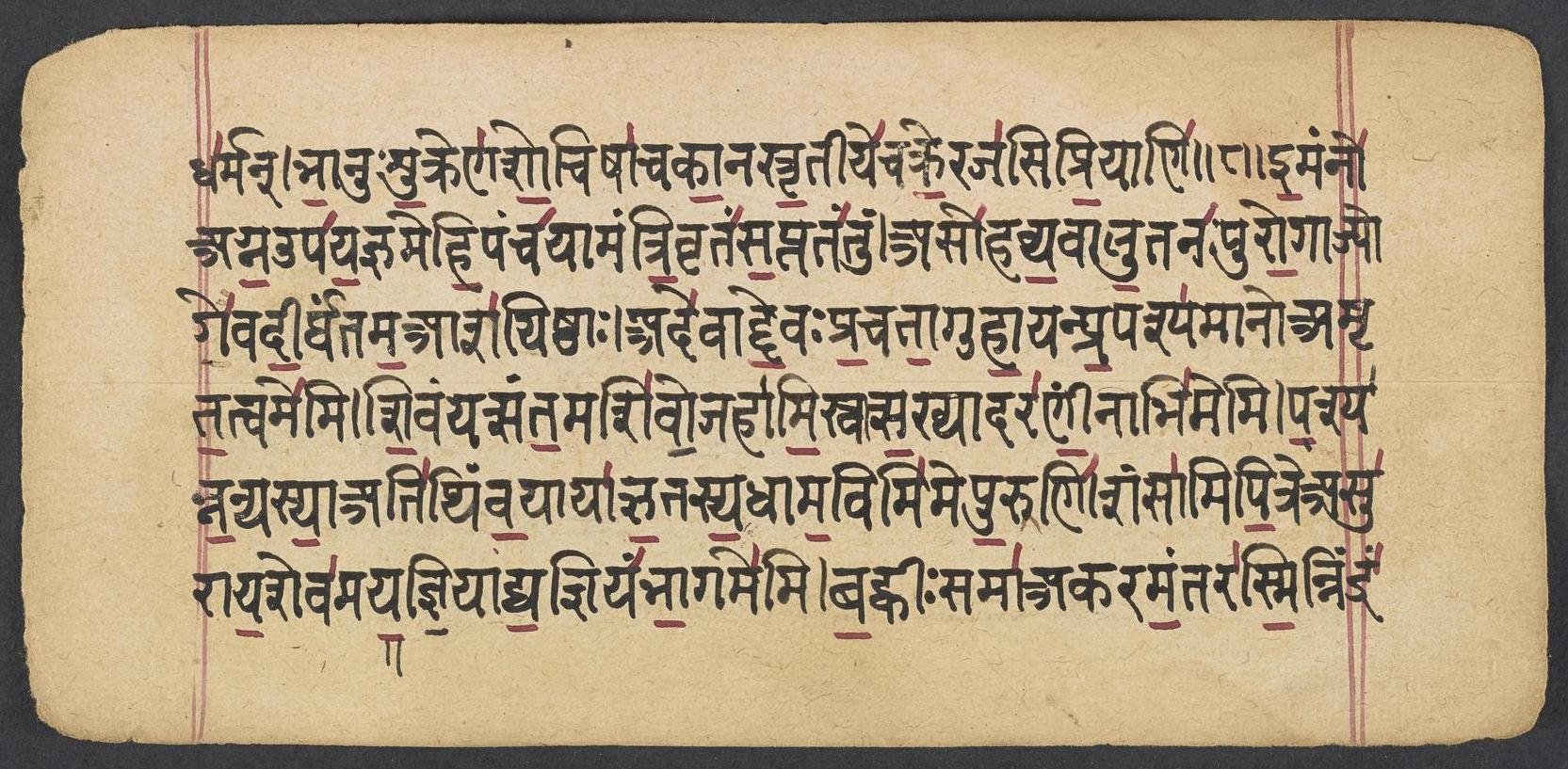
Where on the image
Penn Ms. Coll. 390 Item 48, fol. 111r (OPenn image 110, lower leaf). Checked on the image: the Rigveda text on this page begins in RV 10.123.8 ‹śukreṇa śociṣā cakānas tṛtīye›. The next page with Rigveda text, fol. 111v, begins in RV 10.124.4 ‹vṛṇānaḥ pitaraṁ jahāmi›. Verses 10.124.1-3 end on this page.
1i̱maṁ no̍ agna̱ upa̍ ya̱jñam ehi̱ pañca̍yāmaṁ tri̱vṛta̍ṁ sa̱ptata̍ntum | aso̍ havya̱vāḻ u̱ta na̍ḥ puro̱gā jyog e̱va dī̱rghaṁ tama̱ āśa̍yiṣṭhāḥ ||
2ade̍vād de̱vaḥ pra̱catā̱ guhā̱ yan pra̱paśya̍māno amṛta̱tvam e̍mi | śi̱vaṁ yat santa̱m aśi̍vo̱ jahā̍mi̱ svāt sa̱khyād ara̍ṇī̱ṁ nābhi̍m emi ||
3paśya̍nn a̱nyasyā̱ ati̍thiṁ va̱yāyā̍ ṛ̱tasya̱ dhāma̱ vi mi̍me pu̱rūṇi̍ | śaṁsā̍mi pi̱tre asu̍rāya̱ śeva̍m ayajñi̱yād ya̱jñiya̍m bhā̱gam e̍mi ||
1COME to this sacrifice of ours, O Agni, threefold, with seven threads and five divisions. Be our oblation-bearer and preceder: thou hast lain long enough in during darkness.
2I come a God foreseeing from the godless to immortality by secret pathways, While I, ungracious one, desert the gracious, leave mine own friends and seek the kin of strangers.
3I, looking to the guest of other lineage, have founded many a rule of Law and Order. I bid farewell to the Great God, the Father, and, for neglect, obtain my share of worship.
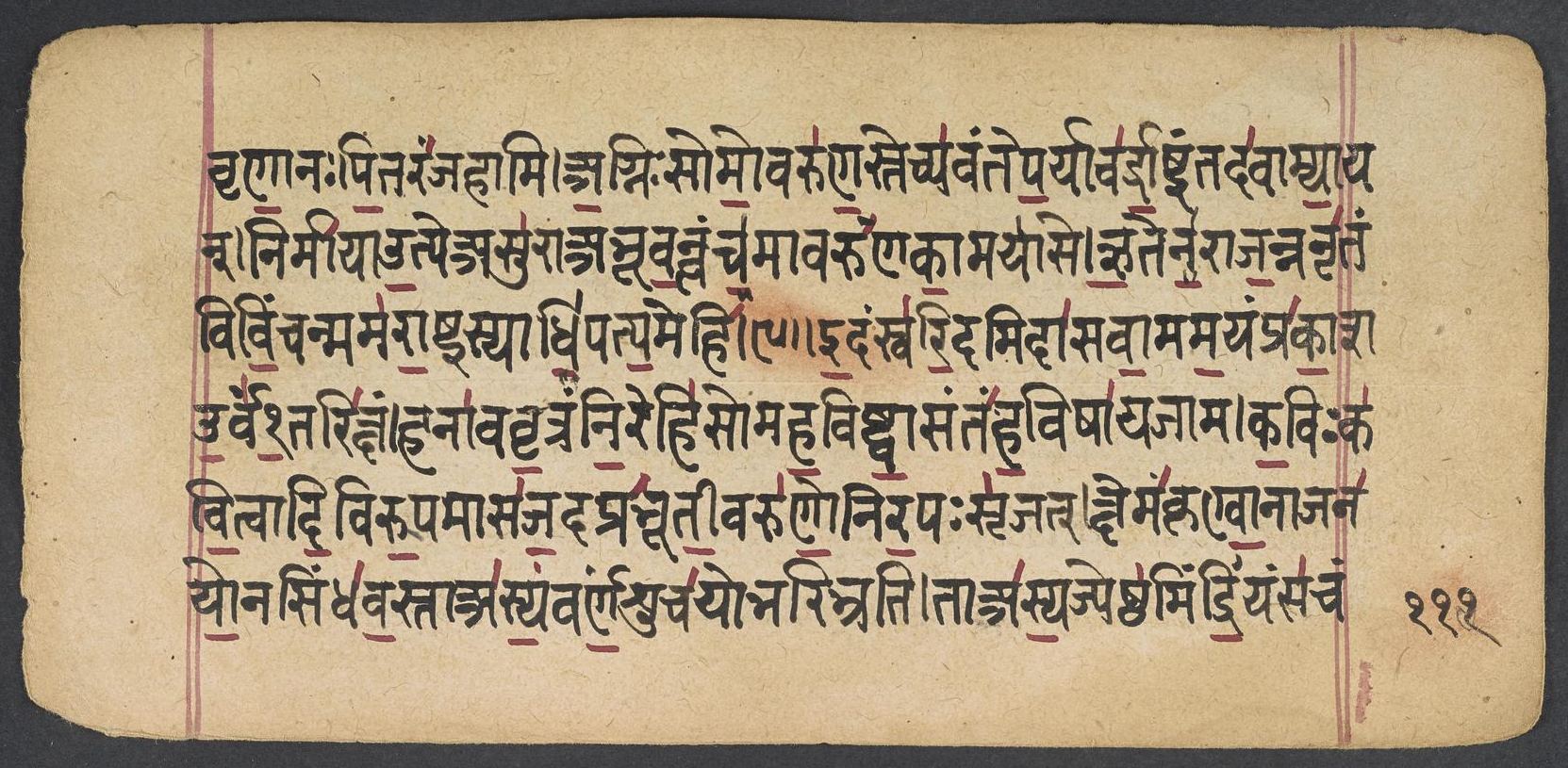
Where on the image
Penn Ms. Coll. 390 Item 48, fol. 111v (OPenn image 111, upper leaf). Checked on the image: the Rigveda text on this page begins in RV 10.124.4 ‹vṛṇānaḥ pitaraṁ jahāmi›. The next page with Rigveda text, fol. 112r, begins in RV 10.124.8 ‹-sacante tā īm ā›. Verses 10.124.4-7 end on this page; 10.124.4 begins on fol. 111r.
4ba̱hvīḥ samā̍ akaram a̱ntar a̍smi̱nn indra̍ṁ vṛṇā̱naḥ pi̱tara̍ṁ jahāmi | a̱gniḥ somo̱ varu̍ṇa̱s te cya̍vante pa̱ryāva̍rd rā̱ṣṭraṁ tad a̍vāmy ā̱yan ||
5nirmā̍yā u̱ tye asu̍rā abhūva̱n tvaṁ ca̍ mā varuṇa kā̱mayā̍se | ṛ̱tena̍ rāja̱nn anṛ̍taṁ vivi̱ñcan mama̍ rā̱ṣṭrasyādhi̍patya̱m ehi̍ ||
6i̱daṁ sva̍r i̱dam id ā̍sa vā̱mam a̱yam pra̍kā̱śa u̱rv a1̱̍ntari̍kṣam | hanā̍va vṛ̱traṁ ni̱rehi̍ soma ha̱viṣ ṭvā̱ santa̍ṁ ha̱viṣā̍ yajāma ||
7ka̱viḥ ka̍vi̱tvā di̱vi rū̱pam āsa̍ja̱d apra̍bhūtī̱ varu̍ṇo̱ nir a̱paḥ sṛ̍jat | kṣema̍ṁ kṛṇvā̱nā jana̍yo̱ na sindha̍va̱s tā a̍sya̱ varṇa̱ṁ śuca̍yo bharibhrati ||
4I tarried many a year within this altar: I leave the Father, for my choice is Indra. Away pass Agni, Varuṇa and Soma. Rule ever changes: this I come to favour.
5These Asuras have lost their powers of magic. But thou, O Varuṇa, if thou dost love me, O King, discerning truth and right from falsehood, come and be Lord and Ruler of my kingdom.
6Here is the light of heaven, here allis lovely; here there is radiance, here is air's wide region. Let us two slaughter Vr̥itra. Forth, O Soma! Thou art oblation: we therewith will serve thee.
7The Sage hath fixed his form by wisdom in the heavens: Varuṇa with no violence let the waters flow. Like women-folk, the floods that bring prosperity have eau lit his hue and colour as they gleamed and shone.
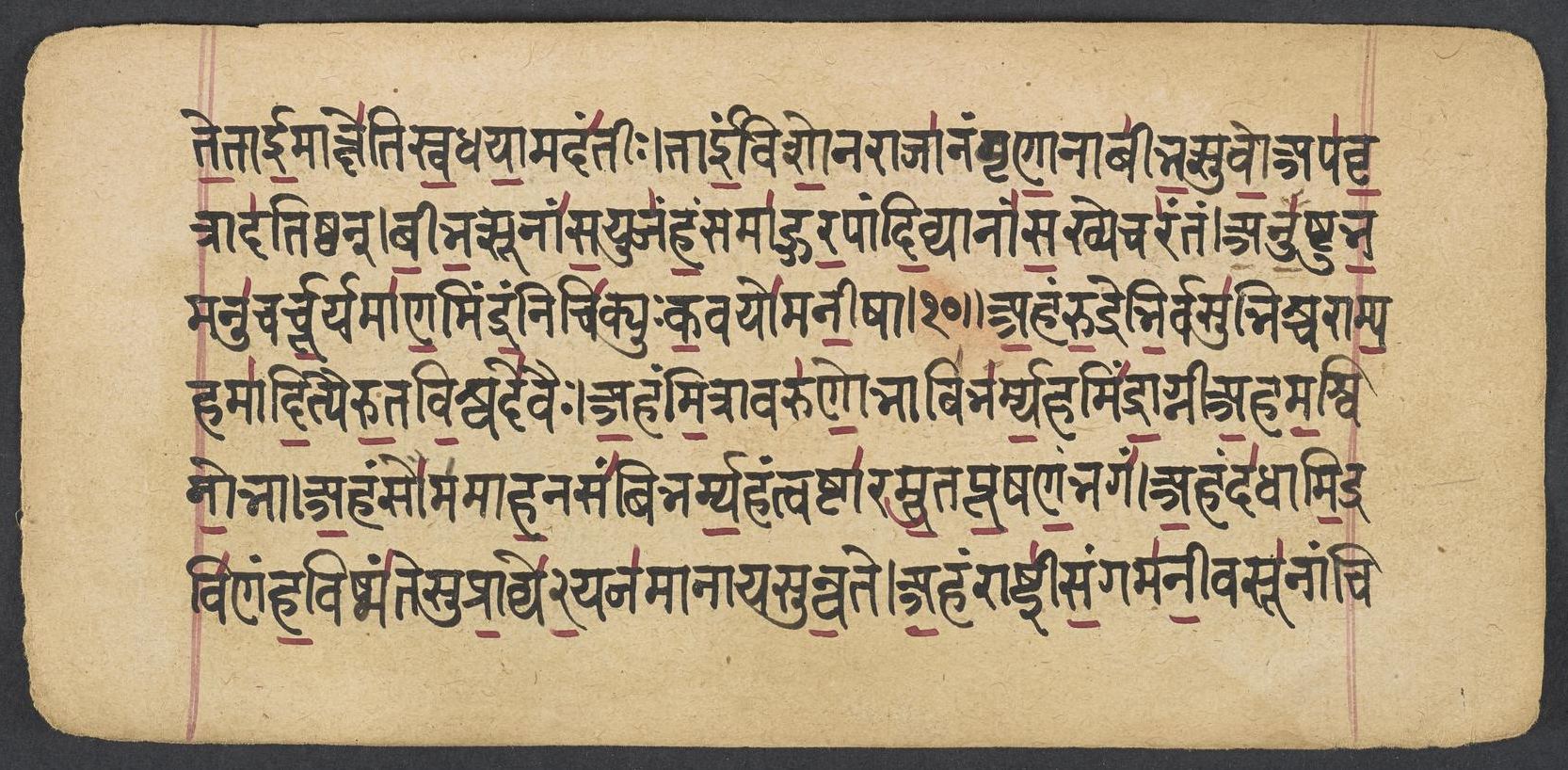
Where on the image
Penn Ms. Coll. 390 Item 48, fol. 112r (OPenn image 111, lower leaf). Checked on the image: the Rigveda text on this page begins in RV 10.124.8 ‹-sacante tā īm ā›. The next page with Rigveda text, fol. 112v, begins in RV 10.125.3 ‹-cikituṣī prathamā yajñiyānām›. Verses 10.124.8-9 end on this page; 10.124.8 begins on fol. 111v.
8tā a̍sya̱ jyeṣṭha̍m indri̱yaṁ sa̍cante̱ tā ī̱m ā kṣe̍ti sva̱dhayā̱ mada̍ntīḥ | tā ī̱ṁ viśo̱ na rājā̍naṁ vṛṇā̱nā bī̍bha̱tsuvo̱ apa̍ vṛ̱trād a̍tiṣṭhan ||
9bī̱bha̱tsūnā̍ṁ sa̱yuja̍ṁ ha̱ṁsam ā̍hur a̱pāṁ di̱vyānā̍ṁ sa̱khye cara̍ntam | a̱nu̱ṣṭubha̱m anu̍ carcū̱ryamā̍ṇa̱m indra̱ṁ ni ci̍kyuḥ ka̱vayo̍ manī̱ṣā ||
8These wait upon his loftiest power and vigour: he dwells in these who triumph in their Godhead; And they, like people who elect their ruler, have in abhorrence turned away from Vr̥itra.
9They call him Swan, the abhorrent floods' Companion, moving in friendship with celestial Waters. The poets in their thought have looked on Indra swiftly approaching when Anushṭup calls him.
Notes
- Sanskrit: Aufrecht's edition (1877) with the Vedic accents, as entered by van Nooten and Holland (GRETIL).
- English: Ralph T. H. Griffith, The Hymns of the Rigveda (1889-1892; 2nd ed. 1896-1897), from the VedaWeb digital text; OCR slips in that text were corrected against the printed 2nd edition (data/sources/rigveda/griffith_errata.json).
Cite
Sources
- Source: Penn Ms. Coll. 390 Item 48 (1711 CE (colophon: Saṃvat 1768)), OPenn, Public Domain Mark + Aufrecht's accented text (GRETIL) + Griffith's English (VedaWeb) (holding institution)
- Critical edition: Aufrecht (1877), accented e-text via GRETIL
← previous · → next · v cycle view · l back to library