Rigveda 10.131: To Indra
Introduction
Rigveda 10.131 is a hymn of 7 verses addressed to Indra. It stands in book (maṇḍala) 10, the last and latest book. The Rigveda is the oldest collection of Sanskrit hymns, composed in the second half of the second millennium BCE and handed down orally for many centuries before it was written down.
The manuscript shown is Penn Ms. Coll. 390 Item 48 (University of Pennsylvania), a paper manuscript of the eighth aṣṭaka (RV 10.46-10.191) of the Ṛgveda Saṃhitā in Devanāgarī, 158 leaves, 6 lines to the page, with the accents marked in red; the scribe's colophon on fol. 158 gives Saṃvat 1768 (1711 CE); this hymn stands on fol. 120r-121r. Each section below gives the verses that end on one page; the page boundaries were read on the images (the opening words of every page), not counted out. Like most Rigveda manuscripts, Penn Ms. Coll. 390 Item 48 writes a repeated refrain in short form after its first occurrence (for example kasmai° for kasmai devāya haviṣā vidhema); the Sanskrit shown is the full text of Aufrecht's edition.
How was this verified? (Provenance)
Where on the image
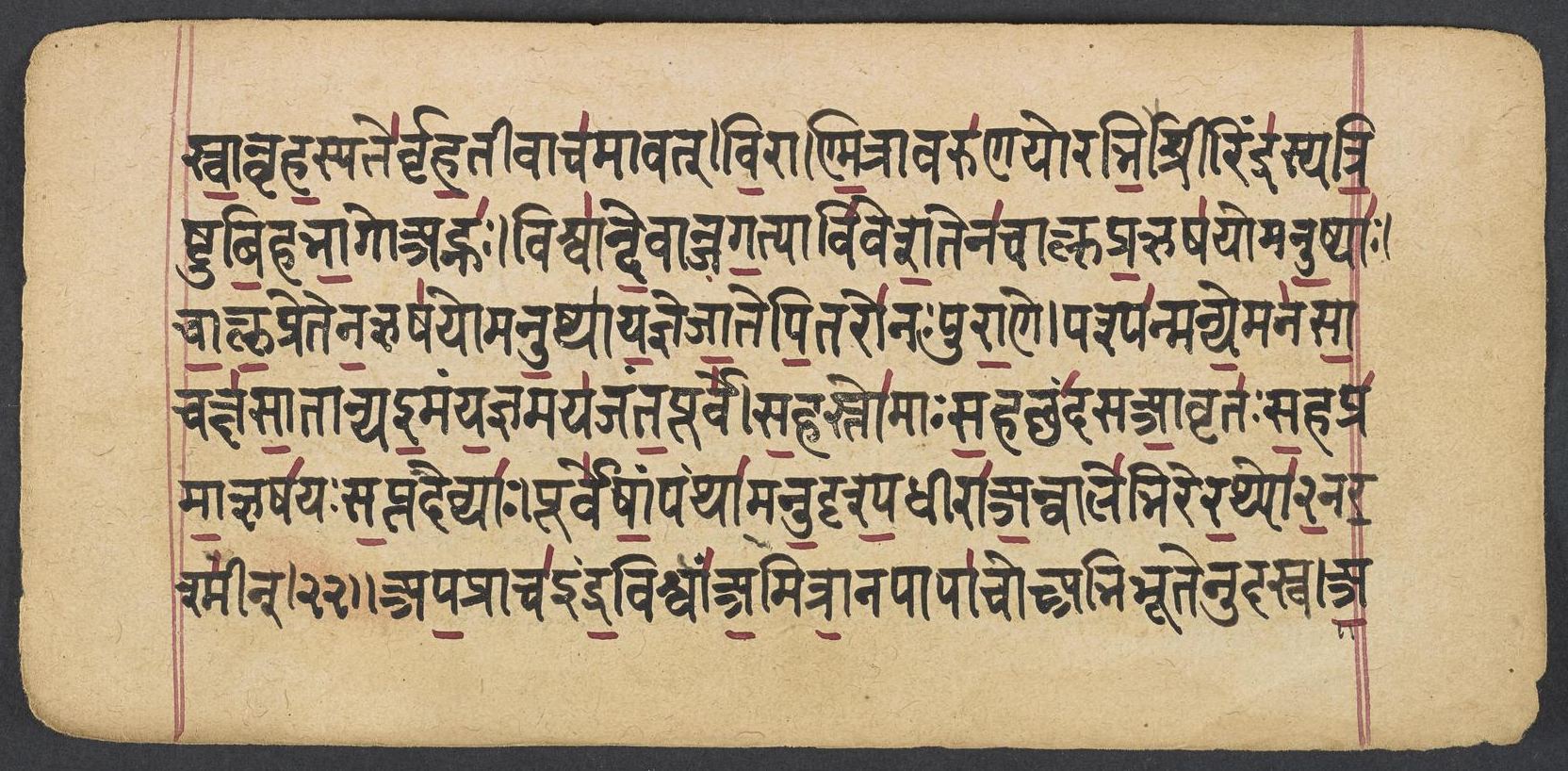
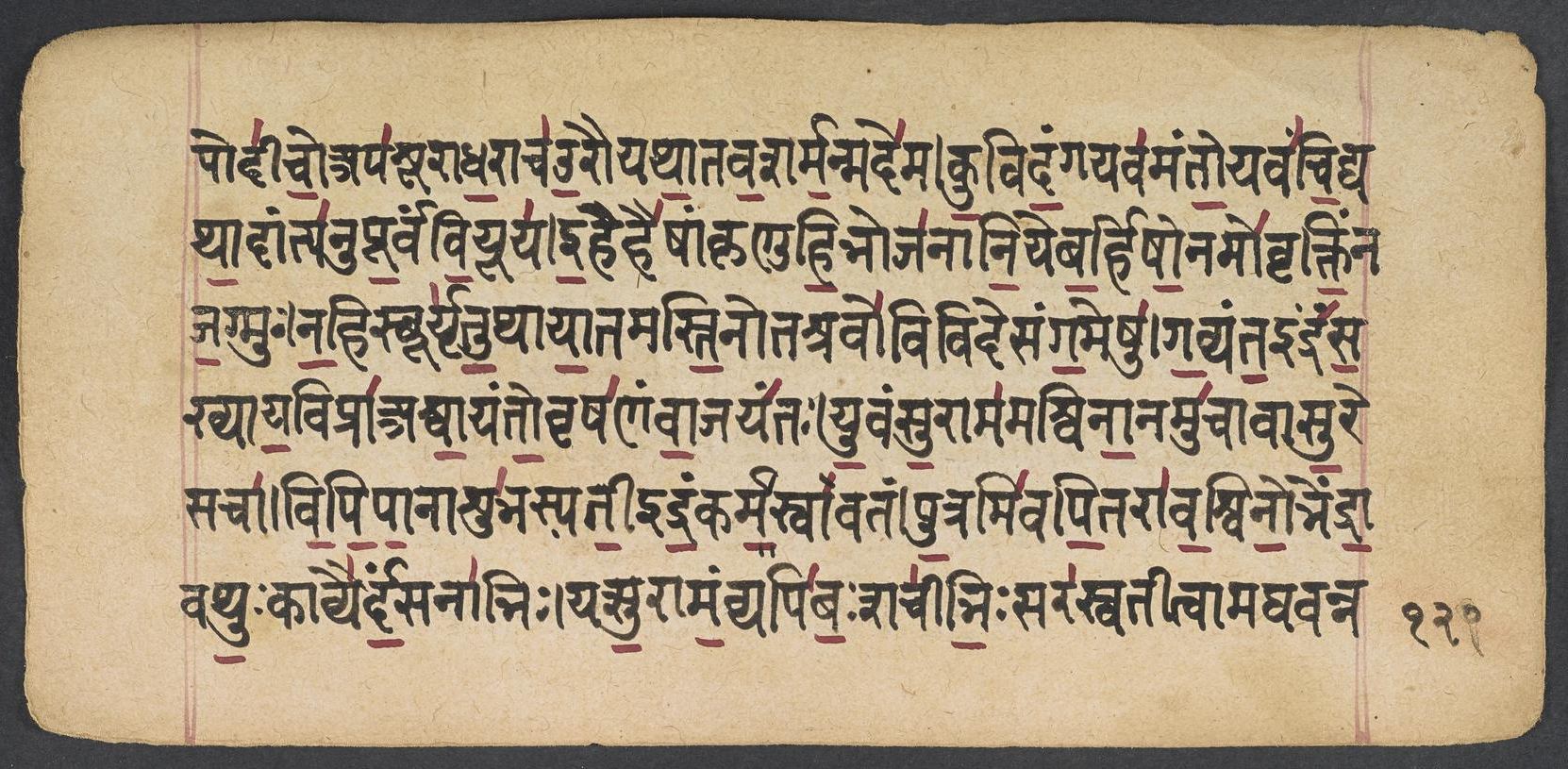
Penn Ms. Coll. 390 Item 48, fol. 120v (OPenn image 120, upper leaf). Checked on the image: the Rigveda text on this page begins in RV 10.131.1 ‹-apodīco apa śūrādharāca urau›. The next page with Rigveda text, fol. 121r, begins in RV 10.131.5 ‹abhiṣṇak›. Verses 10.131.1-4 end on this page; 10.131.1 begins on fol. 120r.
1apa̱ prāca̍ indra̱ viśvā̍m̐ a̱mitrā̱n apāpā̍co abhibhūte nudasva | apodī̍co̱ apa̍ śūrādha̱rāca̍ u̱rau yathā̱ tava̱ śarma̱n made̍ma ||
2ku̱vid a̱ṅga yava̍manto̱ yava̍ṁ ci̱d yathā̱ dānty a̍nupū̱rvaṁ vi̱yūya̍ | i̱hehai̍ṣāṁ kṛṇuhi̱ bhoja̍nāni̱ ye ba̱rhiṣo̱ namo̍vṛkti̱ṁ na ja̱gmuḥ ||
3na̱hi sthūry ṛ̍tu̱thā yā̱tam asti̱ nota śravo̍ vivide saṁga̱meṣu̍ | ga̱vyanta̱ indra̍ṁ sa̱khyāya̱ viprā̍ aśvā̱yanto̱ vṛṣa̍ṇaṁ vā̱jaya̍ntaḥ ||
4yu̱vaṁ su̱rāma̍m aśvinā̱ namu̍cāv āsu̱re sacā̍ | vi̱pi̱pā̱nā śu̍bhas patī̱ indra̱ṁ karma̍sv āvatam ||
1DRIVE all our enemies away, O Indra, the western, mighty Conqueror, and the eastern. Hero, drive off our northern foes and southern, that we in thy wide shelter may be joyful.
2What then? As men whose fields are full of barley reap the ripe corn removing it in order, So bring the food of those men, bring it hither, who went not to prepare the grass for worship.
3Men come not with one horse at sacred seasons; thus they obtain no honour in assemblies. Sages desiring herds of kine and horses strengthen the mighty Indra for his friendship.
4Ye, Aṣvins, Lords of Splendour, drank full draughts of grateful Soma juice, And aided Indra in his work with Namuci of Asura birth.
Where on the image
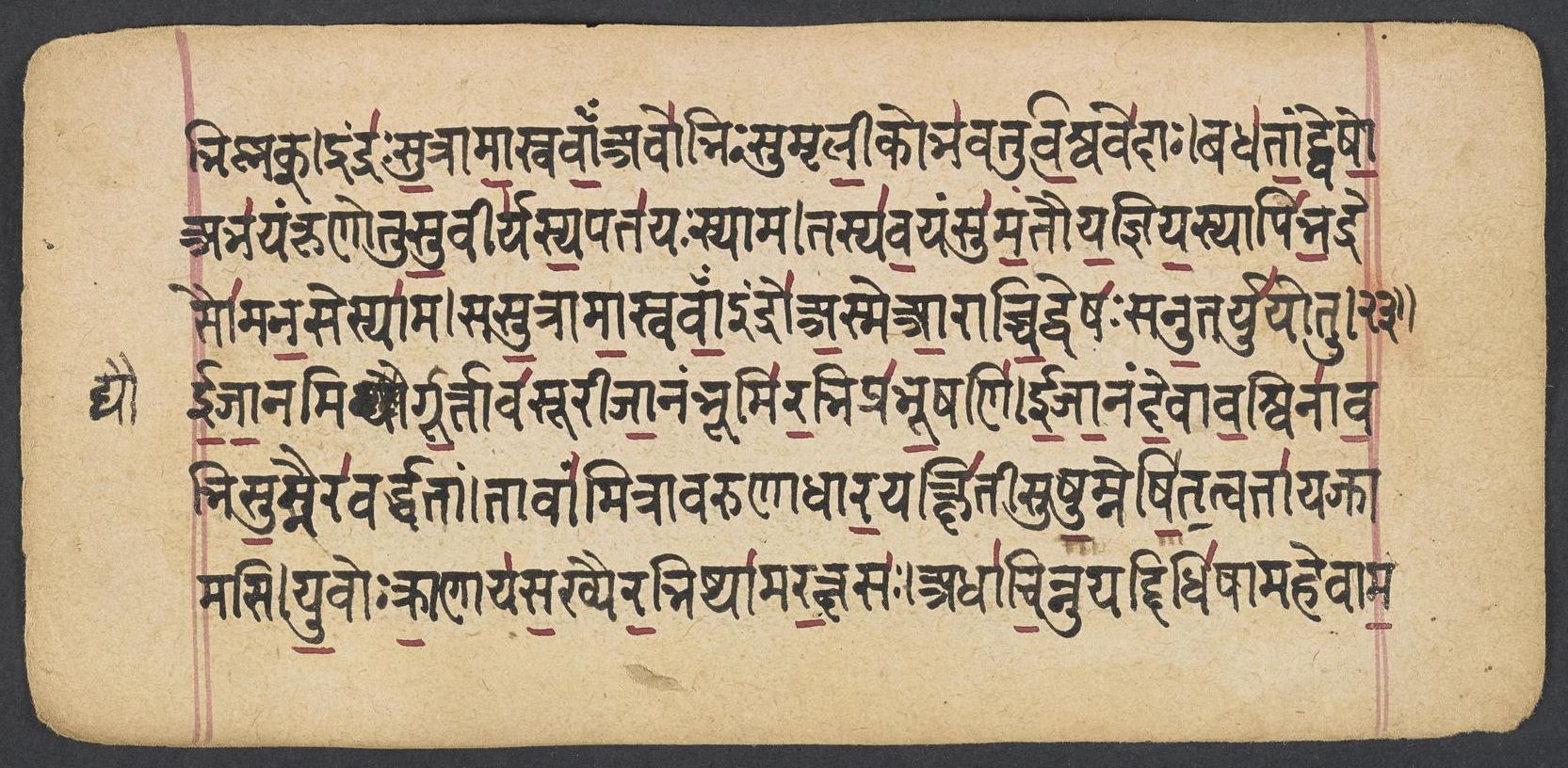
Penn Ms. Coll. 390 Item 48, fol. 121r (OPenn image 120, lower leaf). Checked on the image: the Rigveda text on this page begins in RV 10.131.5 ‹abhiṣṇak›. The next page with Rigveda text, fol. 121v, begins in RV 10.132.3 ‹abhi priyaṁ rekṇaḥ patyamānāḥ›. Verses 10.131.5-7 end on this page; 10.131.5 begins on fol. 120v.
5pu̱tram i̍va pi̱tarā̍v a̱śvino̱bhendrā̱vathu̱ḥ kāvyai̍r da̱ṁsanā̍bhiḥ | yat su̱rāma̱ṁ vy api̍ba̱ḥ śacī̍bhi̱ḥ sara̍svatī tvā maghavann abhiṣṇak ||
6indra̍ḥ su̱trāmā̱ svavā̱m̐ avo̍bhiḥ sumṛḻī̱ko bha̍vatu vi̱śvave̍dāḥ | bādha̍tā̱ṁ dveṣo̱ abha̍yaṁ kṛṇotu su̱vīrya̍sya̱ pata̍yaḥ syāma ||
7tasya̍ va̱yaṁ su̍ma̱tau ya̱jñiya̱syāpi̍ bha̱dre sau̍mana̱se syā̍ma | sa su̱trāmā̱ svavā̱m̐ indro̍ a̱sme ā̱rāc ci̱d dveṣa̍ḥ sanu̱tar yu̍yotu ||
5As parents aid a son, both Aṣvins, Indra, aided thee with their wondrous Powers and wisdom. When thou, with might. hadst drunk the draught that gladdens, Sarasvatî, O Maghavan, refreshed thee.
6Indra is strong to save, rich in assistance may he, possessing all, be kind and gracious. May he disperse our foes and give us safety, and may we be the lords of hero vigou r.
7May we enjoy his favour, his the Holy may we enjoy his blessed loving kindness. May this rich Indra, as our good Protector, drive off and keep afar all those who hate us.
Notes
- Sanskrit: Aufrecht's edition (1877) with the Vedic accents, as entered by van Nooten and Holland (GRETIL).
- English: Ralph T. H. Griffith, The Hymns of the Rigveda (1889-1892; 2nd ed. 1896-1897), from the VedaWeb digital text; OCR slips in that text were corrected against the printed 2nd edition (data/sources/rigveda/griffith_errata.json).
Cite
Sources
- Source: Penn Ms. Coll. 390 Item 48 (1711 CE (colophon: Saṃvat 1768)), OPenn, Public Domain Mark + Aufrecht's accented text (GRETIL) + Griffith's English (VedaWeb) (holding institution)
- Critical edition: Aufrecht (1877), accented e-text via GRETIL
← previous · → next · v cycle view · l back to library