Rigveda 10.136: The long-haired ascetic (Keshin)
Introduction
Rigveda 10.136 is a hymn of 7 verses addressed to the muni. It stands in book (maṇḍala) 10, the last and latest book. The Rigveda is the oldest collection of Sanskrit hymns, composed in the second half of the second millennium BCE and handed down orally for many centuries before it was written down.
The manuscript shown is Penn Ms. Coll. 390 Item 48 (University of Pennsylvania), a paper manuscript of the eighth aṣṭaka (RV 10.46-10.191) of the Ṛgveda Saṃhitā in Devanāgarī, 158 leaves, 6 lines to the page, with the accents marked in red; the scribe's colophon on fol. 158 gives Saṃvat 1768 (1711 CE); this hymn stands on fol. 124r-125r. Each section below gives the verses that end on one page; the page boundaries were read on the images (the opening words of every page), not counted out. Like most Rigveda manuscripts, Penn Ms. Coll. 390 Item 48 writes a repeated refrain in short form after its first occurrence (for example kasmai° for kasmai devāya haviṣā vidhema); the Sanskrit shown is the full text of Aufrecht's edition.
How was this verified? (Provenance)
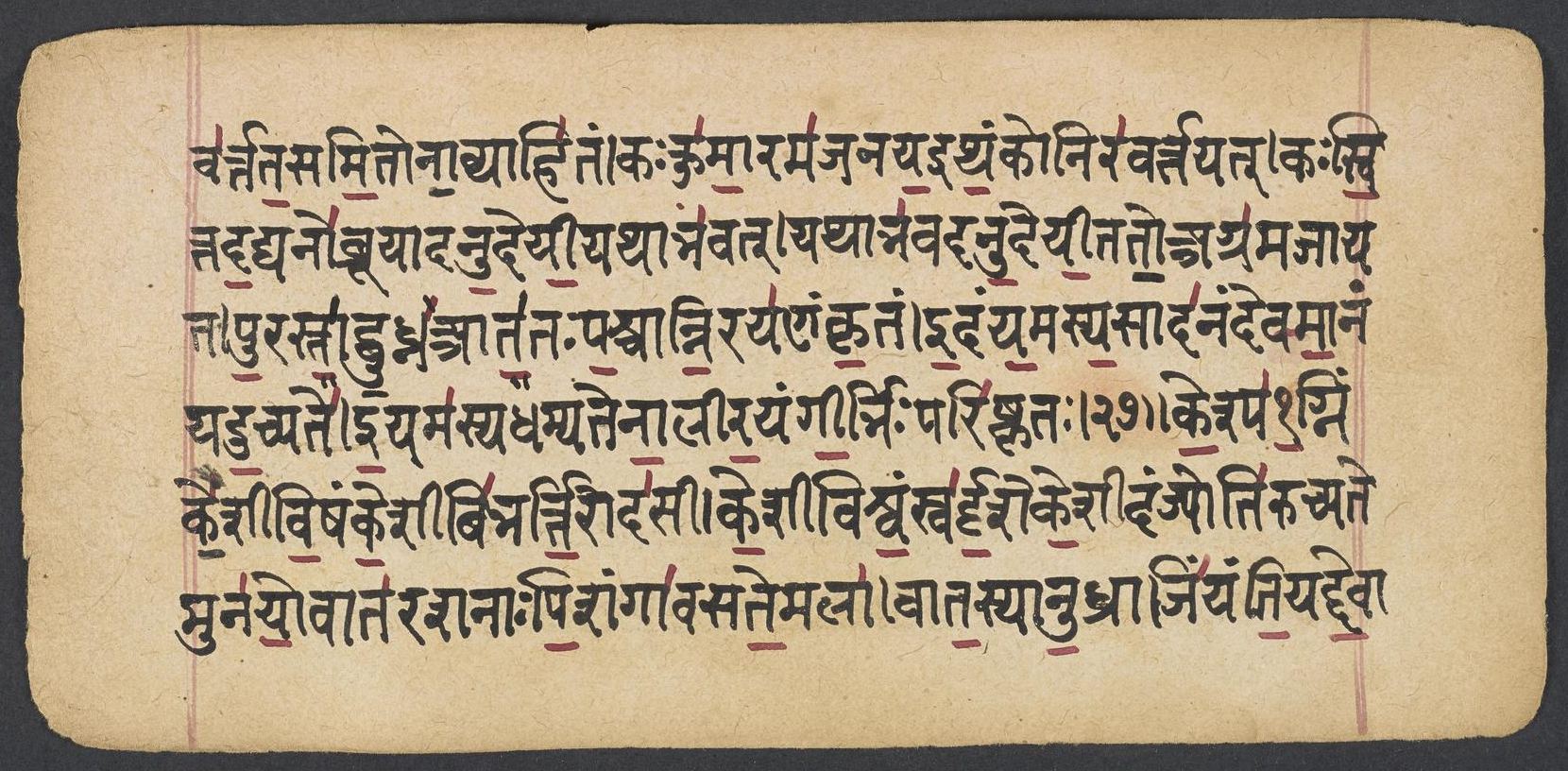
Where on the image
Penn Ms. Coll. 390 Item 48, fol. 124r (OPenn image 123, lower leaf). Checked on the image: the Rigveda text on this page begins in RV 10.135.4 ‹-prāvartata sam ito nāvy›. The next page with Rigveda text, fol. 124v, begins in RV 10.136.2 ‹-devāso avikṣata›. Verse 10.136.1 ends on this page.
1ke̱śy a1̱̍gniṁ ke̱śī vi̱ṣaṁ ke̱śī bi̍bharti̱ roda̍sī | ke̱śī viśva̱ṁ sva̍r dṛ̱śe ke̱śīdaṁ jyoti̍r ucyate ||
1HE with the long loose locks supports Agni, and moisture, heaven, and earth: He is all sky to look upon: he with long hair is called this light.
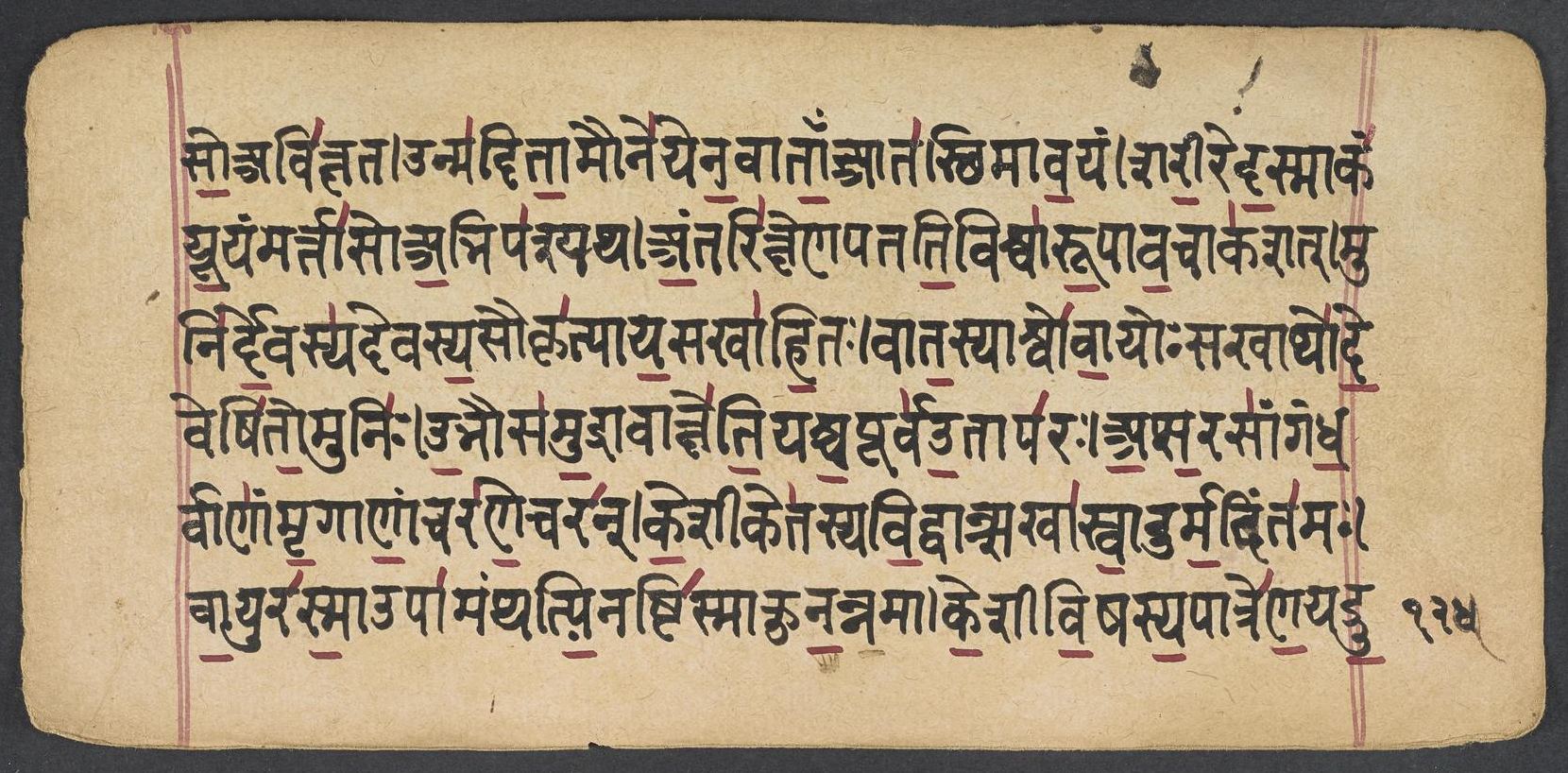
Where on the image
Penn Ms. Coll. 390 Item 48, fol. 124v (OPenn image 124, upper leaf). Checked on the image: the Rigveda text on this page begins in RV 10.136.2 ‹-devāso avikṣata›. The next page with Rigveda text, fol. 125r, begins in RV 10.136.7 ‹-rudreṇāpibat saha›. Verses 10.136.2-6 end on this page; 10.136.2 begins on fol. 124r.
2muna̍yo̱ vāta̍raśanāḥ pi̱śaṅgā̍ vasate̱ malā̍ | vāta̱syānu̱ dhrāji̍ṁ yanti̱ yad de̱vāso̱ avi̍kṣata ||
3unma̍ditā̱ maune̍yena̱ vātā̱m̐ ā ta̍sthimā va̱yam | śarī̱red a̱smāka̍ṁ yū̱yam martā̍so a̱bhi pa̍śyatha ||
4a̱ntari̍kṣeṇa patati̱ viśvā̍ rū̱pāva̱cāka̍śat | muni̍r de̱vasya̍-devasya̱ saukṛ̍tyāya̱ sakhā̍ hi̱taḥ ||
5vāta̱syāśvo̍ vā̱yoḥ sakhātho̍ de̱veṣi̍to̱ muni̍ḥ | u̱bhau sa̍mu̱drāv ā kṣe̍ti̱ yaś ca̱ pūrva̍ u̱tāpa̍raḥ ||
6a̱psa̱rasā̍ṁ gandha̱rvāṇā̍m mṛ̱gāṇā̱ṁ cara̍ṇe̱ cara̍n | ke̱śī keta̍sya vi̱dvān sakhā̍ svā̱dur ma̱dinta̍maḥ ||
2The Munis, girdled with the wind, wear garments soiled of yellow hue. They, following the wind's swift course go where the Gods have gone before.
3Transported with our Munihood we have pressed on into the winds: You therefore, mortal men. behold our natural bodies and no more.
4The Muni, made associate in the holy work of every God, Looking upon all varied forms flies through the region of the air.
5The Steed of Vâta, Vâyu's friend, the Muni, by the Gods impelled, In both the oceans hath his home, in eastern and in western sea.
6Treading the path of sylvan beasts, Gandharvas, and Apsarases, He with long locks, who knows the wish, is a sweet most delightful friend
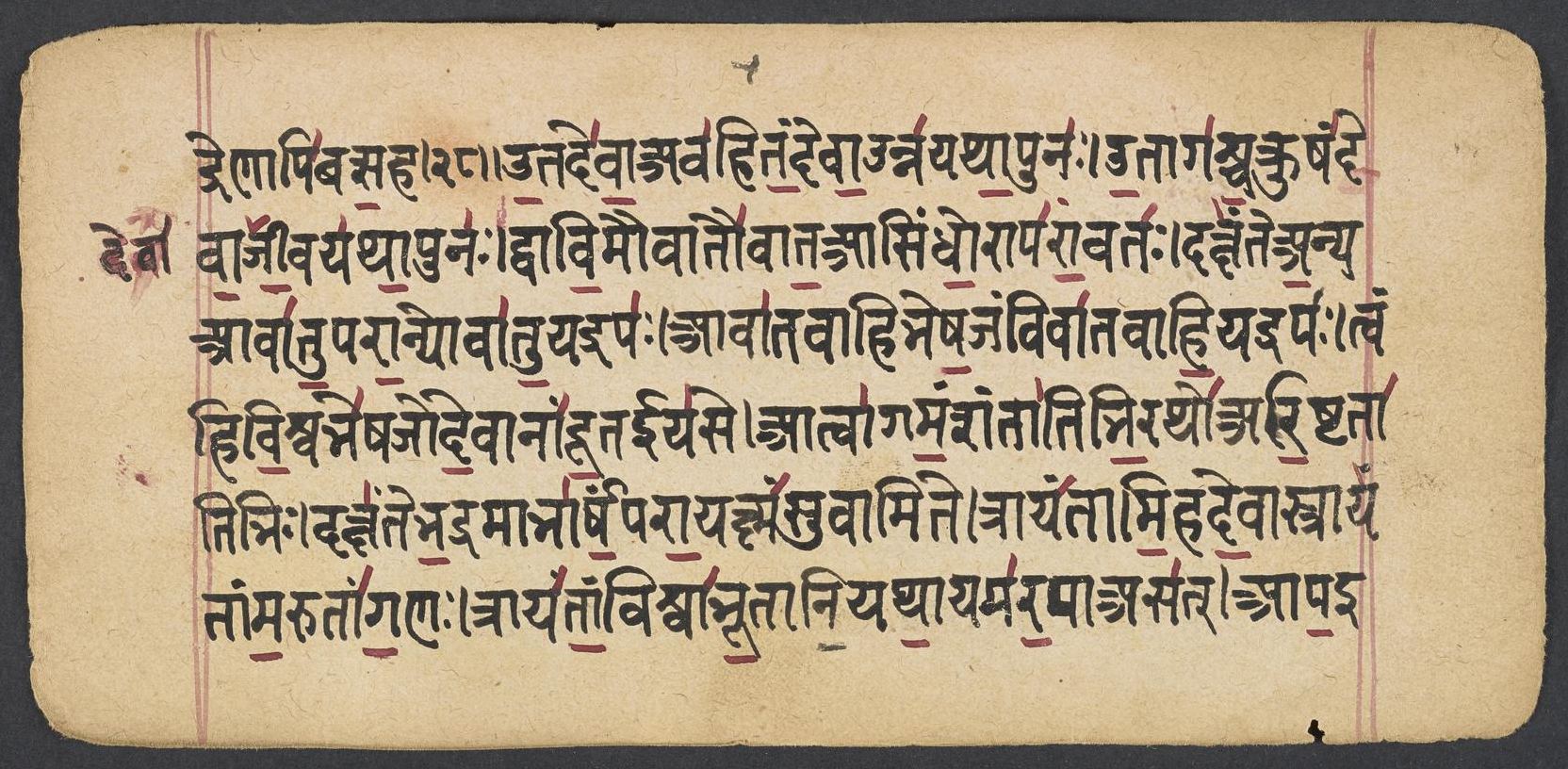
Where on the image
Penn Ms. Coll. 390 Item 48, fol. 125r (OPenn image 124, lower leaf). Checked on the image: the Rigveda text on this page begins in RV 10.136.7 ‹-rudreṇāpibat saha›. The next page with Rigveda text, fol. 125v, begins in RV 10.137.6 ‹-id vā u bheṣajīr›. Verse 10.136.7 ends on this page; 10.136.7 begins on fol. 124v.
7vā̱yur a̍smā̱ upā̍manthat pi̱naṣṭi̍ smā kunanna̱mā | ke̱śī vi̱ṣasya̱ pātre̍ṇa̱ yad ru̱dreṇāpi̍bat sa̱ha ||
7Vâyu hath churned for him: for him he poundeth things most hard to bend, When he with long loose locks hath drunk, with Rudra, water from the cup.
Notes
- Sanskrit: Aufrecht's edition (1877) with the Vedic accents, as entered by van Nooten and Holland (GRETIL).
- English: Ralph T. H. Griffith, The Hymns of the Rigveda (1889-1892; 2nd ed. 1896-1897), from the VedaWeb digital text; OCR slips in that text were corrected against the printed 2nd edition (data/sources/rigveda/griffith_errata.json).
Cite
Sources
- Source: Penn Ms. Coll. 390 Item 48 (1711 CE (colophon: Saṃvat 1768)), OPenn, Public Domain Mark + Aufrecht's accented text (GRETIL) + Griffith's English (VedaWeb) (holding institution)
- Critical edition: Aufrecht (1877), accented e-text via GRETIL
← previous · → next · v cycle view · l back to library