Rigveda 10.137: To all the gods
Introduction
Rigveda 10.137 is a hymn of 7 verses addressed to all the gods. It stands in book (maṇḍala) 10, the last and latest book. The Rigveda is the oldest collection of Sanskrit hymns, composed in the second half of the second millennium BCE and handed down orally for many centuries before it was written down.
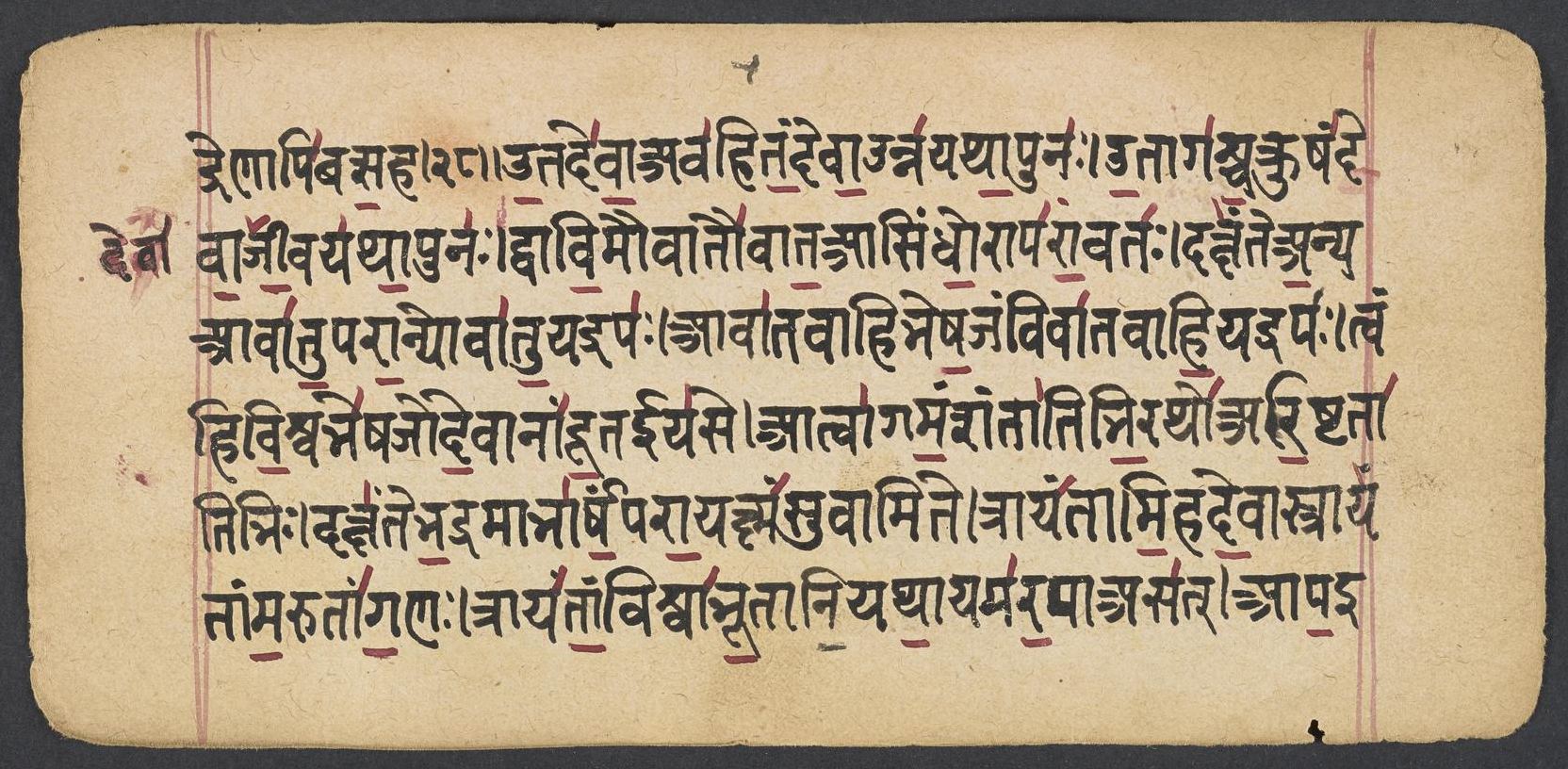
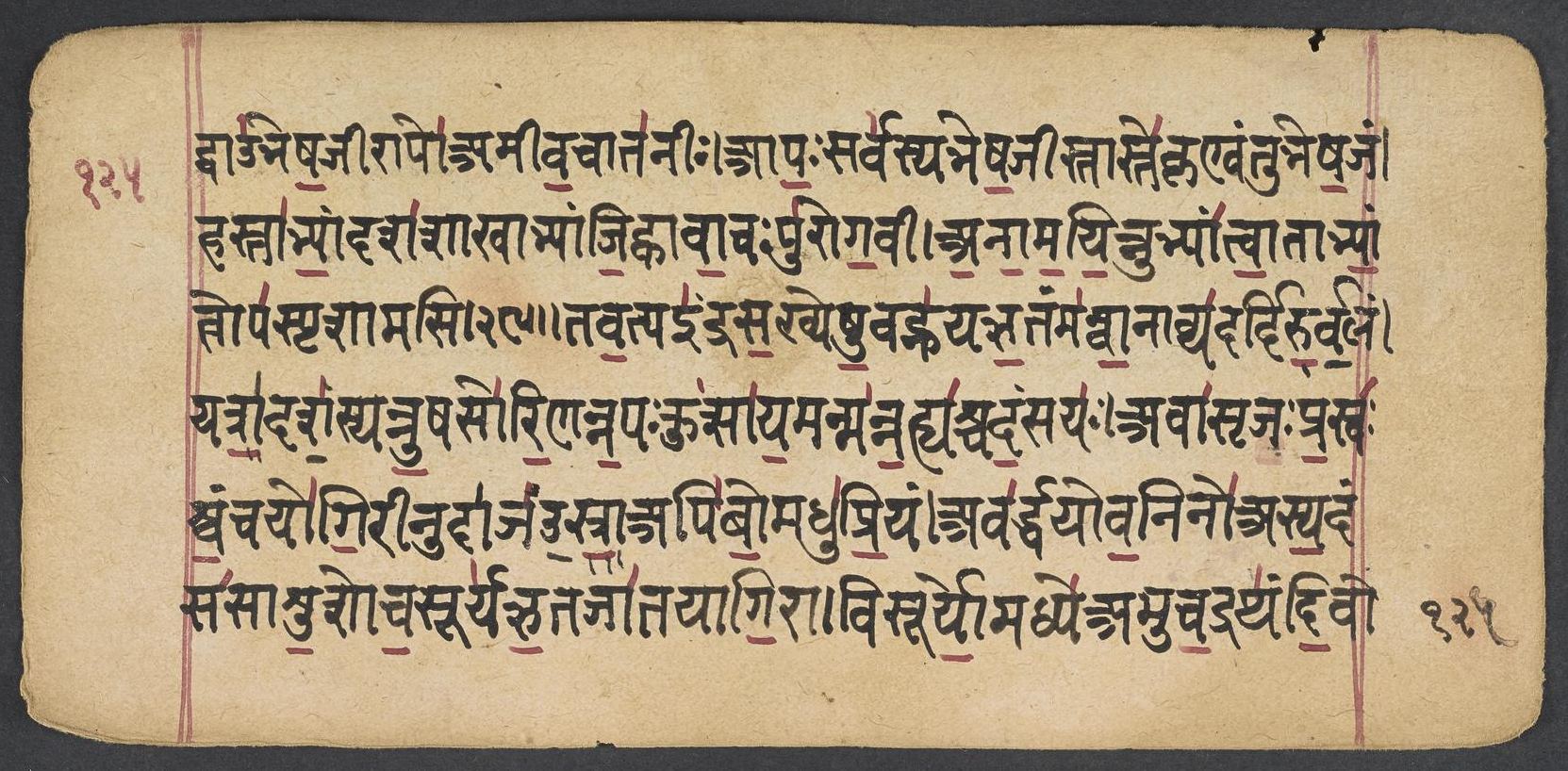
The manuscript shown is Penn Ms. Coll. 390 Item 48 (University of Pennsylvania), a paper manuscript of the eighth aṣṭaka (RV 10.46-10.191) of the Ṛgveda Saṃhitā in Devanāgarī, 158 leaves, 6 lines to the page, with the accents marked in red; the scribe's colophon on fol. 158 gives Saṃvat 1768 (1711 CE); this hymn stands on fol. 125r-125v. Each section below gives the verses that end on one page; the page boundaries were read on the images (the opening words of every page), not counted out. Like most Rigveda manuscripts, Penn Ms. Coll. 390 Item 48 writes a repeated refrain in short form after its first occurrence (for example kasmai° for kasmai devāya haviṣā vidhema); the Sanskrit shown is the full text of Aufrecht's edition.
How was this verified? (Provenance)
Where on the image
Penn Ms. Coll. 390 Item 48, fol. 125r (OPenn image 124, lower leaf). Checked on the image: the Rigveda text on this page begins in RV 10.136.7 ‹-rudreṇāpibat saha›. The next page with Rigveda text, fol. 125v, begins in RV 10.137.6 ‹-id vā u bheṣajīr›. Verses 10.137.1-5 end on this page.
1u̱ta de̍vā̱ ava̍hita̱ṁ devā̱ un na̍yathā̱ puna̍ḥ | u̱tāga̍ś ca̱kruṣa̍ṁ devā̱ devā̍ jī̱vaya̍thā̱ puna̍ḥ ||
2dvāv i̱mau vātau̍ vāta̱ ā sindho̱r ā pa̍rā̱vata̍ḥ | dakṣa̍ṁ te a̱nya ā vā̍tu̱ parā̱nyo vā̍tu̱ yad rapa̍ḥ ||
3ā vā̍ta vāhi bheṣa̱jaṁ vi vā̍ta vāhi̱ yad rapa̍ḥ | tvaṁ hi vi̱śvabhe̍ṣajo de̱vānā̍ṁ dū̱ta īya̍se ||
4ā tvā̍gama̱ṁ śaṁtā̍tibhi̱r atho̍ ari̱ṣṭatā̍tibhiḥ | dakṣa̍ṁ te bha̱dram ābhā̍rṣa̱m parā̱ yakṣma̍ṁ suvāmi te ||
5trāya̍ntām i̱ha de̱vās trāya̍tām ma̱rutā̍ṁ ga̱ṇaḥ | trāya̍ntā̱ṁ viśvā̍ bhū̱tāni̱ yathā̱yam a̍ra̱pā asa̍t ||
1YE Gods, raise up once more the man whom ye have humbled and brought low. O Gods, restore to life again the man who hath committed sin.
2Two several winds are blowing here, from Sindhu, from a distant land. May one breathe energy to thee, the other blow disease away.
3Hither, O Wind, blow healing balm, blow all disease away, thou Wind; For thou who hast all medicine comest as envoy of the Gods.
4I am come nigh to thee with balms to give thee rest and keep thee safe. I bring thee blessed strength, I drive thy weakening malady away.
5Here let the Gods deliver him, the Maruts' band deliver him: All things that be deliver him that he be freed from his disease.
Where on the image
Penn Ms. Coll. 390 Item 48, fol. 125v (OPenn image 125, upper leaf). Checked on the image: the Rigveda text on this page begins in RV 10.137.6 ‹-id vā u bheṣajīr›. The next page with Rigveda text, fol. 126r, begins in RV 10.138.3 ‹vidad dāsāya pratimānam āryaḥ›. Verses 10.137.6-7 end on this page; 10.137.6 begins on fol. 125r.
6āpa̱ id vā u̍ bheṣa̱jīr āpo̍ amīva̱cāta̍nīḥ | āpa̱ḥ sarva̍sya bheṣa̱jīs tās te̍ kṛṇvantu bheṣa̱jam ||
7hastā̍bhyā̱ṁ daśa̍śākhābhyāṁ ji̱hvā vā̱caḥ pu̍roga̱vī | a̱nā̱ma̱yi̱tnubhyā̍ṁ tvā̱ tābhyā̱ṁ tvopa̍ spṛśāmasi ||
6The Waters have their healing power, the Waters drive disease away. The Waters have a balm for all: let them make medicine for thee.
7The tongue that leads the voice precedes. Then with our ten-fold branching hands, With these two chasers of disease we stroke thee with a gentle touch.
Notes
- Sanskrit: Aufrecht's edition (1877) with the Vedic accents, as entered by van Nooten and Holland (GRETIL).
- English: Ralph T. H. Griffith, The Hymns of the Rigveda (1889-1892; 2nd ed. 1896-1897), from the VedaWeb digital text; OCR slips in that text were corrected against the printed 2nd edition (data/sources/rigveda/griffith_errata.json).
Cite
Sources
- Source: Penn Ms. Coll. 390 Item 48 (1711 CE (colophon: Saṃvat 1768)), OPenn, Public Domain Mark + Aufrecht's accented text (GRETIL) + Griffith's English (VedaWeb) (holding institution)
- Critical edition: Aufrecht (1877), accented e-text via GRETIL
← previous · → next · v cycle view · l back to library