Rigveda 10.141: To all the gods
Introduction
Rigveda 10.141 is a hymn of 6 verses addressed to all the gods. It stands in book (maṇḍala) 10, the last and latest book. The Rigveda is the oldest collection of Sanskrit hymns, composed in the second half of the second millennium BCE and handed down orally for many centuries before it was written down.
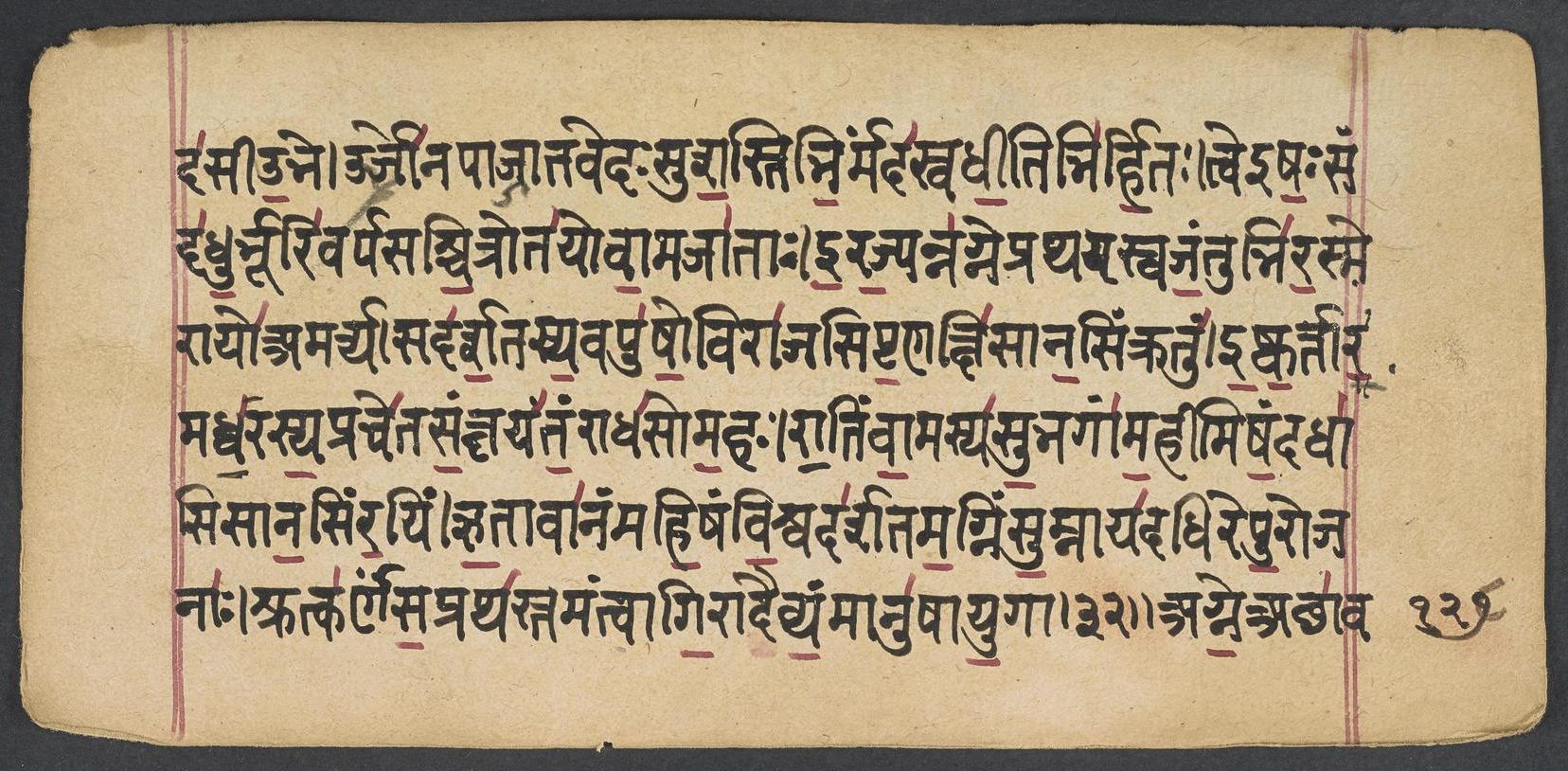
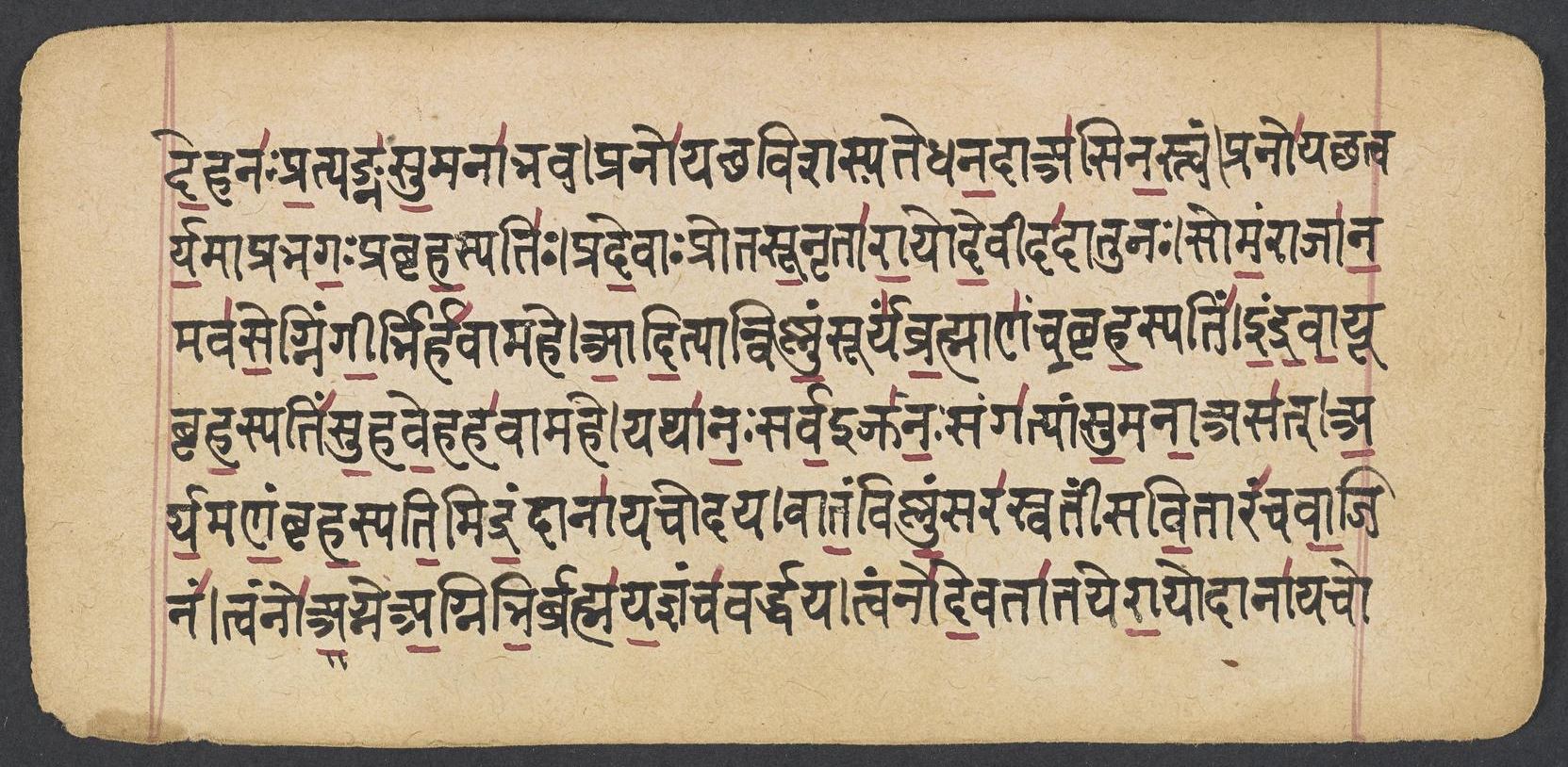
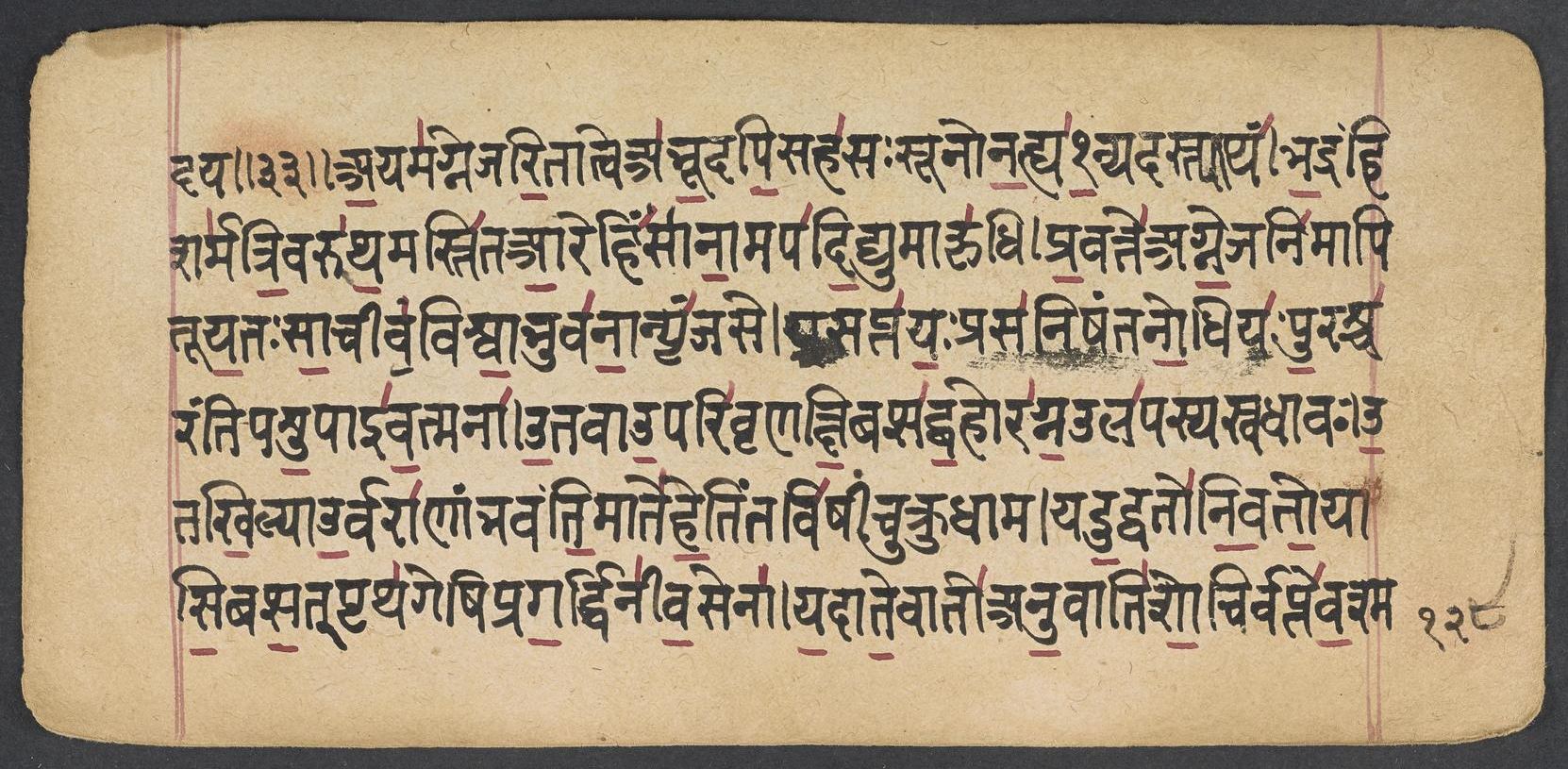
The manuscript shown is Penn Ms. Coll. 390 Item 48 (University of Pennsylvania), a paper manuscript of the eighth aṣṭaka (RV 10.46-10.191) of the Ṛgveda Saṃhitā in Devanāgarī, 158 leaves, 6 lines to the page, with the accents marked in red; the scribe's colophon on fol. 158 gives Saṃvat 1768 (1711 CE); this hymn stands on fol. 127v-128v. Each section below gives the verses that end on one page; the page boundaries were read on the images (the opening words of every page), not counted out. Like most Rigveda manuscripts, Penn Ms. Coll. 390 Item 48 writes a repeated refrain in short form after its first occurrence (for example kasmai° for kasmai devāya haviṣā vidhema); the Sanskrit shown is the full text of Aufrecht's edition.
How was this verified? (Provenance)
Where on the image
Penn Ms. Coll. 390 Item 48, fol. 128r (OPenn image 127, lower leaf). Checked on the image: the Rigveda text on this page begins in RV 10.141.1 ‹-vadeha naḥ pratyaṅ naḥ›. The next page with Rigveda text, fol. 128v, begins in RV 10.141.6 ‹-codaya›. Verses 10.141.1-5 end on this page; 10.141.1 begins on fol. 127v.
1agne̱ acchā̍ vade̱ha na̍ḥ pra̱tyaṅ na̍ḥ su̱manā̍ bhava | pra no̍ yaccha viśas pate dhana̱dā a̍si na̱s tvam ||
2pra no̍ yacchatv arya̱mā pra bhaga̱ḥ pra bṛha̱spati̍ḥ | pra de̱vāḥ prota sū̱nṛtā̍ rā̱yo de̱vī da̍dātu naḥ ||
3soma̱ṁ rājā̍na̱m ava̍se̱ 'gniṁ gī̱rbhir ha̍vāmahe | ā̱di̱tyān viṣṇu̱ṁ sūrya̍m bra̱hmāṇa̍ṁ ca̱ bṛha̱spati̍m ||
4i̱ndra̱vā̱yū bṛha̱spati̍ṁ su̱have̱ha ha̍vāmahe | yathā̍ na̱ḥ sarva̱ ij jana̱ḥ saṁga̍tyāṁ su̱manā̱ asa̍t ||
5a̱rya̱maṇa̱m bṛha̱spati̱m indra̱ṁ dānā̍ya codaya | vāta̱ṁ viṣṇu̱ṁ sara̍svatīṁ savi̱tāra̍ṁ ca vā̱jina̍m ||
1TURN hither, Agni, speak to us: come to us with a gracious mind. Enrich us, Master of the house: thou art the Giver of our wealth.
2Let Aryaman vouchsafe us wealth, and Bhaga, and Br̥ihaspati. Let the Gods give their gifts, and let Sûnr̥itâ, Goddess, grant us wealth.
3We call King Soma to our aid, and Agni with our songs and hymns, Âdityas, Vishṇu, Sûrya, and the Brahman Priest Br̥ihaspati.
4Indra, Vâyu, Br̥ihaspati, Gods swift to listen, we invoke, That in the synod all the folk may be benevolent to us.
5Urge Aryaman to send us gifts, and Indra, and Br̥ihaspati, Vâta, Vishṇu, Sarasvatî and the Strong Courser Savitar.
Where on the image
Penn Ms. Coll. 390 Item 48, fol. 128v (OPenn image 128, upper leaf). Checked on the image: the Rigveda text on this page begins in RV 10.141.6 ‹-codaya›. The next page with Rigveda text, fol. 129r, begins in RV 10.142.4 ‹-śmaśru vapasi pra bhūma›. Verse 10.141.6 ends on this page; 10.141.6 begins on fol. 128r.
6tvaṁ no̍ agne a̱gnibhi̱r brahma̍ ya̱jñaṁ ca̍ vardhaya | tvaṁ no̍ de̱vatā̍taye rā̱yo dānā̍ya codaya ||
6Do thou, O Agni, with thy fires strengthen our prayer and sacrifice: Urge givers to bestow their wealth to aid our service of the Gods.
Notes
- Sanskrit: Aufrecht's edition (1877) with the Vedic accents, as entered by van Nooten and Holland (GRETIL).
- English: Ralph T. H. Griffith, The Hymns of the Rigveda (1889-1892; 2nd ed. 1896-1897), from the VedaWeb digital text; OCR slips in that text were corrected against the printed 2nd edition (data/sources/rigveda/griffith_errata.json).
Cite
Sources
- Source: Penn Ms. Coll. 390 Item 48 (1711 CE (colophon: Saṃvat 1768)), OPenn, Public Domain Mark + Aufrecht's accented text (GRETIL) + Griffith's English (VedaWeb) (holding institution)
- Critical edition: Aufrecht (1877), accented e-text via GRETIL
← previous · → next · v cycle view · l back to library