Rigveda 10.142: To Agni
Introduction
Rigveda 10.142 is a hymn of 8 verses addressed to Agni. It stands in book (maṇḍala) 10, the last and latest book. The Rigveda is the oldest collection of Sanskrit hymns, composed in the second half of the second millennium BCE and handed down orally for many centuries before it was written down.
The manuscript shown is Penn Ms. Coll. 390 Item 48 (University of Pennsylvania), a paper manuscript of the eighth aṣṭaka (RV 10.46-10.191) of the Ṛgveda Saṃhitā in Devanāgarī, 158 leaves, 6 lines to the page, with the accents marked in red; the scribe's colophon on fol. 158 gives Saṃvat 1768 (1711 CE); this hymn stands on fol. 128v-129r. Each section below gives the verses that end on one page; the page boundaries were read on the images (the opening words of every page), not counted out. Like most Rigveda manuscripts, Penn Ms. Coll. 390 Item 48 writes a repeated refrain in short form after its first occurrence (for example kasmai° for kasmai devāya haviṣā vidhema); the Sanskrit shown is the full text of Aufrecht's edition.
How was this verified? (Provenance)
Where on the image
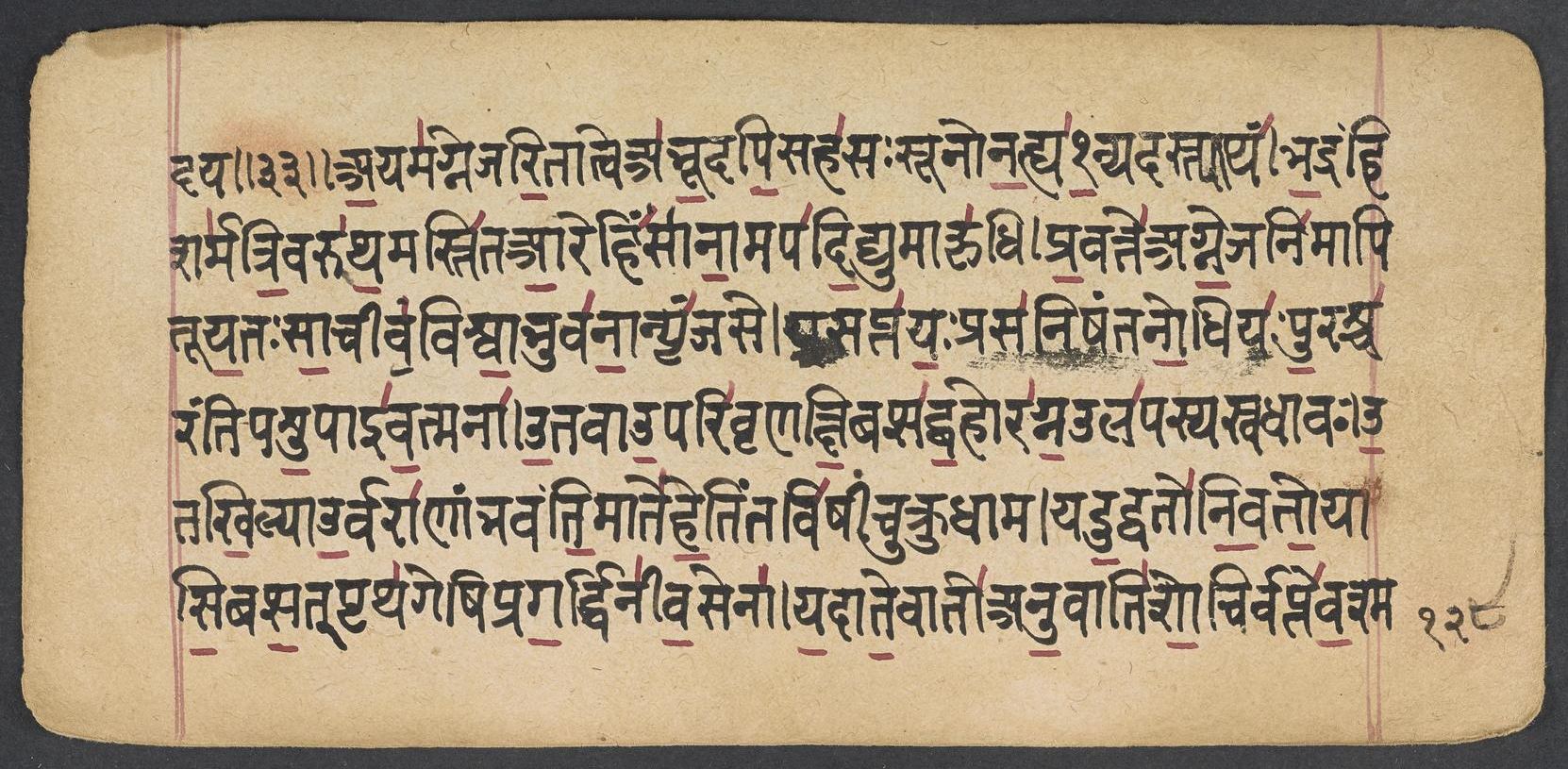
Penn Ms. Coll. 390 Item 48, fol. 128v (OPenn image 128, upper leaf). Checked on the image: the Rigveda text on this page begins in RV 10.141.6 ‹-codaya›. The next page with Rigveda text, fol. 129r, begins in RV 10.142.4 ‹-śmaśru vapasi pra bhūma›. Verses 10.142.1-3 end on this page.
1a̱yam a̍gne jari̱tā tve a̍bhū̱d api̱ saha̍saḥ sūno na̱hy a1̱̍nyad asty āpya̍m | bha̱draṁ hi śarma̍ tri̱varū̍tha̱m asti̍ ta ā̱re hiṁsā̍nā̱m apa̍ di̱dyum ā kṛ̍dhi ||
2pra̱vat te̍ agne̱ jani̍mā pitūya̱taḥ sā̱cīva̱ viśvā̱ bhuva̍nā̱ ny ṛ̍ñjase | pra sapta̍ya̱ḥ pra sa̍niṣanta no̱ dhiya̍ḥ pu̱raś ca̍ranti paśu̱pā i̍va̱ tmanā̍ ||
3u̱ta vā u̱ pari̍ vṛṇakṣi̱ bapsa̍d ba̱hor a̍gna̱ ula̍pasya svadhāvaḥ | u̱ta khi̱lyā u̱rvarā̍ṇām bhavanti̱ mā te̍ he̱tiṁ tavi̍ṣīṁ cukrudhāma ||
1WITH thee, O Agni, was this singer of the laud: he hath no other kinship, O thou Son of Strength. Thou givest blessed shelter with a triple guard. Keep the destructive lightning far away from us.
2Thy birth who seekest food is in the falling flood, Agni: as Comrade thou winnest all living things. Our coursers and our songs shall be victorious: they of themselves advance like one who guards the herd.
3And thou, O Agni, thou of Godlike nature, sparest the stones, while eating up the brushwood. Then are thy tracks like deserts in the corn-lands. Let us not stir to wrath thy mighty arrow.
Where on the image
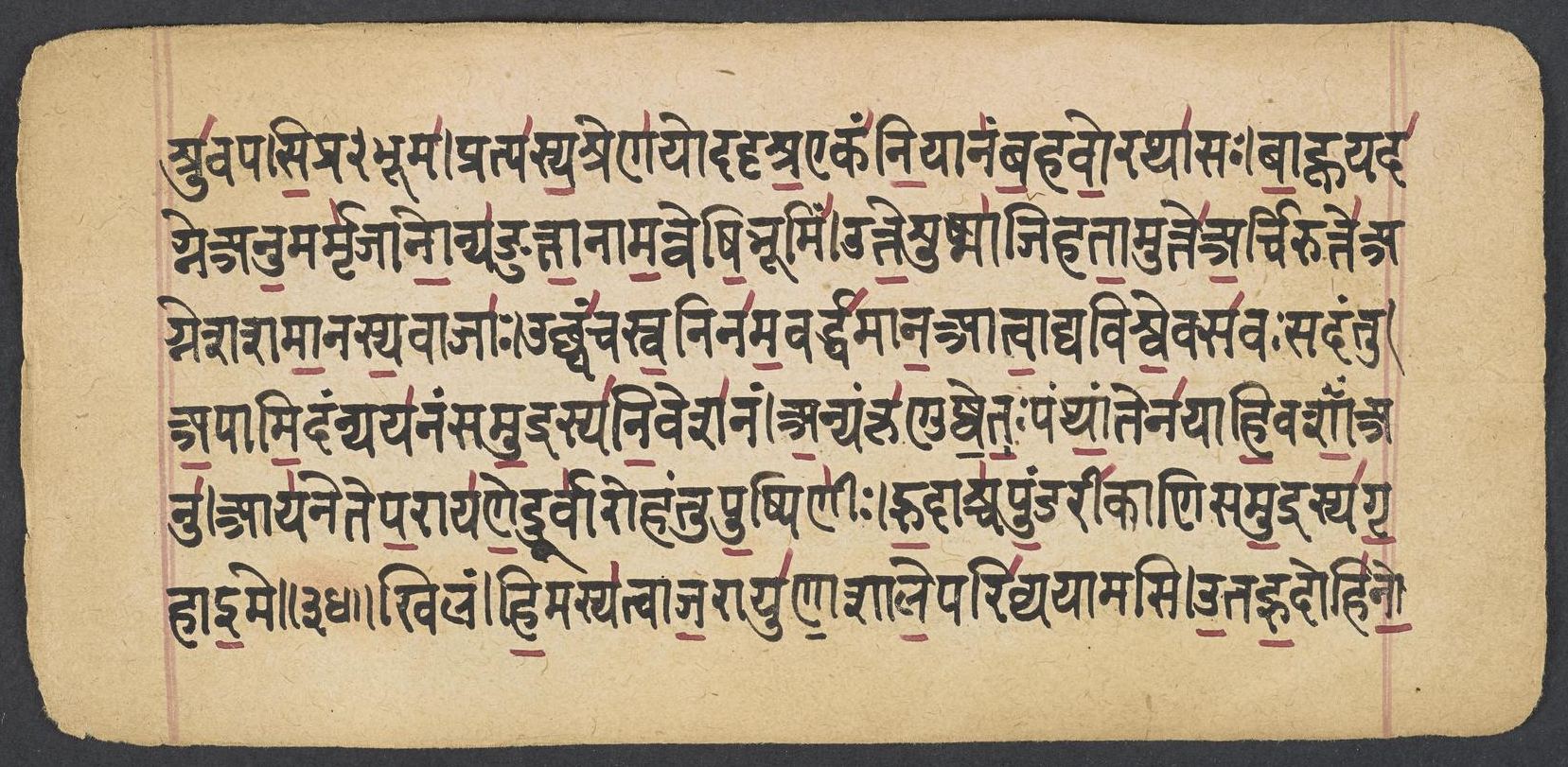
Penn Ms. Coll. 390 Item 48, fol. 129r (OPenn image 128, lower leaf). Checked on the image: the Rigveda text on this page begins in RV 10.142.4 ‹-śmaśru vapasi pra bhūma›. 10.142.8 ends in line 6 with a varga number, followed by the heading khilaṃ and khila verses (himasya tvā jarāyuṇā) that run to 130r line 4. The next page with Rigveda text, fol. 130r, begins in RV 10.143.1 ‹tyaṁ cid atrim ṛtajuram›. Verses 10.142.4-8 end on this page; 10.142.4 begins on fol. 128v.
4yad u̱dvato̍ ni̱vato̱ yāsi̱ bapsa̱t pṛtha̍g eṣi praga̱rdhinī̍va̱ senā̍ | ya̱dā te̱ vāto̍ anu̱vāti̍ śo̱cir vapte̍va̱ śmaśru̍ vapasi̱ pra bhūma̍ ||
5praty a̍sya̱ śreṇa̍yo dadṛśra̱ eka̍ṁ ni̱yāna̍m ba̱havo̱ rathā̍saḥ | bā̱hū yad a̍gne anu̱marmṛ̍jāno̱ nya̍ṅṅ uttā̱nām a̱nveṣi̱ bhūmi̍m ||
6ut te̱ śuṣmā̍ jihatā̱m ut te̍ a̱rcir ut te̍ agne śaśamā̱nasya̱ vājā̍ḥ | uc chva̍ñcasva̱ ni na̍ma̱ vardha̍māna̱ ā tvā̱dya viśve̱ vasa̍vaḥ sadantu ||
7a̱pām i̱daṁ nyaya̍naṁ samu̱drasya̍ ni̱veśa̍nam | a̱nyaṁ kṛ̍ṇuṣve̱taḥ panthā̱ṁ tena̍ yāhi̱ vaśā̱m̐ anu̍ ||
8āya̍ne te pa̱rāya̍ṇe̱ dūrvā̍ rohantu pu̱ṣpiṇī̍ḥ | hra̱dāś ca̍ pu̱ṇḍarī̍kāṇi samu̱drasya̍ gṛ̱hā i̱me ||
4O'er hills through vales devouring as thou goest, thou partest like an army fain for booty As when a barber shaves a beard, thou shavest earth when the wind blows on thy flame and fans it.
5Apparent are his lines as he approaches the course is single, but the cars are many, When, Agni, thou, making thine arms resplendent, advancest o'er the land spread out beneath thee.
6Now let thy strength, thy burning flames fly upward, thine energies, O Agni, as thou toilest. Gape widely, bend thee, waxing in thy vigour: let all the Vasus sit this day beside thee.
7This is the waters' reservoir, the great abode of gathered streams. Take thou another path than this, and as thou listest walk thereon.
8On thy way hitherward and hence let flowery Dûrva grass spring up Let there be lakes with lotus blooms. These are the mansions of the flood.
Notes
- Sanskrit: Aufrecht's edition (1877) with the Vedic accents, as entered by van Nooten and Holland (GRETIL).
- English: Ralph T. H. Griffith, The Hymns of the Rigveda (1889-1892; 2nd ed. 1896-1897), from the VedaWeb digital text; OCR slips in that text were corrected against the printed 2nd edition (data/sources/rigveda/griffith_errata.json).
- This manuscript inserts khila verses (supplementary hymns outside Aufrecht's text) at some hymn ends; they are noted in the section notes and not reproduced.
Cite
Sources
- Source: Penn Ms. Coll. 390 Item 48 (1711 CE (colophon: Saṃvat 1768)), OPenn, Public Domain Mark + Aufrecht's accented text (GRETIL) + Griffith's English (VedaWeb) (holding institution)
- Critical edition: Aufrecht (1877), accented e-text via GRETIL
← previous · → next · v cycle view · l back to library