Rigveda 10.147: To Indra
Introduction
Rigveda 10.147 is a hymn of 5 verses addressed to Indra. It stands in book (maṇḍala) 10, the last and latest book. The Rigveda is the oldest collection of Sanskrit hymns, composed in the second half of the second millennium BCE and handed down orally for many centuries before it was written down.
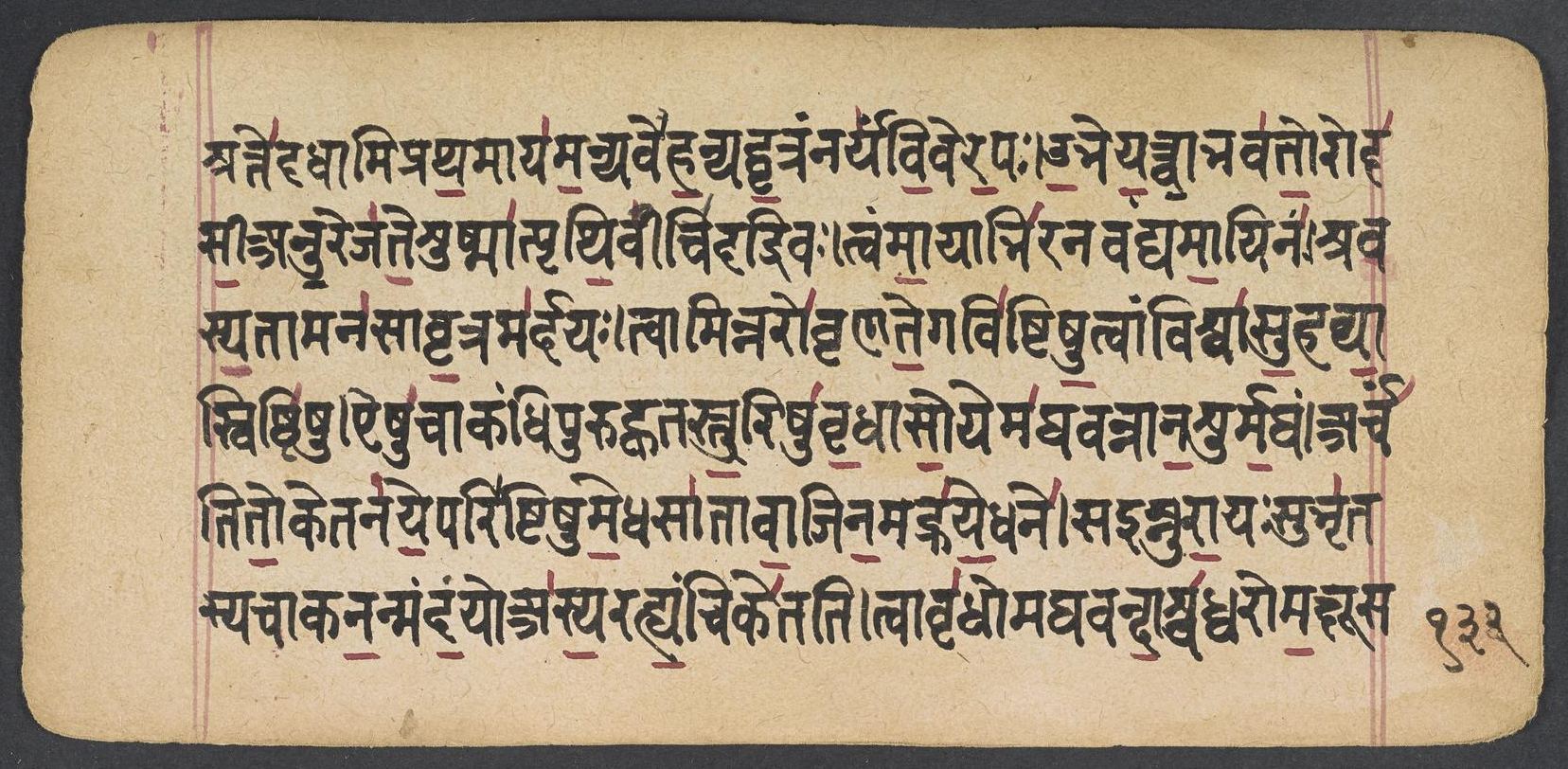
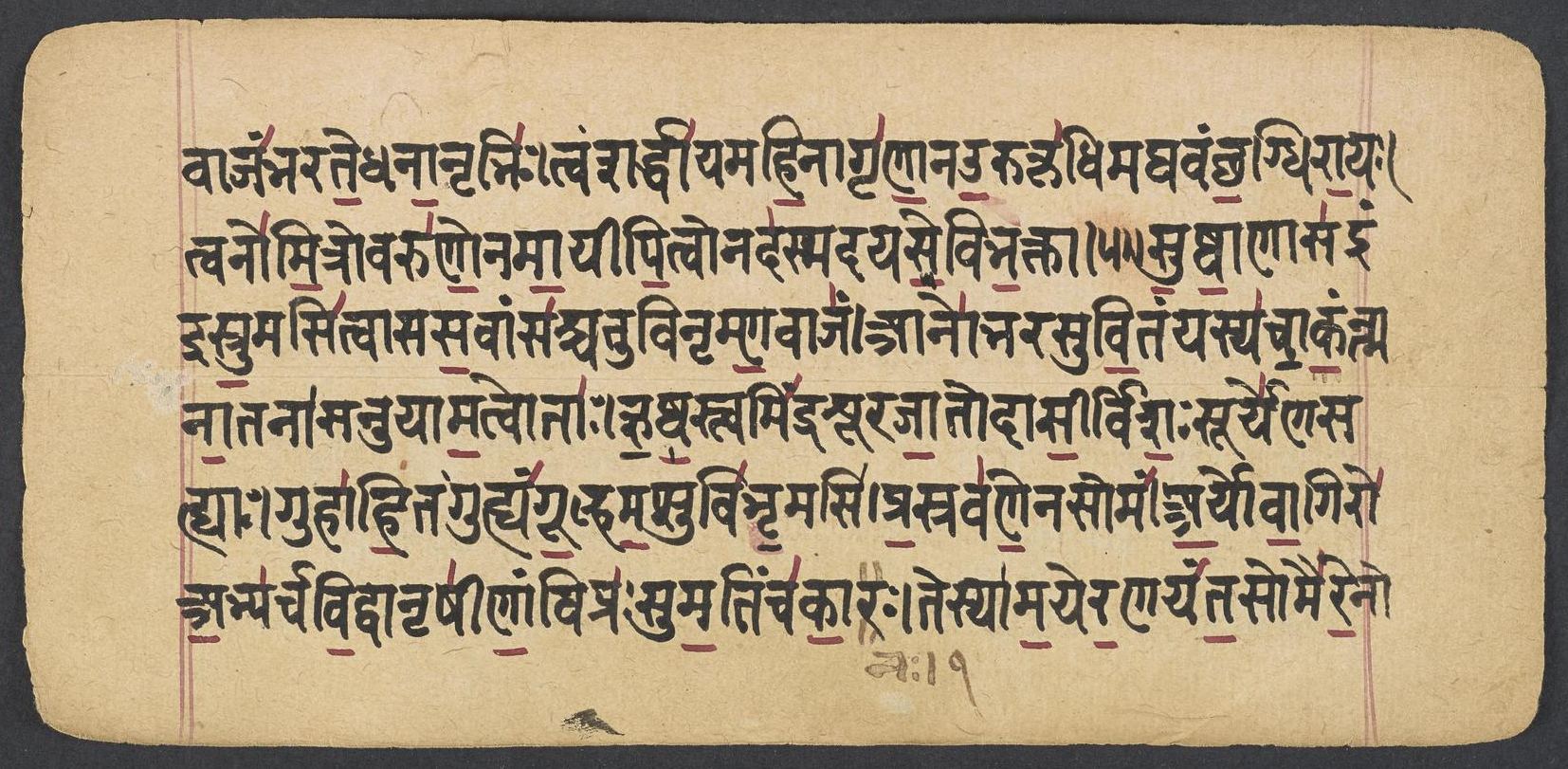
The manuscript shown is Penn Ms. Coll. 390 Item 48 (University of Pennsylvania), a paper manuscript of the eighth aṣṭaka (RV 10.46-10.191) of the Ṛgveda Saṃhitā in Devanāgarī, 158 leaves, 6 lines to the page, with the accents marked in red; the scribe's colophon on fol. 158 gives Saṃvat 1768 (1711 CE); this hymn stands on fol. 132v-133r. Each section below gives the verses that end on one page; the page boundaries were read on the images (the opening words of every page), not counted out. Like most Rigveda manuscripts, Penn Ms. Coll. 390 Item 48 writes a repeated refrain in short form after its first occurrence (for example kasmai° for kasmai devāya haviṣā vidhema); the Sanskrit shown is the full text of Aufrecht's edition.
How was this verified? (Provenance)
Where on the image
Penn Ms. Coll. 390 Item 48, fol. 132v (OPenn image 132, upper leaf). Checked on the image: the Rigveda text on this page begins in RV 10.147.1 ‹śrat te dadhāmi prathamāya›. The next page with Rigveda text, fol. 133r, begins in RV 10.147.4 ‹vājam bharate dhanā nṛbhiḥ›. Verses 10.147.1-3 end on this page.
1śrat te̍ dadhāmi pratha̱māya̍ ma̱nyave 'ha̱n yad vṛ̱traṁ narya̍ṁ vi̱ver a̱paḥ | u̱bhe yat tvā̱ bhava̍to̱ roda̍sī̱ anu̱ reja̍te̱ śuṣmā̍t pṛthi̱vī ci̍d adrivaḥ ||
2tvam mā̱yābhi̍r anavadya mā̱yina̍ṁ śravasya̱tā mana̍sā vṛ̱tram a̍rdayaḥ | tvām in naro̍ vṛṇate̱ gavi̍ṣṭiṣu̱ tvāṁ viśvā̍su̱ havyā̱sv iṣṭi̍ṣu ||
3aiṣu̍ cākandhi puruhūta sū̱riṣu̍ vṛ̱dhāso̱ ye ma̍ghavann āna̱śur ma̱gham | arca̍nti to̱ke tana̍ye̱ pari̍ṣṭiṣu me̱dhasā̍tā vā̱jina̱m ahra̍ye̱ dhane̍ ||
1I TRUST in thy first wrathful deed, O Indra, when thou slewest Vr̥itra and didst work to profit man; What time the two world-halves fell short of thee in might, and the earth trembled at thy force, O Thunder-anned.
2Thou with thy magic powers didst rend the conjurer Vr̥itra, O Blameless One, with heart that longed for fame. Heroes elect thee when they battle for the prey, thee in all sacrifices worthy of renown.
3God Much-invoked, take pleasure in these princes here, who, thine exalters, Maghavan, have come to wealth. In synods, when the rite succeeds, they hymn the Strong for sons and progeny and riches undisturbed.
Where on the image
Penn Ms. Coll. 390 Item 48, fol. 133r (OPenn image 132, lower leaf). Checked on the image: the Rigveda text on this page begins in RV 10.147.4 ‹vājam bharate dhanā nṛbhiḥ›. The next page with Rigveda text, fol. 133v, begins in RV 10.148.3 ‹-enota tubhyaṁ rathoḻha bhakṣaiḥ›. Verses 10.147.4-5 end on this page; 10.147.4 begins on fol. 132v.
4sa in nu rā̱yaḥ subhṛ̍tasya cākana̱n mada̱ṁ yo a̍sya̱ raṁhya̱ṁ cike̍tati | tvāvṛ̍dho maghavan dā̱śva̍dhvaro ma̱kṣū sa vāja̍m bharate̱ dhanā̱ nṛbhi̍ḥ ||
5tvaṁ śardhā̍ya mahi̱nā gṛ̍ṇā̱na u̱ru kṛ̍dhi maghavañ cha̱gdhi rā̱yaḥ | tvaṁ no̍ mi̱tro varu̍ṇo̱ na mā̱yī pi̱tvo na da̍sma dayase vibha̱ktā ||
4That man shall find delight in well-protected wealth whose care provides for him the quick-sought joyous draught. Bringing oblations, strengthened Maghavan, by thee, he swiftly wins the spoil with heroes in the fight.
5Now for our band, O Maghavan, when lauded, make ample room with might, and grant us riches. Magician thou, our Varuṇa and Mitra, deal food to us, O Wondrous, as Dispenser.
Notes
- Sanskrit: Aufrecht's edition (1877) with the Vedic accents, as entered by van Nooten and Holland (GRETIL).
- English: Ralph T. H. Griffith, The Hymns of the Rigveda (1889-1892; 2nd ed. 1896-1897), from the VedaWeb digital text; OCR slips in that text were corrected against the printed 2nd edition (data/sources/rigveda/griffith_errata.json).
Cite
Sources
- Source: Penn Ms. Coll. 390 Item 48 (1711 CE (colophon: Saṃvat 1768)), OPenn, Public Domain Mark + Aufrecht's accented text (GRETIL) + Griffith's English (VedaWeb) (holding institution)
- Critical edition: Aufrecht (1877), accented e-text via GRETIL
← previous · → next · v cycle view · l back to library