Rigveda 10.146: Hymn to the forest (Aranyani)
Introduction
Rigveda 10.146 is a hymn of 6 verses addressed to Aranyani. It stands in book (maṇḍala) 10, the last and latest book. The Rigveda is the oldest collection of Sanskrit hymns, composed in the second half of the second millennium BCE and handed down orally for many centuries before it was written down.
The manuscript shown is Penn Ms. Coll. 390 Item 48 (University of Pennsylvania), a paper manuscript of the eighth aṣṭaka (RV 10.46-10.191) of the Ṛgveda Saṃhitā in Devanāgarī, 158 leaves, 6 lines to the page, with the accents marked in red; the scribe's colophon on fol. 158 gives Saṃvat 1768 (1711 CE); this hymn stands on fol. 131v-132r. Each section below gives the verses that end on one page; the page boundaries were read on the images (the opening words of every page), not counted out. Like most Rigveda manuscripts, Penn Ms. Coll. 390 Item 48 writes a repeated refrain in short form after its first occurrence (for example kasmai° for kasmai devāya haviṣā vidhema); the Sanskrit shown is the full text of Aufrecht's edition.
How was this verified? (Provenance)
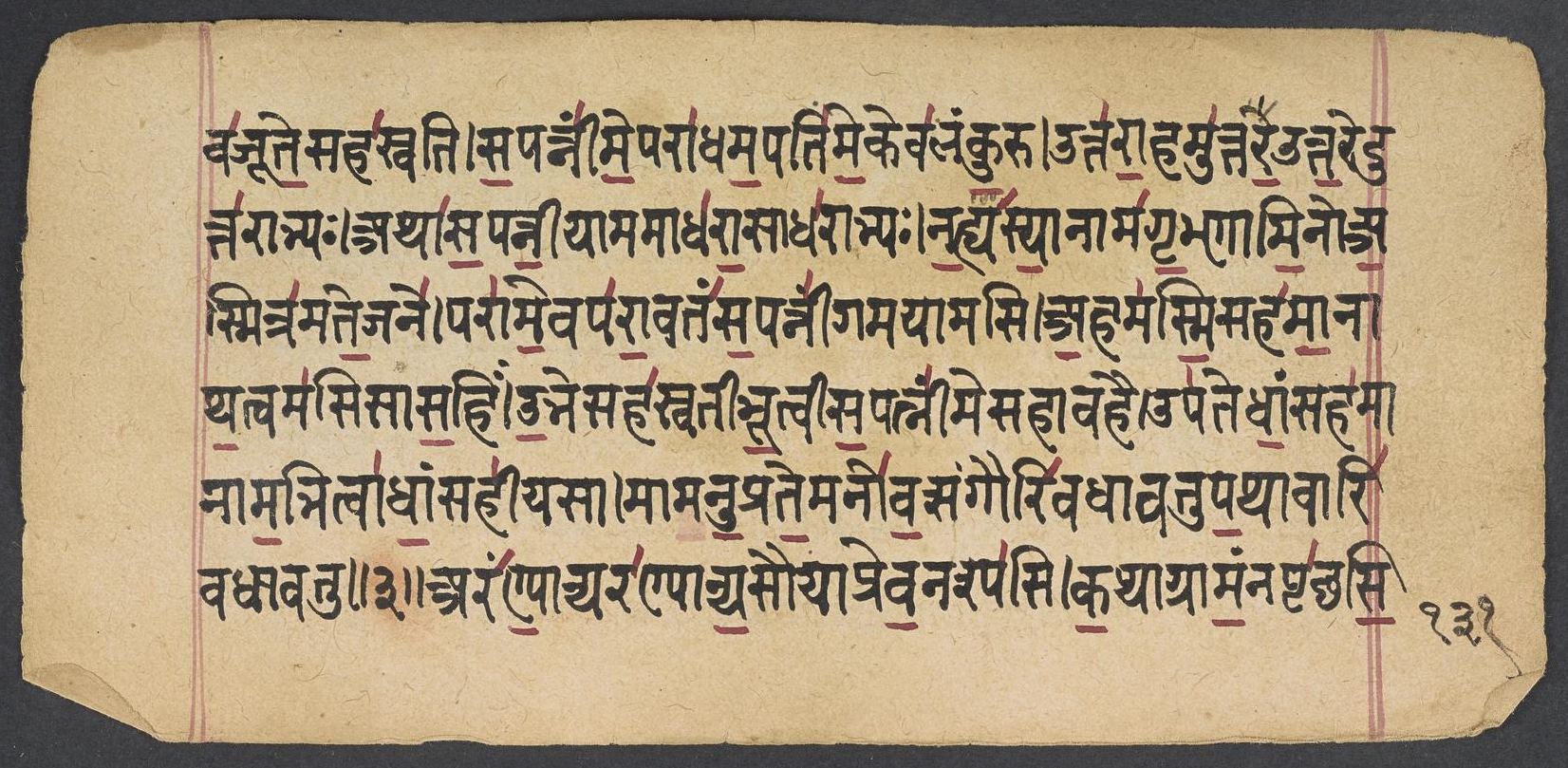
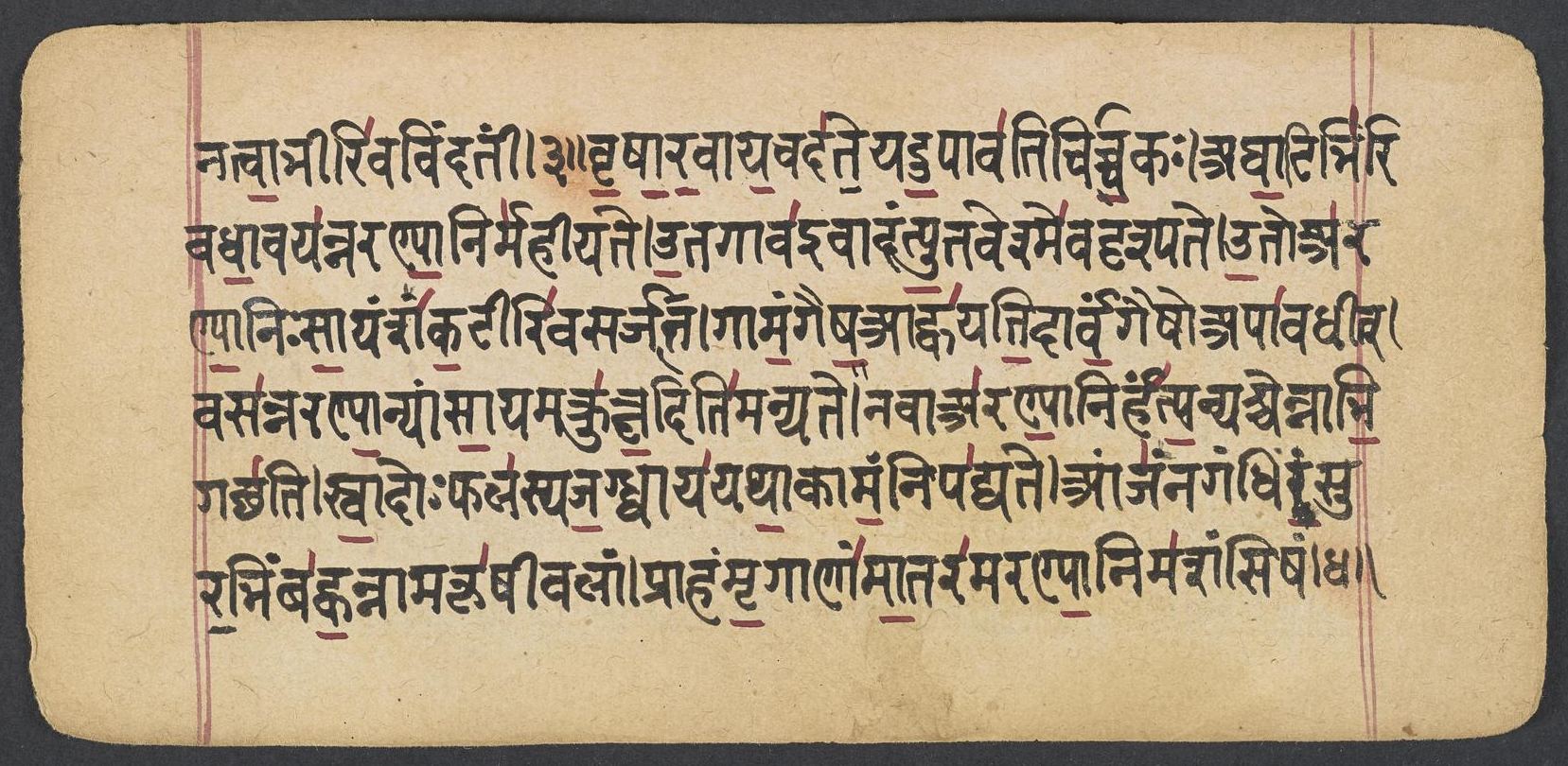
Where on the image
Penn Ms. Coll. 390 Item 48, fol. 132r (OPenn image 131, lower leaf). Checked on the image: the Rigveda text on this page begins in RV 10.146.1 ‹-na tvā bhīr iva›. The next page with Rigveda text, fol. 132v, begins in RV 10.147.1 ‹śrat te dadhāmi prathamāya›. Verses 10.146.1-6 end on this page; 10.146.1 begins on fol. 131v.
1ara̍ṇyā̱ny ara̍ṇyāny a̱sau yā preva̱ naśya̍si | ka̱thā grāma̱ṁ na pṛ̍cchasi̱ na tvā̱ bhīr i̍va vindatī3m̐ ||
2vṛ̱ṣā̱ra̱vāya̱ vada̍te̱ yad u̱pāva̍ti cicci̱kaḥ | ā̱ghā̱ṭibhi̍r iva dhā̱vaya̍nn araṇyā̱nir ma̍hīyate ||
3u̱ta gāva̍ ivādanty u̱ta veśme̍va dṛśyate | u̱to a̍raṇyā̱niḥ sā̱yaṁ śa̍ka̱ṭīr i̍va sarjati ||
4gām a̱ṅgaiṣa ā hva̍yati̱ dārv a̱ṅgaiṣo apā̍vadhīt | vasa̍nn araṇyā̱nyāṁ sā̱yam akru̍kṣa̱d iti̍ manyate ||
5na vā a̍raṇyā̱nir ha̍nty a̱nyaś cen nābhi̱gaccha̍ti | svā̱doḥ phala̍sya ja̱gdhvāya̍ yathā̱kāma̱ṁ ni pa̍dyate ||
6āñja̍nagandhiṁ sura̱bhim ba̍hva̱nnām akṛ̍ṣīvalām | prāham mṛ̱gāṇā̍m mā̱tara̍m araṇyā̱nim a̍śaṁsiṣam ||
1GODDESS of wild and forest who seemest to vanish from the sight. How is it that thou seekest not the village? Art thou not afraid?
2What time the grasshopper replies and swells the shrill cicala's voice, Seeming to sound with tinkling bells, the Lady of the Wood exults.
3And, yonder, cattle seem to graze, what seems a dwelling-place appears: Or else at eve the Lady of the Forest seems to free the wains.
4Here one is calling to his cow, another there hath felled a tree: At eve the dweller in the wood fancies that somebody hath screamed.
5The Goddess never slays, unless some murderous enemy approach. Man eats of savoury fruit and then takes, even as he wills, his rest.
6Now have I praised the Forest Queen, sweet-scented, redolent of balm, The Mother of all sylvan things, who tills not but hath stores of food.
Notes
- Sanskrit: Aufrecht's edition (1877) with the Vedic accents, as entered by van Nooten and Holland (GRETIL).
- English: Ralph T. H. Griffith, The Hymns of the Rigveda (1889-1892; 2nd ed. 1896-1897), from the VedaWeb digital text; OCR slips in that text were corrected against the printed 2nd edition (data/sources/rigveda/griffith_errata.json).
Cite
Sources
- Source: Penn Ms. Coll. 390 Item 48 (1711 CE (colophon: Saṃvat 1768)), OPenn, Public Domain Mark + Aufrecht's accented text (GRETIL) + Griffith's English (VedaWeb) (holding institution)
- Critical edition: Aufrecht (1877), accented e-text via GRETIL
← previous · → next · v cycle view · l back to library