Rigveda 10.162: Against those damaging the foetus
Introduction
Rigveda 10.162 is a hymn of 6 verses addressed to against those damaing the foetus. It stands in book (maṇḍala) 10, the last and latest book. The Rigveda is the oldest collection of Sanskrit hymns, composed in the second half of the second millennium BCE and handed down orally for many centuries before it was written down.
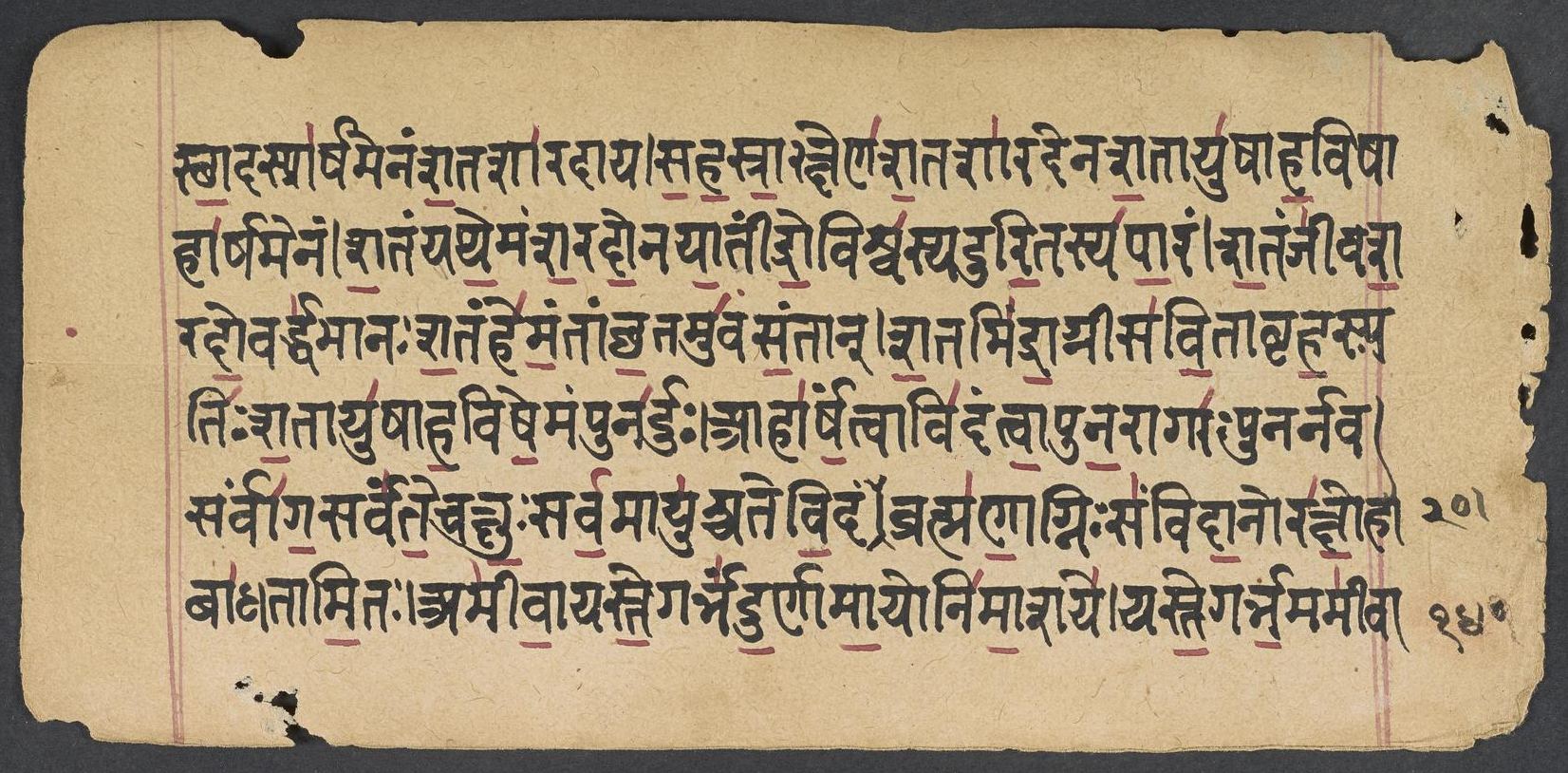
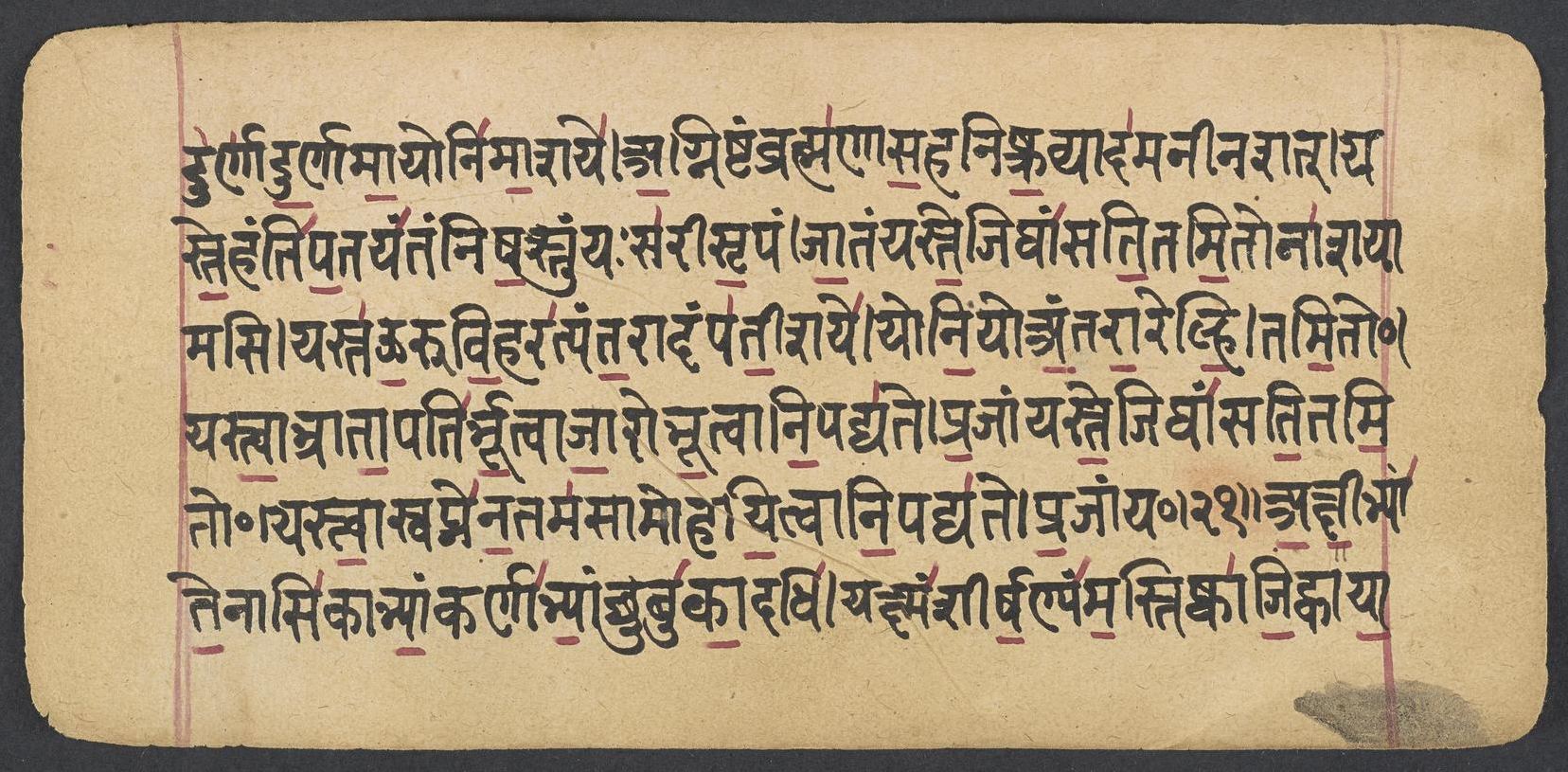
The manuscript shown is Penn Ms. Coll. 390 Item 48 (University of Pennsylvania), a paper manuscript of the eighth aṣṭaka (RV 10.46-10.191) of the Ṛgveda Saṃhitā in Devanāgarī, 158 leaves, 6 lines to the page, with the accents marked in red; the scribe's colophon on fol. 158 gives Saṃvat 1768 (1711 CE); this hymn stands on fol. 140v-141r. Each section below gives the verses that end on one page; the page boundaries were read on the images (the opening words of every page), not counted out. Like most Rigveda manuscripts, Penn Ms. Coll. 390 Item 48 writes a repeated refrain in short form after its first occurrence (for example kasmai° for kasmai devāya haviṣā vidhema); the Sanskrit shown is the full text of Aufrecht's edition.
How was this verified? (Provenance)
Where on the image
Penn Ms. Coll. 390 Item 48, fol. 141r (OPenn image 140, lower leaf). Checked on the image: the Rigveda text on this page begins in RV 10.162.1 ‹durṇāmā yonim āśaye›. The next page with Rigveda text, fol. 141v, begins in RV 10.163.1 ‹-jihvāyā vi vṛhāmi te›. Verses 10.162.1-6 end on this page; 10.162.1 begins on fol. 140v.
1brahma̍ṇā̱gniḥ sa̍ṁvidā̱no ra̍kṣo̱hā bā̍dhatām i̱taḥ | amī̍vā̱ yas te̱ garbha̍ṁ du̱rṇāmā̱ yoni̍m ā̱śaye̍ ||
2yas te̱ garbha̱m amī̍vā du̱rṇāmā̱ yoni̍m ā̱śaye̍ | a̱gniṣ ṭam brahma̍ṇā sa̱ha niṣ kra̱vyāda̍m anīnaśat ||
3yas te̱ hanti̍ pa̱taya̍ntaṁ niṣa̱tsnuṁ yaḥ sa̍rīsṛ̱pam | jā̱taṁ yas te̱ jighā̍ṁsati̱ tam i̱to nā̍śayāmasi ||
4yas ta̍ ū̱rū vi̱hara̍ty anta̱rā dampa̍tī̱ śaye̍ | yoni̱ṁ yo a̱ntar ā̱reḻhi̱ tam i̱to nā̍śayāmasi ||
5yas tvā̱ bhrātā̱ pati̍r bhū̱tvā jā̱ro bhū̱tvā ni̱padya̍te | pra̱jāṁ yas te̱ jighā̍ṁsati̱ tam i̱to nā̍śayāmasi ||
6yas tvā̱ svapne̍na̱ tama̍sā mohayi̱tvā ni̱padya̍te | pra̱jāṁ yas te̱ jighā̍ṁsati̱ tam i̱to nā̍śayāmasi ||
1MAY Agni, yielding to our prayer, the Raksas-slayer, drive away The malady of evil name that hath beset thy labouring womb.
2Agni, concurring in the prayer, drive off the eater of thy flesh, The malady of evil name that hath attacked thy babe and womb.
3That which destroys the sinking germ, the settled, moving embryo, That which will kill the babe at birth,even this will we drive far away.
4That which divides thy legs that it may lie between the married pair, That penetrates and licks thy side,– even this will we exterminate.
5What rests by thee in borrowed form of brother, lover, or of lord, And would destroy thy Progeny,– even this will we exterminate.
6That which through sleep or darkness hath deceived thee and lies down by thee, And will destroy thy progeny,– -even this will we exterminate.
Notes
- Sanskrit: Aufrecht's edition (1877) with the Vedic accents, as entered by van Nooten and Holland (GRETIL).
- English: Ralph T. H. Griffith, The Hymns of the Rigveda (1889-1892; 2nd ed. 1896-1897), from the VedaWeb digital text; OCR slips in that text were corrected against the printed 2nd edition (data/sources/rigveda/griffith_errata.json).
Cite
Sources
- Source: Penn Ms. Coll. 390 Item 48 (1711 CE (colophon: Saṃvat 1768)), OPenn, Public Domain Mark + Aufrecht's accented text (GRETIL) + Griffith's English (VedaWeb) (holding institution)
- Critical edition: Aufrecht (1877), accented e-text via GRETIL
← previous · → next · v cycle view · l back to library