Rigveda 10.168: Hymn to the wind (Vata)
Introduction
Rigveda 10.168 is a hymn of 4 verses addressed to Vata (the storm). It stands in book (maṇḍala) 10, the last and latest book. The Rigveda is the oldest collection of Sanskrit hymns, composed in the second half of the second millennium BCE and handed down orally for many centuries before it was written down.
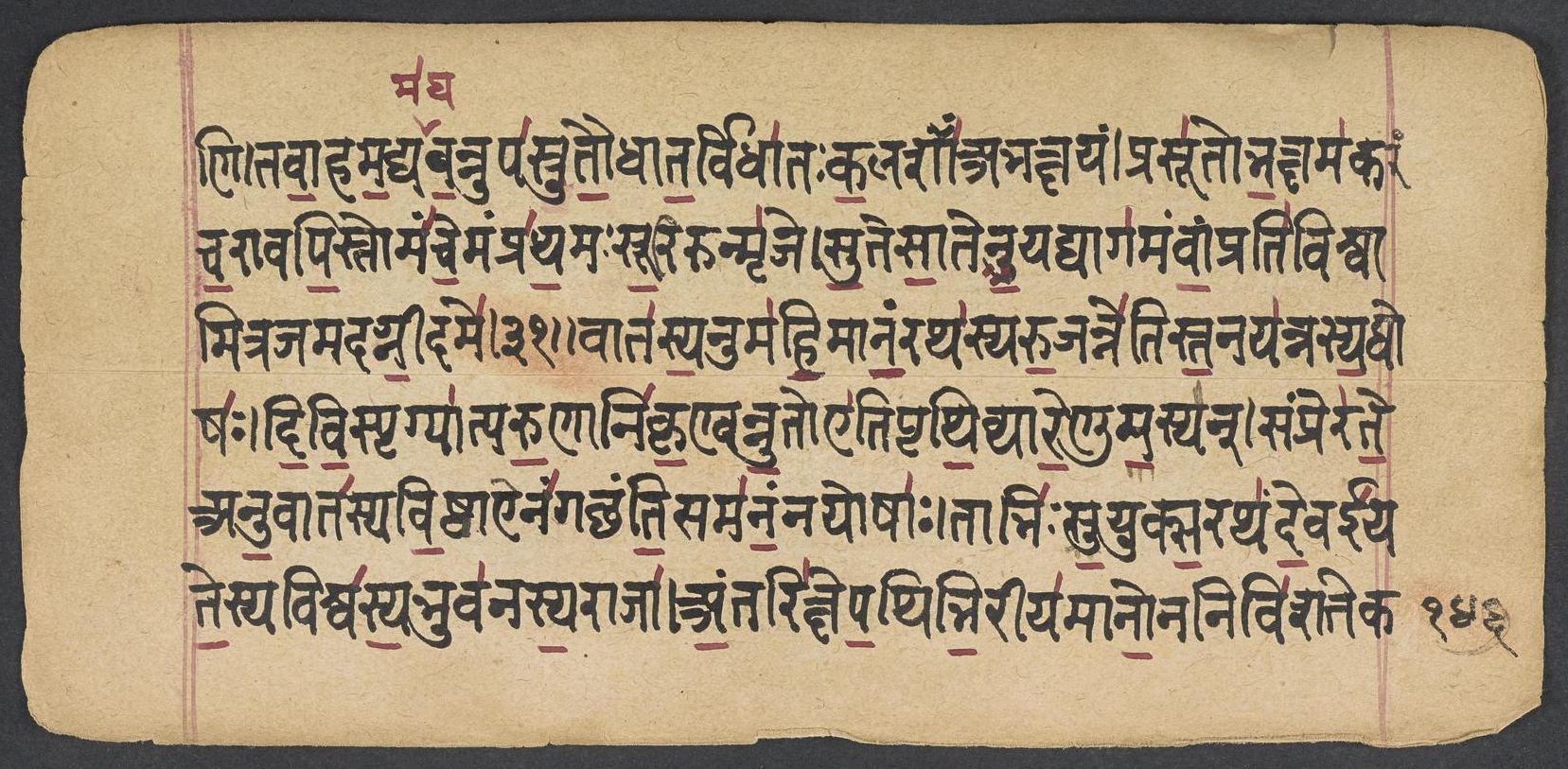
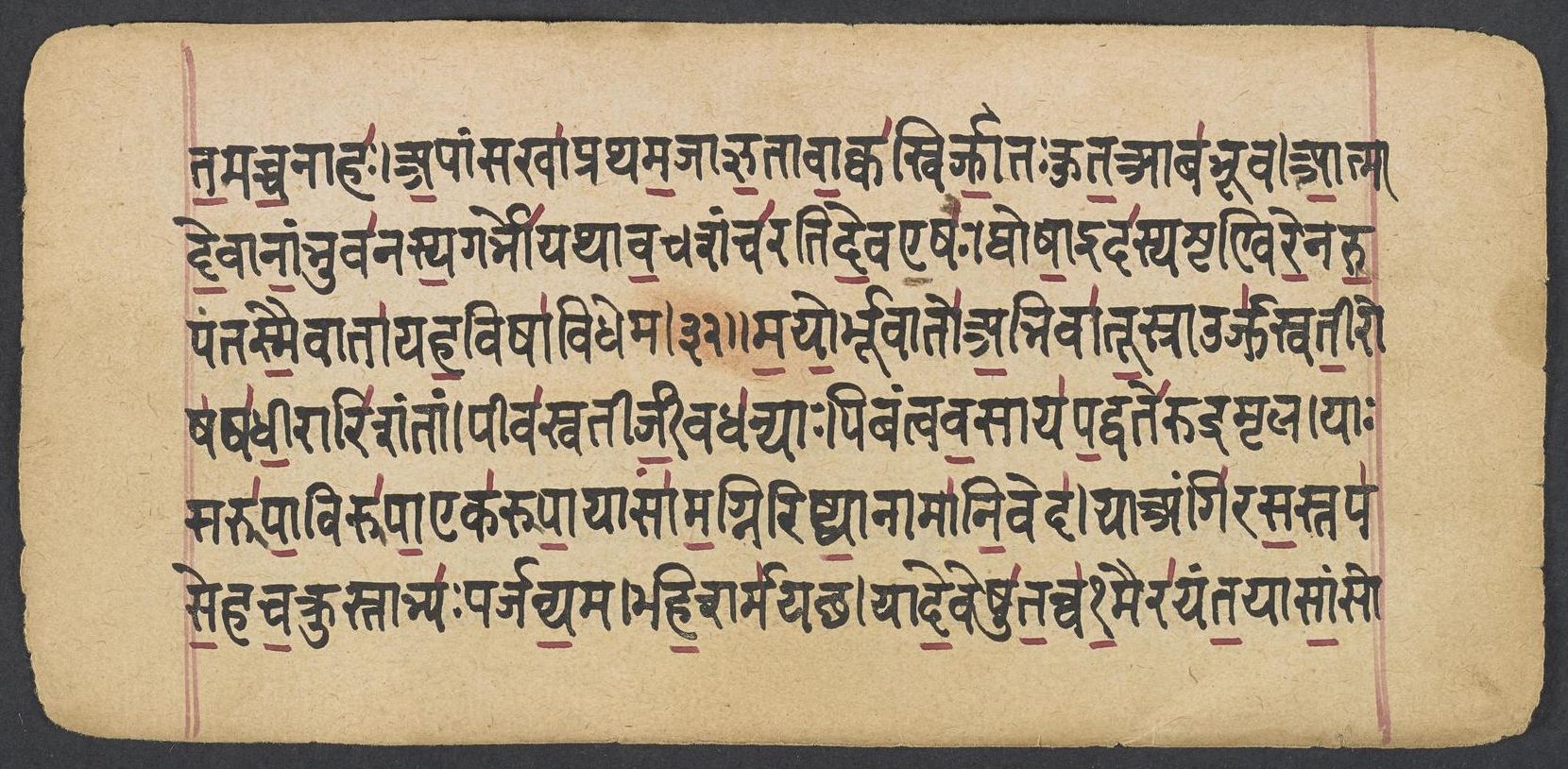
The manuscript shown is Penn Ms. Coll. 390 Item 48 (University of Pennsylvania), a paper manuscript of the eighth aṣṭaka (RV 10.46-10.191) of the Ṛgveda Saṃhitā in Devanāgarī, 158 leaves, 6 lines to the page, with the accents marked in red; the scribe's colophon on fol. 158 gives Saṃvat 1768 (1711 CE); this hymn stands on fol. 146v-147r. Each section below gives the verses that end on one page; the page boundaries were read on the images (the opening words of every page), not counted out. Like most Rigveda manuscripts, Penn Ms. Coll. 390 Item 48 writes a repeated refrain in short form after its first occurrence (for example kasmai° for kasmai devāya haviṣā vidhema); the Sanskrit shown is the full text of Aufrecht's edition.
How was this verified? (Provenance)
Where on the image
Penn Ms. Coll. 390 Item 48, fol. 146v (OPenn image 146, upper leaf). Checked on the image: the Rigveda text on this page begins in RV 10.167.3 ‹-upastutau dhātar vidhātaḥ kalaśām̐›. The next page with Rigveda text, fol. 147r, begins in RV 10.168.3 ‹-katamac canāhaḥ›. Verses 10.168.1-2 end on this page.
1vāta̍sya̱ nu ma̍hi̱māna̱ṁ ratha̍sya ru̱jann e̍ti sta̱naya̍nn asya̱ ghoṣa̍ḥ | di̱vi̱spṛg yā̍ty aru̱ṇāni̍ kṛ̱ṇvann u̱to e̍ti pṛthi̱vyā re̱ṇum asya̍n ||
2sam prera̍te̱ anu̱ vāta̍sya vi̱ṣṭhā aina̍ṁ gacchanti̱ sama̍na̱ṁ na yoṣā̍ḥ | tābhi̍ḥ sa̱yuk sa̱ratha̍ṁ de̱va ī̍yate̱ 'sya viśva̍sya̱ bhuva̍nasya̱ rājā̍ ||
1O THE Wind's chariot, O its power and glory! Crashing it goes and hath a voice of thunder. It makes the regions red and touches heaven, and as it moves the dust of earth is scattered.
2Along the traces of the Wind they hurry, they come to him as dames to an assembly. Borne on his car with these for his attendants, the God speeds forth, the universe's Monarch.
Where on the image
Penn Ms. Coll. 390 Item 48, fol. 147r (OPenn image 146, lower leaf). Checked on the image: the Rigveda text on this page begins in RV 10.168.3 ‹-katamac canāhaḥ›. The next page with Rigveda text, fol. 147v, begins in RV 10.169.3 ‹-somo viśvā rūpāṇi veda›. Verses 10.168.3-4 end on this page; 10.168.3 begins on fol. 146v.
3a̱ntari̍kṣe pa̱thibhi̱r īya̍māno̱ na ni vi̍śate kata̱mac ca̱nāha̍ḥ | a̱pāṁ sakhā̍ prathama̱jā ṛ̱tāvā̱ kva̍ svij jā̱taḥ kuta̱ ā ba̍bhūva ||
4ā̱tmā de̱vānā̱m bhuva̍nasya̱ garbho̍ yathāva̱śaṁ ca̍rati de̱va e̱ṣaḥ | ghoṣā̱ id a̍sya śṛṇvire̱ na rū̱paṁ tasmai̱ vātā̍ya ha̱viṣā̍ vidhema ||
3Travelling on the paths of air's midregion, no single day doth he take rest or slumber. Holy and earliest-born, Friend of the waters, where did he spring and from what region came he?
4Germ of the world, the Deities' vital spirit, this God moves ever as his will inclines him. His voice is heard, his shape is ever viewless. Let us adore this Wind with our oblation.
Notes
- Sanskrit: Aufrecht's edition (1877) with the Vedic accents, as entered by van Nooten and Holland (GRETIL).
- English: Ralph T. H. Griffith, The Hymns of the Rigveda (1889-1892; 2nd ed. 1896-1897), from the VedaWeb digital text; OCR slips in that text were corrected against the printed 2nd edition (data/sources/rigveda/griffith_errata.json).
Cite
Sources
- Source: Penn Ms. Coll. 390 Item 48 (1711 CE (colophon: Saṃvat 1768)), OPenn, Public Domain Mark + Aufrecht's accented text (GRETIL) + Griffith's English (VedaWeb) (holding institution)
- Critical edition: Aufrecht (1877), accented e-text via GRETIL
← previous · → next · v cycle view · l back to library