Rigveda 10.40: To Asvins
Introduction
Rigveda 10.40 is a hymn of 14 verses addressed to Asvins. It stands in book (maṇḍala) 10, the last and latest book. The Rigveda is the oldest collection of Sanskrit hymns, composed in the second half of the second millennium BCE and handed down orally for many centuries before it was written down.
The manuscript shown is Penn Ms. Coll. 390 Item 41 (University of Pennsylvania), an undated paper manuscript of the padapāṭha (the word-by-word recitation text, in which every word is written separately and compounds are split) of the whole Ṛgveda in Devanāgarī, 884 leaves in fascicles, 7-9 lines to the page, accents in red; this hymn stands on fol. 779r-780v. Each section below gives the verses that end on one page; the page boundaries were read on the images (the opening words of every page), not counted out. Where the manuscript is a padapāṭha (the word-by-word recitation text), the section shows Aufrecht's continuous (saṃhitā) text first and, as the edition text, the padapāṭha of the same verses, which is the form written on the page.
How was this verified? (Provenance)
Where on the image
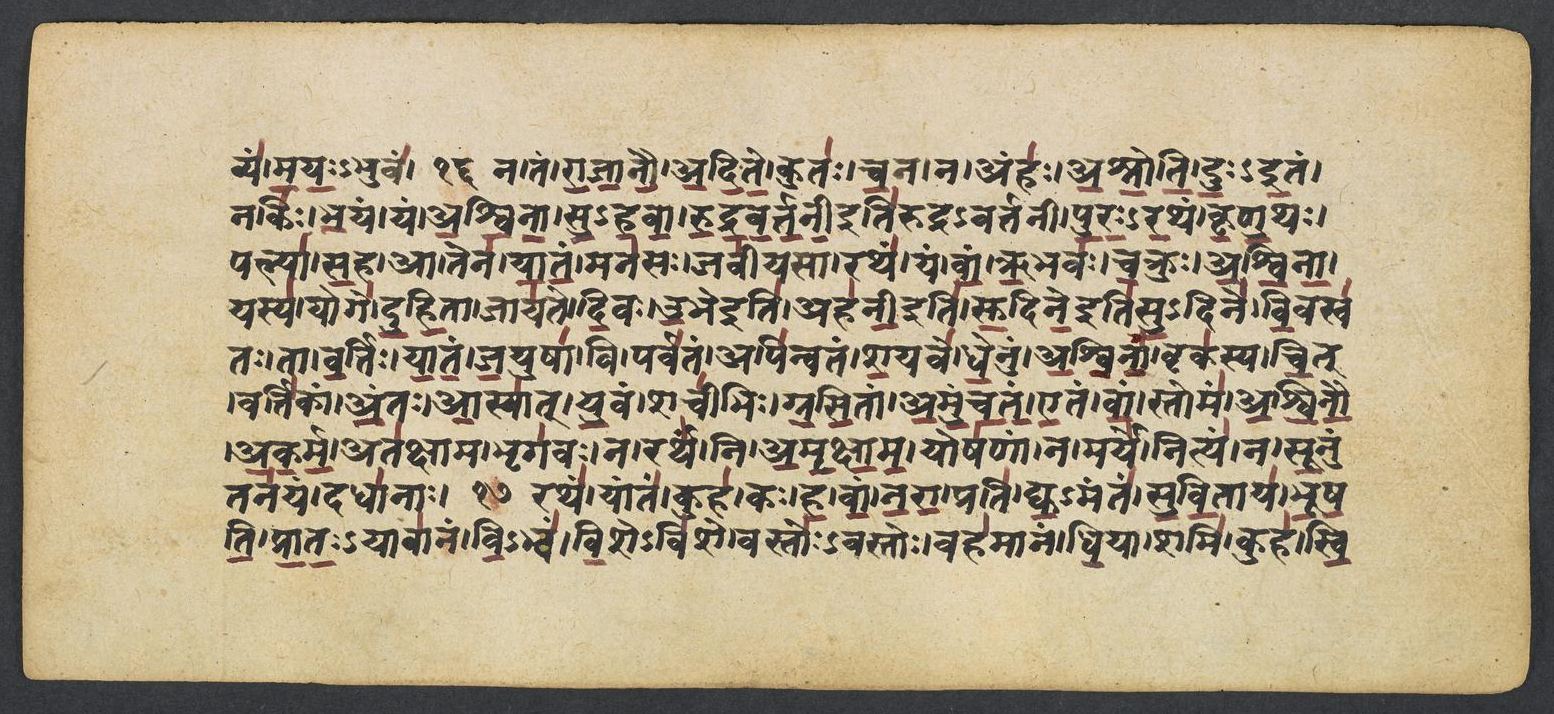
Penn Ms. Coll. 390 Item 41, fol. 779r (numbered 95r by the scribe) (OPenn image 779, lower leaf). Checked on the image: the Rigveda text on this page begins in RV 10.39.10 ‹-havyam mayaḥ-bhuvam›. The next page with Rigveda text, fol. 779v (numbered 95v by the scribe), begins in RV 10.40.2 ‹-svit doṣā kuha vastoḥ›. Verse 10.40.1 ends on this page.
1ratha̱ṁ yānta̱ṁ kuha̱ ko ha̍ vāṁ narā̱ prati̍ dyu̱manta̍ṁ suvi̱tāya̍ bhūṣati | prā̱ta̱ryāvā̍ṇaṁ vi̱bhva̍ṁ vi̱śe-vi̍śe̱ vasto̍r-vasto̱r vaha̍mānaṁ dhi̱yā śami̍ ||
Compare: Padapāṭha (word-by-word text written in the manuscript; Sansknet e-text via GRETIL)
1ratham | yāntam | kuha | kaḥ | ha | vām | narā | prati | dyu-mantam | su-vitāya | bhūṣati | prātaḥ-yāvāṇam | vi-bhvam | viśe--viśe | vastoḥ-vastoḥ | vahamānam | dhiyā | śami
1YOUR radiant Chariot-whither goes it on its way?-who decks it for you, Heroes, for its happy course, Starting at daybreak, visiting each morning every house, borne hitherward through prayer unto the sacrifice?
Where on the image
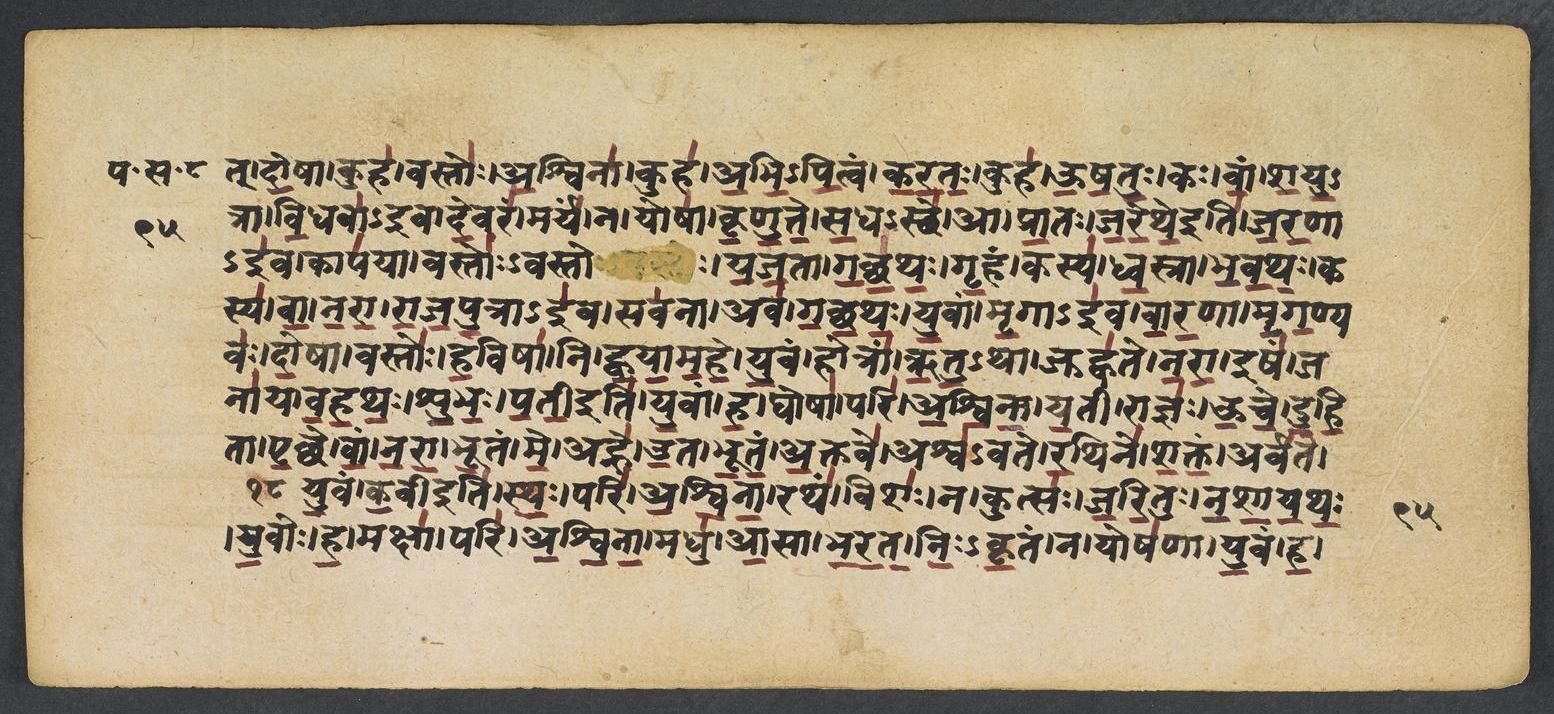
Penn Ms. Coll. 390 Item 41, fol. 779v (numbered 95v by the scribe) (OPenn image 780, upper leaf). Checked on the image: the Rigveda text on this page begins in RV 10.40.2 ‹-svit doṣā kuha vastoḥ›. The next page with Rigveda text, fol. 780r (numbered 96r by the scribe), begins in RV 10.40.7 ‹bhujyum yuvam aśvinā vaśam›. Verses 10.40.2-6 end on this page; 10.40.2 begins on fol. 779r (numbered 95r by the scribe).
2kuha̍ svid do̱ṣā kuha̱ vasto̍r a̱śvinā̱ kuhā̍bhipi̱tvaṁ ka̍rata̱ḥ kuho̍ṣatuḥ | ko vā̍ṁ śayu̱trā vi̱dhave̍va de̱vara̱m marya̱ṁ na yoṣā̍ kṛṇute sa̱dhastha̱ ā ||
3prā̱tar ja̍rethe jara̱ṇeva̱ kāpa̍yā̱ vasto̍r-vastor yaja̱tā ga̍cchatho gṛ̱ham | kasya̍ dhva̱srā bha̍vatha̱ḥ kasya̍ vā narā rājapu̱treva̱ sava̱nāva̍ gacchathaḥ ||
4yu̱vām mṛ̱geva̍ vāra̱ṇā mṛ̍ga̱ṇyavo̍ do̱ṣā vasto̍r ha̱viṣā̱ ni hva̍yāmahe | yu̱vaṁ hotrā̍m ṛtu̱thā juhva̍te na̱reṣa̱ṁ janā̍ya vahathaḥ śubhas patī ||
5yu̱vāṁ ha̱ ghoṣā̱ pary a̍śvinā ya̱tī rājña̍ ūce duhi̱tā pṛ̱cche vā̍ṁ narā | bhū̱tam me̱ ahna̍ u̱ta bhū̍tam a̱ktave 'śvā̍vate ra̱thine̍ śakta̱m arva̍te ||
6yu̱vaṁ ka̱vī ṣṭha̱ḥ pary a̍śvinā̱ ratha̱ṁ viśo̱ na kutso̍ jari̱tur na̍śāyathaḥ | yu̱vor ha̱ makṣā̱ pary a̍śvinā̱ madhv ā̱sā bha̍rata niṣkṛ̱taṁ na yoṣa̍ṇā ||
Compare: Padapāṭha (word-by-word text written in the manuscript; Sansknet e-text via GRETIL)
2kuha | svit | doṣā | kuha | vastoḥ | aśvinā | kuha | abhi-pitvam | karataḥ | kuha | ūṣatuḥ | kaḥ | vām | śayu-trā | vidhavāiva | devaram | maryam | na | yoṣā | kṛṇute | sadha-sthe | ā
3prātaḥ | jaretheiti | jaraṇāiva | kāpayā | vastoḥ-vastoḥ | yajatā | gacchathaḥ | gṛham | kasya | dhvasrā | bhavathaḥ | kasya | vā | narā | rāja-putrāiva | savanā | ava | gacchathaḥ
4yuvām | mṛgāiva | vāraṇā | mṛgaṇyavaḥ | doṣā | vastoḥ | haviṣā | ni | hvayāmahe | yuvam | hotrām | ṛtu-thā | juhvate | narā | iṣam | janāya | vahathaḥ | śubhaḥ | patī iti
5yuvā | ha | ghoṣā | pari | aśvinā | yatī | rājñaḥ | ūce | duhitā | pṛcche | vām | narā | bhūtam | me | ahne | uta | bhūtam | aktave | aśva-vate | rathine | śaktam | arvate
6yuvam | kavī iti | sthaḥ | pari | aśvinā | ratham | viśaḥ | na | kutsaḥ | jarituḥ | naśāyathaḥ | yuvoḥ | ha | makṣā | pari | aśvinā | madhu | āsā | bharata | niḥ | kṛtam | na | yoṣaṇā
2Where are ye, Aṣvins, in the evening, where at morn? Where is your haltingplace, where rest ye for the night? Who brings you homeward, as the widow bedward draws her husband's brother, as the bride attracts the groom?
3Early ye sing forth praise as with a herald's voice, and, meet for worship, go each morning to the house. Whom do ye ever bring to ruin? Unto whose libations come ye, Heroes, like two Sons of Kings?
4Even as hunters follow two wild elephants, we with oblations call you down at morn and eve. To folk who pay you offerings at appointed times, Chiefs, Lords of splendour, ye bring food to strengthen them.
5To you, O Aṣvins, came the daughter of a King, Ghoshâ, and said, O Heroes, this I beg of you: Be near me in the day, he near me in the night: help me to gain a car-borne chieftain rich in steeds.
6O Aṣvins, ye are wise: as Kutsa comes to men, bring your car nigh the folk of him who sings your praise. The bee, O Aṣvins, bears your honey in her mouth, as the maid carries it purified in her hand.
Where on the image
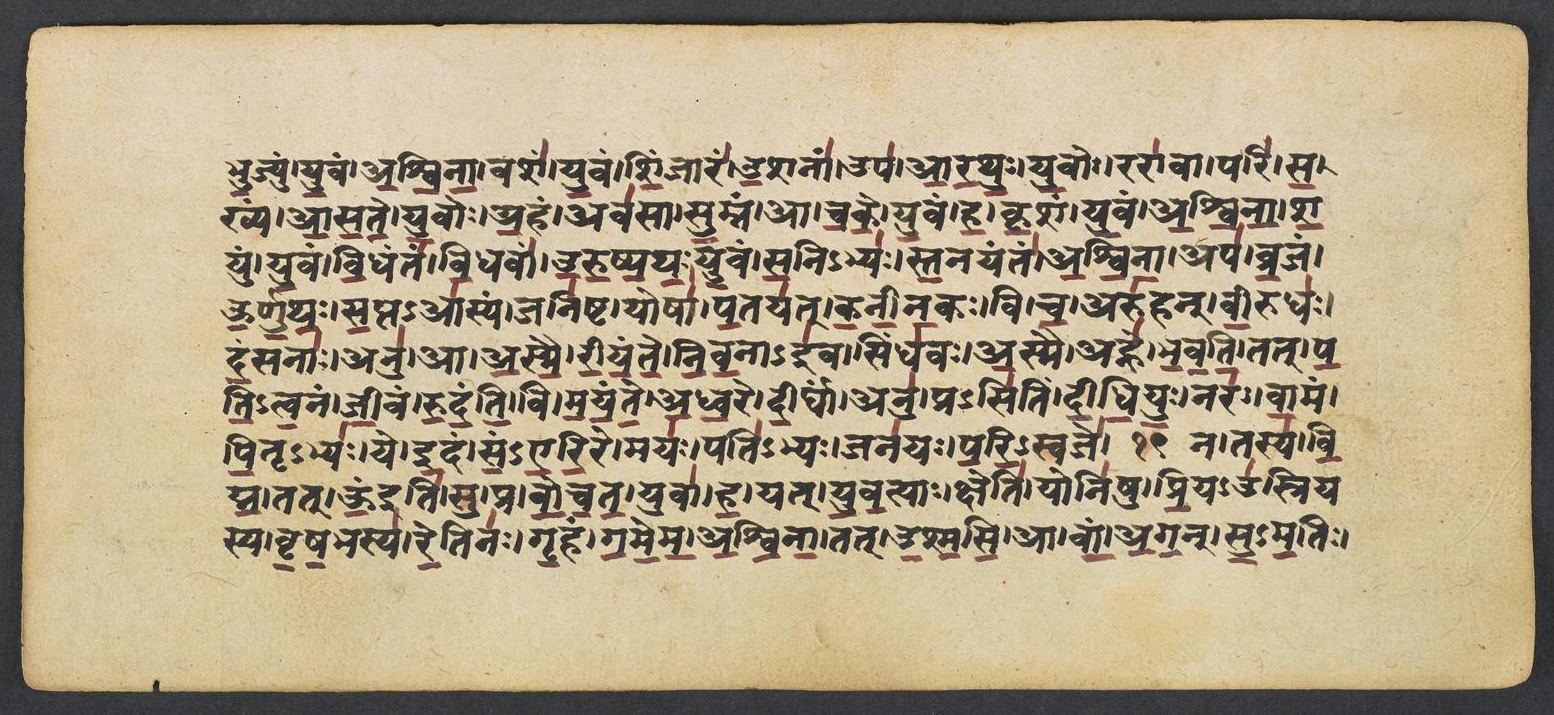
Penn Ms. Coll. 390 Item 41, fol. 780r (numbered 96r by the scribe) (OPenn image 780, lower leaf). Checked on the image: the Rigveda text on this page begins in RV 10.40.7 ‹bhujyum yuvam aśvinā vaśam›. The next page with Rigveda text, fol. 780v (numbered 96v by the scribe), begins in RV 10.40.12 ‹vājinīvasūitivājinī-vasū ni aśvinā hṛt-su›. Verses 10.40.7-11 end on this page; 10.40.7 begins on fol. 779v (numbered 95v by the scribe).
7yu̱vaṁ ha̍ bhu̱jyuṁ yu̱vam a̍śvinā̱ vaśa̍ṁ yu̱vaṁ śi̱ñjāra̍m u̱śanā̱m upā̍rathuḥ | yu̱vo rarā̍vā̱ pari̍ sa̱khyam ā̍sate yu̱vor a̱ham ava̍sā su̱mnam ā ca̍ke ||
8yu̱vaṁ ha̍ kṛ̱śaṁ yu̱vam a̍śvinā śa̱yuṁ yu̱vaṁ vi̱dhanta̍ṁ vi̱dhavā̍m uruṣyathaḥ | yu̱vaṁ sa̱nibhya̍ḥ sta̱naya̍ntam aśvi̱nāpa̍ vra̱jam ū̍rṇuthaḥ sa̱ptāsya̍m ||
9jani̍ṣṭa̱ yoṣā̍ pa̱taya̍t kanīna̱ko vi cāru̍han vī̱rudho̍ da̱ṁsanā̱ anu̍ | āsmai̍ rīyante niva̱neva̱ sindha̍vo̱ 'smā ahne̍ bhavati̱ tat pa̍titva̱nam ||
10jī̱vaṁ ru̍danti̱ vi ma̍yante adhva̱re dī̱rghām anu̱ prasi̍tiṁ dīdhiyu̱r nara̍ḥ | vā̱mam pi̱tṛbhyo̱ ya i̱daṁ sa̍meri̱re maya̱ḥ pati̍bhyo̱ jana̍yaḥ pari̱ṣvaje̍ ||
11na tasya̍ vidma̱ tad u̱ ṣu pra vo̍cata̱ yuvā̍ ha̱ yad yu̍va̱tyāḥ kṣeti̱ yoni̍ṣu | pri̱yosri̍yasya vṛṣa̱bhasya̍ re̱tino̍ gṛ̱haṁ ga̍memāśvinā̱ tad u̍śmasi ||
Compare: Padapāṭha (word-by-word text written in the manuscript; Sansknet e-text via GRETIL)
7yuvam | ha | bhujyum | yuvam | aśvinā | vaśam | yuvam | śiñjāram | uśanām | upa | ārathuḥ | yuvaḥ | rarāvā | pari | sakhyam | āsate | yuvoḥ | aham | avasā | sumnam | ā | cake
8yuvam | ha | kṛśam | yuvam | aśvinā | śayum | yuvam | vidhantam | vidhavām | uruṣyathaḥ | yuvam | sani-bhyaḥ | stanayantam | aśvinā | apa | vrajam | ūrṇuthaḥ | sapta-āsyam
9janiṣṭha | yoṣā | patayat | kanīnakaḥ | vi | ca | aruham | vīrudhaḥ | daṃsanāḥ | anu | ā | asmai | rīyante | nivanāiva | sindhavaḥ | asmai | ahne | bhavati | tat | pati-tvanam
10jīvam | rudanti | vi | mayante | adhvare | dīrghām | anu | pra-sitim | dīdhiyuḥ | naraḥ | vāmam | pitṛ-bhyaḥ | ye | idam | sam-erire | mayaḥ | pati-bhyaḥ | janayaḥ | pari-svaje
11na | tasya | vidma | tat | oṃ iti | su | pra | vocata | yuvā | ha | yat | yuvatyāḥ | kṣeti | yoniṣu | priya-usriyasya | vṛṣabhasya | retinaḥ | gṛham | gamema | aśvinā | tat | uśmasi
7To Bhujyu and to Vaṣa ye came near with help, O Aṣvins, to Ṣinjâra and to Uṣanâ. Your worshipper secures your friendship for himself. Through your protection I desire felicity.
8Kr̥iṣa and Ṣayu ye protect, ye Aṣvins Twain: ye Two assist the widow and the worshipper; And ye throw open, Aṣvins, unto those who win the cattle-stall that thunders with its sevenfold mouth.
9The Woman hath brought forth, the Infant hath appeared, the plants of wondrous beauty straightway have sprung up. To him the rivers run as down a deep descent, and he this day becomes their master and their lord.
10They mourn the living, cry aloud, at sacrifice: the men have set their thoughts upon a distant cast. A lovely thing for fathers who have gathered here,– a joy to husbands,– are the wives their arms shall clasp
11Of this we have no knowledge. Tell it forth to us, how the youth rests within the chambers of the bride. Fain would we reach the dwelling of the vigorous Steer who loves the kine, O Aṣvins: this is our desire.
Where on the image
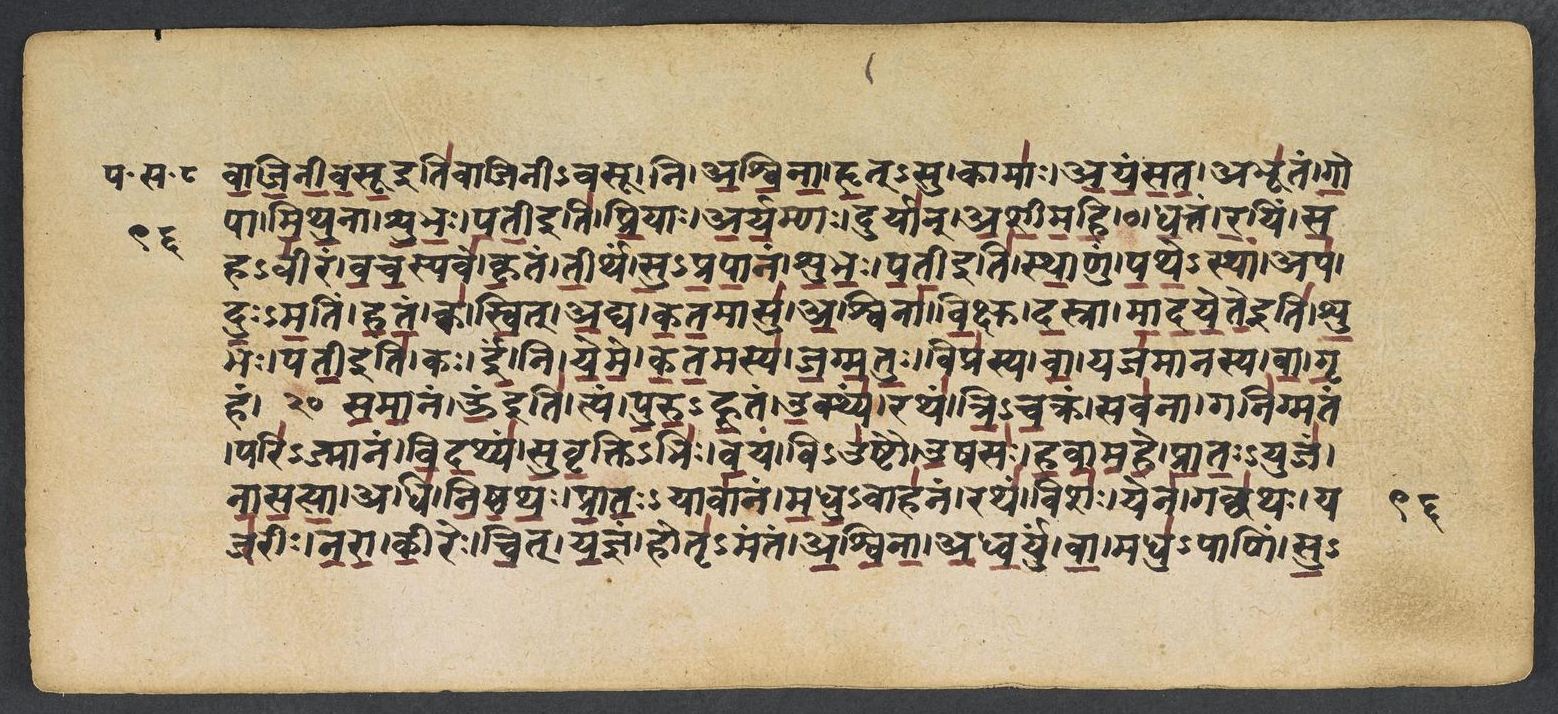
Penn Ms. Coll. 390 Item 41, fol. 780v (numbered 96v by the scribe) (OPenn image 781, upper leaf). Checked on the image: the Rigveda text on this page begins in RV 10.40.12 ‹vājinīvasūitivājinī-vasū ni aśvinā hṛt-su›. The next page with Rigveda text, fol. 781r (numbered 97r by the scribe), begins in RV 10.41.3 ‹-su-hastyam agnidham vā dhṛta-dakṣam›. Verses 10.40.12-14 end on this page; 10.40.12 begins on fol. 780r (numbered 96r by the scribe).
12ā vā̍m agan suma̱tir vā̍jinīvasū̱ ny a̍śvinā hṛ̱tsu kāmā̍ ayaṁsata | abhū̍taṁ go̱pā mi̍thu̱nā śu̍bhas patī pri̱yā a̍rya̱mṇo duryā̍m̐ aśīmahi ||
13tā ma̍ndasā̱nā manu̍ṣo duro̱ṇa ā dha̱ttaṁ ra̱yiṁ sa̱havī̍raṁ vaca̱syave̍ | kṛ̱taṁ tī̱rthaṁ su̍prapā̱ṇaṁ śu̍bhas patī sthā̱ṇum pa̍the̱ṣṭhām apa̍ durma̱tiṁ ha̍tam ||
14kva̍ svid a̱dya ka̍ta̱māsv a̱śvinā̍ vi̱kṣu da̱srā mā̍dayete śu̱bhas patī̍ | ka ī̱ṁ ni ye̍me kata̱masya̍ jagmatu̱r vipra̍sya vā̱ yaja̍mānasya vā gṛ̱ham ||
Compare: Padapāṭha (word-by-word text written in the manuscript; Sansknet e-text via GRETIL)
12ā | vām | agan | su-matiḥ | vājinīvasūitivājinī-vasū | ni | aśvinā | hṛt-su | kāmāḥ | ayaṃsata | abhūtam | gopā | mithunā | śubhaḥ | patī iti | priyāḥ | aryamṇaḥ | duryān | aśīmahi
13tā | mandasānā | manuṣaḥ | duroṇe | ā | dhattam | rayim | saha-vīram | vacasyave | kṛtam | tīrtham | su-prapānam | śubhaḥ | patī iti | sthāṇum | pathe--sthām | apa | duḥ-matim | hatam
14kva | svit | adya | katamāsu | aśvinā | vikṣu | dasrā | mādayeteiti | śubhaḥ | patī iti | kaḥ | īm | ni | yeme | katamasya | jagmatuḥ | viprasya | vā | yajamānasya | vā | gṛham
12Your favouring grace hath come, ye Lords of ample wealth: Aṣvins, our longings are stored up within your hearts. Ye, Lords of splendour, have become our twofold guard: may we as welcome friends reach Aryaman's abode.
13Even so, rejoicing in the dwelling-place of man, give hero sons and riches to the eloquent. Make a ford, Lords of splendour, where men well may drink: remove the spiteful tree-stump standing in the path.
14O Aṣvins, Wonder-Workers, Lords of lustre, where and with what folk do ye delight yourselves today? Who hath detained them with him? Whither are they gone? Unto what sage's or what worshipper's abode?
Notes
- Sanskrit: Aufrecht's edition (1877) with the Vedic accents, as entered by van Nooten and Holland (GRETIL).
- English: Ralph T. H. Griffith, The Hymns of the Rigveda (1889-1892; 2nd ed. 1896-1897), from the VedaWeb digital text; OCR slips in that text were corrected against the printed 2nd edition (data/sources/rigveda/griffith_errata.json).
- Padapāṭha (edition text): Sansknet e-text via GRETIL (CC BY-NC-SA 4.0).
Cite
Sources
- Source: Penn Ms. Coll. 390 Item 41 (undated (catalogued with Penn's 18th-19th c. Vedic manuscripts)), OPenn, Public Domain Mark + Aufrecht's accented text (GRETIL) + Griffith's English (VedaWeb) (holding institution)
- Critical edition: Aufrecht (1877), accented e-text via GRETIL
← previous · → next · v cycle view · l back to library