Rigveda 10.39: To Asvins
Introduction
Rigveda 10.39 is a hymn of 14 verses addressed to Asvins. It stands in book (maṇḍala) 10, the last and latest book. The Rigveda is the oldest collection of Sanskrit hymns, composed in the second half of the second millennium BCE and handed down orally for many centuries before it was written down.
The manuscript shown is Penn Ms. Coll. 390 Item 41 (University of Pennsylvania), an undated paper manuscript of the padapāṭha (the word-by-word recitation text, in which every word is written separately and compounds are split) of the whole Ṛgveda in Devanāgarī, 884 leaves in fascicles, 7-9 lines to the page, accents in red; this hymn stands on fol. 778r-779r. Each section below gives the verses that end on one page; the page boundaries were read on the images (the opening words of every page), not counted out. Where the manuscript is a padapāṭha (the word-by-word recitation text), the section shows Aufrecht's continuous (saṃhitā) text first and, as the edition text, the padapāṭha of the same verses, which is the form written on the page.
How was this verified? (Provenance)
Where on the image
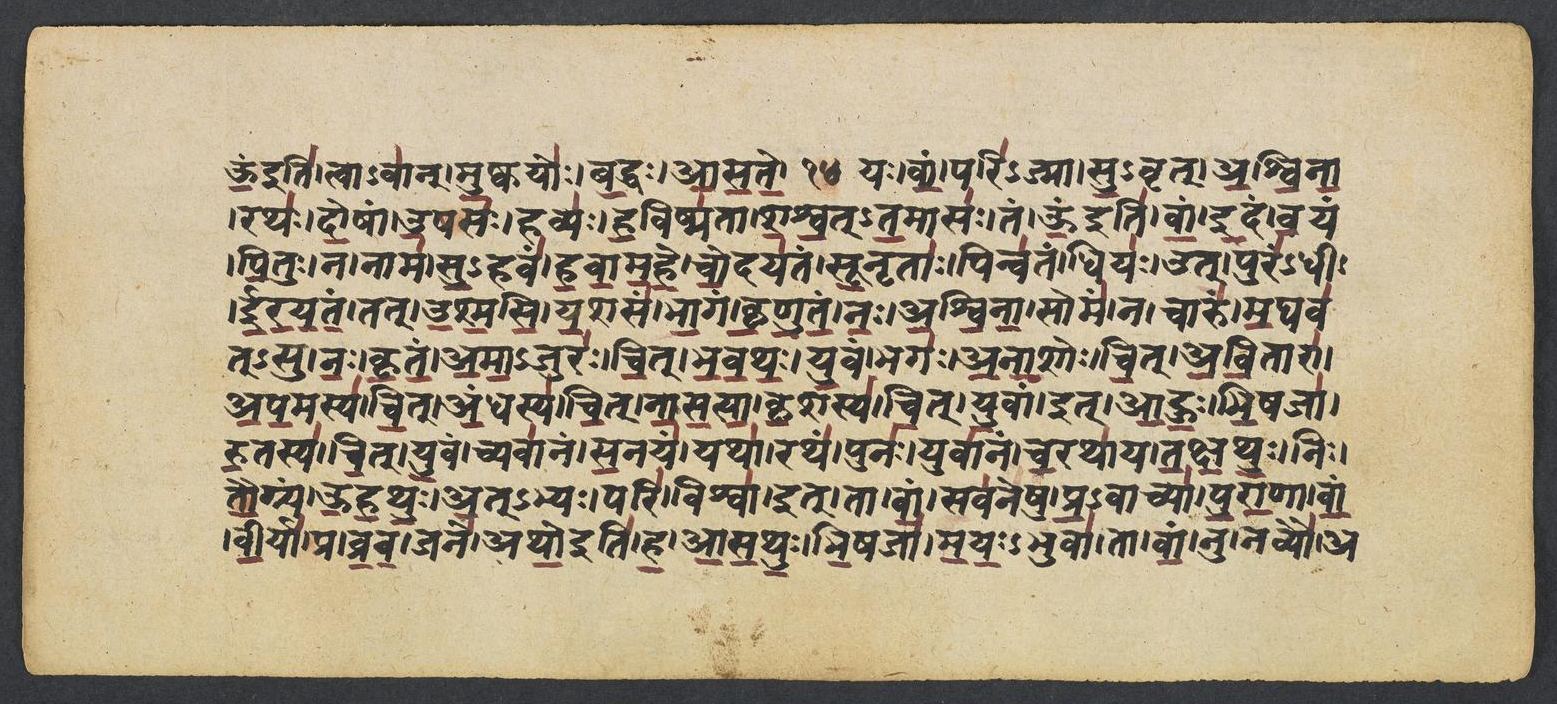
Penn Ms. Coll. 390 Item 41, fol. 778r (numbered 94r by the scribe) (OPenn image 778, lower leaf). Checked on the image: the Rigveda text on this page begins in RV 10.38.5 ‹oṃ iti tvāvān muṣkayoḥ›. The next page with Rigveda text, fol. 778v (numbered 94v by the scribe), begins in RV 10.39.5 ‹-avase karāmahe ayam nāsatyā›. Verses 10.39.1-4 end on this page.
1yo vā̱m pari̍jmā su̱vṛd a̍śvinā̱ ratho̍ do̱ṣām u̱ṣāso̱ havyo̍ ha̱viṣma̍tā | śa̱śva̱tta̱māsa̱s tam u̍ vām i̱daṁ va̱yam pi̱tur na nāma̍ su̱hava̍ṁ havāmahe ||
2co̱daya̍taṁ sū̱nṛtā̱ḥ pinva̍ta̱ṁ dhiya̱ ut pura̍ṁdhīr īrayata̱ṁ tad u̍śmasi | ya̱śasa̍m bhā̱gaṁ kṛ̍ṇutaṁ no aśvinā̱ soma̱ṁ na cāru̍m ma̱ghava̍tsu nas kṛtam ||
3a̱mā̱jura̍ś cid bhavatho yu̱vam bhago̍ 'nā̱śoś ci̍d avi̱tārā̍pa̱masya̍ cit | a̱ndhasya̍ cin nāsatyā kṛ̱śasya̍ cid yu̱vām id ā̍hur bhi̱ṣajā̍ ru̱tasya̍ cit ||
4yu̱vaṁ cyavā̍naṁ sa̱naya̱ṁ yathā̱ ratha̱m puna̱r yuvā̍naṁ ca̱rathā̍ya takṣathuḥ | niṣ ṭau̱gryam ū̍hathur a̱dbhyas pari̱ viśvet tā vā̱ṁ sava̍neṣu pra̱vācyā̍ ||
Compare: Padapāṭha (word-by-word text written in the manuscript; Sansknet e-text via GRETIL)
1yaḥ | vām | pari-jmā | su-vṛt | aśvinā | rathaḥ | doṣām | uṣasaḥ | havyaḥ | hav iṣmatā | śaśvat-tamāsaḥ | tam | oṃ iti | vām | idam | vayam | pituḥ | na | nāma | su-havam | havāmahe
2codayatam | sūnṛtāḥ | pinvatam | dhiyaḥ | ut | puram-dhīḥ | īrayatam | tat | uśmasi | yaśasam | bhāgam | kṛṇutam | naḥ | aśvinā | somam | na | cārum | maghavat-su | naḥ | kṛtam
3amājuraḥ | cit | bhavathaḥ | yuvam | bhagaḥ | anāśoḥ | cit | avitārā | apamasya | ci t | andhasya | cit | nāsatyā | kṛśasya | cit | yuvām | it | āhuḥ | bhiṣajā | rutasya | ci t
4yuvam | cyavānam | sanayam | yathā | ratham | punaḥ | yuvānam | carathāya | takṣathuḥ | niḥ | taugryam | ūhathuḥ | at-bhyaḥ | pari | viśvā | it | tā | vām | savaneṣu | pra-vācyā
1As 'twere the name of father, easy to invoke, we all assembled here invoke this Car of yours, Aṣvins, your swiftly-rolling circumambient Car which he who worships must invoke at eve and dawn.
2Awake all pleasant strains and let the hymns flow forth: raise up abundant fulness: this is our desire. Aṣvins, bestow on us a glorious heritage, and give our princes treasure fair as Soma is.
3Ye are the bliss of her who groweth old at home, and helpers of the slow although he linger last. Men call you too, Nâsatyas, healers of the blind, the thin and feeble, and the man with broken bones.
4Ye made Chyavâna, weak and worn with length of days, young again, like a car, that he had power to move. Ye lifted up the son of Tugra from the floods. At our libations must all these your acts be praised.
Where on the image
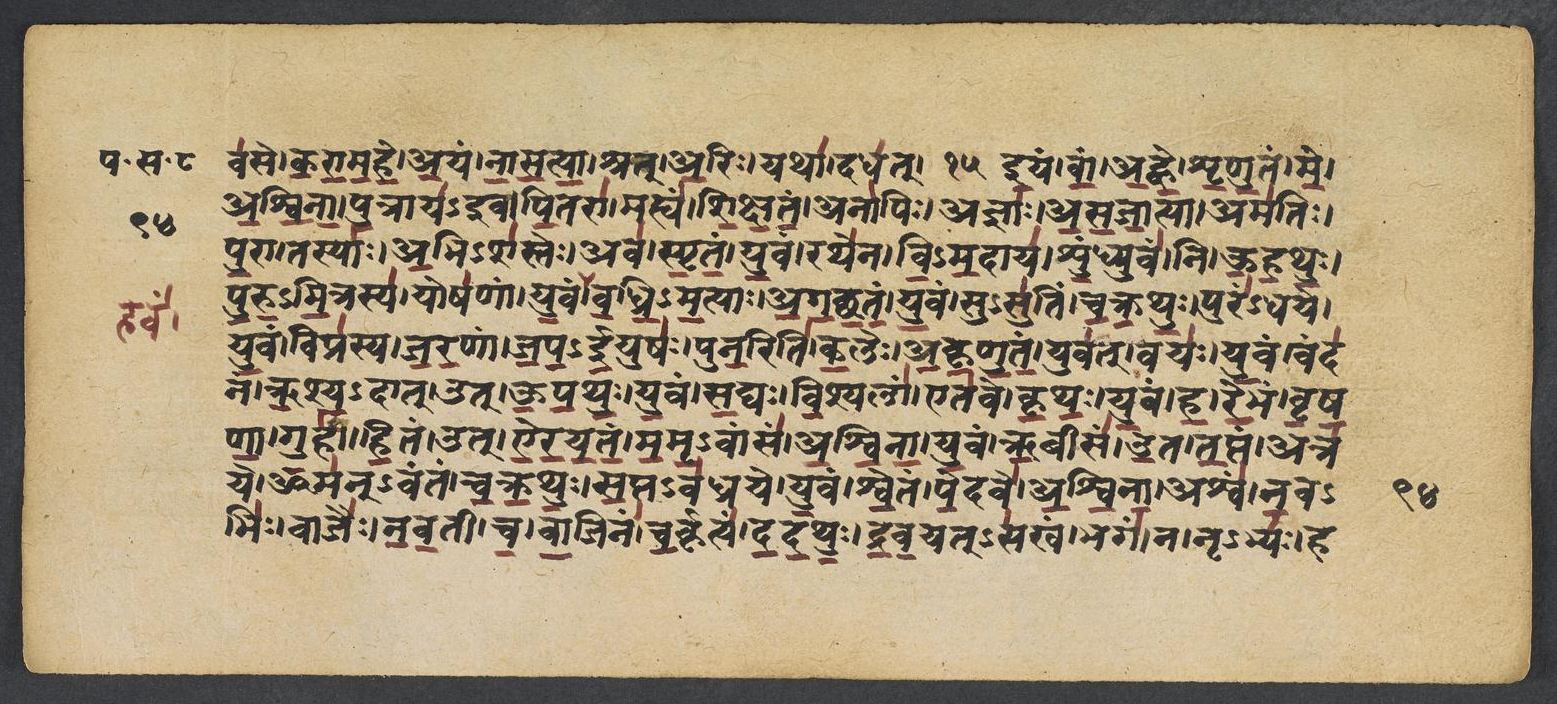
Penn Ms. Coll. 390 Item 41, fol. 778v (numbered 94v by the scribe) (OPenn image 779, upper leaf). Checked on the image: the Rigveda text on this page begins in RV 10.39.5 ‹-avase karāmahe ayam nāsatyā›. The next page with Rigveda text, fol. 779r (numbered 95r by the scribe), begins in RV 10.39.10 ‹-havyam mayaḥ-bhuvam›. Verses 10.39.5-9 end on this page; 10.39.5 begins on fol. 778r (numbered 94r by the scribe).
5pu̱rā̱ṇā vā̍ṁ vī̱ryā̱3̱̍ pra bra̍vā̱ jane 'tho̍ hāsathur bhi̱ṣajā̍ mayo̱bhuvā̍ | tā vā̱ṁ nu navyā̱v ava̍se karāmahe̱ 'yaṁ nā̍satyā̱ śrad a̱rir yathā̱ dadha̍t ||
6i̱yaṁ vā̍m ahve śṛṇu̱tam me̍ aśvinā pu̱trāye̍va pi̱tarā̱ mahya̍ṁ śikṣatam | anā̍pi̱r ajñā̍ asajā̱tyāma̍tiḥ pu̱rā tasyā̍ a̱bhiśa̍ste̱r ava̍ spṛtam ||
7yu̱vaṁ rathe̍na vima̱dāya̍ śu̱ndhyuva̱ṁ ny ū̍hathuḥ purumi̱trasya̱ yoṣa̍ṇām | yu̱vaṁ hava̍ṁ vadhrima̱tyā a̍gacchataṁ yu̱vaṁ suṣu̍tiṁ cakrathu̱ḥ pura̍ṁdhaye ||
8yu̱vaṁ vipra̍sya jara̱ṇām u̍pe̱yuṣa̱ḥ puna̍ḥ ka̱ler a̍kṛṇuta̱ṁ yuva̱d vaya̍ḥ | yu̱vaṁ vanda̍nam ṛśya̱dād ud ū̍pathur yu̱vaṁ sa̱dyo vi̱śpalā̱m eta̍ve kṛthaḥ ||
9yu̱vaṁ ha̍ re̱bhaṁ vṛ̍ṣaṇā̱ guhā̍ hi̱tam ud ai̍rayatam mamṛ̱vāṁsa̍m aśvinā | yu̱vam ṛ̱bīsa̍m u̱ta ta̱ptam atra̍ya̱ oma̍nvantaṁ cakrathuḥ sa̱ptava̍dhraye ||
Compare: Padapāṭha (word-by-word text written in the manuscript; Sansknet e-text via GRETIL)
5purāṇā | vām | vīryā | pra | brava | jane | atho iti | ha | āsathuḥ | bhiṣajā | mayaḥ-bhuvā | tā | vām | nu | navyau | / avase | karāmahe | ayam | nāsatyā | śrat | ariḥ | yathā | dadhat
6iyam | vām | ahve | śṛṇutam | me | aśvinā | putrāya-iva | pitarā | mahyam | śikṣatam | anāpiḥ | ajñāḥ | asajātyā | amatiḥ | purā | tasyāḥ | abhi-śasteḥ | ava | spṛtam
7yuvam | rathena | vi-madāya | śundhyuvam | ni | ūhathuḥ | puru-mitrasya | yoṣaṇam | yuvam | havam | vadhri-matyāḥ | agacchatam | yuvam | su-sutim | cakrathuḥ | puram-dhaye
8yuvam | viprasya | jaraṇām | upa-īyuṣaḥ | punariti | kaleḥ | akṛṇutam | yuvat | vayaḥ | yuvam | vandanam | ṛśya-dāt | ut | ūpathuḥ | yuvam | sadyaḥ | viśpalām | etave | kṛthaḥ
9yuvam | ha | rebham | vṛṣaṇā | guhā | hitam | ut | airayatam | mamṛ-vāṃsam | aśvinā | yuvam | ṛbīsam | uta | taptam | atraye | oman-vantam | cakrathuḥ | sapta-vadhraye
5We will declare among the folk your ancient deeds heroic; yea, ye were Physicians bringing health. You, you who must be lauded, will we bring for aid, so that this foe of ours, O Aṣvins, may believe.
6Listen to me, O Aṣvins; I have cried to you. Give me-your aid as sire and mother aid their son. Poor, without kin or friend or ties of blood am I. Save me before it be too late, from this my curse.
7Ye, mounted on your chariot brought to Vimada the comely maid of Purumitra as a bride. Ye, came unto the calling of the weakling's dame, and granted noble offspring to the happy wife.
8Ye gave a ain the vigour of his youthful life to the sage Kali when old age was coming nigh. Ye rescued Vandana and raised him from the pit, and in a moment gave Vispala power to move.
9Ye Aṣvins Twain, endowed with manly strength, brought forth Rebha when hidden in the cave and well-nigh dead, Freed Saptavadliri, and for Atri caused the pit heated with fire to be a pleasant resting-place.
Where on the image
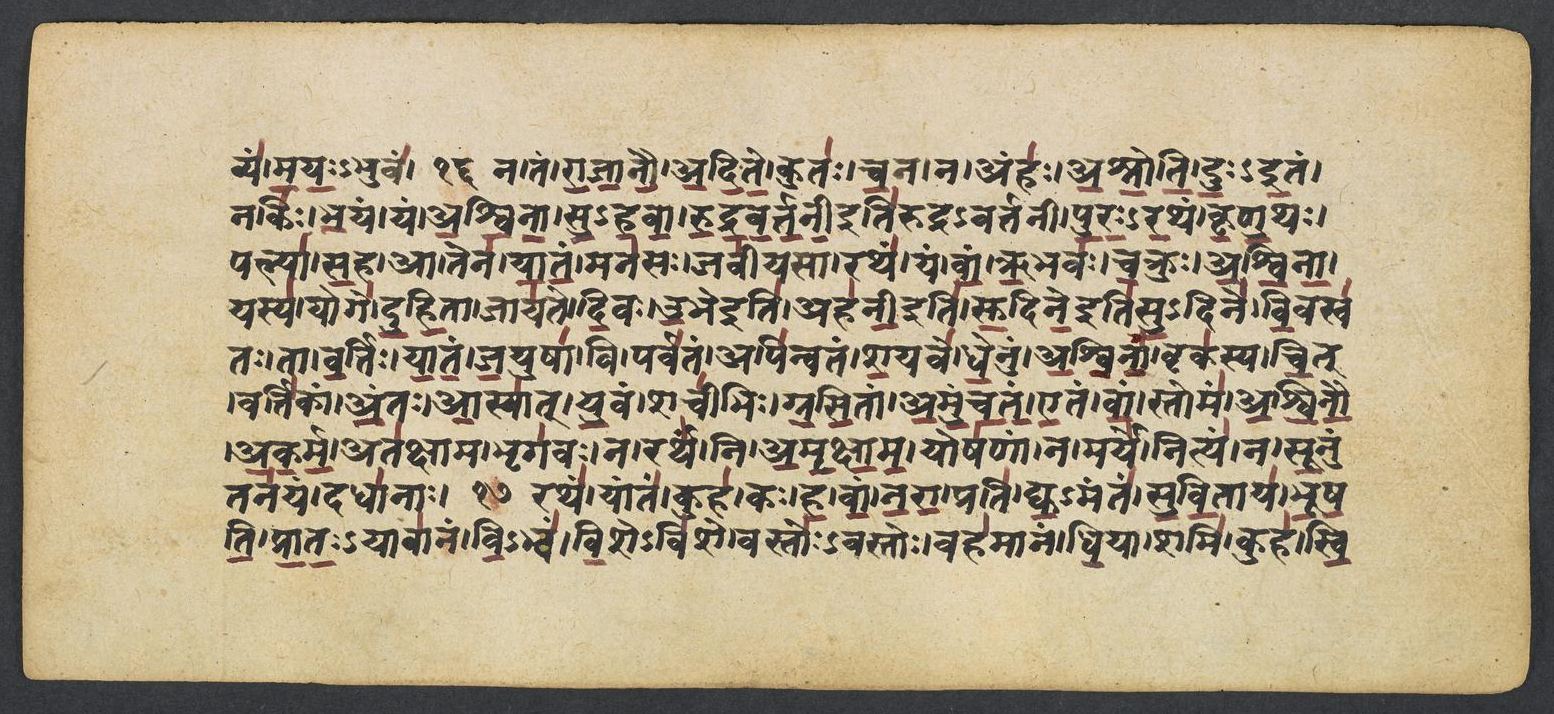
Penn Ms. Coll. 390 Item 41, fol. 779r (numbered 95r by the scribe) (OPenn image 779, lower leaf). Checked on the image: the Rigveda text on this page begins in RV 10.39.10 ‹-havyam mayaḥ-bhuvam›. The next page with Rigveda text, fol. 779v (numbered 95v by the scribe), begins in RV 10.40.2 ‹-svit doṣā kuha vastoḥ›. Verses 10.39.10-14 end on this page; 10.39.10 begins on fol. 778v (numbered 94v by the scribe).
10yu̱vaṁ śve̱tam pe̱dave̍ 'śvi̱nāśva̍ṁ na̱vabhi̱r vājai̍r nava̱tī ca̍ vā̱jina̍m | ca̱rkṛtya̍ṁ dadathur drāva̱yatsa̍kha̱m bhaga̱ṁ na nṛbhyo̱ havya̍m mayo̱bhuva̍m ||
11na taṁ rā̍jānāv adite̱ kuta̍ś ca̱na nāṁho̍ aśnoti duri̱taṁ naki̍r bha̱yam | yam a̍śvinā suhavā rudravartanī purora̱thaṁ kṛ̍ṇu̱thaḥ patnyā̍ sa̱ha ||
12ā tena̍ yāta̱m mana̍so̱ javī̍yasā̱ ratha̱ṁ yaṁ vā̍m ṛ̱bhava̍ś ca̱krur a̍śvinā | yasya̱ yoge̍ duhi̱tā jāya̍te di̱va u̱bhe aha̍nī su̱dine̍ vi̱vasva̍taḥ ||
13tā va̱rtir yā̍taṁ ja̱yuṣā̱ vi parva̍ta̱m api̍nvataṁ śa̱yave̍ dhe̱num a̍śvinā | vṛka̍sya ci̱d varti̍kām a̱ntar ā̱syā̍d yu̱vaṁ śacī̍bhir grasi̱tām a̍muñcatam ||
14e̱taṁ vā̱ṁ stoma̍m aśvināv aka̱rmāta̍kṣāma̱ bhṛga̍vo̱ na ratha̍m | ny a̍mṛkṣāma̱ yoṣa̍ṇā̱ṁ na marye̱ nitya̱ṁ na sū̱nuṁ tana̍ya̱ṁ dadhā̍nāḥ ||
Compare: Padapāṭha (word-by-word text written in the manuscript; Sansknet e-text via GRETIL)
10yuvam | śvetam | pedave | aśvinā | aśvam | nava-bhiḥ | vājaiḥ | navatī | ca | vāji nam | carkṛtyam | dadathuḥ | dravayat-sakham | bhagam | na | nṛ-bhyaḥ | havyam | mayaḥ-bhuvam
11na | tam | rājānau | adite | kutaḥ | cana | na | aṃhaḥ | aśnoti | duḥ-itam | nakiḥ | bhayam | yam | aśvinā | su-havā | rudravartanī itirudra-vartanī | puraḥ-ratham | kṛṇuthaḥ | patnyā | saha
12ā | tena | yātam | manasaḥ | javīyasā | ratham | yam | vām | ṛbhavaḥ | cakruḥ | aśvi nā | yasya | yoge | duhitā | jāyate | divaḥ | ubhe iti | ahanī iti | sudineitisu-dine | vivasvataḥ
13tā | vartiḥ | yātam | jayuṣā | vi | parvatam | apinvatam | śayave | dhenum | aśvinā | vṛkasya | cit | varikām | antaḥ | āsyāt | yuvam | śacībhiḥ | grasitām | amuñcatam
14etam | vām | stomam | aśvinau | akarma | aatakṣāma | bhṛgavaḥ | na | ratham | ni | amṛkṣāma | yoṣaṇām | na | marye | nityam | na | sūnum | tanayam | dadhānāḥ
10On Pedu ye bestowed, Aṣvins, a courser white, mighty with nine-and-ninety varied gifts of strength, A horse to be renowned, who bore his friend at speed, joy-giving, Bhaga-like to be invoked of men.
11From no side, ye Two Kings whom none may check or stay, doth grief, distress, or danger come u on the man Whom, Aṣvins swift to hear, borne on your glowing path, ye with your Consort make the foremost in the race.
12Come on that Chariot which the R̥ibhus wrought for you, the Chariot, Aṣvins, that is speedier than thought, At harnessing whereof Heaven's Daughter springs to birth, and from Vivasvan come auspicious Night and Day.
13Come, Conquerors of the sundered mountain, to our home, Aṣvins who made the cow stream milk for Ṣayu's sake, Ye who delivered even from the wolf's deep throat and set again at liberty the swallowed quail.
14We have prepared this laud for you, O Aṣvins, and, like the Bhr̥igus, as a car have framed it, Have decked it as a maid to meet the bridegroom, and brought it as a son, our stay for ever.
Notes
- Sanskrit: Aufrecht's edition (1877) with the Vedic accents, as entered by van Nooten and Holland (GRETIL).
- English: Ralph T. H. Griffith, The Hymns of the Rigveda (1889-1892; 2nd ed. 1896-1897), from the VedaWeb digital text; OCR slips in that text were corrected against the printed 2nd edition (data/sources/rigveda/griffith_errata.json).
- Padapāṭha (edition text): Sansknet e-text via GRETIL (CC BY-NC-SA 4.0).
Cite
Sources
- Source: Penn Ms. Coll. 390 Item 41 (undated (catalogued with Penn's 18th-19th c. Vedic manuscripts)), OPenn, Public Domain Mark + Aufrecht's accented text (GRETIL) + Griffith's English (VedaWeb) (holding institution)
- Critical edition: Aufrecht (1877), accented e-text via GRETIL
← previous · → next · v cycle view · l back to library