Rigveda 10.42: To Indra
Introduction
Rigveda 10.42 is a hymn of 11 verses addressed to Indra. It stands in book (maṇḍala) 10, the last and latest book. The Rigveda is the oldest collection of Sanskrit hymns, composed in the second half of the second millennium BCE and handed down orally for many centuries before it was written down.
The manuscript shown is Penn Ms. Coll. 390 Item 41 (University of Pennsylvania), an undated paper manuscript of the padapāṭha (the word-by-word recitation text, in which every word is written separately and compounds are split) of the whole Ṛgveda in Devanāgarī, 884 leaves in fascicles, 7-9 lines to the page, accents in red; this hymn stands on fol. 781r-782r. Each section below gives the verses that end on one page; the page boundaries were read on the images (the opening words of every page), not counted out. Where the manuscript is a padapāṭha (the word-by-word recitation text), the section shows Aufrecht's continuous (saṃhitā) text first and, as the edition text, the padapāṭha of the same verses, which is the form written on the page.
How was this verified? (Provenance)
Where on the image
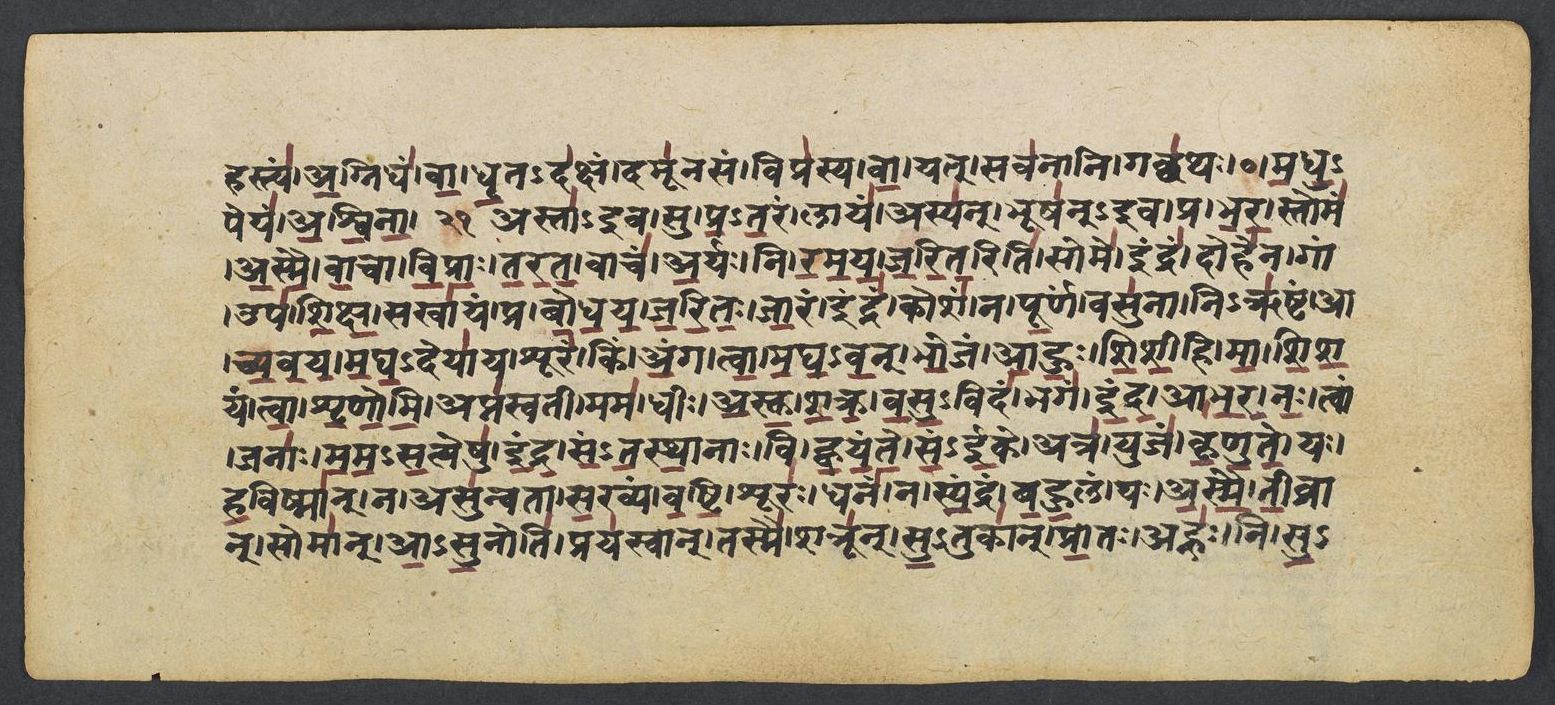
Penn Ms. Coll. 390 Item 41, fol. 781r (numbered 97r by the scribe) (OPenn image 781, lower leaf). Checked on the image: the Rigveda text on this page begins in RV 10.41.3 ‹-su-hastyam agnidham vā dhṛta-dakṣam›. The next page with Rigveda text, fol. 781v (numbered 97v by the scribe), begins in RV 10.42.5 ‹-su-aṣṭrān yuvati hanti vṛtram›. Verses 10.42.1-4 end on this page.
1aste̍va̱ su pra̍ta̱raṁ lāya̱m asya̱n bhūṣa̍nn iva̱ pra bha̍rā̱ stoma̍m asmai | vā̱cā vi̍prās tarata̱ vāca̍m a̱ryo ni rā̍maya jarita̱ḥ soma̱ indra̍m ||
2dohe̍na̱ gām upa̍ śikṣā̱ sakhā̍ya̱m pra bo̍dhaya jaritar jā̱ram indra̍m | kośa̱ṁ na pū̱rṇaṁ vasu̍nā̱ nyṛ̍ṣṭa̱m ā cyā̍vaya magha̱deyā̍ya̱ śūra̍m ||
3kim a̱ṅga tvā̍ maghavan bho̱jam ā̍huḥ śiśī̱hi mā̍ śiśa̱yaṁ tvā̍ śṛṇomi | apna̍svatī̱ mama̱ dhīr a̍stu śakra vasu̱vida̱m bhaga̍m i̱ndrā bha̍rā naḥ ||
4tvāṁ janā̍ mamasa̱tyeṣv i̍ndra saṁtasthā̱nā vi hva̍yante samī̱ke | atrā̱ yuja̍ṁ kṛṇute̱ yo ha̱viṣmā̱n nāsu̍nvatā sa̱khyaṁ va̍ṣṭi̱ śūra̍ḥ ||
Compare: Padapāṭha (word-by-word text written in the manuscript; Sansknet e-text via GRETIL)
1astāiva | su | pra-taram | lāyam | asyan | bhūṣan-iva | pra | bhara | stomam | asmai | vācā | viprāḥ | tarata | vācam | aryaḥ | ni | ramaya | jaritariti | some | indram
2dohena | gām | upa | śikṣa | sakhāyam | pra | bodhaya | jaritaḥ | jāram | indram | kośam | na | pūrṇam | vasunā | ni-ṛṣṭam | ā | cyavaya | magha-deyāya | śūram
3kim | aṅga | tvā | magha-van | bhojam | āhuḥ | śiśīhi | mā | śiśayam | tvā | śṛṇomi | apnasvatī | mama | dhīḥ | astu | śakra | vasu-vidam | bhagam | indra | ā | bhara | naḥ
4tvām | janāḥ | mama-satyeṣu | indra | sam-tasthānāḥ | vi | hvayante | sam-īke | atra | yujam | kṛṇute | yaḥ | haviṣmān | na | asunvatā | sakhyam | vaṣṭi | śūraḥ
1EVEN as an archer shoots afar his arrow, offer the laud to him with meet adornment. Quell with your voice the wicked's voice, O sages. Singer, make Indra rest beside the Soma.
2Draw thy Friend to thee like a cow at milking: O Singer, wake up Indra as a lover. Make thou the Hero haste to give us riches even as a vessel filled brimful with treasure.
3Why, Maghavan, do they call thee Bounteous; Giver? Quicken me: thou, I hear, art he who quickens. Ṣakra, let my intelligence be active, and bring us luck that finds great wealth, O Indra.
4Standing, in battle for their rights, together, the people, Indra, in the fray invoke thee. Him who brings gifts the Hero makes his comrade: with him who pours no juice he seeks not friendship.
Where on the image
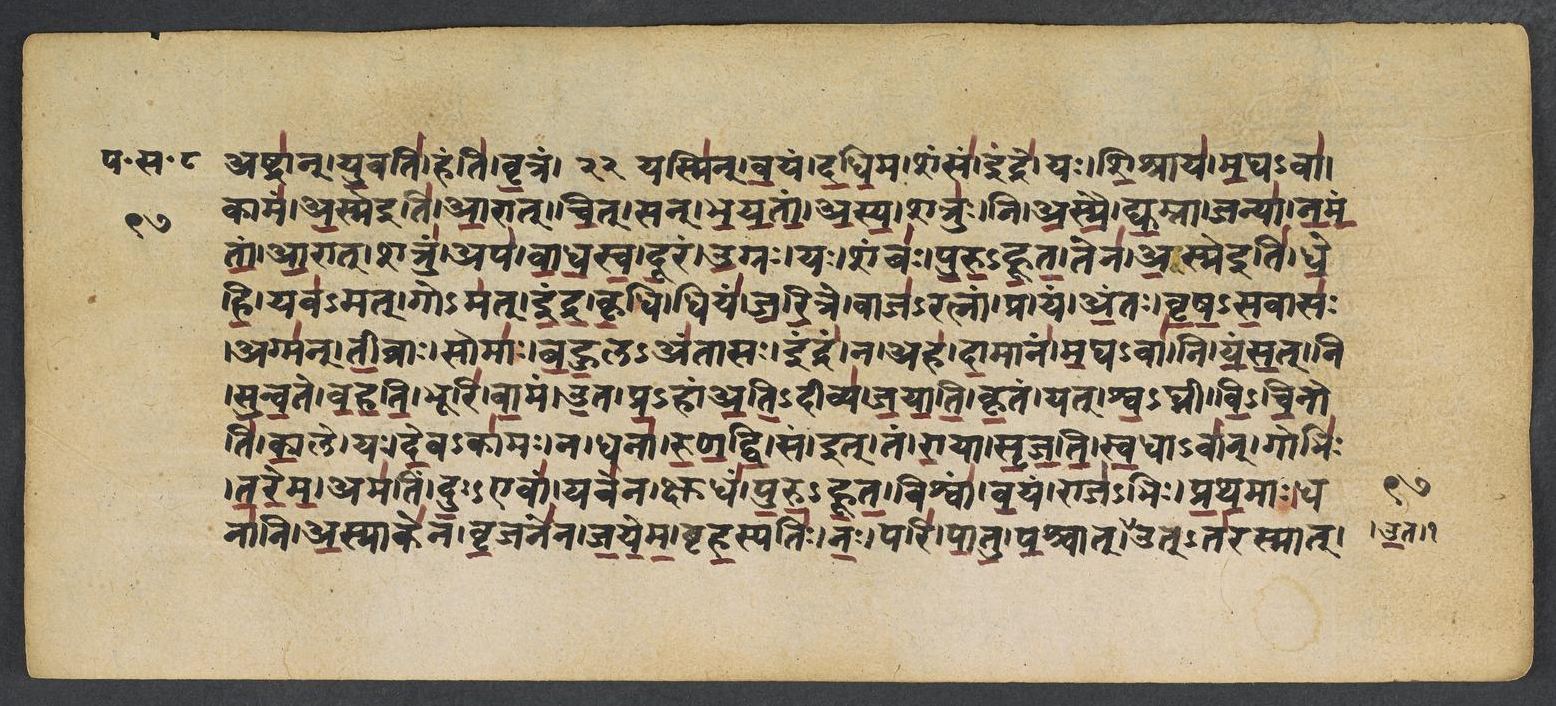
Penn Ms. Coll. 390 Item 41, fol. 781v (numbered 97v by the scribe) (OPenn image 782, upper leaf). Checked on the image: the Rigveda text on this page begins in RV 10.42.5 ‹-su-aṣṭrān yuvati hanti vṛtram›. The next page with Rigveda text, fol. 782r (numbered 98r by the scribe), begins in RV 10.42.11 ‹adharāt agha-yoḥ indraḥ purastāt›. Verses 10.42.5-10 end on this page; 10.42.5 begins on fol. 781r (numbered 97r by the scribe).
5dhana̱ṁ na sya̱ndram ba̍hu̱laṁ yo a̍smai tī̱vrān somā̍m̐ āsu̱noti̱ praya̍svān | tasmai̱ śatrū̍n su̱tukā̍n prā̱tar ahno̱ ni svaṣṭrā̍n yu̱vati̱ hanti̍ vṛ̱tram ||
6yasmi̍n va̱yaṁ da̍dhi̱mā śaṁsa̱m indre̱ yaḥ śi̱śrāya̍ ma̱ghavā̱ kāma̍m a̱sme | ā̱rāc ci̱t san bha̍yatām asya̱ śatru̱r ny a̍smai dyu̱mnā janyā̍ namantām ||
7ā̱rāc chatru̱m apa̍ bādhasva dū̱ram u̱gro yaḥ śamba̍ḥ puruhūta̱ tena̍ | a̱sme dhe̍hi̱ yava̍ma̱d goma̍d indra kṛ̱dhī dhiya̍ṁ jari̱tre vāja̍ratnām ||
8pra yam a̱ntar vṛ̍ṣasa̱vāso̱ agma̍n tī̱vrāḥ somā̍ bahu̱lāntā̍sa̱ indra̍m | nāha̍ dā̱māna̍m ma̱ghavā̱ ni ya̍ṁsa̱n ni su̍nva̱te va̍hati̱ bhūri̍ vā̱mam ||
9u̱ta pra̱hām a̍ti̱dīvyā̍ jayāti kṛ̱taṁ yac chva̱ghnī vi̍ci̱noti̍ kā̱le | yo de̱vakā̍mo̱ na dhanā̍ ruṇaddhi̱ sam it taṁ rā̱yā sṛ̍jati sva̱dhāvā̍n ||
10gobhi̍ṣ ṭare̱māma̍tiṁ du̱revā̱ṁ yave̍na̱ kṣudha̍m puruhūta̱ viśvā̍m | va̱yaṁ rāja̍bhiḥ pratha̱mā dhanā̍ny a̱smāke̍na vṛ̱jane̍nā jayema ||
Compare: Padapāṭha (word-by-word text written in the manuscript; Sansknet e-text via GRETIL)
5dhanam | na | spandram | bahulam | yaḥ | asmai | tīvrān | somān | āsunoti | prayasvān | tasmai | śatrūn | su-tukān | prātaḥ | ahnaḥ | ni | su-aṣṭrān | yuvati | hanti | vṛtram
6yasmin | vayam | dadhima | śaṃsam | indre | yaḥ | śiśrāya | magha-vā | kāmam | asme iti | ārāt | cit | san | bhayatām | asya | śatruḥ | ni | asmai | dyumnā | janyā | namantām
7ārāt | śatrum | apa | bādhasva | dūram | ugraḥ | yaḥ | śambaḥ | puru-hūta | tena | asme iti | dhehi | yava-mat | go--mat | indra | kṛdhi | dhiyam | jaritre | vāja-ratnām
8pra | yam | antaḥ | vṛṣa-savāsaḥ | agman | tīvrāḥ | somāḥ | bahula-antāsaḥ | indram | na | aha | dāmānam | magha-vā | ni | yaṃsat | ni | sunvate | vahati | bhūri | vāmam
9uta | pra-hām | ati-dīvya | jayāti | kṛtam | yat | śva-ghnī | vi-cinoti | kāle | yaḥ | deva-kāmaḥ | na | dhanā | ruṇaddhi | sam | it | tam | rāyā | sṛjati | svadhāvān
10gobhiḥ | tarema | amatim | duḥ-evām | yavena | kṣudham | puru-hūta | viśvām | vayam | rāja-bhiḥ | prathamā | dhanāni | asmākena | vṛjanena | jayema
5Whoso with plenteous food for him expresses strong Somas as much quickly-coming treasure, For him he overthrows in early morning his swift well-weaponed foes, and slays the tyrant.
6He unto whom we offer praises, Indra, Maghavan, who hath joined to ours his wishes,– Before him even afar the foe must tremble: low before him must bow all human glories.
7With thy fierce bolt, O God invoked of many, drive to a distance from afar the foeman. O Indra, give us wealth in corn and cattle, and make thy singer's prayer gain strength and riches.
8Indra, the swallower of strong libations rich in the boons they bring, the potent Somas, He, Maghavan, will not restrict his bounty he brings much wealth unto the Soma-presser.
9Yea, by superior play he wins advantage, when he, a gambler, piles his gains in season. Celestial-natured, he o'erwhelms with riches the devotee who keeps not back his treasure.
10O Much-invoked, may we subdue all famine and evil want with store of grain and cattle. May we allied, as first in rank, with princes obtain possessions by our own exertion.
Where on the image
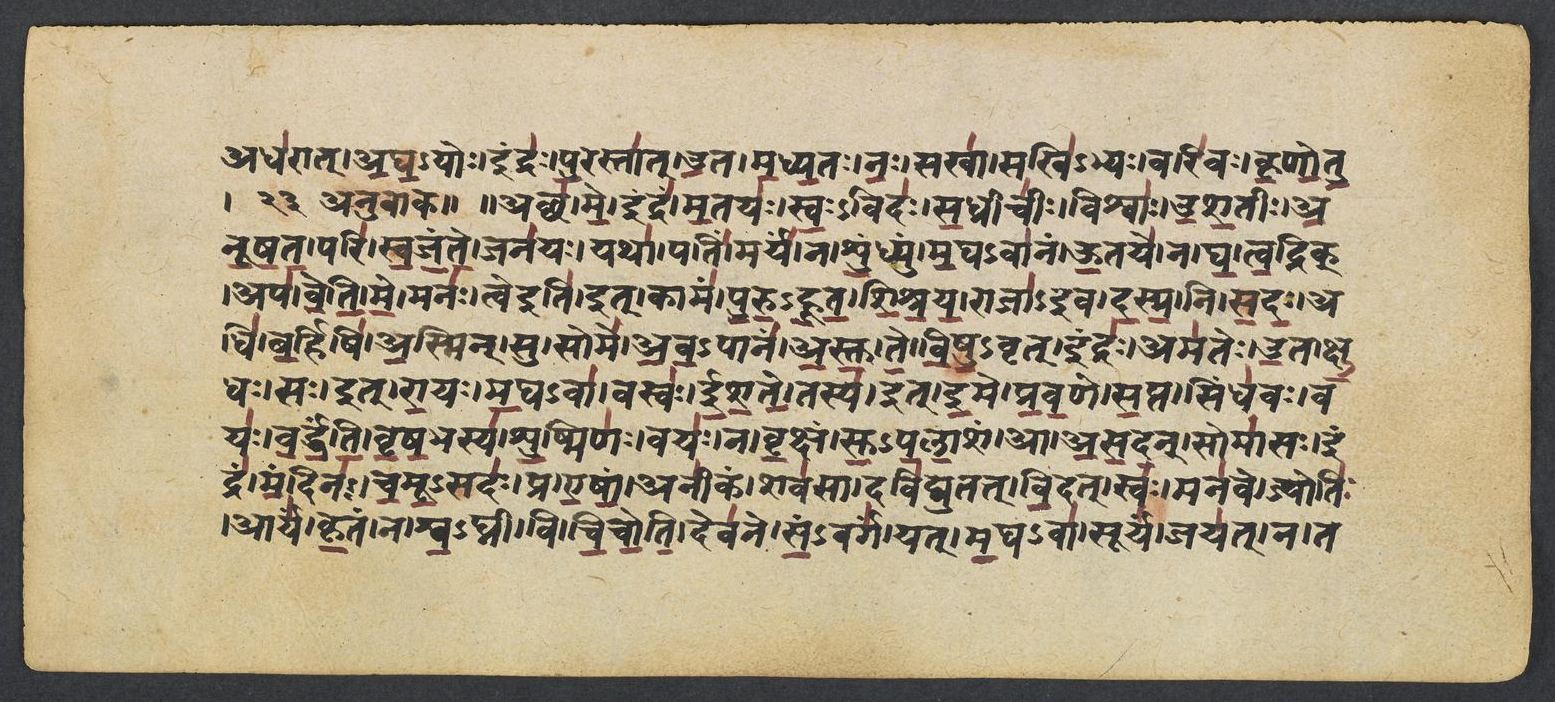
Penn Ms. Coll. 390 Item 41, fol. 782r (numbered 98r by the scribe) (OPenn image 782, lower leaf). Checked on the image: the Rigveda text on this page begins in RV 10.42.11 ‹adharāt agha-yoḥ indraḥ purastāt›. The next page with Rigveda text, fol. 782v (numbered 98v by the scribe), begins in RV 10.43.5 ‹-tat te anyaḥ anu›. Verse 10.42.11 ends on this page; 10.42.11 begins on fol. 781v (numbered 97v by the scribe).
11bṛha̱spati̍r na̱ḥ pari̍ pātu pa̱ścād u̱totta̍rasmā̱d adha̍rād aghā̱yoḥ | indra̍ḥ pu̱rastā̍d u̱ta ma̍dhya̱to na̱ḥ sakhā̱ sakhi̍bhyo̱ vari̍vaḥ kṛṇotu ||
Compare: Padapāṭha (word-by-word text written in the manuscript; Sansknet e-text via GRETIL)
11bṛhaspatiḥ | naḥ | pari | pātu | paścāt | uta | ut-tarasmāt | adharāt | agha-yoḥ | indraḥ | purastāt | uta | madhyataḥ | naḥ | sakhā | sakhi-bhyaḥ | vari-vaḥ | kṛṇotu
11Br̥ihaspati protect us from the rearward, and from above, and from below, from sinners! May Indra from the front, and from the centre, as Friend to friends, vouchsafe us room and freedom.
Notes
- Sanskrit: Aufrecht's edition (1877) with the Vedic accents, as entered by van Nooten and Holland (GRETIL).
- English: Ralph T. H. Griffith, The Hymns of the Rigveda (1889-1892; 2nd ed. 1896-1897), from the VedaWeb digital text; OCR slips in that text were corrected against the printed 2nd edition (data/sources/rigveda/griffith_errata.json).
- Padapāṭha (edition text): Sansknet e-text via GRETIL (CC BY-NC-SA 4.0).
Cite
Sources
- Source: Penn Ms. Coll. 390 Item 41 (undated (catalogued with Penn's 18th-19th c. Vedic manuscripts)), OPenn, Public Domain Mark + Aufrecht's accented text (GRETIL) + Griffith's English (VedaWeb) (holding institution)
- Critical edition: Aufrecht (1877), accented e-text via GRETIL
← previous · → next · v cycle view · l back to library