Rigveda 10.43: To Indra
Introduction
Rigveda 10.43 is a hymn of 11 verses addressed to Indra. It stands in book (maṇḍala) 10, the last and latest book. The Rigveda is the oldest collection of Sanskrit hymns, composed in the second half of the second millennium BCE and handed down orally for many centuries before it was written down.
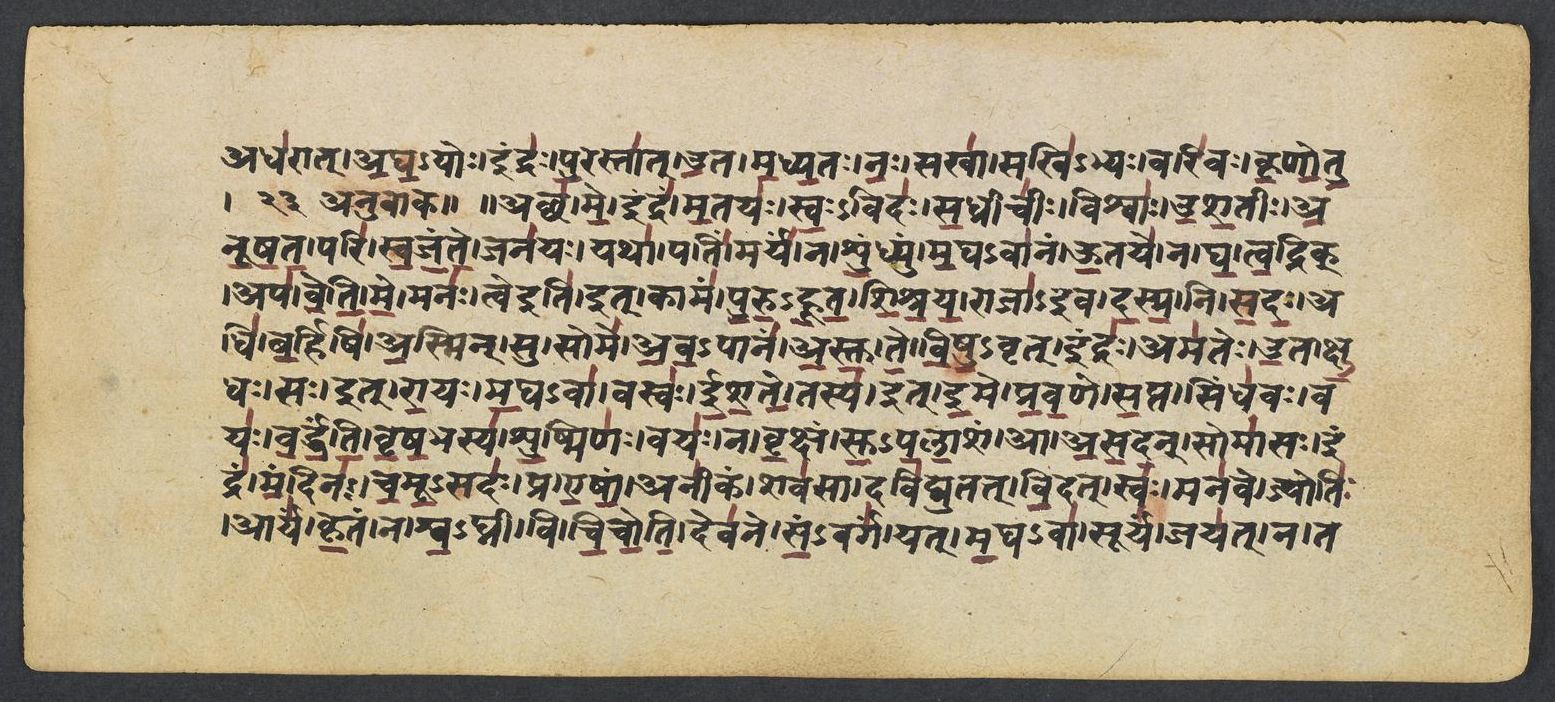
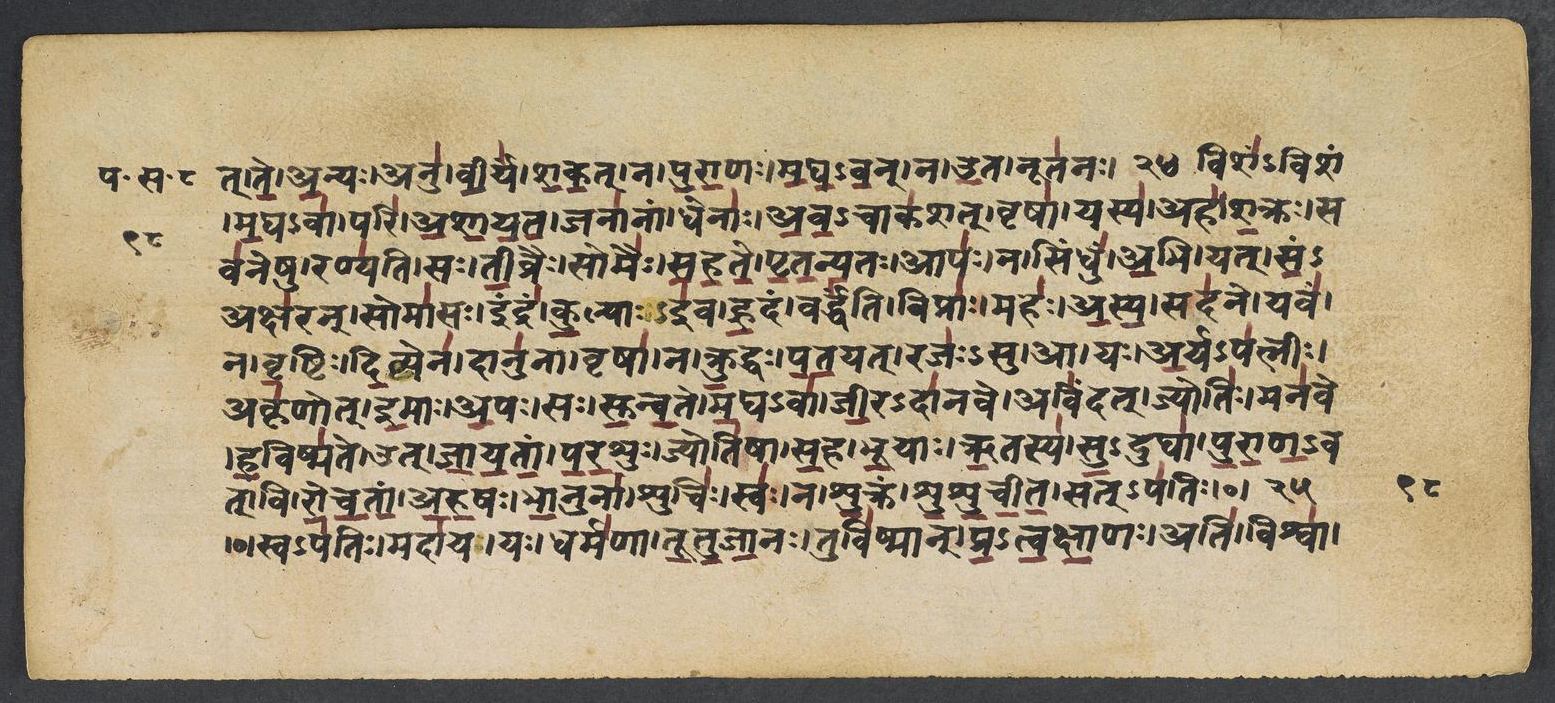
The manuscript shown is Penn Ms. Coll. 390 Item 41 (University of Pennsylvania), an undated paper manuscript of the padapāṭha (the word-by-word recitation text, in which every word is written separately and compounds are split) of the whole Ṛgveda in Devanāgarī, 884 leaves in fascicles, 7-9 lines to the page, accents in red; this hymn stands on fol. 782r-782v. Each section below gives the verses that end on one page; the page boundaries were read on the images (the opening words of every page), not counted out. Where the manuscript is a padapāṭha (the word-by-word recitation text), the section shows Aufrecht's continuous (saṃhitā) text first and, as the edition text, the padapāṭha of the same verses, which is the form written on the page.
How was this verified? (Provenance)
Where on the image
Penn Ms. Coll. 390 Item 41, fol. 782r (numbered 98r by the scribe) (OPenn image 782, lower leaf). Checked on the image: the Rigveda text on this page begins in RV 10.42.11 ‹adharāt agha-yoḥ indraḥ purastāt›. The next page with Rigveda text, fol. 782v (numbered 98v by the scribe), begins in RV 10.43.5 ‹-tat te anyaḥ anu›. Verses 10.43.1-4 end on this page.
1acchā̍ ma̱ indra̍m ma̱taya̍ḥ sva̱rvida̍ḥ sa̱dhrīcī̱r viśvā̍ uśa̱tīr a̍nūṣata | pari̍ ṣvajante̱ jana̍yo̱ yathā̱ pati̱m marya̱ṁ na śu̱ndhyum ma̱ghavā̍nam ū̱taye̍ ||
2na ghā̍ tva̱drig apa̍ veti me̱ mana̱s tve it kāma̍m puruhūta śiśraya | rāje̍va dasma̱ ni ṣa̱do 'dhi̍ ba̱rhiṣy a̱smin su some̍ 'va̱pāna̍m astu te ||
3vi̱ṣū̱vṛd indro̱ ama̍ter u̱ta kṣu̱dhaḥ sa id rā̱yo ma̱ghavā̱ vasva̍ īśate | tasyed i̱me pra̍va̱ṇe sa̱pta sindha̍vo̱ vayo̍ vardhanti vṛṣa̱bhasya̍ śu̱ṣmiṇa̍ḥ ||
4vayo̱ na vṛ̱kṣaṁ su̍palā̱śam āsa̍da̱n somā̍sa̱ indra̍m ma̱ndina̍ś camū̱ṣada̍ḥ | praiṣā̱m anī̍ka̱ṁ śava̍sā̱ davi̍dyutad vi̱dat sva1̱̍r mana̍ve̱ jyoti̱r ārya̍m ||
Compare: Padapāṭha (word-by-word text written in the manuscript; Sansknet e-text via GRETIL)
1accha | me | indram | matayaḥ | svaḥ-vidaḥ | sadhrīcīḥ | viśvāḥ | uśatīḥ | anūṣata | pari | svajante | janayaḥ | yathā | patim | maryam | na | śundhyum | magha-vānam | ūtaye
2na | gha | tvadrik | apa | veti | me | manaḥ | tve iti | it | kāmam | puru-hūta | śiśraya | rājāiva | dasma | ni | sadaḥ | adhi | barhi ṣi | asmin | su | some | ava-pānam | astu | te
3viṣu-vṛt | indraḥ | amateḥ | ut | kṣudhaḥ | saḥ | it | rāyaḥ | magha-vā | vasvaḥ | īśate | tasya | ime | pravaṇe | sapta | sindhavaḥ | vayaḥ | vardhanti | vṛṣabhasya | śuṣmiṇaḥ
4vayaḥ | na | vṛkṣam | su-palāśam | ā | asadan | somāsaḥ | indram | mandinaḥ | camū-sadaḥ | pra | eṣām | anīkam | śavasā | davidyutat | vidat | svaḥ | manave | jyotiḥ | āryam
1IN perfect unison all yearning hymns of mine that find the light of heaven have sung forth Indra's praise. As wives embrace their lord, the comely bridegroom, so they compass Maghavan about that he may help.
2Directed unto thee my spirit never strays, for I have set my hopes on thee, O Much-invoked! Sit, Wonderful! as King upon the sacred grass, and let thy drinking-place be by the Soma juice.
3From indigence and hunger Indra turns away: Maghavan hath dominion over precious wealth. These the Seven Rivers flowing on their downward path increase the vital vigour of the potent Steer.
4As on the fair-leafed tree rest birds, to Indra flow the gladdening Soma juices that the bowls contain. Their face that glows with splendour through their mighty power hath found the shine of heaven for man, the Aryas' light.
Where on the image
Penn Ms. Coll. 390 Item 41, fol. 782v (numbered 98v by the scribe) (OPenn image 783, upper leaf). Checked on the image: the Rigveda text on this page begins in RV 10.43.5 ‹-tat te anyaḥ anu›. The next page with Rigveda text, fol. 783r (numbered 99r by the scribe), begins in RV 10.44.1 ‹sahāṃsi apāreṇa mahatā vṛṣṇyena›. Verses 10.43.5-11 end on this page; 10.43.5 begins on fol. 782r (numbered 98r by the scribe).
5kṛ̱taṁ na śva̱ghnī vi ci̍noti̱ deva̍ne sa̱ṁvarga̱ṁ yan ma̱ghavā̱ sūrya̱ṁ jaya̍t | na tat te̍ a̱nyo anu̍ vī̱rya̍ṁ śaka̱n na pu̍rā̱ṇo ma̍ghava̱n nota nūta̍naḥ ||
6viśa̍ṁ-viśam ma̱ghavā̱ pary a̍śāyata̱ janā̍nā̱ṁ dhenā̍ ava̱cāka̍śa̱d vṛṣā̍ | yasyāha̍ śa̱kraḥ sava̍neṣu̱ raṇya̍ti̱ sa tī̱vraiḥ somai̍ḥ sahate pṛtanya̱taḥ ||
7āpo̱ na sindhu̍m a̱bhi yat sa̱makṣa̍ra̱n somā̍sa̱ indra̍ṁ ku̱lyā i̍va hra̱dam | vardha̍nti̱ viprā̱ maho̍ asya̱ sāda̍ne̱ yava̱ṁ na vṛ̱ṣṭir di̱vyena̱ dānu̍nā ||
8vṛṣā̱ na kru̱ddhaḥ pa̍taya̱d raja̱ḥsv ā yo a̱ryapa̍tnī̱r akṛ̍ṇod i̱mā a̱paḥ | sa su̍nva̱te ma̱ghavā̍ jī̱radā̍na̱ve 'vi̍nda̱j jyoti̱r mana̍ve ha̱viṣma̍te ||
9uj jā̍yatām para̱śur jyoti̍ṣā sa̱ha bhū̱yā ṛ̱tasya̍ su̱dughā̍ purāṇa̱vat | vi ro̍catām aru̱ṣo bhā̱nunā̱ śuci̱ḥ sva1̱̍r ṇa śu̱kraṁ śu̍śucīta̱ satpa̍tiḥ ||
10gobhi̍ṣ ṭare̱māma̍tiṁ du̱revā̱ṁ yave̍na̱ kṣudha̍m puruhūta̱ viśvā̍m | va̱yaṁ rāja̍bhiḥ pratha̱mā dhanā̍ny a̱smāke̍na vṛ̱jane̍nā jayema ||
11bṛha̱spati̍r na̱ḥ pari̍ pātu pa̱ścād u̱totta̍rasmā̱d adha̍rād aghā̱yoḥ | indra̍ḥ pu̱rastā̍d u̱ta ma̍dhya̱to na̱ḥ sakhā̱ sakhi̍bhyo̱ vari̍vaḥ kṛṇotu ||
Compare: Padapāṭha (word-by-word text written in the manuscript; Sansknet e-text via GRETIL)
5kṛtam | na | śva-ghnī | vi | cinoti | devane | sam-vargam | yat | magha-vā | sūryam | jayat | na | tat | te | anyaḥ | anu | vīryam | śakat | na | purāṇaḥ | magha-van | na | uta | nūtanaḥ
6viśam-viśam | magha-vā | pari | aśāyata | janānām | dhenāḥ | ava-cākaśat | vṛṣā | yasya | aha | śakraḥ | savaneṣu | raṇyati | saḥ | tīvraiḥ | somaiḥ | sahate | pṛtanyataḥ
7āpaḥ | na | sindhum | abhi | yat | sam-akṣaran | somāsaḥ | indram | kulyāḥ-iva | hradam | vardhanti | viprāḥ | mahaḥ | asya | sādane | yavam | na | vṛṣṭiḥ | divyena | dānunā
8vṛṣā | na | kruddhaḥ | patayat | rajaḥ-su | ā | yaḥ | arya-patnīḥ | akṛṇot | imāḥ | apaḥ | saḥ | sunvate | magha-vā | jīra-dānave | avindat | jyotiḥ | manave | haviṣmate
9ut | jāyatām | paraśuḥ | jyotiṣā | saha | bhūyāḥ | ṛtasya | su-dughā | purāṇa-vat | vi | rocatām | aruṣaḥ | bhānunā | śuciḥ | svaḥ | ṇa | śukram | śuśucīta | sat-patiḥ
10gobhiḥ | tarema | amatim | duḥ-evām | yavena | kṣudham | puru-hūta | viśvām | vayam | rāja-bhiḥ | prathamā | dhanāni | asmākena | vṛjanena | jayema
11bṛhaspatiḥ | naḥ | pari | pātu | paścāt | uta | ut-tarasmāt | adharāt | agha-yoḥ | indraḥ | purastāt | uta | madhyataḥ | naḥ | sakhā | sakhi-bhyaḥ | vari-vaḥ | kṛṇotu
5As in the game a gambler piles his winnings, so Maghavan, sweeping all together, gained the Sun This mighty deed of thine none other could achieve, none, Maghavan, before thee, none in recent time.
6Maghavan came by turns to all the tribes of men: the Steer took notice of the people's songs of praise. The man in whose libations Ṣakra hath delight by means of potent Somas vanquisheth his foes.
7When Soma streams together unto Indra flow like waters to the river, rivulets to the lake, In place of sacrifice sages exalt his might, as the rain swells the corn by moisture sent from heaven.
8He rushes through the region like a furious Bull, he who hath made these floods the dames of worthy lords. This Maghavan hath found light for the man who brings oblation, sheds the juice, and promptly pours his gifts.
9Let the keen axe come forth together with the light: here be,.as erst, the teeming cow of sacrifice. Let the Red God shine bright with his refulgent ray, and let the Lord of heroes glow like heaven's clear sheen.
10O Much-invoked, may we subdue all famine and evil want with store of grain and cattle. May we allied, as first in rank, with princes obtain possessions by our own exertion.
11Br̥ihaspati protect us from the rearward, and from above, and from below, from sinners. May Indra from the front, and from the centre, as Friend to friends, vouchsafe us room and freedom.
Notes
- Sanskrit: Aufrecht's edition (1877) with the Vedic accents, as entered by van Nooten and Holland (GRETIL).
- English: Ralph T. H. Griffith, The Hymns of the Rigveda (1889-1892; 2nd ed. 1896-1897), from the VedaWeb digital text; OCR slips in that text were corrected against the printed 2nd edition (data/sources/rigveda/griffith_errata.json).
- Padapāṭha (edition text): Sansknet e-text via GRETIL (CC BY-NC-SA 4.0).
Cite
Sources
- Source: Penn Ms. Coll. 390 Item 41 (undated (catalogued with Penn's 18th-19th c. Vedic manuscripts)), OPenn, Public Domain Mark + Aufrecht's accented text (GRETIL) + Griffith's English (VedaWeb) (holding institution)
- Critical edition: Aufrecht (1877), accented e-text via GRETIL
← previous · → next · v cycle view · l back to library