Rigveda 10.46: To Agni
Introduction
Rigveda 10.46 is a hymn of 10 verses addressed to Agni. It stands in book (maṇḍala) 10, the last and latest book. The Rigveda is the oldest collection of Sanskrit hymns, composed in the second half of the second millennium BCE and handed down orally for many centuries before it was written down.
The manuscript shown is Penn Ms. Coll. 390 Item 48 (University of Pennsylvania), a paper manuscript of the eighth aṣṭaka (RV 10.46-10.191) of the Ṛgveda Saṃhitā in Devanāgarī, 158 leaves, 6 lines to the page, with the accents marked in red; the scribe's colophon on fol. 158 gives Saṃvat 1768 (1711 CE); this hymn stands on fol. 1v-2v. Each section below gives the verses that end on one page; the page boundaries were read on the images (the opening words of every page), not counted out. Like most Rigveda manuscripts, Penn Ms. Coll. 390 Item 48 writes a repeated refrain in short form after its first occurrence (for example kasmai° for kasmai devāya haviṣā vidhema); the Sanskrit shown is the full text of Aufrecht's edition.
How was this verified? (Provenance)
Where on the image
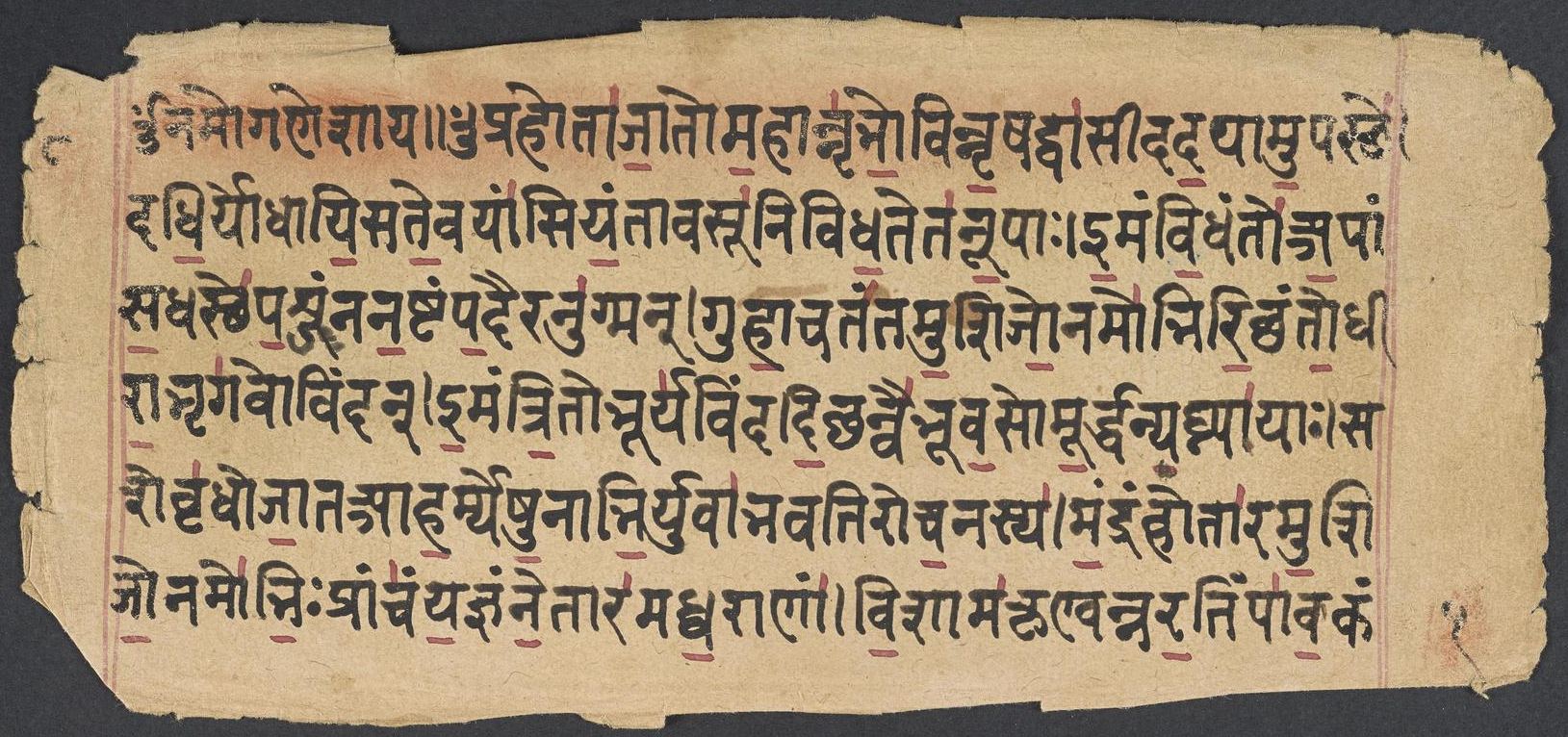
Penn Ms. Coll. 390 Item 48, fol. 1v (OPenn image 1, upper leaf). Checked on the image: the Rigveda text on this page begins in RV 10.46.1 ‹pra hotā jāto mahān›. Line 1 opens with the invocation śrīgaṇeśāya namaḥ, then 10.46.1 (pra hotā jāto mahān nabhovin). The next page with Rigveda text, fol. 2r, begins in RV 10.46.4 ‹havyavāhaṁ dadhato mānuṣeṣu›. Verses 10.46.1-3 end on this page.
1pra hotā̍ jā̱to ma̱hān na̍bho̱vin nṛ̱ṣadvā̍ sīdad a̱pām u̱pasthe̍ | dadhi̱r yo dhāyi̱ sa te̱ vayā̍ṁsi ya̱ntā vasū̍ni vidha̱te ta̍nū̱pāḥ ||
2i̱maṁ vi̱dhanto̍ a̱pāṁ sa̱dhasthe̍ pa̱śuṁ na na̱ṣṭam pa̱dair anu̍ gman | guhā̱ cata̍ntam u̱śijo̱ namo̍bhir i̱cchanto̱ dhīrā̱ bhṛga̍vo 'vindan ||
3i̱maṁ tri̱to bhūry a̍vindad i̱cchan vai̍bhūva̱so mū̱rdhany aghnyā̍yāḥ | sa śevṛ̍dho jā̱ta ā ha̱rmyeṣu̱ nābhi̱r yuvā̍ bhavati roca̱nasya̍ ||
1STABLISHED for thee, to lend thee vital forces, Giver of wealth, Guard of his servant's body. The Great Priest, born, who knows the clouds, Abider with men, is seated in the lap of waters.
2Worshipping, seeking him with adoration like some lost creature followed by its footprints, Wise Bhr̥igus, yearning in their hearts, pursued him, and found him lurking where the floods are gathered.
3On the Cow's forehead, with laborious searching, Trita, the offspring of Vibhiavas, found him. Born in our houses, Youthful, joy-bestower, he now becomes the central point of brightness.
Where on the image
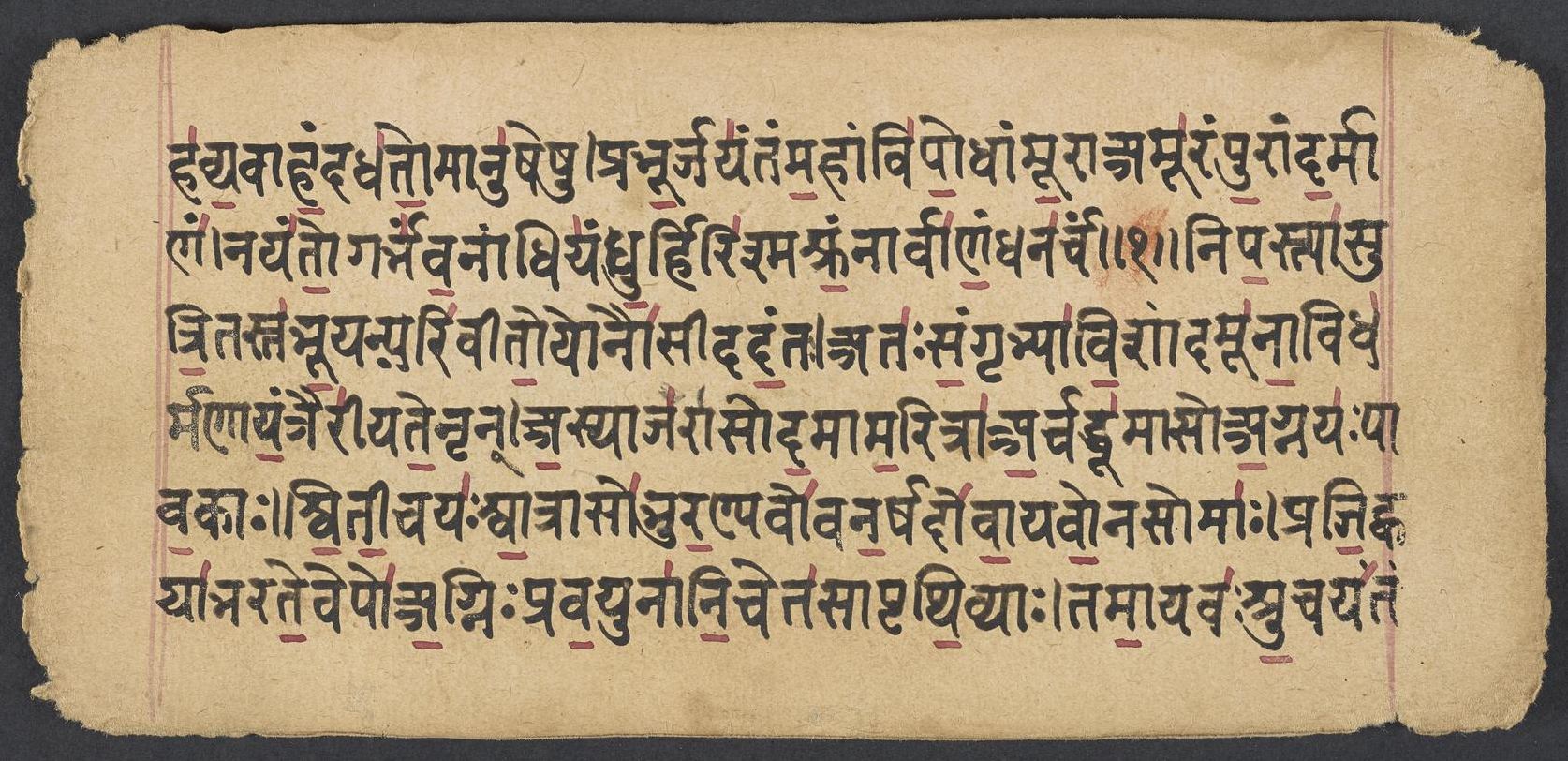
Penn Ms. Coll. 390 Item 48, fol. 2r (OPenn image 1, lower leaf). Checked on the image: the Rigveda text on this page begins in RV 10.46.4 ‹havyavāhaṁ dadhato mānuṣeṣu›. The next page with Rigveda text, fol. 2v, begins in RV 10.46.8 ‹pāvakam mandraṁ hotāraṁ dadhire›. Verses 10.46.4-7 end on this page; 10.46.4 begins on fol. 1v.
4ma̱ndraṁ hotā̍ram u̱śijo̱ namo̍bhi̱ḥ prāñca̍ṁ ya̱jñaṁ ne̱tāra̍m adhva̱rāṇā̍m | vi̱śām a̍kṛṇvann ara̱tim pā̍va̱kaṁ ha̍vya̱vāha̱ṁ dadha̍to̱ mānu̍ṣeṣu ||
5pra bhū̱r jaya̍ntam ma̱hāṁ vi̍po̱dhām mū̱rā amū̍ram pu̱rāṁ da̱rmāṇa̍m | naya̍nto̱ garbha̍ṁ va̱nāṁ dhiya̍ṁ dhu̱r hiri̍śmaśru̱ṁ nārvā̍ṇa̱ṁ dhana̍rcam ||
6ni pa̱styā̍su tri̱taḥ sta̍bhū̱yan pari̍vīto̱ yonau̍ sīdad a̱ntaḥ | ata̍ḥ sa̱ṁgṛbhyā̍ vi̱śāṁ damū̍nā̱ vidha̍rmaṇāya̱ntrair ī̍yate̱ nṝn ||
7a̱syājarā̍so da̱mām a̱ritrā̍ a̱rcaddhū̍māso a̱gnaya̍ḥ pāva̱kāḥ | śvi̱tī̱caya̍ḥ śvā̱trāso̍ bhura̱ṇyavo̍ vana̱rṣado̍ vā̱yavo̱ na somā̍ḥ ||
4Yearning, with homage, they have set and made him blithe Priest among mankind, oblation-bearer, Leader of rites and Purifier, envoy of men, as sacrifice that still advances.
5The foolish brought the ne'er-bewildered forward, great, Victor, Song-inspirer, Fort-destroyer. Leading the Youth gold-bearded, like a courser gleaming with wealth, they turned their hymn to profit.
6Holding his station firmly in the houses, Trita sat down within his home surrounded Thence, as Law bids, departs the Tribes' Companion having collected men with no compulsion.
7His are the fires, eternal, purifying, that make the houses move, whose smoke is shining, White, waxing in their strength, for ever stirring, and sitting in the wood; like winds are Somas.
Where on the image
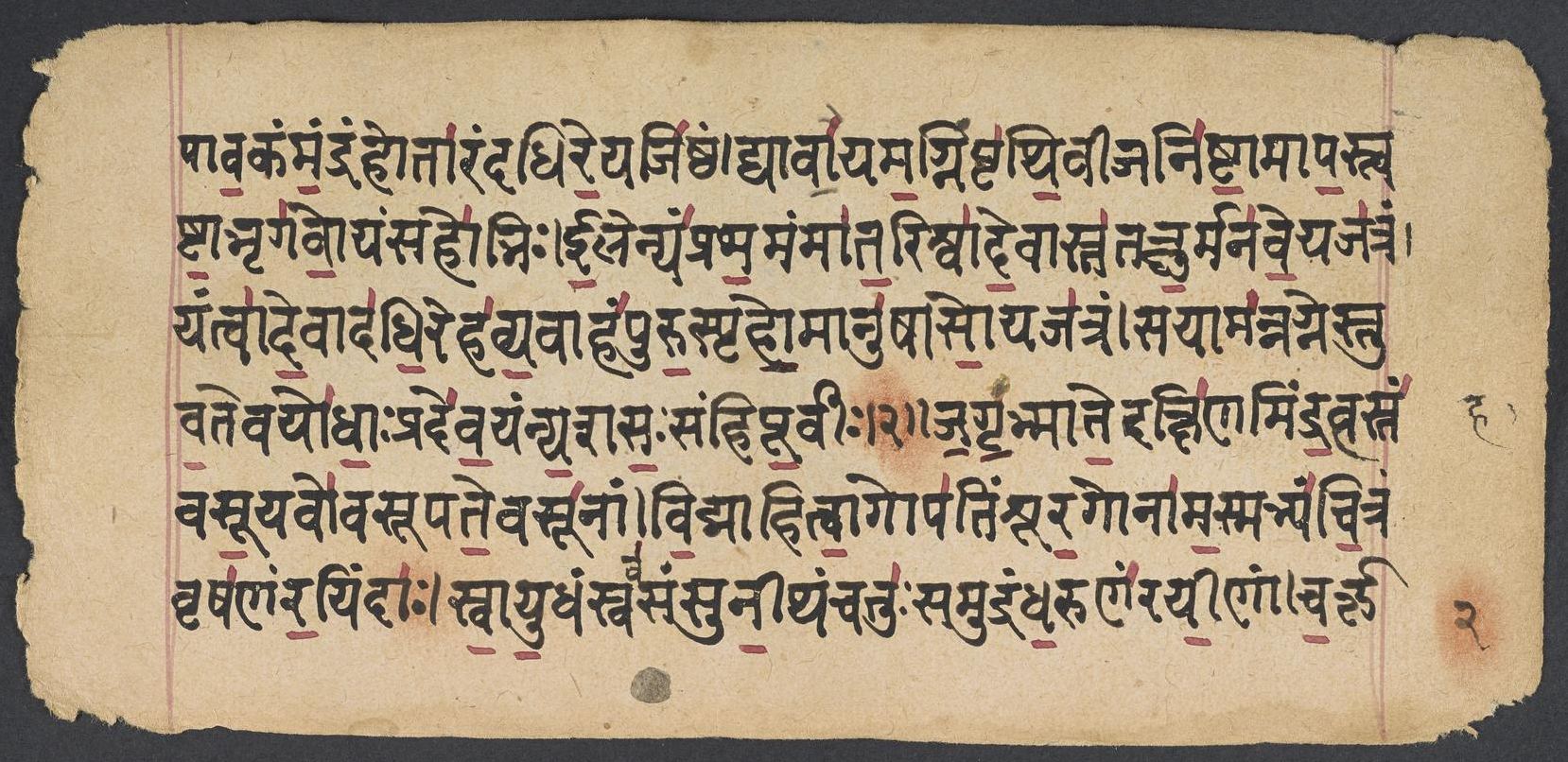
Penn Ms. Coll. 390 Item 48, fol. 2v (OPenn image 2, upper leaf). Checked on the image: the Rigveda text on this page begins in RV 10.46.8 ‹pāvakam mandraṁ hotāraṁ dadhire›. The next page with Rigveda text, fol. 3r, begins in RV 10.47.2 ‹-carkṛtyaṁ śaṁsyam bhūrivāram asmabhyaṁ›. Verses 10.46.8-10 end on this page; 10.46.8 begins on fol. 2r.
8pra ji̱hvayā̍ bharate̱ vepo̍ a̱gniḥ pra va̱yunā̍ni̱ ceta̍sā pṛthi̱vyāḥ | tam ā̱yava̍ḥ śu̱caya̍ntam pāva̱kam ma̱ndraṁ hotā̍raṁ dadhire̱ yaji̍ṣṭham ||
9dyāvā̱ yam a̱gnim pṛ̍thi̱vī jani̍ṣṭā̱m āpa̱s tvaṣṭā̱ bhṛga̍vo̱ yaṁ saho̍bhiḥ | ī̱ḻenya̍m pratha̱mam mā̍ta̱riśvā̍ de̱vās ta̍takṣu̱r mana̍ve̱ yaja̍tram ||
10yaṁ tvā̍ de̱vā da̍dhi̱re ha̍vya̱vāha̍m puru̱spṛho̱ mānu̍ṣāso̱ yaja̍tram | sa yāma̍nn agne stuva̱te vayo̍ dhā̱ḥ pra de̍va̱yan ya̱śasa̱ḥ saṁ hi pū̱rvīḥ ||
8The tongue of Agni bears away the praisesong, and, through his care for Earth, her operations. Him, bright and radiant, living men have stablished as their blithe Priest, the Chief of Sacrificers.
9That Agni, him whom Heaven and Earth engendered, the Waters. Tvashṭar, and with might, the Bhr̥igus, Him Mâtariṣvan and the Gods have fashioned holy for man and first to be entreated.
10Agni, whom Gods have made oblationbearer, and much-desiring men regard as holy, Give life to him who lauds thee when he worships, and then shall glorious men in troops adore thee.
Notes
- Sanskrit: Aufrecht's edition (1877) with the Vedic accents, as entered by van Nooten and Holland (GRETIL).
- English: Ralph T. H. Griffith, The Hymns of the Rigveda (1889-1892; 2nd ed. 1896-1897), from the VedaWeb digital text; OCR slips in that text were corrected against the printed 2nd edition (data/sources/rigveda/griffith_errata.json).
Cite
Sources
- Source: Penn Ms. Coll. 390 Item 48 (1711 CE (colophon: Saṃvat 1768)), OPenn, Public Domain Mark + Aufrecht's accented text (GRETIL) + Griffith's English (VedaWeb) (holding institution)
- Critical edition: Aufrecht (1877), accented e-text via GRETIL
← previous · → next · v cycle view · l back to library