Rigveda 10.45: To Agni
Introduction
Rigveda 10.45 is a hymn of 12 verses addressed to Agni. It stands in book (maṇḍala) 10, the last and latest book. The Rigveda is the oldest collection of Sanskrit hymns, composed in the second half of the second millennium BCE and handed down orally for many centuries before it was written down.
The manuscript shown is Penn Ms. Coll. 390 Item 41 (University of Pennsylvania), an undated paper manuscript of the padapāṭha (the word-by-word recitation text, in which every word is written separately and compounds are split) of the whole Ṛgveda in Devanāgarī, 884 leaves in fascicles, 7-9 lines to the page, accents in red; this hymn stands on fol. 783v-784v. Each section below gives the verses that end on one page; the page boundaries were read on the images (the opening words of every page), not counted out. Where the manuscript is a padapāṭha (the word-by-word recitation text), the section shows Aufrecht's continuous (saṃhitā) text first and, as the edition text, the padapāṭha of the same verses, which is the form written on the page.
How was this verified? (Provenance)
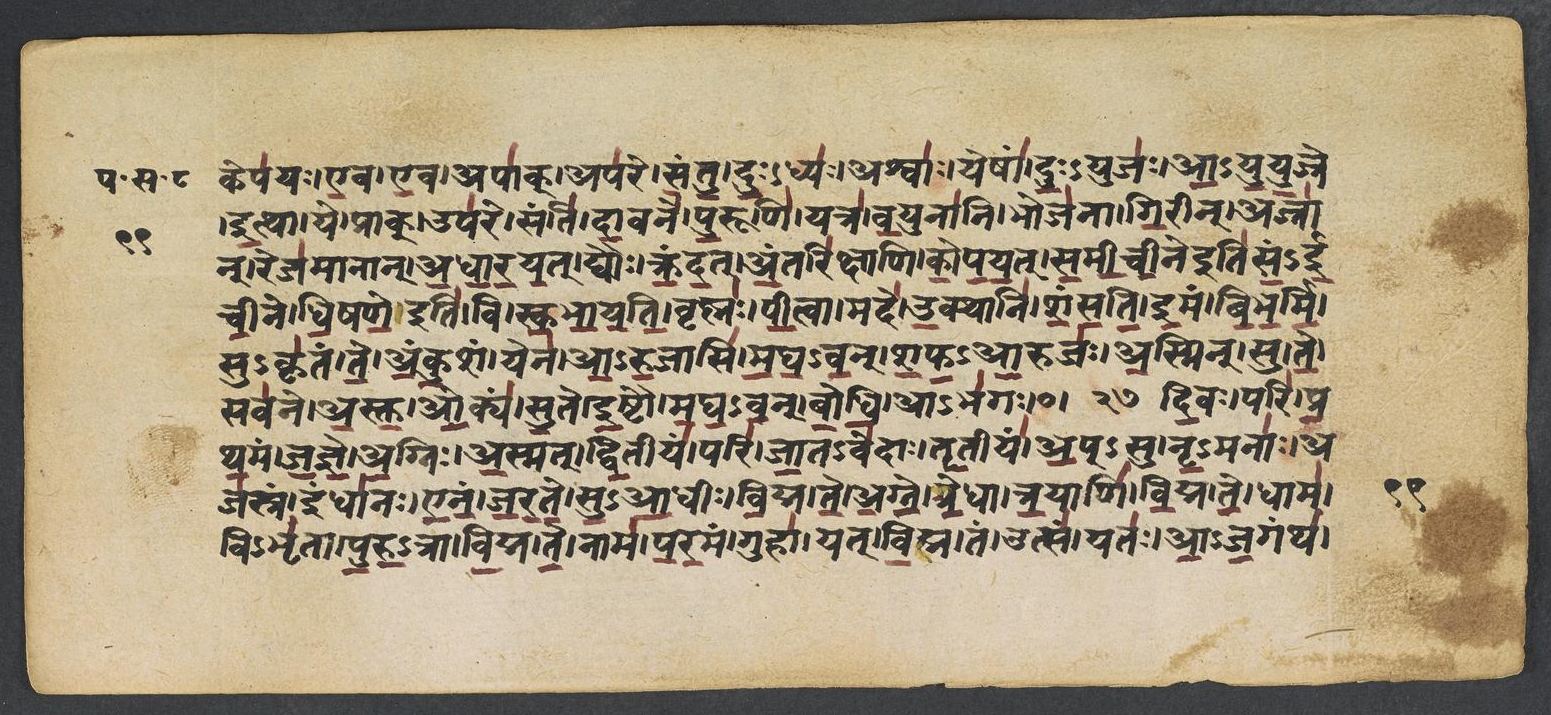
Where on the image
Penn Ms. Coll. 390 Item 41, fol. 783v (numbered 99v by the scribe) (OPenn image 784, upper leaf). Checked on the image: the Rigveda text on this page begins in RV 10.44.6 ‹kepayaḥ›. The next page with Rigveda text, fol. 784r (numbered 100r by the scribe), begins in RV 10.45.3 ‹samudre tvā nṛ-manāḥ ap-su›. Verses 10.45.1-2 end on this page.
1di̱vas pari̍ pratha̱maṁ ja̍jñe a̱gnir a̱smad dvi̱tīya̱m pari̍ jā̱tave̍dāḥ | tṛ̱tīya̍m a̱psu nṛ̱maṇā̱ aja̍sra̱m indhā̍na enaṁ jarate svā̱dhīḥ ||
2vi̱dmā te̍ agne tre̱dhā tra̱yāṇi̍ vi̱dmā te̱ dhāma̱ vibhṛ̍tā puru̱trā | vi̱dmā te̱ nāma̍ para̱maṁ guhā̱ yad vi̱dmā tam utsa̱ṁ yata̍ āja̱gantha̍ ||
Compare: Padapāṭha (word-by-word text written in the manuscript; Sansknet e-text via GRETIL)
1divaḥ | pari | prathamam | jajñe | agniḥ | asmat | dvitīyam | pari | jāta-vedāḥ | tṛtīyam | ap-su | nṛ-manāḥ | ajasram | indhānaḥ | enam | jarate | su-ādhīḥ
2vidma | te | agne | tredhā | trayāṇi | vidma | te | dhāma | vi-bhṛtā | puru-trā | vidma | te | nāma | paramam | guhā | yat | vidma | tam | utsam | yataḥ | ājagantha
1FIRST Agni sprang to life from out of Heaven: the second time from us came Jâtavedas. Thirdly the Manly-souled was in the waters. The pious lauds and kindles him the Eternal.
2Agni, we know thy three powers in three stations, we know thy forms in many a place divided. We know what name supreme thou hast in secret: we know the source from which thou hast proceeded.
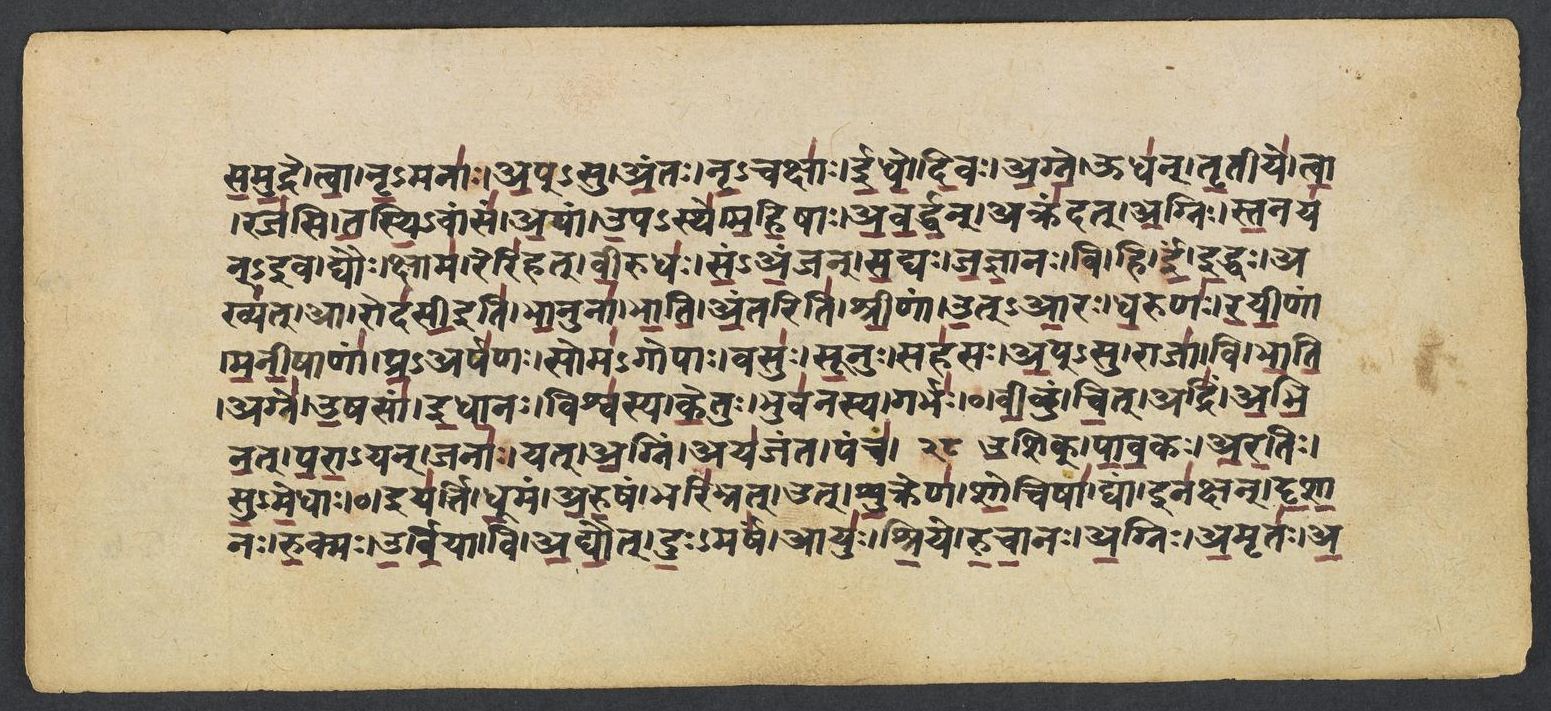
Where on the image
Penn Ms. Coll. 390 Item 41, fol. 784r (numbered 100r by the scribe) (OPenn image 784, lower leaf). Checked on the image: the Rigveda text on this page begins in RV 10.45.3 ‹samudre tvā nṛ-manāḥ ap-su›. The next page with Rigveda text, fol. 784v (numbered 100v by the scribe), begins in RV 10.45.8 ‹-abhavat vayaḥ-bhiḥ yat enam›. Verses 10.45.3-7 end on this page.
3sa̱mu̱dre tvā̍ nṛ̱maṇā̍ a̱psv a1̱̍ntar nṛ̱cakṣā̍ īdhe di̱vo a̍gna̱ ūdha̍n | tṛ̱tīye̍ tvā̱ raja̍si tasthi̱vāṁsa̍m a̱pām u̱pasthe̍ mahi̱ṣā a̍vardhan ||
4akra̍ndad a̱gniḥ sta̱naya̍nn iva̱ dyauḥ kṣāmā̱ reri̍had vī̱rudha̍ḥ sama̱ñjan | sa̱dyo ja̍jñā̱no vi hīm i̱ddho akhya̱d ā roda̍sī bhā̱nunā̍ bhāty a̱ntaḥ ||
5śrī̱ṇām u̍dā̱ro dha̱ruṇo̍ rayī̱ṇām ma̍nī̱ṣāṇā̱m prārpa̍ṇa̱ḥ soma̍gopāḥ | vasu̍ḥ sū̱nuḥ saha̍so a̱psu rājā̱ vi bhā̱ty agra̍ u̱ṣasā̍m idhā̱naḥ ||
6viśva̍sya ke̱tur bhuva̍nasya̱ garbha̱ ā roda̍sī apṛṇā̱j jāya̍mānaḥ | vī̱ḻuṁ ci̱d adri̍m abhinat parā̱yañ janā̱ yad a̱gnim aya̍janta̱ pañca̍ ||
7u̱śik pā̍va̱ko a̍ra̱tiḥ su̍me̱dhā marte̍ṣv a̱gnir a̱mṛto̱ ni dhā̍yi | iya̍rti dhū̱mam a̍ru̱ṣam bhari̍bhra̱d uc chu̱kreṇa̍ śo̱ciṣā̱ dyām ina̍kṣan ||
Compare: Padapāṭha (word-by-word text written in the manuscript; Sansknet e-text via GRETIL)
3samudre | tvā | nṛ-manāḥ | ap-su | antaḥ | nṛ-cakṣāḥ | īdhe | divaḥ | agne | ūdhan | tṛtīye | tvā | rajasi | tasthi-vāṃsam | apām | upa-sthe | mahiṣāḥ | avardhan
4akrandat | agniḥ | stanayan-iva | dyauḥ | kṣāma | rerihat | vīrudhaḥ | sam-añjan | sadyaḥ | jajñānaḥ | vi | hi | īm | iddhaḥ | akhyat | ā | rodasī iti | bhānunā | bhāti | antariti
5śrīṇām | ut-āraḥ | dharuṇaḥ | rayīṇām | manīṣāṇām | pra-arpaṇaḥ | soma-gopāḥ | vasuḥ | sūnuḥ | sahasaḥ | ap-su | rājā | vi | bhāti | agre | uṣasām | idhānaḥ
6viśvasya | ketuḥ | bhuvanasya | garbhaḥ | ā | rodasī iti | apṛṇāt | jāyamānaḥ | vīḷum | cit | adrim | abhinat | parāyan | janāḥ | yat | agni m | ayajanta | pañca
7uśik | pāvakaḥ | aratiḥ | su-medhāḥ | marteṣu | agniḥ | amṛtaḥ | ni | dhāyi | iyarti | dhūmam | aruṣam | bharibhrat | ut | śukreṇa | śociṣā | dyām | inakṣan
3The Manly-souled lit thee in sea and waters, man's Viewer lit thee in the breast of heaven, There as thou stoodest in the third high region the Steers increased thee in the water's bosom.
4Agni roared out, like Dyaus what time he thunders: he licked the ground about the plants he flickered. At once, when born, he looked around enkindled, and lightened heaven and earth within with splendour.
5The spring of glories and support of riches, rouser of thoughts and guardian of the Soma, Good Son of Strength, a King amid the waters, in forefront of the Dawns he shines enkindled.
6Germ of the world, ensign of all creation, be sprang to life and filled the earth and heavens. Even the firm rock he cleft when passing over, when the Five Tribes brought sacrifice to Agni.
7So among mortals was Immortal Agni stablished as holy wise and willing envoy. He waves the red smoke that he lifts above him, striving to reach the heavens with radiant lustre.
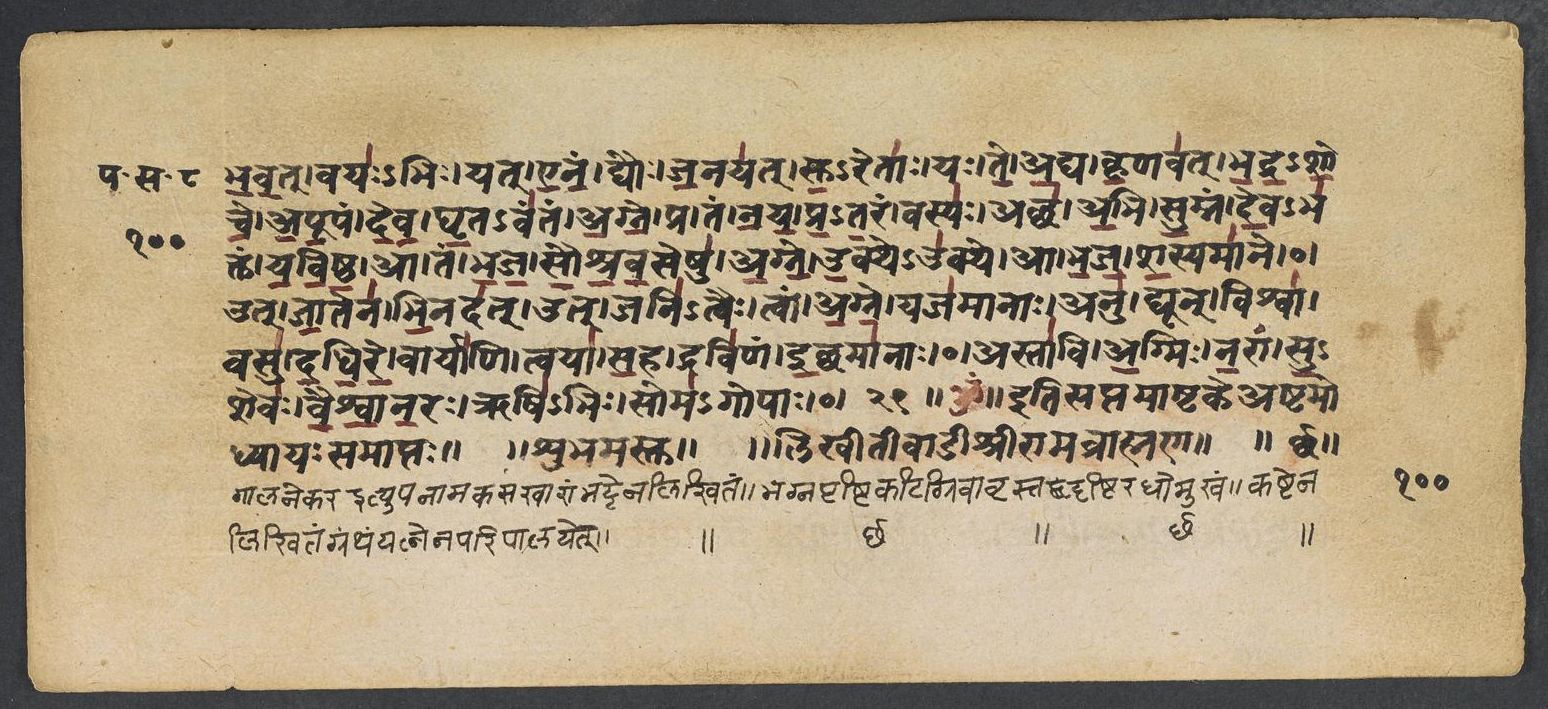
Where on the image
Penn Ms. Coll. 390 Item 41, fol. 784v (numbered 100v by the scribe) (OPenn image 785, upper leaf). Checked on the image: the Rigveda text on this page begins in RV 10.45.8 ‹-abhavat vayaḥ-bhiḥ yat enam›. The next page with Rigveda text, fol. 786v (numbered 2v by the scribe), begins in RV 10.46.1 ‹pra hotā jātaḥ mahān›. Verses 10.45.8-12 end on this page; 10.45.8 begins on fol. 784r (numbered 100r by the scribe).
8dṛ̱śā̱no ru̱kma u̍rvi̱yā vy a̍dyaud du̱rmarṣa̱m āyu̍ḥ śri̱ye ru̍cā̱naḥ | a̱gnir a̱mṛto̍ abhava̱d vayo̍bhi̱r yad e̍na̱ṁ dyaur ja̱naya̍t su̱retā̍ḥ ||
9yas te̍ a̱dya kṛ̱ṇava̍d bhadraśoce 'pū̱paṁ de̍va ghṛ̱tava̍ntam agne | pra taṁ na̍ya prata̱raṁ vasyo̱ acchā̱bhi su̱mnaṁ de̱vabha̍ktaṁ yaviṣṭha ||
10ā tam bha̍ja sauśrava̱seṣv a̍gna u̱ktha-u̍ktha̱ ā bha̍ja śa̱syamā̍ne | pri̱yaḥ sūrye̍ pri̱yo a̱gnā bha̍vā̱ty uj jā̱tena̍ bhi̱nada̱d uj jani̍tvaiḥ ||
11tvām a̍gne̱ yaja̍mānā̱ anu̱ dyūn viśvā̱ vasu̍ dadhire̱ vāryā̍ṇi | tvayā̍ sa̱ha dravi̍ṇam i̱cchamā̍nā vra̱jaṁ goma̍ntam u̱śijo̱ vi va̍vruḥ ||
12astā̍vy a̱gnir na̱rāṁ su̱śevo̍ vaiśvāna̱ra ṛṣi̍bhi̱ḥ soma̍gopāḥ | a̱dve̱ṣe dyāvā̍pṛthi̱vī hu̍vema̱ devā̍ dha̱tta ra̱yim a̱sme su̱vīra̍m ||
Compare: Padapāṭha (word-by-word text written in the manuscript; Sansknet e-text via GRETIL)
8dṛśānaḥ | rukmaḥ | urviyā | vi | adyaut | duḥ-marṣam | āyuḥ | śriye | rucānaḥ | agniḥ | amṛtaḥ | abhavat | vayaḥ-bhiḥ | yat | enam | dyauḥ | janayat | su-retāḥ
9yaḥ | te | adya | kṛṇavat | bhadra-śoce | apūpam | deva | ghṛta-vantam | agne | pra | tam | naya | pra-taram | vasyaḥ | accha | abhi | sumnam | deva-bhaktam | yaviṣṭha
10ā | tam | bhaja | sauśravaseṣu | agne | ukthe--ukthe | ā | bhaja | śasyamāne | priyaḥ | sūrye | priyaḥ | agnā | bhavāti | ut | jātena | bhinadat | ut | jani-tvaiḥ
11tvām | agne | yajamānāḥ | anu | dyūn | viśvā | vasu | dadhire | vāryāṇi | tvayā | saha | draviṇam | icchamānāḥ | vrajam | go--mantam | uśijaḥ | vi | vavruḥ
12astāvi | agniḥ | narām | su-śevaḥ | vaiśvānaraḥ | ṛṣi-bhiḥ | soma-gopāḥ | adveṣe | dyāvāpṛthivī iti | huvema | devāḥ | dhatta | rayim | asme iti | su-vīram
8Like gold to look on, far he shone refulgent, beaming imperishable life for glory, Agni by vital powers became immortal when his prolific Father Dyaus begat him.
9Whoso this day, O God whose flames are lovely, prepares a cake, O Agni, mixt with butter, Lead thou and further him to higher fortune, to bliss bestowed by Gods, O thou Most Youthful.
10Endow him, Agni, with a share of glory, at every song of praise sung forth enrich him. Dear let him be to Sûrya, dear to Agni, preeminent with son and children's children.
11While, Agni, day by day men pay thee worship they win themselves all treasures worth the wishing. Allied with thee, eager and craving riches, they have disclosed the stable filled with cattle.
12Agni, the Friend of men, the Soma's keeper, Vaiṣvânara, hath been lauded by the R̥ishis. We will invoke benignant Earth and Heaven: ye Deities, give us wealth with hero children.
Notes
- Sanskrit: Aufrecht's edition (1877) with the Vedic accents, as entered by van Nooten and Holland (GRETIL).
- English: Ralph T. H. Griffith, The Hymns of the Rigveda (1889-1892; 2nd ed. 1896-1897), from the VedaWeb digital text; OCR slips in that text were corrected against the printed 2nd edition (data/sources/rigveda/griffith_errata.json).
- Padapāṭha (edition text): Sansknet e-text via GRETIL (CC BY-NC-SA 4.0).
Cite
Sources
- Source: Penn Ms. Coll. 390 Item 41 (undated (catalogued with Penn's 18th-19th c. Vedic manuscripts)), OPenn, Public Domain Mark + Aufrecht's accented text (GRETIL) + Griffith's English (VedaWeb) (holding institution)
- Critical edition: Aufrecht (1877), accented e-text via GRETIL
← previous · → next · v cycle view · l back to library