Rigveda 10.51: Dialogue between the gods and Agni
Introduction
Rigveda 10.51 is a hymn of 9 verses addressed to dialogue between the gods and Agni. It stands in book (maṇḍala) 10, the last and latest book. The Rigveda is the oldest collection of Sanskrit hymns, composed in the second half of the second millennium BCE and handed down orally for many centuries before it was written down.
The manuscript shown is Penn Ms. Coll. 390 Item 48 (University of Pennsylvania), a paper manuscript of the eighth aṣṭaka (RV 10.46-10.191) of the Ṛgveda Saṃhitā in Devanāgarī, 158 leaves, 6 lines to the page, with the accents marked in red; the scribe's colophon on fol. 158 gives Saṃvat 1768 (1711 CE); this hymn stands on fol. 7r-8v. Each section below gives the verses that end on one page; the page boundaries were read on the images (the opening words of every page), not counted out. Like most Rigveda manuscripts, Penn Ms. Coll. 390 Item 48 writes a repeated refrain in short form after its first occurrence (for example kasmai° for kasmai devāya haviṣā vidhema); the Sanskrit shown is the full text of Aufrecht's edition.
How was this verified? (Provenance)
Where on the image
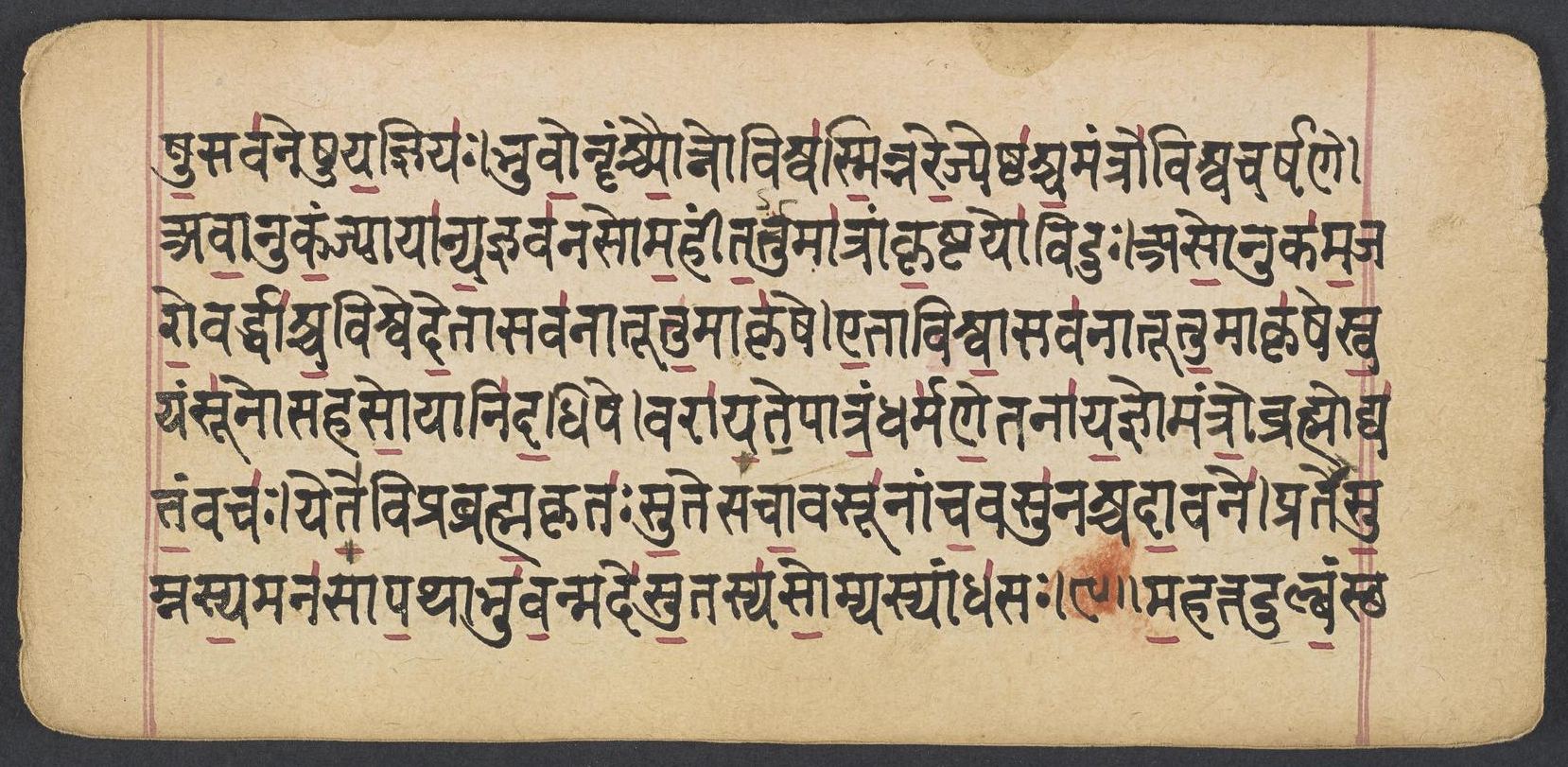
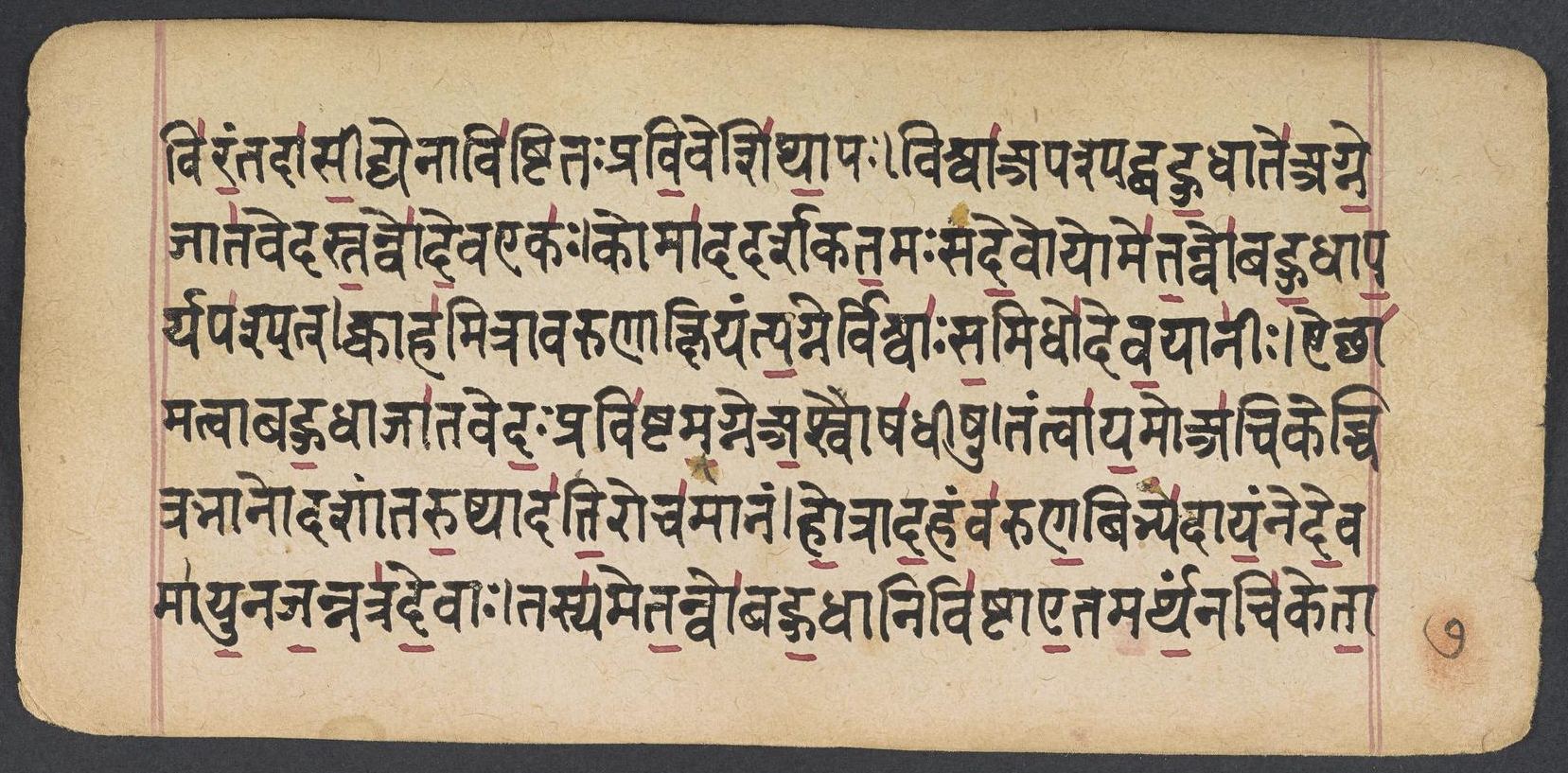
Penn Ms. Coll. 390 Item 48, fol. 7v (OPenn image 7, upper leaf). Checked on the image: the Rigveda text on this page begins in RV 10.51.1 ‹-sthaviraṁ tad āsīd yenāviṣṭitaḥ›. The next page with Rigveda text, fol. 8r, begins in RV 10.51.4 ‹-ciketāham agniḥ›. Verses 10.51.1-3 end on this page; 10.51.1 begins on fol. 7r.
1ma̱hat tad ulba̱ṁ sthavi̍ra̱ṁ tad ā̍sī̱d yenāvi̍ṣṭitaḥ pravi̱veśi̍thā̱paḥ | viśvā̍ apaśyad bahu̱dhā te̍ agne̱ jāta̍vedas ta̱nvo̍ de̱va eka̍ḥ ||
2ko mā̍ dadarśa kata̱maḥ sa de̱vo yo me̍ ta̱nvo̍ bahu̱dhā pa̱ryapa̍śyat | kvāha̍ mitrāvaruṇā kṣiyanty a̱gner viśvā̍ḥ sa̱midho̍ deva̱yānī̍ḥ ||
3aicchā̍ma tvā bahu̱dhā jā̍taveda̱ḥ pravi̍ṣṭam agne a̱psv oṣa̍dhīṣu | taṁ tvā̍ ya̱mo a̍cikec citrabhāno daśāntaru̱ṣyād a̍ti̱roca̍mānam ||
1LARGE was that covering, and firm of texture, folded wherein thou enteredst the waters. One Deity alone, O Jâtavedas Agni, saw all thy forms in sundry places.
2What God hath seen me? Who of all their number clearly beheld my forms in many places? Where lie, then, all the sacred logs of Agni that lead him God-ward, Varuṇa and Mitra?
3In many places, Agni Jâtavedas, we sought thee hidden in the plants and waters. Then Yama marked thee, God of wondrous splendour! effulgent from thy tenfold secret dwelling,
Where on the image
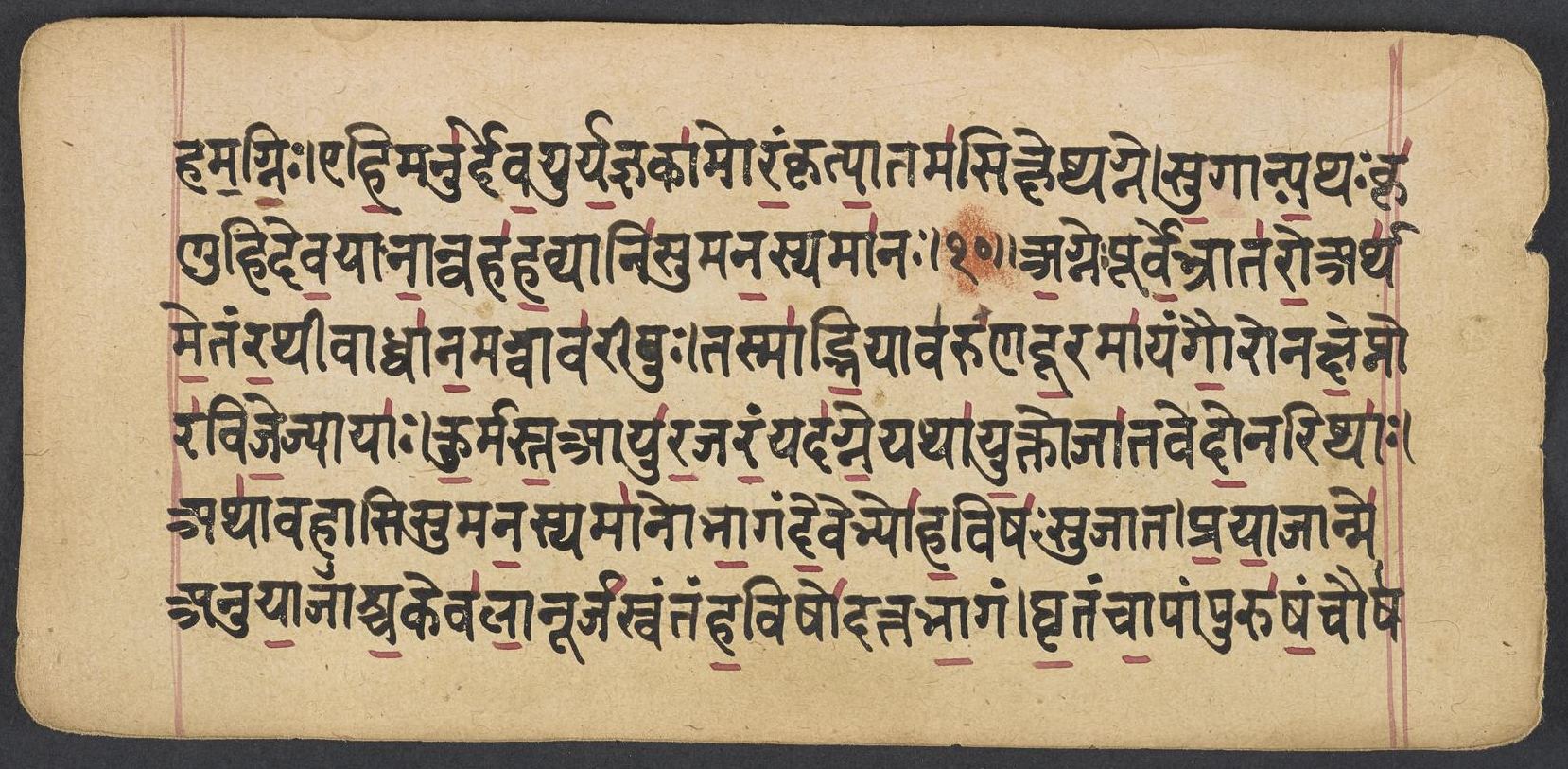
Penn Ms. Coll. 390 Item 48, fol. 8r (OPenn image 7, lower leaf). Checked on the image: the Rigveda text on this page begins in RV 10.51.4 ‹-ciketāham agniḥ›. The next page with Rigveda text, fol. 8v, begins in RV 10.51.8 ‹-cauṣadhīnām agneś ca dīrgham›. Verses 10.51.4-7 end on this page; 10.51.4 begins on fol. 7v.
4ho̱trād a̱haṁ va̍ruṇa̱ bibhya̍d āya̱ṁ ned e̱va mā̍ yu̱naja̱nn atra̍ de̱vāḥ | tasya̍ me ta̱nvo̍ bahu̱dhā nivi̍ṣṭā e̱tam artha̱ṁ na ci̍ketā̱ham a̱gniḥ ||
5ehi̱ manu̍r deva̱yur ya̱jñakā̍mo 'ra̱ṁkṛtyā̱ tama̍si kṣeṣy agne | su̱gān pa̱thaḥ kṛ̍ṇuhi deva̱yānā̱n vaha̍ ha̱vyāni̍ sumana̱syamā̍naḥ ||
6a̱gneḥ pūrve̱ bhrāta̍ro̱ artha̍m e̱taṁ ra̱thīvādhvā̍na̱m anv āva̍rīvuḥ | tasmā̍d bhi̱yā va̍ruṇa dū̱ram ā̍yaṁ gau̱ro na kṣe̱pnor a̍vije̱ jyāyā̍ḥ ||
7ku̱rmas ta̱ āyu̍r a̱jara̱ṁ yad a̍gne̱ yathā̍ yu̱kto jā̍tavedo̱ na riṣyā̍ḥ | athā̍ vahāsi sumana̱syamā̍no bhā̱gaṁ de̱vebhyo̍ ha̱viṣa̍ḥ sujāta ||
4I fled in fear from sacrificial worship, Varuṇa, lest the Gods should thus engage me. Thus were my forms laid down in many places. This, as my goal, I Agni saw before me.
5Come; man is pious and would fain do worship, he waits prepared: in gloom thou, Agni, dwellest. Make pathways leading God-ward clear and easy, and bear oblations with a kindly spirit.
6This goal mine elder brothers erst selected, as he who drives a car the way to travel. So,Varuṇa, I fled afar through terror, as flies the wild-bull from an archer's bowstring.
7We give thee life unwasting, Jâtavedas, so that, employed, thou never shalt be injured. So, nobly born! shalt thou with kindly spirit bear to the Gods their share of men's oblations.
Where on the image
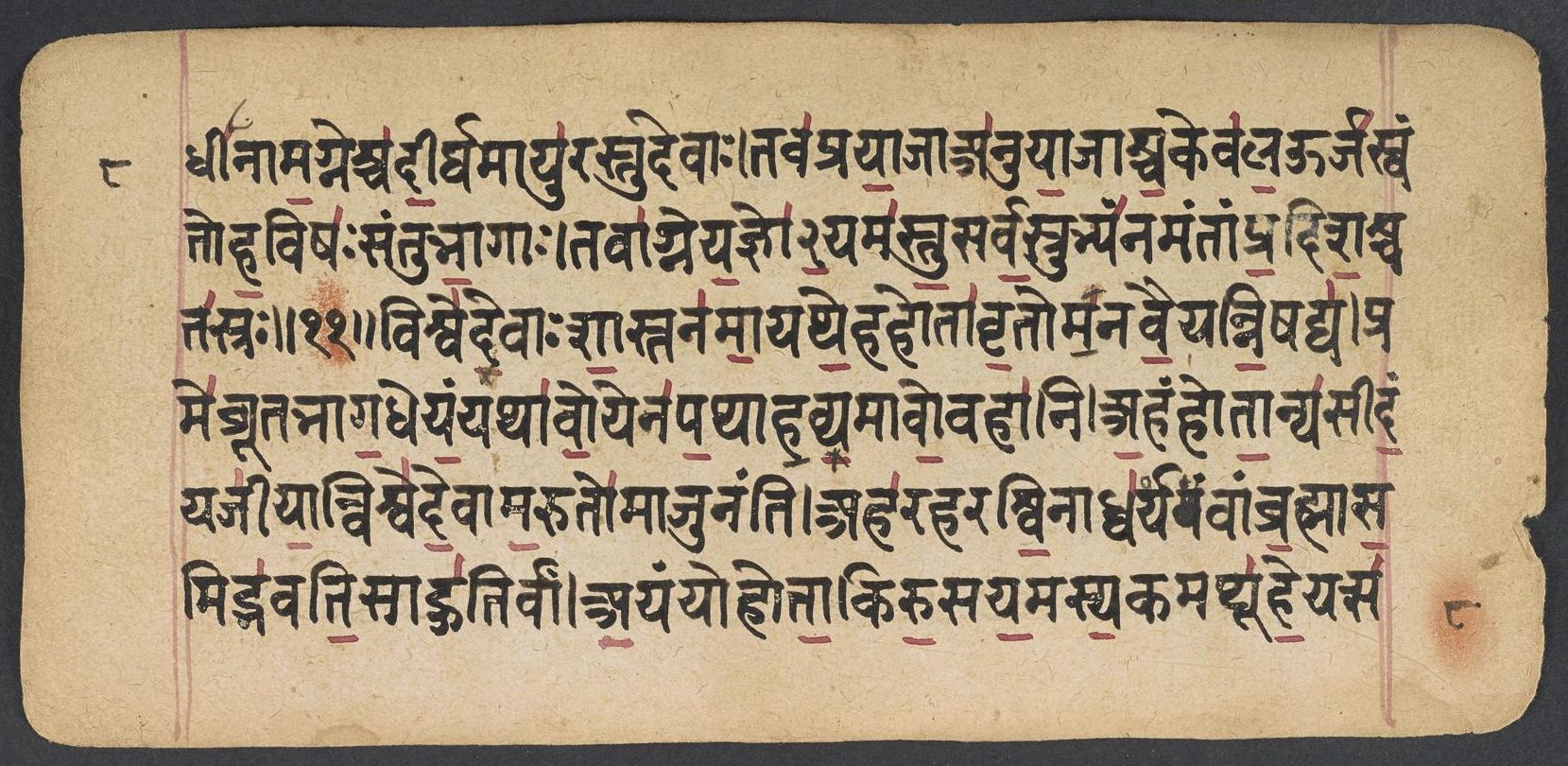
Penn Ms. Coll. 390 Item 48, fol. 8v (OPenn image 8, upper leaf). Checked on the image: the Rigveda text on this page begins in RV 10.51.8 ‹-cauṣadhīnām agneś ca dīrgham›. The next page with Rigveda text, fol. 9r, begins in RV 10.52.3 ‹-samañjanti devāḥ›. Verses 10.51.8-9 end on this page; 10.51.8 begins on fol. 8r.
8pra̱yā̱jān me̍ anuyā̱jām̐ś ca̱ keva̍lā̱n ūrja̍svantaṁ ha̱viṣo̍ datta bhā̱gam | ghṛ̱taṁ cā̱pām puru̍ṣa̱ṁ cauṣa̍dhīnām a̱gneś ca̍ dī̱rgham āyu̍r astu devāḥ ||
9tava̍ prayā̱jā a̍nuyā̱jāś ca̱ keva̍la̱ ūrja̍svanto ha̱viṣa̍ḥ santu bhā̱gāḥ | tavā̍gne ya̱jño̱3̱̍ 'yam a̍stu̱ sarva̱s tubhya̍ṁ namantām pra̱diśa̱ś cata̍sraḥ ||
8Grant me the first oblations and the latter, entire, my forceful shares of holy presents, The soul of plants, the fatness of the waters, and let there be long life, ye Gods, to Agni.
9Thine be the first oblations and the latter, entire, thy forceful shares of holy presents. Let all this sacrifice be thine, O Agni, and let the world's four regions bow before thee.
Notes
- Sanskrit: Aufrecht's edition (1877) with the Vedic accents, as entered by van Nooten and Holland (GRETIL).
- English: Ralph T. H. Griffith, The Hymns of the Rigveda (1889-1892; 2nd ed. 1896-1897), from the VedaWeb digital text; OCR slips in that text were corrected against the printed 2nd edition (data/sources/rigveda/griffith_errata.json).
Cite
Sources
- Source: Penn Ms. Coll. 390 Item 48 (1711 CE (colophon: Saṃvat 1768)), OPenn, Public Domain Mark + Aufrecht's accented text (GRETIL) + Griffith's English (VedaWeb) (holding institution)
- Critical edition: Aufrecht (1877), accented e-text via GRETIL
← previous · → next · v cycle view · l back to library