Rigveda 10.53: Sacrificial hymn
Introduction
Rigveda 10.53 is a hymn of 11 verses addressed to sacrificial hymn. It stands in book (maṇḍala) 10, the last and latest book. The Rigveda is the oldest collection of Sanskrit hymns, composed in the second half of the second millennium BCE and handed down orally for many centuries before it was written down.
The manuscript shown is Penn Ms. Coll. 390 Item 48 (University of Pennsylvania), a paper manuscript of the eighth aṣṭaka (RV 10.46-10.191) of the Ṛgveda Saṃhitā in Devanāgarī, 158 leaves, 6 lines to the page, with the accents marked in red; the scribe's colophon on fol. 158 gives Saṃvat 1768 (1711 CE); this hymn stands on fol. 9r-11r. Each section below gives the verses that end on one page; the page boundaries were read on the images (the opening words of every page), not counted out. Like most Rigveda manuscripts, Penn Ms. Coll. 390 Item 48 writes a repeated refrain in short form after its first occurrence (for example kasmai° for kasmai devāya haviṣā vidhema); the Sanskrit shown is the full text of Aufrecht's edition.
How was this verified? (Provenance)
Where on the image
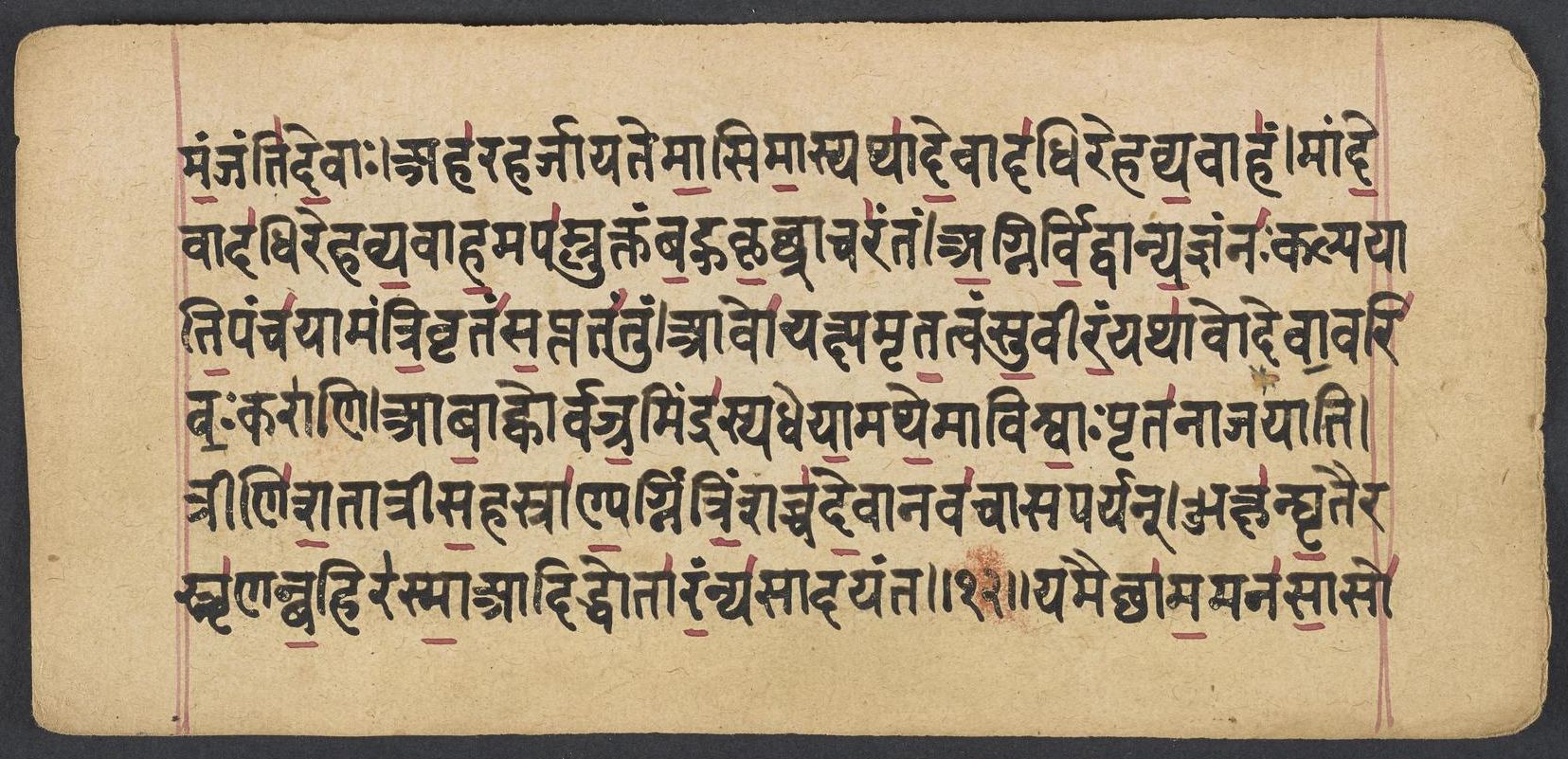
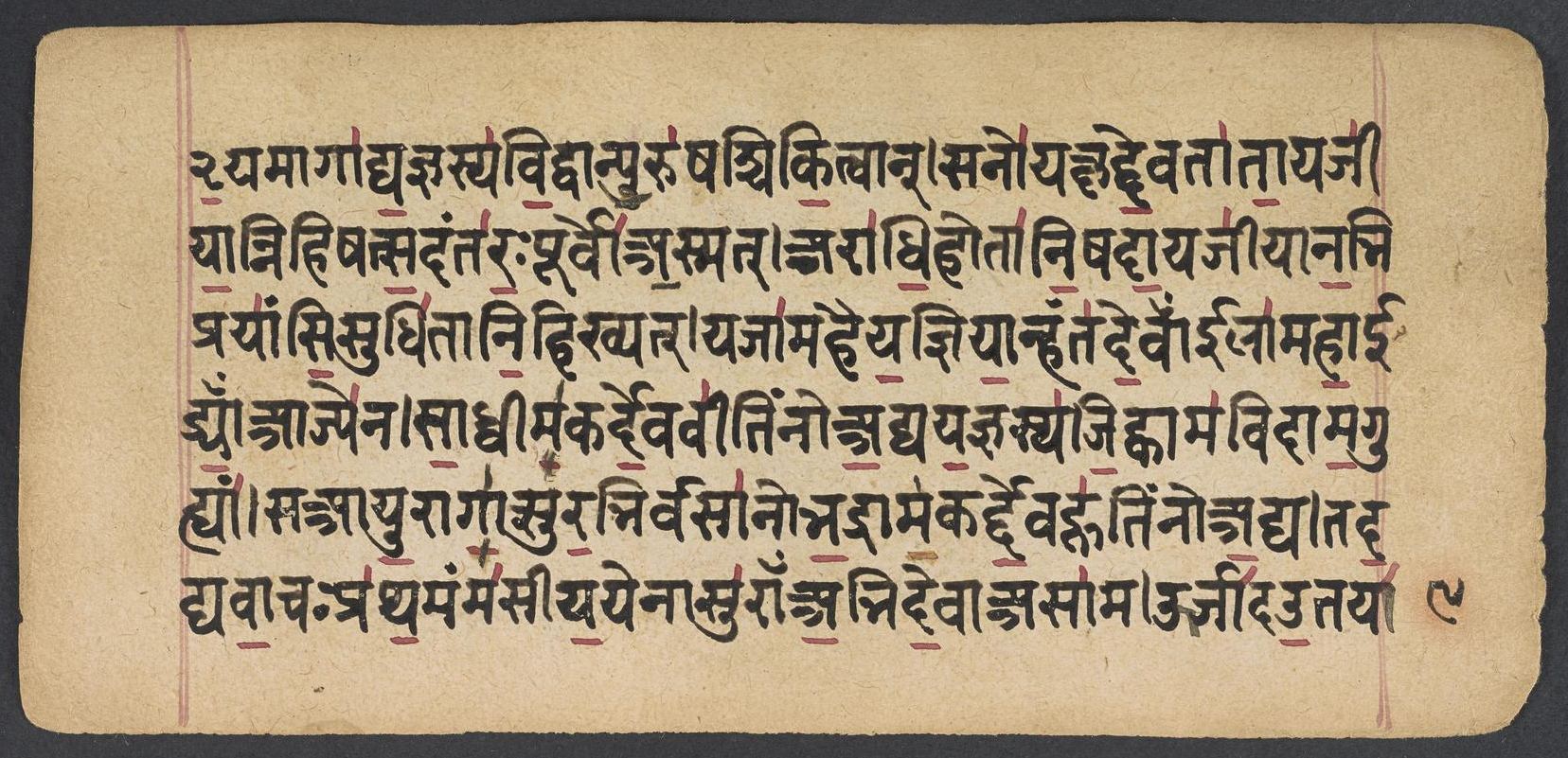
Penn Ms. Coll. 390 Item 48, fol. 9v (OPenn image 9, upper leaf). Checked on the image: the Rigveda text on this page begins in RV 10.53.1 ‹-so3 'yam āgād yajñasya›. The next page with Rigveda text, fol. 10r, begins in RV 10.53.4 ‹yajñiyāsaḥ pañca janā mama›. Verses 10.53.1-3 end on this page; 10.53.1 begins on fol. 9r.
1yam aicchā̍ma̱ mana̍sā̱ so̱3̱̍ 'yam āgā̍d ya̱jñasya̍ vi̱dvān paru̍ṣaś ciki̱tvān | sa no̍ yakṣad de̱vatā̍tā̱ yajī̍yā̱n ni hi ṣatsa̱d anta̍ra̱ḥ pūrvo̍ a̱smat ||
2arā̍dhi̱ hotā̍ ni̱ṣadā̱ yajī̍yān a̱bhi prayā̍ṁsi̱ sudhi̍tāni̱ hi khyat | yajā̍mahai ya̱jñiyā̱n hanta̍ de̱vām̐ īḻā̍mahā̱ īḍyā̱m̐ ājye̍na ||
3sā̱dhvīm a̍kar de̱vavī̍tiṁ no a̱dya ya̱jñasya̍ ji̱hvām a̍vidāma̱ guhyā̍m | sa āyu̱r āgā̍t sura̱bhir vasā̍no bha̱drām a̍kar de̱vahū̍tiṁ no a̱dya ||
1HE hath arrived, he whom we sought with longing, who skilled in sacrifice well knows its courses. Let him discharge his sacrificial duties: let him sit down as Friend who was before Us.
2Best Priest, he hath been won by being seated, for he hath looked on the well-ordered viands. Come, let usworship Gods who must be worshipped, and pouring oil, laud those who should be lauded.
3Now hath he made the feast of Gods effective: now have we found the secret tongue of worship. Now hath he come, sweet, robed in vital vigour, and made our calling on the Gods effective.
Where on the image
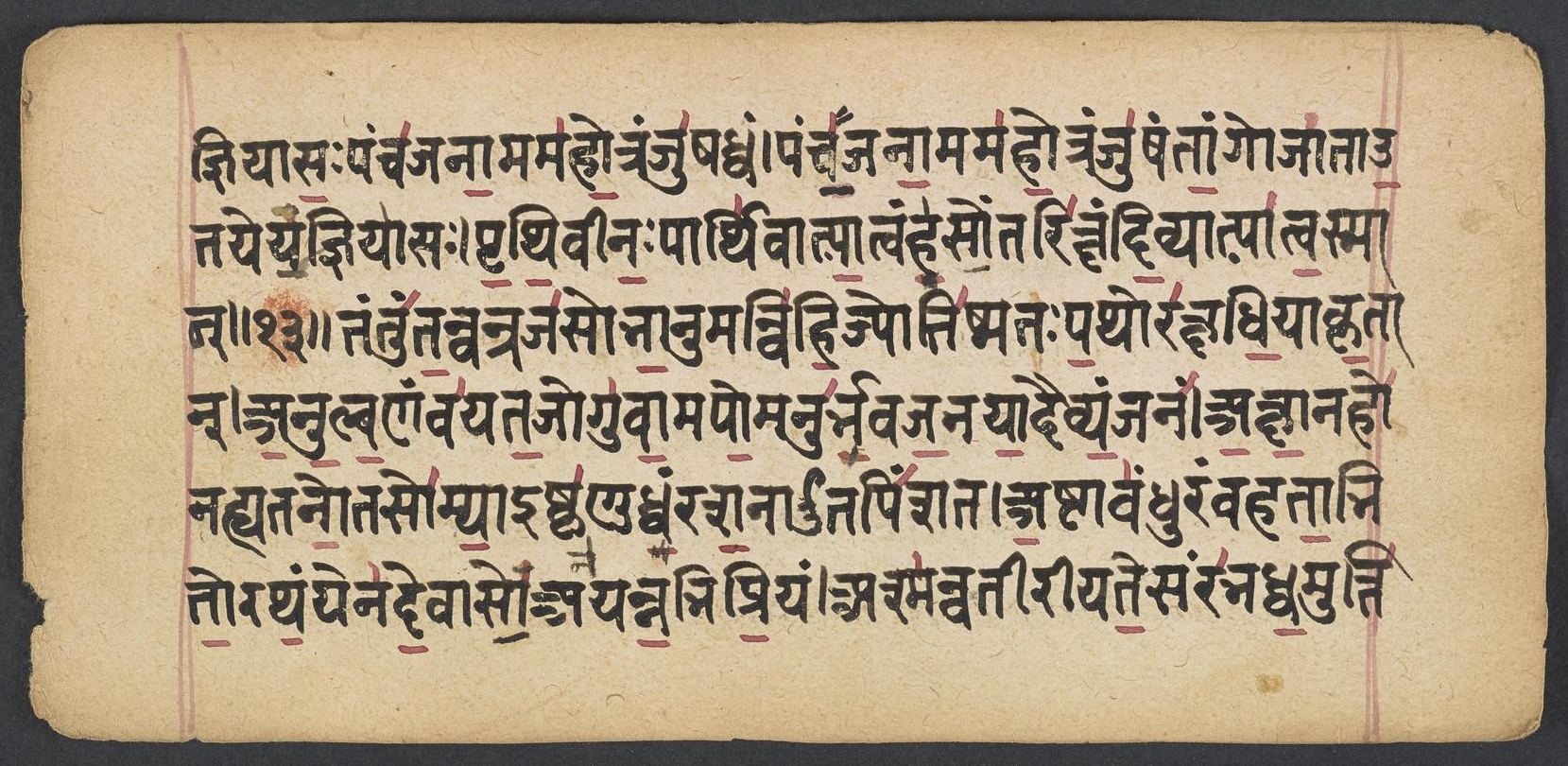
Penn Ms. Coll. 390 Item 48, fol. 10r (OPenn image 9, lower leaf). Checked on the image: the Rigveda text on this page begins in RV 10.53.4 ‹yajñiyāsaḥ pañca janā mama›. The next page with Rigveda text, fol. 10v, begins in RV 10.53.8 ‹-tiṣṭhata pra taratā sakhāyaḥ›. Verses 10.53.4-7 end on this page; 10.53.4 begins on fol. 9v.
4tad a̱dya vā̱caḥ pra̍tha̱mam ma̍sīya̱ yenāsu̍rām̐ a̱bhi de̱vā asā̍ma | ūrjā̍da u̱ta ya̍jñiyāsa̱ḥ pañca̍ janā̱ mama̍ ho̱traṁ ju̍ṣadhvam ||
5pañca̱ janā̱ mama̍ ho̱traṁ ju̍ṣantā̱ṁ gojā̍tā u̱ta ye ya̱jñiyā̍saḥ | pṛ̱thi̱vī na̱ḥ pārthi̍vāt pā̱tv aṁha̍so̱ 'ntari̍kṣaṁ di̱vyāt pā̍tv a̱smān ||
6tantu̍ṁ ta̱nvan raja̍so bhā̱num anv i̍hi̱ jyoti̍ṣmataḥ pa̱tho ra̍kṣa dhi̱yā kṛ̱tān | a̱nu̱lba̱ṇaṁ va̍yata̱ jogu̍vā̱m apo̱ manu̍r bhava ja̱nayā̱ daivya̱ṁ jana̍m ||
7a̱kṣā̱naho̍ nahyatano̱ta so̍myā̱ iṣkṛ̍ṇudhvaṁ raśa̱nā ota pi̍ṁśata | a̱ṣṭāva̍ndhuraṁ vahatā̱bhito̱ ratha̱ṁ yena̍ de̱vāso̱ ana̍yann a̱bhi pri̱yam ||
4This prelude of my speech I now will utter, whereby we Gods may quell our Asura foemen. Eaters of strengthening food who merit worship, O ye Five Tribes, be pleased with mine oblation.
5May the Five Tribes be pleased with mine oblation, and the Cow's Sons and all who merit worship. From earthly trouble may the earth protect us, and air's mid realm from woe that comes from heaven.
6Spinning the thread, follow the region's splendid light: guard thou the path ways well which wisdom hath prepared. Weave ye the knotless labour of the bards who sing: be Manu thou, and bring the Heavenly People forth.
7Lovers of Soma, bind the chariot traces fast: set ye the reins in order and embellish them. Bring hitherward the car with seats where eight may sit, whereon the Gods have brought the treasure that we love.
Where on the image
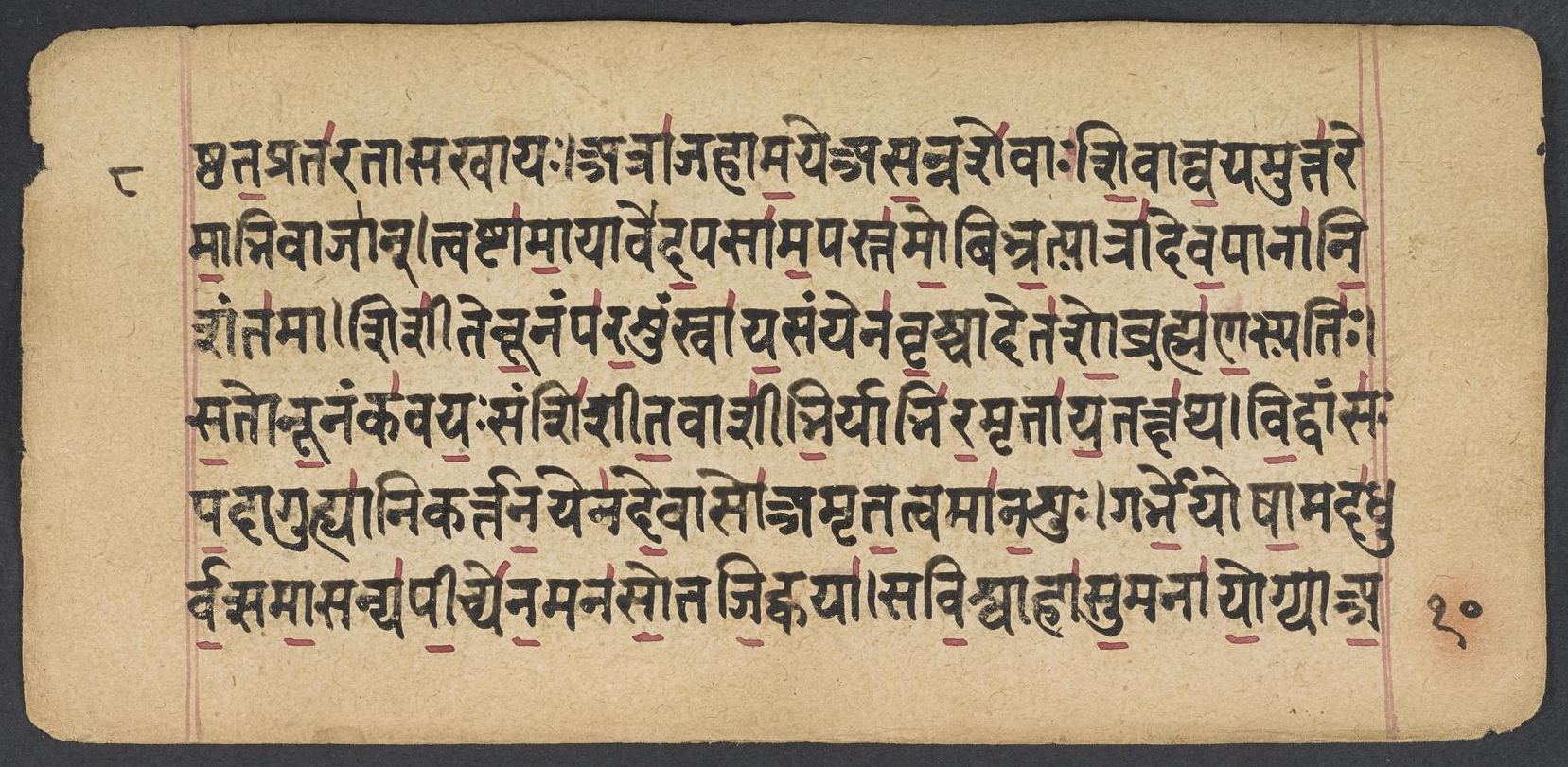
Penn Ms. Coll. 390 Item 48, fol. 10v (OPenn image 10, upper leaf). Checked on the image: the Rigveda text on this page begins in RV 10.53.8 ‹-tiṣṭhata pra taratā sakhāyaḥ›. The next page with Rigveda text, fol. 11r, begins in RV 10.53.11 ‹siṣāsanir vanate kāra ij›. Verses 10.53.8-10 end on this page; 10.53.8 begins on fol. 10r.
8aśma̍nvatī rīyate̱ saṁ ra̍bhadhva̱m ut ti̍ṣṭhata̱ pra ta̍ratā sakhāyaḥ | atrā̍ jahāma̱ ye asa̱nn aśe̍vāḥ śi̱vān va̱yam ut ta̍remā̱bhi vājā̍n ||
9tvaṣṭā̍ mā̱yā ve̍d a̱pasā̍m a̱pasta̍mo̱ bibhra̱t pātrā̍ deva̱pānā̍ni̱ śaṁta̍mā | śiśī̍te nū̱nam pa̍ra̱śuṁ svā̍ya̱saṁ yena̍ vṛ̱ścād eta̍śo̱ brahma̍ṇa̱s pati̍ḥ ||
10sa̱to nū̱naṁ ka̍vaya̱ḥ saṁ śi̍śīta̱ vāśī̍bhi̱r yābhi̍r a̱mṛtā̍ya̱ takṣa̍tha | vi̱dvāṁsa̍ḥ pa̱dā guhyā̍ni kartana̱ yena̍ de̱vāso̍ amṛta̱tvam ā̍na̱śuḥ ||
8Here flows Asmanvati: hold fast each other, keep yourselves up, and pass, my friends, the river. There let us leave the Powers that brought no profit, and cross the flood to Powers that are auspicious.
9Tvashṭar, most deft of workmen, knew each magic art, bringing most blessed bowls that hold the drink of Gods. His axe, wrought of good metal, he is sharpening now, wherewith the radiant Brahmaṇaspati will cut.
10Now, O ye Sapient Ones, make ye the axes sharp wherewith ye fashion bowls to hold the Amrita. Knowing the secret places make ye ready that whereby the Gods have gotten immortality.
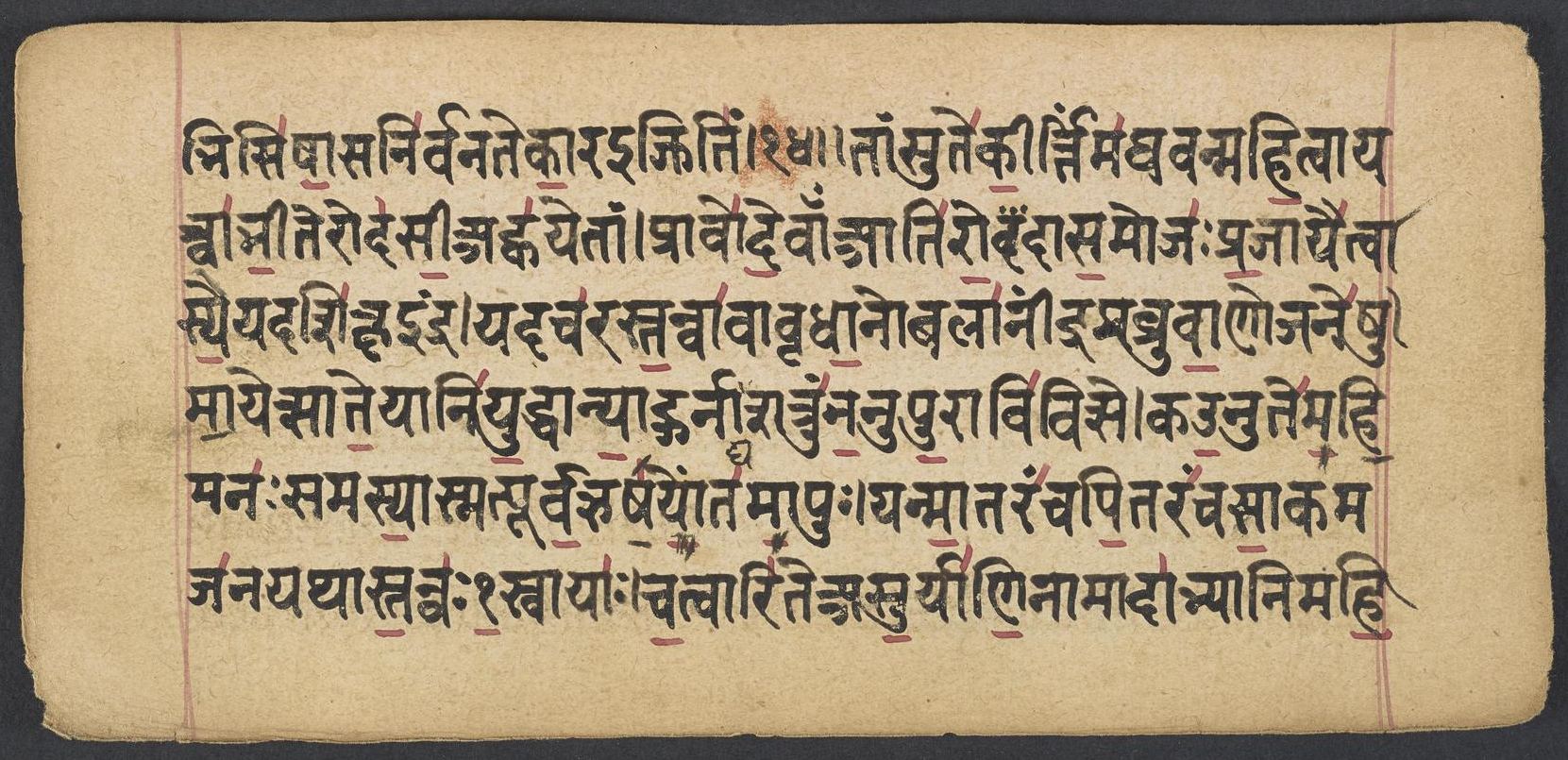
Where on the image
Penn Ms. Coll. 390 Item 48, fol. 11r (OPenn image 10, lower leaf). Checked on the image: the Rigveda text on this page begins in RV 10.53.11 ‹siṣāsanir vanate kāra ij›. The next page with Rigveda text, fol. 11v, begins in RV 10.54.4 ‹-mahiṣasya santi›. Verse 10.53.11 ends on this page; 10.53.11 begins on fol. 10v.
11garbhe̱ yoṣā̱m ada̍dhur va̱tsam ā̱sany a̍pī̱cye̍na̱ mana̍so̱ta ji̱hvayā̍ | sa vi̱śvāhā̍ su̱manā̍ yo̱gyā a̱bhi si̍ṣā̱sani̍r vanate kā̱ra ij jiti̍m ||
11Ye with a secret tongue and dark intention laid the maiden deep within, the calf within the mouth. They evermore are near us with their gracious help: successful is the song that strives for victory.
Notes
- Sanskrit: Aufrecht's edition (1877) with the Vedic accents, as entered by van Nooten and Holland (GRETIL).
- English: Ralph T. H. Griffith, The Hymns of the Rigveda (1889-1892; 2nd ed. 1896-1897), from the VedaWeb digital text; OCR slips in that text were corrected against the printed 2nd edition (data/sources/rigveda/griffith_errata.json).
Cite
Sources
- Source: Penn Ms. Coll. 390 Item 48 (1711 CE (colophon: Saṃvat 1768)), OPenn, Public Domain Mark + Aufrecht's accented text (GRETIL) + Griffith's English (VedaWeb) (holding institution)
- Critical edition: Aufrecht (1877), accented e-text via GRETIL
← previous · → next · v cycle view · l back to library