Rigveda 10.54: To Indra
Introduction
Rigveda 10.54 is a hymn of 6 verses addressed to Indra. It stands in book (maṇḍala) 10, the last and latest book. The Rigveda is the oldest collection of Sanskrit hymns, composed in the second half of the second millennium BCE and handed down orally for many centuries before it was written down.
The manuscript shown is Penn Ms. Coll. 390 Item 48 (University of Pennsylvania), a paper manuscript of the eighth aṣṭaka (RV 10.46-10.191) of the Ṛgveda Saṃhitā in Devanāgarī, 158 leaves, 6 lines to the page, with the accents marked in red; the scribe's colophon on fol. 158 gives Saṃvat 1768 (1711 CE); this hymn stands on fol. 11r-11v. Each section below gives the verses that end on one page; the page boundaries were read on the images (the opening words of every page), not counted out. Like most Rigveda manuscripts, Penn Ms. Coll. 390 Item 48 writes a repeated refrain in short form after its first occurrence (for example kasmai° for kasmai devāya haviṣā vidhema); the Sanskrit shown is the full text of Aufrecht's edition.
How was this verified? (Provenance)
Where on the image
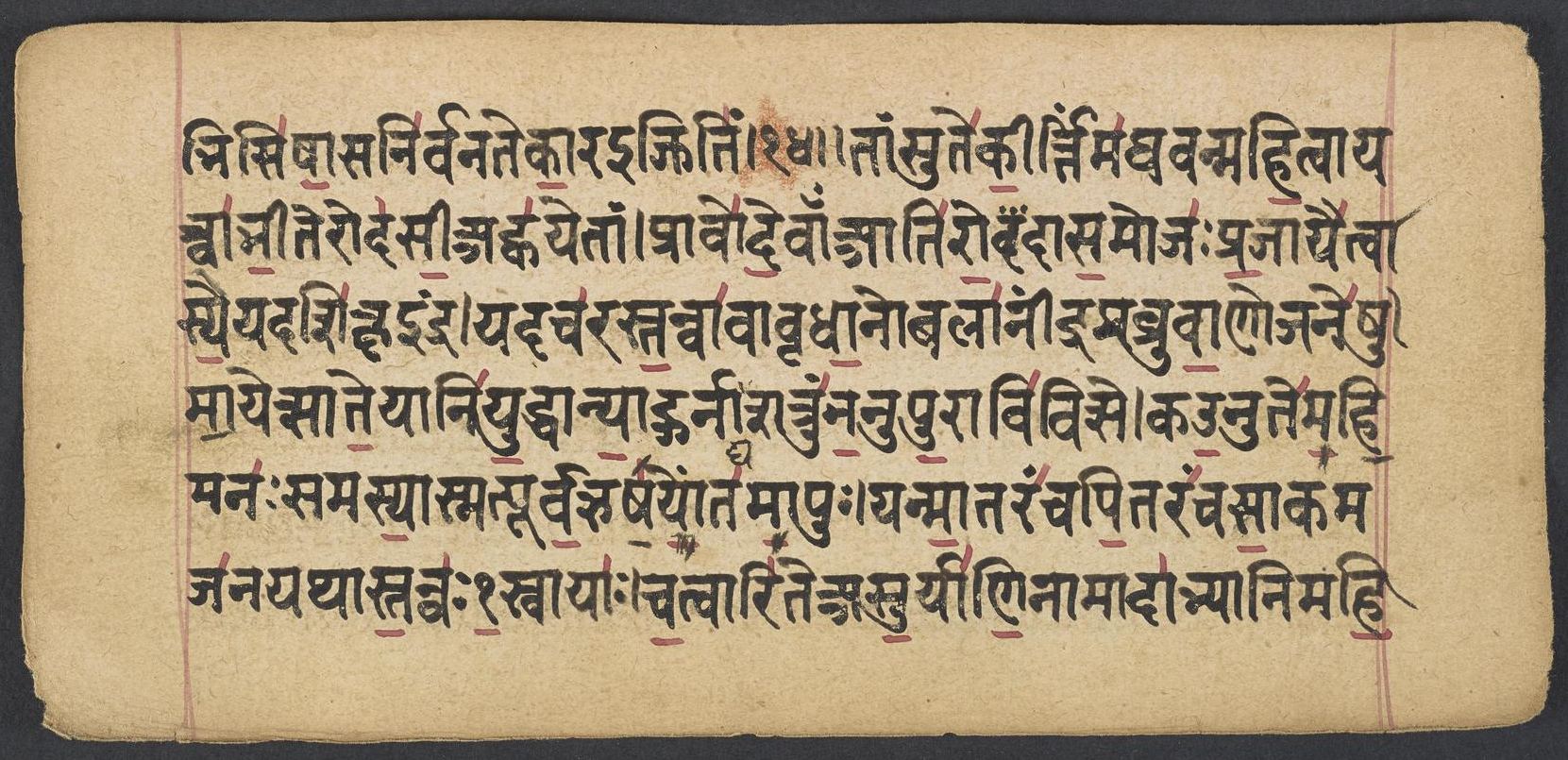
Penn Ms. Coll. 390 Item 48, fol. 11r (OPenn image 10, lower leaf). Checked on the image: the Rigveda text on this page begins in RV 10.53.11 ‹siṣāsanir vanate kāra ij›. The next page with Rigveda text, fol. 11v, begins in RV 10.54.4 ‹-mahiṣasya santi›. Verses 10.54.1-3 end on this page.
1tāṁ su te̍ kī̱rtim ma̍ghavan mahi̱tvā yat tvā̍ bhī̱te roda̍sī̱ ahva̍yetām | prāvo̍ de̱vām̐ āti̍ro̱ dāsa̱m oja̍ḥ pra̱jāyai̍ tvasyai̱ yad aśi̍kṣa indra ||
2yad aca̍ras ta̱nvā̍ vāvṛdhā̱no balā̍nīndra prabruvā̱ṇo jane̍ṣu | mā̱yet sā te̱ yāni̍ yu̱ddhāny ā̱hur nādya śatru̍ṁ na̱nu pu̱rā vi̍vitse ||
3ka u̱ nu te̍ mahi̱mana̍ḥ samasyā̱smat pūrva̱ ṛṣa̱yo 'nta̍m āpuḥ | yan mā̱tara̍ṁ ca pi̱tara̍ṁ ca sā̱kam aja̍nayathās ta̱nva1̱̍ḥ svāyā̍ḥ ||
1I SING thy fame that, Maghavan, through thy Greatness the heavens and earth invoked thee in their terror, Thou, aiding Gods, didst quell the power of Dâsas, what time thou holpest many a race, O Indra.
2When thou wast roaming, waxen strong in body, telling thy might, Indra, among the people, All that men called thy battles was illusion: no foe hast thou to-day, nor erst hast found one.
3Who are the R̥ishis, then, who comprehended before our time the bounds of all thy greatness? For from thy body thou hast generated at the same time the Mother and the Father.
Where on the image
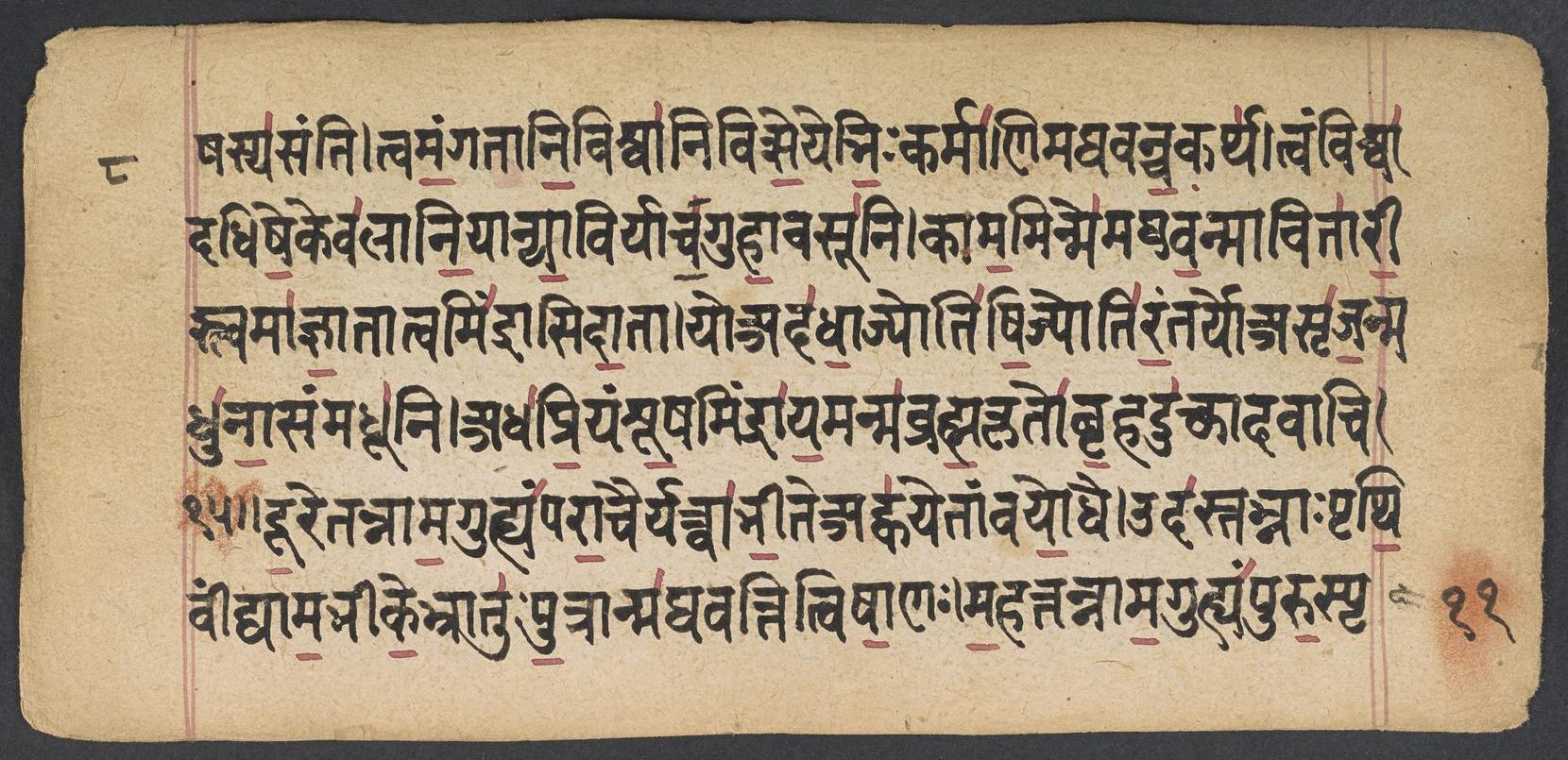
Penn Ms. Coll. 390 Item 48, fol. 11v (OPenn image 11, upper leaf). Checked on the image: the Rigveda text on this page begins in RV 10.54.4 ‹-mahiṣasya santi›. The next page with Rigveda text, fol. 12r, begins in RV 10.55.2 ‹-puruspṛg yena bhūtaṁ janayo›. Verses 10.54.4-6 end on this page; 10.54.4 begins on fol. 11r.
4ca̱tvāri̍ te asu̱ryā̍ṇi̱ nāmādā̍bhyāni mahi̱ṣasya̍ santi | tvam a̱ṅga tāni̱ viśvā̍ni vitse̱ yebhi̱ḥ karmā̍ṇi maghavañ ca̱kartha̍ ||
5tvaṁ viśvā̍ dadhiṣe̱ keva̍lāni̱ yāny ā̱vir yā ca̱ guhā̱ vasū̍ni | kāma̱m in me̍ maghava̱n mā vi tā̍rī̱s tvam ā̍jñā̱tā tvam i̍ndrāsi dā̱tā ||
6yo ada̍dhā̱j jyoti̍ṣi̱ jyoti̍r a̱ntar yo asṛ̍ja̱n madhu̍nā̱ sam madhū̍ni | adha̍ pri̱yaṁ śū̱ṣam indrā̍ya̱ manma̍ brahma̱kṛto̍ bṛ̱hadu̍kthād avāci ||
4Thou, Mighty Steer, hast four supremest natures, Asura natures that may ne'er be injured. All these, O Maghavan, thou surely knowest, wherewith thou hast performed thy great achievements.
5Thou hast all treasures in thy sole possession, treasures made manifest and treasures hidden. Defer not thou, O Maghavan, my longing: thou, art Director, Indra, thou art Giver.
6To him who set the light in things of splendour, and with all sweetness blent essential sweetness, To Indra hath this welcome hymn that strengthens been uttered by the votary Br̥ihaduktha.
Notes
- Sanskrit: Aufrecht's edition (1877) with the Vedic accents, as entered by van Nooten and Holland (GRETIL).
- English: Ralph T. H. Griffith, The Hymns of the Rigveda (1889-1892; 2nd ed. 1896-1897), from the VedaWeb digital text; OCR slips in that text were corrected against the printed 2nd edition (data/sources/rigveda/griffith_errata.json).
Cite
Sources
- Source: Penn Ms. Coll. 390 Item 48 (1711 CE (colophon: Saṃvat 1768)), OPenn, Public Domain Mark + Aufrecht's accented text (GRETIL) + Griffith's English (VedaWeb) (holding institution)
- Critical edition: Aufrecht (1877), accented e-text via GRETIL
← previous · → next · v cycle view · l back to library