Rigveda 10.60: Praise of Asamati
Introduction
Rigveda 10.60 is a hymn of 12 verses addressed to praise of Asamati. It stands in book (maṇḍala) 10, the last and latest book. The Rigveda is the oldest collection of Sanskrit hymns, composed in the second half of the second millennium BCE and handed down orally for many centuries before it was written down.
The manuscript shown is Penn Ms. Coll. 390 Item 48 (University of Pennsylvania), a paper manuscript of the eighth aṣṭaka (RV 10.46-10.191) of the Ṛgveda Saṃhitā in Devanāgarī, 158 leaves, 6 lines to the page, with the accents marked in red; the scribe's colophon on fol. 158 gives Saṃvat 1768 (1711 CE); this hymn stands on fol. 15v-16v. Each section below gives the verses that end on one page; the page boundaries were read on the images (the opening words of every page), not counted out. Like most Rigveda manuscripts, Penn Ms. Coll. 390 Item 48 writes a repeated refrain in short form after its first occurrence (for example kasmai° for kasmai devāya haviṣā vidhema); the Sanskrit shown is the full text of Aufrecht's edition.
How was this verified? (Provenance)
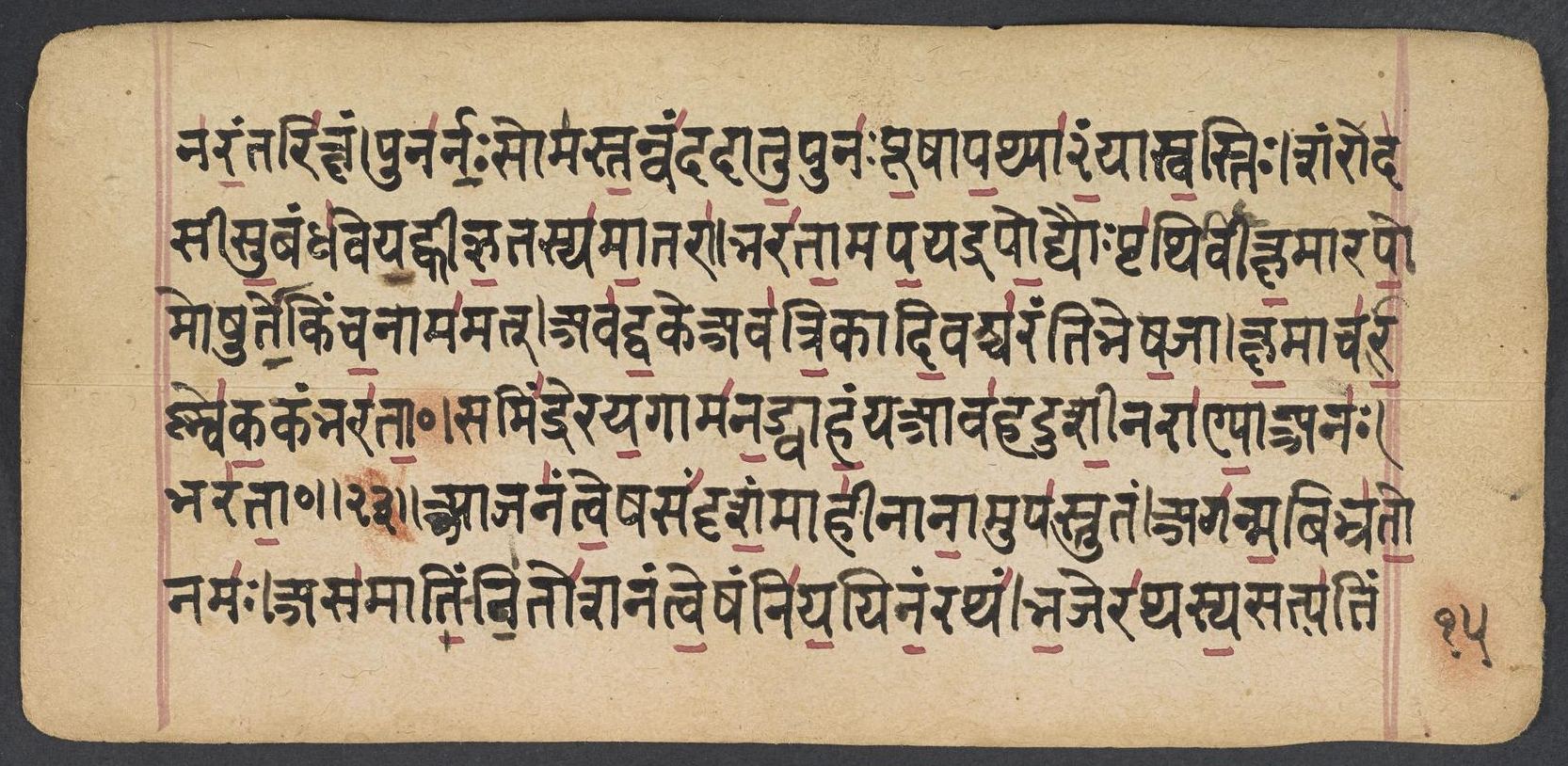
Where on the image
Penn Ms. Coll. 390 Item 48, fol. 15v (OPenn image 15, upper leaf). Checked on the image: the Rigveda text on this page begins in RV 10.59.7 ‹-punar antarikṣam›. The next page with Rigveda text, fol. 16r, begins in RV 10.60.3 ‹yo janān mahiṣām̐ ivātitasthau›. Verses 10.60.1-2 end on this page.
1ā jana̍ṁ tve̱ṣasa̍ṁdṛśa̱m māhī̍nānā̱m upa̍stutam | aga̍nma̱ bibhra̍to̱ nama̍ḥ ||
2asa̍mātiṁ ni̱tośa̍naṁ tve̱ṣaṁ ni̍ya̱yina̱ṁ ratha̍m | bha̱jera̍thasya̱ satpa̍tim ||
1BRINGING our homage we have come to one magnificent in look. Glorified of the mighty Gods
2To Asâmati, spring of gifts, lord of the brave, a radiant car, The conqueror of Bhajeratha
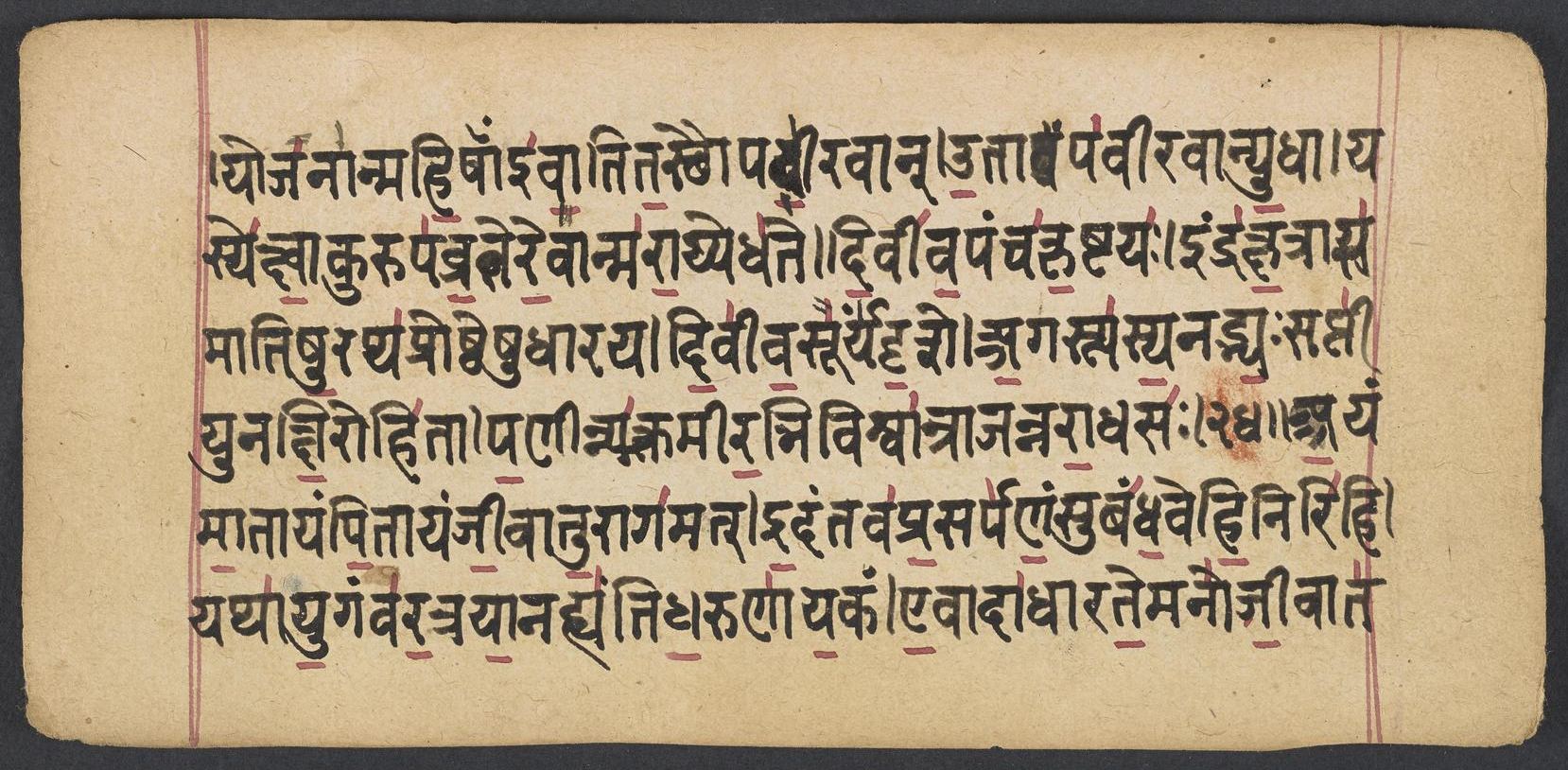
Where on the image
Penn Ms. Coll. 390 Item 48, fol. 16r (OPenn image 15, lower leaf). Checked on the image: the Rigveda text on this page begins in RV 10.60.3 ‹yo janān mahiṣām̐ ivātitasthau›. The next page with Rigveda text, fol. 16v, begins in RV 10.60.8 ‹-jīvātave na mṛtyave 'tho›. Verses 10.60.3-7 end on this page.
3yo janā̍n mahi̱ṣām̐ i̍vātita̱sthau pavī̍ravān | u̱tāpa̍vīravān yu̱dhā ||
4yasye̍kṣvā̱kur upa̍ vra̱te re̱vān ma̍rā̱yy edha̍te | di̱vī̍va̱ pañca̍ kṛ̱ṣṭaya̍ḥ ||
5indra̍ kṣa̱trāsa̍mātiṣu̱ ratha̍proṣṭheṣu dhāraya | di̱vī̍va̱ sūrya̍ṁ dṛ̱śe ||
6a̱gastya̍sya̱ nadbhya̱ḥ saptī̍ yunakṣi̱ rohi̍tā | pa̱ṇīn ny a̍kramīr a̱bhi viśvā̍n rājann arā̱dhasa̍ḥ ||
7a̱yam mā̱tāyam pi̱tāyaṁ jī̱vātu̱r āga̍mat | i̱daṁ tava̍ pra̱sarpa̍ṇa̱ṁ suba̍ndha̱v ehi̱ nir i̍hi ||
3Who, when the spear hath armed his hand, or even weaponless o'erthrows Men strong as buffaloes in fight;
4Him in whose service flourishes Ikshvâku, rich and dazzling-bright. As the Five Tribes that are in heaven.
5Indra, support the princely power of Rathaproshṭhas matched by none, Even as the Sun for all to see.
6Thou for Agastya's sister's sons yokest thy pair of ruddy steeds. Thou troddest niggards under foot, all those, O King, who brought no gifts.
7This is the mother, this the sire, this one hath come to be thy life. What brings thee forth is even this. Now come, Subandhu, get thee forth.
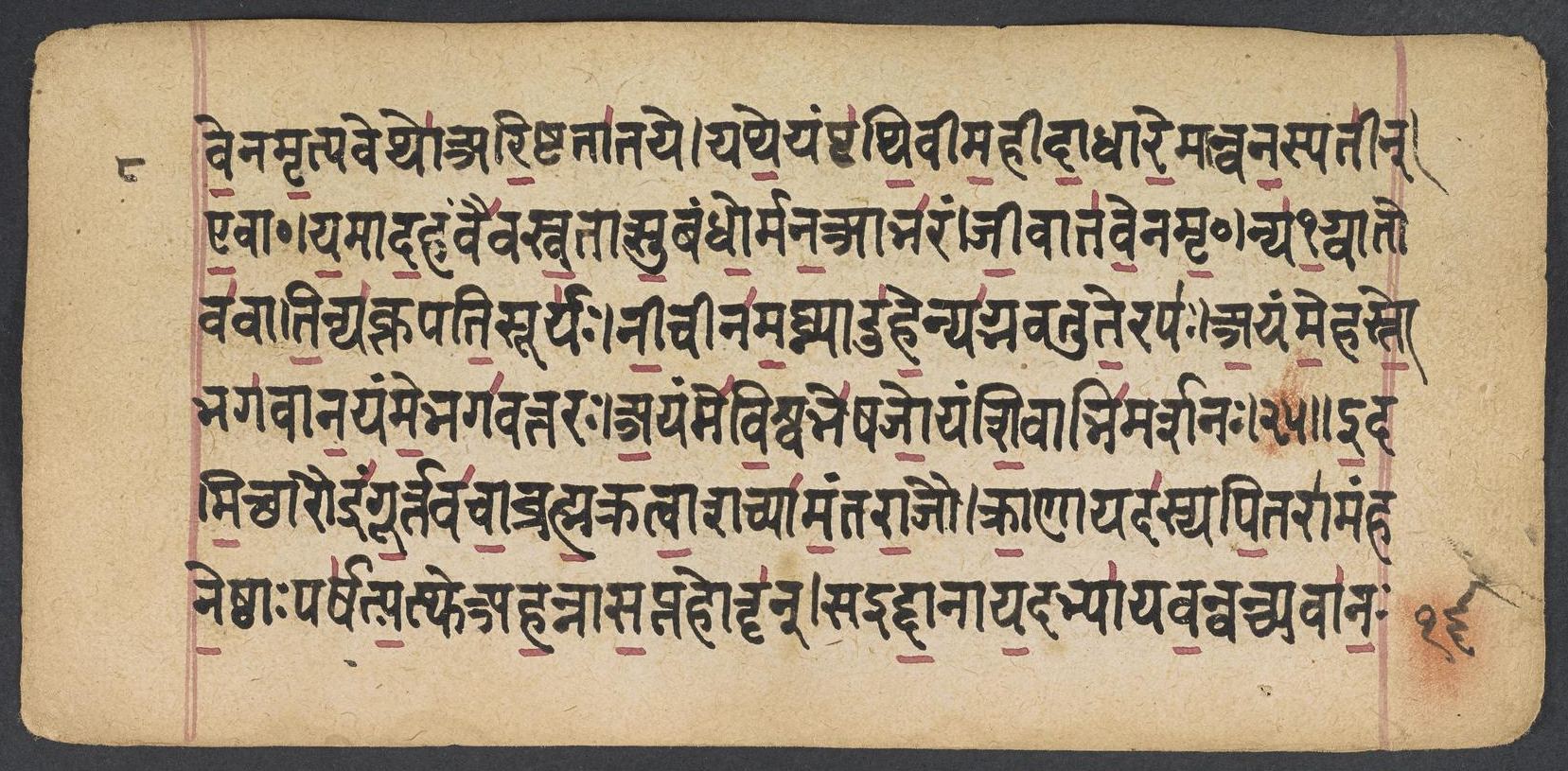
Where on the image
Penn Ms. Coll. 390 Item 48, fol. 16v (OPenn image 16, upper leaf). Checked on the image: the Rigveda text on this page begins in RV 10.60.8 ‹-jīvātave na mṛtyave 'tho›. The next page with Rigveda text, fol. 17r, begins in RV 10.61.2 ‹-cyavānaḥ sūdair amimīta vedim›. Verses 10.60.8-12 end on this page; 10.60.8 begins on fol. 16r.
8yathā̍ yu̱gaṁ va̍ra̱trayā̱ nahya̍nti dha̱ruṇā̍ya̱ kam | e̱vā dā̍dhāra te̱ mano̍ jī̱vāta̍ve̱ na mṛ̱tyave 'tho̍ ari̱ṣṭatā̍taye ||
9yathe̱yam pṛ̍thi̱vī ma̱hī dā̱dhāre̱mān vana̱spatī̍n | e̱vā dā̍dhāra te̱ mano̍ jī̱vāta̍ve̱ na mṛ̱tyave 'tho̍ ari̱ṣṭatā̍taye ||
10ya̱mād a̱haṁ vai̍vasva̱tāt su̱bandho̱r mana̱ ābha̍ram | jī̱vāta̍ve̱ na mṛ̱tyave 'tho̍ ari̱ṣṭatā̍taye ||
11nya1̱̍g vāto 'va̍ vāti̱ nya̍k tapati̱ sūrya̍ḥ | nī̱cīna̍m a̱ghnyā du̍he̱ nya̍g bhavatu te̱ rapa̍ḥ ||
12a̱yam me̱ hasto̱ bhaga̍vān a̱yam me̱ bhaga̍vattaraḥ | a̱yam me̍ vi̱śvabhe̍ṣajo̱ 'yaṁ śi̱vābhi̍marśanaḥ ||
8As with the leather thong they bind the chariot yoke to hold it fast, So have I held thy spirit fast, held it for life and not for death, held it for thy security.
9Even as this earth, the mighty earth, holds fast the monarchs of the wood. So have I held thy spirit fast, held it for life and not for death, held it for thy security.
10Subandlin's spirit I have brought from Yama, from Vivasvan's Son, Brought it for life and not for death, yea, brought it for security.
11The wind blows downward from on high, downward the Sun-God sends his heat, Downward the milch-cow pours her milk: so downward go thy pain and grief.
12Felicitous is this mine hand, yet more felicitous is this. This hand contains all healing balms, and this makes whole with gentle touch.
Notes
- Sanskrit: Aufrecht's edition (1877) with the Vedic accents, as entered by van Nooten and Holland (GRETIL).
- English: Ralph T. H. Griffith, The Hymns of the Rigveda (1889-1892; 2nd ed. 1896-1897), from the VedaWeb digital text; OCR slips in that text were corrected against the printed 2nd edition (data/sources/rigveda/griffith_errata.json).
Cite
Sources
- Source: Penn Ms. Coll. 390 Item 48 (1711 CE (colophon: Saṃvat 1768)), OPenn, Public Domain Mark + Aufrecht's accented text (GRETIL) + Griffith's English (VedaWeb) (holding institution)
- Critical edition: Aufrecht (1877), accented e-text via GRETIL
← previous · → next · v cycle view · l back to library