Rigveda 10.61: To all the gods
Introduction
Rigveda 10.61 is a hymn of 27 verses addressed to all the gods. It stands in book (maṇḍala) 10, the last and latest book. The Rigveda is the oldest collection of Sanskrit hymns, composed in the second half of the second millennium BCE and handed down orally for many centuries before it was written down.
The manuscript shown is Penn Ms. Coll. 390 Item 48 (University of Pennsylvania), a paper manuscript of the eighth aṣṭaka (RV 10.46-10.191) of the Ṛgveda Saṃhitā in Devanāgarī, 158 leaves, 6 lines to the page, with the accents marked in red; the scribe's colophon on fol. 158 gives Saṃvat 1768 (1711 CE); this hymn stands on fol. 16v-20r. Each section below gives the verses that end on one page; the page boundaries were read on the images (the opening words of every page), not counted out. Like most Rigveda manuscripts, Penn Ms. Coll. 390 Item 48 writes a repeated refrain in short form after its first occurrence (for example kasmai° for kasmai devāya haviṣā vidhema); the Sanskrit shown is the full text of Aufrecht's edition.
Gaps: verses 10.61.5, 10.61.6, 10.61.7, 10.61.8 were rendered by Griffith in Latin, not English, and are not shown.
How was this verified? (Provenance)
Where on the image
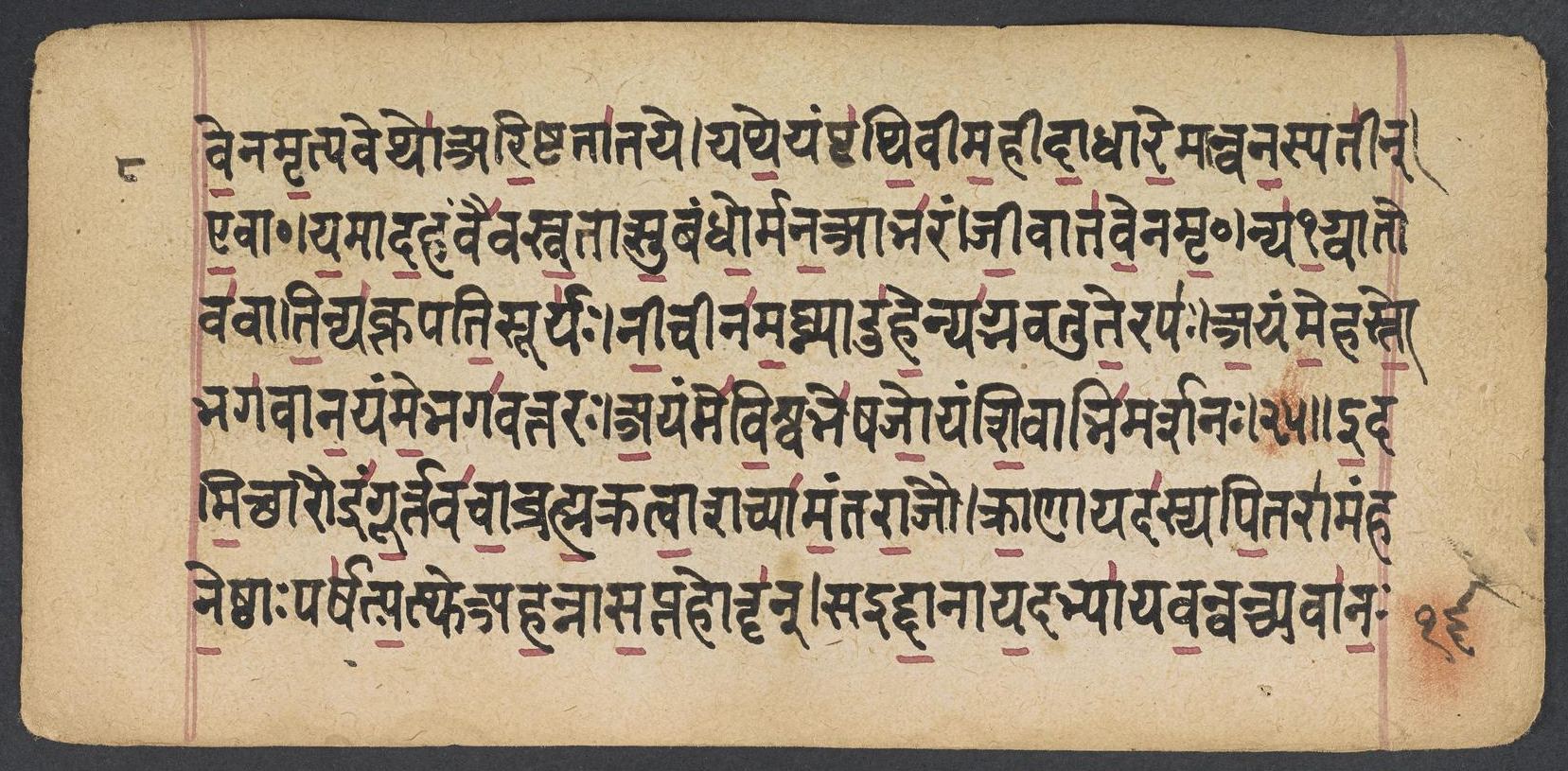
Penn Ms. Coll. 390 Item 48, fol. 16v (OPenn image 16, upper leaf). Checked on the image: the Rigveda text on this page begins in RV 10.60.8 ‹-jīvātave na mṛtyave 'tho›. The next page with Rigveda text, fol. 17r, begins in RV 10.61.2 ‹-cyavānaḥ sūdair amimīta vedim›. Verse 10.61.1 ends on this page.
1i̱dam i̱tthā raudra̍ṁ gū̱rtava̍cā̱ brahma̱ kratvā̱ śacyā̍m a̱ntar ā̱jau | krā̱ṇā yad a̍sya pi̱tarā̍ maṁhane̱ṣṭhāḥ parṣa̍t pa̱kthe aha̱nn ā sa̱pta hotṝ̍n ||
1THE welcome speaker in the storm of battle uttered with might this prayer to win the Aṣvins, When the most liberal God, for Paktha, rescued his parents, and assailed the seven Hotrâs.
Where on the image
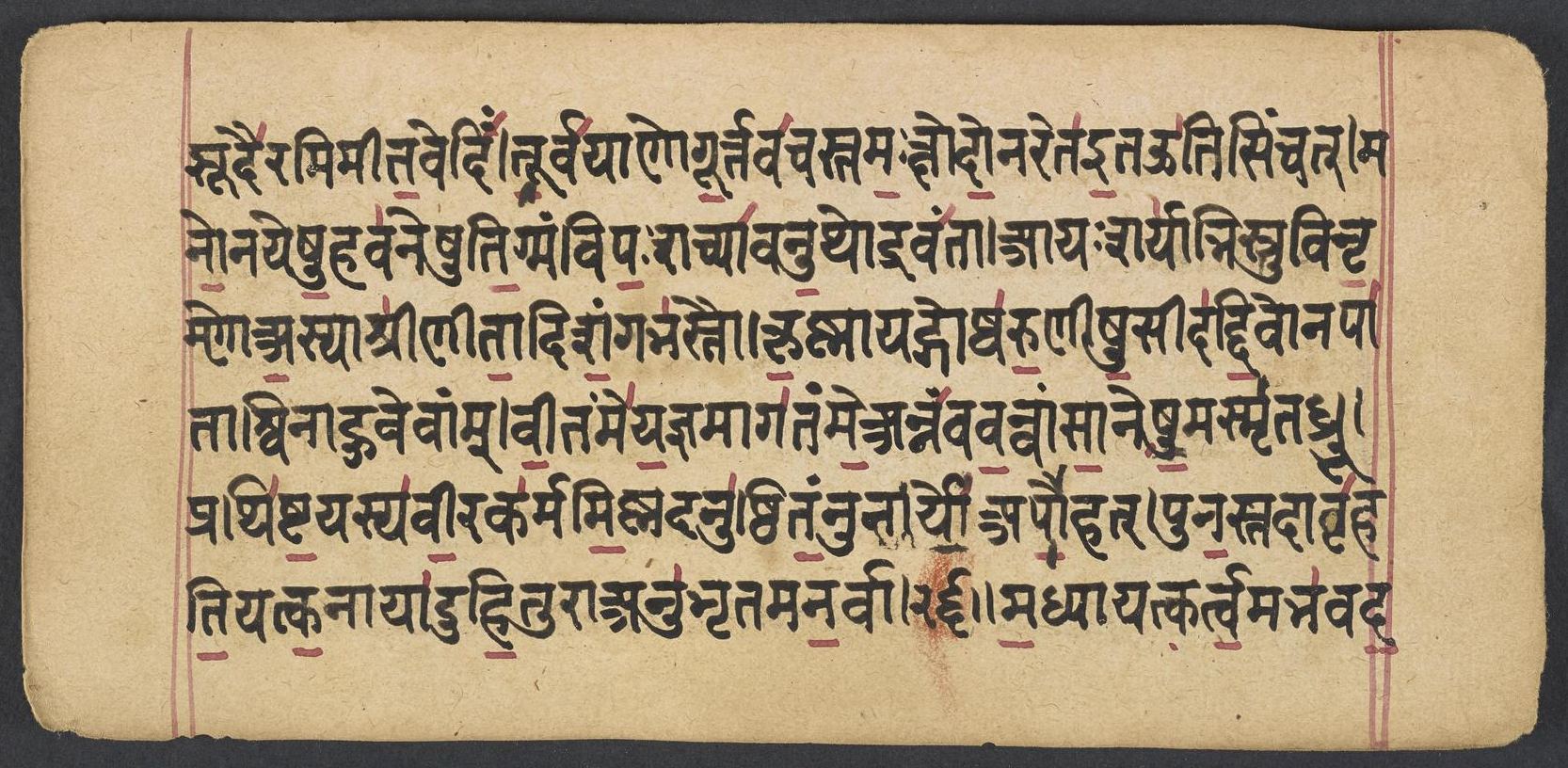
Penn Ms. Coll. 390 Item 48, fol. 17r (OPenn image 16, lower leaf). Checked on the image: the Rigveda text on this page begins in RV 10.61.2 ‹-cyavānaḥ sūdair amimīta vedim›. The next page with Rigveda text, fol. 17v, begins in RV 10.61.6 ‹-abhīke kāmaṁ kṛṇvāne pitari›. Verses 10.61.2-4 end on this page; 10.61.2 begins on fol. 16v.
2sa id dā̱nāya̱ dabhyā̍ya va̱nvañ cyavā̍na̱ḥ sūdai̍r amimīta̱ vedi̍m | tūrva̍yāṇo gū̱rtava̍castama̱ḥ kṣodo̱ na reta̍ i̱taū̍ti siñcat ||
3mano̱ na yeṣu̱ hava̍neṣu ti̱gmaṁ vipa̱ḥ śacyā̍ vanu̱tho drava̍ntā | ā yaḥ śaryā̍bhis tuvinṛ̱mṇo a̱syāśrī̍ṇītā̱diśa̱ṁ gabha̍stau ||
4kṛ̱ṣṇā yad goṣv a̍ru̱ṇīṣu̱ sīda̍d di̱vo napā̍tāśvinā huve vām | vī̱tam me̍ ya̱jñam ā ga̍tam me̱ anna̍ṁ vava̱nvāṁsā̱ neṣa̱m asmṛ̍tadhrū ||
2Chyavâna, purposing deceptive presents, with all ingredients, made the altar ready. Most sweet-voiced Tûrvayâṇa poured oblations like floods of widely fertilizing water.
3To his oblations, swift as thought, ye hurried, and welcomed eagerly the prayers he offered. With arrows in his hand the Very Mighty forced from him all obedience of a servant.
4I call on you the Sons of Dyaus, the Aṣvins, that a dark cow to my red kine be added. Enjoy my sacrifice, come to my viands contented, not deceiving expectation. '
Where on the image
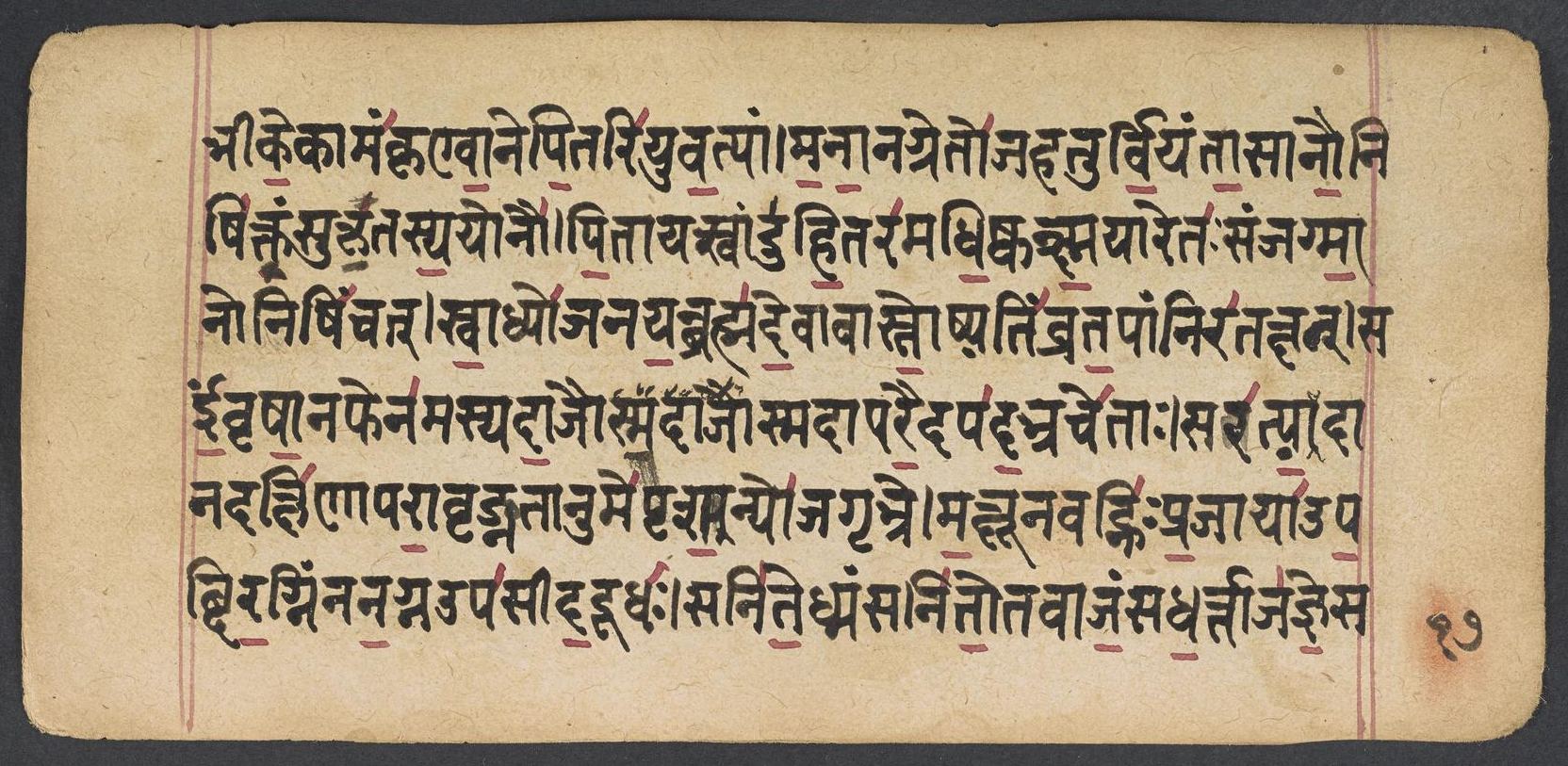
Penn Ms. Coll. 390 Item 48, fol. 17v (OPenn image 17, upper leaf). Checked on the image: the Rigveda text on this page begins in RV 10.61.6 ‹-abhīke kāmaṁ kṛṇvāne pitari›. The next page with Rigveda text, fol. 18r, begins in RV 10.61.10 ‹kanāyāḥ sakhyaṁ navagvā ṛtaṁ›. Verse 10.61.9 ends on this page.
9ma̱kṣū na vahni̍ḥ pra̱jāyā̍ upa̱bdir a̱gniṁ na na̱gna upa̍ sīda̱d ūdha̍ḥ | sani̍te̱dhmaṁ sani̍to̱ta vāja̱ṁ sa dha̱rtā ja̍jñe̱ saha̍sā yavī̱yut ||
9The fire, burning the people, does not approach quickly (by day): the naked (Rákshasas approach) not Agni by night; the giver of fuel, and the giver of food, he, the upholder (of the rite), is born, overcoming enemies by his might.
Where on the image
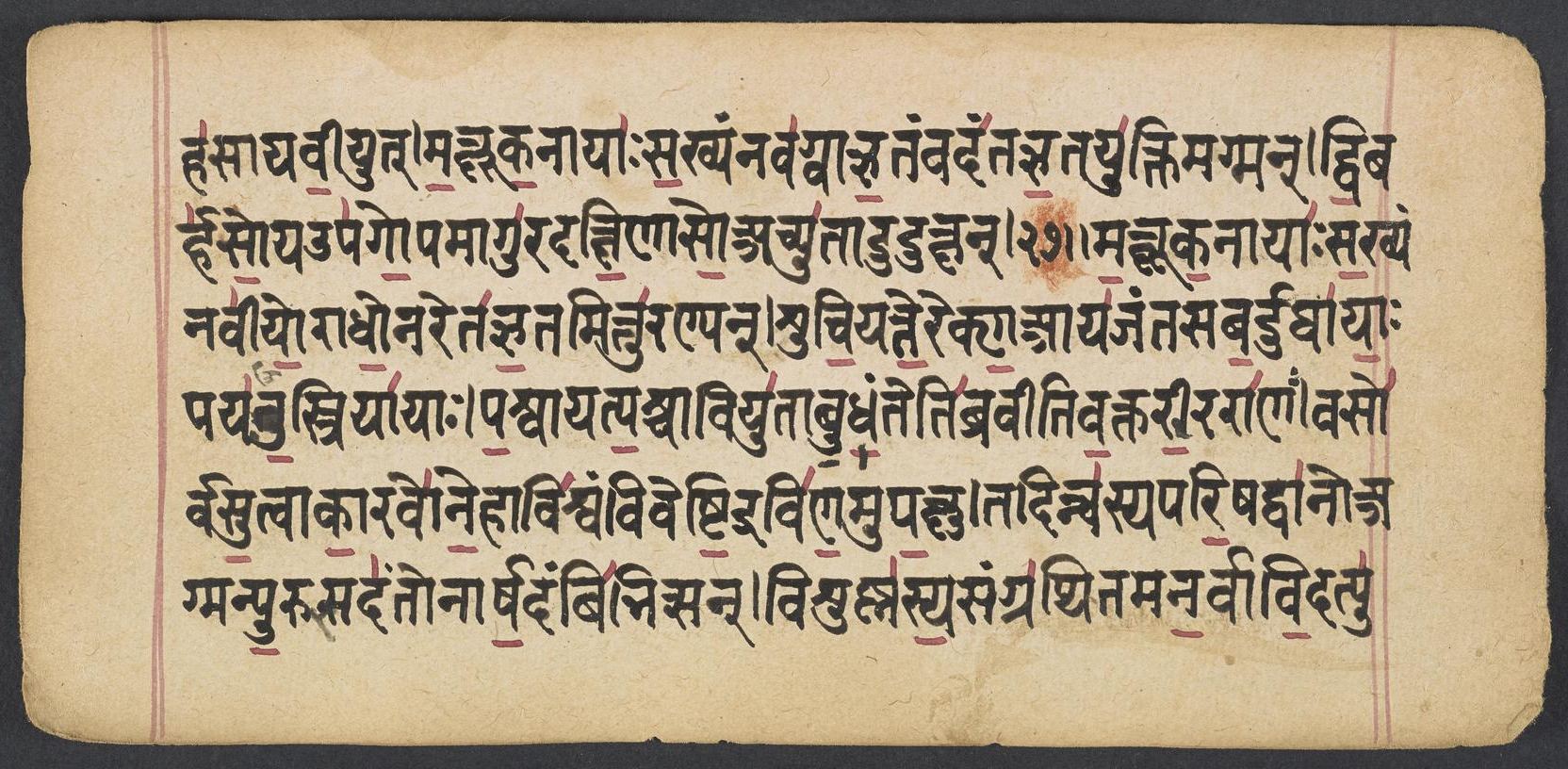
Penn Ms. Coll. 390 Item 48, fol. 18r (OPenn image 17, lower leaf). Checked on the image: the Rigveda text on this page begins in RV 10.61.10 ‹kanāyāḥ sakhyaṁ navagvā ṛtaṁ›. The next page with Rigveda text, fol. 18v, begins in RV 10.61.13 ‹-puruprajātasya guhā yat›. Verses 10.61.10-12 end on this page; 10.61.10 begins on fol. 17v.
10ma̱kṣū ka̱nāyā̍ḥ sa̱khyaṁ nava̍gvā ṛ̱taṁ vada̍nta ṛ̱tayu̍ktim agman | dvi̱barha̍so̱ ya upa̍ go̱pam āgu̍r adakṣi̱ṇāso̱ acyu̍tā dudukṣan ||
11ma̱kṣū ka̱nāyā̍ḥ sa̱khyaṁ navī̍yo̱ rādho̱ na reta̍ ṛ̱tam it tu̍raṇyan | śuci̱ yat te̱ rekṇa̱ āya̍janta saba̱rdughā̍yā̱ḥ paya̍ u̱sriyā̍yāḥ ||
12pa̱śvā yat pa̱ścā viyu̍tā bu̱dhanteti̍ bravīti va̱ktarī̱ rarā̍ṇaḥ | vaso̍r vasu̱tvā kā̱ravo̍ 'ne̱hā viśva̍ṁ viveṣṭi̱ dravi̍ṇa̱m upa̱ kṣu ||
10Uttering praise to suit the rite Navagvas came speedily to win the damsel's friendship. They who approached the twice-strong stable's keeper, meedless would milk the rocks that naught had shaken.
11Swift was new friendship with the maid they quickly accepted it as genuine seed and bounty. Milk which the cow Sabardugha had yielded was the bright heritage which to thee they offered.
12When afterwards they woke- and missed the cattle, the speaker thus in joyful mood addressed them: Matchless are singers through the Vasu's nature; he bringeth them all food and all possessions.
Where on the image
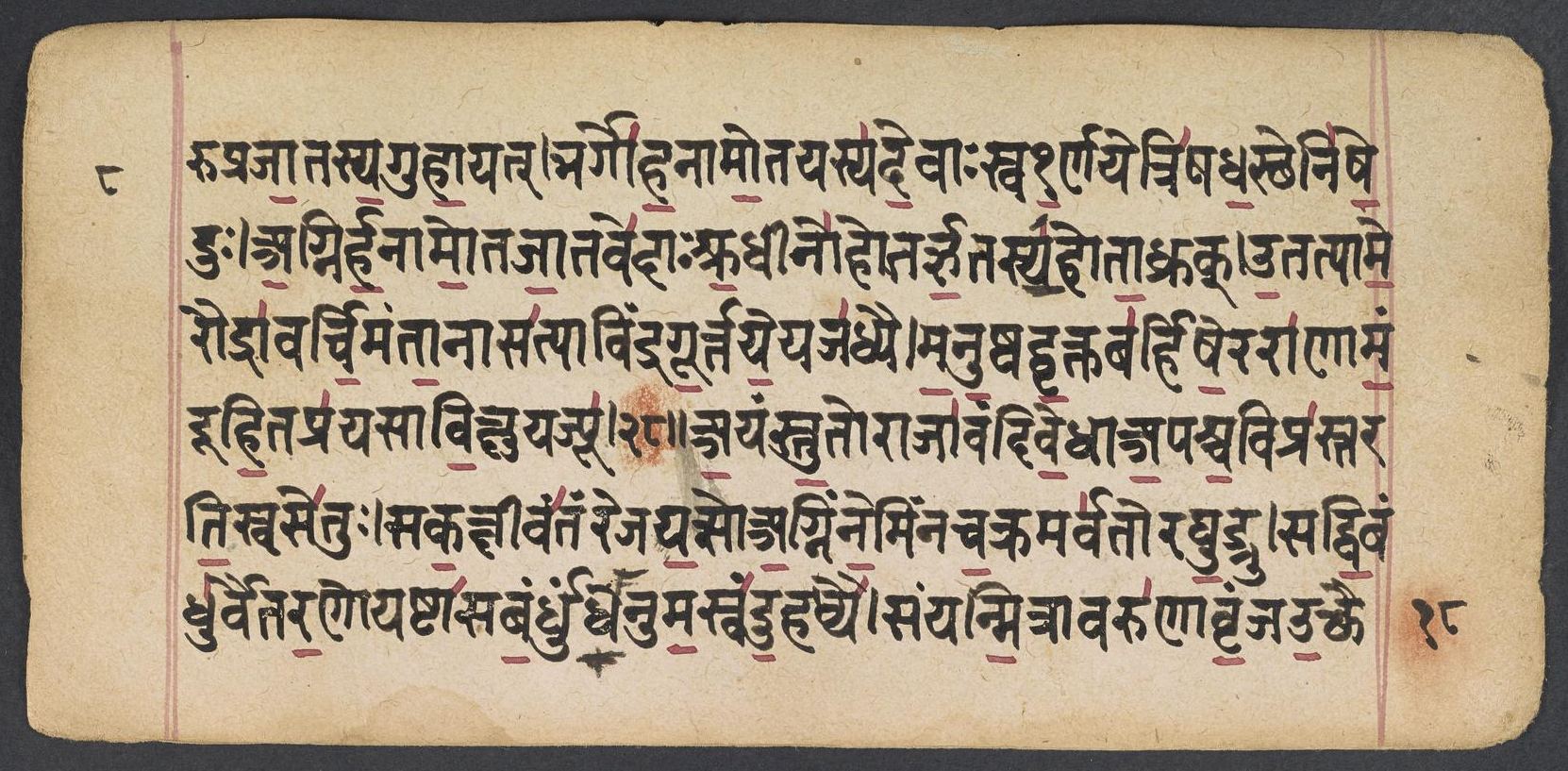
Penn Ms. Coll. 390 Item 48, fol. 18v (OPenn image 18, upper leaf). Checked on the image: the Rigveda text on this page begins in RV 10.61.13 ‹-puruprajātasya guhā yat›. The next page with Rigveda text, fol. 19r, begins in RV 10.61.17 ‹jyeṣṭhebhir aryamaṇaṁ varūthaiḥ›. Verses 10.61.13-16 end on this page; 10.61.13 begins on fol. 18r.
13tad in nv a̍sya pari̱ṣadvā̍no agman pu̱rū sada̍nto nārṣa̱dam bi̍bhitsan | vi śuṣṇa̍sya̱ saṁgra̍thitam ana̱rvā vi̱dat pu̍ruprajā̱tasya̱ guhā̱ yat ||
14bhargo̍ ha̱ nāmo̱ta yasya̍ de̱vāḥ sva1̱̍r ṇa ye tri̍ṣadha̱sthe ni̍ṣe̱duḥ | a̱gnir ha̱ nāmo̱ta jā̱tave̍dāḥ śru̱dhī no̍ hotar ṛ̱tasya̱ hotā̱dhruk ||
15u̱ta tyā me̱ raudrā̍v arci̱mantā̱ nāsa̍tyāv indra gū̱rtaye̱ yaja̍dhyai | ma̱nu̱ṣvad vṛ̱ktaba̍rhiṣe̱ rarā̍ṇā ma̱ndū hi̱tapra̍yasā vi̱kṣu yajyū̍ ||
16a̱yaṁ stu̱to rājā̍ vandi ve̱dhā a̱paś ca̱ vipra̍s tarati̱ svase̍tuḥ | sa ka̱kṣīva̍ntaṁ rejaya̱t so a̱gniṁ ne̱miṁ na ca̱kram arva̍to raghu̱dru ||
13His followers then who dwelt in sundry places came and desired too slay the son of Nr̥ishad. Resistless foe, be found the hidden treasure of Ṣushṇa multiplied in numerous offspring.
14Thou, called Effulgence, in whose threefold dwelling, as in the light of heaven, the Gods are sitting, Thou who art called Agni or Jâtavedas, Priest, hear us, guileless Priest of holy worship.
15And, Indra, bring, that I may laud and serve them, those Two resplendent glorious Nâsatyas, Blithe, bounteous, man-like, to the sacrificer, honoured among our men with offered viands.
16This King is praised and honoured as Ordainer: himself the bridge, the Sage speeds o'er the waters. He hath stirred up Kakshîvân, stirred up Agni, as the steed's swift wheel drives the felly onward.
Where on the image
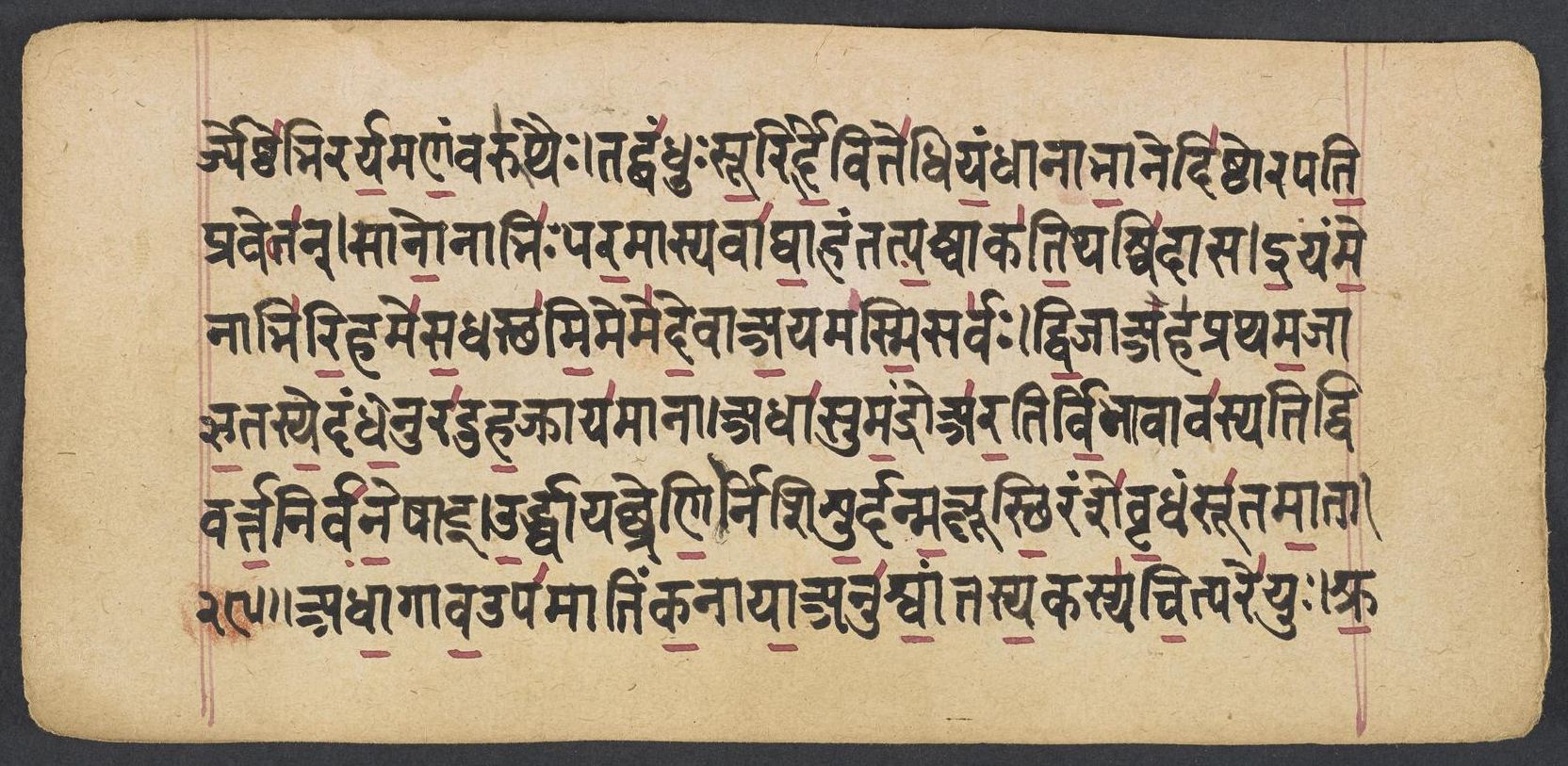
Penn Ms. Coll. 390 Item 48, fol. 19r (OPenn image 18, lower leaf). Checked on the image: the Rigveda text on this page begins in RV 10.61.17 ‹jyeṣṭhebhir aryamaṇaṁ varūthaiḥ›. The next page with Rigveda text, fol. 19v, begins in RV 10.61.21 ‹-śrudhi tvaṁ sudraviṇo nas›. Verses 10.61.17-20 end on this page; 10.61.17 begins on fol. 18v.
17sa dvi̱bandhu̍r vaitara̱ṇo yaṣṭā̍ saba̱rdhuṁ dhe̱num a̱sva̍ṁ du̱hadhyai̍ | saṁ yan mi̱trāvaru̍ṇā vṛ̱ñja u̱kthair jyeṣṭhe̍bhir arya̱maṇa̱ṁ varū̍thaiḥ ||
18tadba̍ndhuḥ sū̱rir di̱vi te̍ dhiya̱ṁdhā nābhā̱nedi̍ṣṭho rapati̱ pra vena̍n | sā no̱ nābhi̍ḥ para̱māsya vā̍ ghā̱haṁ tat pa̱ścā ka̍ti̱thaś ci̍d āsa ||
19i̱yam me̱ nābhi̍r i̱ha me̍ sa̱dhastha̍m i̱me me̍ de̱vā a̱yam a̍smi̱ sarva̍ḥ | dvi̱jā aha̍ prathama̱jā ṛ̱tasye̱daṁ dhe̱nur a̍duha̱j jāya̍mānā ||
20adhā̍su ma̱ndro a̍ra̱tir vi̱bhāvāva̍ syati dvivarta̱nir va̍ne̱ṣāṭ | ū̱rdhvā yac chreṇi̱r na śiśu̱r dan ma̱kṣū sthi̱raṁ śe̍vṛ̱dhaṁ sū̍ta mā̱tā ||
17Vaitaraṇa, doubly kinsman, sacrificer, shall milk the cow who ne'er hath calved, Sabardhu, When I encompass Varuṇa and Mitra with lauds, and Aryaman in safest shelter.
18Their kin, the Prince in heaven, thy nearest kinsman, turning his thought to thee thus speaks in kindness: This is our highest bond: I am his offspring. How many others came ere I succeeded?
19Here is my kinship, here the place I dwell in: these are my Gods; I in full strength am present. Twice-born am I, the first-born Son of Order: the Cow milked this when first she had her being.
20So mid these tribes he rests, the friendly envoy, borne on two paths, refulgent Lord of fuel. When, like a line, the Babe springs up erectly, his Mother straight hath borne him strong to bless us.
Where on the image
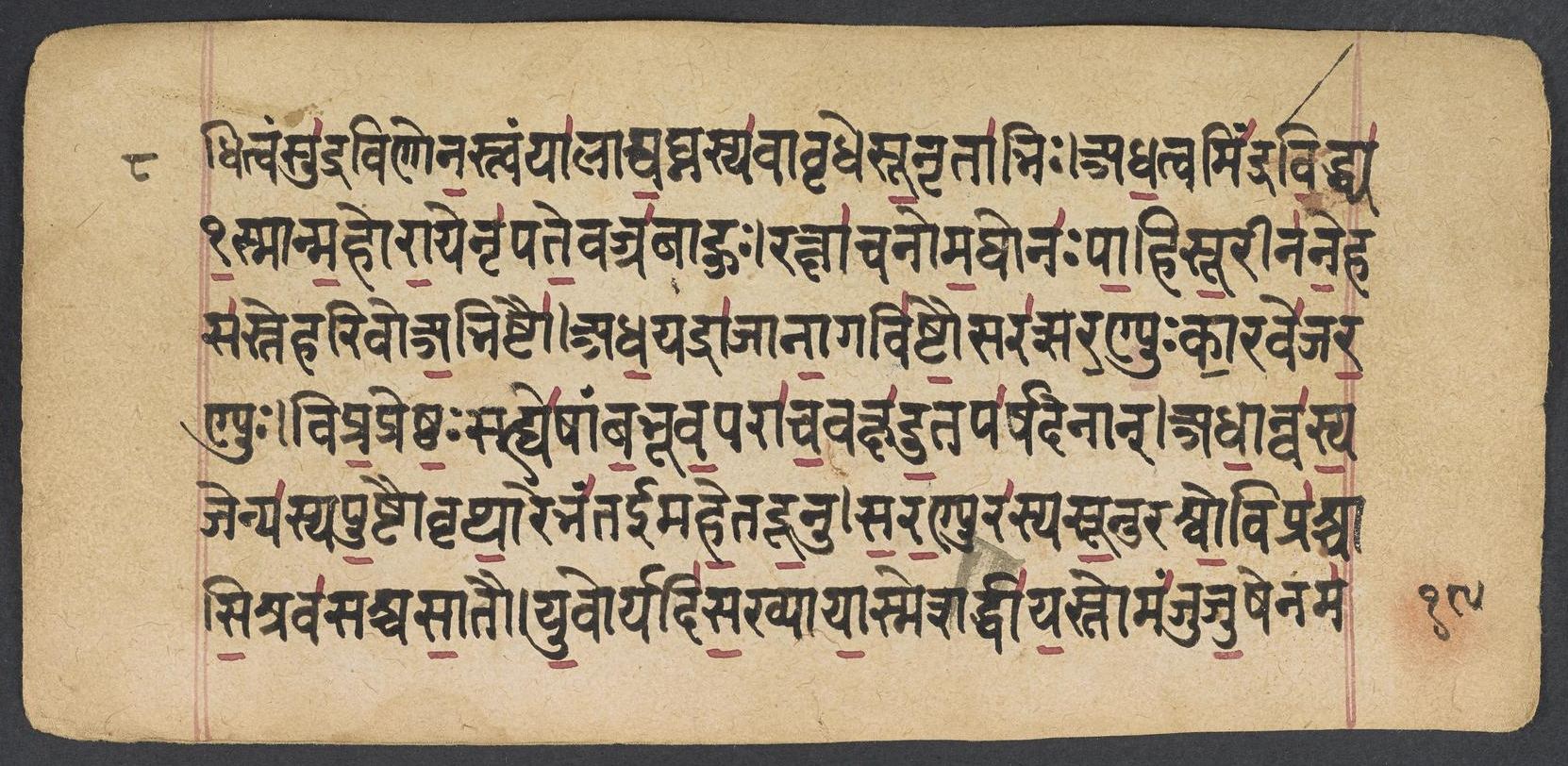
Penn Ms. Coll. 390 Item 48, fol. 19v (OPenn image 19, upper leaf). Checked on the image: the Rigveda text on this page begins in RV 10.61.21 ‹-śrudhi tvaṁ sudraviṇo nas›. The next page with Rigveda text, fol. 20r, begins in RV 10.61.25 ‹-namasvān›. Verses 10.61.21-24 end on this page; 10.61.21 begins on fol. 19r.
21adhā̱ gāva̱ upa̍mātiṁ ka̱nāyā̱ anu̍ śvā̱ntasya̱ kasya̍ ci̱t pare̍yuḥ | śru̱dhi tvaṁ su̍draviṇo na̱s tvaṁ yā̍ḻ āśva̱ghnasya̍ vāvṛdhe sū̱nṛtā̍bhiḥ ||
22adha̱ tvam i̍ndra vi̱ddhy a1̱̍smān ma̱ho rā̱ye nṛ̍pate̱ vajra̍bāhuḥ | rakṣā̍ ca no ma̱ghona̍ḥ pā̱hi sū̱rīn a̍ne̱hasa̍s te harivo a̱bhiṣṭau̍ ||
23adha̱ yad rā̍jānā̱ gavi̍ṣṭau̱ sara̍t sara̱ṇyuḥ kā̱rave̍ jara̱ṇyuḥ | vipra̱ḥ preṣṭha̱ḥ sa hy e̍ṣām ba̱bhūva̱ parā̍ ca̱ vakṣa̍d u̱ta pa̍rṣad enān ||
24adhā̱ nv a̍sya̱ jenya̍sya pu̱ṣṭau vṛthā̱ rebha̍nta īmahe̱ tad ū̱ nu | sa̱ra̱ṇyur a̍sya sū̱nur aśvo̱ vipra̍ś cāsi̱ śrava̍saś ca sā̱tau ||
21Then went the milch-kine forth to please the damsel, and for the good of every man that liveth. Hear us, O wealthy Lord; begin our worship. Thou hast grown mighty through Âṣvaghna's virtues.
22And take thou notice of us also, Indra, for ample riches, King whose arm wields thunder! Protect our wealthy nobles, guard our princes unmenaced near thee, Lord of Tawny Coursers.
23When he goes forth, ye Pair of Kings, for booty, speeding to war and praise to please the singer,– I was the dearest sage of those about him,– let him lead these away and bring them safely.
24Now for this noble man's support and comfort, singing with easy voice we thus implore thee: Impetuous be his son and fleet his courser: and may I be his priest to win him glory.
Where on the image
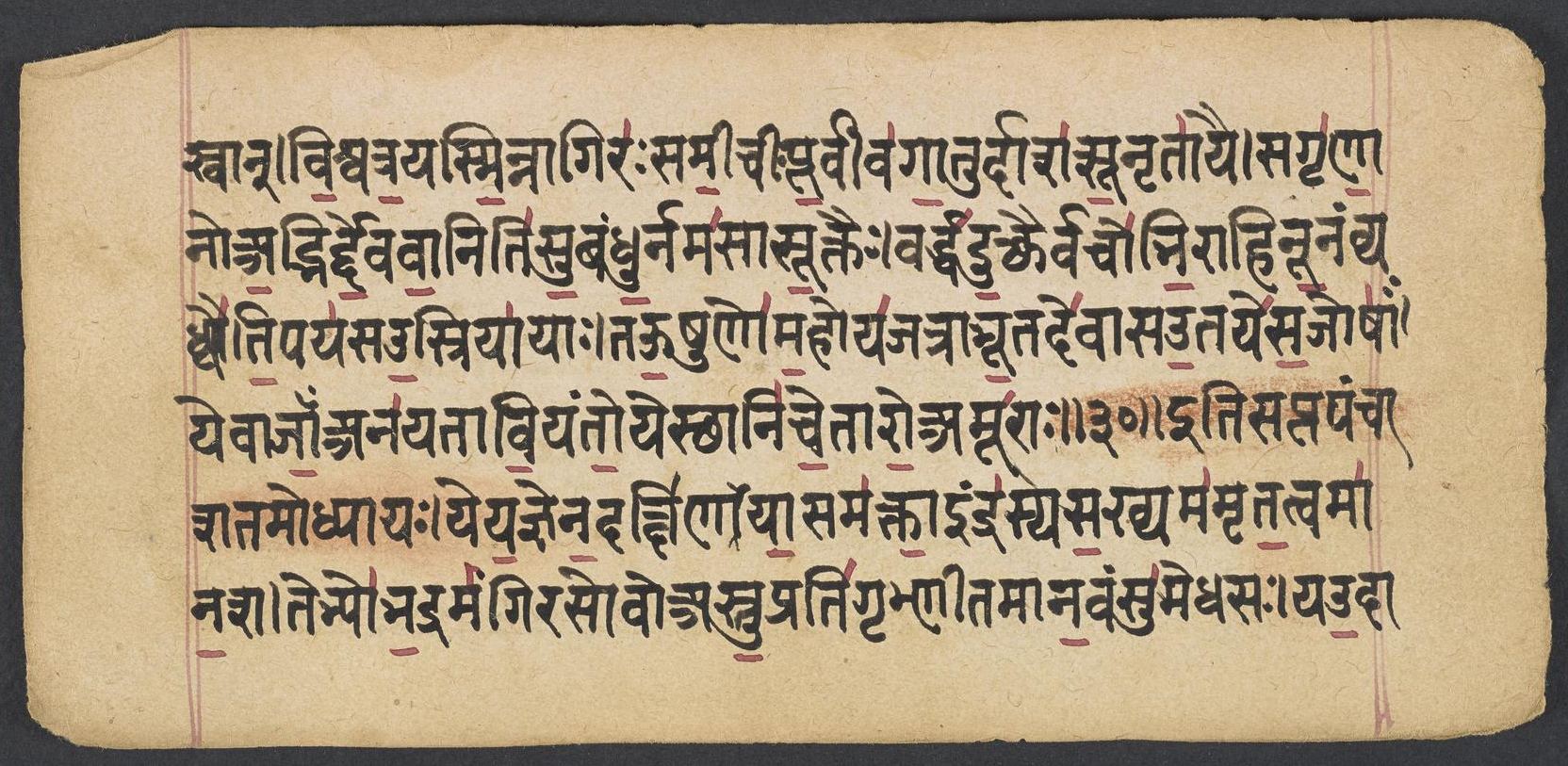
Penn Ms. Coll. 390 Item 48, fol. 20r (OPenn image 19, lower leaf). Checked on the image: the Rigveda text on this page begins in RV 10.61.25 ‹-namasvān›. The next page with Rigveda text, fol. 20v, begins in RV 10.62.2 ‹pitaro gomayaṁ vasv ṛtenābhindan›. Verses 10.61.25-27 end on this page; 10.61.25 begins on fol. 19v.
25yu̱vor yadi̍ sa̱khyāyā̱sme śardhā̍ya̱ stoma̍ṁ juju̱ṣe nama̍svān | vi̱śvatra̱ yasmi̱nn ā gira̍ḥ samī̱cīḥ pū̱rvīva̍ gā̱tur dāśa̍t sū̱nṛtā̍yai ||
26sa gṛ̍ṇā̱no a̱dbhir de̱vavā̱n iti̍ su̱bandhu̱r nama̍sā sū̱ktaiḥ | vardha̍d u̱kthair vaco̍bhi̱r ā hi nū̱naṁ vy adhvai̍ti̱ paya̍sa u̱sriyā̍yāḥ ||
27ta ū̱ ṣu ṇo̍ ma̱ho ya̍jatrā bhū̱ta de̍vāsa ū̱taye̍ sa̱joṣā̍ḥ | ye vājā̱m̐ ana̍yatā vi̱yanto̱ ye sthā ni̍ce̱tāro̱ amū̍rāḥ ||
25If, for our strength, the priest with adoration to win your friendship made the laud accepted, That laud shall be a branching road to virtue for every one to whom the songs are suited.
26Glorified thus, with holy hymns and homage:-Of noble race, with Waters, God-attended May he enrich us for our prayers and praises: now can the cow be milked; the path is open.
27Be to us, then, ye Gods who merit worship, be ye of one accord our strong protection, Who went on various ways and brought us vigour, ye who are undeceivable explorers.
Notes
- Sanskrit: Aufrecht's edition (1877) with the Vedic accents, as entered by van Nooten and Holland (GRETIL).
- English: Ralph T. H. Griffith, The Hymns of the Rigveda (1889-1892; 2nd ed. 1896-1897), from the VedaWeb digital text; OCR slips in that text were corrected against the printed 2nd edition (data/sources/rigveda/griffith_errata.json).
Cite
Sources
- Source: Penn Ms. Coll. 390 Item 48 (1711 CE (colophon: Saṃvat 1768)), OPenn, Public Domain Mark + Aufrecht's accented text (GRETIL) + Griffith's English (VedaWeb) (holding institution)
- Critical edition: Aufrecht (1877), accented e-text via GRETIL
← previous · → next · v cycle view · l back to library