Rigveda 10.64: To all the gods
Introduction
Rigveda 10.64 is a hymn of 17 verses addressed to all the gods. It stands in book (maṇḍala) 10, the last and latest book. The Rigveda is the oldest collection of Sanskrit hymns, composed in the second half of the second millennium BCE and handed down orally for many centuries before it was written down.
The manuscript shown is Penn Ms. Coll. 390 Item 48 (University of Pennsylvania), a paper manuscript of the eighth aṣṭaka (RV 10.46-10.191) of the Ṛgveda Saṃhitā in Devanāgarī, 158 leaves, 6 lines to the page, with the accents marked in red; the scribe's colophon on fol. 158 gives Saṃvat 1768 (1711 CE); this hymn stands on fol. 23v-26r. Each section below gives the verses that end on one page; the page boundaries were read on the images (the opening words of every page), not counted out. Like most Rigveda manuscripts, Penn Ms. Coll. 390 Item 48 writes a repeated refrain in short form after its first occurrence (for example kasmai° for kasmai devāya haviṣā vidhema); the Sanskrit shown is the full text of Aufrecht's edition.
How was this verified? (Provenance)
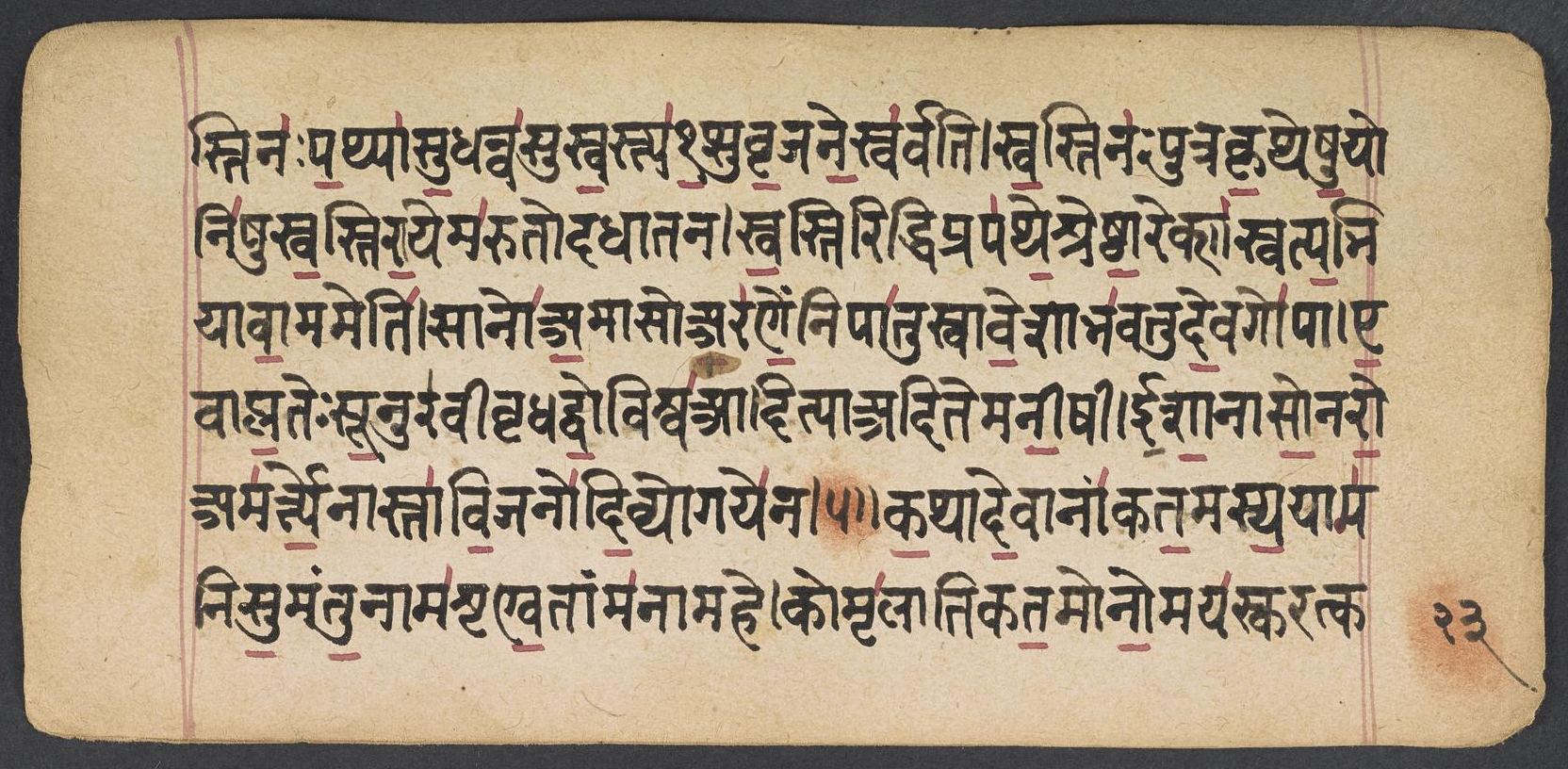
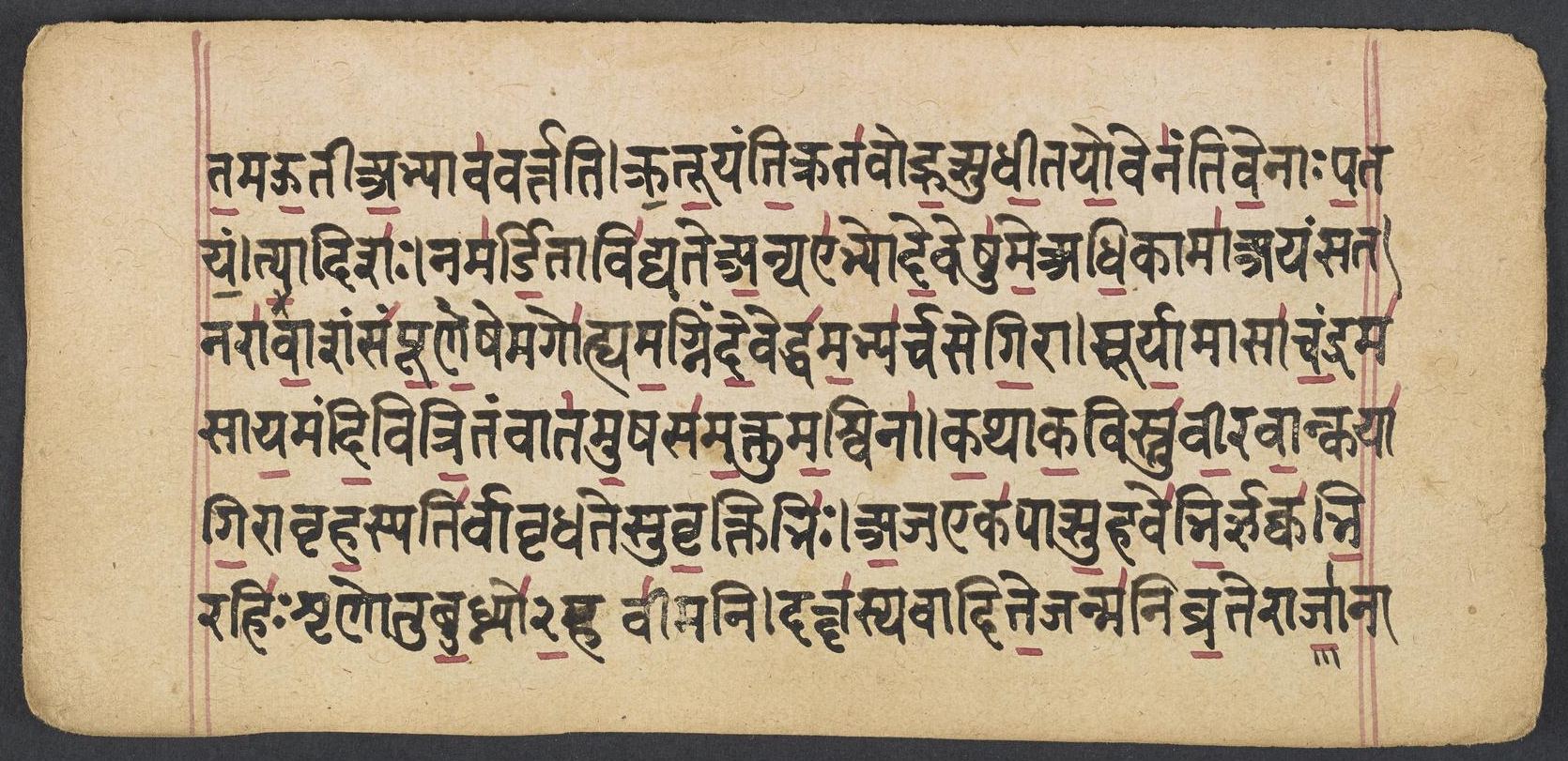
Where on the image
Penn Ms. Coll. 390 Item 48, fol. 24r (OPenn image 23, lower leaf). Checked on the image: the Rigveda text on this page begins in RV 10.64.1 ‹-katama ūtī abhy ā›. The next page with Rigveda text, fol. 24v, begins in RV 10.64.5 ‹mitrāvaruṇā vivāsasi›. Verses 10.64.1-4 end on this page; 10.64.1 begins on fol. 23v.
1ka̱thā de̱vānā̍ṁ kata̱masya̱ yāma̍ni su̱mantu̱ nāma̍ śṛṇva̱tām ma̍nāmahe | ko mṛ̍ḻāti kata̱mo no̱ maya̍s karat kata̱ma ū̱tī a̱bhy ā va̍vartati ||
2kra̱tū̱yanti̱ krata̍vo hṛ̱tsu dhī̱tayo̱ vena̍nti ve̱nāḥ pa̱taya̱nty ā diśa̍ḥ | na ma̍rḍi̱tā vi̍dyate a̱nya e̍bhyo de̱veṣu̍ me̱ adhi̱ kāmā̍ ayaṁsata ||
3narā̍ vā̱ śaṁsa̍m pū̱ṣaṇa̱m ago̍hyam a̱gniṁ de̱veddha̍m a̱bhy a̍rcase gi̱rā | sūryā̱māsā̍ ca̱ndrama̍sā ya̱maṁ di̱vi tri̱taṁ vāta̍m u̱ṣasa̍m a̱ktum a̱śvinā̍ ||
4ka̱thā ka̱vis tu̍vī̱ravā̱n kayā̍ gi̱rā bṛha̱spati̍r vāvṛdhate suvṛ̱ktibhi̍ḥ | a̱ja eka̍pāt su̱have̍bhi̱r ṛkva̍bhi̱r ahi̍ḥ śṛṇotu bu̱dhnyo̱3̱̍ havī̍mani ||
1WHAT God, of those who hear, is he whose well-praised name we may record in this our sacrifice; and how? Who will be gracious? Who of many give us bliss? Who out of all the Host will come to lend us aid?
2The will and thoughts within my breast exert their power: they yearn with love, and fly to all the regions round. None other comforter is found save only these: my longings and my hopes are fixt upon the Gods.
3To Narâṣansa and to Pûshan I sing forth, unconcealable Agni kindled by the Gods. To Sun and Moon, two Moons, to Yama in the heaven, to Trita, Vâta, Dawn, Night, and the Aṣvins Twain.
4How is the Sage extolled whom the loud singers praise? What voice, what hymn is used to laud Br̥ihaspati? May Aja-Ekapad with Rkvans swift to hear, and Ahi of the Deep listen unto our call.
Where on the image
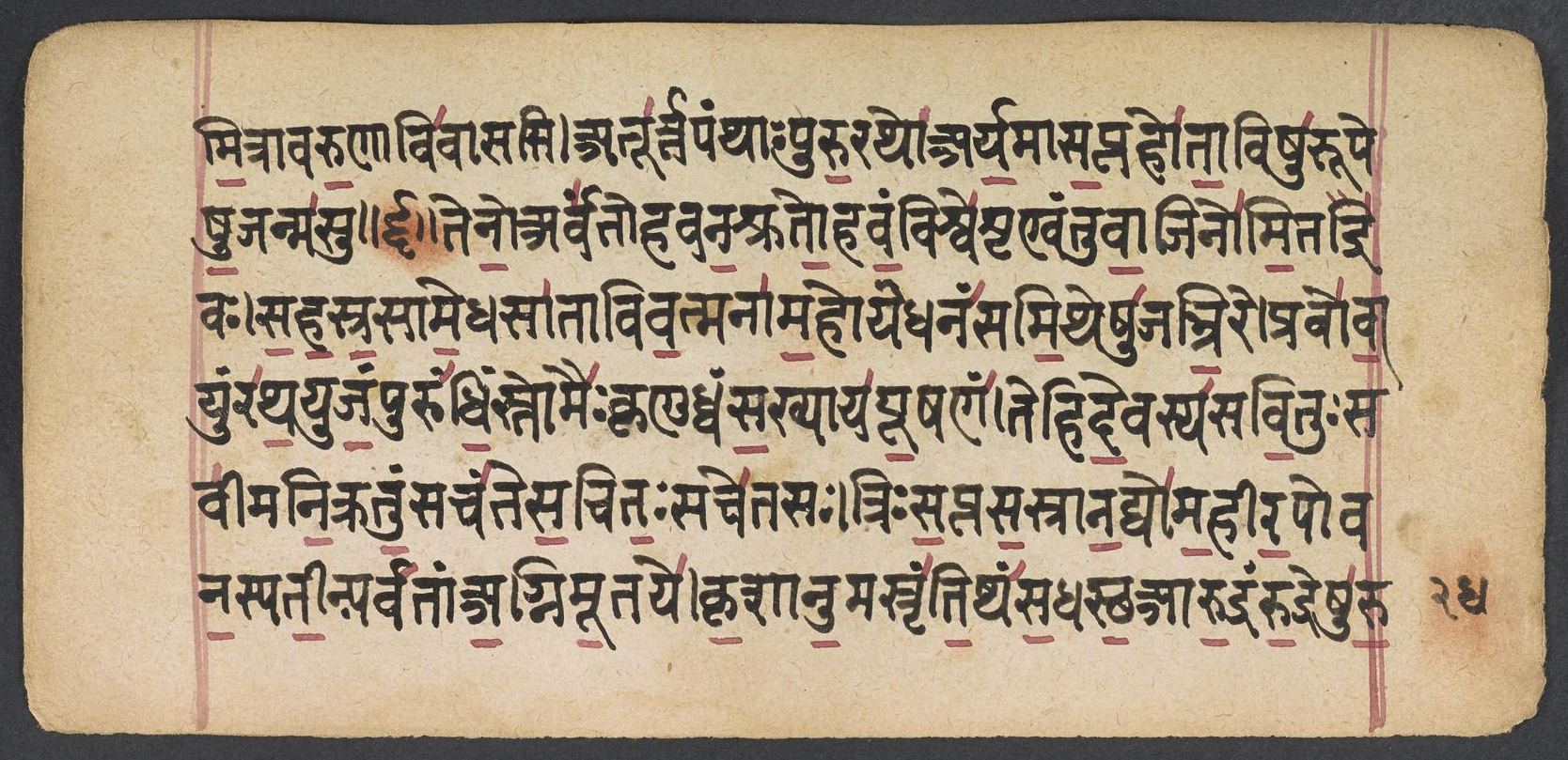
Penn Ms. Coll. 390 Item 48, fol. 24v (OPenn image 24, upper leaf). Checked on the image: the Rigveda text on this page begins in RV 10.64.5 ‹mitrāvaruṇā vivāsasi›. The next page with Rigveda text, fol. 25r, begins in RV 10.64.8 ‹-rudriyaṁ havāmahe›. Verses 10.64.5-7 end on this page; 10.64.5 begins on fol. 24r.
5dakṣa̍sya vādite̱ janma̍ni vra̱te rājā̍nā mi̱trāvaru̱ṇā vi̍vāsasi | atū̍rtapanthāḥ puru̱ratho̍ arya̱mā sa̱ptaho̍tā̱ viṣu̍rūpeṣu̱ janma̍su ||
6te no̱ arva̍nto havana̱śruto̱ hava̱ṁ viśve̍ śṛṇvantu vā̱jino̍ mi̱tadra̍vaḥ | sa̱ha̱sra̱sā me̱dhasā̍tāv iva̱ tmanā̍ ma̱ho ye dhana̍ṁ sami̱theṣu̍ jabhri̱re ||
7pra vo̍ vā̱yuṁ ra̍tha̱yuja̱m pura̍ṁdhi̱ṁ stomai̍ḥ kṛṇudhvaṁ sa̱khyāya̍ pū̱ṣaṇa̍m | te hi de̱vasya̍ savi̱tuḥ savī̍mani̱ kratu̱ṁ saca̍nte sa̱cita̱ḥ sace̍tasaḥ ||
5Aditi, to the birth of Daksha and the vow thou summonest the Kings Mitra and Varuṇa. With course unchecked, with many chariots Aryaman comes with the seven priests to tribes of varied sort.
6May all those vigorous Coursers listen to our cry, hearers of invocation, speeding on their way; Winners of thousands where the priestly meed is won, who gather of themselves great wealth in every race.
7Bring ye Purandhi, bring Vâyu who yokes his steeds, for friendship bring ye Pûshan with your songs of praise: They with one mind, one thought attend the sacrifice, urged by the favouring aid of Savitar the God.
Where on the image
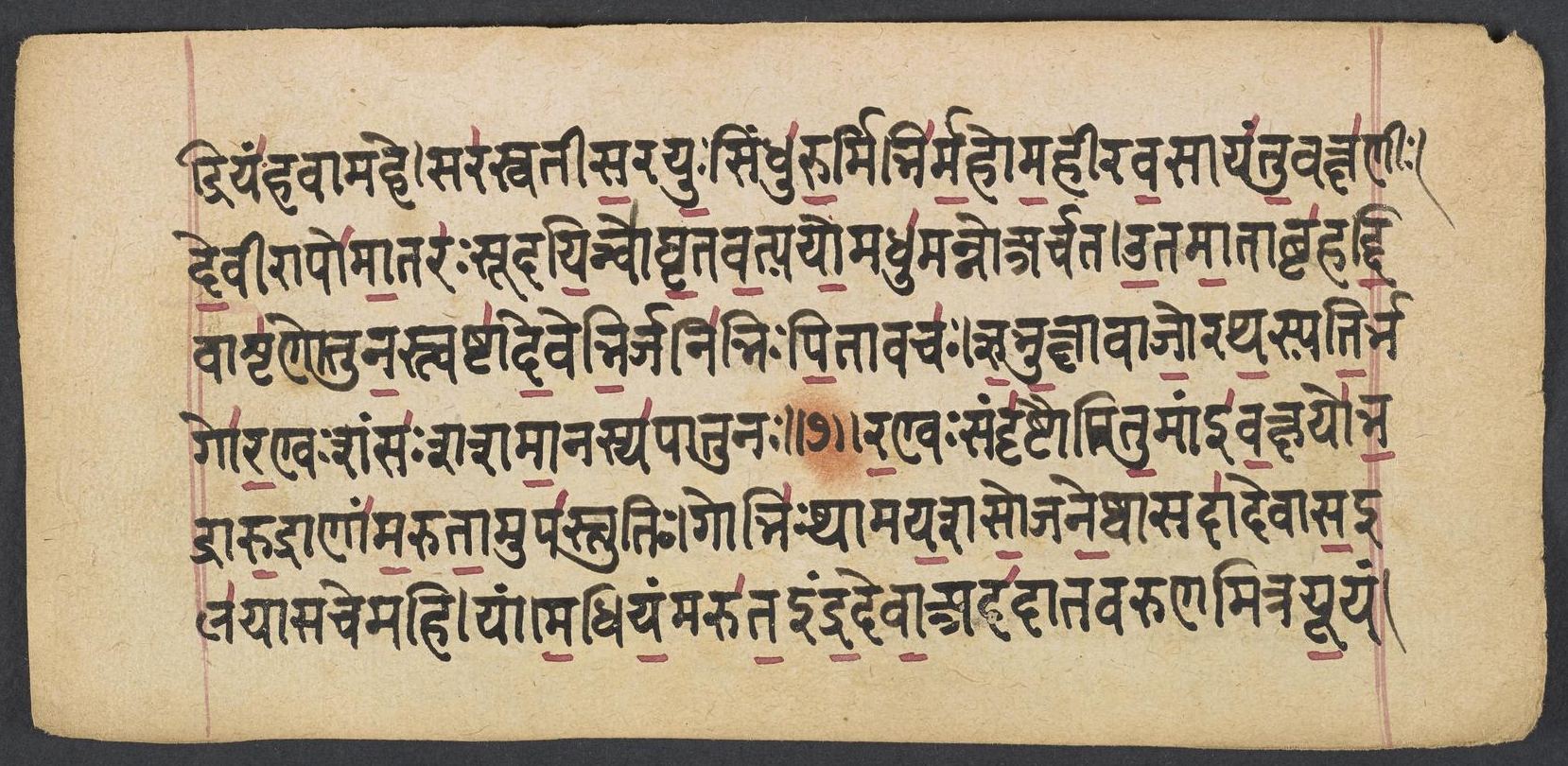
Penn Ms. Coll. 390 Item 48, fol. 25r (OPenn image 24, lower leaf). Checked on the image: the Rigveda text on this page begins in RV 10.64.8 ‹-rudriyaṁ havāmahe›. The next page with Rigveda text, fol. 25v, begins in RV 10.64.12 ‹tām pīpayata payaseva dhenuṁ›. Verses 10.64.8-11 end on this page; 10.64.8 begins on fol. 24v.
8triḥ sa̱pta sa̱srā na̱dyo̍ ma̱hīr a̱po vana̱spatī̱n parva̍tām̐ a̱gnim ū̱taye̍ | kṛ̱śānu̱m astṝ̍n ti̱ṣya̍ṁ sa̱dhastha̱ ā ru̱draṁ ru̱dreṣu̍ ru̱driya̍ṁ havāmahe ||
9sara̍svatī sa̱rayu̱ḥ sindhu̍r ū̱rmibhi̍r ma̱ho ma̱hīr ava̱sā ya̍ntu̱ vakṣa̍ṇīḥ | de̱vīr āpo̍ mā̱tara̍ḥ sūdayi̱tnvo̍ ghṛ̱tava̱t payo̱ madhu̍man no arcata ||
10u̱ta mā̱tā bṛ̍haddi̱vā śṛ̍ṇotu na̱s tvaṣṭā̍ de̱vebhi̱r jani̍bhiḥ pi̱tā vaca̍ḥ | ṛ̱bhu̱kṣā vājo̱ ratha̱spati̱r bhago̍ ra̱ṇvaḥ śaṁsa̍ḥ śaśamā̱nasya̍ pātu naḥ ||
11ra̱ṇvaḥ saṁdṛ̍ṣṭau pitu̱mām̐ i̍va̱ kṣayo̍ bha̱drā ru̱drāṇā̍m ma̱rutā̱m upa̍stutiḥ | gobhi̍ḥ ṣyāma ya̱śaso̱ jane̱ṣv ā sadā̍ devāsa̱ iḻa̍yā sacemahi ||
8The thrice-seven wandering Rivers, yea, the mighty floods, the forest trees, the mountains, Agni to our aid, Kr̥iṣanu, Tisya, archers to our gathering-place, and Rudra strong amid the Rudras we invoke.
9Let the great Streams come hither with their mighty help, Sindhu, Sarasvatî, and Sarayu with waves. Ye Goddess Floods, ye Mothers, animating all, promise us water rich in fatness and in balm.
10And let Br̥ihaddiva, the Mother, hear our call, and Tvashṭar, Father, with the Goddesses and Dames. R̥ibhukshan, Vâja, Bhaga, and Rathaspati, and the sweet speech of him who labours guard us well!
11Pleasant to look on as a dwelling rich in food is the blest favour of the Maruts, Rudra's Sons. May we be famed among the folk for wealth in kine. and ever come to you, ye Gods, with sacred food.
Where on the image
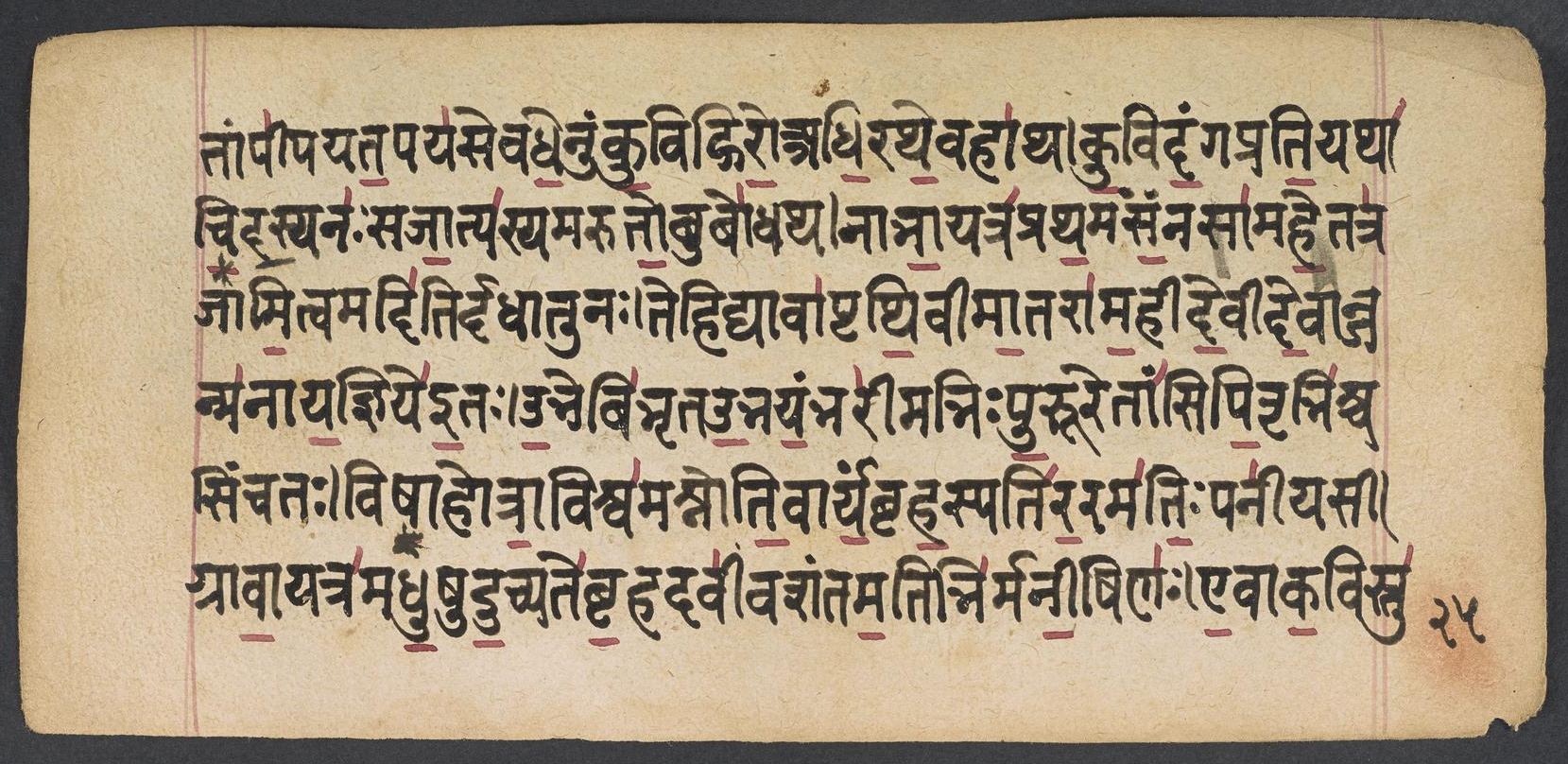
Penn Ms. Coll. 390 Item 48, fol. 25v (OPenn image 25, upper leaf). Checked on the image: the Rigveda text on this page begins in RV 10.64.12 ‹tām pīpayata payaseva dhenuṁ›. The next page with Rigveda text, fol. 26r, begins in RV 10.64.16 ‹-tuvīravām̐ ṛtajñā draviṇasyur draviṇasaś›. Verses 10.64.12-15 end on this page; 10.64.12 begins on fol. 25r.
12yām me̱ dhiya̱m maru̍ta̱ indra̱ devā̱ ada̍dāta varuṇa mitra yū̱yam | tām pī̍payata̱ paya̍seva dhe̱nuṁ ku̱vid giro̱ adhi̱ rathe̱ vahā̍tha ||
13ku̱vid a̱ṅga prati̱ yathā̍ cid a̱sya na̍ḥ sajā̱tya̍sya maruto̱ bubo̍dhatha | nābhā̱ yatra̍ pratha̱maṁ sa̱ṁnasā̍mahe̱ tatra̍ jāmi̱tvam adi̍tir dadhātu naḥ ||
14te hi dyāvā̍pṛthi̱vī mā̱tarā̍ ma̱hī de̱vī de̱vāñ janma̍nā ya̱jñiye̍ i̱taḥ | u̱bhe bi̍bhṛta u̱bhaya̱m bharī̍mabhiḥ pu̱rū retā̍ṁsi pi̱tṛbhi̍ś ca siñcataḥ ||
15vi ṣā hotrā̱ viśva̍m aśnoti̱ vārya̱m bṛha̱spati̍r a̱rama̍ti̱ḥ panī̍yasī | grāvā̱ yatra̍ madhu̱ṣud u̱cyate̍ bṛ̱had avī̍vaśanta ma̱tibhi̍r manī̱ṣiṇa̍ḥ ||
12The thought which ye, O Maruts, Indra and ye Gods have given to me, and ye, Mitra and Varuṇa,– Cause this to grow and swell like a milchcow with milk. Will ye not bear away my songs upon your car?
13O Maruts, do ye never, never recollect and call again to mind this our relationship? When next we meet together at the central point, even there shall Aditi confirm our brotherhood.
14The Mothers, Heaven and Earth, those mighty Goddesses, worthy of sacrifice, ecune with the race of Gods. These Two with their support uphold both Gods and men, and with the Fathers pour the copious genial stream.
15This invocation wins all good that we desire Br̥ihaspati, highly-praised Aramati, are here, Even where the stone that presses meath rings loudly out, and where the sages make their voices heard with hymns.
Where on the image
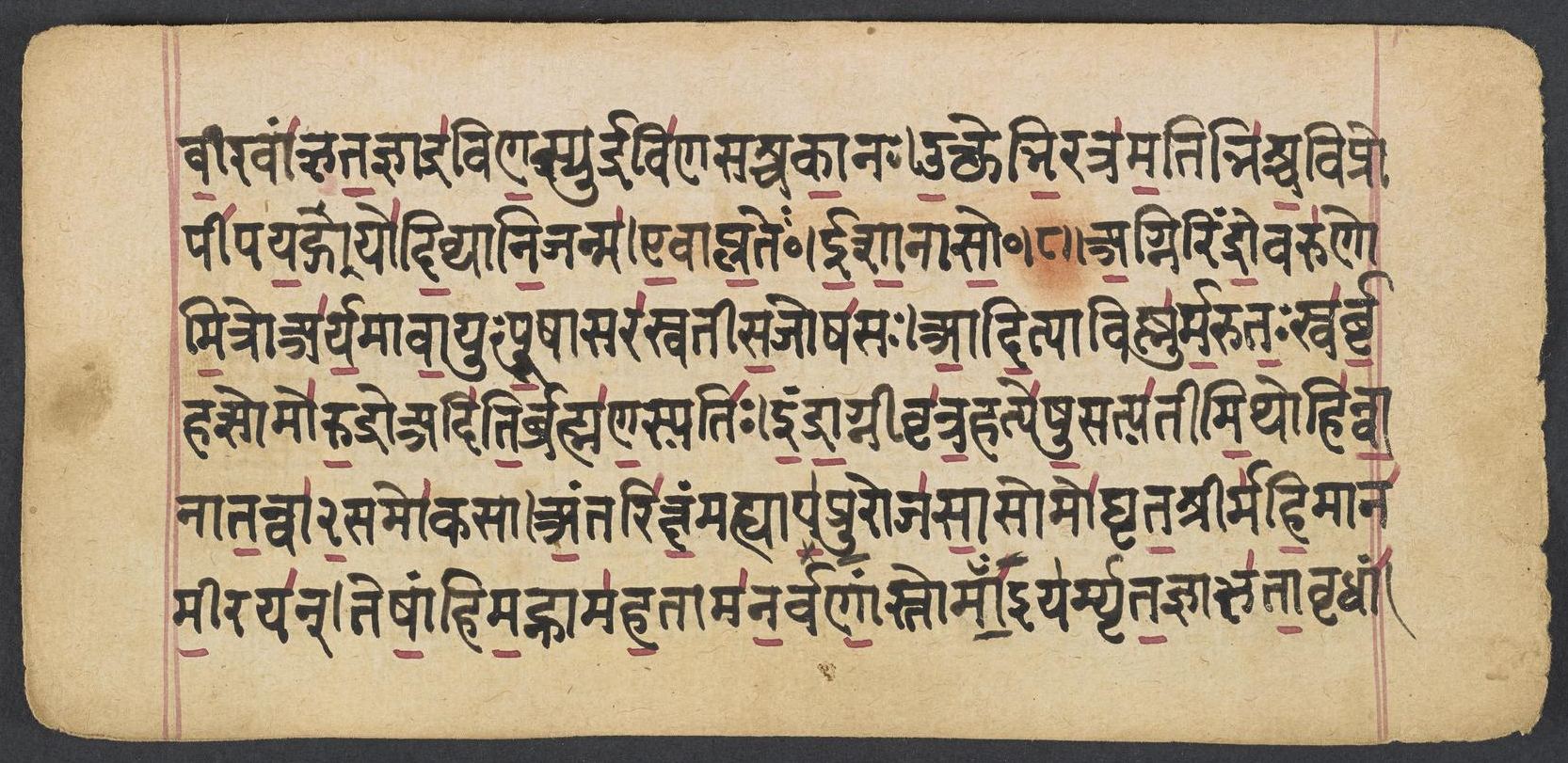
Penn Ms. Coll. 390 Item 48, fol. 26r (OPenn image 25, lower leaf). Checked on the image: the Rigveda text on this page begins in RV 10.64.16 ‹-tuvīravām̐ ṛtajñā draviṇasyur draviṇasaś›. The next page with Rigveda text, fol. 26v, begins in RV 10.65.3 ‹ye apsavam arṇavaṁ citrarādhasas›. Verses 10.64.16-17 end on this page; 10.64.16 begins on fol. 25v.
16e̱vā ka̱vis tu̍vī̱ravā̍m̐ ṛta̱jñā dra̍viṇa̱syur dravi̍ṇasaś cakā̱naḥ | u̱kthebhi̱r atra̍ ma̱tibhi̍ś ca̱ vipro 'pī̍paya̱d gayo̍ di̱vyāni̱ janma̍ ||
17e̱vā pla̱teḥ sū̱nur a̍vīvṛdhad vo̱ viśva̍ ādityā adite manī̱ṣī | ī̱śā̱nāso̱ naro̱ ama̍rtye̱nāstā̍vi̱ jano̍ di̱vyo gaye̍na ||
16Thus hath the sage, skilled in loud singers' duties, desiring riches, yearning after treasure, Gaya, the priestly singer, with his praises and hymns contented the Celestial people.
17Thus hath the thoughtful sage the son of Plati, praised you, O Aditi and all Âdityas. Men are made rich by those who are Immortal: the Heavenly Folk have been extolled by Gaya.
Notes
- Sanskrit: Aufrecht's edition (1877) with the Vedic accents, as entered by van Nooten and Holland (GRETIL).
- English: Ralph T. H. Griffith, The Hymns of the Rigveda (1889-1892; 2nd ed. 1896-1897), from the VedaWeb digital text; OCR slips in that text were corrected against the printed 2nd edition (data/sources/rigveda/griffith_errata.json).
Cite
Sources
- Source: Penn Ms. Coll. 390 Item 48 (1711 CE (colophon: Saṃvat 1768)), OPenn, Public Domain Mark + Aufrecht's accented text (GRETIL) + Griffith's English (VedaWeb) (holding institution)
- Critical edition: Aufrecht (1877), accented e-text via GRETIL
← previous · → next · v cycle view · l back to library