Rigveda 10.63: To all the gods
Introduction
Rigveda 10.63 is a hymn of 17 verses addressed to all the gods. It stands in book (maṇḍala) 10, the last and latest book. The Rigveda is the oldest collection of Sanskrit hymns, composed in the second half of the second millennium BCE and handed down orally for many centuries before it was written down.
The manuscript shown is Penn Ms. Coll. 390 Item 48 (University of Pennsylvania), a paper manuscript of the eighth aṣṭaka (RV 10.46-10.191) of the Ṛgveda Saṃhitā in Devanāgarī, 158 leaves, 6 lines to the page, with the accents marked in red; the scribe's colophon on fol. 158 gives Saṃvat 1768 (1711 CE); this hymn stands on fol. 21r-23v. Each section below gives the verses that end on one page; the page boundaries were read on the images (the opening words of every page), not counted out. Like most Rigveda manuscripts, Penn Ms. Coll. 390 Item 48 writes a repeated refrain in short form after its first occurrence (for example kasmai° for kasmai devāya haviṣā vidhema); the Sanskrit shown is the full text of Aufrecht's edition.
How was this verified? (Provenance)
Where on the image
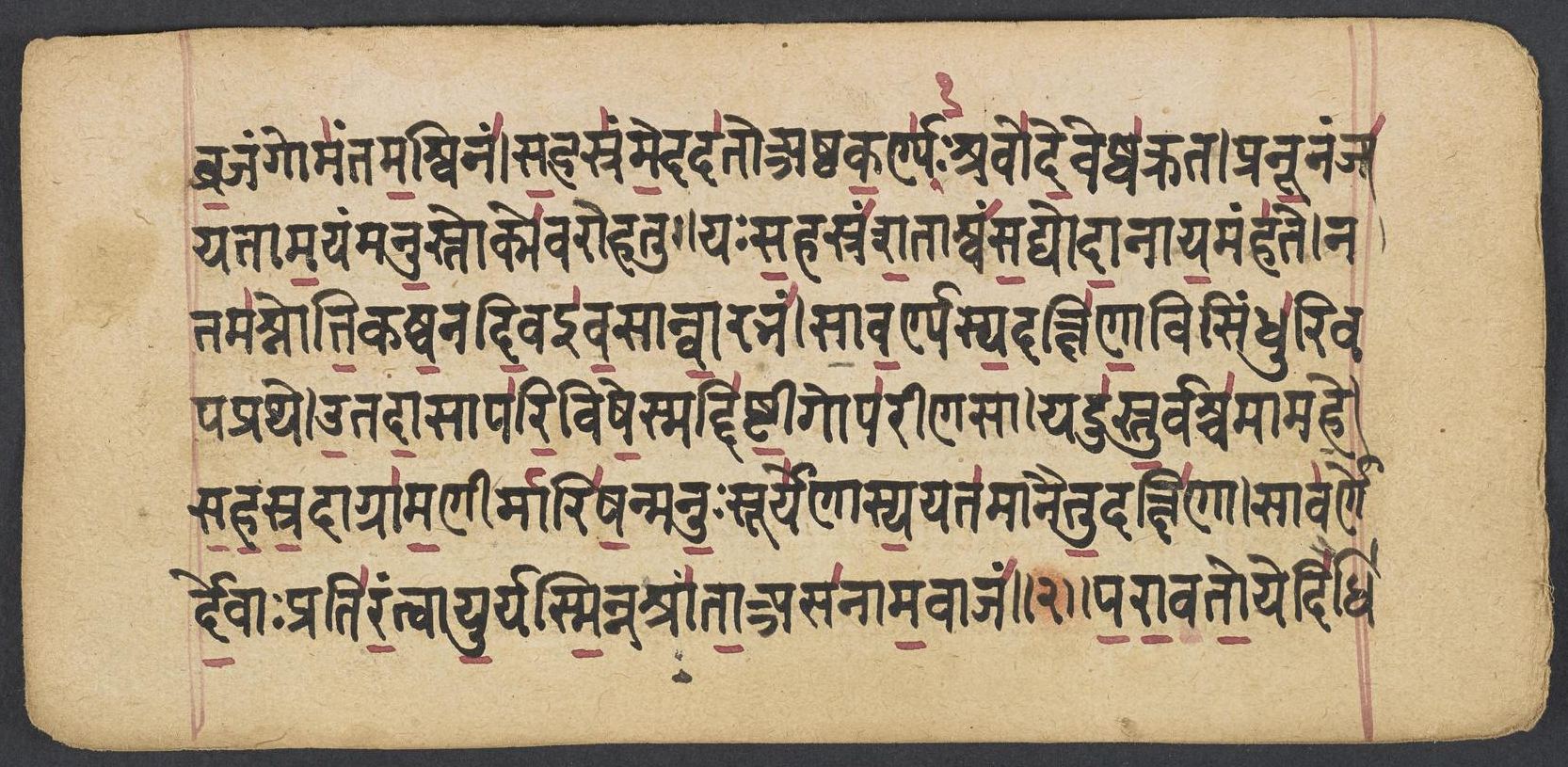
Penn Ms. Coll. 390 Item 48, fol. 21v (OPenn image 21, upper leaf). Checked on the image: the Rigveda text on this page begins in RV 10.63.1 ‹-didhiṣanta āpyam manuprītāso janimā›. The next page with Rigveda text, fol. 22r, begins in RV 10.63.4 ‹-ahimāyā anāgaso divo varṣmāṇaṁ›. Verses 10.63.1-3 end on this page; 10.63.1 begins on fol. 21r.
1pa̱rā̱vato̱ ye didhi̍ṣanta̱ āpya̱m manu̍prītāso̱ jani̍mā vi̱vasva̍taḥ | ya̱yāte̱r ye na̍hu̱ṣya̍sya ba̱rhiṣi̍ de̱vā āsa̍te̱ te adhi̍ bruvantu naḥ ||
2viśvā̱ hi vo̍ nama̱syā̍ni̱ vandyā̱ nāmā̍ni devā u̱ta ya̱jñiyā̍ni vaḥ | ye stha jā̱tā adi̍ter a̱dbhyas pari̱ ye pṛ̍thi̱vyās te ma̍ i̱ha śru̍tā̱ hava̍m ||
3yebhyo̍ mā̱tā madhu̍ma̱t pinva̍te̱ paya̍ḥ pī̱yūṣa̱ṁ dyaur adi̍ti̱r adri̍barhāḥ | u̱kthaśu̍ṣmān vṛṣabha̱rān svapna̍sa̱s tām̐ ā̍di̱tyām̐ anu̍ madā sva̱staye̍ ||
1MAY they who would assume kinship from far away, Vivasvan's generations, dearly loved of men, Even the Gods who sit upon the sacred grass of Nahusha's son Yayati, bless and comfort us.
2For worthy of obeisance, Gods, are all your names, worthy of adoration and of sacrifice. Ye who were born from waters, and from Aditi, and from the earth, do ye here listen to my call.
3I will rejoice in these Âdityas for my weal, for whom the Mother pours forth water rich in balm, And Dyaus the Infinite, firm as a rock, sweet milk,– Gods active, strong through lauds, whose might the Bull upholds.
Where on the image
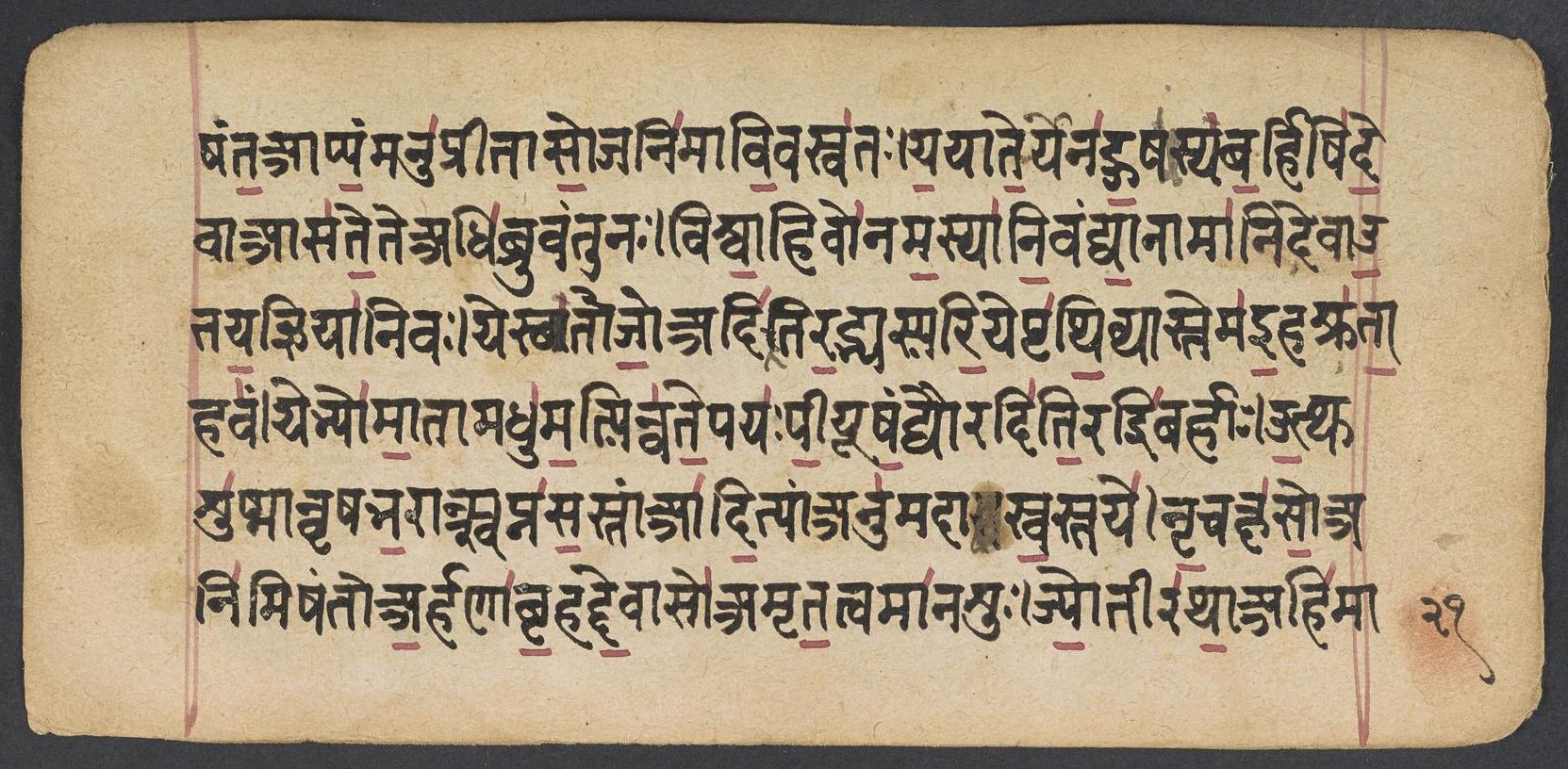
Penn Ms. Coll. 390 Item 48, fol. 22r (OPenn image 21, lower leaf). Checked on the image: the Rigveda text on this page begins in RV 10.63.4 ‹-ahimāyā anāgaso divo varṣmāṇaṁ›. The next page with Rigveda text, fol. 22v, begins in RV 10.63.8 ‹viśvasya sthātur jagataś ca›. Verses 10.63.4-7 end on this page; 10.63.4 begins on fol. 21v.
4nṛ̱cakṣa̍so̱ ani̍miṣanto a̱rhaṇā̍ bṛ̱had de̱vāso̍ amṛta̱tvam ā̍naśuḥ | jyo̱tīra̍thā̱ ahi̍māyā̱ anā̍gaso di̱vo va̱rṣmāṇa̍ṁ vasate sva̱staye̍ ||
5sa̱mrājo̱ ye su̱vṛdho̍ ya̱jñam ā̍ya̱yur apa̍rihvṛtā dadhi̱re di̱vi kṣaya̍m | tām̐ ā vi̍vāsa̱ nama̍sā suvṛ̱ktibhi̍r ma̱ho ā̍di̱tyām̐ adi̍tiṁ sva̱staye̍ ||
6ko va̱ḥ stoma̍ṁ rādhati̱ yaṁ jujo̍ṣatha̱ viśve̍ devāso manuṣo̱ yati̱ ṣṭhana̍ | ko vo̍ 'dhva̱raṁ tu̍vijātā̱ ara̍ṁ kara̱d yo na̱ḥ parṣa̱d aty aṁha̍ḥ sva̱staye̍ ||
7yebhyo̱ hotrā̍m pratha̱mām ā̍ye̱je manu̱ḥ sami̍ddhāgni̱r mana̍sā sa̱pta hotṛ̍bhiḥ | ta ā̍dityā̱ abha̍ya̱ṁ śarma̍ yacchata su̱gā na̍ḥ karta su̱pathā̍ sva̱staye̍ ||
4Looking on men, ne'er slumbering, they by their deserts attained as Gods to lofty immortality. Borne on refulgent cars, sinless, with serpents' powers, they robe them, for our welfare, in the height of heaven.
5Great Kings who bless us, who have come to sacrifice, who, ne'er assailed, have set their mansion in the sky,– These I invite with adoration and with hymns, mighty Âdityas, Aditi, for happiness.
6Who offereth to you the laud that ye accept, O ye All-Gods of Manu, many as ye are? Who, Mighty Ones, will prepare for you the sacrifice to bear us over trouble to felicity?
7Ye to whom Manu, by seven priests, with kindled fire, offered the first oblation with his heart and soul, Vouchsafe us, ye Âdityas, shelter free from fear, and make us good and easy paths to happiness.
Where on the image
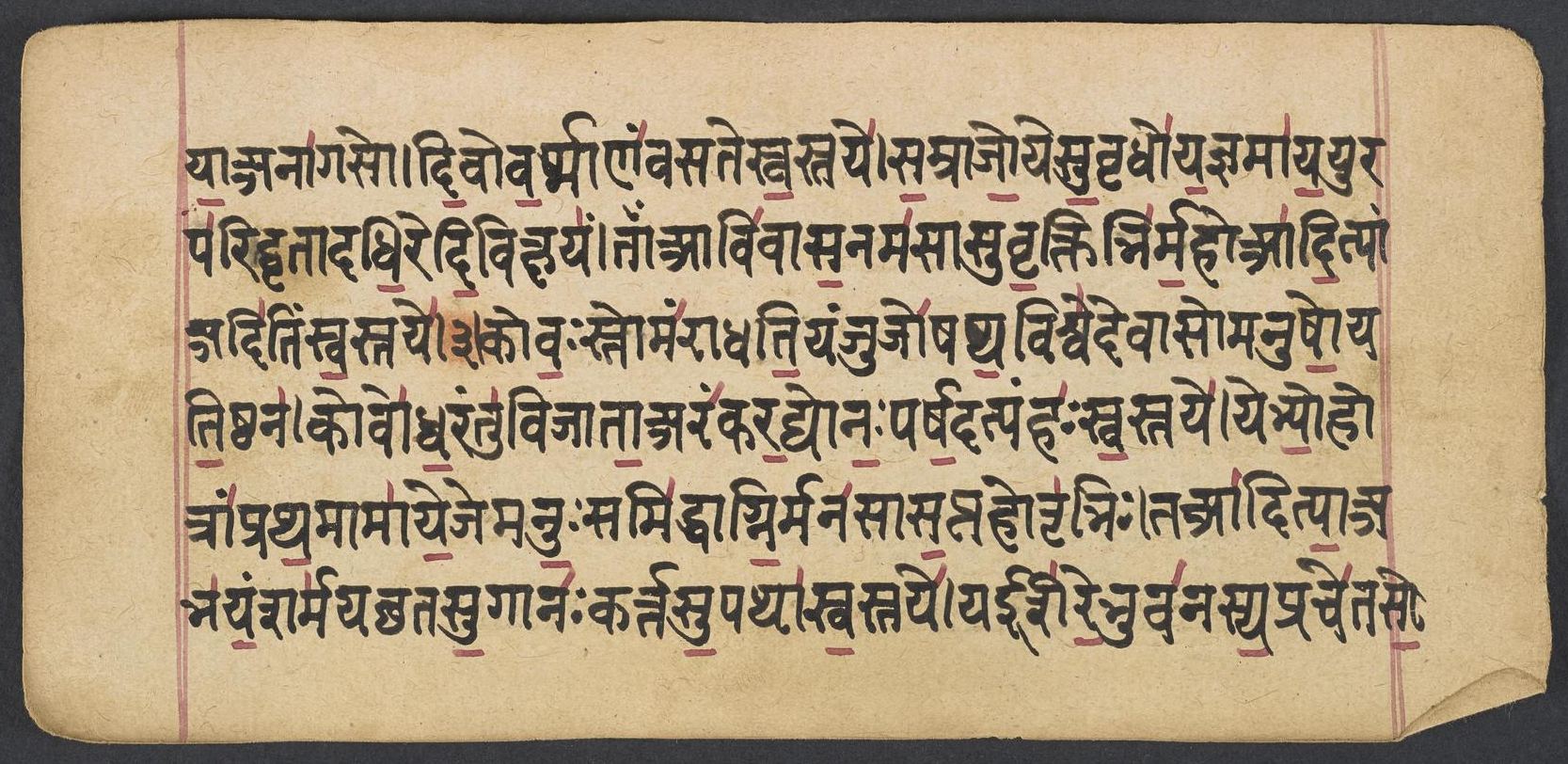
Penn Ms. Coll. 390 Item 48, fol. 22v (OPenn image 22, upper leaf). Checked on the image: the Rigveda text on this page begins in RV 10.63.8 ‹viśvasya sthātur jagataś ca›. The next page with Rigveda text, fol. 23r, begins in RV 10.63.11 ‹svastaye›. Verses 10.63.8-10 end on this page; 10.63.8 begins on fol. 22r.
8ya īśi̍re̱ bhuva̍nasya̱ prace̍taso̱ viśva̍sya sthā̱tur jaga̍taś ca̱ manta̍vaḥ | te na̍ḥ kṛ̱tād akṛ̍tā̱d ena̍sa̱s pary a̱dyā de̍vāsaḥ pipṛtā sva̱staye̍ ||
9bhare̱ṣv indra̍ṁ su̱hava̍ṁ havāmahe 'ṁho̱muca̍ṁ su̱kṛta̱ṁ daivya̱ṁ jana̍m | a̱gnim mi̱traṁ varu̍ṇaṁ sā̱taye̱ bhaga̱ṁ dyāvā̍pṛthi̱vī ma̱ruta̍ḥ sva̱staye̍ ||
10su̱trāmā̍ṇam pṛthi̱vīṁ dyām a̍ne̱hasa̍ṁ su̱śarmā̍ṇa̱m adi̍tiṁ su̱praṇī̍tim | daivī̱ṁ nāva̍ṁ svari̱trām anā̍gasa̱m asra̍vantī̱m ā ru̍hemā sva̱staye̍ ||
8Wise Deities, who have dominion o'er the world, ye thinkers over all that moves not and that moves, Save us from uncommitted and committed sin, preserve us from all sin to-day for happiness.
9In battles we invoke Indra still swift to hear, and all the holy Host of Heaven who banish grief, Agni, Mitra, and Varuṇa that we may gain, Dyaus, Bhaga, Maruts, Pr̥ithivî for happiness:
10Mightily-saving Earth, incomparable Heaven the good guide Aditi who gives secure defence The well-oared heavenly Ship that lets no waters in, free from defect, will we ascend for happiness.
Where on the image
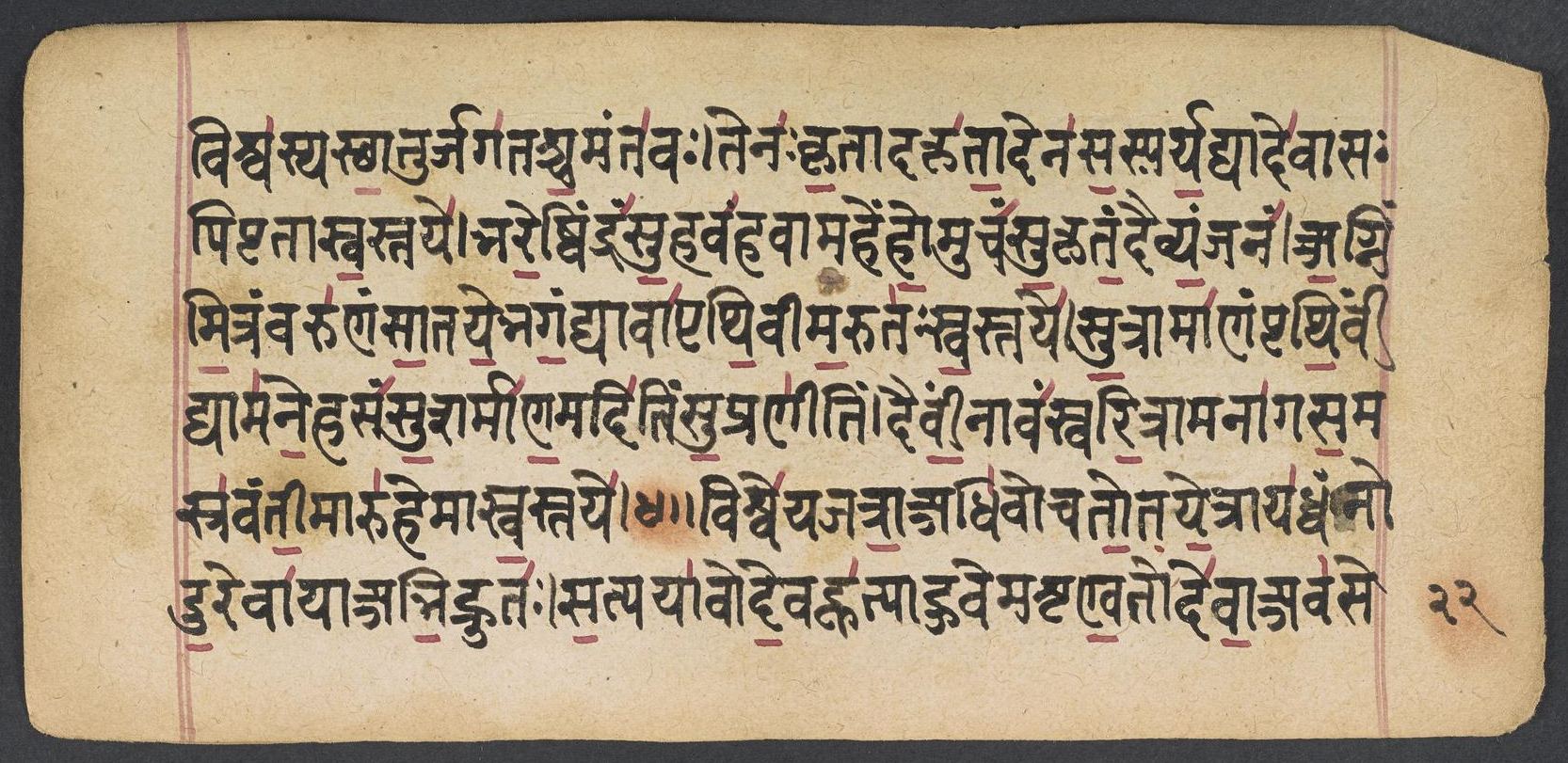
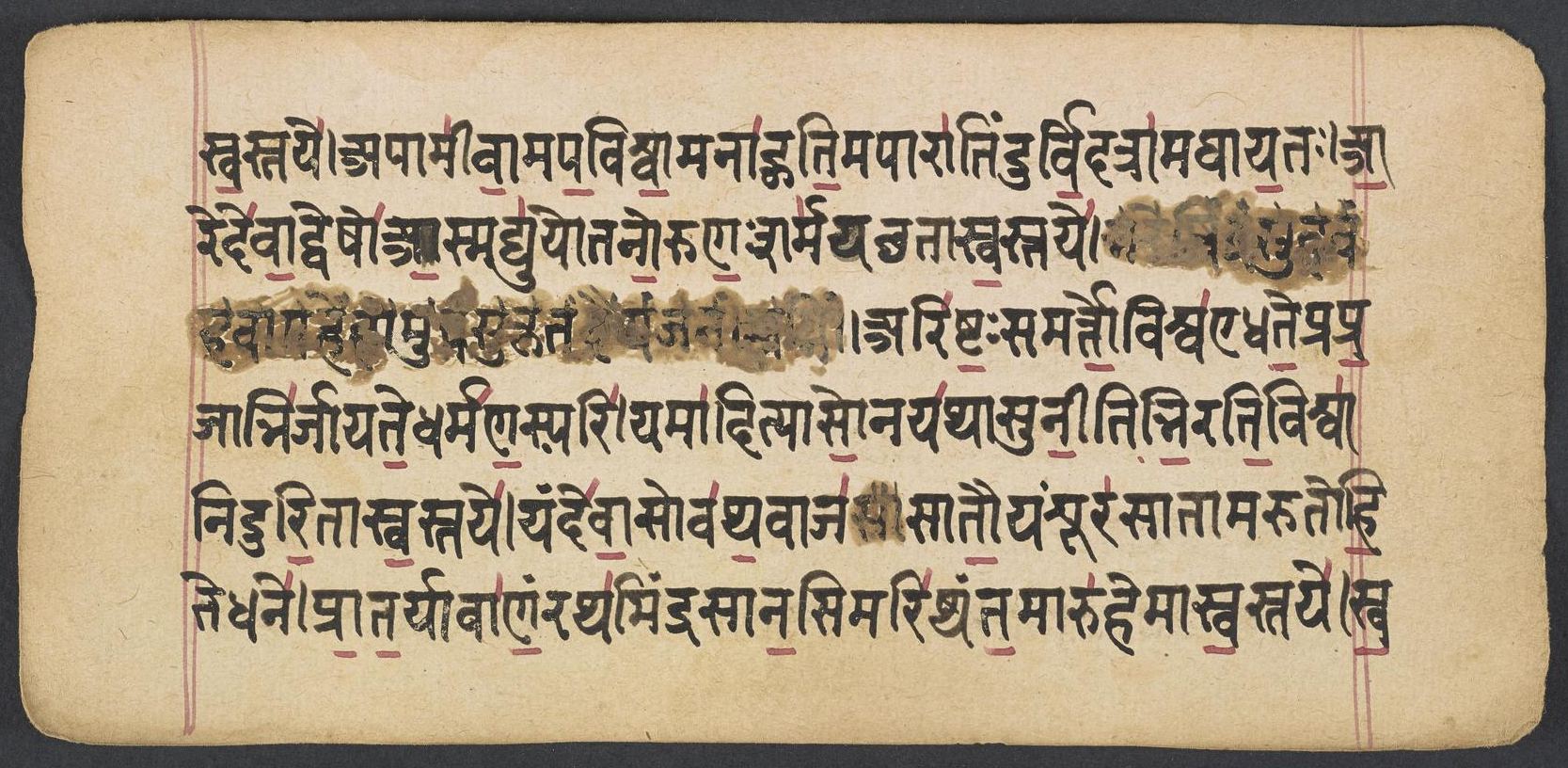
Penn Ms. Coll. 390 Item 48, fol. 23r (OPenn image 22, lower leaf). Checked on the image: the Rigveda text on this page begins in RV 10.63.11 ‹svastaye›. The next page with Rigveda text, fol. 23v, begins in RV 10.63.15 ‹-svasti naḥ pathyāsu dhanvasu›. Verses 10.63.11-14 end on this page; 10.63.11 begins on fol. 22v.
11viśve̍ yajatrā̱ adhi̍ vocato̱taye̱ trāya̍dhvaṁ no du̱revā̍yā abhi̱hruta̍ḥ | sa̱tyayā̍ vo de̱vahū̍tyā huvema śṛṇva̱to de̍vā̱ ava̍se sva̱staye̍ ||
12apāmī̍vā̱m apa̱ viśvā̱m anā̍huti̱m apārā̍tiṁ durvi̱datrā̍m aghāya̱taḥ | ā̱re de̍vā̱ dveṣo̍ a̱smad yu̍yotano̱ru ṇa̱ḥ śarma̍ yacchatā sva̱staye̍ ||
13ari̍ṣṭa̱ḥ sa marto̱ viśva̍ edhate̱ pra pra̱jābhi̍r jāyate̱ dharma̍ṇa̱s pari̍ | yam ā̍dityāso̱ naya̍thā sunī̱tibhi̱r ati̱ viśvā̍ni duri̱tā sva̱staye̍ ||
14yaṁ de̍vā̱so 'va̍tha̱ vāja̍sātau̱ yaṁ śūra̍sātā maruto hi̱te dhane̍ | prā̱ta̱ryāvā̍ṇa̱ṁ ratha̍m indra sāna̱sim ari̍ṣyanta̱m ā ru̍hemā sva̱staye̍ ||
11Bless us, all Holy Ones, that we may have your help, guard and protect us from malignant injury. With fruitful invocation may we call on you, Gods, who give ear to us for grace, for happiness.
12Keep all disease afar and sordid sacrifice, keep off the wicked man's malicious enmity. Keep far away from us all hatred, O ye Gods, and give us ample shelter for our happiness.
13Untouched by any evil, every mortal thrives, and, following the Law, spreads in his progeny. Whom ye with your good guidance, O Âdityas, lead safely through all his pain and grief to happiness.
14That which ye guard and grace in battle, O ye Gods, ye Maruts, where the prize is wealth, where heroes win, That conquering Car, O Indra, that sets forth at dawn, that never breaks, may we ascend for happiness.
Where on the image
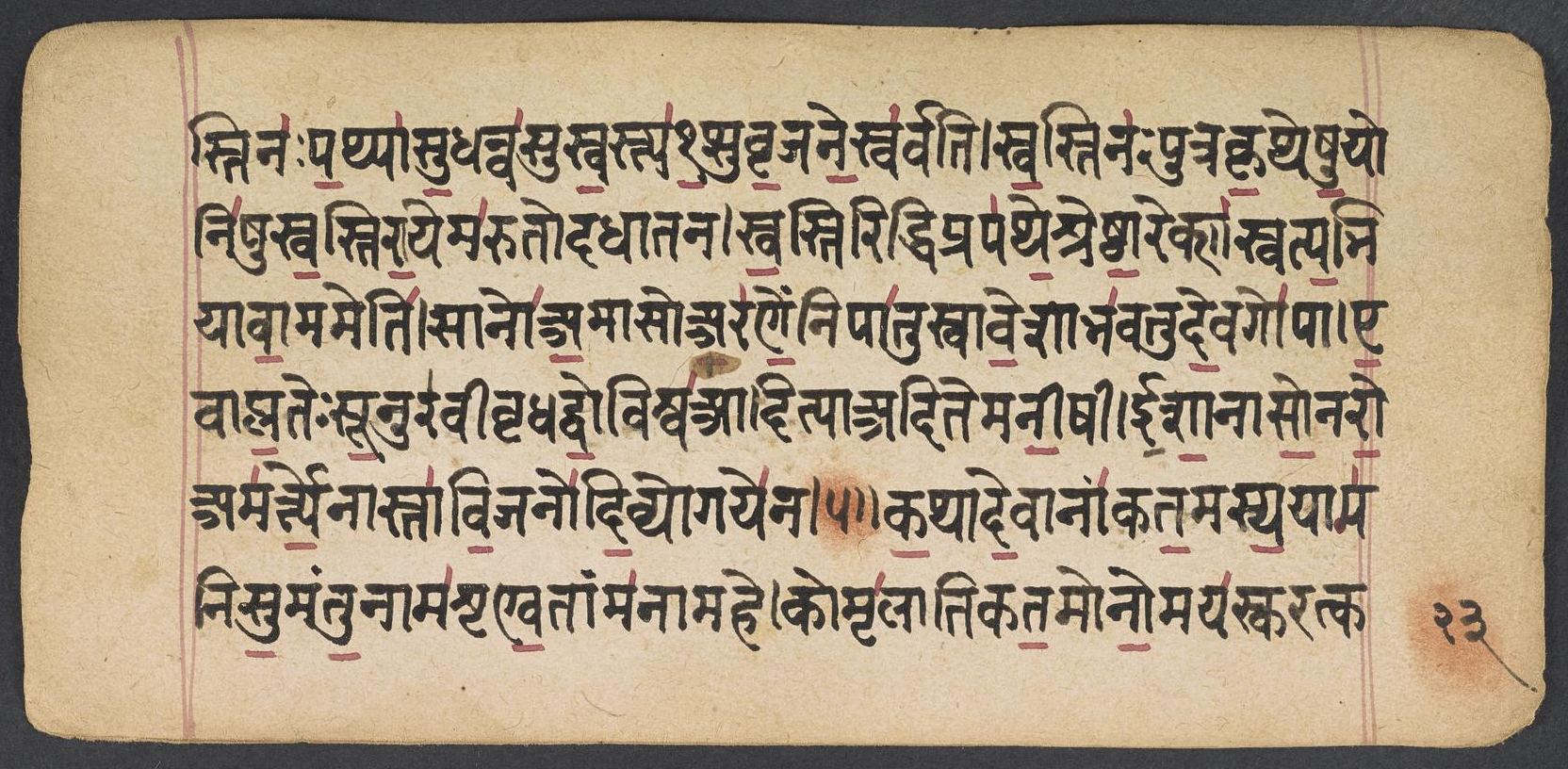
Penn Ms. Coll. 390 Item 48, fol. 23v (OPenn image 23, upper leaf). Checked on the image: the Rigveda text on this page begins in RV 10.63.15 ‹-svasti naḥ pathyāsu dhanvasu›. The next page with Rigveda text, fol. 24r, begins in RV 10.64.1 ‹-katama ūtī abhy ā›. Verses 10.63.15-17 end on this page; 10.63.15 begins on fol. 23r.
15sva̱sti na̍ḥ pa̱thyā̍su̱ dhanva̍su sva̱sty a1̱̍psu vṛ̱jane̱ sva̍rvati | sva̱sti na̍ḥ putrakṛ̱theṣu̱ yoni̍ṣu sva̱sti rā̱ye ma̍ruto dadhātana ||
16sva̱stir id dhi prapa̍the̱ śreṣṭhā̱ rekṇa̍svaty a̱bhi yā vā̱mam eti̍ | sā no̍ a̱mā so ara̍ṇe̱ ni pā̍tu svāve̱śā bha̍vatu de̱vago̍pā ||
17e̱vā pla̱teḥ sū̱nur a̍vīvṛdhad vo̱ viśva̍ ādityā adite manī̱ṣī | ī̱śā̱nāso̱ naro̱ ama̍rtye̱nāstā̍vi̱ jano̍ di̱vyo gaye̍na ||
15Vouchsafe us blessing in our paths and desert tracts, blessing in waters and in battle, for the light; Blessing upon the wombs that bring male children forth, and blessing, O ye Maruts, for the gain of wealth.
16The noblest Svasti with abundant riches, who comes to what is good by distant pathway,– May she at home and far away preserve us, and dwell with us under the Gods' protection
17Thus hath the thoughtful sage, the son of Plati, praised you, O Aditi and all Âdityas, Men are made rich by those who are Immortal: the Heavenly Folk have been extolled by Gaya.
Notes
- Sanskrit: Aufrecht's edition (1877) with the Vedic accents, as entered by van Nooten and Holland (GRETIL).
- English: Ralph T. H. Griffith, The Hymns of the Rigveda (1889-1892; 2nd ed. 1896-1897), from the VedaWeb digital text; OCR slips in that text were corrected against the printed 2nd edition (data/sources/rigveda/griffith_errata.json).
Cite
Sources
- Source: Penn Ms. Coll. 390 Item 48 (1711 CE (colophon: Saṃvat 1768)), OPenn, Public Domain Mark + Aufrecht's accented text (GRETIL) + Griffith's English (VedaWeb) (holding institution)
- Critical edition: Aufrecht (1877), accented e-text via GRETIL
← previous · → next · v cycle view · l back to library