Rigveda 10.67: To Brihaspati
Introduction
Rigveda 10.67 is a hymn of 12 verses addressed to Brihaspati. It stands in book (maṇḍala) 10, the last and latest book. The Rigveda is the oldest collection of Sanskrit hymns, composed in the second half of the second millennium BCE and handed down orally for many centuries before it was written down.
The manuscript shown is Penn Ms. Coll. 390 Item 48 (University of Pennsylvania), a paper manuscript of the eighth aṣṭaka (RV 10.46-10.191) of the Ṛgveda Saṃhitā in Devanāgarī, 158 leaves, 6 lines to the page, with the accents marked in red; the scribe's colophon on fol. 158 gives Saṃvat 1768 (1711 CE); this hymn stands on fol. 30r-31v. Each section below gives the verses that end on one page; the page boundaries were read on the images (the opening words of every page), not counted out. Like most Rigveda manuscripts, Penn Ms. Coll. 390 Item 48 writes a repeated refrain in short form after its first occurrence (for example kasmai° for kasmai devāya haviṣā vidhema); the Sanskrit shown is the full text of Aufrecht's edition.
How was this verified? (Provenance)
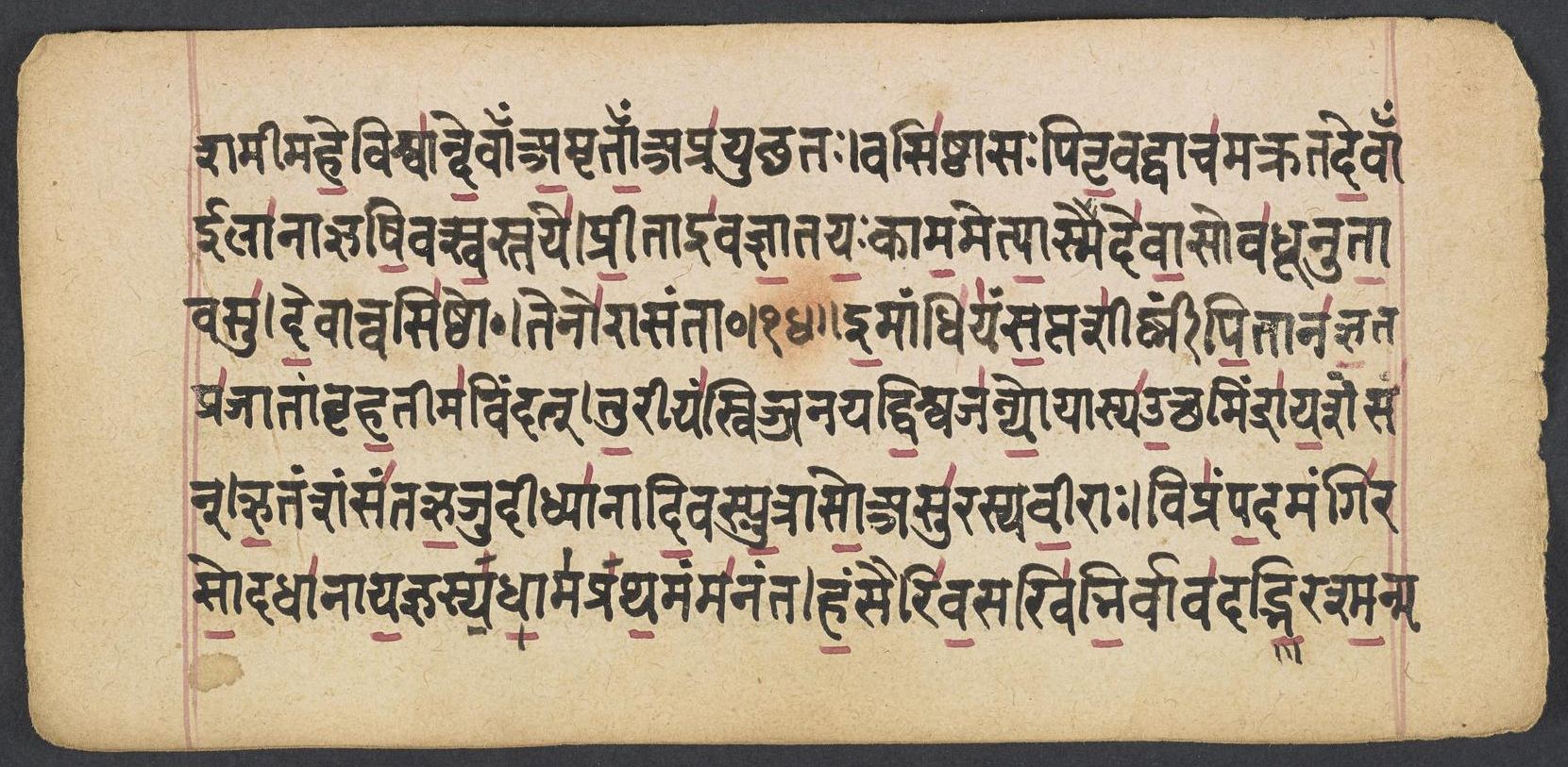
Where on the image
Penn Ms. Coll. 390 Item 48, fol. 30r (numbered 29r by the scribe) (OPenn image 29, lower leaf). Checked on the image: the Rigveda text on this page begins in RV 10.66.13 ‹-prativeśam īmahe viśvān devām̐›. The next page with Rigveda text, fol. 30v (numbered 29v by the scribe), begins in RV 10.67.3 ‹-aśmanmayāni nahanā vyasyan›. Verses 10.67.1-2 end on this page.
1i̱māṁ dhiya̍ṁ sa̱ptaśī̍rṣṇīm pi̱tā na̍ ṛ̱tapra̍jātām bṛha̱tīm a̍vindat | tu̱rīya̍ṁ svij janayad vi̱śvaja̍nyo̱ 'yāsya̍ u̱ktham indrā̍ya̱ śaṁsa̍n ||
2ṛ̱taṁ śaṁsa̍nta ṛ̱ju dīdhyā̍nā di̱vas pu̱trāso̱ asu̍rasya vī̱rāḥ | vipra̍m pa̱dam aṅgi̍raso̱ dadhā̍nā ya̱jñasya̱ dhāma̍ pratha̱mam ma̍nanta ||
1THIS holy hymn, sublime and sevenheaded, sprung from eternal Law, our sire discovered. Ayasya, friend of all men, hath engendered the fourth hymn as he sang his laud to Indra.
2Thinking aright, praising eternal Order, the sons of Dyaus the Asura, those heroes, Angirases, holding the rank of sages, first honoured sacrifice's holy statute.
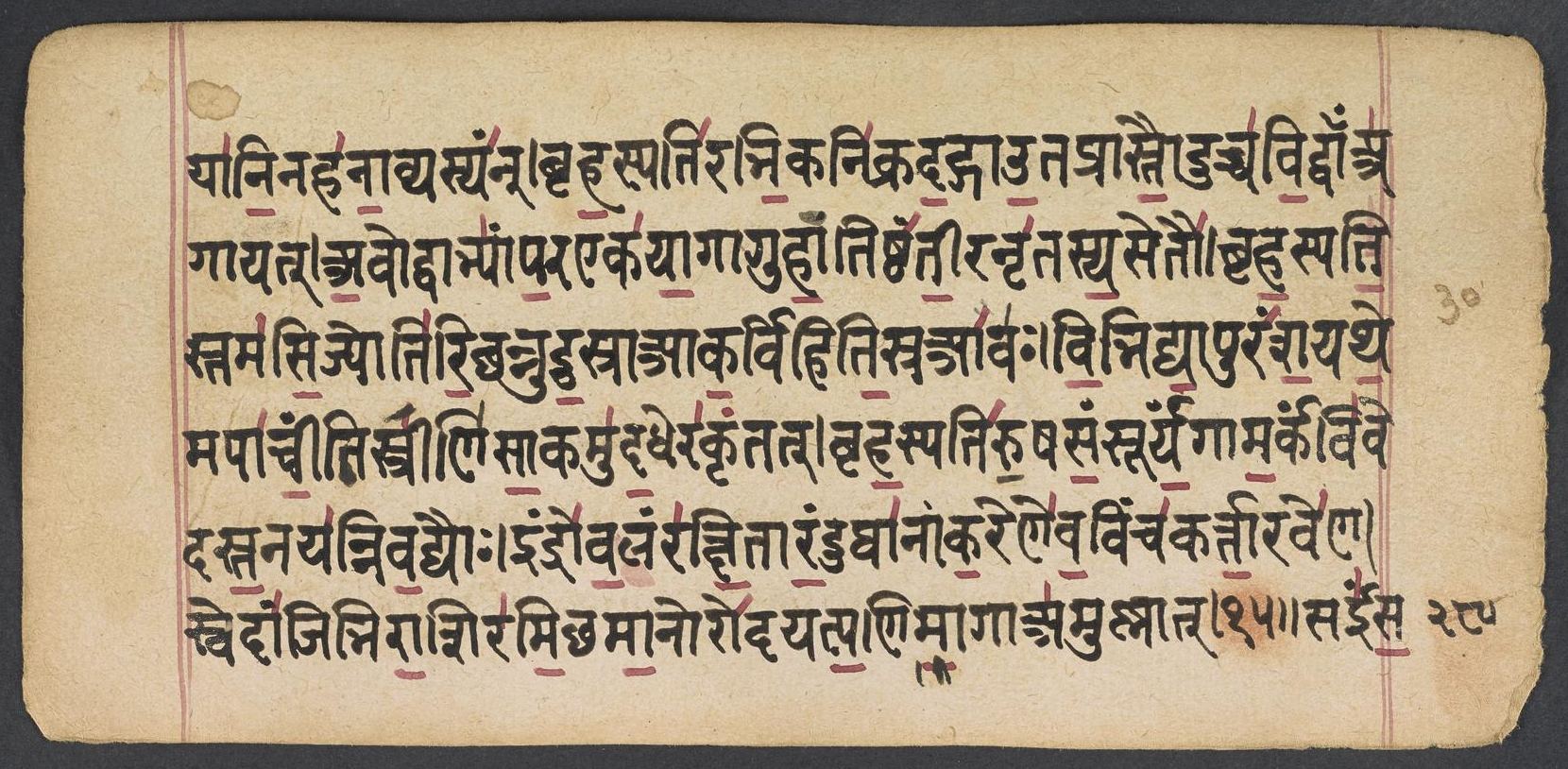
Where on the image
Penn Ms. Coll. 390 Item 48, fol. 30v (numbered 29v by the scribe) (OPenn image 30, upper leaf). Checked on the image: the Rigveda text on this page begins in RV 10.67.3 ‹-aśmanmayāni nahanā vyasyan›. The next page with Rigveda text, fol. 31r (numbered 30r by the scribe), begins in RV 10.67.7 ‹-satyebhiḥ sakhibhiḥ śucadbhir godhāyasaṁ›. Verses 10.67.3-6 end on this page; 10.67.3 begins on fol. 30r (numbered 29r by the scribe).
3ha̱ṁsair i̍va̱ sakhi̍bhi̱r vāva̍dadbhir aśma̱nmayā̍ni̱ naha̍nā̱ vyasya̍n | bṛha̱spati̍r abhi̱kani̍krada̱d gā u̱ta prāstau̱d uc ca̍ vi̱dvām̐ a̍gāyat ||
4a̱vo dvābhyā̍m pa̱ra eka̍yā̱ gā guhā̱ tiṣṭha̍ntī̱r anṛ̍tasya̱ setau̍ | bṛha̱spati̱s tama̍si̱ jyoti̍r i̱cchann ud u̱srā āka̱r vi hi ti̱sra āva̍ḥ ||
5vi̱bhidyā̱ pura̍ṁ śa̱yathe̱m apā̍cī̱ṁ nis trīṇi̍ sā̱kam u̍da̱dher a̍kṛntat | bṛha̱spati̍r u̱ṣasa̱ṁ sūrya̱ṁ gām a̱rkaṁ vi̍veda sta̱naya̍nn iva̱ dyauḥ ||
6indro̍ va̱laṁ ra̍kṣi̱tāra̱ṁ dughā̍nāṁ ka̱reṇe̍va̱ vi ca̍kartā̱ rave̍ṇa | svedā̍ñjibhir ā̱śira̍m i̱cchamā̱no 'ro̍dayat pa̱ṇim ā gā a̍muṣṇāt ||
3Girt by his friends who cried with swanlike voices, bursting the stony barriers of the prison, Br̥ihaspati spake in thunder to the cattle, and uttered praise and song when he had found them.
4Apart from one, away from two above him, he drave the kine that stood in bonds of falsehood. Br̥ihaspati, seeking light amid the darkness, drave forth the bright cows: three he made apparent.
5When he had cleft the lairs and western castle, he cut off three from him who held the waters. Br̥ihaspati discovered, while he thundered like Dyaus, the dawn, the Sun, the cow, the lightning.
6As with a hand, so with his roaring Indra cleft Vala through, the guardian of the cattle. Seeking the milk-draught with sweatshining comrades he stole the Paṇi's kine and left him weeping.
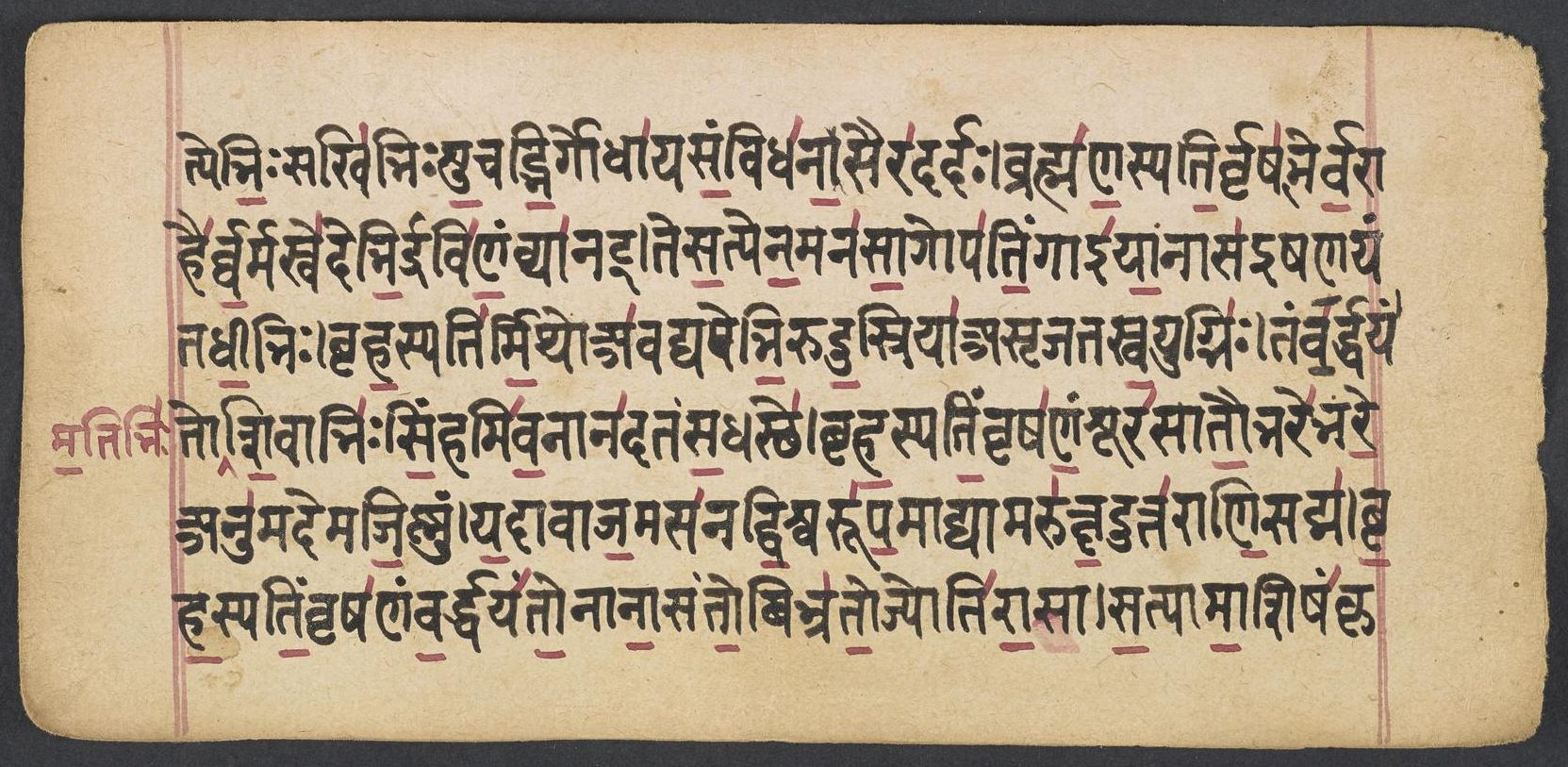
Where on the image
Penn Ms. Coll. 390 Item 48, fol. 31r (numbered 30r by the scribe) (OPenn image 30, lower leaf). Checked on the image: the Rigveda text on this page begins in RV 10.67.7 ‹-satyebhiḥ sakhibhiḥ śucadbhir godhāyasaṁ›. The next page with Rigveda text, fol. 31v (numbered 30v by the scribe), begins in RV 10.67.11 ‹kīriṁ cid dhy avatha›. Verses 10.67.7-10 end on this page; 10.67.7 begins on fol. 30v (numbered 29v by the scribe).
7sa ī̍ṁ sa̱tyebhi̱ḥ sakhi̍bhiḥ śu̱cadbhi̱r godhā̍yasa̱ṁ vi dha̍na̱sair a̍dardaḥ | brahma̍ṇa̱s pati̱r vṛṣa̍bhir va̱rāhai̍r gha̱rmasve̍debhi̱r dravi̍ṇa̱ṁ vy ā̍naṭ ||
8te sa̱tyena̱ mana̍sā̱ gopa̍ti̱ṁ gā i̍yā̱nāsa̍ iṣaṇayanta dhī̱bhiḥ | bṛha̱spati̍r mi̱thoa̍vadyapebhi̱r ud u̱sriyā̍ asṛjata sva̱yugbhi̍ḥ ||
9taṁ va̱rdhaya̍nto ma̱tibhi̍ḥ śi̱vābhi̍ḥ si̱ṁham i̍va̱ nāna̍dataṁ sa̱dhasthe̍ | bṛha̱spati̱ṁ vṛṣa̍ṇa̱ṁ śūra̍sātau̱ bhare̍-bhare̱ anu̍ madema ji̱ṣṇum ||
10ya̱dā vāja̱m asa̍nad vi̱śvarū̍pa̱m ā dyām aru̍kṣa̱d utta̍rāṇi̱ sadma̍ | bṛha̱spati̱ṁ vṛṣa̍ṇaṁ va̱rdhaya̍nto̱ nānā̱ santo̱ bibhra̍to̱ jyoti̍r ā̱sā ||
7He with bright faithful Friends, winners of booty, hath rent the milker of the cows asunder. Br̥ihaspati with wild boars strong and mighty, sweating with heat, hath gained a rich possession.
8They, longing for the kine, with faithful spirit incited with their hymns the Lord of cattle. Br̥ihaspati freed the radiant cows with comrades self-yoked, averting shame from one another.
9In our assembly with auspicious praises exalting him who roareth like a lion, Maywe, in every fight where heroes conquer, rejoice in strong Br̥ihaspati the Victor.
10When he had won him every sort of booty and gone to heaven and its most lofty mansions, Men praised Br̥ihaspati the Mighty, bringing the light within their mouths from sundry places.
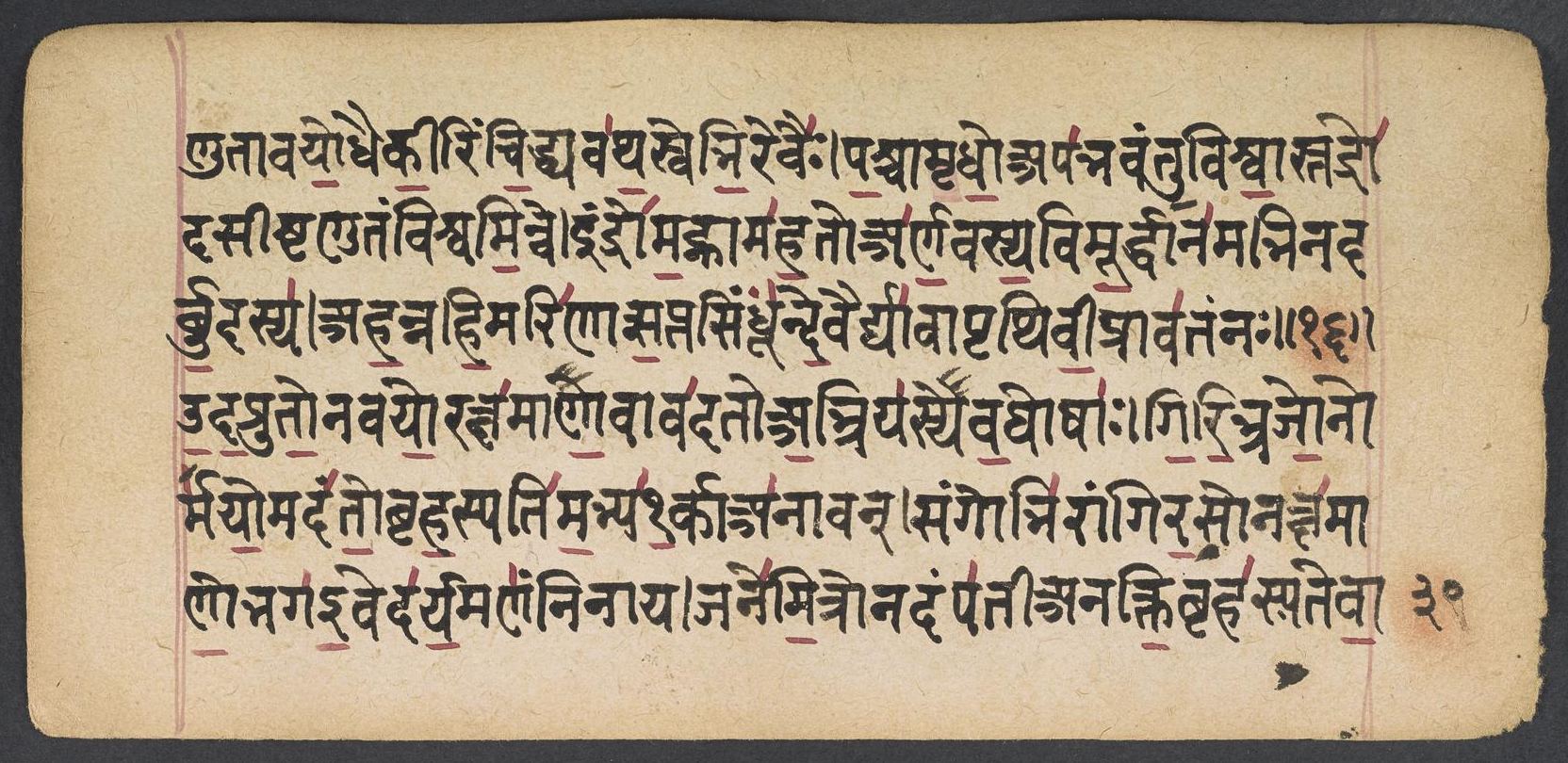
Where on the image
Penn Ms. Coll. 390 Item 48, fol. 31v (numbered 30v by the scribe) (OPenn image 31, upper leaf). Checked on the image: the Rigveda text on this page begins in RV 10.67.11 ‹kīriṁ cid dhy avatha›. The next page with Rigveda text, fol. 32r (numbered 31r by the scribe), begins in RV 10.68.2 ‹vājayāśūm̐r ivājau›. Verses 10.67.11-12 end on this page; 10.67.11 begins on fol. 31r (numbered 30r by the scribe).
11sa̱tyām ā̱śiṣa̍ṁ kṛṇutā vayo̱dhai kī̱riṁ ci̱d dhy ava̍tha̱ svebhi̱r evai̍ḥ | pa̱ścā mṛdho̱ apa̍ bhavantu̱ viśvā̱s tad ro̍dasī śṛṇutaṁ viśvami̱nve ||
12indro̍ ma̱hnā ma̍ha̱to a̍rṇa̱vasya̱ vi mū̱rdhāna̍m abhinad arbu̱dasya̍ | aha̱nn ahi̱m ari̍ṇāt sa̱pta sindhū̍n de̱vair dyā̍vāpṛthivī̱ prāva̍taṁ naḥ ||
11Fulfil the prayer that begs for vital vigour: aid in your wonted manner even the humble. Let all our foes be turned and driven backward. Hear this, O Heaven and Earth, ye All-producers.
12Indra with mighty strength cleft asunder the head of Arbuda the watery monster, Slain Ahi, and set free the Seven Rivers. O Heaven and Earth, with all the Gods protect us.
Notes
- Sanskrit: Aufrecht's edition (1877) with the Vedic accents, as entered by van Nooten and Holland (GRETIL).
- English: Ralph T. H. Griffith, The Hymns of the Rigveda (1889-1892; 2nd ed. 1896-1897), from the VedaWeb digital text; OCR slips in that text were corrected against the printed 2nd edition (data/sources/rigveda/griffith_errata.json).
Cite
Sources
- Source: Penn Ms. Coll. 390 Item 48 (1711 CE (colophon: Saṃvat 1768)), OPenn, Public Domain Mark + Aufrecht's accented text (GRETIL) + Griffith's English (VedaWeb) (holding institution)
- Critical edition: Aufrecht (1877), accented e-text via GRETIL
← previous · → next · v cycle view · l back to library