Rigveda 10.68: To Brihaspati
Introduction
Rigveda 10.68 is a hymn of 12 verses addressed to Brihaspati. It stands in book (maṇḍala) 10, the last and latest book. The Rigveda is the oldest collection of Sanskrit hymns, composed in the second half of the second millennium BCE and handed down orally for many centuries before it was written down.
The manuscript shown is Penn Ms. Coll. 390 Item 48 (University of Pennsylvania), a paper manuscript of the eighth aṣṭaka (RV 10.46-10.191) of the Ṛgveda Saṃhitā in Devanāgarī, 158 leaves, 6 lines to the page, with the accents marked in red; the scribe's colophon on fol. 158 gives Saṃvat 1768 (1711 CE); this hymn stands on fol. 31v-33r. Each section below gives the verses that end on one page; the page boundaries were read on the images (the opening words of every page), not counted out. Like most Rigveda manuscripts, Penn Ms. Coll. 390 Item 48 writes a repeated refrain in short form after its first occurrence (for example kasmai° for kasmai devāya haviṣā vidhema); the Sanskrit shown is the full text of Aufrecht's edition.
How was this verified? (Provenance)
Where on the image
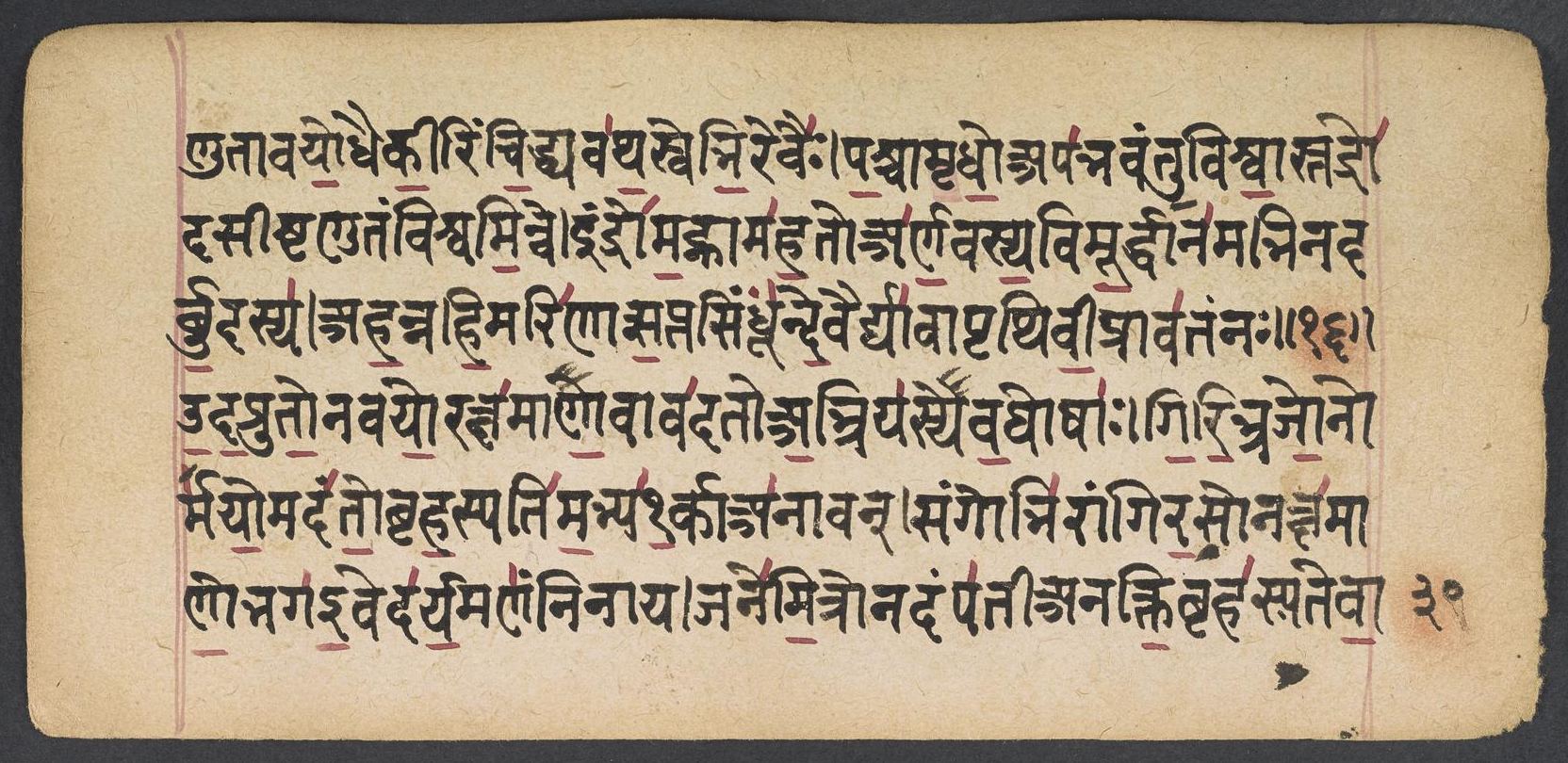
Penn Ms. Coll. 390 Item 48, fol. 31v (numbered 30v by the scribe) (OPenn image 31, upper leaf). Checked on the image: the Rigveda text on this page begins in RV 10.67.11 ‹kīriṁ cid dhy avatha›. The next page with Rigveda text, fol. 32r (numbered 31r by the scribe), begins in RV 10.68.2 ‹vājayāśūm̐r ivājau›. Verse 10.68.1 ends on this page.
1u̱da̱pruto̱ na vayo̱ rakṣa̍māṇā̱ vāva̍dato a̱bhriya̍syeva̱ ghoṣā̍ḥ | gi̱ri̱bhrajo̱ normayo̱ mada̍nto̱ bṛha̱spati̍m a̱bhy a1̱̍rkā a̍nāvan ||
1LIKE birds who keep their watch, plashing in water, like the loud voices of the thundering raincloud, Like merry streamlets bursting from the mountain, thus to Br̥ihaspati our hymns have sounded.
Where on the image
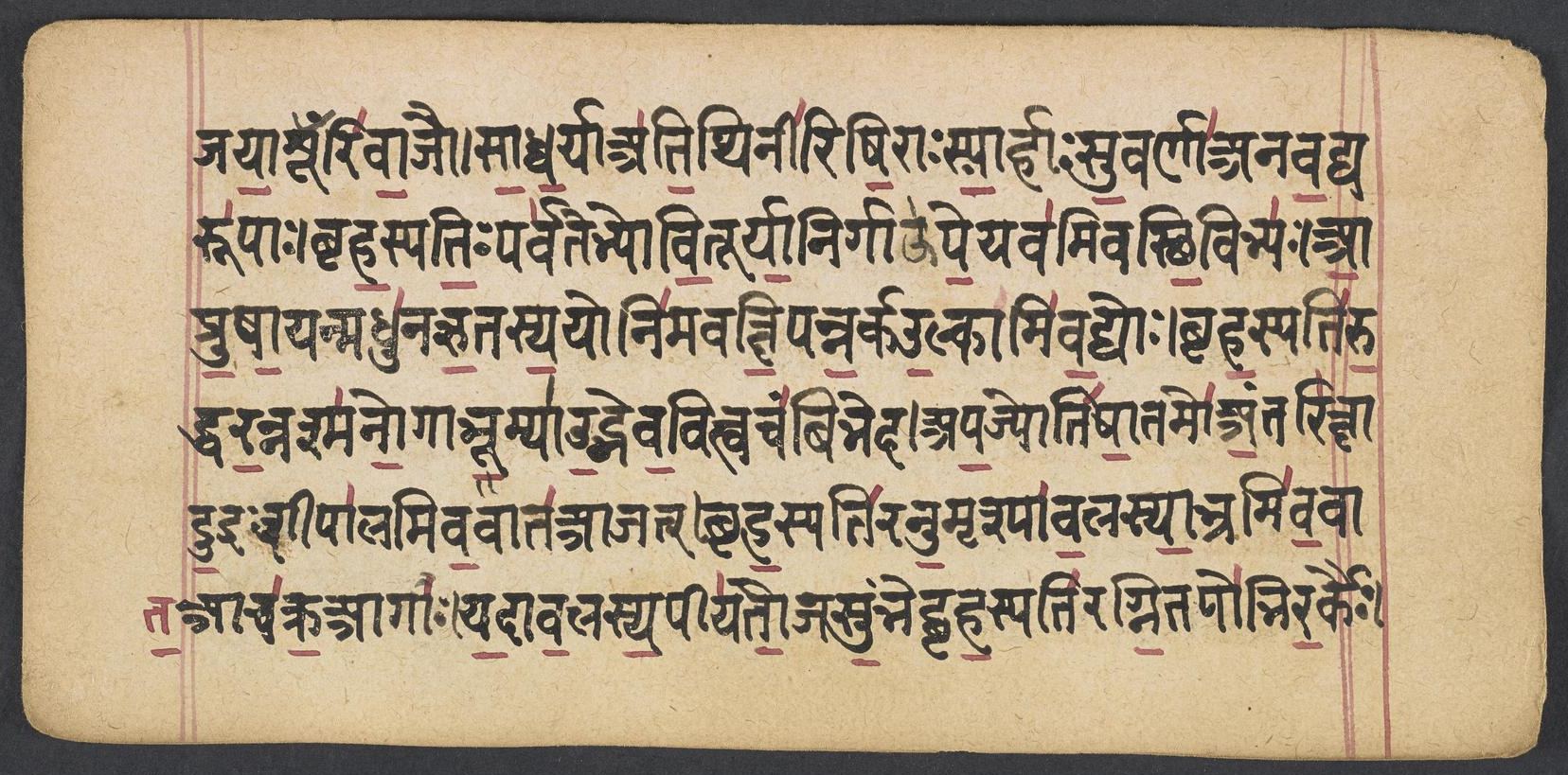
Penn Ms. Coll. 390 Item 48, fol. 32r (numbered 31r by the scribe) (OPenn image 31, lower leaf). Checked on the image: the Rigveda text on this page begins in RV 10.68.2 ‹vājayāśūm̐r ivājau›. The next page with Rigveda text, fol. 32v (numbered 31v by the scribe), begins in RV 10.68.6 ‹dadbhir na jihvā pariviṣṭam›. Verses 10.68.2-5 end on this page; 10.68.2 begins on fol. 31v (numbered 30v by the scribe).
2saṁ gobhi̍r āṅgira̱so nakṣa̍māṇo̱ bhaga̍ i̱ved a̍rya̱maṇa̍ṁ nināya | jane̍ mi̱tro na dampa̍tī anakti̱ bṛha̍spate vā̱jayā̱śūm̐r i̍vā̱jau ||
3sā̱dhva̱ryā a̍ti̱thinī̍r iṣi̱rāḥ spā̱rhāḥ su̱varṇā̍ anava̱dyarū̍pāḥ | bṛha̱spati̱ḥ parva̍tebhyo vi̱tūryā̱ nir gā ū̍pe̱ yava̍m iva sthi̱vibhya̍ḥ ||
4ā̱pru̱ṣā̱yan madhu̍na ṛ̱tasya̱ yoni̍m avakṣi̱pann a̱rka u̱lkām i̍va̱ dyoḥ | bṛha̱spati̍r u̱ddhara̱nn aśma̍no̱ gā bhūmyā̍ u̱dneva̱ vi tvaca̍m bibheda ||
5apa̱ jyoti̍ṣā̱ tamo̍ a̱ntari̍kṣād u̱dnaḥ śīpā̍lam iva̱ vāta̍ ājat | bṛha̱spati̍r anu̱mṛśyā̍ va̱lasyā̱bhram i̍va̱ vāta̱ ā ca̍kra̱ ā gāḥ ||
2The Son of Angirases, meeting the cattle, as Bhaga, brought in Aryaman among us. As Friend of men he decks the wife and husband: as for the race, Br̥ihaspati, nerve our coursers.
3Br̥ihaspati, having won them from the mountains, strewed down, like barley out of winnowingbaskets, The vigorous, wandering cows who aid the pious, desired of all, of blameless form, well-coloured.
4As the Sun dews with meath the seat of Order, and casts a flaming meteor down from heaven. So from the rock Br̥ihaspati forced the cattle, and cleft the earth's skin as it were with water.
5Forth from mid air with light he drave the darkness, as the gale blows a lily from the river. Like the wind grasping at the cloud of Vala, Br̥ihaspati gathered to himself the cattle,
Where on the image
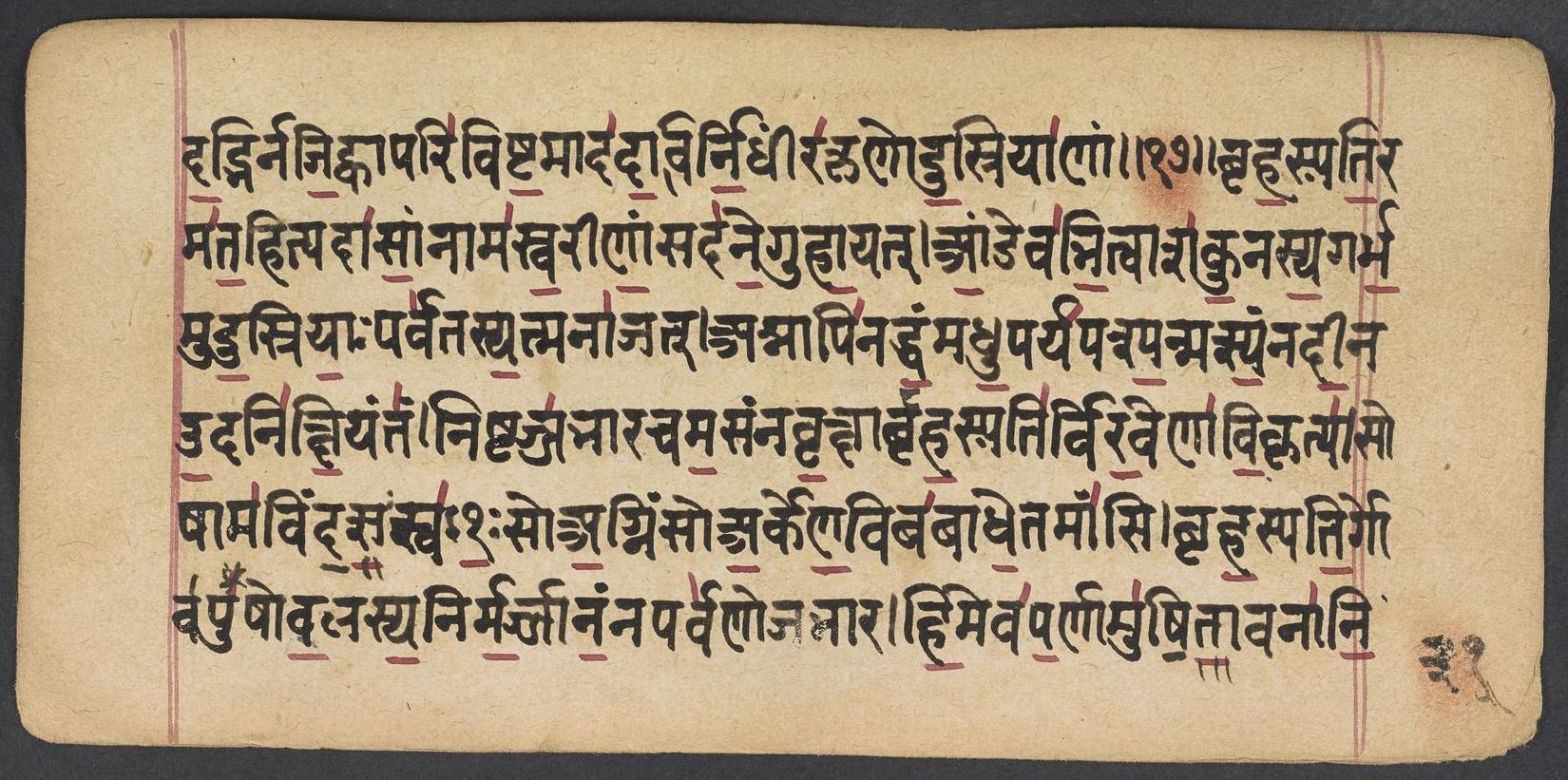
Penn Ms. Coll. 390 Item 48, fol. 32v (numbered 31v by the scribe) (OPenn image 32, upper leaf). Checked on the image: the Rigveda text on this page begins in RV 10.68.6 ‹dadbhir na jihvā pariviṣṭam›. The next page with Rigveda text, fol. 33r (numbered 32r by the scribe), begins in RV 10.68.10 ‹bṛhaspatinākṛpayad valo gāḥ›. Verses 10.68.6-9 end on this page; 10.68.6 begins on fol. 32r (numbered 31r by the scribe).
6ya̱dā va̱lasya̱ pīya̍to̱ jasu̱m bhed bṛha̱spati̍r agni̱tapo̍bhir a̱rkaiḥ | da̱dbhir na ji̱hvā pari̍viṣṭa̱m āda̍d ā̱vir ni̱dhīm̐r a̍kṛṇod u̱sriyā̍ṇām ||
7bṛha̱spati̱r ama̍ta̱ hi tyad ā̍sā̱ṁ nāma̍ sva̱rīṇā̱ṁ sada̍ne̱ guhā̱ yat | ā̱ṇḍeva̍ bhi̱ttvā śa̍ku̱nasya̱ garbha̱m ud u̱sriyā̱ḥ parva̍tasya̱ tmanā̍jat ||
8aśnāpi̍naddha̱m madhu̱ pary a̍paśya̱n matsya̱ṁ na dī̱na u̱dani̍ kṣi̱yanta̍m | niṣ ṭaj ja̍bhāra cama̱saṁ na vṛ̱kṣād bṛha̱spati̍r vira̱veṇā̍ vi̱kṛtya̍ ||
9soṣām a̍vinda̱t sa sva1̱̍ḥ so a̱gniṁ so a̱rkeṇa̱ vi ba̍bādhe̱ tamā̍ṁsi | bṛha̱spati̱r gova̍puṣo va̱lasya̱ nir ma̱jjāna̱ṁ na parva̍ṇo jabhāra ||
6Br̥ihaspati, when he with fiery lightnings cleft through the weapon of reviling Vala, Consumed.him as tongues eat what teeth have compassed: he threw the prisons of the red cows open.
7That secret name borne by the lowing cattle within the cave Br̥ihaspati discovered, And drave, himself, the bright kine from the mountain, like a bird's young after the egg's disclosure.
8He looked around on rock-imprisoned sweetness as one who eyes a fish in scanty water. Br̥ihaspati, cleaving through with varied clamour, brought it forth like a bowl from out the timber.
9He found the light of heaven, and fire, and Morning: with lucid rays he forced apart the darkness. As from a joint, Br̥ihaspati took the marrow of Vala as he gloried in his cattle.
Where on the image
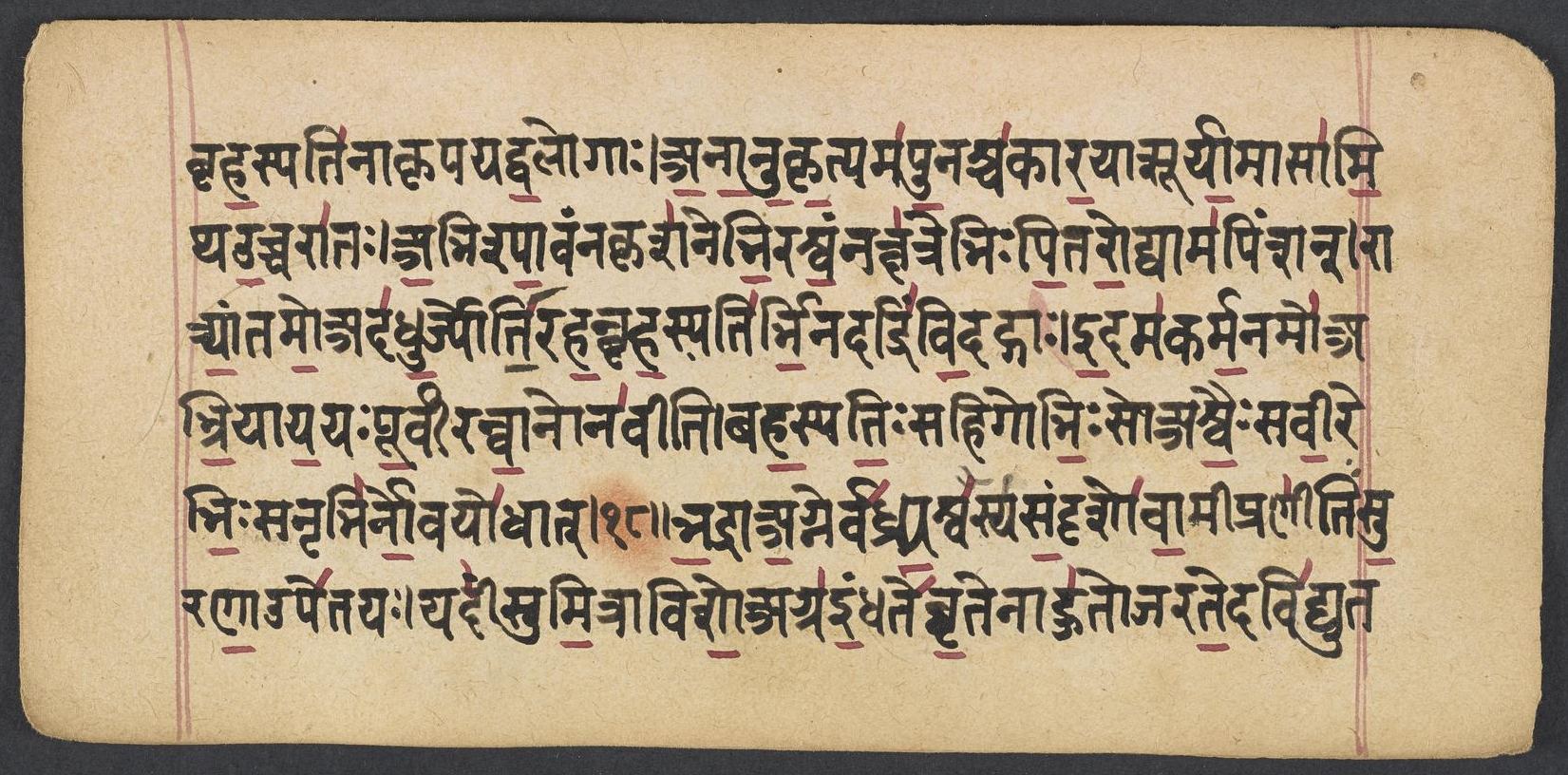
Penn Ms. Coll. 390 Item 48, fol. 33r (numbered 32r by the scribe) (OPenn image 32, lower leaf). Checked on the image: the Rigveda text on this page begins in RV 10.68.10 ‹bṛhaspatinākṛpayad valo gāḥ›. The next page with Rigveda text, fol. 33v (numbered 32v by the scribe), begins in RV 10.69.2 ‹ghṛtam agner vadhryaśvasya vardhanaṁ›. Verses 10.68.10-12 end on this page; 10.68.10 begins on fol. 32v (numbered 31v by the scribe).
10hi̱meva̍ pa̱rṇā mu̍ṣi̱tā vanā̍ni̱ bṛha̱spati̍nākṛpayad va̱lo gāḥ | a̱nā̱nu̱kṛ̱tyam a̍pu̱naś ca̍kāra̱ yāt sūryā̱māsā̍ mi̱tha u̱ccarā̍taḥ ||
11a̱bhi śyā̱vaṁ na kṛśa̍nebhi̱r aśva̱ṁ nakṣa̍trebhiḥ pi̱taro̱ dyām a̍piṁśan | rātryā̱ṁ tamo̱ ada̍dhu̱r jyoti̱r aha̱n bṛha̱spati̍r bhi̱nad adri̍ṁ vi̱dad gāḥ ||
12i̱dam a̍karma̱ namo̍ abhri̱yāya̱ yaḥ pū̱rvīr anv ā̱nona̍vīti | bṛha̱spati̱ḥ sa hi gobhi̱ḥ so aśvai̱ḥ sa vī̱rebhi̱ḥ sa nṛbhi̍r no̱ vayo̍ dhāt ||
10As trees for foliage robbed by winter, Vala mourned for the cows Br̥ihaspati had taken. He did a deed ne'er done, ne'er to be equalled, whereby the Sun and Moon ascend alternate.
11Like a dark steed adorned with pearl, the Fathers have decorated heaven With constellations. They set the light in day, in night the darkness. Br̥ihaspati cleft the rock and found the cattle.
12This homage have we.offered to the Cloud God who thunders out to many in succession. May this Br̥ihaspati vouchsafe us fulness of life with kine and horses, men, and heroes.
Notes
- Sanskrit: Aufrecht's edition (1877) with the Vedic accents, as entered by van Nooten and Holland (GRETIL).
- English: Ralph T. H. Griffith, The Hymns of the Rigveda (1889-1892; 2nd ed. 1896-1897), from the VedaWeb digital text; OCR slips in that text were corrected against the printed 2nd edition (data/sources/rigveda/griffith_errata.json).
Cite
Sources
- Source: Penn Ms. Coll. 390 Item 48 (1711 CE (colophon: Saṃvat 1768)), OPenn, Public Domain Mark + Aufrecht's accented text (GRETIL) + Griffith's English (VedaWeb) (holding institution)
- Critical edition: Aufrecht (1877), accented e-text via GRETIL
← previous · → next · v cycle view · l back to library