Rigveda 10.71: Hymn on knowledge (Jnana Sukta)
Introduction
Rigveda 10.71 is a hymn of 11 verses addressed to hymn of wisdom. It stands in book (maṇḍala) 10, the last and latest book. The Rigveda is the oldest collection of Sanskrit hymns, composed in the second half of the second millennium BCE and handed down orally for many centuries before it was written down.
The manuscript shown is Penn Ms. Coll. 390 Item 48 (University of Pennsylvania), a paper manuscript of the eighth aṣṭaka (RV 10.46-10.191) of the Ṛgveda Saṃhitā in Devanāgarī, 158 leaves, 6 lines to the page, with the accents marked in red; the scribe's colophon on fol. 158 gives Saṃvat 1768 (1711 CE); this hymn stands on fol. 36r-37v. Each section below gives the verses that end on one page; the page boundaries were read on the images (the opening words of every page), not counted out. Like most Rigveda manuscripts, Penn Ms. Coll. 390 Item 48 writes a repeated refrain in short form after its first occurrence (for example kasmai° for kasmai devāya haviṣā vidhema); the Sanskrit shown is the full text of Aufrecht's edition.
How was this verified? (Provenance)
Where on the image
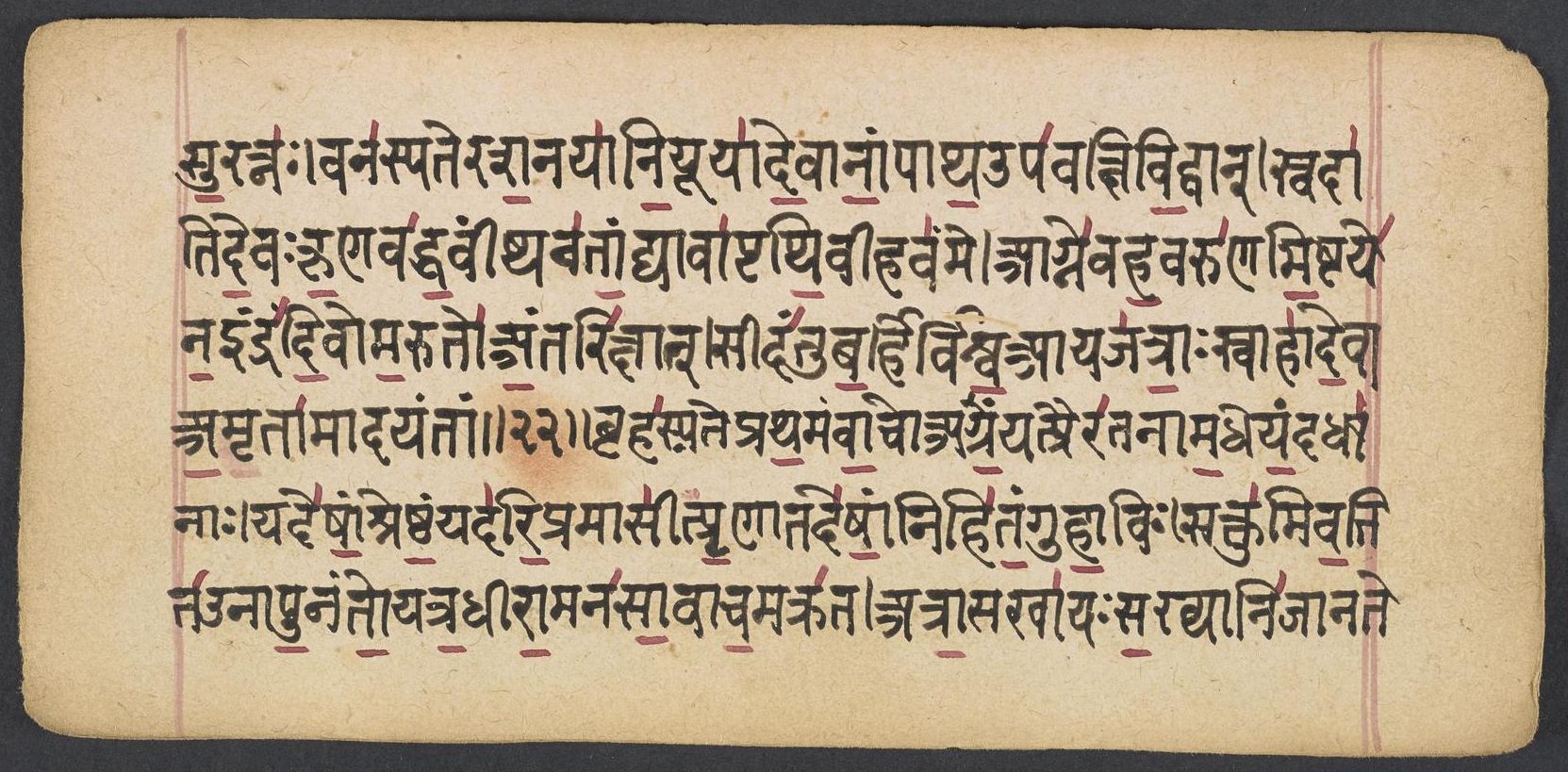
Penn Ms. Coll. 390 Item 48, fol. 36r (numbered 35r by the scribe) (OPenn image 35, lower leaf). Checked on the image: the Rigveda text on this page begins in RV 10.70.9 ‹suratnaḥ›. The next page with Rigveda text, fol. 36v (numbered 35v by the scribe), begins in RV 10.71.2 ‹bhadraiṣāṁ lakṣmīr nihitādhi vāci›. Verse 10.71.1 ends on this page.
1bṛha̍spate pratha̱maṁ vā̱co agra̱ṁ yat praira̍ta nāma̱dheya̱ṁ dadhā̍nāḥ | yad e̍ṣā̱ṁ śreṣṭha̱ṁ yad a̍ri̱pram āsī̍t pre̱ṇā tad e̍ṣā̱ṁ nihi̍ta̱ṁ guhā̱viḥ ||
1WHEN-men, Br̥ihaspati, giving names to objects, sent out Vâk's first and earliest utterances, All that was excellent and spotless, treasured within them, was disclosed through their affection.
Where on the image
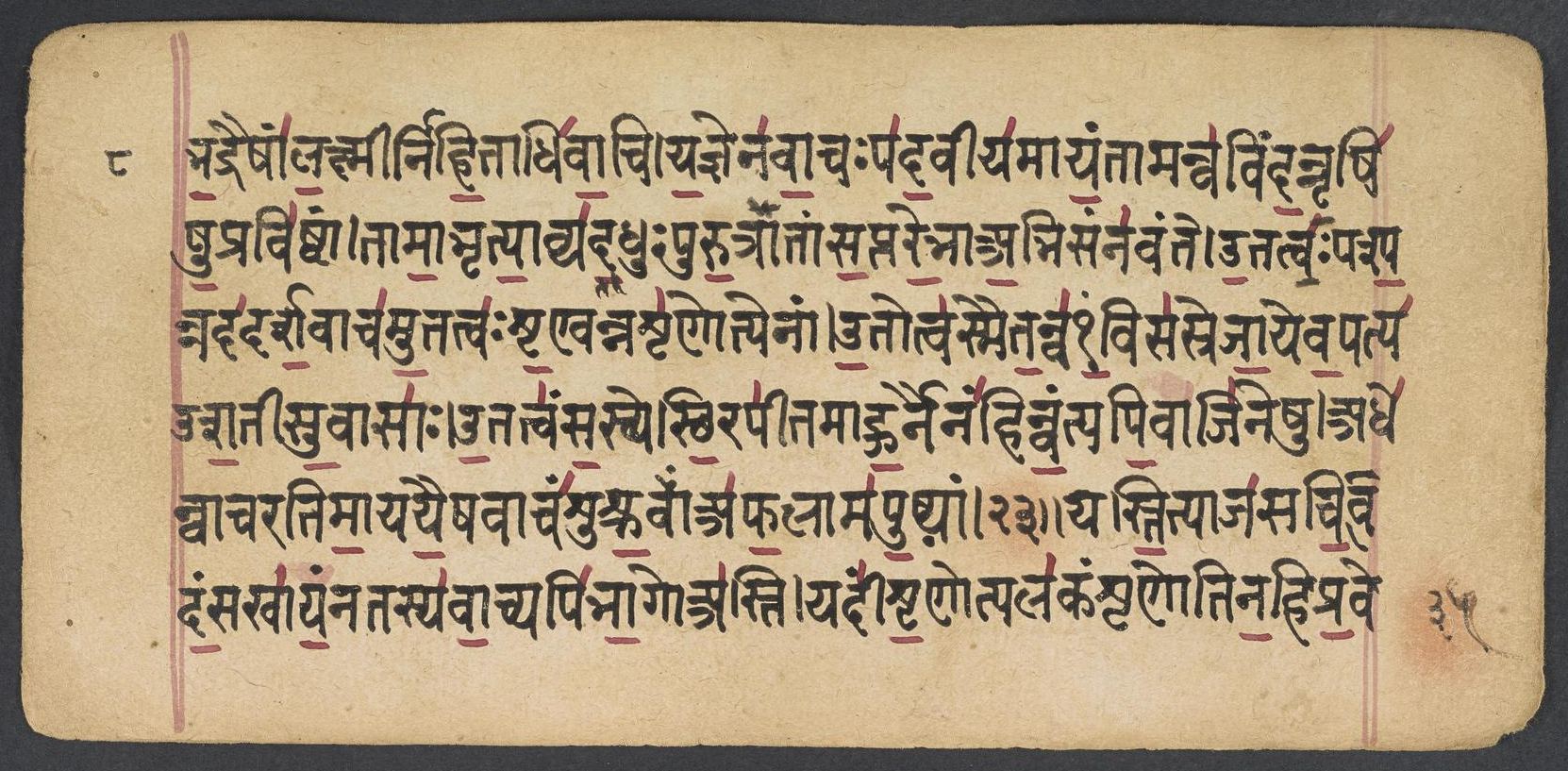
Penn Ms. Coll. 390 Item 48, fol. 36v (numbered 35v by the scribe) (OPenn image 36, upper leaf). Checked on the image: the Rigveda text on this page begins in RV 10.71.2 ‹bhadraiṣāṁ lakṣmīr nihitādhi vāci›. The next page with Rigveda text, fol. 37r (numbered 36r by the scribe), begins in RV 10.71.6 ‹-praveda sukṛtasya panthām›. Verses 10.71.2-5 end on this page; 10.71.2 begins on fol. 36r (numbered 35r by the scribe).
2saktu̍m iva̱ tita̍ünā pu̱nanto̱ yatra̱ dhīrā̱ mana̍sā̱ vāca̱m akra̍ta | atrā̱ sakhā̍yaḥ sa̱khyāni̍ jānate bha̱draiṣā̍ṁ la̱kṣmīr nihi̱tādhi̍ vā̱ci ||
3ya̱jñena̍ vā̱caḥ pa̍da̱vīya̍m āya̱n tām anv a̍vinda̱nn ṛṣi̍ṣu̱ pravi̍ṣṭām | tām ā̱bhṛtyā̱ vy a̍dadhuḥ puru̱trā tāṁ sa̱pta re̱bhā a̱bhi saṁ na̍vante ||
4u̱ta tva̱ḥ paśya̱n na da̍darśa̱ vāca̍m u̱ta tva̍ḥ śṛ̱ṇvan na śṛ̍ṇoty enām | u̱to tva̍smai ta̱nva1̱̍ṁ vi sa̍sre jā̱yeva̱ patya̍ uśa̱tī su̱vāsā̍ḥ ||
5u̱ta tva̍ṁ sa̱khye sthi̱rapī̍tam āhu̱r naina̍ṁ hinva̱nty api̱ vāji̍neṣu | adhe̍nvā carati mā̱yayai̱ṣa vāca̍ṁ śuśru̱vām̐ a̍pha̱lām a̍pu̱ṣpām ||
2Where, like men cleansing corn-flour in a cribble, the wise in spirit have created language, Friends see and recognize the marks of friendship: their speech retains the blessed sign imprinted.
3With sacrifice the trace of Vâk they followed, and found her harbouring within the R̥ishis. They brought her, dealt her forth in many places: seven singers make her tones resound in concert.
4One man hath ne'er seen Vâk, and yet he seeth: one man hath hearing but hath never heard her. But to another hath she shown her beauty as a fond well-dressed woman to her husband.
5One man they call a laggard, dull in friendship: they never urge him on to deeds of valour. He wanders on in profitless illusion: the Voice he heard yields neither fruit,nor blossom.
Where on the image
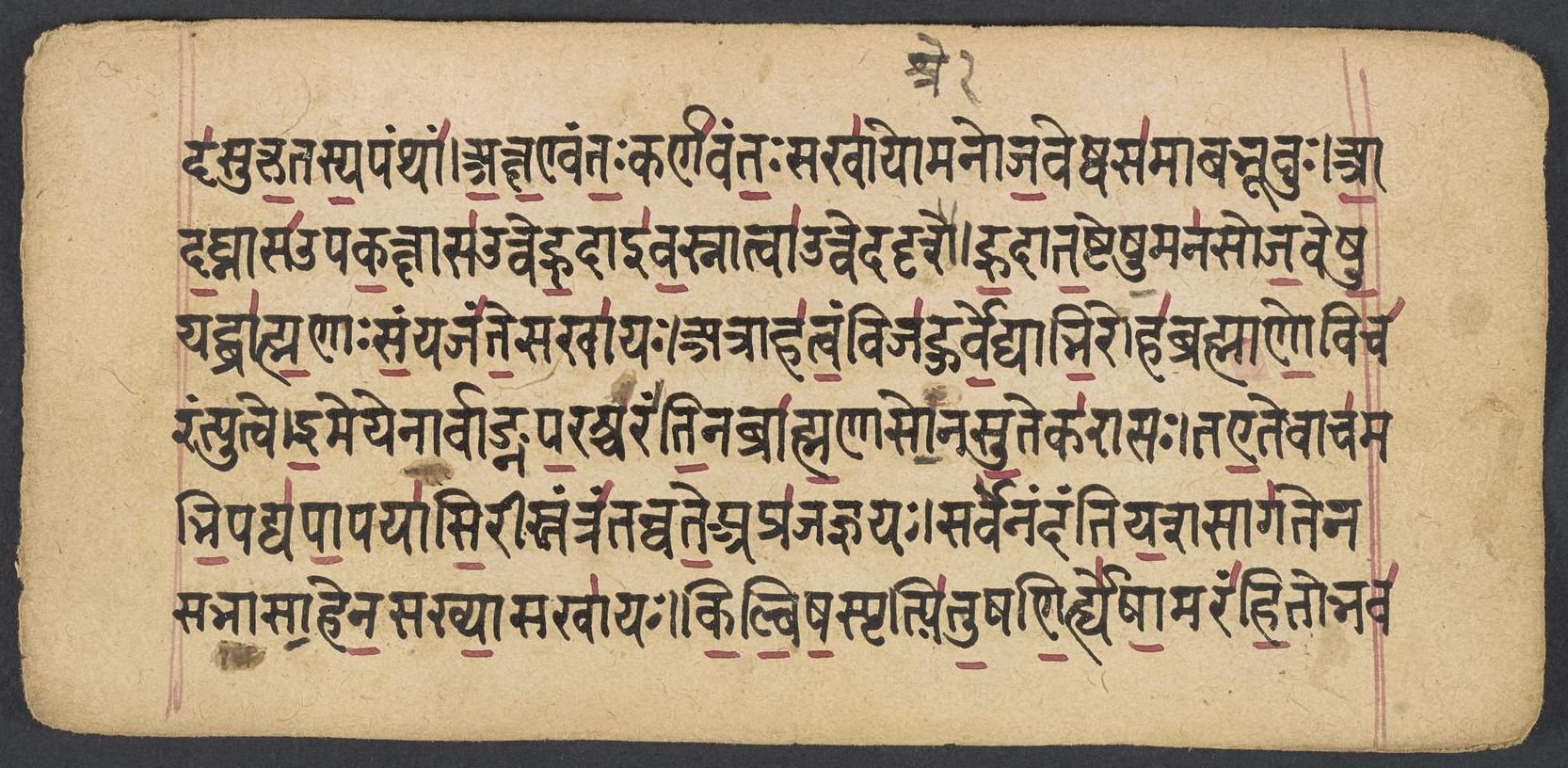
Penn Ms. Coll. 390 Item 48, fol. 37r (numbered 36r by the scribe) (OPenn image 36, lower leaf). Checked on the image: the Rigveda text on this page begins in RV 10.71.6 ‹-praveda sukṛtasya panthām›. The next page with Rigveda text, fol. 37v (numbered 36v by the scribe), begins in RV 10.71.10 ‹-bhavati vājināya›. Verses 10.71.6-9 end on this page; 10.71.6 begins on fol. 36v (numbered 35v by the scribe).
6yas ti̱tyāja̍ saci̱vida̱ṁ sakhā̍ya̱ṁ na tasya̍ vā̱cy api̍ bhā̱go a̍sti | yad ī̍ṁ śṛ̱ṇoty ala̍kaṁ śṛṇoti na̱hi pra̱veda̍ sukṛ̱tasya̱ panthā̍m ||
7a̱kṣa̱ṇvanta̱ḥ karṇa̍vanta̱ḥ sakhā̍yo manoja̱veṣv asa̍mā babhūvuḥ | ā̱da̱ghnāsa̍ upaka̱kṣāsa̍ u tve hra̱dā i̍va̱ snātvā̍ u tve dadṛśre ||
8hṛ̱dā ta̱ṣṭeṣu̱ mana̍so ja̱veṣu̱ yad brā̍hma̱ṇāḥ sa̱ṁyaja̍nte̱ sakhā̍yaḥ | atrāha̍ tva̱ṁ vi ja̍hur ve̱dyābhi̱r oha̍brahmāṇo̱ vi ca̍ranty u tve ||
9i̱me ye nārvāṅ na pa̱raś cara̍nti̱ na brā̍hma̱ṇāso̱ na su̱teka̍rāsaḥ | ta e̱te vāca̍m abhi̱padya̍ pā̱payā̍ si̱rīs tantra̍ṁ tanvate̱ apra̍jajñayaḥ ||
6No part in Vâk hath he who hath abandoned his own dear friend who knows the truth of friendship. Even if he hears her still in vain he listens: naught knows he of the path of righteous action.
7Unequal in the quickness of their spirit are friends endowed alike with eyes and hearing. Some look like tanks that reach the mouth or shoulder, others like pools of water fit to bathe in.
8When friendly Brahmans sacrifice together with mental impulse which the heart hath fashioned, They leave one far behind through their attainments, and some who count as Brahmans wander elsewhere.
9Those men who step not back and move not forward, nor Brahmans nor preparers of libations, Having attained to Vâk in sinful fashion spin out their thread in ignorance like spinsters.
Where on the image
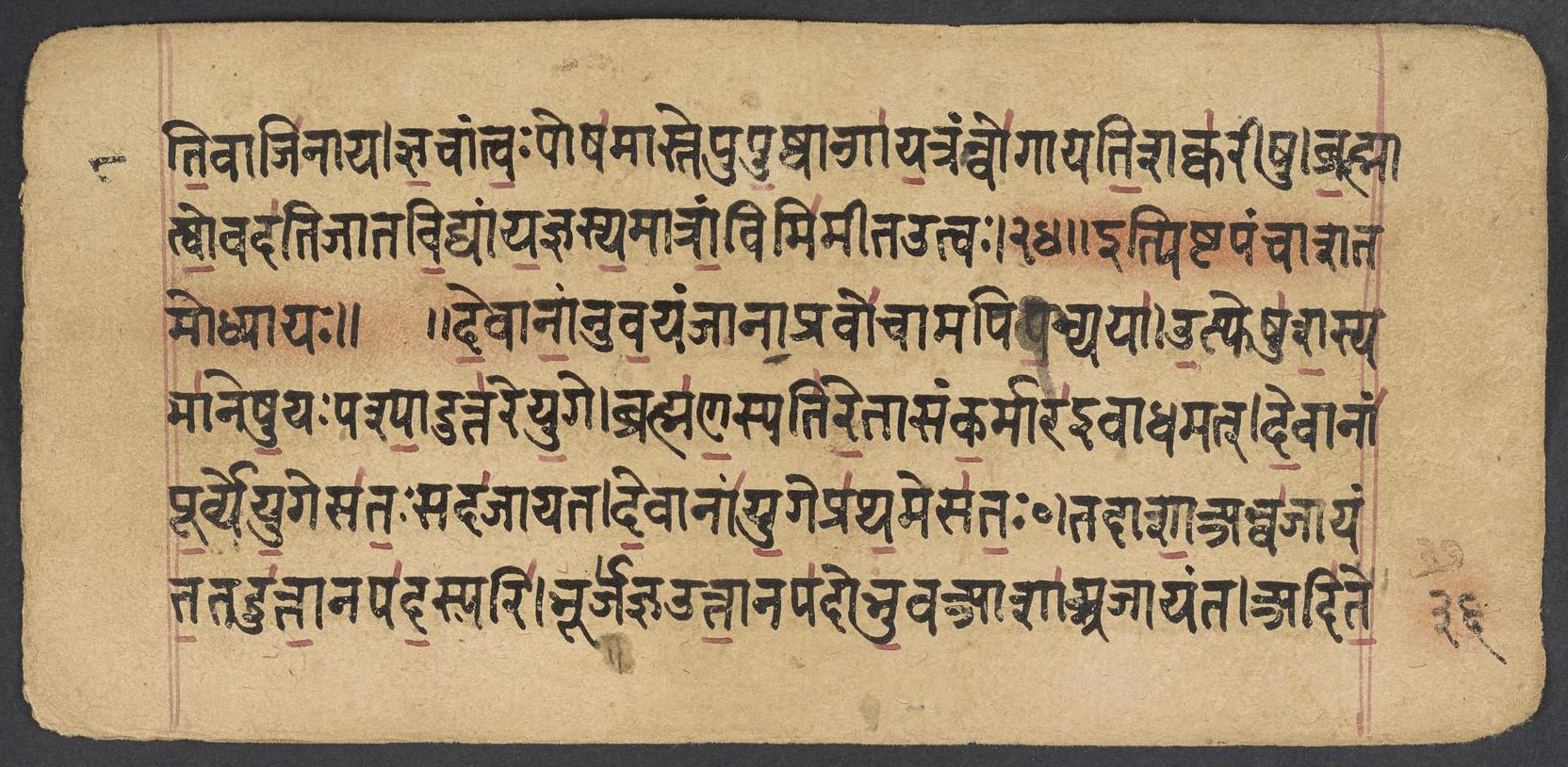
Penn Ms. Coll. 390 Item 48, fol. 37v (numbered 36v by the scribe) (OPenn image 37, upper leaf). Checked on the image: the Rigveda text on this page begins in RV 10.71.10 ‹-bhavati vājināya›. The next page with Rigveda text, fol. 38r (numbered 37r by the scribe), begins in RV 10.72.4 ‹-aditer dakṣo ajāyata dakṣād›. Verses 10.71.10-11 end on this page; 10.71.10 begins on fol. 37r (numbered 36r by the scribe).
10sarve̍ nandanti ya̱śasāga̍tena sabhāsā̱hena̱ sakhyā̱ sakhā̍yaḥ | ki̱lbi̱ṣa̱spṛt pi̍tu̱ṣaṇi̱r hy e̍ṣā̱m ara̍ṁ hi̱to bhava̍ti̱ vāji̍nāya ||
11ṛ̱cāṁ tva̱ḥ poṣa̍m āste pupu̱ṣvān gā̍ya̱traṁ tvo̍ gāyati̱ śakva̍rīṣu | bra̱hmā tvo̱ vada̍ti jātavi̱dyāṁ ya̱jñasya̱ mātrā̱ṁ vi mi̍mīta u tvaḥ ||
10All friends are joyful in the friend who cometh in triumph, having conquered in assembly. He is their blame-averter, food-provider prepared is he and fit for deed of vigour.
11One plies his constant task reciting verses. one sings the holy psalm in Ṣakvarî measures. One more, the Brahman, tells the lore of being, and one lays down the rules of sacrificing.
Notes
- Sanskrit: Aufrecht's edition (1877) with the Vedic accents, as entered by van Nooten and Holland (GRETIL).
- English: Ralph T. H. Griffith, The Hymns of the Rigveda (1889-1892; 2nd ed. 1896-1897), from the VedaWeb digital text; OCR slips in that text were corrected against the printed 2nd edition (data/sources/rigveda/griffith_errata.json).
Cite
Sources
- Source: Penn Ms. Coll. 390 Item 48 (1711 CE (colophon: Saṃvat 1768)), OPenn, Public Domain Mark + Aufrecht's accented text (GRETIL) + Griffith's English (VedaWeb) (holding institution)
- Critical edition: Aufrecht (1877), accented e-text via GRETIL
← previous · → next · v cycle view · l back to library