Rigveda 10.70: Apri hymn
Introduction
Rigveda 10.70 is a hymn of 11 verses addressed to Apri hymn. It stands in book (maṇḍala) 10, the last and latest book. The Rigveda is the oldest collection of Sanskrit hymns, composed in the second half of the second millennium BCE and handed down orally for many centuries before it was written down.
The manuscript shown is Penn Ms. Coll. 390 Item 48 (University of Pennsylvania), a paper manuscript of the eighth aṣṭaka (RV 10.46-10.191) of the Ṛgveda Saṃhitā in Devanāgarī, 158 leaves, 6 lines to the page, with the accents marked in red; the scribe's colophon on fol. 158 gives Saṃvat 1768 (1711 CE); this hymn stands on fol. 34v-36r. Each section below gives the verses that end on one page; the page boundaries were read on the images (the opening words of every page), not counted out. Like most Rigveda manuscripts, Penn Ms. Coll. 390 Item 48 writes a repeated refrain in short form after its first occurrence (for example kasmai° for kasmai devāya haviṣā vidhema); the Sanskrit shown is the full text of Aufrecht's edition.
How was this verified? (Provenance)
Where on the image
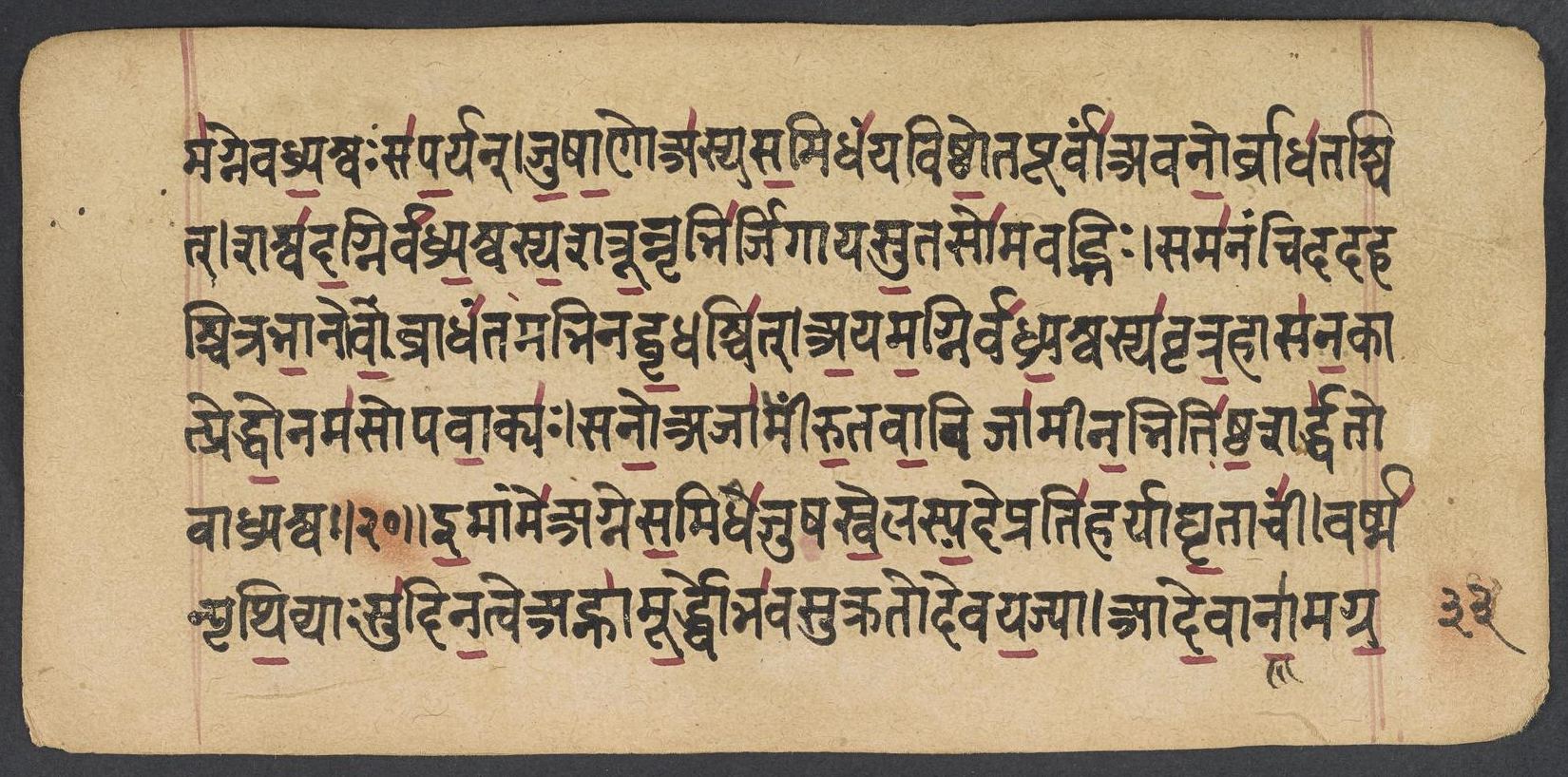
Penn Ms. Coll. 390 Item 48, fol. 34v (numbered 33v by the scribe) (OPenn image 34, upper leaf). Checked on the image: the Rigveda text on this page begins in RV 10.69.10 ‹-tvām agne vadhryaśvaḥ saparyan›. The next page with Rigveda text, fol. 35r (numbered 34r by the scribe), begins in RV 10.70.2 ‹-agrayāveha yātu narāśaṁso viśvarūpebhir›. Verse 10.70.1 ends on this page.
1i̱mām me̍ agne sa̱midha̍ṁ juṣasve̱ḻas pa̱de prati̍ haryā ghṛ̱tācī̍m | varṣma̍n pṛthi̱vyāḥ su̍dina̱tve ahnā̍m ū̱rdhvo bha̍va sukrato devaya̱jyā ||
1ENJOY, O Agni, this my Fuel, welcome the oil-filled ladle where we pour libation. Rise up for worship of the Gods, wise Agni, on the earth's height, while days are bright with beauty.
Where on the image
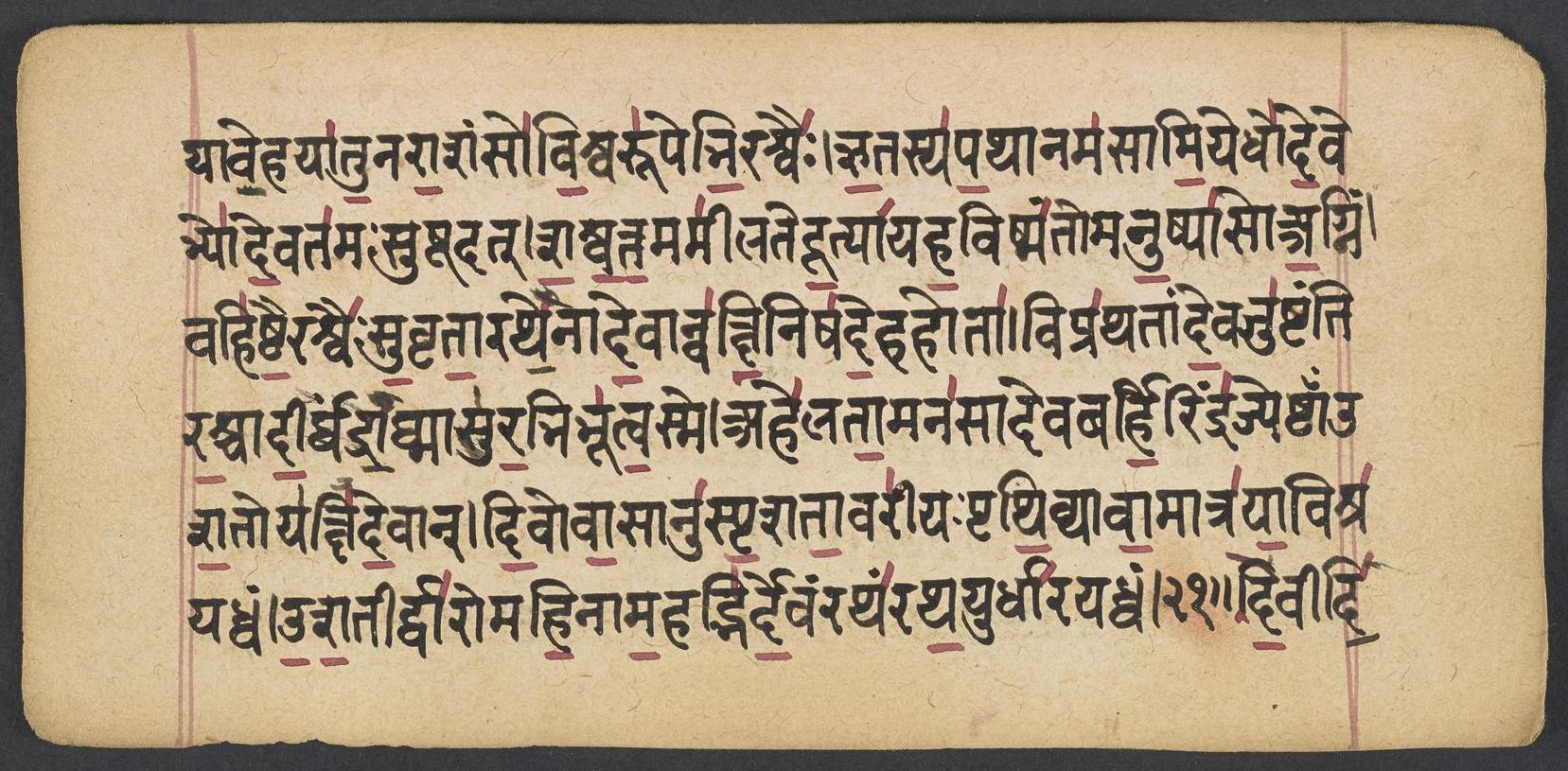
Penn Ms. Coll. 390 Item 48, fol. 35r (numbered 34r by the scribe) (OPenn image 34, lower leaf). Checked on the image: the Rigveda text on this page begins in RV 10.70.2 ‹-agrayāveha yātu narāśaṁso viśvarūpebhir›. The next page with Rigveda text, fol. 35v (numbered 34v by the scribe), begins in RV 10.70.6 ‹-divo duhitarā suśilpe uṣāsānaktā›. Verses 10.70.2-5 end on this page; 10.70.2 begins on fol. 34v (numbered 33v by the scribe).
2ā de̱vānā̍m agra̱yāve̱ha yā̍tu̱ narā̱śaṁso̍ vi̱śvarū̍pebhi̱r aśvai̍ḥ | ṛ̱tasya̍ pa̱thā nama̍sā mi̱yedho̍ de̱vebhyo̍ de̱vata̍maḥ suṣūdat ||
3śa̱śva̱tta̱mam ī̍ḻate dū̱tyā̍ya ha̱viṣma̍nto manu̱ṣyā̍so a̱gnim | vahi̍ṣṭhai̱r aśvai̍ḥ su̱vṛtā̱ rathe̱nā de̱vān va̍kṣi̱ ni ṣa̍de̱ha hotā̍ ||
4vi pra̍thatāṁ de̱vaju̍ṣṭaṁ tira̱ścā dī̱rghaṁ drā̱ghmā su̍ra̱bhi bhū̍tv a̱sme | ahe̍ḻatā̱ mana̍sā deva barhi̱r indra̍jyeṣṭhām̐ uśa̱to ya̍kṣi de̱vān ||
5di̱vo vā̱ sānu̍ spṛ̱śatā̱ varī̍yaḥ pṛthi̱vyā vā̱ mātra̍yā̱ vi śra̍yadhvam | u̱śa̱tīr dvā̍ro mahi̱nā ma̱hadbhi̍r de̱vaṁ ratha̍ṁ ratha̱yur dhā̍rayadhvam ||
2May he who goes before the Gods come hither with steeds whose shapes are varied, Narasarhsa. May he, most Godlike, speed our offered viands with homage God-ward on the path of Order.
3Men with oblations laud most constant Agni, and pray him to perform an envoy's duty. With lightly-rolling car and best draught-horses, bring the Gods hither and sit down as Hotar.
4May the delight of Gods spread out transversely: may it be with us long in length and fragrant. O Holy Grass divine, with friendly spirit bring thou the willing Gods whose Chief is Indra.
5Touch ye the far-extending height of heaven or spring apart to suit the wide earth's measure. Yearning, ye Doors, with those sublime in greatness, seize eagerly the heavenly Car that cometh.
Where on the image
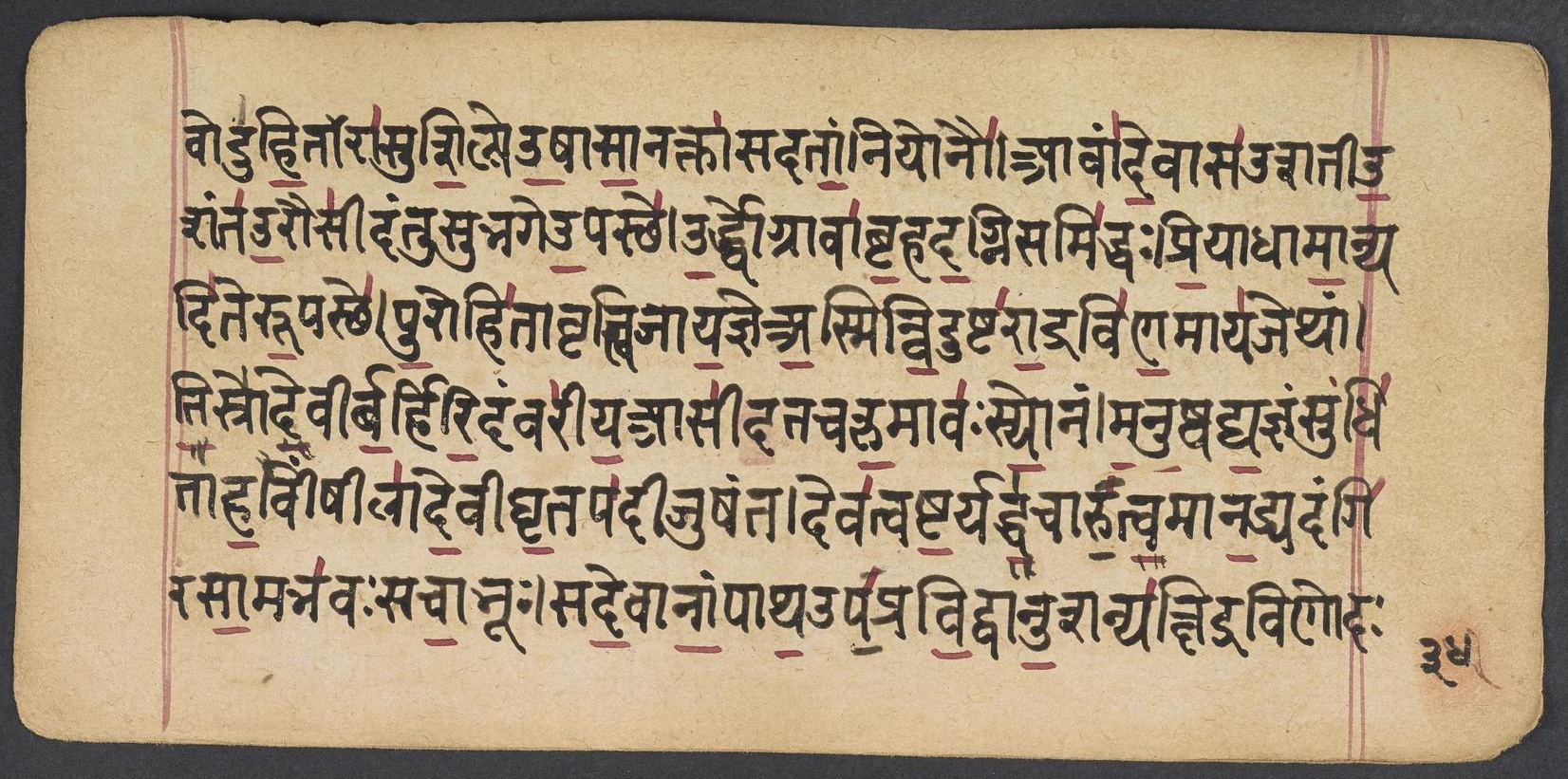
Penn Ms. Coll. 390 Item 48, fol. 35v (numbered 34v by the scribe) (OPenn image 35, upper leaf). Checked on the image: the Rigveda text on this page begins in RV 10.70.6 ‹-divo duhitarā suśilpe uṣāsānaktā›. The next page with Rigveda text, fol. 36r (numbered 35r by the scribe), begins in RV 10.70.9 ‹suratnaḥ›. Verses 10.70.6-8 end on this page; 10.70.6 begins on fol. 35r (numbered 34r by the scribe).
6de̱vī di̱vo du̍hi̱tarā̍ suśi̱lpe u̱ṣāsā̱naktā̍ sadatā̱ṁ ni yonau̍ | ā vā̍ṁ de̱vāsa̍ uśatī u̱śanta̍ u̱rau sī̍dantu subhage u̱pasthe̍ ||
7ū̱rdhvo grāvā̍ bṛ̱had a̱gniḥ sami̍ddhaḥ pri̱yā dhāmā̱ny adi̍ter u̱pasthe̍ | pu̱rohi̍tāv ṛtvijā ya̱jñe a̱smin vi̱duṣṭa̍rā̱ dravi̍ṇa̱m ā ya̍jethām ||
8tisro̍ devīr ba̱rhir i̱daṁ varī̍ya̱ ā sī̍data cakṛ̱mā va̍ḥ syo̱nam | ma̱nu̱ṣvad ya̱jñaṁ sudhi̍tā ha̱vīṁṣīḻā̍ de̱vī ghṛ̱tapa̍dī juṣanta ||
6Here in this shrine may Dawn and Night, the Daughters of Heaven, the skilful Goddesses, be seated. In your wide lap, auspicious, willing Ladies may the Gods seat them with a willing spirit.
7Up stands the stone, high burns the fire enkindled: Aditi's lap contains the Friendly Natures Ye Two Chief Priests who serve at this our worship, may ye, more skilled, win for us rich possessions.
8On our wide grass, Three Goddesses be seated: for you have we prepared and made it pleasant. May Iḷâ, she whose foot drops oil, the Goddess, taste, man-like, sacrifice and well-set presents.
Where on the image
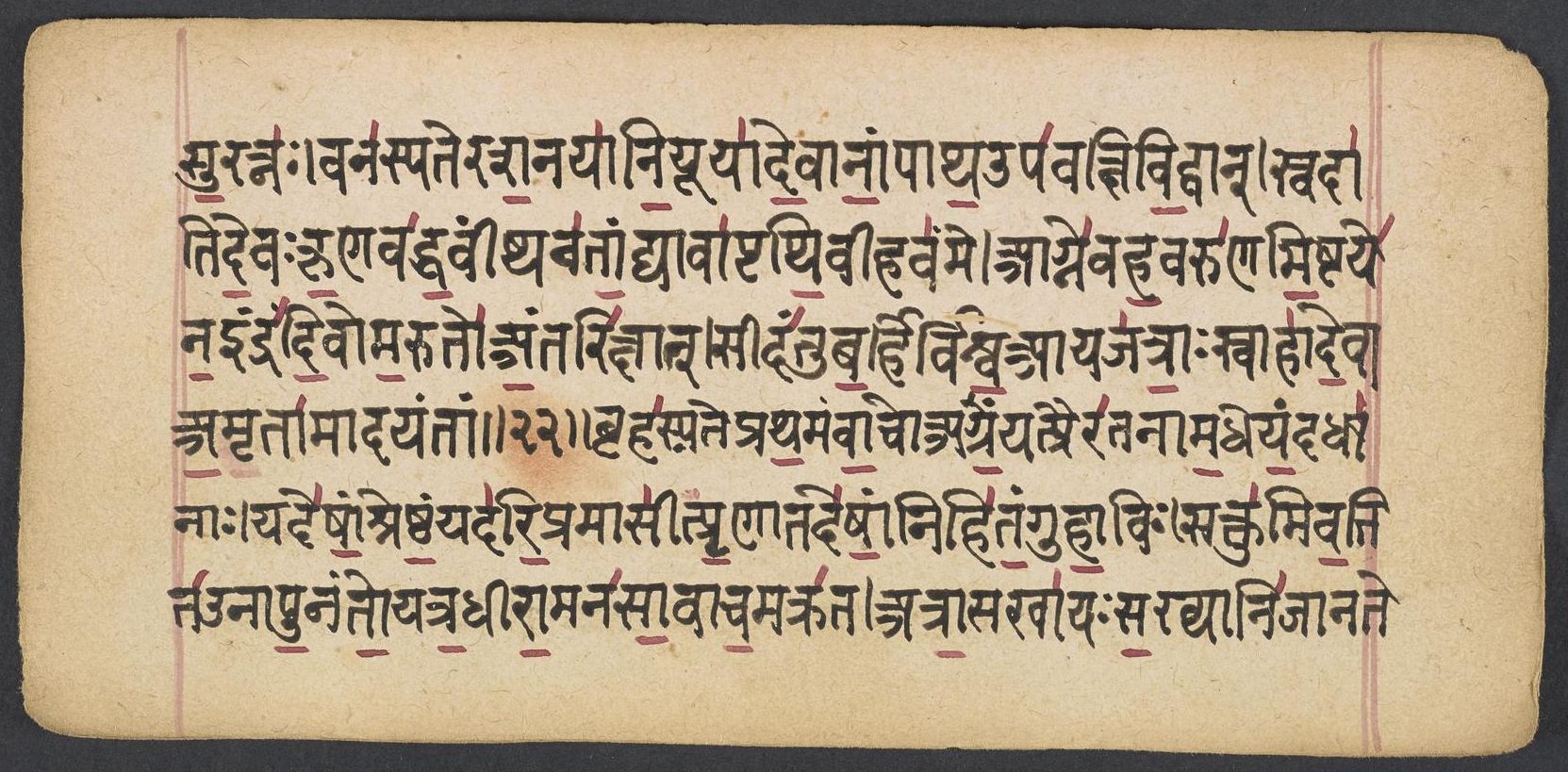
Penn Ms. Coll. 390 Item 48, fol. 36r (numbered 35r by the scribe) (OPenn image 35, lower leaf). Checked on the image: the Rigveda text on this page begins in RV 10.70.9 ‹suratnaḥ›. The next page with Rigveda text, fol. 36v (numbered 35v by the scribe), begins in RV 10.71.2 ‹bhadraiṣāṁ lakṣmīr nihitādhi vāci›. Verses 10.70.9-11 end on this page; 10.70.9 begins on fol. 35v (numbered 34v by the scribe).
9deva̍ tvaṣṭa̱r yad dha̍ cāru̱tvam āna̱ḍ yad aṅgi̍rasā̱m abha̍vaḥ sacā̱bhūḥ | sa de̱vānā̱m pātha̱ upa̱ pra vi̱dvām̐ u̱śan ya̍kṣi draviṇodaḥ su̱ratna̍ḥ ||
10vana̍spate raśa̱nayā̍ ni̱yūyā̍ de̱vānā̱m pātha̱ upa̍ vakṣi vi̱dvān | svadā̍ti de̱vaḥ kṛ̱ṇava̍d dha̱vīṁṣy ava̍tā̱ṁ dyāvā̍pṛthi̱vī hava̍m me ||
11āgne̍ vaha̱ varu̍ṇam i̱ṣṭaye̍ na̱ indra̍ṁ di̱vo ma̱ruto̍ a̱ntari̍kṣāt | sīda̍ntu ba̱rhir viśva̱ ā yaja̍trā̱ḥ svāhā̍ de̱vā a̱mṛtā̍ mādayantām ||
9Since thou, God Tvashṭar, hast made beauty perfect, since thou hast been the Angirases' Companion, Willing, most wealthy, Giver of possessions, grant us the Gods' assembly, thou who knowest.
10Well-knowing, binding with thy cord, bring hither, Lord of the Wood, the Deities' assembly. The God prepare and season our oblations may Heaven and Earth be gracious to my calling.
11Agni, bring hither Varuṇa to help us, Indra from heaven, from air's mid-realm the Maruts. On sacred grass all Holy ones be seated and let the Immortal Gods rejoice in Svâhâ.
Notes
- Sanskrit: Aufrecht's edition (1877) with the Vedic accents, as entered by van Nooten and Holland (GRETIL).
- English: Ralph T. H. Griffith, The Hymns of the Rigveda (1889-1892; 2nd ed. 1896-1897), from the VedaWeb digital text; OCR slips in that text were corrected against the printed 2nd edition (data/sources/rigveda/griffith_errata.json).
Cite
Sources
- Source: Penn Ms. Coll. 390 Item 48 (1711 CE (colophon: Saṃvat 1768)), OPenn, Public Domain Mark + Aufrecht's accented text (GRETIL) + Griffith's English (VedaWeb) (holding institution)
- Critical edition: Aufrecht (1877), accented e-text via GRETIL
← previous · → next · v cycle view · l back to library