Rigveda 10.73: To Indra
Introduction
Rigveda 10.73 is a hymn of 11 verses addressed to Indra. It stands in book (maṇḍala) 10, the last and latest book. The Rigveda is the oldest collection of Sanskrit hymns, composed in the second half of the second millennium BCE and handed down orally for many centuries before it was written down.
The manuscript shown is Penn Ms. Coll. 390 Item 48 (University of Pennsylvania), a paper manuscript of the eighth aṣṭaka (RV 10.46-10.191) of the Ṛgveda Saṃhitā in Devanāgarī, 158 leaves, 6 lines to the page, with the accents marked in red; the scribe's colophon on fol. 158 gives Saṃvat 1768 (1711 CE); this hymn stands on fol. 38v-39v. Each section below gives the verses that end on one page; the page boundaries were read on the images (the opening words of every page), not counted out. Like most Rigveda manuscripts, Penn Ms. Coll. 390 Item 48 writes a repeated refrain in short form after its first occurrence (for example kasmai° for kasmai devāya haviṣā vidhema); the Sanskrit shown is the full text of Aufrecht's edition.
How was this verified? (Provenance)
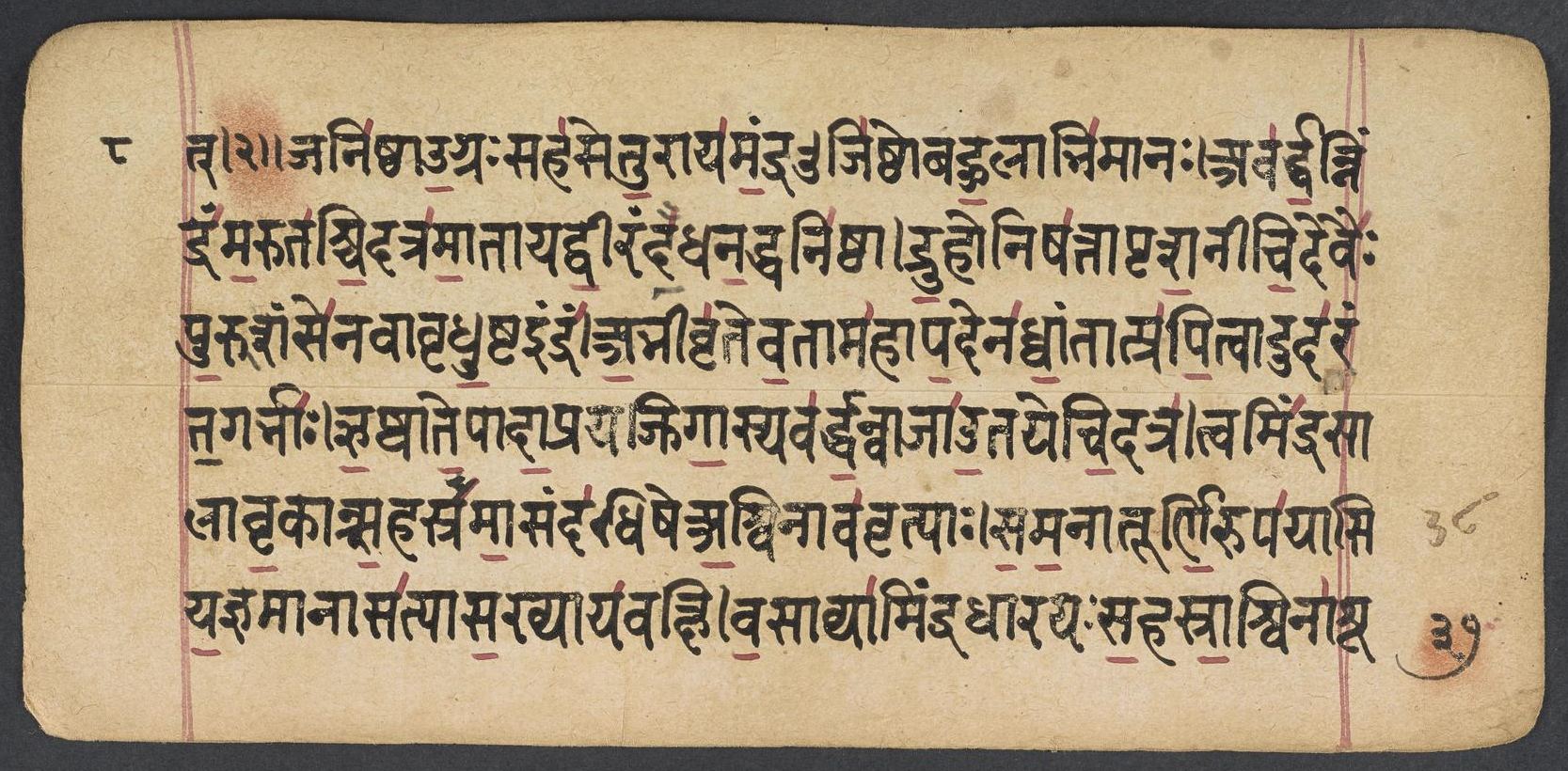
Where on the image
Penn Ms. Coll. 390 Item 48, fol. 38v (numbered 37v by the scribe) (OPenn image 38, upper leaf). Checked on the image: the Rigveda text on this page begins in RV 10.72.9 ‹-ābharat›. The next page with Rigveda text, fol. 39r (numbered 38r by the scribe), begins in RV 10.73.4 ‹-śūra dadatur maghāni›. Verses 10.73.1-3 end on this page.
1jani̍ṣṭhā u̱graḥ saha̍se tu̱rāya̍ ma̱ndra oji̍ṣṭho bahu̱lābhi̍mānaḥ | ava̍rdha̱nn indra̍m ma̱ruta̍ś ci̱d atra̍ mā̱tā yad vī̱raṁ da̱dhana̱d dhani̍ṣṭhā ||
2dru̱ho niṣa̍ttā pṛśa̱nī ci̱d evai̍ḥ pu̱rū śaṁse̍na vāvṛdhu̱ṣ ṭa indra̍m | a̱bhīvṛ̍teva̱ tā ma̍hāpa̱dena̍ dhvā̱ntāt pra̍pi̱tvād ud a̍ranta̱ garbhā̍ḥ ||
3ṛ̱ṣvā te̱ pādā̱ pra yaj jigā̱sy ava̍rdha̱n vājā̍ u̱ta ye ci̱d atra̍ | tvam i̍ndra sālāvṛ̱kān sa̱hasra̍m ā̱san da̍dhiṣe a̱śvinā va̍vṛtyāḥ ||
1THOU wast born mighty for victorious valour, exulting, strongest, full of pride and courage. There, even there, the Maruts strengthened Indra when. his most rapid Mother stirred the Hero.
2There with fiend's ways e'en Pr̥iṣni was seated: with much laudation they exalted Indra. As if encompassed by the Mighty-footed, from darkness, near at hand, forth came the Children.
3High are thy feet when on thy way thou goest: the strength thou foundest here hath lent thee vigour. Thousand hyenas in thy mouth thou holdest. O Indra, mayst thou turn the Aṣvins hither.
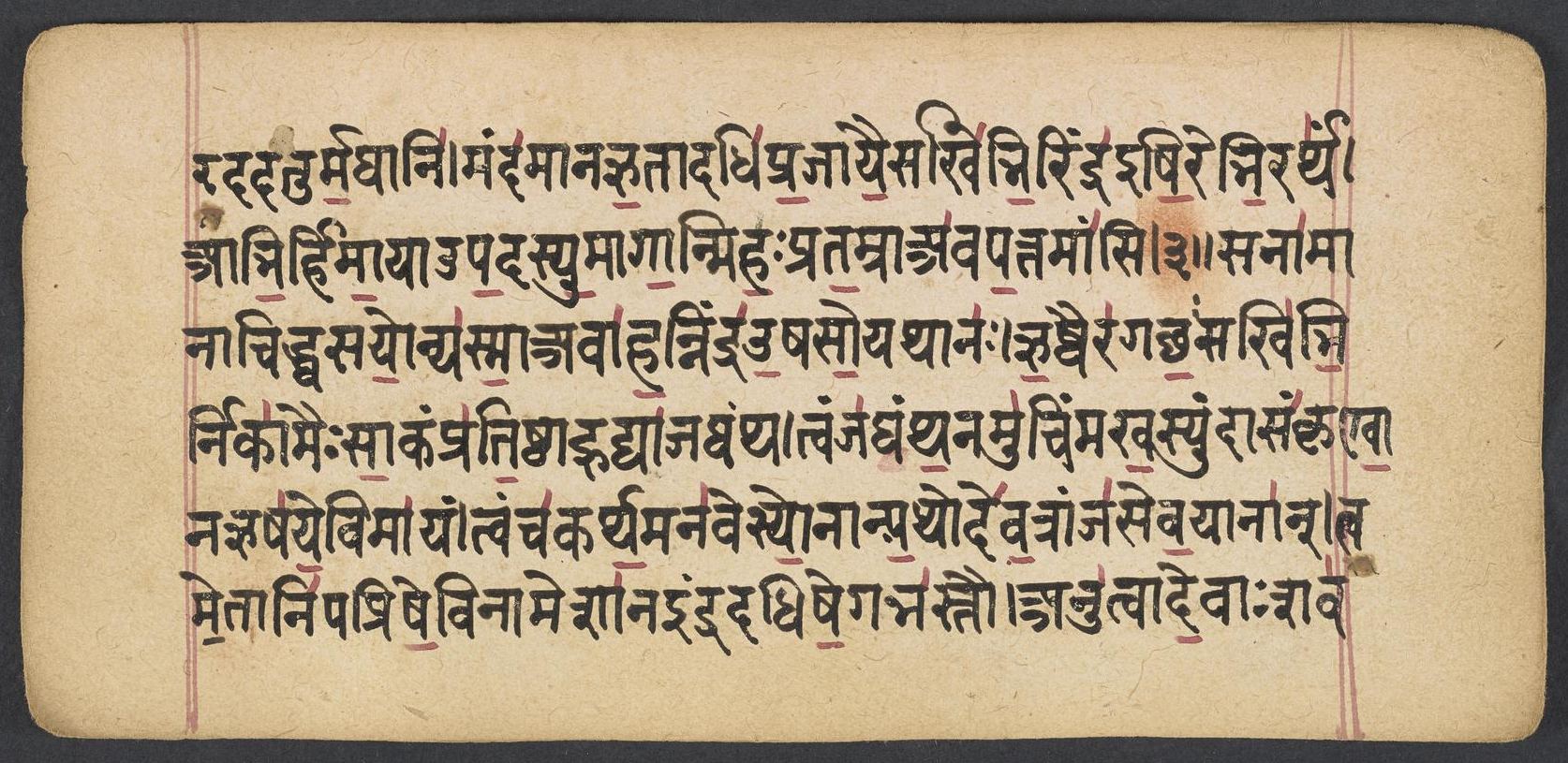
Where on the image
Penn Ms. Coll. 390 Item 48, fol. 39r (numbered 38r by the scribe) (OPenn image 38, lower leaf). Checked on the image: the Rigveda text on this page begins in RV 10.73.4 ‹-śūra dadatur maghāni›. The next page with Rigveda text, fol. 39v (numbered 38v by the scribe), begins in RV 10.73.8 ‹-śavasā madanty uparibudhnān vaninaś›. Verses 10.73.4-7 end on this page; 10.73.4 begins on fol. 38v (numbered 37v by the scribe).
4sa̱ma̱nā tūrṇi̱r upa̍ yāsi ya̱jñam ā nāsa̍tyā sa̱khyāya̍ vakṣi | va̱sāvyā̍m indra dhārayaḥ sa̱hasrā̱śvinā̍ śūra dadatur ma̱ghāni̍ ||
5manda̍māna ṛ̱tād adhi̍ pra̱jāyai̱ sakhi̍bhi̱r indra̍ iṣi̱rebhi̱r artha̍m | ābhi̱r hi mā̱yā upa̱ dasyu̱m āgā̱n miha̱ḥ pra ta̱mrā a̍vapa̱t tamā̍ṁsi ||
6sanā̍mānā cid dhvasayo̱ ny a̍smā̱ avā̍ha̱nn indra̍ u̱ṣaso̱ yathāna̍ḥ | ṛ̱ṣvair a̍gaccha̱ḥ sakhi̍bhi̱r nikā̍maiḥ sā̱kam pra̍ti̱ṣṭhā hṛdyā̍ jaghantha ||
7tvaṁ ja̍ghantha̱ namu̍cim makha̱syuṁ dāsa̍ṁ kṛṇvā̱na ṛṣa̍ye̱ vimā̍yam | tvaṁ ca̍kartha̱ mana̍ve syo̱nān pa̱tho de̍va̱trāñja̍seva̱ yānā̍n ||
4Speeding at once to sacrifice thou comest for friendship thou art bringing both Nâsatyas. Thou hadst a thousand treasures in possession. The Aṣvins, O thou Hero, gave thee riches.
5Glad, for the race that rests on holy Order, with friends who hasten to their goal, hath Indra With these his magic powers assailed the Dasyu: he cast away the gloomy mists, the darkness.
6Two of like name for him didst thou demolish, as Indra striking down the car of Ushas. With thy beloved lofty Friends thou camest, and with the assurance of thine heart thou slewest.
7War-loving Namuci thou smotest, robbing the Dâsa of his magic for the R̥ishi. For man thou madest ready pleasant pathways, paths leading as it were directly God-ward.
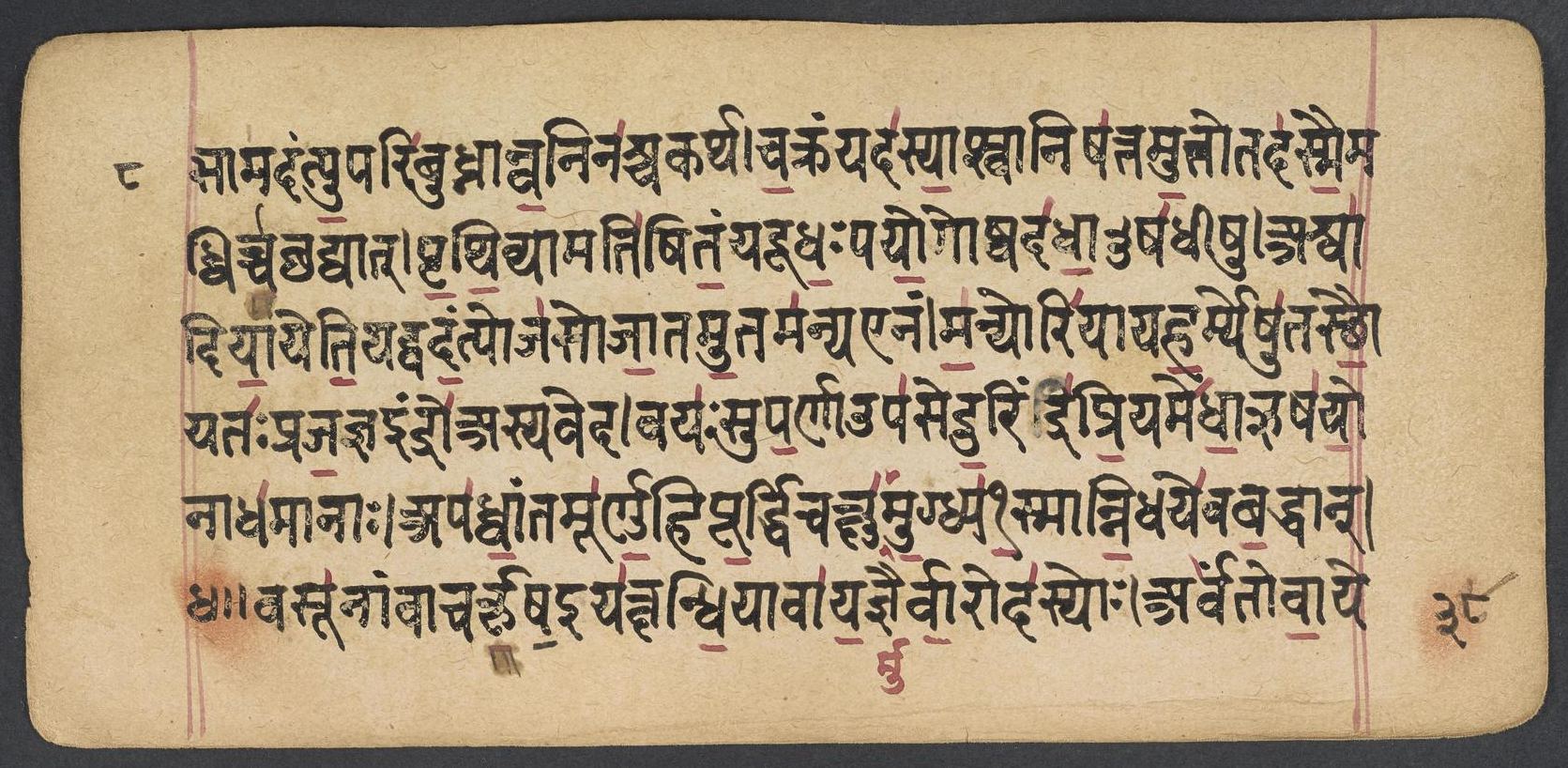
Where on the image
Penn Ms. Coll. 390 Item 48, fol. 39v (numbered 38v by the scribe) (OPenn image 39, upper leaf). Checked on the image: the Rigveda text on this page begins in RV 10.73.8 ‹-śavasā madanty uparibudhnān vaninaś›. The next page with Rigveda text, fol. 40r (numbered 39r by the scribe), begins in RV 10.74.1 ‹-ye rayimantaḥ sātau vanuṁ›. Verses 10.73.8-11 end on this page; 10.73.8 begins on fol. 39r (numbered 38r by the scribe).
8tvam e̱tāni̍ papriṣe̱ vi nāmeśā̍na indra dadhiṣe̱ gabha̍stau | anu̍ tvā de̱vāḥ śava̍sā madanty u̱pari̍budhnān va̱nina̍ś cakartha ||
9ca̱kraṁ yad a̍syā̱psv ā niṣa̍ttam u̱to tad a̍smai̱ madhv ic ca̍cchadyāt | pṛ̱thi̱vyām ati̍ṣita̱ṁ yad ūdha̱ḥ payo̱ goṣv ada̍dhā̱ oṣa̍dhīṣu ||
10aśvā̍d iyā̱yeti̱ yad vada̱nty oja̍so jā̱tam u̱ta ma̍nya enam | ma̱nyor i̍yāya ha̱rmyeṣu̍ tasthau̱ yata̍ḥ praja̱jña indro̍ asya veda ||
11vaya̍ḥ supa̱rṇā upa̍ sedu̱r indra̍m pri̱yame̍dhā̱ ṛṣa̍yo̱ nādha̍mānāḥ | apa̍ dhvā̱ntam ū̍rṇu̱hi pū̱rdhi cakṣu̍r mumu̱gdhy a1̱̍smān ni̱dhaye̍va ba̱ddhān ||
8These names of thine thou hast fulfilled completely: as Lord, thou boldest in thine arm, O Indra. In thee, through thy great might, the Gods are joyful: the roots of trees hast thou directed upward.
9May the sweet Soma juices make him happy to cast his quoit that lies in depth of waters. Thou from the udder which o'er earth is fastened hast poured the milk into the kine and herbage.
10When others call him offspring of the Courser, my meaning is that Mighty Power produced him. He came from Manyu and remained in houses: whence he hath sprung is known to Indra only.
11Like birds of beauteous wing the Priyamedhas, R̥ishis, imploring, have come nigh to Indra: Dispel the darkness and fill full our vision deliver us as men whom snares entangle.
Notes
- Sanskrit: Aufrecht's edition (1877) with the Vedic accents, as entered by van Nooten and Holland (GRETIL).
- English: Ralph T. H. Griffith, The Hymns of the Rigveda (1889-1892; 2nd ed. 1896-1897), from the VedaWeb digital text; OCR slips in that text were corrected against the printed 2nd edition (data/sources/rigveda/griffith_errata.json).
Cite
Sources
- Source: Penn Ms. Coll. 390 Item 48 (1711 CE (colophon: Saṃvat 1768)), OPenn, Public Domain Mark + Aufrecht's accented text (GRETIL) + Griffith's English (VedaWeb) (holding institution)
- Critical edition: Aufrecht (1877), accented e-text via GRETIL
← previous · → next · v cycle view · l back to library