Rigveda 10.74: To Indra
Introduction
Rigveda 10.74 is a hymn of 6 verses addressed to Indra. It stands in book (maṇḍala) 10, the last and latest book. The Rigveda is the oldest collection of Sanskrit hymns, composed in the second half of the second millennium BCE and handed down orally for many centuries before it was written down.
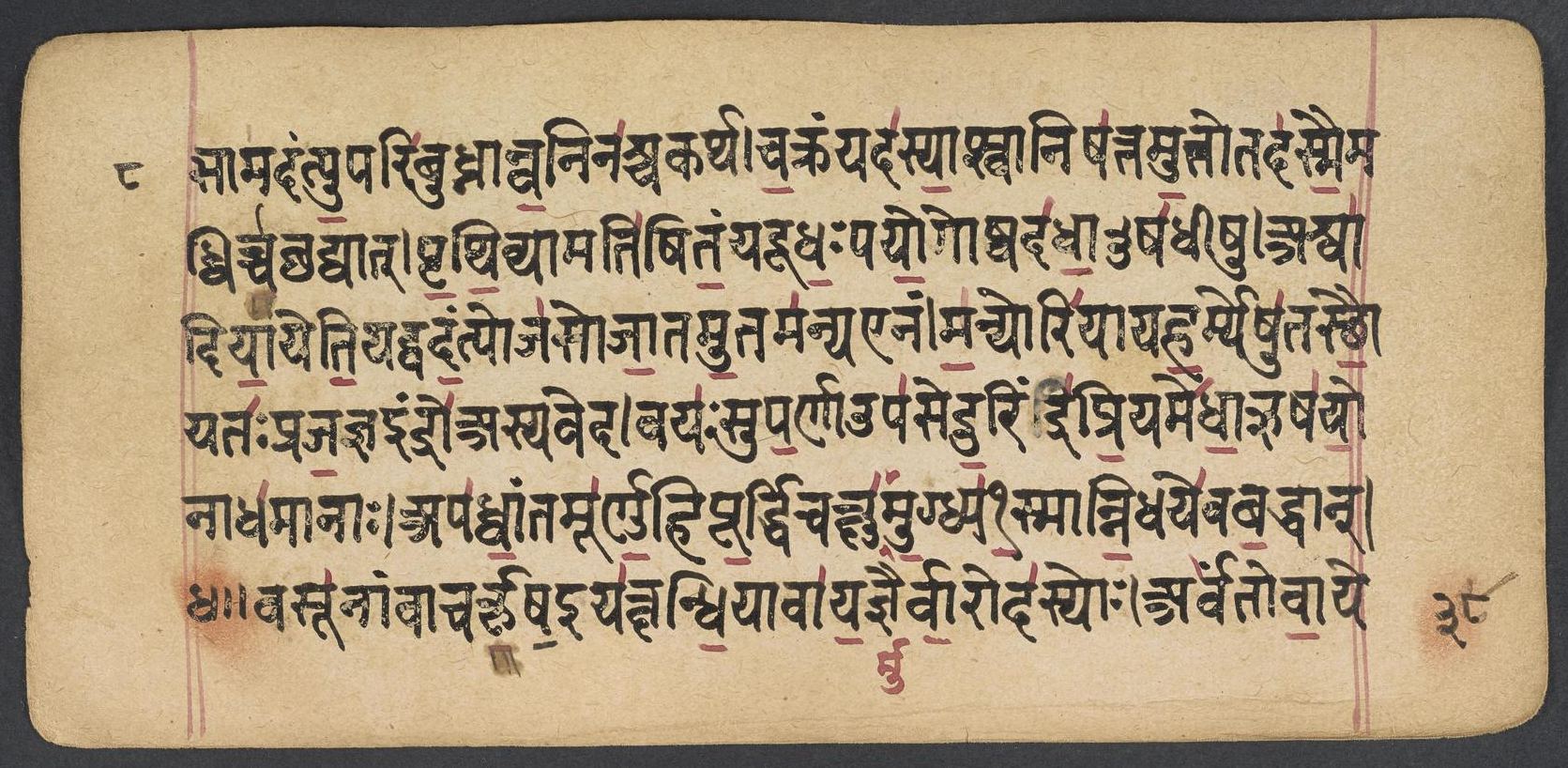
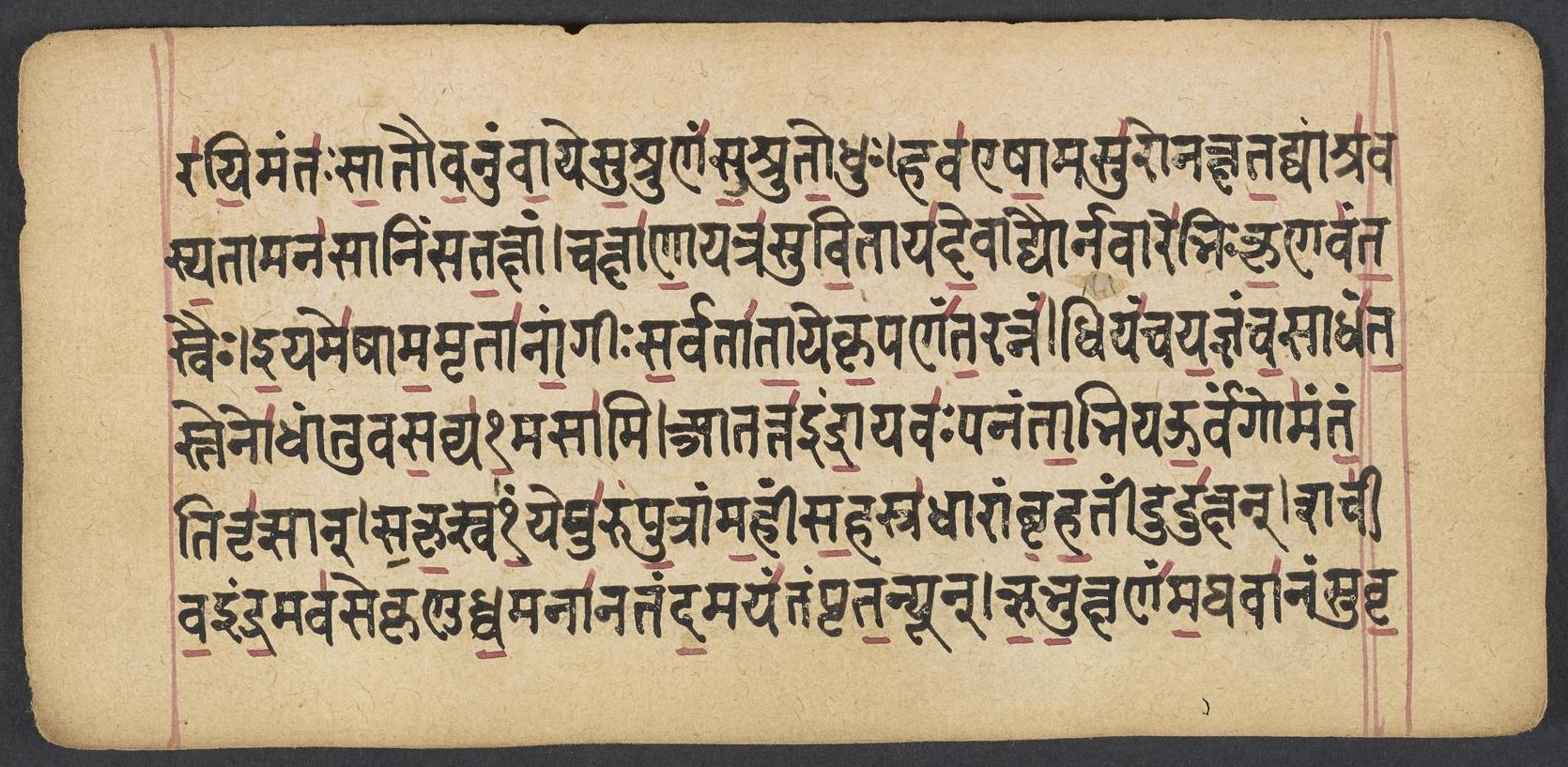
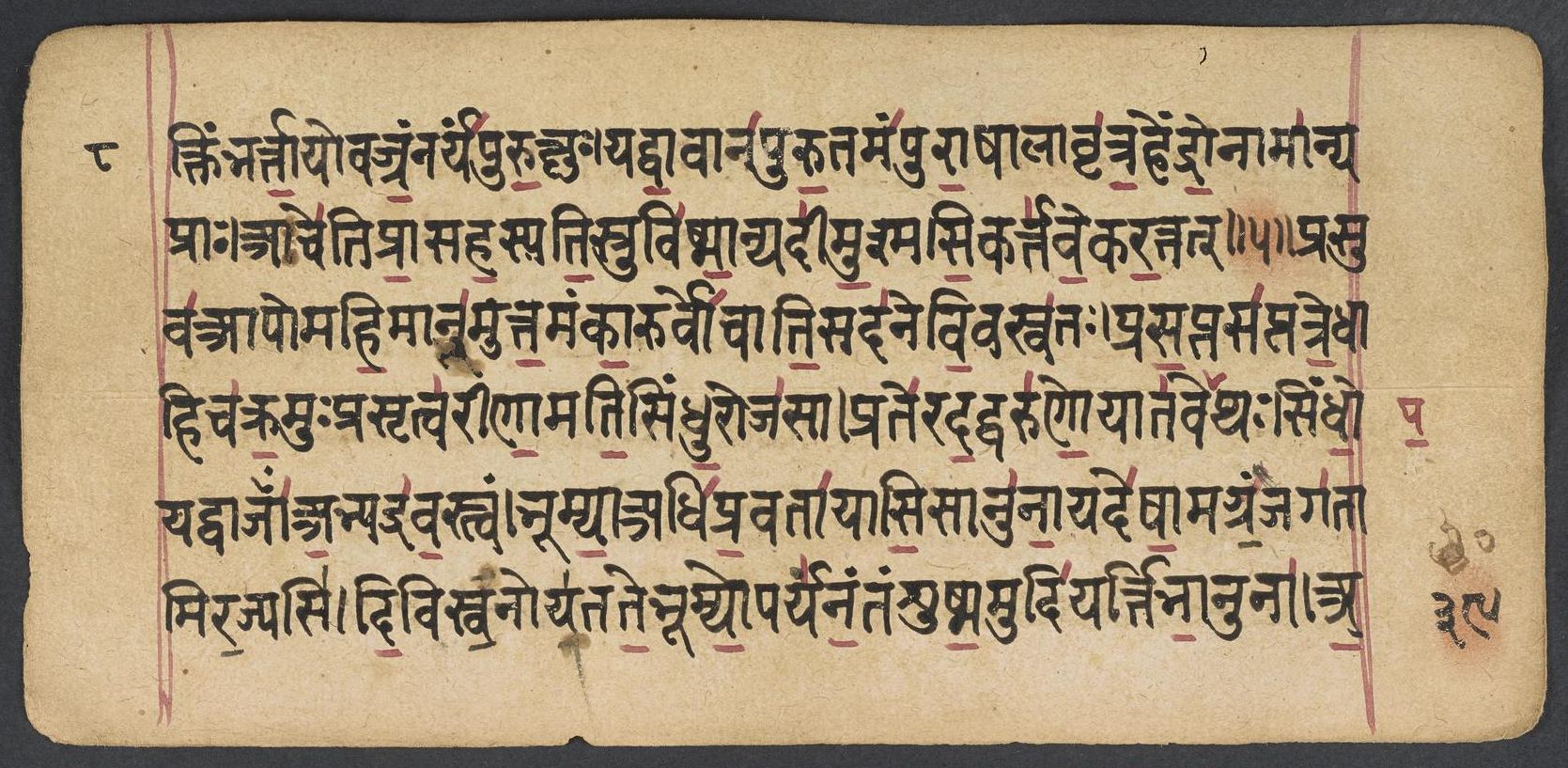
The manuscript shown is Penn Ms. Coll. 390 Item 48 (University of Pennsylvania), a paper manuscript of the eighth aṣṭaka (RV 10.46-10.191) of the Ṛgveda Saṃhitā in Devanāgarī, 158 leaves, 6 lines to the page, with the accents marked in red; the scribe's colophon on fol. 158 gives Saṃvat 1768 (1711 CE); this hymn stands on fol. 39v-40v. Each section below gives the verses that end on one page; the page boundaries were read on the images (the opening words of every page), not counted out. Like most Rigveda manuscripts, Penn Ms. Coll. 390 Item 48 writes a repeated refrain in short form after its first occurrence (for example kasmai° for kasmai devāya haviṣā vidhema); the Sanskrit shown is the full text of Aufrecht's edition.
How was this verified? (Provenance)
Where on the image
Penn Ms. Coll. 390 Item 48, fol. 40r (numbered 39r by the scribe) (OPenn image 39, lower leaf). Checked on the image: the Rigveda text on this page begins in RV 10.74.1 ‹-ye rayimantaḥ sātau vanuṁ›. The next page with Rigveda text, fol. 40v (numbered 39v by the scribe), begins in RV 10.74.5 ‹-suvṛktim bhartā yo vajraṁ›. Verses 10.74.1-4 end on this page; 10.74.1 begins on fol. 39v (numbered 38v by the scribe).
1vasū̍nāṁ vā carkṛṣa̱ iya̍kṣan dhi̱yā vā̍ ya̱jñair vā̱ roda̍syoḥ | arva̍nto vā̱ ye ra̍yi̱manta̍ḥ sā̱tau va̱nuṁ vā̱ ye su̱śruṇa̍ṁ su̱śruto̱ dhuḥ ||
2hava̍ eṣā̱m asu̍ro nakṣata̱ dyāṁ śra̍vasya̱tā mana̍sā niṁsata̱ kṣām | cakṣā̍ṇā̱ yatra̍ suvi̱tāya̍ de̱vā dyaur na vāre̍bhiḥ kṛ̱ṇava̍nta̱ svaiḥ ||
3i̱yam e̍ṣām a̱mṛtā̍nā̱ṁ gīḥ sa̱rvatā̍tā̱ ye kṛ̱paṇa̍nta̱ ratna̍m | dhiya̍ṁ ca ya̱jñaṁ ca̱ sādha̍nta̱s te no̍ dhāntu vasa̱vya1̱̍m asā̍mi ||
4ā tat ta̍ indrā̱yava̍ḥ panantā̱bhi ya ū̱rvaṁ goma̍nta̱ṁ titṛ̍tsān | sa̱kṛ̱tsva1̱̍ṁ ye pu̍rupu̱trām ma̱hīṁ sa̱hasra̍dhārām bṛha̱tīṁ dudu̍kṣan ||
1I AM prepared to laud with song or worship the Noble Ones who are in earth and heaven, Or Coursers who have triumphed in, the contest, or those who famed, have won the prize with glory.
2Their call, the call of Gods, went up to heaven: they kissed the ground with glory-seeking spirit, There where the Gods look on for happy fortune, and like the kindly heavens bestow their bounties.
3This is the song of those Immortal Beings who long for treasures in their full perfection. May these, completing prayers and sacrifices, bestow upon us wealth where naught is wanting.
4Those living men extolled thy deed, O Indra, those who would fain burst through the stall of cattle, Fain to milk her who bare but once, great, lofty, whose Sons are many and her streams past number.
Where on the image
Penn Ms. Coll. 390 Item 48, fol. 40v (numbered 39v by the scribe) (OPenn image 40, upper leaf). Checked on the image: the Rigveda text on this page begins in RV 10.74.5 ‹-suvṛktim bhartā yo vajraṁ›. The next page with Rigveda text, fol. 41r (numbered 40r by the scribe), begins in RV 10.75.3 ‹-abhrād iva pra stanayanti›. Verses 10.74.5-6 end on this page; 10.74.5 begins on fol. 40r (numbered 39r by the scribe).
5śacī̍va̱ indra̱m ava̍se kṛṇudhva̱m anā̍nataṁ da̱maya̍ntam pṛta̱nyūn | ṛ̱bhu̱kṣaṇa̍m ma̱ghavā̍naṁ suvṛ̱ktim bhartā̱ yo vajra̱ṁ narya̍m puru̱kṣuḥ ||
6yad vā̱vāna̍ puru̱tama̍m purā̱ṣāḻ ā vṛ̍tra̱hendro̱ nāmā̍ny aprāḥ | ace̍ti prā̱saha̱s pati̱s tuvi̍ṣmā̱n yad ī̍m u̱śmasi̱ karta̍ve̱ kara̱t tat ||
5Sacivan, win to your assistance Indra who never bends, who overcomes his foemen. R̥ibhukshan, Maghavan, the hymn's upholder, who, rich in food, bears man's kind friend, the thunder.
6Since he who won of old anew hath triumphed, Indra hath earned his name of Vr̥itra-slayer. He hath appeared, the mighty Lord of Conquest. What we would have him do let him accomplish.
Notes
- Sanskrit: Aufrecht's edition (1877) with the Vedic accents, as entered by van Nooten and Holland (GRETIL).
- English: Ralph T. H. Griffith, The Hymns of the Rigveda (1889-1892; 2nd ed. 1896-1897), from the VedaWeb digital text; OCR slips in that text were corrected against the printed 2nd edition (data/sources/rigveda/griffith_errata.json).
Cite
Sources
- Source: Penn Ms. Coll. 390 Item 48 (1711 CE (colophon: Saṃvat 1768)), OPenn, Public Domain Mark + Aufrecht's accented text (GRETIL) + Griffith's English (VedaWeb) (holding institution)
- Critical edition: Aufrecht (1877), accented e-text via GRETIL
← previous · → next · v cycle view · l back to library